Tag: Dimensity 9500

  • Oppo Find X9 Series Unveiled: Design Similar to OnePlus 15

    Oppo Find X9 Series Unveiled: Design Similar to OnePlus 15

    Key Takeaways

    1. Oppo will launch the Find X9 and X9 Pro smartphones on October 16, 2025, starting in China, with a global release to follow.
    2. The design of the Find X9 series closely resembles the OnePlus 15, featuring a new squircle-shaped camera island.
    3. The Find X9 Pro will have an advanced camera system with an improved periscope telephoto sensor and four rear cameras.
    4. The standard Find X9 will have a Hasselblad logo, while the OnePlus 15 will not, as it will use its own camera technology.
    5. The Find X9 series will emphasize AI capabilities, potentially including two dedicated AI buttons for enhanced functionality.


    Oppo is preparing to launch its new flagship smartphones, the Find X9 and X9 Pro, which will be powered by the Dimensity 9500 chipset. The company has announced that these devices will be available worldwide shortly after their initial release in China, which is scheduled for October 16, 2025.

    Design Similarities

    Recently, Oppo has revealed new images of the Find X9 and X9 Pro. According to these teaser images, the design of Oppo’s latest flagship phones will closely resemble that of the OnePlus 15, which was also recently featured in a leaked image.

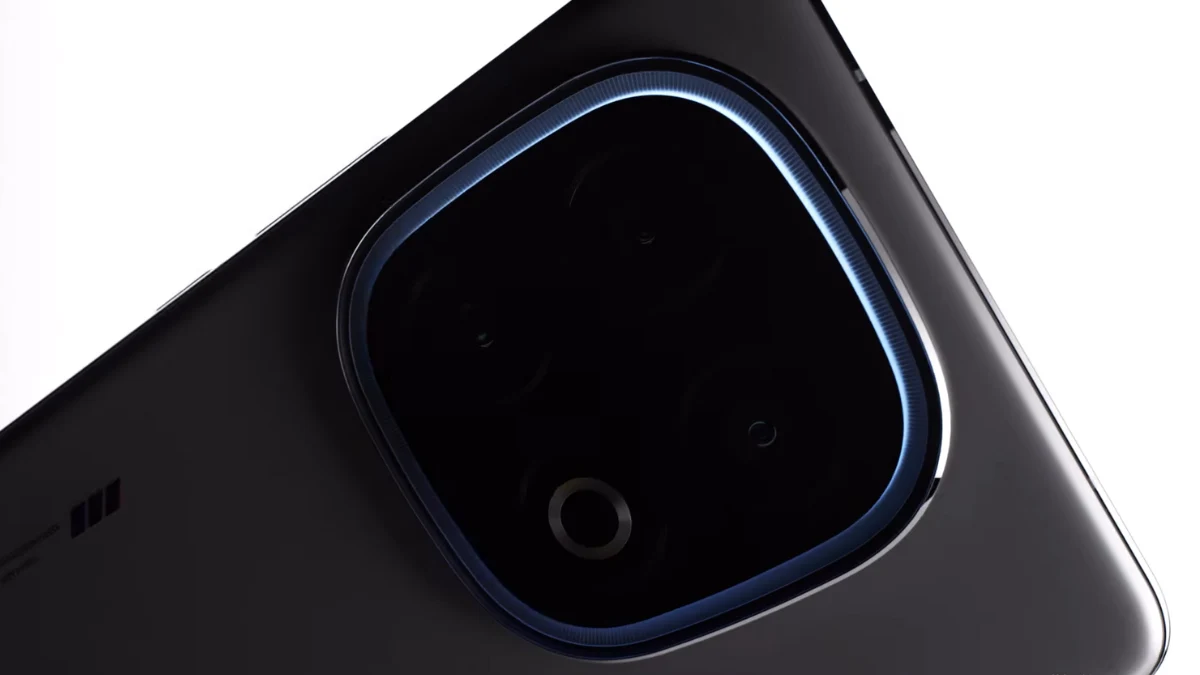
    To be more specific, when compared to the Find X8 series, the upcoming Dimensity 9500 devices from Oppo feature a newly designed camera island. This new design takes on a squircle shape, contrasting with the circular camera island seen on the earlier models. Among the two, the standard Find X9 shares more design elements with the recently leaked OnePlus 15, although it distinctively has a Hasselblad logo on its back.

    Camera Innovations

    In regards to the OnePlus 15, the brand had previously disclosed its decision to part ways with Hasselblad for camera tuning. Instead, OnePlus plans to implement its own DetailMax Engine, which explains the absence of the Hasselblad logo on the back of the leaked device.

    Turning back to the Oppo Find X9 series, the X9 Pro has been officially presented with a more advanced camera system. Specifically, the images reveal that the Pro variant includes an improved periscope telephoto sensor. Both devices seem to be equipped with four rear cameras.

    AI Features

    Additionally, Oppo has hinted that the Find X9 series will place a strong emphasis on AI capabilities. This tease has led to suggestions that the phones might come with two dedicated AI buttons for enhanced functionality.

    Source:
    Link



  • TSMC Raises N3P Node Prices by Up to 24% for Qualcomm, MediaTek

    TSMC Raises N3P Node Prices by Up to 24% for Qualcomm, MediaTek

    Key Takeaways

    1. Apple’s A19 and A19 Pro SoCs show significant performance improvements, especially in GPU capabilities, compared to previous generations.
    2. Qualcomm and MediaTek are set to release their high-end SoCs, Snapdragon 8 Elite Gen 5 and Dimensity 9500, which may challenge Apple’s A19 Pro.
    3. TSMC’s new N3P process has increased prices by 20%, impacting costs for MediaTek and Qualcomm, while Apple may benefit from better pricing due to its status as TSMC’s largest client.
    4. A projected 50% price hike for TSMC’s 2 nm process could lead to higher costs for flagship smartphone SoCs, affecting future device pricing.
    5. Upcoming flagship devices, including those from Vivo, Xiaomi, Oppo, and the Galaxy S26 series, may be priced higher due to increased manufacturing costs.


    With the unveiling of the A19 and A19 Pro SoCs, Apple has demonstrated a remarkable improvement in performance compared to previous generations, particularly in the GPU sector. Not wanting to fall behind, Android chip makers Qualcomm and MediaTek are preparing to launch their top-tier SoCs, the Snapdragon 8 Elite Gen 5 and the Dimensity 9500.

    Performance Comparison

    If the leaks regarding performance are accurate, the Apple A19 Pro may face stiff competition as both the Dimensity 9500 and Snapdragon 8 Elite Gen 5 seem to be exceptionally powerful. Nonetheless, Apple might have a significant edge in one key area: pricing.

    Cost Increases

    A recent report from China Times indicates that TSMC’s new N3P “3 nm” process node has seen a 20% price hike compared to the previous generation. Because of this increase, TSMC is reportedly charging MediaTek 24% more for the N3P than the last-gen, and Qualcomm is facing a 16% increase as well.

    The report doesn’t mention Apple, which leads us to think that either TSMC is not overcharging Apple or that Cupertino has negotiated a discount on the price hike and is paying significantly less than MediaTek and Qualcomm. Allegedly, Apple is TSMC’s largest client and, according to Taiwanese sources, is expected to account for 22-25% of TSMC’s total revenue by 2026. Thus, it seems reasonable that TSMC would offer Apple a more favorable deal than other chip manufacturers.

    Future Impacts

    In addition, TSMC is reportedly increasing the price of the 2 nm process node by “at least” 50% due to high research and development costs and yield issues. This will impact flagship smartphone SoCs next year, with unit costs potentially reaching up to $280. TSMC is also said to be offering no discounts or bargaining options.

    Smartphone manufacturers like Vivo, Xiaomi, and Oppo are gearing up to launch their latest flagship devices. These upcoming models, powered by the Qualcomm Snapdragon 8 Elite Gen 5 and MediaTek Dimensity 9500, might be priced higher than their predecessors.

    Outlook for Upcoming Flagships

    A similar trend could be expected for the Galaxy S26 series, which is anticipated to utilize both the Exynos 2600 and Snapdragon 8 Elite Gen 5 in the upcoming year.

    Lastly, if TSMC’s rumored 50% price increase for the 2 nm process node is accurate, then flagship devices launched in the latter half of 2026, like the Apple iPhone 18, are likely to carry a significant price premium over their last-gen versions. Therefore, if you’re considering an upgrade, now could be an excellent time, as many Android flagships are currently available at substantial discounts.

    Source:
    Link


  • MediaTek Dimensity 9500 Launches: Major Upgrades vs. 9400

    MediaTek Dimensity 9500 Launches: Major Upgrades vs. 9400

    Key Takeaways

    1. MediaTek launched the Dimensity 9400 Plus, competing with Apple A19 Pro and Snapdragon 8 Gen 5 Elite.
    2. The Dimensity 9400 Plus features new Lumex CPU cores and the Mali-G1 Ultra GPU, enhancing performance.
    3. It boasts a 32% improvement in single-threaded tasks and a 16% boost in multi-threaded tasks compared to its predecessor.
    4. The Mali G1-Ultra GPU shows a 33% increase in performance and a 119% rise in ray tracing speed.
    5. The chipset supports UFS 4.1 storage and will be used in upcoming smartphones like Oppo Find X9 and Vivo X300, launching mid-October.


    MediaTek has introduced a competitor to the Apple A19 Pro and the soon-to-come Snapdragon 8 Gen 5 Elite with the launch of the Dimensity 9400 Plus this spring. The Dimensity 9400 Plus expands upon the original Dimensity 9400, which can be found in devices like the Galaxy Tab S11 (currently priced at $859.99 on Amazon) and other premium gadgets. Notably, the Dimensity 9500 is the inaugural chipset from MediaTek that utilizes ARM’s v9.3 architecture combined with TSMC’s N3P nodes.

    New CPU and GPU Features

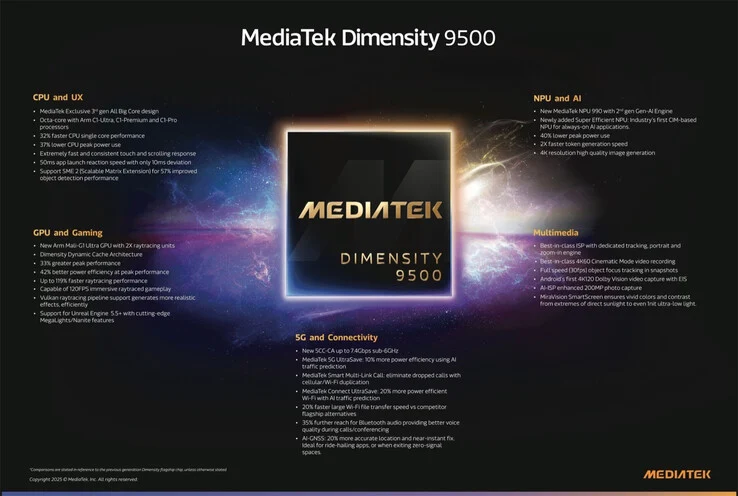
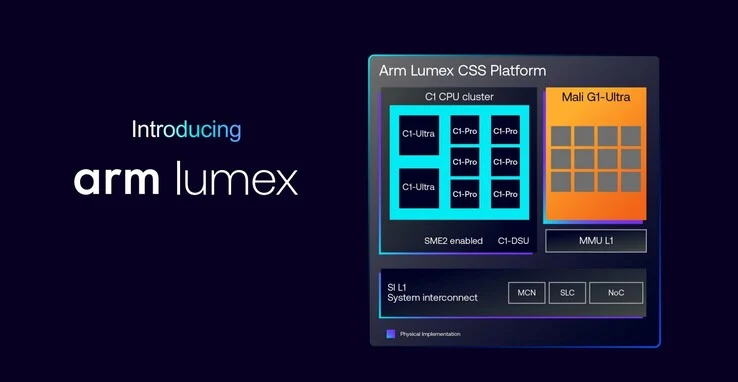
    This marks the debut of the Lumex CPU cores and the Mali-G1 Ultra GPU, which ARM announced just this month. MediaTek has enhanced ARM’s new 12-core GPU with a single C1-Ultra CPU core running at 4.21 GHz, three C1-Premium cores operating at 3.5 GHz, and four C1-Pro cores capped at 2.7 GHz.

    Performance Improvements

    According to official statements, the Dimensity 9500 is expected to outperform its predecessor by 32% in tasks that require single-threading and around 16% in tasks that utilize multiple threads. Furthermore, the Mali G1-Ultra is reported to provide a 33% enhancement in GPU performance, along with a significant 119% increase in ray tracing speed. MediaTek also asserts that the Dimensity 9500 operates with 37% greater efficiency under CPU strain and 42% better in GPU-intensive applications.

    Additional Upgrades and Launch Plans

    The Dimensity 9500 includes several other improvements over the Dimensity 9400, such as support for UFS 4.1 storage, an NPU 990, and MediaTek’s Imagiq 1190 imaging engine. This chipset will be featured in the soon-to-be-released Oppo Find X9 and Vivo X300, including their Pro variants. At the moment, these four smartphones are anticipated to launch in mid-October, with global availability confirmed for the Find X9 series as well.

    Source:
    Link


  • Vivo Teases X300 Series Launch with New Flagship Phone Photos

    Vivo Teases X300 Series Launch with New Flagship Phone Photos

    Key Takeaways

    1. Vivo X300 series smartphones will launch in China on October 13, 2025.
    2. The new series will feature the Dimensity 9500 chipset, competing with Qualcomm’s Snapdragon 8 Elite Gen 5.
    3. Performance differences between the Dimensity 9500 and Snapdragon 8 Elite Gen 5 are expected to be minimal based on early benchmarks.
    4. The Vivo X300 series will introduce a Sony LYT 828 primary camera with a 50 MP resolution and Hybrid Frame HDR technology.
    5. New camera enhancements include 200 MP HP8 and LYT 602 periscope sensors, along with UFS 4.1 storage and an improved ultrasonic fingerprint sensor.


    Vivo has announced the launch date for its X300 series. The much-anticipated flagship smartphones are scheduled to be released in China on October 13, 2025, just 18 days after Xiaomi showcases its Snapdragon 8 Elite Gen 5 devices. The new Vivo series will mark the debut of smartphones powered by the Dimensity 9500 chipset.

    Competition in the Market

    This new MediaTek flagship system-on-chip (SoC) aims to rival the Snapdragon 8 Elite Gen 5, and early Geekbench results indicate that Qualcomm might have a small advantage when it comes to raw performance. However, it’s worth noting that flagship products from both Qualcomm and MediaTek usually show similar benchmark results. After their official launches, we shouldn’t expect a significant difference in performance between these next-gen chips.

    Details on the New Devices

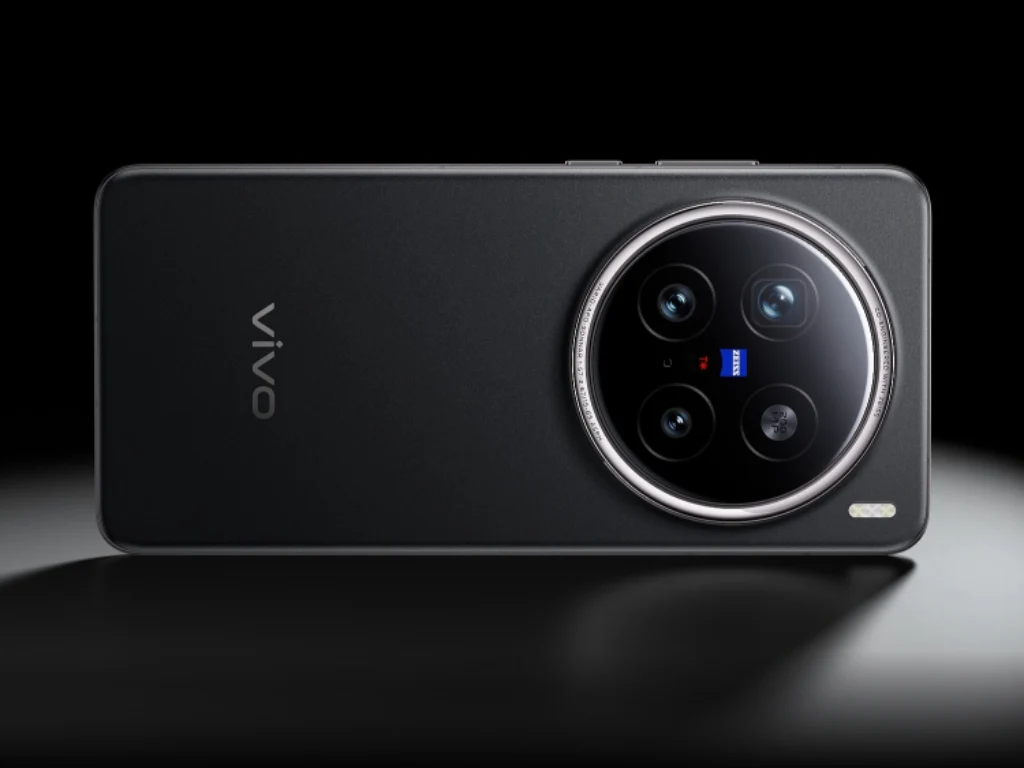
    In addition to confirming the launch date for the Vivo X300 series, the company has also provided a glimpse of what to expect from its upcoming flagship phones. While there won’t be any major changes in design, recent leaks suggest that the Dimensity 9500 won’t be the sole hardware improvement for these new devices.

    As per the reliable Weibo leaker Digital Chat Station, the Vivo X300 series will introduce a new phone equipped with a Sony LYT 828 primary camera. This sensor is newly released, featuring a size of 1/1.28-inch, a resolution of 50 MP, and Hybrid Frame HDR technology, which enhances dynamic range.

    Camera Enhancements

    The leaks also indicated that the Vivo X300 series will be the first to incorporate the 200 MP HP8 and LYT 602 periscope sensors. These enhancements in the camera department are expected to make the upcoming phones more appealing choices for photography enthusiasts compared to previous flagship models. Furthermore, the series is anticipated to include UFS 4.1 storage and an improved ultrasonic fingerprint sensor.

    Source:
    Link


  • Vivo X300 Specs Leak: What to Expect Before October Launch

    Vivo X300 Specs Leak: What to Expect Before October Launch

    Key Takeaways

    1. Vivo is set to launch the X300 series, including the standard X300 and X300 Pro, in October.
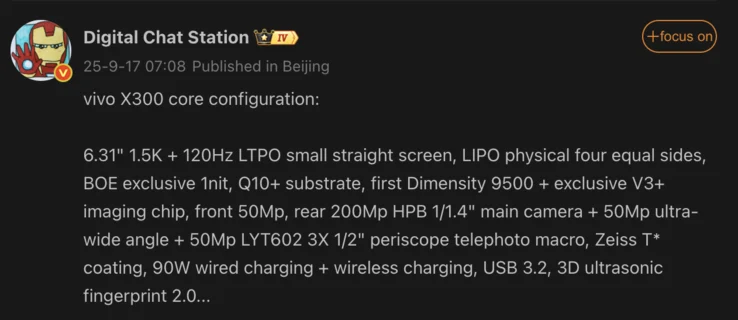
    2. The X300 features a 6.31-inch LTPO display with a 120Hz refresh rate and 1.5K resolution, designed by BOE.
    3. The camera system includes a 200MP primary sensor, a 50MP ultrawide lens, and a 50MP telephoto lens with Zeiss T coating for improved image quality.
    4. Powered by the MediaTek Dimensity 9500 processor, the X300 is expected to have a battery around 6,000mAh with 90W wired and wireless charging.
    5. The smartphone will first launch in China, followed by a global release.


    Vivo is likely to unveil its new flagship X300 series this October. This series is anticipated to consist of at least two variants: the standard X300 and the X300 Pro. One of the standout features of the Vivo X300 is its compact design, complemented by the ZEISS camera system. A reputable source has leaked detailed specifications for this upcoming smartphone.

    Display Features

    As per the information shared by Digital Chat Station on Weibo, the Vivo X300 will sport a 6.31-inch LTPO display boasting a 120Hz refresh rate and a 1.5K resolution. The screen will be manufactured by BOE and will utilize LIPO technology to ensure consistent and slim bezels across all edges.

    Camera Specifications

    The Vivo X300 is rumored to come equipped with a 200MP primary sensor measuring 1/1.4″, a 50MP ultrawide lens, and a 50MP LYT602 periscope telephoto lens offering 3X optical zoom. The camera system is also expected to include a Zeiss T anti-reflective coating which aims to minimize lens flare and ghosting effects. Additionally, it has been confirmed that the Vivo X300 will be fitted with the in-house V3+ imaging chip, enabling users to record cinematic portrait videos at 4K 60fps. For selfies, the X300 is believed to feature a 50MP front camera.

    Performance and Battery

    The smartphone is set to be powered by the Dimensity 9500, which is MediaTek’s forthcoming flagship processor. While the leak did not specify the battery capacity, it is projected to be around 6,000mAh. The leakster also hints at the inclusion of 90W wired charging and wireless charging support. Other significant characteristics include a USB 3.2 port and an ultrasonic fingerprint scanner. The Vivo X300, along with the X300 Pro, is expected to launch first in China, followed by a global release.

    Source:
    Link


  • Vivo X300 Beats Vivo X200 Ultra in Early Benchmark Tests

    Vivo X300 Beats Vivo X200 Ultra in Early Benchmark Tests

    Key Takeaways

    1. Vivo is launching its flagship smartphones, the X300 and X300 Pro, in China, competing with Oppo’s Find X9 and Find X9 Pro.
    2. Both Vivo and Oppo will use the new Dimensity 9500 chipset, set to be introduced by MediaTek on September 22.
    3. The Vivo X300 has shown significant performance improvements, with a 27.8% increase in single-core and a 32.5% increase in multi-core scores on Geekbench.
    4. The Dimensity 9500 chipset offers over 30% better multi-core performance and a 59% increase in single-core performance compared to the previous Dimensity 9400.
    5. While the Vivo X300 outperforms the X200 Ultra, it still lags behind some Snapdragon 8 Elite-powered smartphones, and its global release date remains uncertain.


    Vivo is currently putting its efforts into launching its upcoming flagship smartphones in China. The company is promoting the X300 and X300 Pro while Oppo prepares to unveil the Find X9 and Find X9 Pro in the same region. Furthermore, both companies will utilize the same Dimensity 9500 chipset, which MediaTek is set to introduce on September 22.

    Benchmarking Insights

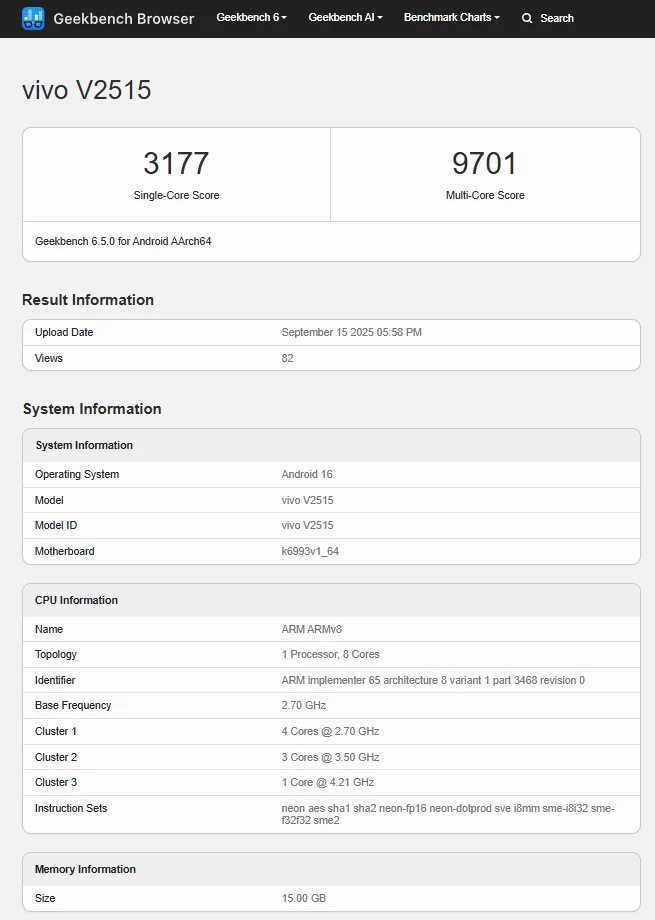
    Recently, the global variant of the Vivo X300 has been spotted on Geekbench. Interestingly, the Chinese version also appeared on this benchmarking site about a month earlier. During this period, the single-core performance has risen by 27.8%, reaching a score of 3,177. At the same time, the multi-core performance has seen a boost of 32.5%.

    Performance Comparison

    Consequently, the Dimensity 9500 showcased below achieves more than 30% better multi-core results compared to the averages from the Dimensity 9400 in our assessments. Even more impressively, the upcoming chipset delivers a staggering 59% increase in single-core performance on Geekbench 6. Additionally, the Vivo X300 surpasses the Vivo X200 Ultra in the same tests, which recorded averages of 2,976 and 9,284 with its Snapdragon 8 Elite processor and 16 GB of RAM.

    Market Positioning

    That said, the Vivo X300 still falls behind some smartphones powered by the Snapdragon 8 Elite, such as the Asus ROG Phone 9 Pro and the RedMagic 10S Pro (currently priced at $949 on Amazon). Nevertheless, the leaked benchmark results suggest that Vivo plans to release the X300 globally with 16 GB of RAM. Unfortunately, it is still unclear when the Vivo X300 will be launched officially outside of China, or if the X300 Pro will debut at the same time.

    Source:
    Link


  • Vivo X300 Series to Feature AirDrop-Like Function at Launch

    Vivo X300 Series to Feature AirDrop-Like Function at Launch

    Key Takeaways

    1. The X300 Pro is Vivo’s major competitor to Apple’s latest iPhones, featuring improved rear cameras and a sleek design.
    2. Powered by the Dimensity 9500, it offers software and cross-device compatibility similar to the iPhone experience.
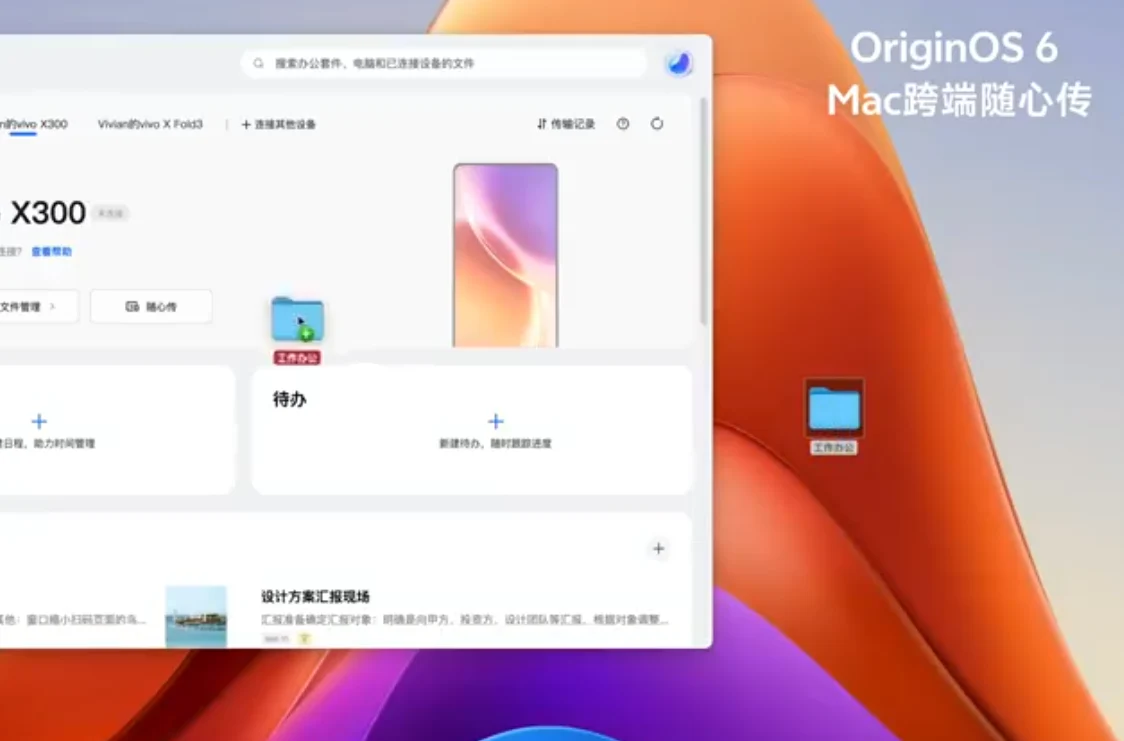
    3. Users can transfer files between the X300 Pro and Apple devices using OriginOS 6, Vivo’s customized Android version.
    4. The cross-platform transfer requires logging into the Vivo account on both devices but does not need a shared Wi-Fi network.
    5. The Mac transfer feature will also be available on the iQoo 15, which uses the Snapdragon 8 Elite 2 processor.


    The X300 Pro has now been revealed as Vivo’s major competitor to Apple’s newest iPhones at its release, showcasing significantly improved rear cameras, all in a possibly sleeker design.

    Features and Performance

    The flagship smartphone, powered by the Dimensity 9500, is also being highlighted as the closest alternative to an iPhone experience, particularly in software and cross-device compatibility.

    A representative from the company stated that it will penetrate Apple’s closed ecosystem, allowing users to transfer files between a macOS PC or iPad and the new smartphone.

    This capability will be included in OriginOS 6, Vivo’s customized version of Android 16. Similar to the OnePlus offering, there is a limitation; these “free Mac cross-platform transfers” must occur within the Vivo account’s user interface, which requires logging in on both the Apple device and the new phone.

    Wireless Connectivity

    Nevertheless, this minor limitation supposedly eliminates the requirement for the devices to share the same Wi-Fi network. It appears to be totally wireless, with no cables needed at all.

    OriginOS 6 and its Mac transfer feature are also expected to launch on the X300 Pro’s smaller counterpart and their Snapdragon 8 Elite 2-powered relative, the iQoo 15, during its introduction.

    Source:
    Link


  • MediaTek Dimensity 9500 Boosts Vivo X300 Pro Performance by 40%

    MediaTek Dimensity 9500 Boosts Vivo X300 Pro Performance by 40%

    Key Takeaways

    1. MediaTek will unveil the Dimensity 9500 chipset soon, aiming to compete with Qualcomm’s Snapdragon 8 Elite Gen 5 and Apple’s A19 Pro.
    2. The Vivo X300 Pro, powered by Dimensity 9500, achieved an impressive AnTuTu score of 401,193, but this score is based on a new beta version and may not reflect final performance.
    3. The Dimensity 9500 shows a 40% performance increase compared to last year’s Dimensity 9400 in the Vivo X200 Pro.
    4. The Vivo X300 Pro’s CPU and GPU scores are significantly higher than the Dimensity 9400, with improvements of 22% in CPU and 51% in GPU performance.
    5. The Galaxy Tab S11, equipped with the Dimensity 9400+, is available for purchase on Amazon.


    MediaTek is set to showcase the Dimensity 9500 before the month wraps up. This top-tier chipset aims to compete with Qualcomm’s Snapdragon 8 Elite Gen 5 and Apple’s latest A19 Pro, having already shown its capabilities on AnTuTu through the Vivo X300 Pro.

    Impressive AnTuTu Scores

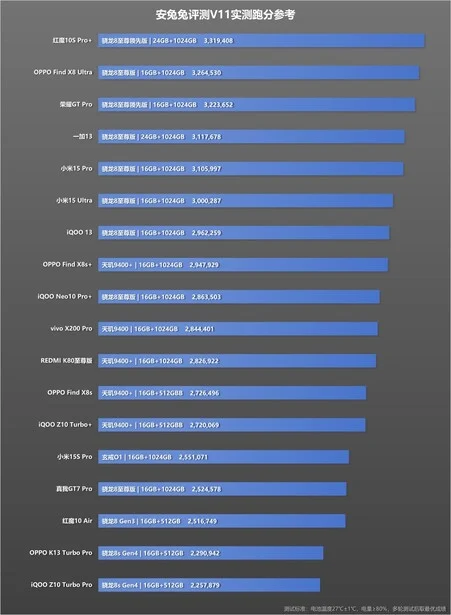
    Vivo’s executive Han Boxiao shared on Weibo that the Vivo X300 Pro, which runs on the Dimensity 9500, achieved an outstanding score of 401,1931 on AnTuTu. However, it’s worth noting two important points. First, this score comes from AnTuTu’s new V11 beta, making it not directly comparable to devices tested with V10. Additionally, scores from pre-release devices often exceed what users typically see on their final models.

    Performance Comparison

    The Vivo X300 Pro demonstrates a notable 40% increase in overall performance when compared to last year’s Vivo X200 Pro, which had a Dimensity 9400 and achieved a total score of 2,884,401. To put things into perspective, the highest scoring Android device on the list, the RedMagic 10S Pro with Snapdragon 8 Elite Leading Version, scores 3,319,408.

    Despite the absence of detailed AnTuTu V11 score breakdowns, leaker Digital Chat Station has suggested that the Dimensity 9400 scores approximately 850,000 in CPU performance and around 100,000 on the GPU side. In contrast, the Vivo X300 Pro excels with scores of 1,043,247 for CPU and 1,510,982 for GPU, indicating a substantial 22% improvement in CPU performance and a remarkable 51% enhancement in GPU performance.

    Source:
    Link


  • Arm Unveils Lumex CPU Cores and Mali G1-Ultra GPU for Smartphones

    Arm Unveils Lumex CPU Cores and Mali G1-Ultra GPU for Smartphones

    Key Takeaways

    1. Arm has introduced new CPU and GPU cores for smartphone SoCs, including the Lumex C1 Ultra, C1 Premium, C1 Pro, and C1 Nano, set to launch in 2025-26.
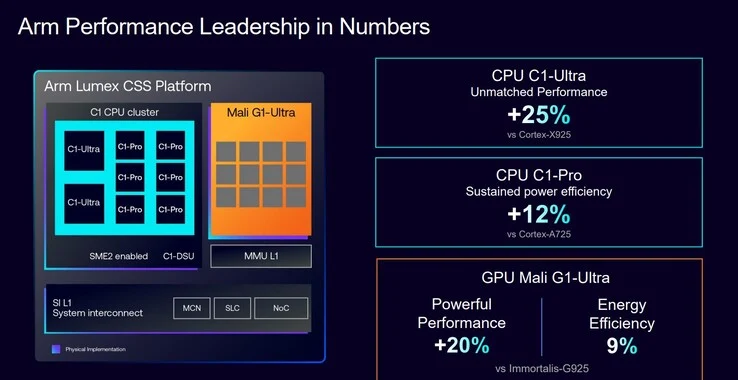
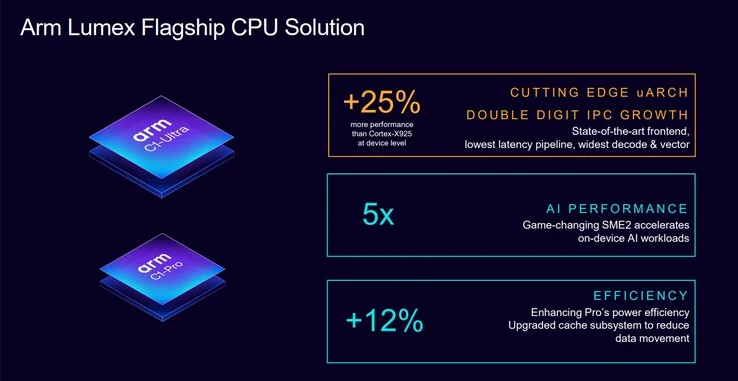
    2. The Lumex C1 Ultra offers up to a 25% performance increase over the Cortex-X925, while the C1 Pro is 12% more power efficient than the Cortex-A725.
    3. All new cores will utilize Arm’s v9.3 architecture, featuring the SME2 instruction set, which can enhance AI performance by up to 5x and improve power efficiency by 3x.
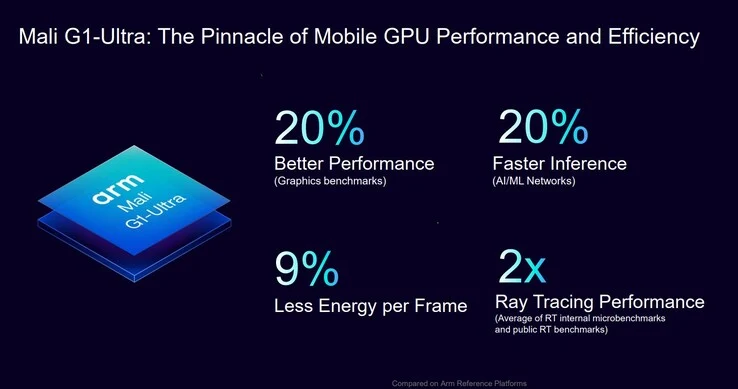
    4. The GPU branding has changed from Immortalis to Ultra, with the Mali G1-Ultra promising a 20% performance boost and a 2x improvement in ray tracing capabilities.
    5. The competitive landscape includes contenders like Apple’s GPUs, Qualcomm’s Adreno 840, and Samsung’s Xclipse 950, making the market highly competitive.


    Arm has unveiled its latest CPU and GPU cores designed for smartphone SoCs set to launch in 2025-26. The Dimensity 9500 from MediaTek is expected to be among the first to implement these new technologies, closely followed by Samsung’s Exynos 2600. In a significant shift, Arm has revamped its naming conventions for CPUs and GPUs, moving away from familiar names like Cortex and Mali to a more streamlined yet somewhat perplexing system.

    New Core Classifications

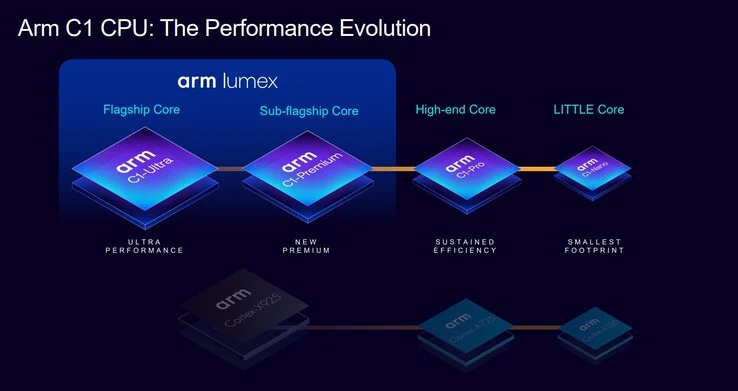
    The newly designed smartphone SoC cores will be divided into four distinct categories: Lumex C1 Ultra, Lumex C1 Premium, Lumex C1 Pro, and Lumex C1 Nano. The C1 Ultra serves as the successor to the Cortex-X925, while both the C1 Premium and C1 Pro act as ‘middle’ cores, succeeding the Cortex-A725. Meanwhile, the C1 Nano is the next iteration of the Cortex-A520. Arm showcased a reference design that includes two Lumex C1 Ultra cores along with a six-core cluster of Lumex C1 Pro, potentially giving us a first look at the Dimensity 9500.

    Performance Improvements

    In terms of performance, Arm asserts that the Lumex C1 Ultra can be as much as 25% quicker than the Cortex-X925, and the Lumex C1 Pro features 12% improved power efficiency over the Cortex-A725, thanks to notable gains in IPC. Competitors for these cores include successors to Apple’s Everest and Sawtooth cores found in the A19/A19 Pro and Qualcomm’s upcoming Nuvia cores, which are expected to launch alongside the Snapdragon 8 Elite 2/Snapdragon 8 Elite Gen 5.

    Architectural Advancements

    All four cores—the Lumex C1 Ultra, Lumex C1 Pro, Lumex C1 Premium, and Lumex C1 Nano—will be built on Arm’s latest v9.3 architecture. The most significant update is the introduction of the SME2 (Scalable Matrix Extension) instruction set. According to Arm, SME2 could provide up to a 5x performance boost in AI workloads, while also being 3x more efficient in terms of power consumption.

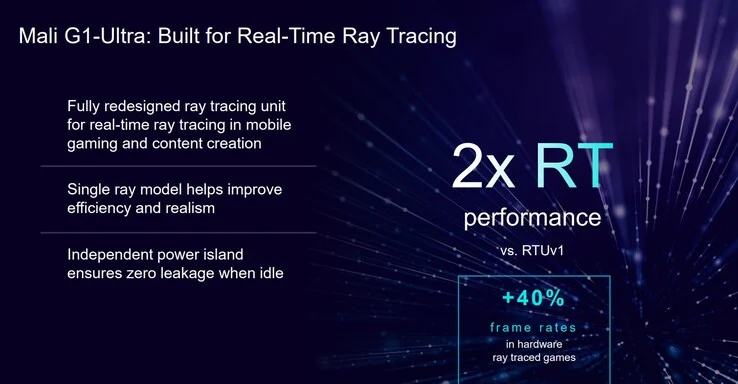
    Arm’s GPU branding has transitioned from Immortalis to Ultra, although it remains unclear what the names for lower-tier models will be. An earlier Geekbench listing for the Dimensity 9500 has already revealed this new branding. Arm claims that the Mali G1-Ultra can deliver a 20% enhancement in overall performance and a 2x boost in ray tracing capabilities, translating to a potential 40% increase in frames per second (FPS).

    Competitive Landscape

    Despite these impressive specifications, the competition is notably intense this time around. Alongside Apple’s GPUs, Qualcomm’s Adreno 840 and Samsung’s Xclipse 950 are also contenders, with the latter possibly being Samsung’s first set of in-house chips in recent years. While Arm has not provided a specific timeline for the release of these components, if recent leaks are to be believed, we can expect them to hit the market soon.

    Source:
    Link


  • iQoo 15 Mini Launch Date and Chipset Details Revealed

    iQoo 15 Mini Launch Date and Chipset Details Revealed

    Key Takeaways

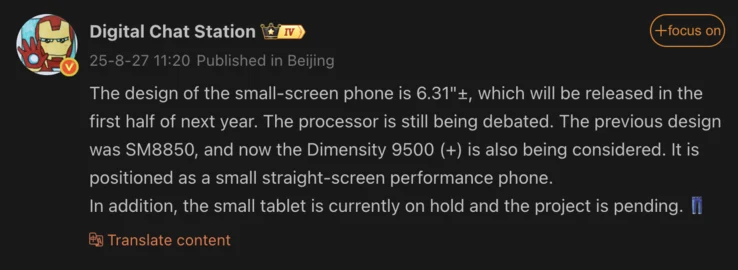
    1. The iQoo 15 Mini is expected to have a display size of around 6.31 inches with a flat screen design.
    2. The smartphone may feature either the Snapdragon 8 Elite 2 or the Dimensity 9500+ chipset.
    3. The Snapdragon 8 Elite 2 is anticipated to be released around late September, while the Dimensity 9500+ is an overclocked variant of the upcoming Dimensity 9500.
    4. The iQoo 15 Mini is rumored to come with a large 7,000mAh battery, surpassing competitors like the OnePlus 13T and Vivo X200 Pro Mini.
    5. The expected launch for the iQoo 15 Mini is in the first half of 2026, but official details have not yet been confirmed by iQoo.


    iQoo is said to be working on a new compact flagship smartphone named the iQoo 15 Mini. Recently, some important details about the device have been leaked.

    Display Size

    As per the Digital Chat Station on Weibo, the iQoo 15 Mini might have a display that measures about 6.31 inches. Previous leaks mentioned that the device is likely to come with a flat screen.

    Chipset Options

    The tipster also mentioned that the device was initially thought to run on the Snapdragon 8 Elite 2 chipset. However, now the company is looking into using the Dimensity 9500+ chipset instead.

    The Snapdragon 8 Elite 2 is anticipated to be Qualcomm’s next flagship processor, slated for release around late September. This chip is expected to be featured in premium phones like OnePlus 15 and iQoo 15. In contrast, the Dimensity 9500 is the upcoming chipset from MediaTek, and its Dimensity 9500+ version is expected to be an overclocked variant, similar to the Dimensity 9400 series, where the base 9400 was launched first, followed by the 9400+.

    Battery and Launch Timeline

    According to earlier leaks, the iQoo 15 Mini is expected to be equipped with a robust 7,000mAh battery. For context, other compact devices such as the OnePlus 13T and Vivo X200 Pro Mini come with batteries of 6,260mAh and 5,700mAh, respectively. The iQoo 15 Mini is projected to be launched in the first half of 2026.

    It’s important to highlight that iQoo has not confirmed any official details about the iQoo 15 Mini yet, so it’s advisable to consider this information with caution.

    Source:
    Link