Tag: AnTuTu

  • Gaming Flagship Dominates AnTuTu, Qualcomm Loses Mid-Range

    Key Takeaway

    – RedMagic 11S Pro+ tops May 2026 AnTuTu charts with 4.17 million points.
    – Qualcomm dominates the flagship segment, holding most top-10 spots.
    – No Snapdragon-powered devices appear in the top-10 mid-range rankings.
    – MediaTek Dimensity 8400/8500 series leads the mid-range segment.
    – Vivo iQOO Z11 is the top mid-range performer with 2.33 million points.


    Shortly after its launch, the RedMagic 11S Pro+ took first place in the May 2026 AnTuTu performance charts. Thanks to the combination of a higher clocked Qualcomm Snapdragon 8 Elite Gen 5 with a vapor chamber, liquid cooling and an active fan, the gaming flagship scored 4.17 million points.

    High-End Chipset Battle

    The Vivo iQOO 15 Ultra, the Vivo X300 Ultra and the iQOO 15 are only just behind, with all other smartphones scoring below 4 million points in May. Qualcomm still has a dominant market position in the top price segment – in the top 10 in May, the Vivo iQOO 15T is the only smartphone that is not equipped with Qualcomm’s flagship chip, but with a MediaTek Dimensity 9500. With 3.80 million points, the smartphone falls around 8.8 percent behind the RedMagic 11S Pro+.

    Mid-Range Market Shift

    The situation is completely different in the mid-range. In the price range that AnTuTu selected for this segment, not a single smartphone with a Snapdragon chip made it into the top 10. Instead, the benchmark charts are populated exclusively by models with chips from the MediaTek Dimensity 8400 and 8500 series.

    In first place with 2.33 million points is the Vivo iQOO Z11, followed by the Honor 600 Pro with 2.18 million points and the Honor Win Turbo with 2.17 million points. AnTuTu has also compiled a ranking of the most powerful tablets, which we have have already reported on.
    Sources

  • Flagship Vivo Tablet with Snapdragon 8 Elite Gen 5 Tops AnTuTu

    Flagship Vivo Tablet with Snapdragon 8 Elite Gen 5 Tops AnTuTu

    Key Takeaway

    – Vivo Pad 6 Pro tops the May 2026 China rankings with a score of 4,132,697.
    – Snapdragon 8 Elite Gen 5 dominates the top six spots.
    – iQoo Pad 6 Pro and Lenovo Legion Y700 5th Gen take second and third.
    – Redmi K Pad 2 is the only top-ten tablet with a MediaTek Dimensity 9500.
    – Intel-powered H3C MegaBook ranks eighth with a score of 3,390,074.


    Tablet Rankings for May 2026

    AnTuTu has revealed the top-performing flagship tablet rankings for May 2026. The list is specific to the Chinese market, so some of the models may not be globally available.

    Top Three Performers With Snapdragon Power

    The top performer is the Vivo Pad 6 Pro (8/256GB curr. $822 on TradingShenzhen). It is powered by the Snapdragon 8 Elite Gen 5 and has an average score of 4,132,697 points. The iQoo Pad 6 Pro secured the second spot with the Snapdragon 8 Elite Gen 5 and an average score of 4,081,031 points. The Lenovo Legion Y700 5th Gen ranks third with the Snapdragon 8 Elite Gen 5 and an average score of 4,073,338 points.

    Mid-Range Contenders and MediaTek Entry

    The Oppo Pad 5 Pro, OnePlus Pad 3 Pro, and Honor MagicPad 3 Pro 13.3 take the fourth, fifth, and sixth spots, respectively, with all three tablets powered by the Snapdragon 8 Elite Gen 5. Notably, the Redmi K Pad 2 is the only tablet in the top ten with the MediaTek Dimensity 9500, scoring an average of 3,716,562 points.

    The H3C MegaBook is powered by the Intel Core Ultra 5 228V and takes the eigth spot, with an average score of 3,390,074 points. The list is rounded out by the Oppo Pad 4 Pro and OnePlus Pad 2 Pro, both powered by the Snapdragon 8 Elite.


    Sources

  • Xiaomi 17 Series Benchmarks Show Weak Snapdragon 8 Elite Gen 5 Performance

    Xiaomi 17 Series Benchmarks Show Weak Snapdragon 8 Elite Gen 5 Performance

    Key Takeaways

    1. The Xiaomi 17 series smartphones are the first to use Qualcomm’s Snapdragon 8 Elite Gen 5 chipset but may not fully utilize its potential.
    2. AnTuTu benchmarks show the Xiaomi 17’s CPU score is only 3% higher than the Vivo X200 Ultra, with some models scoring lower than the standard version.
    3. Geekbench results for the Xiaomi 17 series fell short of pre-launch expectations in both single-core and multi-core tests.
    4. Xiaomi devices often lag behind competitors due to conservative tuning or software challenges, similar to trends seen in Samsung devices.
    5. Other flagship models from brands like Honor, Oppo, and RedMagic may better demonstrate the capabilities of the Snapdragon 8 Elite Gen 5 chipset.


    The recent Xiaomi 17 series smartphones are the first to use Qualcomm’s Snapdragon 8 Elite Gen 5 chipset. While they show improvements in performance compared to the previous models, recent benchmark results suggest that they might not fully showcase what the Qualcomm chipset can really do.

    Performance Insights

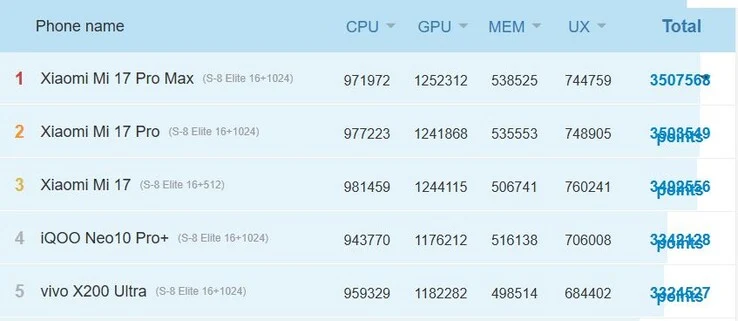
    AnTuTu’s new performance rankings reveal that the Xiaomi 17 has a CPU score of 981,459. This number sounds impressive by itself, but it’s only about 3% higher than the Vivo X200 Ultra, which achieved a score of 959,329 with last year’s Snapdragon 8 Elite. Furthermore, both the Xiaomi 17 Pro and Xiaomi 17 Pro Max have even lower scores than the standard Xiaomi 17.

    Benchmark Comparisons

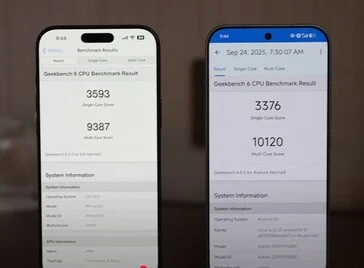
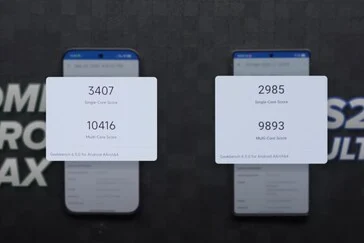
    The situation is similar in Geekbench. Before the launch, expectations were high, with the Xiaomi 17 series predicted to exceed 3,700 and 11,000 in single-core and multi-core tests, respectively. However, real-world results paint a different picture. For instance, Ben’s Gadget Reviews saw scores of 3,376 and 10,120; Sahil Karoul got 3,328 and 10,210; while Mrwhosetheboss achieved 3,407 and 10,416. Though these figures are respectable, they do not significantly outperform the Oppo Find X8 Ultra, which scored 3,145 and 9,722 in testing. In contrast, the Snapdragon 8 Elite Gen 5’s QRD device showed much better results with scores of 3,832 and 12,459.

    Overall Assessment

    These results suggest that the Xiaomi 17 series smartphones might not be performing at the peak potential of Qualcomm’s new chipset, a trend that isn’t uncommon for Xiaomi. Due to conservative tuning or software challenges, devices from Xiaomi—and also Samsung—tend to lag slightly behind many competitors. Flagship models from Honor, Oppo, and RedMagic may provide a clearer view of the Snapdragon 8 Elite Gen 5’s true capabilities.

    Source:
    Link


  • MediaTek Dimensity 9500 Boosts Vivo X300 Pro Performance by 40%

    MediaTek Dimensity 9500 Boosts Vivo X300 Pro Performance by 40%

    Key Takeaways

    1. MediaTek will unveil the Dimensity 9500 chipset soon, aiming to compete with Qualcomm’s Snapdragon 8 Elite Gen 5 and Apple’s A19 Pro.
    2. The Vivo X300 Pro, powered by Dimensity 9500, achieved an impressive AnTuTu score of 401,193, but this score is based on a new beta version and may not reflect final performance.
    3. The Dimensity 9500 shows a 40% performance increase compared to last year’s Dimensity 9400 in the Vivo X200 Pro.
    4. The Vivo X300 Pro’s CPU and GPU scores are significantly higher than the Dimensity 9400, with improvements of 22% in CPU and 51% in GPU performance.
    5. The Galaxy Tab S11, equipped with the Dimensity 9400+, is available for purchase on Amazon.


    MediaTek is set to showcase the Dimensity 9500 before the month wraps up. This top-tier chipset aims to compete with Qualcomm’s Snapdragon 8 Elite Gen 5 and Apple’s latest A19 Pro, having already shown its capabilities on AnTuTu through the Vivo X300 Pro.

    Impressive AnTuTu Scores

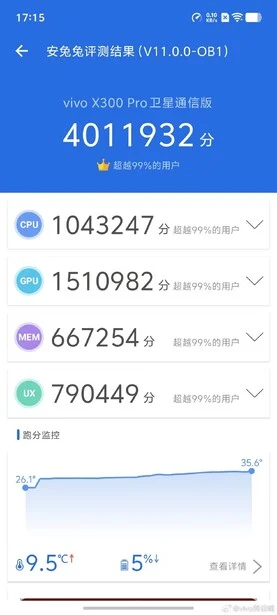
    Vivo’s executive Han Boxiao shared on Weibo that the Vivo X300 Pro, which runs on the Dimensity 9500, achieved an outstanding score of 401,1931 on AnTuTu. However, it’s worth noting two important points. First, this score comes from AnTuTu’s new V11 beta, making it not directly comparable to devices tested with V10. Additionally, scores from pre-release devices often exceed what users typically see on their final models.

    Performance Comparison

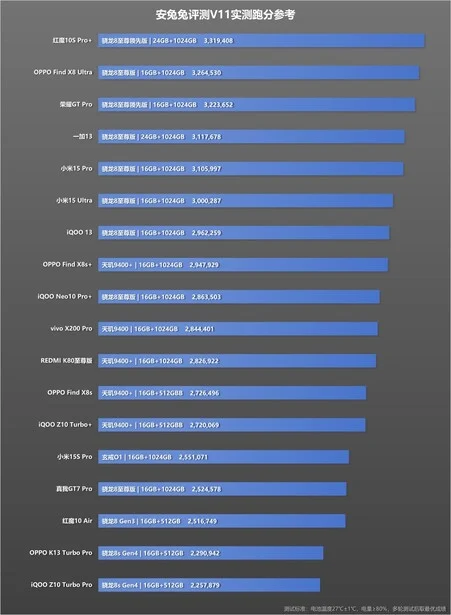
    The Vivo X300 Pro demonstrates a notable 40% increase in overall performance when compared to last year’s Vivo X200 Pro, which had a Dimensity 9400 and achieved a total score of 2,884,401. To put things into perspective, the highest scoring Android device on the list, the RedMagic 10S Pro with Snapdragon 8 Elite Leading Version, scores 3,319,408.

    Despite the absence of detailed AnTuTu V11 score breakdowns, leaker Digital Chat Station has suggested that the Dimensity 9400 scores approximately 850,000 in CPU performance and around 100,000 on the GPU side. In contrast, the Vivo X300 Pro excels with scores of 1,043,247 for CPU and 1,510,982 for GPU, indicating a substantial 22% improvement in CPU performance and a remarkable 51% enhancement in GPU performance.

    Source:
    Link


  • New RedMagic Gaming Tablet Ranks First in AnTuTu Performance

    New RedMagic Gaming Tablet Ranks First in AnTuTu Performance

    Key Takeaways

    1. AnTuTu released the top 10 flagship tablets based on average benchmark scores in July 2025.
    2. The RedMagic gaming tablet, known as Astra globally, has secured the top position in the current rankings.
    3. There were only minor positional shifts compared to the previous ranking, with no new entries in the lineup.
    4. AnTuTu’s performance rankings highlight the strength and competitiveness of flagship tablets.
    5. The changes in ranking reflect ongoing advancements in tablet technology.


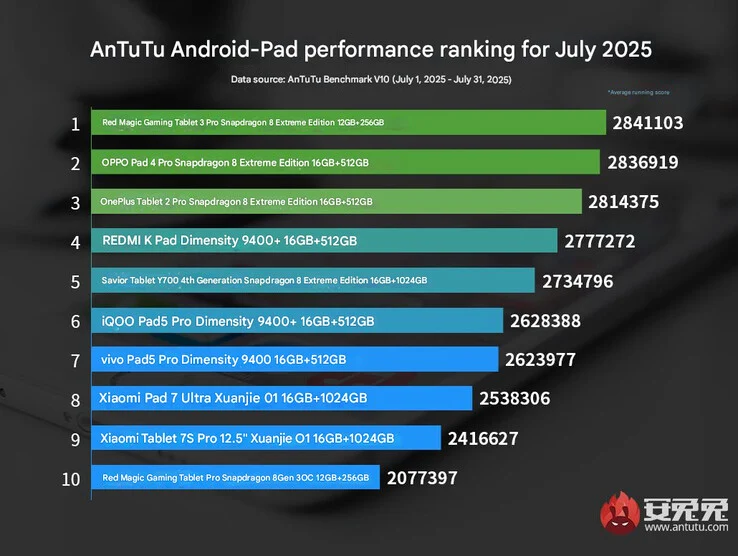
    In July 2025, AnTuTu shared not only the top 10 flagship phones with the best average benchmark scores but also the leading flagship tablets. The new RedMagic gaming tablet, known as Astra in the global market and available on Amazon, didn’t quite make it in the previous ranking, but it has now taken the top spot in the current leaderboard.

    Performance Rankings

    The other tablets that have achieved a spot in the AnTuTu flagship tablet performance chart are listed below. When we compare this latest performance ranking to the previous one, we notice only minor positional shifts. There are no new entries in the lineup. For more details on the updated leaderboard, check out the image attached below.

    Insights from AnTuTu

    AnTuTu has provided valuable insights, and their performance rankings show the strength of these flagship tablets. It’s interesting to see how the competition plays out, especially since the Astra has made such a significant leap. Overall, the changes in ranking reflect the ongoing developments in tablet technology.

    Source:
    Link


  • OnePlus 13T Achieves Top AnTuTu Benchmark Scores Before Launch

    OnePlus 13T Achieves Top AnTuTu Benchmark Scores Before Launch

    Key Takeaways

    1. OnePlus will soon release the OnePlus 13T, with its first appearance expected this month.
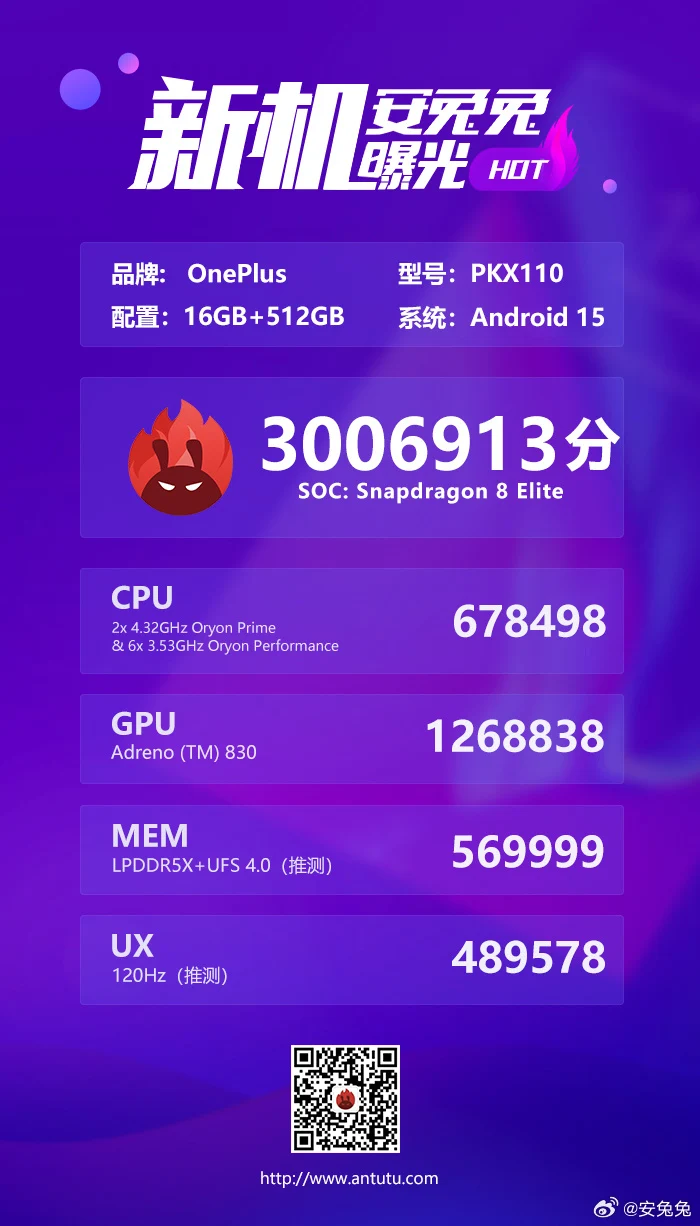
    2. The OnePlus 13T achieved an impressive benchmark score of 3,006,913 on AnTuTu.
    3. The device features a Qualcomm Snapdragon 8 Elite processor and an upgraded thermal management system for enhanced performance.
    4. It will come with up to 16 GB of LPDDR5X RAM and 512 GB of UFS 4.0 storage.
    5. The launch is anticipated at the end of the month in China, followed by a global release.


    OnePlus has recently announced its intention to release the OnePlus 13T soon. This compact flagship is set to make its first appearance this month and has already been seen on a benchmark for the very first time, showcasing some quite impressive results.

    Benchmark Details

    According to a post on Weibo from the official AnTuTu account, the OnePlus 13T has been spotted on the benchmark list. The device carries the model number “PKX110,” which has been confirmed by previous leaks and certification documents. Notably, the 13T achieved an impressive AnTuTu score of 3,006,913. For comparison, the top-rated device currently on AnTuTu’s official leaderboard, the OnePlus Ace 5 Pro, has a score of 2,890,600.

    Performance Insights

    Even though pre-launch benchmark scores can often be overly optimistic, this result still underlines the performance potential of the OnePlus 13T. Earlier leaks suggested that the phone would offer “radical performance” due to an upgraded thermal management system along with Qualcomm’s Snapdragon 8 Elite. Additionally, OnePlus’s official teaser emphasized its performance capabilities, indicating that the claims might not just be mere marketing hype.

    Specifications and Availability

    Alongside the notable benchmark score, the listing reveals that the OnePlus 13T will come equipped with up to 16 GB of LPDDR5X RAM and 512 GB of UFS 4.0 storage. The launch is expected to take place at the end of the month in China, with a global release anticipated shortly after.

    Source:
    Link


  • Dimensity 8400 Processor Leak: New Cores and Immortalis GPU

    Dimensity 8400 Processor Leak: New Cores and Immortalis GPU

    The anticipated replacement for MediaTek’s Dimensity 8300 series is said to be a cutting-edge 4 nanometer (4nm) chip featuring at least one of ARM’s newest mobile processor cores, as suggested in earlier reports. Recently, the well-known leaker Digital Chat Station has come forward, seemingly substantiating these claims and providing additional intriguing insights.

    Performance Specs

    The Dimensity 8400 is expected to come with a single-core cluster that operates at a remarkable 3.25GHz, along with three additional cores running at 3GHz and four more at 2.15GHz, totaling the usual eight cores. While these specs may seem impressive, it’s worth noting that they are actually slower than those found in the 8300-Ultra. This difference is attributed to the fact that the older model utilized Cortex-A715 or A510 cores, whereas the 8400 will be equipped with newly designed A725 cores, according to the latest information from the well-known leaker.

    Efficiency Insights

    In addition, Digital Chat Station has suggested that none of these cores will focus on efficiency mode. This means the performance is likely aimed at power rather than energy-saving features.

    The new System on Chip (SoC) will also feature a variant of the Immortalis-G720 GPU known as the MC7, which could operate at a speed of 1.3GHz. This upgrade is projected to help the 8400 achieve impressive scores of around 1.8 million on the AnTuTu benchmark.

    Future Devices

    As of now, the first smartphone to utilize the Dimensity 8400 remains unidentified. However, potential candidates include the rumored Oppo Find X8S, which may succeed the Redmi K70E or Realme Neo6 SE. Meanwhile, the expected launch date for this processor is December 23, 2024.

    Source: Link

  • In January 2024, the Oppo Find X7 claims top spot on AnTuTu list powered by Dimensity 9300 chip

    In January 2024, the Oppo Find X7 claims top spot on AnTuTu list powered by Dimensity 9300 chip

    MediaTek Chips Lead AnTuTu’s Top Lists for January 2024

    AnTuTu, the popular benchmarking platform, has released its updated monthly top lists for January 2024. According to their rankings, MediaTek chips dominate both the flagship and flagship killer categories.

    Oppo Find X7 Tops the Flagship Chart

    Taking the top spot on the flagship list is the Oppo Find X7. This smartphone is powered by a MediaTek Dimensity 9300 SoC, which is paired with LPDDR5x RAM and UFS 4.0 storage. The 16GB + 1TB variant of the Oppo Find X7 leads the AnTuTu January 2024 flagship list with an impressive score of 2209832 points.

    The Dimensity 9300 is the world’s first flagship smartphone mobile platform to exclusively use ARM big cores. It consists of 4 x Cortex-X4 and 4 x Cortex-A720 cores. The chip is fabricated on TSMC’s 3rd gen 4nm process and features a 12-core Immortalis-G720 GPU with hardware-level ray tracing support.

    Redmi K70E Dominates the Flagship Killer Roll

    In the flagship killer category, the Redmi K70E retains its position as the top player. This device houses a MediaTek Dimensity 8300-Ultra chipset, along with LPDDR5x RAM and UFS 4.0 storage. The 12GB + 512GB variant of the Redmi K70E secures the first place on the AnTuTu January 2024 flagship killer list, scoring 1382150 points.

    The Dimensity 8300 mobile platform utilizes the traditional ARM big.LITTLE architecture and features a CPU with 4 x Cortex-A715 and 4 x Cortex-A510 cores. Graphics performance is handled by the Mali-G615 MC6 GPU. The chip is manufactured using TSMC’s 2nd gen 4nm process, and the “Ultra” in the name indicates customization by Xiaomi.

    MediaTek Leads the Way

    When examining the top 10 lists, it becomes evident that MediaTek dominates the flagship killer chart with 8 devices. On the flagship roll, Qualcomm still maintains its position as a strong competitor with 6 devices.

    AnTuTu Benchmark Top Flagship Smartphones January 2024

    1. Oppo Find X7
    2. iQOO 12 Pro
    3. Asus ROG Phone 8 Pro
    4. Oppo Find X7 Ultra
    5. iQOO 12
    6. OnePlus 12
    7. Red Magic 9 Pro Plus
    8. iQOO Neo 9 Pro
    9. Vivo X100 Pro
    10. Vivo X100

    AnTuTu Benchmark Top Flagship Killer Smartphones January 2024

    1. Redmi K70E
    2. Realme GT Neo 5 SE
    3. Redmi Note 12 Turbo
    4. Oppo Reno 11
    5. iQOO Z8
    6. iQOO Neo 7 SE
    7. Redmi Note 12T Pro
    8. OnePlus Ace Racing Edition
    9. Redmi K60E
    10. Realme GT Neo 3
  • AnTuTu Records Impressive Performance by IQOO Neo 9 Pro’s 12GB+256GB Model

    AnTuTu Records Impressive Performance by IQOO Neo 9 Pro’s 12GB+256GB Model

    The iQOO Neo 9 Pro is set to make its debut in India on February 22nd. As the launch date approaches, the company has been teasing the device's key features. In a recent teaser, iQOO confirmed details about one of the configurations of the Neo 9 Pro and also revealed its AnTuTu score.

    According to the brand, the iQOO Neo 9 Pro with 12GB of RAM and 256GB of storage has achieved a score of over 1.7 million on AnTuTu benchmarks. However, it is still unclear how many variants of the Neo 9 Pro will be released in India. The previous model, Neo 7 Pro, was available in 8GB+128GB and 12GB+256GB variants with a starting price of Rs 34,999.

    The iQOO Neo 9 Pro is expected to be a tough competitor for the OnePlus 12R in India. The 12R comes in two options: 8GB+128GB for Rs 39,999 and 16GB+256GB for Rs 45,999. The Neo 9 Pro is expected to be available in two colors, Conqueror Black and Fiery Red.

    Moving on to the specifications, the iQOO Neo 9 Pro heading to India is said to be a rebranded version of the Neo 9 available in China. It is rumored to feature a 6.78-inch OLED 1.5K 144Hz display, a Snapdragon 8 Gen 2 chipset, LPDDR5x RAM, UFS 4.0 storage, and a 5,160mAh battery with 120W fast charging.

    For photography enthusiasts, the Neo 9 Pro will sport a 16-megapixel selfie camera on the front. On the back, it will feature an OIS-assisted Sony IMX920 50-megapixel main camera and an 8-megapixel ultra-wide lens. Other notable features of the Neo 9 Pro include an in-display fingerprint sensor, FunTouch OS 14-based Android 14, dual speakers, and an IR blaster.

    With its impressive specifications and high AnTuTu score, the iQOO Neo 9 Pro is shaping up to be a promising device in the Indian market. As the launch date approaches, more details about the device are expected to be revealed.

  • Asus ROG Phone 8 Pro: AnTuTu and Geekbench Scores Revealed

    Asus ROG Phone 8 Pro: AnTuTu and Geekbench Scores Revealed

    Asus Reveals Benchmark Scores for ROG Phone 8 Pro

    Asus is gearing up to introduce the highly anticipated ROG Phone 8 series of gaming smartphones in China on January 16. Ahead of the official debut, the brand has disclosed the benchmark results of the ROG Phone 8 Pro, offering insights into its performance capabilities.

    Impressive Benchmark Scores Unveiled

    As per Asus, the ROG Phone 8 Pro has achieved an exceptional score of 2,359,969 on AnTuTu benchmarks, showcasing its remarkable performance prowess. Furthermore, on Geekbench, the ROG Phone 8 Pro appears to have posted 7422 points in the multi-core test.

    Detailed Specifications and Features

    The ROG Phone 8 Pro is anticipated to feature the latest Snapdragon 8 Gen 3 chip. Rumored specifications for the Pro variant include a 6.78-inch AMOLED punch-hole display with FHD+ resolution. This display will offer a high refresh rate of 165Hz, brightness up to 2,500 nits, and will be shielded by Gorilla Glass Victus. It will also integrate an in-display fingerprint sensor for enhanced security.

    Powered by the Snapdragon 8 Gen 3 chipset, the device is set to house a robust 5,500mAh battery with 65W fast charging support. Users can expect generous storage choices with options for 16 GB or 24 GB of LPDDR5x RAM and 512 GB or 1 TB of UFS 4.0 storage. In terms of imaging capabilities, the phone will flaunt a 32-megapixel front camera and a rear camera setup comprising a 50-megapixel Sony IMX890 main sensor, a 13-megapixel ultra-wide lens, and a 32-megapixel telephoto camera offering 3x optical zoom.

    Standout Features and More

    Alongside its impressive specs, the ROG Phone 8 Pro will be enriched with several notable features. Operating on Android 14, the device promises a seamless and up-to-date user experience. It will sport an IP68-rated chassis, ensuring resistance to dust and water. Audio enthusiasts will be pleased with the inclusion of a 5-magnet speaker and a 3.5mm audio jack for premium sound output. Additionally, the phone’s rear panel will showcase an RGB-lit logo, contributing a touch of elegance to the overall aesthetics.

    The ROG Phone 8 Pro seems poised to deliver an extraordinary gaming experience with its formidable performance, advanced specifications, and distinct features. Followers of Asus and gaming aficionados alike are eagerly anticipating its official launch to delve into the next frontier of mobile gaming.