

Key Takeaways
1. Arm has introduced new CPU and GPU cores for smartphone SoCs, including the Lumex C1 Ultra, C1 Premium, C1 Pro, and C1 Nano, set to launch in 2025-26.
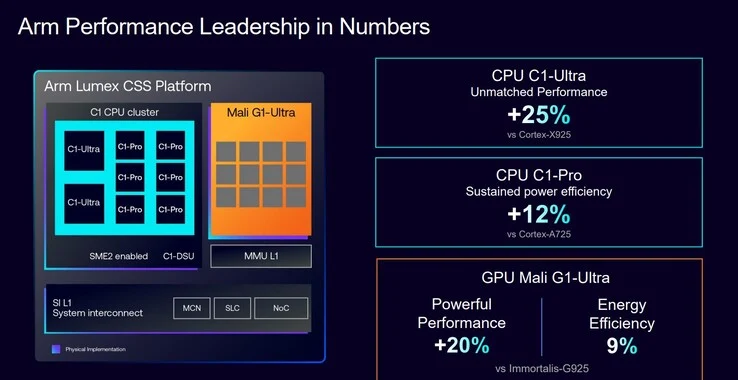
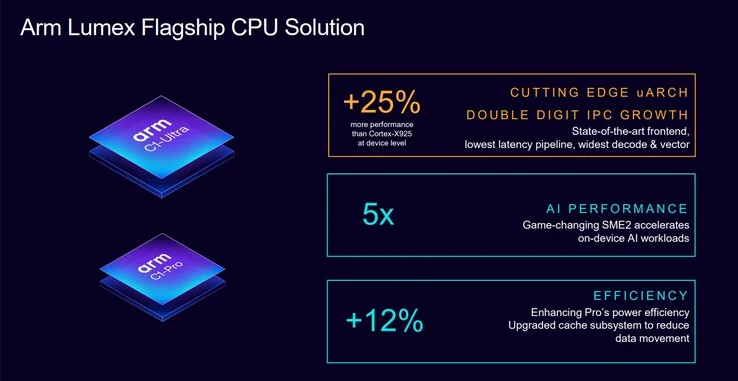
2. The Lumex C1 Ultra offers up to a 25% performance increase over the Cortex-X925, while the C1 Pro is 12% more power efficient than the Cortex-A725.
3. All new cores will utilize Arm’s v9.3 architecture, featuring the SME2 instruction set, which can enhance AI performance by up to 5x and improve power efficiency by 3x.
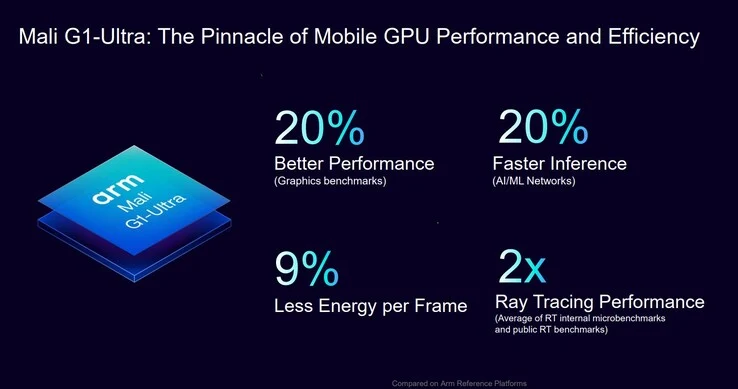
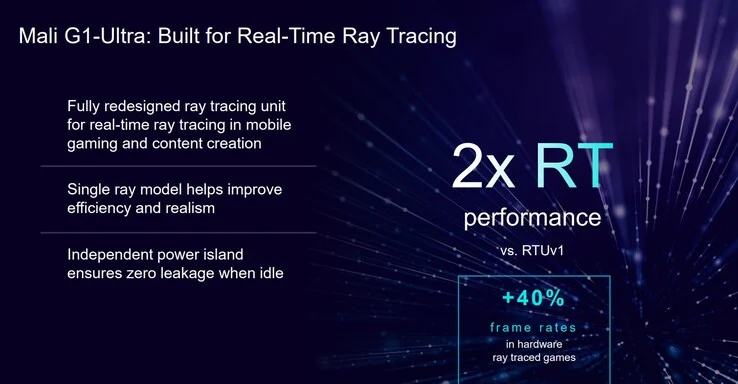
4. The GPU branding has changed from Immortalis to Ultra, with the Mali G1-Ultra promising a 20% performance boost and a 2x improvement in ray tracing capabilities.
5. The competitive landscape includes contenders like Apple’s GPUs, Qualcomm’s Adreno 840, and Samsung’s Xclipse 950, making the market highly competitive.
Arm has unveiled its latest CPU and GPU cores designed for smartphone SoCs set to launch in 2025-26. The Dimensity 9500 from MediaTek is expected to be among the first to implement these new technologies, closely followed by Samsung’s Exynos 2600. In a significant shift, Arm has revamped its naming conventions for CPUs and GPUs, moving away from familiar names like Cortex and Mali to a more streamlined yet somewhat perplexing system.
New Core Classifications
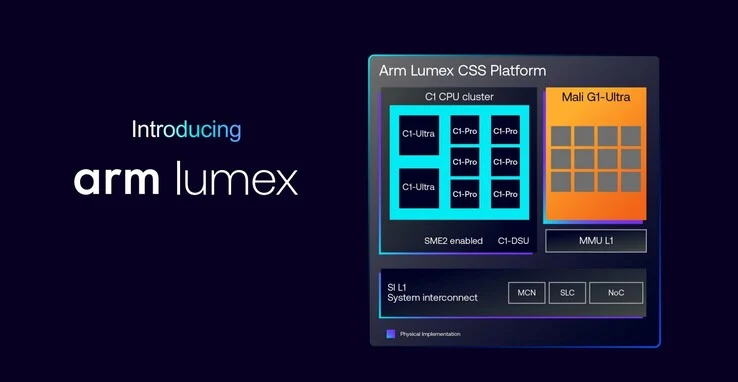
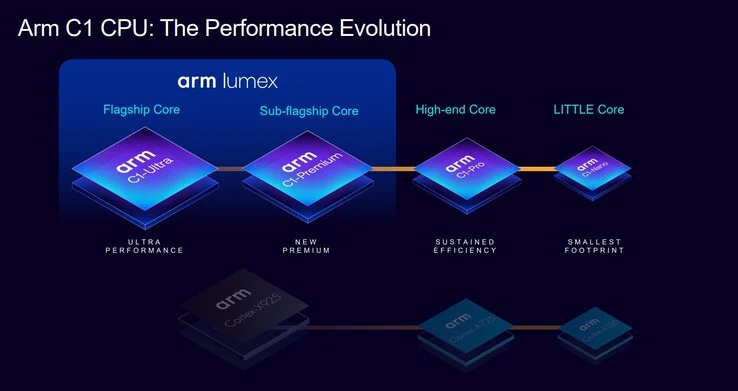
The newly designed smartphone SoC cores will be divided into four distinct categories: Lumex C1 Ultra, Lumex C1 Premium, Lumex C1 Pro, and Lumex C1 Nano. The C1 Ultra serves as the successor to the Cortex-X925, while both the C1 Premium and C1 Pro act as ‘middle’ cores, succeeding the Cortex-A725. Meanwhile, the C1 Nano is the next iteration of the Cortex-A520. Arm showcased a reference design that includes two Lumex C1 Ultra cores along with a six-core cluster of Lumex C1 Pro, potentially giving us a first look at the Dimensity 9500.
Performance Improvements
In terms of performance, Arm asserts that the Lumex C1 Ultra can be as much as 25% quicker than the Cortex-X925, and the Lumex C1 Pro features 12% improved power efficiency over the Cortex-A725, thanks to notable gains in IPC. Competitors for these cores include successors to Apple’s Everest and Sawtooth cores found in the A19/A19 Pro and Qualcomm’s upcoming Nuvia cores, which are expected to launch alongside the Snapdragon 8 Elite 2/Snapdragon 8 Elite Gen 5.
Architectural Advancements
All four cores—the Lumex C1 Ultra, Lumex C1 Pro, Lumex C1 Premium, and Lumex C1 Nano—will be built on Arm’s latest v9.3 architecture. The most significant update is the introduction of the SME2 (Scalable Matrix Extension) instruction set. According to Arm, SME2 could provide up to a 5x performance boost in AI workloads, while also being 3x more efficient in terms of power consumption.
Arm’s GPU branding has transitioned from Immortalis to Ultra, although it remains unclear what the names for lower-tier models will be. An earlier Geekbench listing for the Dimensity 9500 has already revealed this new branding. Arm claims that the Mali G1-Ultra can deliver a 20% enhancement in overall performance and a 2x boost in ray tracing capabilities, translating to a potential 40% increase in frames per second (FPS).
Competitive Landscape
Despite these impressive specifications, the competition is notably intense this time around. Alongside Apple’s GPUs, Qualcomm’s Adreno 840 and Samsung’s Xclipse 950 are also contenders, with the latter possibly being Samsung’s first set of in-house chips in recent years. While Arm has not provided a specific timeline for the release of these components, if recent leaks are to be believed, we can expect them to hit the market soon.
Source:
Link
Leave a Reply