Tag: Apple

  • Report: Apple developing two prototypes of foldable iPhones

    Report: Apple developing two prototypes of foldable iPhones

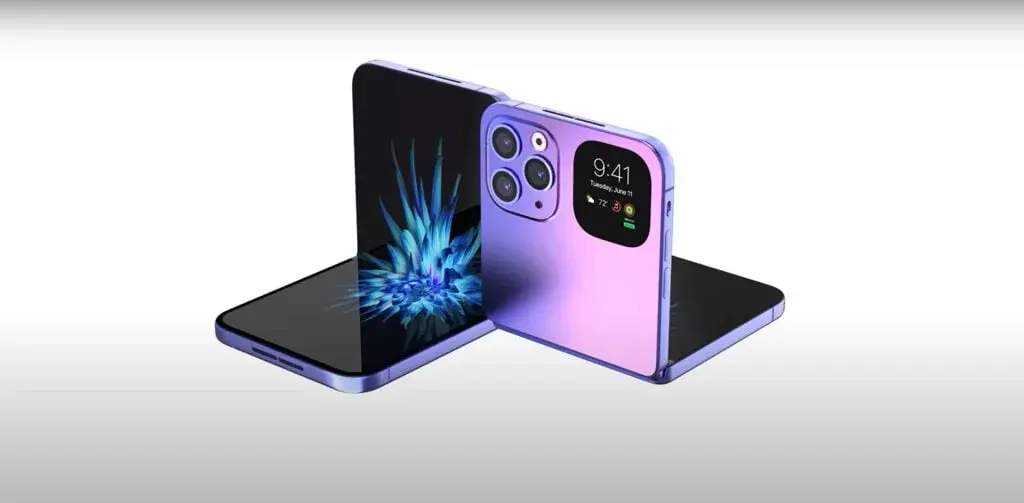
    Apple is reportedly in the early stages of developing foldable smartphone prototypes, according to recent reports from The Information. While a foldable iPad is expected to be released before a foldable iPhone, Apple is said to be exploring the idea of foldable iPhones that are only half as thick as current models.

    Foldable iPhone Prototypes

    The foldable iPhone prototypes are said to resemble the Samsung Galaxy Z Flip models in design. Apple is aiming to create a foldable iPhone that doesn’t look too thick when closed, and is considering adding an outward screen. However, engineers are facing challenges with components such as batteries and displays, making it difficult to meet these goals.

    Despite the challenges, Apple has reportedly discussed ordering components with Asian manufacturers for two different sizes of foldable iPhones. However, the project may be scrapped if it doesn’t meet Apple’s standards.

    Foldable iPad

    On the other hand, Apple is said to be focusing on developing a foldable iPad with an 8-inch screen, similar to the size of an iPad mini. The larger form factor allows for a thicker design and fewer durability concerns. However, the primary challenge for Apple is to eliminate the crease that forms with repeated folding, in order to create a completely flat screen for seamless interaction and Apple Pencil use.

    It’s unclear whether Apple has found a solution to this issue yet. As a result, it seems that Apple’s foldable devices are still a few years away from becoming a reality.


  • New AI Tool by Apple Simplifies Photo Editing Using Text Prompts

    New AI Tool by Apple Simplifies Photo Editing Using Text Prompts

    Apple has once again pushed the boundaries of technology, this time transforming the way we think about photo editing. With the introduction of the MGIE model, a collaboration with the University of California, Santa Barbara, Apple is making it simpler for everyone to tweak photos with just a few words. Gone are the days when mastering complex software was a prerequisite for photo editing. Now, whether you want to crop, resize, flip, or add a bit of flair with filters, all you need is to describe your vision.

    Revolutionizing Photo Editing with MGIE

    The brilliance of MGIE, which stands for MLLM-Guided Image Editing, lies in its ability to understand and execute both straightforward and intricate edits through textual prompts. Imagine wanting a bluer sky in your photo; MGIE interprets this request into a specific action, like enhancing the brightness of the sky, to fulfill your request accurately.

    From Pizza to Tigers: Unleashing Your Imagination

    One of the most captivating examples provided involves transforming an image of pepperoni pizza into a healthier version by simply asking the model to “make it more healthy,” which magically adds vegetable toppings to the pizza. Similarly, a dim picture of tigers can be brightened with a prompt to add more contrast, showcasing the model’s ability to bring your imagination to life.

    Apple’s Venture into AI Editing Space

    Apple’s venture into the AI editing space with MGIE is a notable shift, especially when considered alongside giants like Adobe, which has led the charge with its own AI editing tools. While Apple has traditionally been more reserved in the generative AI arena, this innovation marks a significant step towards integrating more AI features into its products, as hinted by CEO Tim Cook. Making MGIE accessible through GitHub and a web demo on Hugging Face Spaces opens up new possibilities for creatives and tech enthusiasts alike.

  • Improved Persona function in Apple visionOS 1.1 beta enhances Vision Pro’s capabilities

    Improved Persona function in Apple visionOS 1.1 beta enhances Vision Pro’s capabilities

    Apple Releases visionOS 1.1 Developer Beta with Enhanced Persona Feature

    Apple has rolled out the first developer beta version of visionOS 1.1 for Vision Pro, introducing significant updates focused on optimizing Persona, the personal virtual image feature. Upon installing visionOS 1.1, Apple Vision Pro users will be prompted to re-enter Persona to experience the “latest cosmetic updates” included in the update. Social media platforms have already been abuzz with users sharing screenshots of the updated Persona, noting the detail enhancement and lifelike appearance.

    Improved Realism with Persona

    The new version of Persona showcases more detailed and realistic avatars, reflecting Apple’s commitment to continually improving the user experience on its VR platform. Notably, some users have observed new prompts in visionOS 1.1 Beta 1, indicating that Apple recommends users refrain from holding the headset themselves when entering Persona. Instead, users are advised to place the headset high or allow others to hold it during the setup process.

    Continued Optimization and EyeSight Functionality

    Despite these enhancements, Apple still designates Persona as a “beta” feature within visionOS 1.1, suggesting ongoing optimization efforts in future updates. Persona is described by Apple as a “real spatial representation” capable of capturing users’ facial expressions and hand movements in real time. This feature becomes particularly useful during Vision Pro’s video calls, where Persona can replace the user’s real face, providing privacy while maintaining engagement.

    When setting up Persona, the system also captures the user’s eyes for use in the “EyeSight” function. This functionality allows the other party in a video call to see a virtually rendered image of the user’s eyes on the Vision Pro’s external display, enhancing the sense of connection and realism during communication.

    Advancing VR Capabilities

    Overall, the introduction of visionOS 1.1 with optimized Persona underscores Apple’s dedication to advancing the capabilities and usability of its VR platform.

  • Passwords in Apple Vision Pro Cannot be Changed Without Visiting Apple Store

    Passwords in Apple Vision Pro Cannot be Changed Without Visiting Apple Store

    Apple Vision Pro has been released with a price tag of $3,499. Undoubtedly, the device has managed to capture the attention of technology enthusiasts worldwide. This technology, which merges the real and virtual worlds, has piqued the interest of many. However, the $3,499 price is quite substantial, and it’s beneficial to be aware of every detail before spending such an amount. For instance, did you know that you can’t reset the Apple Vision Pro password without visiting an Apple store? Here are the details…

    Why Apple Vision Pro Passwords Require a Store Visit

    If you often struggle to remember your passwords, Apple Vision Pro may not be the best option for you. Currently, there’s no way to reset the password for the mixed reality headset without going to the Apple Store. If you forget the device’s password or need to reset it, you’ll have to either go to the Apple Store in person or send the device to Apple, even if you don’t do it yourself.

    Apple Vision Pro is still a new product for all of us. Therefore, the company is keeping security measures at a maximum and aims for it to be a highly secure device. Hence, there might be a simple security concern behind this move. Nevertheless, considering how often users forget their passwords, there is a high probability that Apple may backtrack on this issue soon.

    Important Considerations Before Purchasing Apple Vision Pro

    However, it should be noted that the only detail you need to know before paying $3,499 for Vision Pro is not just that you have to take it to the Apple Store to reset the password. This first-generation headset is also quite fragile. For instance, a recent iFixit teardown revealed a complex design and highlighted the difficulty of repairs. Additionally, we know that the laminated front glass easily scratches and costs $799 to repair. Therefore, it’s advisable to be aware of all the negative aspects before making such an expenditure.

  • Google and Mozilla Take Offense at Apple’s Browser Rule Modification

    Google and Mozilla Take Offense at Apple’s Browser Rule Modification

    Apple is making some big changes to how browsers work on iPhones and iPads in Europe, and it’s all because of new rules from the European Union. These rules are supposed to help other companies compete better with big ones like Apple. Now, browsers like Chrome and Firefox can use their own technology on iOS devices, but there’s a catch – this is only happening in Europe.

    Apple’s Changes for European Browsers

    The European Union is responsible for this change. Google and Mozilla, the companies behind Chrome and Firefox, aren’t too happy about this. They say that by making these changes only in Europe, Apple is making things complicated for them. They’ll have to work on two different versions of their browsers, one for Europe and another for the rest of the world. Mozilla thinks this is unfair and makes it hard for any browser other than Safari to compete.

    Discontent Among Google and Mozilla

    Google’s Chrome team agrees. They think Apple’s not really trying to make it easier for other browsers to compete on iPhones and iPads. Right now, if you download Chrome or Firefox on an iOS device, you’re basically using Safari with a different look. That’s because Apple hasn’t let other browsers use their own tech until now.

    Competition and Safari’s Improvement

    People have been complaining about Safari for a while, saying it’s slow to add new features that other browsers have. But Safari is getting better, and having more competition could push it to improve even faster. The problem is, with Apple’s new rules, this competition is only happening in Europe.

    Even though these changes are a big deal for Europe, they don’t help everyone else. Google and Mozilla have been getting ready for this by working on their browsers for iOS, hoping to bring new features to users. But with Apple’s restrictions, it looks like the rest of the world will have to wait to see any real change in how they browse the web on their iPhones and iPads.

  • Supply chain issues push MicroLED Apple Watch delays beyond 2026

    Supply chain issues push MicroLED Apple Watch delays beyond 2026

    Apple‘s plans to transition to Micro LED technology for its Apple Watch series may face delays until after 2027 due to challenges in finalizing the supply chain for the necessary components. This upgrade aims to replace OLED displays in Apple Watch models, offering improved lifespan, brightness, and efficiency.

    MicroLED Apple Watch Now Projected to Launch in 2027

    Last year, initial reports suggested Apple might introduce Micro LED technology in its Apple Watches by the end of 2024. However, projections have been postponed, and now the expected timeline for this transition is not before the first quarter of 2026, as per market research firm TrendForce.

    High Production Costs and Lower Yield Rates Pose Challenges

    The primary challenge in Apple’s move to Micro LED technology is the high production costs and lower yield rates. The manufacturing cost for a Micro LED display for the Apple Watch could be as high as $150, in contrast to the current $38 cost for OLED displays. This significant cost difference raises concerns about the retail pricing of future Micro LED Apple Watches, potentially positioning them at a much higher price point compared to current models and even OLED iPhones.

    Advantages of Micro LED Technology

    Despite these challenges, Apple’s interest in Micro LED technology is driven by its advantages over OLED, including the potential for enhanced display quality on smaller screens. With a feasible pixel density range of 300-400 PPI, Micro LED offers a suitable upgrade path for the wearable device.

    Collaboration with Suppliers to Overcome Obstacles

    Apple is reported to be collaborating with various suppliers to overcome these obstacles, including Epistar and Osram for wafer and chip production, LuxVue for backplane technology, and LG Display and ITRI for additional componentry. However, without a finalized supply chain, the path to mass production remains uncertain.

    The Future of Smartwatch Displays

    As the industry watches Apple’s efforts to innovate within its wearable lineup, the potential shift to Micro LED technology represents a significant investment in the future of smartwatch displays. However, with production costs and supply chain complexities posing significant challenges, consumers may have to wait longer than anticipated for the next big leap in Apple Watch technology.

  • Supply chain sources suggest Apple Vision Pro may launch in China in April

    Supply chain sources suggest Apple Vision Pro may launch in China in April

    Apple’s highly-anticipated augmented reality (AR) headset, known as the Vision Pro, is set to launch in the Chinese market in the coming months. According to reports from Wall Street News and supply chain insiders, the headset is expected to be available as early as April, with a deadline of May.

    Registration Process Nearing Completion

    Insiders also reveal that the registration process with China’s Ministry of Industry and Information Technology (MIIT) is almost complete. This suggests that the release of the innovative AR product in China is imminent.

    Tim Cook’s Statement

    Last week, Apple’s CEO, Tim Cook, visited an Apple store in New York. When asked about the release date of the Vision Pro in China, Cook simply responded with “soon.” This further indicates that the launch is just around the corner.

    Apple Vision Pro Key Specs

    The Apple Vision Pro is a cutting-edge headset that combines virtual and augmented reality for spatial computing. It boasts dual micro-OLED displays with high resolution and color accuracy. The device supports multiple refresh rates (90Hz, 96Hz, 100Hz) to deliver smooth visuals.

    When it comes to audio technology, the Vision Pro features Spatial Audio and a six-microphone array for immersive audio experiences. It also supports various audio and video formats. Connectivity options include Wi-Fi 6 and Bluetooth 5.3, while the custom operating system, visionOS, is specifically designed for spatial interactions and supports various input accessories.

    The headset is equipped with a range of hardware features, including cameras, tracking sensors, eye-tracking cameras, and LiDAR. These features ensure an interactive user experience. The Vision Pro also offers biometric authentication through Optic ID and supports AirPlay.

    During the launch, the Vision Pro will come with an exclusive lineup of 600 apps that are specifically designed for the headset. One notable addition is OpenAI’s ChatGPT app.

    Security Challenges and Connectivity

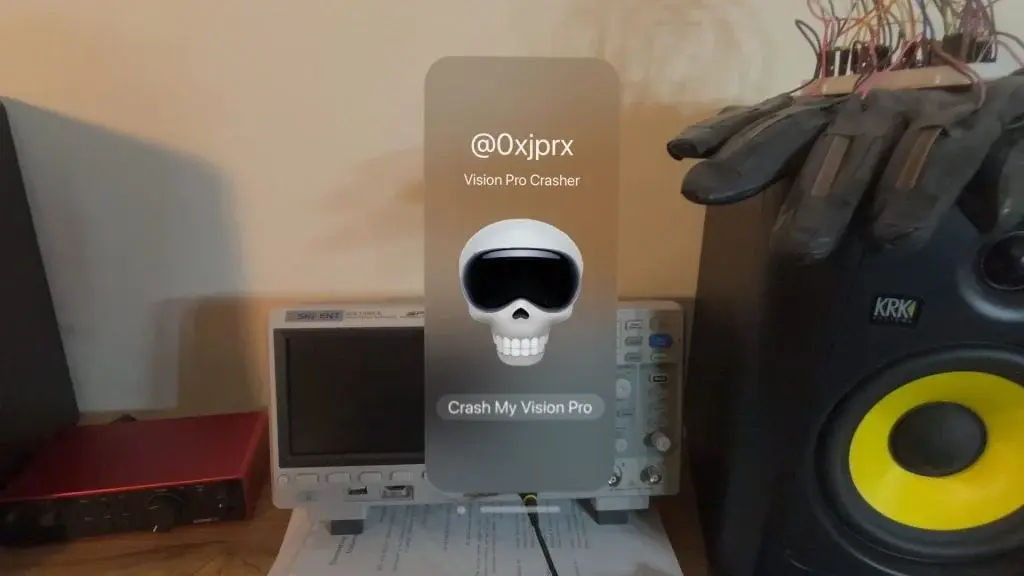
    However, the Vision Pro has faced some security challenges. There have been reports of a system crash caused by a kernel vulnerability. Additionally, the device still relies on the Lightning port for both charging and connectivity. Details about the battery pack specifications have also emerged.

    Pricing and Availability

    The pricing details for the Vision Pro in China have not been disclosed yet. However, with the registration process nearing completion, the headset is expected to be available to Chinese consumers very soon.

    Supply chain sources suggest Apple Vision Pro may launch in China in April
  • Easily Scratchable: Apple Vision Pro’s Front Glass Replacement Priced at $799 (~5,700 Yuan)

    Easily Scratchable: Apple Vision Pro’s Front Glass Replacement Priced at $799 (~5,700 Yuan)

    The much-anticipated Apple Vision Pro has officially launched in the United States, garnering attention from eager users. Initial tests showcased its laminated front glass, which is essentially a plastic layer on top of the glass. While the plastic layer may protect the glass from shattering, it is very susceptible to scratches.

    Scratch Vulnerability of the Apple Vision Pro

    Upon being scratched, the outer plastic layer will obstruct the view of the cameras through which you see the world. The $3499 Apple Vision Pro starts scratching at level 3!

    Youtube creator Jack Nelson from JerryRigEverything shared a teardown video today, focusing on the front glass covering the camera, sensor, and display of the Vision Pro. While laminated glass typically incorporates a plastic layer to enhance impact resistance, the Vision Pro’s design leaves this layer on the outside, making it highly prone to scratches.

    Scratch Tests and Results

    Tests employing Mohs hardness testing revealed that tools with a hardness level as low as 2 can leave light scratches on the Vision Pro’s front glass, with level 3 hardness tools causing deeper scratches. This contrasts sharply with most smartphone displays, which typically only show scratches at hardness levels of 6-7.

    As a consequence, everyday items such as keys, coins, and even dust pose a significant risk of leaving permanent marks on the Vision Pro’s front glass. To mitigate this issue, Apple includes a special protective case and polishing cloth in the product’s packaging. However, replacement of the front glass comes at a hefty cost of US$799 (~5,700 Yuan), underscoring the severity of potential damage.

    Drop Resistance of the Apple Vision Pro

    Despite this vulnerability, the outer plastic layer does offer an upside: enhanced drop resistance. Drop tests conducted by AppleTrack demonstrate that the front glass of the Vision Pro can endure multiple drops before succumbing to breakage, providing reassurance to users concerned about accidental impacts.

    While the Apple Vision Pro excels in one aspect, its vulnerability to scratches highlights the importance of proper handling and maintenance of the device. Apple CEO Tim Cook says this ‘special computing‘ device will soon launch in the Chinese market.

  • OpenAI’s ChatGPT app integrated with Apple Vision Pro

    OpenAI’s ChatGPT app integrated with Apple Vision Pro

    OpenAI has introduced its ChatGPT app for the new Apple Vision Pro headset, featuring the GPT-4 Turbo model. This allows users to engage with AI through the headset in a highly immersive augmented reality (AR) setting.

    ChatGPT App is Now Available on VisionOS

    The ChatGPT app on Vision Pro enables users to communicate with the AI in various formats, including text, voice, and visual inputs. It’s one of the first applications to utilize visionOS, Apple’s operating system for the Vision Pro, designed for seamless integration of digital content with the real world.

    The Apple Vision Pro includes advanced features such as Optic ID for biometric authentication through eye tracking and iris recognition, Spatial Audio for lifelike sound experiences, and VisionKit for app development. Although it’s not specified which features the ChatGPT app will use, there’s significant potential for enhanced AI interactions using text, speech, and visual inputs.

    Integrating ChatGPT with Vision Pro

    Integrating ChatGPT with Vision Pro marks a step towards more natural and intuitive interactions between humans and AI. Users can address complex issues or generate content by speaking instructions or showing problems to the AI via the headset’s camera. This integration could transform various tasks, from troubleshooting mechanical problems to meal planning and educational activities, through direct visual input.

    Making ChatGPT available on Vision Pro is part of OpenAI’s strategy to extend its generative AI technologies across multiple platforms. ChatGPT was previously made available on iPhone and iPad, broadening user access.

    The ChatGPT app is available for free on the visionOS App Store, with an optional subscription for advanced features and quicker responses. The store also offers over 600 other apps designed for a range of purposes, ensuring a rich ecosystem for Vision Pro users.

  • Apple Surpassed by Huawei as China’s Top-selling Smartphone Brand in Early 2024

    Apple Surpassed by Huawei as China’s Top-selling Smartphone Brand in Early 2024

    Huawei experienced an exciting growth in the Chinese smartphone market in 2023. Recently IDC report revealed that Huawei’s shipments increased by 36.2% in Q4, 2023 making it the fourth-largest smartphone brand in China.

    Huawei Tops Smartphone Sales in China in 2024

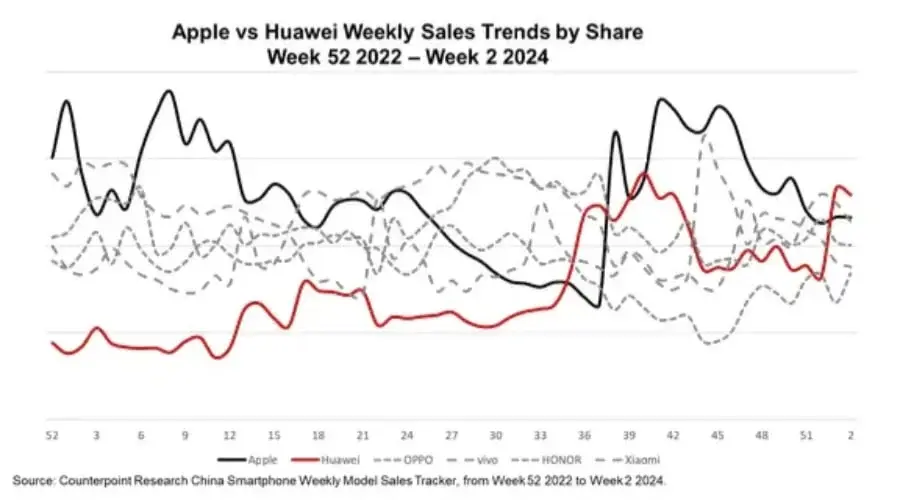
    A new report by Counterpoint Research now reveals that Huawei has clinched the top spot in smartphone sales during the first two weeks of 2024.

    The achievement is particularly noteworthy, not just because it has surpassed Apple, but also because it’s the first time since the 2019 US ban that Huawei has secured the leading position in terms of smartphone sales in China.

    Mate 60 Series Key to Huawei’s Success

    As expected, the Mate 60 series is the key to Huawei’s recent success in the Chinese market. Launched last year, the smartphones feature a Kirin 9000S processor and Harmony OS operating system. Mate 60 series is still said to be in high demand in the mainland, according to local distributors.

    Huawei’s Ambitious Plans for Harmony OS NEXT

    Looking ahead, the company has ambitious plans to launch Harmony OS NEXT; an operating system with Huawei’s own kernel which will phase out Android app support completely. Expected to launch by the end of 2024, its success will have a significant impact on Huawei’s smartphone business.

    Nova 12 Series Boosts Sales

    Except for the Mate 60, the Nova 12 series launched back in December has also helped Huawei to increase its sales numbers. These are all mid-range smartphones powered by Kirin processors, except for the Nova 12 Lite which has a Snapdragon 778G 4G chip inside.

    Chinese Brands Chipping Away at Apple’s Market Share

    According to a Counterpoint report, the high-end smartphone market in China saw a growth of 27% in 2023. While Apple continues to hold the top position, Huawei and other Chinese brands have been gradually chipping away at Apple’s market share since the third quarter of 2023.