Category: Video / Photo

  • Xiaomi Smart Outdoor Camera 4 Pro Launch: New Features & Specs

    Xiaomi Smart Outdoor Camera 4 Pro Launch: New Features & Specs

    Key Takeaways

    1. The Xiaomi Smart Outdoor Camera 4 Pro features three 5MP cameras with advanced zoom and motion tracking capabilities, offering 3K video quality.
    2. It allows remote monitoring through Xiaomi’s app, providing alerts for unusual activity and integrating with other smart home devices.
    3. The camera includes bright lights and a loud alarm to deter potential break-ins and is rated IP66 for weather resistance.
    4. It supports multiple video storage options, including microSD, cloud storage, and NAS, and works with both 2.4GHz and 5GHz Wi-Fi 6.
    5. Priced at CNY 449 (about $63), the camera is currently available in China, with no plans announced for release in other regions.


    Xiaomi has introduced the Smart Outdoor Camera 4 Pro Triple Camera Zoom edition in China. This latest flagship version is an upgrade from the Smart Outdoor Camera 4 that was first launched in this region back in July 2025.

    Advanced Camera Features

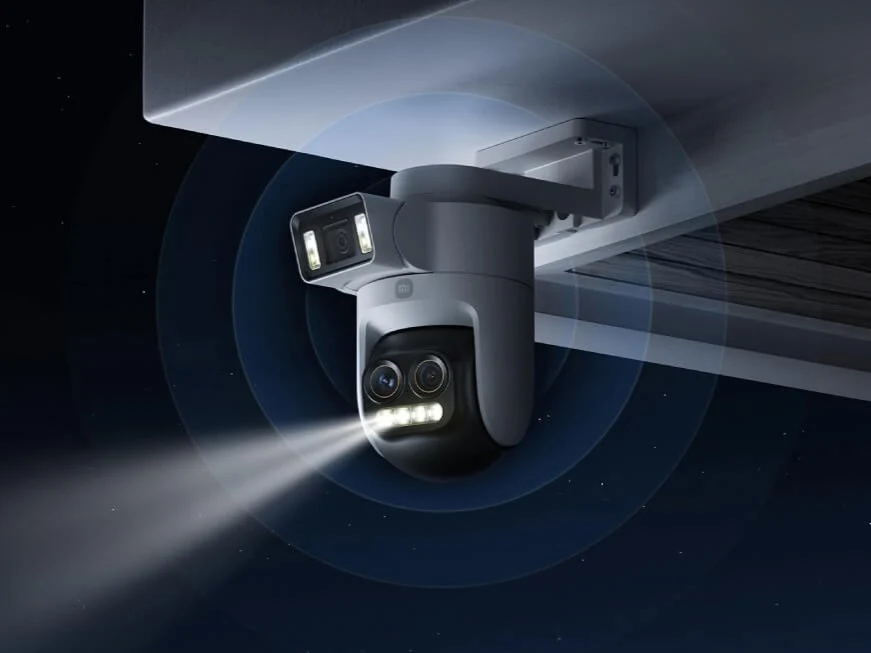
    The Smart Outdoor Camera 4 Pro includes three 5MP cameras that have an f/1.6 aperture. It is claimed to provide 3K video quality (2,880 x 1,620 px) with 9x hybrid zoom capabilities. The top camera can rotate a full 180° horizontally, while the lower camera can pan 355° horizontally and tilt 95° vertically. These features allow it to track motion effectively, automatically zooming in when people are detected. Additionally, it has eight lights that enable the camera to capture full-color video during the night.

    Remote Monitoring and Alerts

    Users can manage the Smart Outdoor Camera 4 Pro remotely using Xiaomi’s app, which also sends alerts for any unusual activity. To help prevent break-ins, the camera comes equipped with bright lights and a loud alarm. Furthermore, Xiaomi HyperOS Connect allows this security camera to link with other smart home gadgets. It supports both 2.4GHz and 5GHz Wi-Fi 6, and offers various video storage solutions, including microSD cards, cloud storage, or NAS. This outdoor camera is rated IP66 for weather resistance and can function at temperatures ranging from -30 to 60°C (~-22 to 140°F).

    Pricing and Availability

    The Xiaomi Smart Outdoor Camera 4 Pro Triple Camera Zoom edition is priced at CNY 449 (approximately $63) in China. The company has not yet revealed any plans for launching this product in other regions, such as Europe, where it offers similar models like the Outdoor Camera CW700S (currently priced at €78.42 on Amazon.de).

    Source:
    Link


  • Camp Snap CS-8: Retro Digital Camera with USB-C for $149

    Camp Snap CS-8: Retro Digital Camera with USB-C for $149

    Key Takeaways

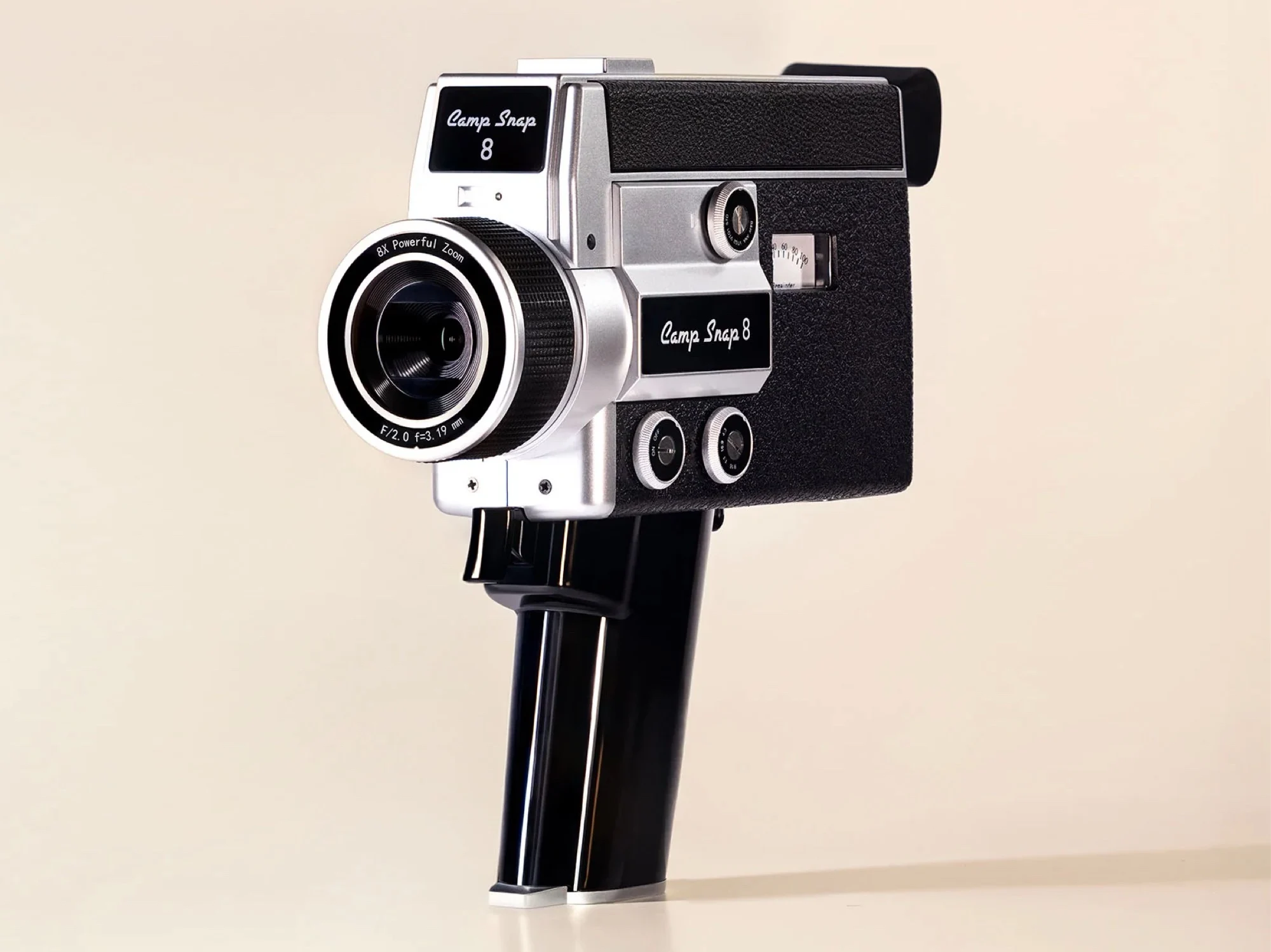
    1. The CS-8 camera by Camp Snap is inspired by the classic Kodak Super 8 and features a nostalgic design with a handgrip and trigger for easy video recording.
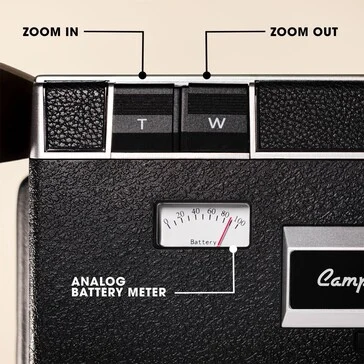
    2. It includes analog indicators for storage and battery levels, enhancing the analog experience despite having an electronic viewfinder and no screen.
    3. Users can apply video filters and adjust the aspect ratio (16:9, 4:3, 9:16) using a rotary dial.
    4. The camera offers an 8x digital zoom, but potential buyers should manage expectations regarding video quality based on sample clips.
    5. The CS-8 is available for preorder at $149, with shipments starting in mid-September, and shipping is free to many countries, though additional fees may apply.


    With the CS-8, Camp Snap has introduced a digital video camera that takes cues from the classic Kodak Super 8. This camera features a nostalgic design, complete with a handgrip and a trigger that can be easily pressed by the index finger to initiate and halt video recording. This design makes capturing short clips a breeze.

    Unique Features

    One standout aspect of the CS-8 is its analog indicators located on the sides, which reveal how much storage is left on the SD card as well as the battery level. Although the camera comes with an electronic viewfinder, it lacks a screen entirely, which enhances the overall analog experience. Additionally, a rotary dial on the side lets users enable video filters, allowing for recordings in black-and-white or sepia tones, for example.

    Video Options and Quality

    Users can also adjust the aspect ratio using a rotary dial, with options for 16:9, 4:3, and even 9:16 for portrait or square videos. The camera boasts an 8x zoom, but the label on the lens indicates that this is purely a digital zoom. Generally, potential buyers should temper their expectations regarding video quality, as the brief sample clips showcased on the product page suggest. The camera does include microphones and features a built-in battery that can be charged through USB-C.

    The Camp Snap CS-8 video camera is currently available for preorder on the official website, with shipments anticipated to begin in mid-September. The price is set at $149 with a promotional discount, but it will rise after the launch period. Shipping is complimentary to numerous countries, though extra import fees and taxes may be applicable.

    Source:
    Link


  • DJI Neo Rival HoverAir Drone with Waterproofing and Display Teased

    DJI Neo Rival HoverAir Drone with Waterproofing and Display Teased

    Key Takeaways

    1. DJI faces increasing competition from Insta360 and HoverAir in the drone market.
    2. Insta360 has announced a new product that may rival DJI’s Mini 4 Pro and Mini 5 Pro.
    3. HoverAir is developing a new drone, likely named the Aqua, which features waterproof capabilities.
    4. The HoverAir Aqua is designed to float on water and includes a display that may function as a viewfinder.
    5. HoverAir plans to reveal the Aqua and its accompanying remote control later this month.


    It appears that DJI is facing competition not only from Insta360 but also from HoverAir, which is gearing up to launch new drone models. Recently, Insta360 presented a new product that leaks suggest will compete with DJI’s Mini 4 Pro and Mini 5 Pro. Now, HoverAir seems to be working on an alternative to the DJI Neo, which is currently priced at $199 on Amazon.

    Teasers and Speculations

    In the past few days, HoverAir has released some intriguing teasers that showcase a new drone along with an official accessory. As noted by Igor Bogdanov, this accessory closely resembles the RC Track, which rumors suggest DJI may have cancelled. In contrast, it looks like HoverAir’s small remote control will be launched at the same time as the new drone.

    Introducing the Aqua

    The upcoming drone is expected to be called the HoverAir Aqua, likely due to its waterproof features. According to a recent Instagram post from HoverAir, the Aqua can float on water without sustaining any damage. The visuals suggest that this drone has the capability to shoot vertically, although it’s not clear how it will manage to take off from the water. Interestingly, HoverAir has also included a small display on the drone, which appears to work as a viewfinder at first glance. HoverAir is poised to fully unveil the Aqua later this month.

    Source:
    Link


  • Vivo X200 Ultra Dominates Samsung, Apple, Oppo Flagships

    Vivo X200 Ultra Dominates Samsung, Apple, Oppo Flagships

    Key Takeaways

    1. Vivo X200 Ultra and iPhone 16 Pro Max tied for first in studio images with 14 points.
    2. Vivo dominated in daytime portraits, scoring 13 points, and maintained a strong performance in low-light portraits with another 13 points.
    3. Vivo excelled in additional categories for daylight and low-light portrait videos, achieving maximum points in both.
    4. The Pixel and Sony Xperia 1 VII ranked lowest in the evaluation, finishing in eighth andninth place, respectively.
    5. Vivo X200 Ultra previously excelled in zoom photography among flagship devices, indicating its overall camera capabilities.


    In this evaluation, Versus analyzed nine top-tier smartphones using the Lumix S5II mirrorless camera as a benchmark. The assessment was segmented into three primary categories: studio images, daytime portraits, and low-light portraits. Throughout the evaluation, the Pixel and Sony Xperia 1 VII quickly secured their spots, finishing in eighth and ninth place, respectively.

    Performance in Studio Shots

    During the studio image segment, the Vivo X200 Ultra shared the top spot with the iPhone 16 Pro Max, both earning 14 points. In the daytime portrait category, Vivo once again took the lead, scoring 13 points. The low-light portrait section saw Vivo maintaining its dominance with another 13 points. Versus added two additional categories: daylight portrait video and low-light portrait video, where Vivo excelled, achieving the maximum points in both.

    Overall Ranking in Portrait Photography

    Vivo’s success is not merely a coincidence—our review of the Vivo X200 Ultra highlights its exceptional capabilities in portrait photography. In a previous assessment we reported, the X200 Ultra was crowned the champion of zoom photography among the same lineup of flagship devices, although Sony was not included in that comparison.


  • DJI Mini 5 Pro Leaks: 1-Inch Camera Sensor and Release Delay

    DJI Mini 5 Pro Leaks: 1-Inch Camera Sensor and Release Delay

    Key Takeaways

    1. DJI has launched the Osmo 360, entering the 360-degree action camera market, competing with GoPro Max 2 and Insta360 X5.
    2. The Mini 5 Pro is expected to feature a 1-inch CMOS sensor, capable of recording 4K videos at 120 FPS, with a 48 mm telephoto mode.
    3. The flight time for the Mini 5 Pro is anticipated to be 36 minutes, slightly increasing from its predecessor.
    4. The release date for the Mini 5 Pro has been delayed, now projected for September instead of the initially planned August 7.
    5. Due to trade conflicts, the Mini 5 Pro and other DJI drones may not be available in the US market.


    DJI has launched the Osmo 360, marking its entry into the 360-degree action camera market. Competing with the GoPro Max 2 and Insta360 X5 (currently priced at $549 on Amazon), the Osmo 360 is part of a series of new products DJI is expected to unveil this summer and fall. Some of these items belong to the Osmo line, and there are hints that DJI might also be ready to update its Mini 4 Pro drone soon.

    New Mini 5 Pro Details Emerge

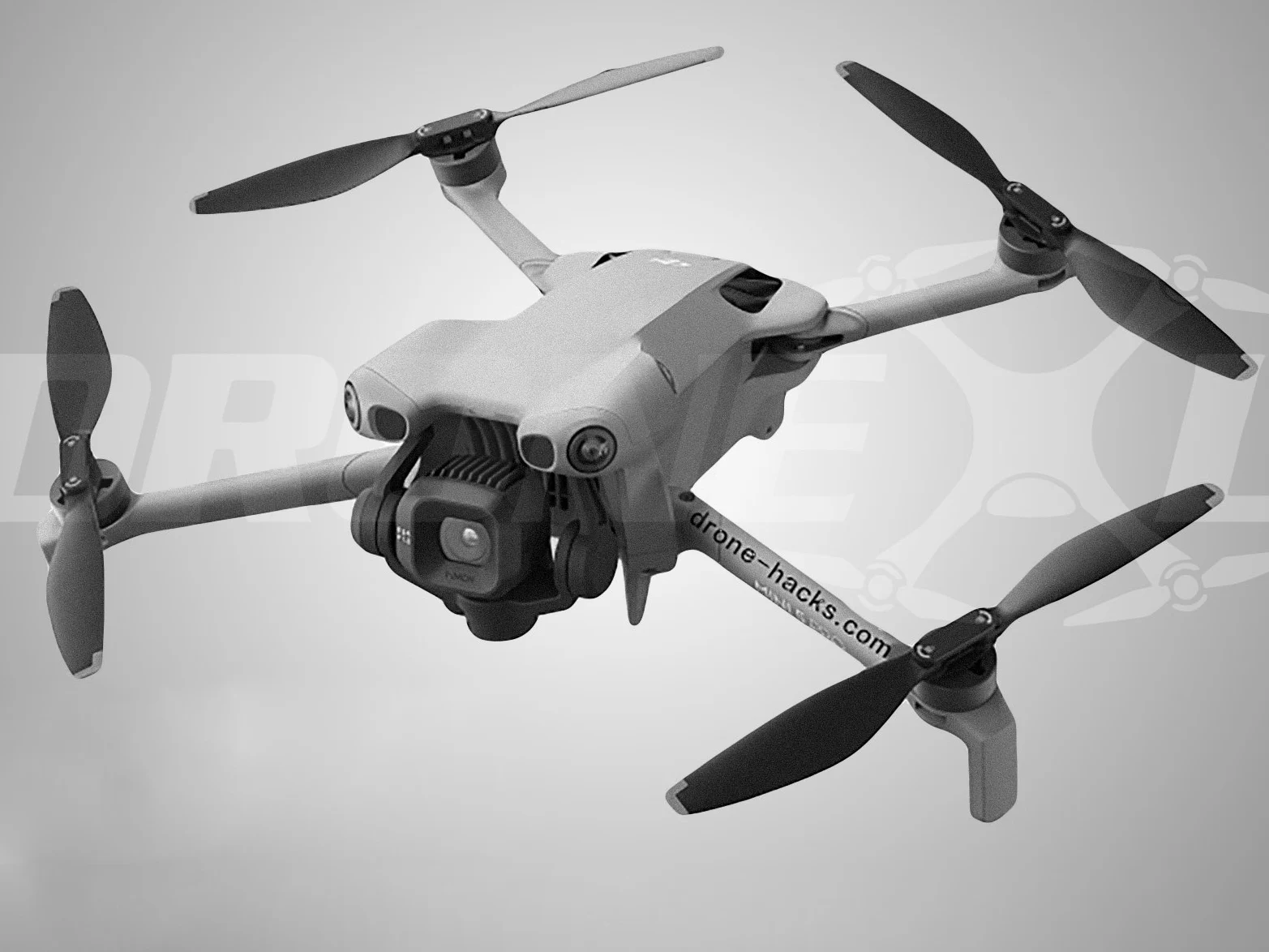
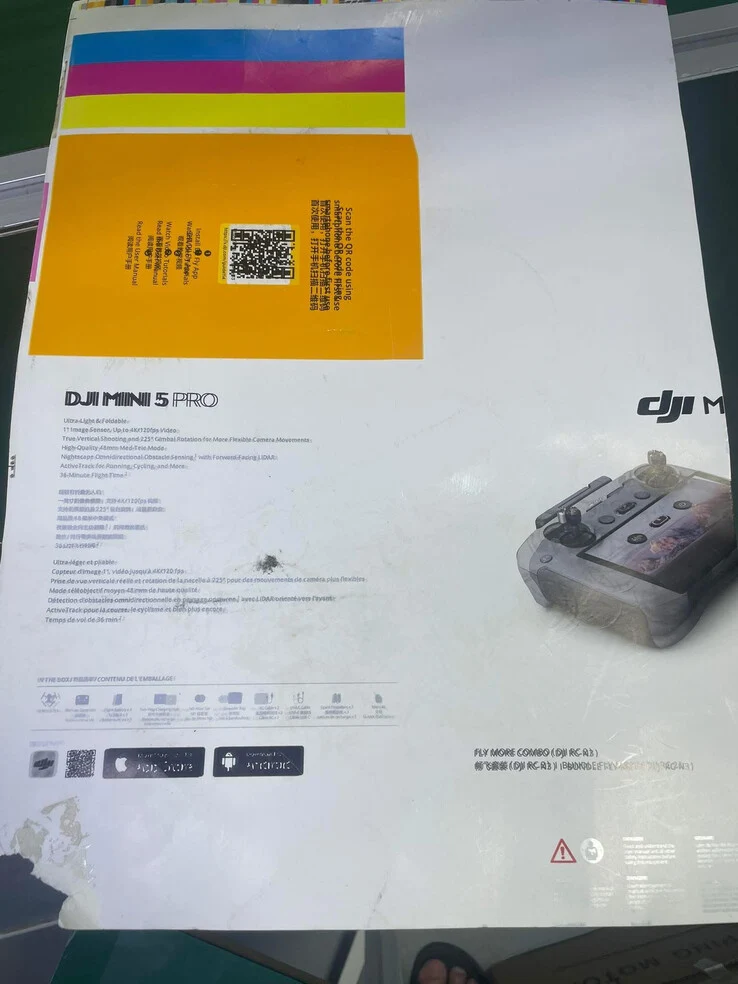
    Recently, alleged retail packaging and a high-resolution image of the Mini 5 Pro have been leaked online, providing a sneak peek into its features. First shared by @KietN7650 on X and reportedly from an insider, this image has been deemed trustworthy by leaker Jasper Ellens for now. The details suggest that the Mini 5 Pro will feature a 1-inch CMOS sensor capable of recording 4K videos at 120 FPS, with a 48 mm telephoto mode likely achieved through in-sensor cropping.

    Flight Time and Features

    The Mini 5 Pro is also expected to have a flight time of 36 minutes, offering a slight 2-minute increase over its predecessor. The image reveals a comprehensive list of key specifications that highlight its advanced capabilities.

    However, according to Jasper Ellens, the Mini 5 Pro’s release date has changed. It will no longer debut on August 7, as he initially reported. Considering that DJI did not release a teaser by July 31, it now seems clear that the launch will be delayed beyond Ellens’s earlier timeline.

    Upcoming Release Date

    In a recent update on DroneXL, Ellens mentioned that the Mini 5 Pro is now slated for a September release. Although he didn’t specify an exact date, he hinted that it could be launched around the same time as the Neo 2. Unfortunately, due to the intensifying trade conflict between China and the United States, it appears that DJI will not be making either drone available in the US market.

    Source:
    Link


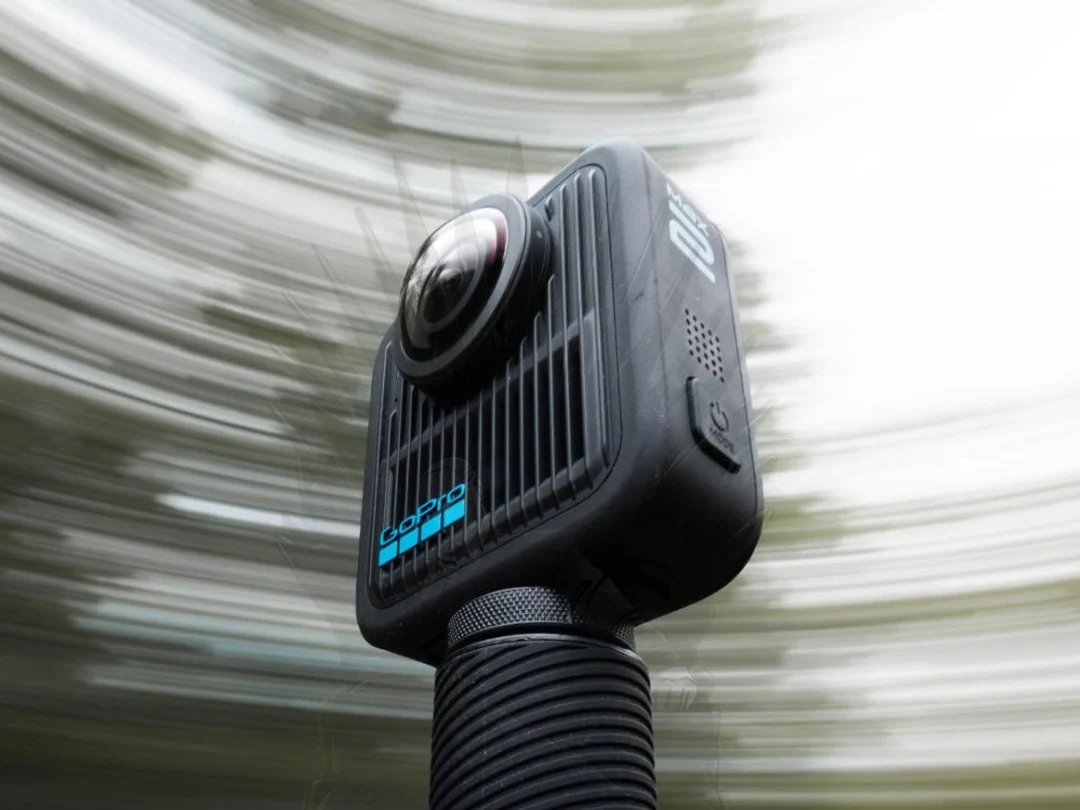
  • GoPro Max 2 Set to Outperform DJI Osmo 360 Ahead of Release

    GoPro Max 2 Set to Outperform DJI Osmo 360 Ahead of Release

    Key Takeaways

    1. GoPro is competing with DJI’s Osmo 360, which has a powerful 1/1.1-inch CMOS sensor and captures 8K/30 FPS video.
    2. GoPro has not announced the release date or features of the Max 2, unlike DJI’s clear product launch.
    3. The Max 2 will feature interchangeable lenses, making repairs easier compared to DJI’s lens replacement process.
    4. GoPro is leveraging influencer marketing to generate buzz about the Max 2, with influencers testing and sharing content.
    5. An official launch for the Max 2 is expected by the end of the month, as GoPro manages the content shared by influencers.


    GoPro has upped its teaser game after DJI launched the Osmo 360 earlier this week. Both companies are competing to outshine Insta360, which has been the top player in the 360-degree action camera market for years with products like the Insta360 X5 (curr. $549.99 on Amazon).

    Performance Comparison

    DJI aims to enhance raw camera performance with a 1/1.1-inch CMOS sensor that captures 360-degree video at an impressive 120 MP and 8K/30 FPS. For more detailed information, check out our article about the Osmo 360 launch, which dives deep into DJI’s first 360-degree action camera. In contrast, GoPro hasn’t announced when the Max 2 will hit the market or what new features it will have compared to the current Max (2025).

    Teaser Insights

    Instead, GoPro has shared a brief teaser on its social media, showcasing a possible edge of the Max 2 over the Osmo 360. Specifically, the Max 2 will allow users to swap out lenses if one gets damaged. In what seems like a jab at DJI, GoPro points out that replacing a lens is as simple as twisting it into place, unlike DJI’s method which requires tools and calibration after installation.

    Influencer Buzz

    Additionally, GoPro is allowing influencers to start sharing their experiences with the Max 2 on social media. So far, two influencers have confirmed that they are currently testing the Max 2. The images they posted clearly display the Max 2, showing the same side of the device and using similar accessories. It looks like GoPro is managing what content gets shared at this time, likely in preparation for an official launch by the end of the month at the latest.

    Source:
    Link


  • ESA Unveils Sharpest Ultra Deep Field Image Ever

    ESA Unveils Sharpest Ultra Deep Field Image Ever

    Key Takeaways

    1. Webb combined data from its NIRCam and MIRI to produce detailed images of the Hubble Ultra Deep Field, showcasing over 10,000 galaxies from early in the Universe’s history.
    2. The MIRI Deep Imaging Survey (MIDIS) involved nearly 100 hours of observation, revealing over 2,500 sources, including many hidden or evolved galaxies.
    3. Infrared wavelengths in the images highlight unique galaxy features, with red and orange indicating dust-rich or high star formation galaxies, and blue and cyan showing brighter galaxies in shorter wavelengths.
    4. Webb’s images provide insights into the characteristics of distant galaxies, influenced by redshift, which shifts their light into the mid-infrared spectrum.
    5. The findings enhance our understanding of galaxy formation and the early Universe, contributing significantly to the fields of astronomy and cosmology.


    Webb has merged data from its Near-Infrared Camera (NIRCam) and Mid-Infrared Instrument (MIRI) to show sharp and detailed images of the Hubble Ultra Deep Field. This field was first created using Hubble’s observations taken between 2003 and 2004 and it displays over 10,000 galaxies, with some of them being from less than a billion years after the Big Bang.

    MIRI Deep Imaging Survey

    The recent observations by Webb concentrated on the MIRI Deep Imaging Survey (MIDIS) area, utilizing MIRI’s shortest-wavelength filter. This observation took almost 100 hours, making it Webb’s longest observation of an extragalactic field through a single filter. In this tiny segment of the sky that was studied, Webb uncovered over 2,500 sources, which includes hundreds of very red galaxies. Many of these are probably large galaxies hidden within cosmic dust or more evolved galaxies containing mature stars that emerged early in the Universe’s existence.

    Infrared Wavelengths and Galaxy Features

    The image used colors based on infrared wavelengths, bringing out unique features of the galaxies. Longer mid-infrared wavelengths are represented by orange and red, pointing out galaxies with characteristics like significant dust, high star formation rates, or active galactic nuclei (AGN). The small greenish-white galaxies seem to be more distant due to redshift, causing their light to shift into the mid-infrared spectrum. Most other galaxies shine the brightest in shorter near-infrared wavelengths, which are depicted as blue and cyan, as they do not have mid-infrared boosts.

    Webb’s perspective on the Hubble Ultra Deep Field is among the most profound views of the Universe ever captured, offering valuable information about how the first cosmic structures came into being.

    Conclusion

    Overall, Webb’s findings enhance our understanding of galaxy formation and the early Universe, making significant contributions to astronomy and cosmology.

    Source:
    Link


  • Casio Introduces Uterocervical Camera System in Taiwan

    Casio Introduces Uterocervical Camera System in Taiwan

    Key Takeaways

    1. Casio launched the DZ-C100 Colpocamera and CST-100M camera stand as Class II medical devices in Taiwan on July 30, 2025, for gynecological observation.
    2. The DZ-C100 Colpocamera offers advanced imaging capabilities, including three types of high-definition images and a touch-operated focusing function.
    3. The CST-100M camera stand allows users to adjust and secure the camera at desired heights and angles for improved convenience during examinations.
    4. D’z Image Viewer C software is included for PC-based image management, enabling easy review and organization of captured images.
    5. The DZ-C100SET package is priced at NT$495,000 (~$16,661), with separate prices for the camera, stand, and battery, and the devices were previously launched in Japan and rolled out internationally.


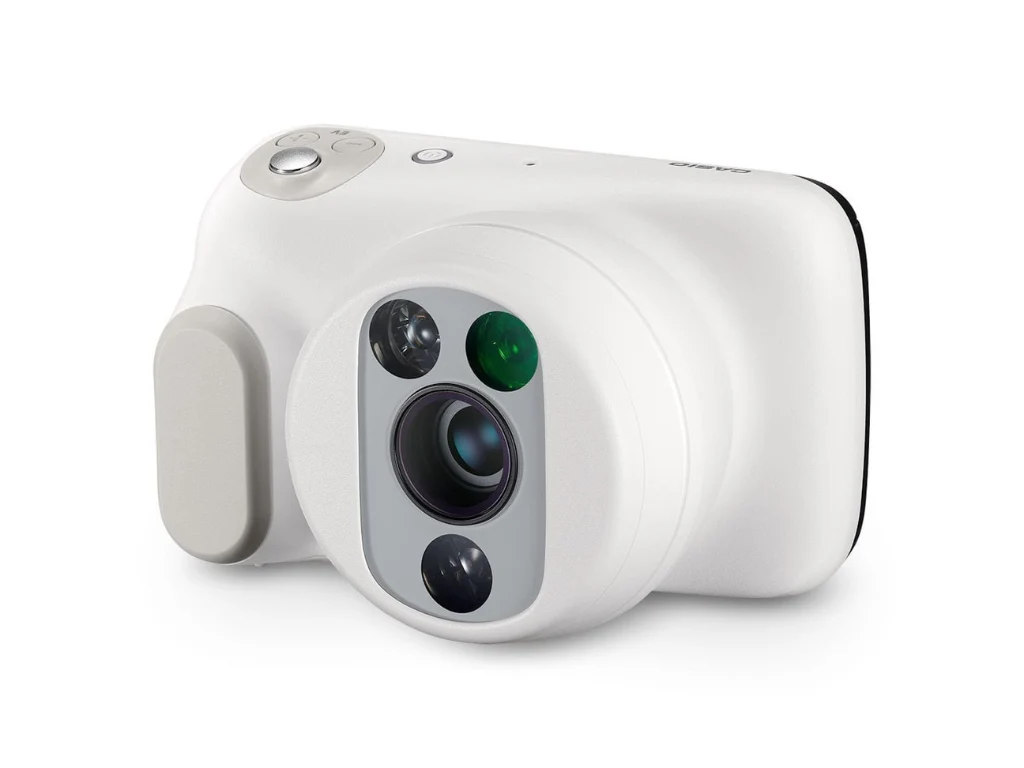
    Casio, widely recognized for its watches and calculators, has officially rolled out the DZ-C100 Colpocamera uterocervical observation camera along with the CST-100M camera stand in Taiwan as of July 30, 2025. These products have been designated as Class II medical devices by the Taiwan Food and Drug Administration (TFDA) and are meant for gynecological observation and documentation.

    Advanced Imaging Capabilities

    The DZ-C100 Colpocamera aids in the early discovery of cervical cancer through both photographic and visual analysis of the uterine cervix. It takes three varieties of high-definition images—normal, green-filtered, and polarized—with just one click of the shutter. The device features a touch-operated focusing function, allowing clinicians to swiftly mark specific areas of observation directly on the LCD screen.

    Innovative Camera Stand

    Alongside this, the CST-100M stand has been introduced, enabling users to adjust and secure the camera at their preferred height and angle during examinations. This stand is designed to enhance the convenience of using the camera in clinical settings.

    Image Management Software Included

    To facilitate image management, Casio is also offering the D’z Image Viewer C software, which allows for PC-based review and organization of the captured images. This software is part of the D’z Image brand, which Casio promotes as a comprehensive solution for medical imaging and diagnostics.

    The combined DZ-C100 and CST-100M set (model DZ-C100SET) is available for NT$495,000 (~$16,661) in Taiwan. If purchased separately, the DZ-C100 costs NT$165,000 ($5,553), while the CST-100M is priced at NT$365,000 (~$12,285), and the compatible lithium battery (DNP-100M) is NT$3,700 (~$125).

    Global Release Timeline

    These medical devices were first launched in Japan in March 2022 and saw a gradual international rollout in Europe, the United States, Australia, and New Zealand throughout 2023 and 2024. Casio’s medical devices can be accessed through its Taiwan subsidiary and are listed on the official website:

    Link

    Source:
    Link

  • Anker Eufy E41: 4K Night Vision Camera for Vibrant Images

    Anker Eufy E41: 4K Night Vision Camera for Vibrant Images

    Key Takeaways

    1. The Eufy E41 surveillance camera requires a wired connection and only works with the Anker Eufy PoE NVR system.
    2. It features 4K resolution and a 122° fixed field of view, with a five-fold digital zoom option.
    3. The camera includes AI capabilities for detecting objects like people, pets, and vehicles.
    4. It has Starlight night vision for capturing color images in low light and infrared technology for nighttime recording.
    5. The Eufy E41 is priced at $130 and may have limitations due to its fixed angle and lack of a zoom lens.


    Attentive readers might recall the Eufy E41: we previously discussed this new surveillance camera alongside the launch of the NVR system, and it is now up for sale on its own. The design has not changed: the Eufy E41 is intended to work only with the Anker Eufy PoE NVR system, which means it cannot be connected via WiFi like other cameras. This camera is part of a complete system, necessitating a wired connection; Ethernet handles both data transfer and power supply through PoE.

    Camera Features

    This camera boasts a 4K resolution and claims to have a 122° field of view. While it lacks a secondary lens, like a zoom lens, it does feature a five-fold digital zoom option. Because this is not a PTZ (pan-tilt-zoom) camera, the viewing angle is fixed and cannot be adjusted remotely. It comes with AI capabilities to detect objects, including people, pets, and vehicles. The Starlight function is designed to capture color images at night, provided there’s some light around. Nighttime recording is also possible with infrared technology. More information about the E41 can be found on the product page, where it retails for $130.

    Summary

    In summary, if you are in the market for a reliable surveillance camera that integrates into an existing Eufy system, the Eufy E41 could be a great choice. Just remember that it requires a wired connection and works exclusively with the Anker Eufy PoE NVR system. With features like AI detection and Starlight night vision, it offers some solid capabilities. However, the fixed angle and lack of a zoom lens might limit its versatility for some users.

    Source:
    Link


  • DJI Osmo 360: First 360° Action Camera with 1-Inch Sensor

    DJI Osmo 360: First 360° Action Camera with 1-Inch Sensor

    Key Takeaways

    1. DJI’s Osmo 360 competes with Insta360 and GoPro, featuring a compact design of 61 x 36.3 x 81 mm and a weight of 183 grams.
    2. The camera offers exceptional video recording capabilities with 8k/50 fps and a 120 MP resolution for 360° photos, utilizing a unique square HDR image sensor.
    3. Advanced stabilization technologies, HorizonSteady and RockSteady 3.0, ensure smooth footage, while the battery lasts over 100 minutes at 8k/30 fps.
    4. Additional features include a 2-inch touchscreen, four built-in microphones, 128 GB internal storage (expandable to 1 TB), WiFi 6, and Bluetooth 5.1.
    5. Pricing for the Osmo 360 starts at €479.99 for the standard combo and €629.99 for the Adventure combo, available through multiple retail channels.


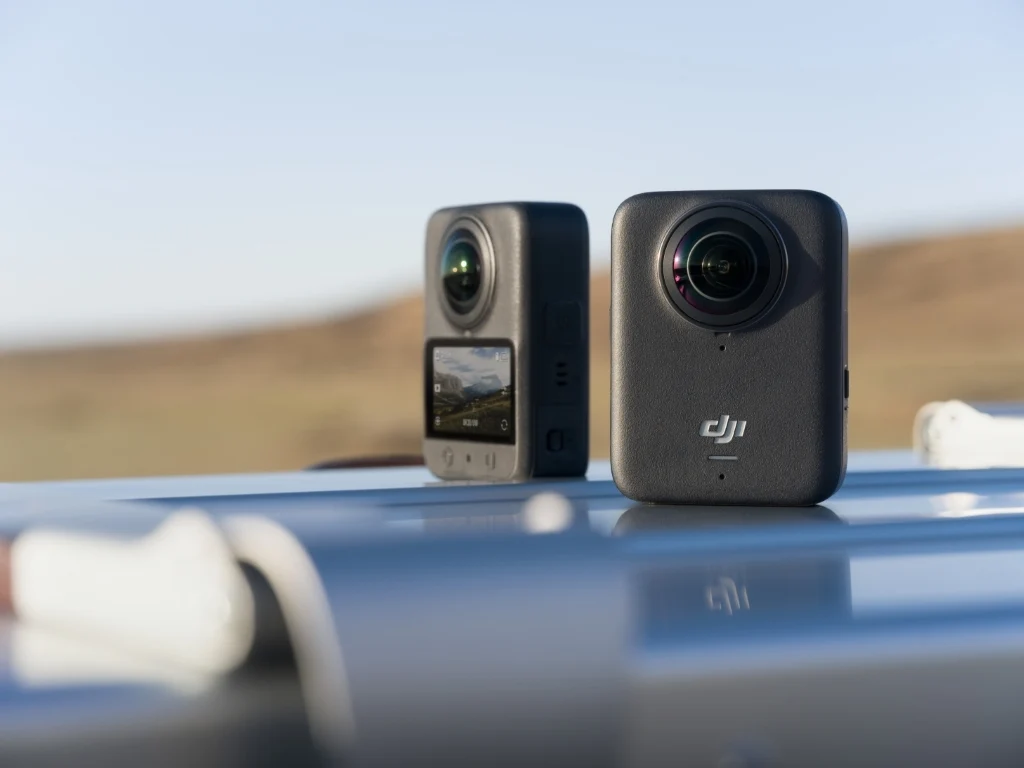
    DJI has stepped into the realm of 360 cameras, challenging Insta360 with its new Osmo 360 model. This action camera is set to compete against the Insta360 X5 and the soon-to-be-released GoPro Max 2. The design of the Osmo 360 is both straightforward and compact, measuring 61 x 36.3 x 81 mm (2.4 x 1.4 x 3.1 inches) and weighing about 183 grams (0.40 lbs).

    Camera Specifications

    DJI’s Osmo 360 features a 1/1.1-inch CMOS sensor, allowing for exceptional 8k/50 fps video recording in a full 360°. This is claimed to be the first-ever square HDR image sensor in the industry, providing a 25% increase in sensor utilization. Additionally, it supports video recording in slow-motion up to 4x. The image sensor also enables the capture of 360° photographs with a stunning resolution of up to 120 MP, ensuring high clarity in images.

    Stabilization and Battery Life

    DJI has integrated HorizonSteady and RockSteady 3.0 stabilization tech, intended to minimize camera shake while maintaining dynamic motion, thus delivering smooth footage even while on the go. In comparison, the Insta360 X5, which retails for $549.99 on Amazon, features a larger 2.5-inch touchscreen. The Osmo 360, however, opts for a more compact 2-inch touchscreen with a resolution of 314 x 556 and a brightness of 800 nits.

    This action camera is powered by a 1,950 mAh battery, which reportedly lasts more than 100 minutes when recording at 8k/30 fps in 360° mode. The battery life can be extended to 180 minutes when used with the Osmo 360 extension rod. For context, the Insta360 X5 comes with a 2,400 mAh battery that lasts up to 185 minutes. The Osmo 360 also has features like intelligent tracking, gesture, and voice control. It is rated for a depth of 10 m (33 ft) and allows for cross-platform editing through the DJI Studio or DJI Mimo app.

    Additional Features and Pricing

    The camera includes four built-in microphones, 128 GB of internal storage, which can be expanded to 1 TB via a microSD card, WiFi 6, Bluetooth 5.1, and an invisible selfie stick mode.

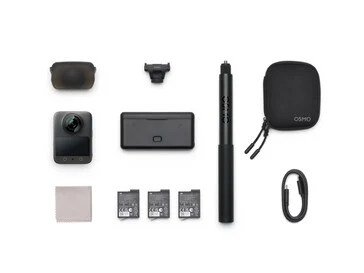
    The starting price for the DJI Osmo 360 action camera standard combo is €479.99, while the Adventure combo is available for €629.99. The Adventure combo features the Osmo 360, along with an Osmo Action Extreme Battery Plus, an Osmo Action Multifunctional Battery Case, a protective case, a lens cleaning cloth, a USB-C to USB-C PD Cable (USB 3.1), an adjustable quick release adapter mount, a 1.2m invisible selfie stick, and a lens protector made of rubber. You can find the Osmo 360 for sale on DJI’s official online and offline stores, Amazon, and other authorized retailers.

    Source:
    Link