Category: Video / Photo

  • Insta360 Go Ultra: Leaked Images Unveil Powerful 4K Clip-On Camera

    Insta360 Go Ultra: Leaked Images Unveil Powerful 4K Clip-On Camera

    Key Takeaways

    1. The new camera model is called the Insta360 Go Ultra, marking a significant upgrade from the previous Go 3S.
    2. The design of the Insta360 Go Ultra is now taller and more square-shaped, differing from the egg-like design of its predecessor.
    3. The camera is expected to record video at 4K60, doubling the frame rate from the previous model.
    4. The redesigned dock resembles a compact camera grip, enhancing the functionality for users.
    5. There is currently no information on the release date or pricing, and a smaller version called the Insta360 Go 4 may also be released.


    As an extension of its stronger 360-degree cameras, like the Insta360 X5, Insta360 has been selling its Go series for several years. These cameras, while lacking a full 360-degree view due to their small size and clip-on design, are incredibly portable and can be taken almost anywhere. Following the Insta360 Go 3S from last year, this year’s model is set to be a major upgrade, now called the Insta360 Go Ultra instead of the Insta360 Go 4 or Insta360 Go 4s.

    New Features and Design

    This was unveiled through a detailed promotional image leak, which not only showcased the official press images of the camera (see above) but also included various promotional visuals. These images mainly illustrate scenarios where a vlogging camera could come in handy, like capturing memorable moments during family trips, workouts, or romantic evenings at the beach. The renderings show a clear shift in the design of the mini camera, which is now almost twice as tall, giving it a more square shape, in contrast to the egg-like design of the Insta360 Go 3S. While detailed specifications for the new ultra-compact camera haven’t been disclosed yet, it is expected to weigh more due to its increased size.

    Portability and Performance

    It remains unclear whether this added weight will affect how well it clips onto a T-shirt, for example. However, the bigger design might also mean more functions, such as a bigger battery. One feature that is already confirmed is that the Insta360 Go Ultra can record at 4K60 instead of just 30 frames per second. The dock with the foldable screen, previously known as the Action Pod, has undergone a slight redesign and now resembles a compact camera grip that secures the mini camera. Currently, there is no information available about the release date or pricing. It’s also possible that alongside the Insta360 Go Ultra, a smaller version called the Insta360 Go 4 may be released.

    Conclusion

    Insta360 continues to innovate in the portable camera space with its Go series, now set to introduce the Insta360 Go Ultra. With enhancements in design and functionality, it aims to cater to vlogging enthusiasts and everyday users alike. Keeping an eye on future announcements will be essential for those interested in the latest in compact camera technology.

    Source:
    Link
  • TecSox Revo: Affordable Smart Projector Launches in India

    TecSox Revo: Affordable Smart Projector Launches in India

    Key Takeaways

    1. TecSox has launched the Revo Android Smart Projector in India, priced at Rs 6,499 (about $74.16).
    2. The projector features a rotatable design, supports 4K and HDR10 input, and has a brightness of 11,000 lumens with a lamp life of 30,000 hours.
    3. User-friendly features include electric focus and ±50° auto keystone correction, along with access to over 5,000 apps on Android 11 or 13.
    4. Specifications include 1GB of RAM, 8GB of internal storage, WiFi 6 support, and Bluetooth 5.0 for device connectivity.
    5. The Revo competes in the budget projector market, but potential buyers should be cautious of typical issues like slow interfaces and color fidelity in lower-priced models.


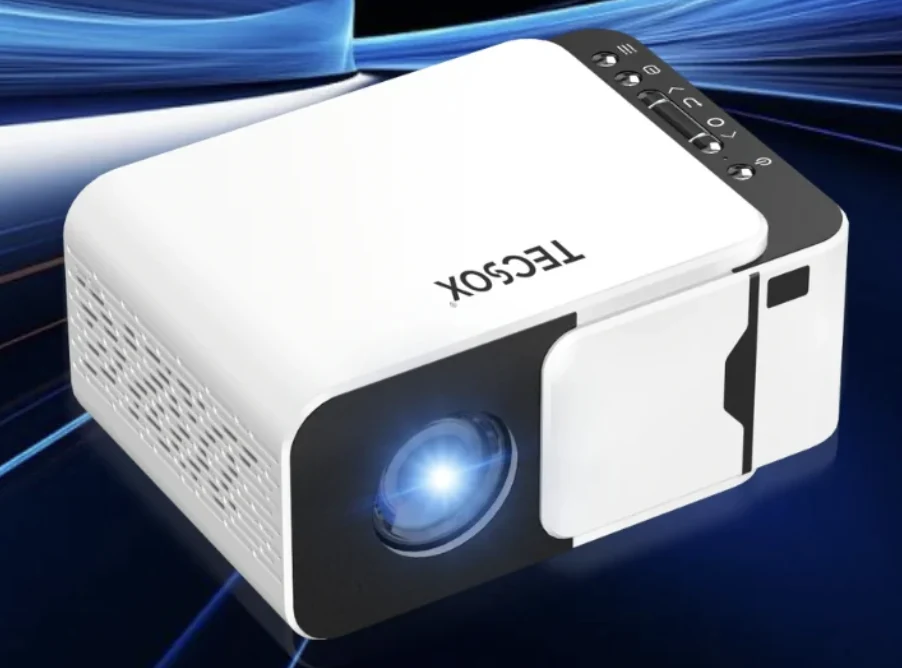
    TecSox has recently broadened its product range with the introduction of a new projector in India. The Revo Android Smart Projector seems to focus on being both portable and affordable, and it’s currently available for Rs 6,499 (which is about $74.16 based on current exchange rates).

    Unique Design Features

    This projector comes with a “rotatable design,” making it suitable for various settings. Regarding its performance, it supports both 4K and HDR10 input, and it includes a 2.69-inch wide LCD panel capable of projecting images onto screens sized between 40 to 200 inches. It boasts a brightness of “11,000 lumens” and a claimed lamp life of 30,000 hours. However, it’s important to note that these figures aren’t based on ISO or ANSI lumens. Furthermore, the company hasn’t disclosed the projector’s output resolution, leaving us to wonder if it might be as low as 640 by 480, which could result in blurry text and disappointing HD content playback.

    User-Friendly Features

    For image adjustments, the Revo provides both electric focus and a ±50° auto keystone correction feature, which minimizes the need for any manual setup.

    The Revo operates on either Android 13 or Android 11, as the official product page mentions both versions, giving users access to a decent variety of streaming services and apps. TecSox claims that the projector can support over 5,000 apps, including popular ones like Netflix, Prime Video, and Disney Plus.

    Specifications and Connectivity

    In terms of memory, it comes with just 1GB of RAM and 8GB of internal storage. There’s no information available regarding the SoC that’s driving the system. However, it does support WiFi 6 connectivity (both 2.4GHz and 5GHz), along with Bluetooth 5.0 for connecting to devices like external speakers or smartphones.

    The Revo adds to a growing list of budget-friendly projector options in the marketplace, competing with brands like Zebronnics and Wzatco. Whether it serves as a viable substitute for pricier projectors from names like BenQ and Nebula mainly hinges on the user’s expectations and requirements. Typically, lower-priced projectors face challenges such as sluggish user interfaces and inadequate color fidelity.

    TecSox’s entry in this market segment reflects a trend towards more accessible projection solutions, but potential buyers should be aware of the common pitfalls that often accompany cheaper models.

    Source:
    Link

  • Frustration with Missing Skip Button and Annoying Ad Formats

    Frustration with Missing Skip Button and Annoying Ad Formats

    Key Takeaways

    1. Users are experiencing fewer skippable ads on YouTube, with some ads offering no skip option at all.
    2. New ad formats, such as “floating ads,” are disrupting the viewing experience and are hard to close, especially on mobile.
    3. YouTube appears to be conducting targeted testing of new ad styles to gauge user reactions and maintain viewership.
    4. There is increasing pressure on users to subscribe to YouTube Premium for an ad-free experience and additional features.
    5. Many users view the recent ad changes as a tactic to push subscriptions to the paid model, leading to negative feedback.


    Normally, most ads on YouTube can be skipped after five seconds using the skip button. However, according to users on Reddit, this option is becoming less frequent. In some cases, the button only appears at the very end of the ad—or it doesn’t show up at all. Screenshots shared on Reddit clearly display ads that claim to be skippable but actually provide no way to skip them. This leads to a very frustrating experience: some users mention that even refreshing the page—once a dependable workaround—now just brings up a different unskippable ad.

    Disruptive New Ad Formats

    New advertising formats, like the so-called “floating ads,” are also upsetting the YouTube experience. These are banner ads that hover over the video itself, often showing up after an ad has already been played or skipped. Users, especially those with the Opera GX browser, have reported that these annoying banners are difficult to close. On the mobile application, they sometimes even block the video completely, making it hard to watch anything.

    Targeted Testing of Ads

    The uneven rollout of these new advertisement styles indicates a targeted test. It seems that YouTube is trying out different user groups to see how much it can change its advertising strategy without losing viewers. While a technical error can’t be entirely dismissed, it appears unlikely considering the consistent feedback from multiple users.

    Increasing Pressure for Premium

    The pressure on users to subscribe to YouTube Premium is clearly on the rise. For $13.99 a month, Google provides ad-free viewing, downloads, and background playback. Many people view the recent changes as a way to push users towards the paid model—and the response has not been very positive.

    Source:
    Link


  • NASA Captures Clear Image of Betelgeuse’s Companion Star

    NASA Captures Clear Image of Betelgeuse’s Companion Star

    Key Takeaways

    1. Scientists have suspected that Betelgeuse has a companion star due to its brightness changes and speed, but it was difficult to confirm due to its bright light.
    2. A team led by NASA’s Steve Howell successfully discovered Betelgeuse’s companion using the Gemini North telescope in Hawai’i and a special high-resolution camera.
    3. The ‘Alopeke speckle instrument allowed the team to capture thousands of quick images to correct for atmospheric disturbances, revealing the companion star.
    4. The new imaging technique provides clarity similar to space images, even for faint stars, and has potential for future astronomical discoveries.
    5. The discovery of the companion star, named “Siwarha,” opens new opportunities for further research, with the next significant observation set for November 2027.


    Scientists have long thought that Betelgeuse might have a partner star. The giant star’s changes in brightness and speed gave hints about this possibility. But due to Betelgeuse’s bright light, it was really difficult to find this companion star for a long time.

    Ground-Based Breakthrough

    A group of astrophysicists led by Steve Howell, a senior scientist at NASA, has finally solved this mystery. While earlier scientists tried to find Betelgeuse’s companion with space telescopes and failed, Howell’s team used a ground telescope instead.

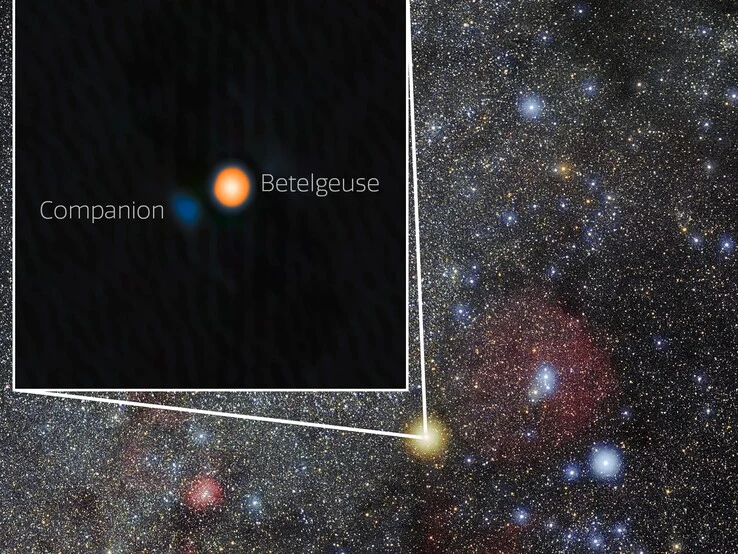
    Howell discovered that the Gemini North telescope in Hawai’i, when paired with a special high-resolution camera, could help overcome the blurriness caused by the atmosphere to find Betelgeuse’s hidden partner. The camera, named the ‘Alopeke speckle instrument, took thousands of quick pictures of Betelgeuse. These images allowed the team to manage and correct for atmospheric disruptions using advanced processing techniques, revealing a picture of Betelgeuse and its companion.

    A New Imaging Technique

    ‘Alopeke is a high-resolution, dual-channel imager set up at Gemini North, made for capturing sharp, two-color optical images while reducing atmospheric distortion. By using speckle imaging—a method that takes rapid exposures to fight atmospheric turbulence—it can achieve clarity like that of space images even for faint targets of up to 17th magnitude. It also provides both narrow and wide-field imaging modes.

    Feeling thrilled about their find, Howell called this combination “a key to opening new observational windows.” His team decided to name the newly discovered companion “Siwarha,” which translates to “her bracelet.”

    Future Discoveries Await

    This breakthrough not only answers a question that has been around for over a century, but also opens doors for future discoveries. Howell and his team are eager to keep studying Betelgeuse and its companion. Their next big chance will be in November 2027, when the companion will be farthest from the star.

    Source:
    Link


  • Elgato Facecam 4K: Swap Real Lens Filters for Stunning Video

    Elgato Facecam 4K: Swap Real Lens Filters for Stunning Video

    Key Takeaways

    1. The Elgato Facecam 4K offers true 4K resolution at 60 fps and allows users to swap out 49mm lens filters for various effects.
    2. Special offers include a complimentary CPL filter or privacy cap with purchase, and compatibility with third-party filters.
    3. It features a Sony Starvis 2 CMOS sensor and Elgato prime lens with fixed focus and f/4.0 aperture, recording options of 4K at 60fps or 30fps with HDR.
    4. Camera control is available through Elgato’s Camera Hub software, which includes manual settings and the ability to save settings to the camera’s memory.
    5. Priced at $199.99 in the US, the webcam is compatible with the Nintendo Switch 2 and integrates with Elgato’s Prompter hardware with a new backplate.


    Elgato has recently introduced its latest Facecam 4K webcam, which delivers true 4K resolution at 60 fps. This camera stands out in the market because it allows users to swap out lens filters, which is quite unique for webcams. You can use any regular 49mm lens filter to create various effects, such as using a diffusion filter for a softer appearance or a circular polarizing (CPL) filter to minimize glare from glasses.

    Special Offers

    When you purchase the Facecam 4K from Elgato’s store, you can get a complimentary CPL filter or a privacy cap that attaches like those on DSLR cameras. There’s also the option to use third-party filters like macro, black mist, or star filters to completely alter the visual style of your 4K videos.

    Technical Details

    The camera is equipped with a Sony Starvis 2 CMOS sensor along with an Elgato prime lens that has a fixed focus and an f/4.0 aperture. This setup delivers sharp video, but the more costly Facecam Pro has a wider f/2.0 aperture that works better in dim lighting. Just like the Pro version, this camera can record smoothly in 4K at 60fps, or you can choose 4K at 30fps with HDR turned on for improved color and contrast. It connects via USB-C, has a standard 1/4-inch thread for mounting, and weighs 112 grams without the monitor mount and cable.

    Software Features

    You can control the camera’s output using Elgato’s Camera Hub software, which gives you manual settings for ISO, exposure, and shutter speed. This software also enables digital pan, tilt, and zoom functions to help you frame your webcam feed perfectly. A handy feature is the ability to save your settings directly onto the camera’s onboard memory, so you won’t need to keep the software running to maintain your desired look. If you have an Nvidia RTX graphics card, you can activate a background blur that mimics a DSLR-style depth-of-field effect.

    Compatibility and Pricing

    The new webcam is also designed to integrate with Elgato’s Prompter hardware, but you’ll need to buy a separate backplate for that. To facilitate this, Elgato is now including the Facecam 4K backplate with new Prompter purchases, replacing the previous one used for the Facecam Pro.

    Moreover, this webcam is compatible with the Nintendo Switch 2, as long as you update the firmware to version 2.32 or a newer version. The Facecam 4K is priced at $199.99 in the US, £179.99 in the UK, and €199.99 in Europe.

    Source:
    Link

  • Insta360 Unveils New Rival to DJI Mini 5 Pro in First Video

    Insta360 Unveils New Rival to DJI Mini 5 Pro in First Video

    Key Takeaways

    1. Insta360 has officially announced its first drone, branded as Antigravity.
    2. The drone features an 8K camera capable of capturing 360-degree footage.
    3. The Antigravity drone lacks a gimbal, setting it apart from competitors like DJI.
    4. It has front-facing sensors that are rotated 90 degrees compared to DJI’s models.
    5. Detailed specifications and pricing for the drone have not yet been released.


    Insta360 has at last acknowledged the launch of its first drone after numerous leaks hinted at the gadget before its official announcement. As mentioned in our previous reports, Insta360 has chosen to market the drone under a new label called Antigravity instead of as an extension of its main brand.

    Exciting Features

    The Antigravity drone is set to come equipped with an 8K camera that can capture 360 degrees, similar to the current Insta360 X5 action camera (curr. $549.99 on Amazon). For now, neither Insta360 nor Antigravity has shared additional details about the drone showcased above. Meanwhile, leaker Igor Bogdanov has managed to acquire a leaked video that shows a prototype model in action.

    Design Insights

    The video embedded below indicates that the drone does not include a gimbal, unlike the DJI Mini 4 Pro or the soon-to-be-released Mini 5 Pro. However, the Antigravity drone does have a recognizable set of front-facing sensors, though they are rotated 90 degrees when compared to those found on DJI’s sub-249 g drones. The overall design bears similarities to competitors’ models, featuring a battery that can be accessed from the back and exposed propeller blades. Sadly, complete specifications and pricing are still not available at this time.

    Source:
    Link

  • DJI Mini 4K: Grab 17% Off for Affordable Aerial Cinematography

    DJI Mini 4K: Grab 17% Off for Affordable Aerial Cinematography

    Key Takeaways

    1. The DJI Mini 4K is lightweight (under 249 grams) and does not require FAA registration, making it accessible for beginners.
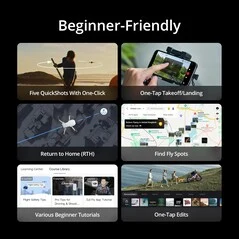
    2. It features user-friendly functions such as one-tap takeoff and landing, GPS Return-to-Home, and in-app tutorials for easy learning.
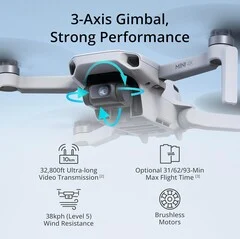
    3. The drone records 4K Ultra HD videos and includes a 3-axis gimbal for high-quality aerial footage and various QuickShots options.
    4. It offers impressive wind resistance (Level 5) and can operate at altitudes up to 4,000 meters, ensuring stable performance.
    5. The package includes essential items like the drone, battery, remote controller, and flexible battery options for extended shooting times.


    Drones have become a fantastic tool for capturing breathtaking aerial photos and videos for creative endeavors. However, issues like regulatory requirements, operational difficulties, and the costs of ownership have made it tough for newcomers and hobbyists to get involved.

    The Solution: DJI Mini 4K

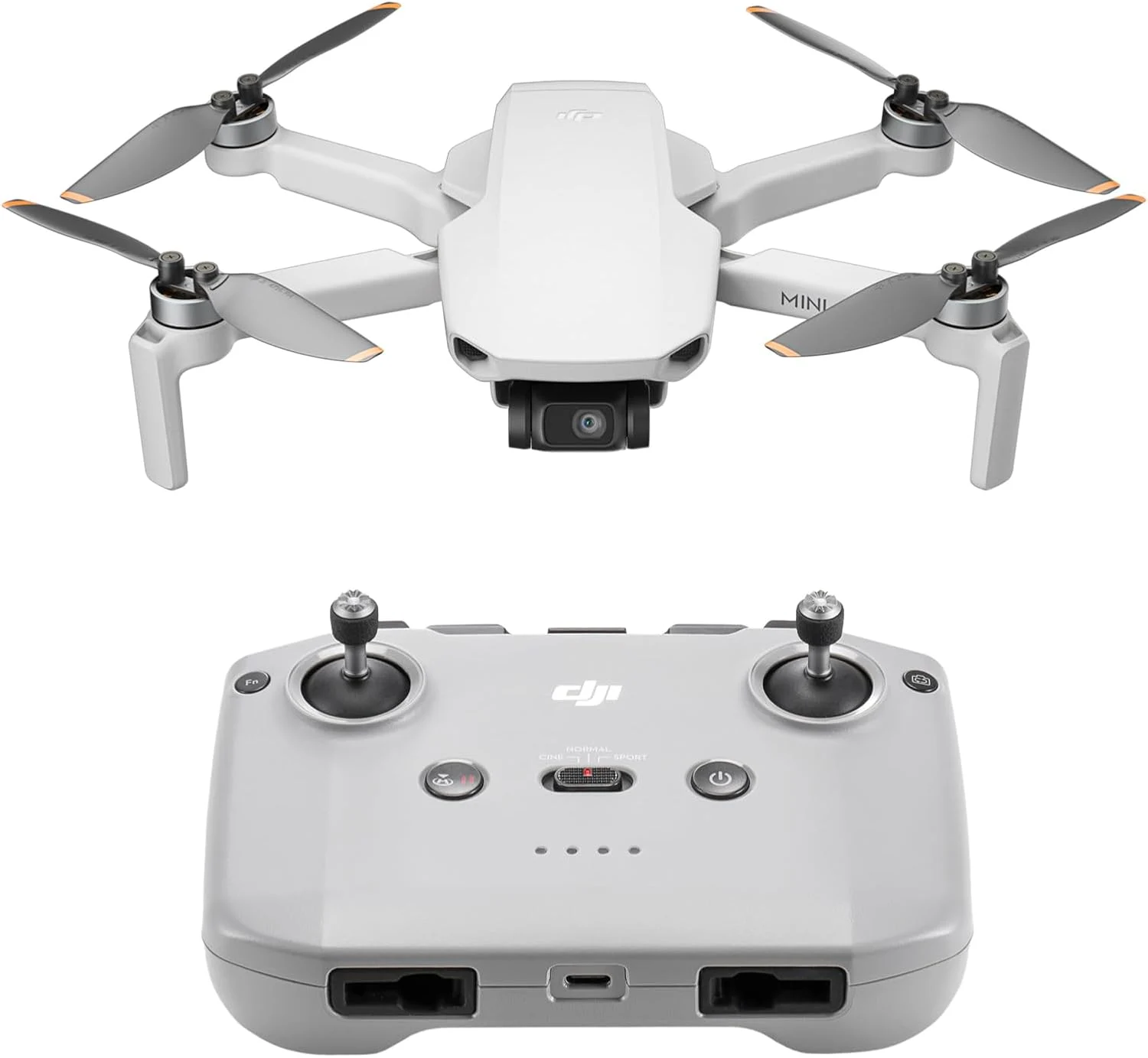
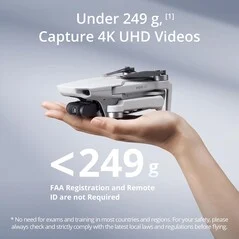
    Weighing less than 249 grams, the DJI Mini 4K doesn’t require FAA registration or Remote ID to operate. This greatly lowers the barrier for those looking to try their hand at flying a drone. Still, it’s wise to check local laws before taking to the skies.

    User-Friendly Features

    The Mini 4K is designed with beginners in mind, featuring an easy one-tap takeoff and landing, GPS Return-to-Home function, and stable hovering capabilities. The in-app tutorials also help users to learn more about flight control and aerial photography.

    Stunning Aerial Footage

    This drone can record 4K Ultra HD videos and comes with a 3-axis gimbal, which allows for stunning cinematic shots — from bright sunrises to tricky nighttime scenes. It’s simple to capture exciting content; users can choose from QuickShots like Helix, Dronie, Rocket, Circle, and Boomerang with just a tap for that polished appearance.

    Performance You Can Count On

    Even with its small size, the Mini 4K has an impressive Level 5 wind resistance (up to 38 kph), keeping it stable during windy weather. Thanks to its strong brushless motors, it can take off at heights of up to 4,000 meters without issues.

    What’s Included

    The package comes with the DJI Mini 4K, a battery, an RC-N1C remote controller, and other essentials to kick off your journey into 4K drone filming. You can achieve longer shooting times with flexible battery options: a 1-battery set offers 31 minutes, a 2-battery set provides 62 minutes, and a 3-battery set gives you 93 minutes.

    Limited Time Offer

    You can grab the DJI Mini 4K on Amazon for just $249 until August 3, which is a 17% discount from the original price of $299.

    Note: The DJI Fly app is not available on the Google Play store anymore due to compatibility problems. Users can download the most recent version of the app directly from the official DJI website.

    Source:
    Link


  • Court Orders Google to Pay $12,500 for Naked Street View Image

    Court Orders Google to Pay $12,500 for Naked Street View Image

    Key Takeaways

    1. An Argentine police officer received $12,500 in damages after Google Street View captured him naked in his yard.
    2. The appeals court ruled that Google violated the man’s dignity by posting the image online without adequate privacy protection.
    3. The initial dismissal of the man’s claim was overturned because the court found a clear invasion of privacy within his home boundaries.
    4. The court criticized Google for not blurring the naked image, emphasizing that the company has guidelines for protecting privacy.
    5. This case is part of a history of legal challenges faced by Google regarding privacy issues related to Street View.


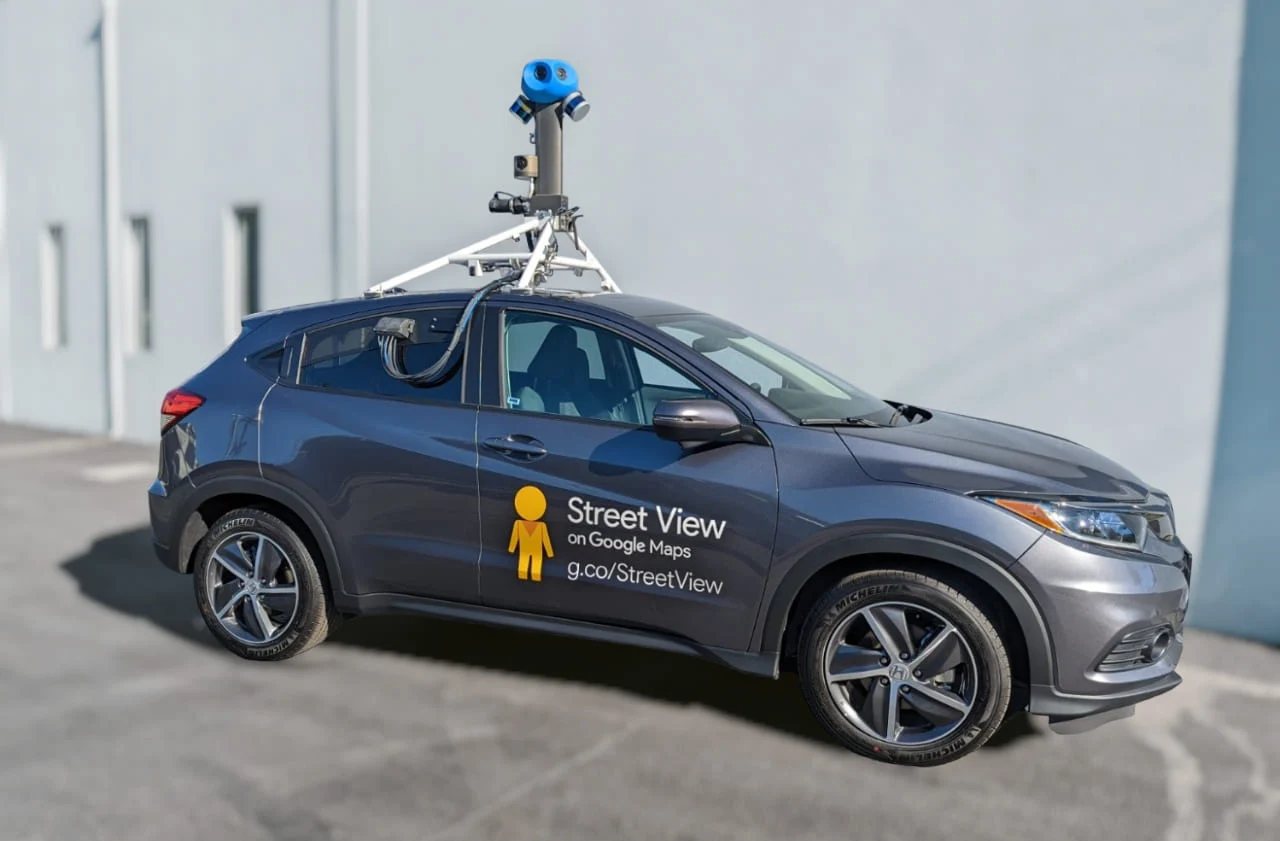
    An Argentine police officer has been awarded around $12,500 in damages after a Google Street View camera took a picture of him naked in his yard. An appeals court decided that the tech giant “flagrantly violated” the man’s dignity by posting the image online.

    The Incident

    The event took place in 2017 when a Google Street View camera, while capturing images of a small town in Argentina, took a photo of the man from behind as he was unclothed in his garden. At that moment, he claimed he was behind a nearly 2-meter (6.5-foot) wall. The image that was published did not blur out his home address, which resulted in the photo being aired on local television and circulated on social media, leading to him being mocked at work and in his community.

    Legal Battle

    Seeking compensation from Google for the damage to his dignity, the man initially had his claim dismissed by a lower court, which said he was at fault for “walking around in inappropriate conditions in the garden of his home.” Google’s defense contended that the perimeter wall was not tall enough to create a reasonable expectation of privacy.

    However, the appeals court reversed the lower court’s decision, stating that the man’s privacy was clearly violated. The judges mentioned, “This involves an image of a person that was not taken in a public area but within the boundaries of their home, behind a fence taller than the average-sized person.”

    Court’s Conclusion

    The court determined that there was an “arbitrary intrusion into another’s life” and found no justification for Google to evade responsibility for the mistake. “No one wants to be seen naked by the world as they came into it,” the judges added. They also referenced Google’s own guidelines as an indication of its accountability.

    While Google does automatically blur faces and license plates in Street View photos, the judges pointed out that although the man’s face was not shown, his “entire naked body” was visible, and this “should have also been prevented.” Interestingly, the court did not hold the other two parties involved — telecom company Cablevision SA and news site El Censor — responsible for the spread of the image. The judges indicated that their actions “helped highlight the misstep committed by Google.”

    Previous Challenges

    This isn’t the first instance where Google’s Street View has encountered legal troubles. In 2019, it was reported that Google settled for $13 million due to the collection of private information through the program. In another case back in 2010, the company paid a couple $1 in damages after admitting it trespassed to photograph a house in the Pittsburgh area.

    Source:
    Link

  • Insta360 Antigravity: New 8K 360 Drone to Compete with DJI Mini 5 Pro

    Insta360 Antigravity: New 8K 360 Drone to Compete with DJI Mini 5 Pro

    Key Takeaways

    1. Insta360’s first drone will be branded as Antigravity, not under the Insta360 name.
    2. Antigravity aims to compete with DJI Mini 5 Pro, with a target launch by the end of the year.
    3. The drone will weigh less than 249 g to meet EU C0 drone class regulations.
    4. It will capture 8K and 360-degree video, outpacing competitors like Autel EVO Nano+ and DJI Mini 4 Pro.
    5. A community ‘Hub’ will allow fans to contribute to the development of Antigravity’s products and features.


    Insta360 has revealed some early information about its first drone after many leaks and speculations. Right now, Insta360 is being quite secretive. Still, there are hints that suggest it aims to compete with the DJI Mini 5 Pro by the end of this year.

    Brand Overhaul

    Interestingly, this drone will be marketed under the name Antigravity rather than the Insta360 brand. Insta360 has described Antigravity as a brand that is ‘incubated by Insta360 in partnership with third parties’ and not just a simple subsidiary of Insta360. Additionally, Antigravity will feature a ‘Hub’ where fans and community members can contribute to ‘shaping the future of Antigravity’s products and features.’ The drone itself is designed to weigh less than 249 g to comply with the European Union’s C0 drone class regulations.

    Advanced Features

    Moreover, Antigravity’s inaugural drone will be capable of capturing 8K and 360-degree video footage. This sets it apart from competitors that are limited to 4K, such as the Autel EVO Nano+ or the DJI Mini 4 Pro. In terms of camera performance, the Antigravity drone appears to have features similar to the Insta360 X5 (currently priced at $549.99 on Amazon). The official launch of the drone is expected in August, but the company has yet to confirm the specific date for the unveiling or the marketing name.

    Anticipation Builds

    As the launch date approaches, excitement is building around Antigravity’s first drone. While Insta360 remains tight-lipped about many details, the anticipation for a product that promises to push the boundaries of drone technology is palpable. Fans are eagerly awaiting more information on this innovative device and how it will perform against established competitors in the market.

    Source:
    Link

  • New 1-Inch Smartphone Camera Specs Reveal Familiar Features

    New 1-Inch Smartphone Camera Specs Reveal Familiar Features

    Key Takeaways

    1. New camera sensors, including the Sony LYT-828 and SmartSens SC590XS, are expected for the 2025/26 Android flagship season.
    2. The SC5A5XS sensor will debut with a 50MP/1-inch design, used in Huawei Pura 80 Ultra and Xiaomi 15 Ultra.
    3. It will feature SmartSens’ SuperPixGain HDR 2.0, offering a dynamic range of 110 decibels and “SmartClarity-XL Pro” detail with 1.6µm pixels.
    4. The SC5A5XS is built on a 28nm process, similar to older mobile SoCs, despite SmartSens previously using 22nm technology.
    5. Xiaomi may choose a different sensor for its upcoming 16 Ultra super-flagship, possibly opting for the SC5A5XS’ predecessor.


    According to recent leaks, there are several new camera sensors to keep an eye on for the upcoming 2025/26 Android flagship season, notably the Sony LYT-828 and SmartSens SC590XS. The latter may have a more advanced version to compete with upon its release.

    SC5A5XS Debut

    The SC5A5XS is expected to launch, as per the well-informed leaker Digital Chat Station. This sensor will feature a 50MP/1-inch design, which is a standout characteristic of the Huawei Pura 80 Ultra and Xiaomi 15 Ultra.

    Enhanced Features

    It’s likely that the sensor will include SmartSens’ SuperPixGain HDR 2.0, offering a dynamic range of 110 decibels (dB). Additionally, it may provide advanced “SmartClarity-XL Pro” detail, thanks to its notably small 1.6µm pixels.

    Competitive Landscape

    Some Omnivision fans might feel a sense of familiarity with these specs, as they were also revealed for the OV50X, which is Omnivision’s very own new 1-inch smartphone sensor. Moreover, the SC5A5XS is built on a 28 nanometer (nm) process, similar to an older, less powerful mobile SoC, despite SmartSens previously using more advanced 22nm technology.

    Despite this, the sensor could attract mobile manufacturers due to its trendy features. However, the specific brands remain unidentified at this moment. Digital Chat Station suggests that Xiaomi might opt for a different choice—possibly the SC5A5XS’ predecessor—for its upcoming 16 Ultra super-flagship.

    Source:
    Link