
Key Takeaways
1. Scientists have suspected that Betelgeuse has a companion star due to its brightness changes and speed, but it was difficult to confirm due to its bright light.
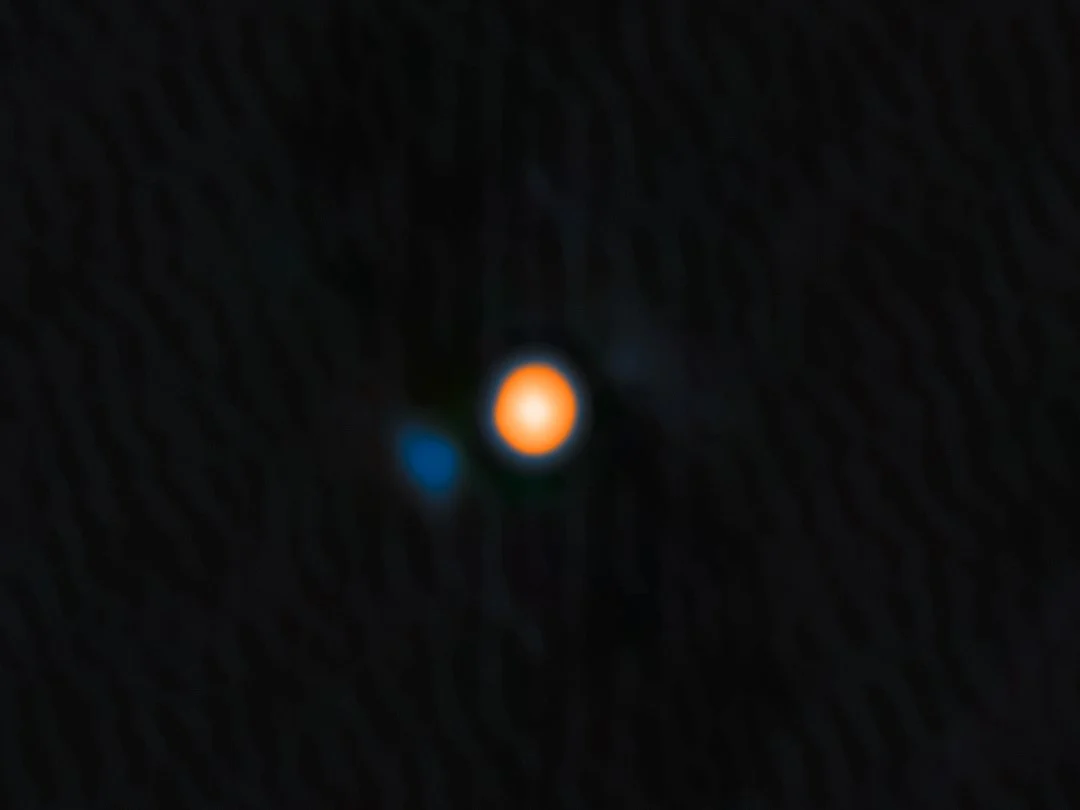
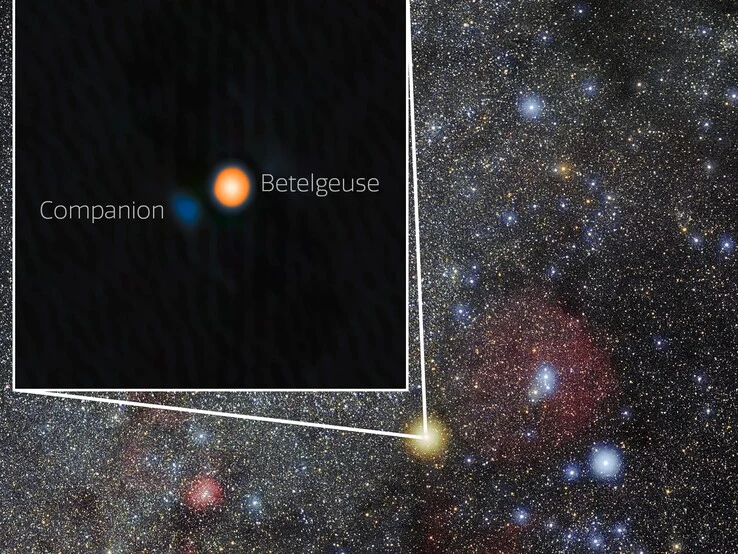
2. A team led by NASA’s Steve Howell successfully discovered Betelgeuse’s companion using the Gemini North telescope in Hawai’i and a special high-resolution camera.
3. The ‘Alopeke speckle instrument allowed the team to capture thousands of quick images to correct for atmospheric disturbances, revealing the companion star.
4. The new imaging technique provides clarity similar to space images, even for faint stars, and has potential for future astronomical discoveries.
5. The discovery of the companion star, named “Siwarha,” opens new opportunities for further research, with the next significant observation set for November 2027.
Scientists have long thought that Betelgeuse might have a partner star. The giant star’s changes in brightness and speed gave hints about this possibility. But due to Betelgeuse’s bright light, it was really difficult to find this companion star for a long time.
Ground-Based Breakthrough
A group of astrophysicists led by Steve Howell, a senior scientist at NASA, has finally solved this mystery. While earlier scientists tried to find Betelgeuse’s companion with space telescopes and failed, Howell’s team used a ground telescope instead.
Howell discovered that the Gemini North telescope in Hawai’i, when paired with a special high-resolution camera, could help overcome the blurriness caused by the atmosphere to find Betelgeuse’s hidden partner. The camera, named the ‘Alopeke speckle instrument, took thousands of quick pictures of Betelgeuse. These images allowed the team to manage and correct for atmospheric disruptions using advanced processing techniques, revealing a picture of Betelgeuse and its companion.
A New Imaging Technique
‘Alopeke is a high-resolution, dual-channel imager set up at Gemini North, made for capturing sharp, two-color optical images while reducing atmospheric distortion. By using speckle imaging—a method that takes rapid exposures to fight atmospheric turbulence—it can achieve clarity like that of space images even for faint targets of up to 17th magnitude. It also provides both narrow and wide-field imaging modes.
Feeling thrilled about their find, Howell called this combination “a key to opening new observational windows.” His team decided to name the newly discovered companion “Siwarha,” which translates to “her bracelet.”
Future Discoveries Await
This breakthrough not only answers a question that has been around for over a century, but also opens doors for future discoveries. Howell and his team are eager to keep studying Betelgeuse and its companion. Their next big chance will be in November 2027, when the companion will be farthest from the star.
Source:
Link


Leave a Reply