Category: Phones

Stay updated with the latest phone news, reviews, and trends. Discover cutting-edge smartphones, features, and innovations in our Phones category at GizNewsDaily

  • OnePlus 15: Slimmer Bezels vs. Xiaomi 17, Tougher than iPhone 17 Pro

    OnePlus 15: Slimmer Bezels vs. Xiaomi 17, Tougher than iPhone 17 Pro

    Key Takeaways

    1. Launch Anticipation: OnePlus is set to unveil its first Snapdragon 8 Elite Gen 5 flagship smartphone, the OnePlus 15, expected in mid-October 2025.

    2. Thinner Bezels: The OnePlus 15 will feature 1.15 mm bezels, slightly thinner than the Xiaomi 17’s 1.18 mm, aiming for a more immersive visual experience.

    3. Durable Chassis Material: The device will utilize aerospace-grade nano-ceramic metal, claimed to be significantly tougher than titanium and aluminum, enhancing its damage resistance.

    4. Comfortable Design Features: The OnePlus 15 will include a “small arc edge” for grip comfort and a “skin-friendly” coating, along with a minimalist camera island for a sleek look.

    5. Enhanced Usability: A “golden R corner” design element is included to improve one-handed usability of the smartphone.


    OnePlus is preparing to unveil its inaugural Snapdragon 8 Elite Gen 5 flagship smartphone, the OnePlus 15. Although the exact launch date hasn’t been officially announced, it’s anticipated that the reveal will take place in China around mid-October 2025. Before the official announcement, the company has confirmed that its new device will feature thinner bezels compared to the Xiaomi 17.

    Thinner Bezels for an Enhanced Experience

    Specifically, the OnePlus 15 is said to come with 1.15 mm bezels on all four edges, while the Xiaomi 17 is advertised to have bezels measuring 1.18 mm. Although the difference may seem minor, the reduced bezels on OnePlus’s latest flagship are expected to provide a more immersive visual experience.

    Durable Chassis Material

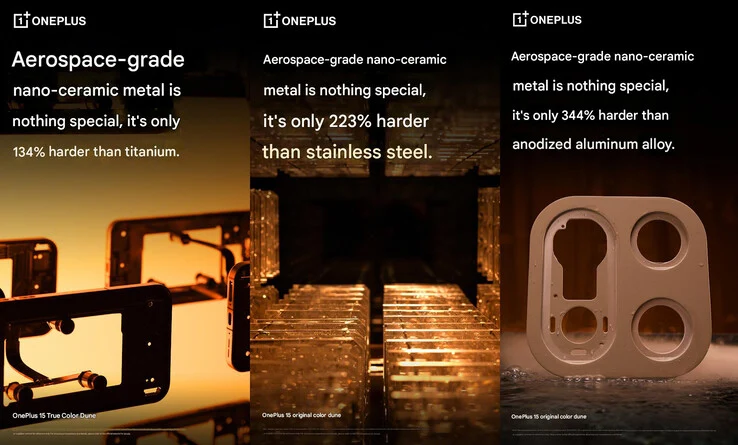
    Moreover, OnePlus has stated that the Sand Dune OnePlus 15 will utilize a chassis made from “aerospace-grade nano-ceramic metal.” This material is claimed to be 134% tougher than titanium, 344% more durable than standard anodized aluminum, and 223% stronger than stainless steel.

    Thus, according to OnePlus’s description, the chassis of the OnePlus 15 makes it significantly more resistant to damage compared to the iPhone 17 Pro, which has a heat-forged aluminum unibody design. The company has not clarified if the chassis material will be consistent across all color variants.

    Design Features for Comfort and Aesthetics

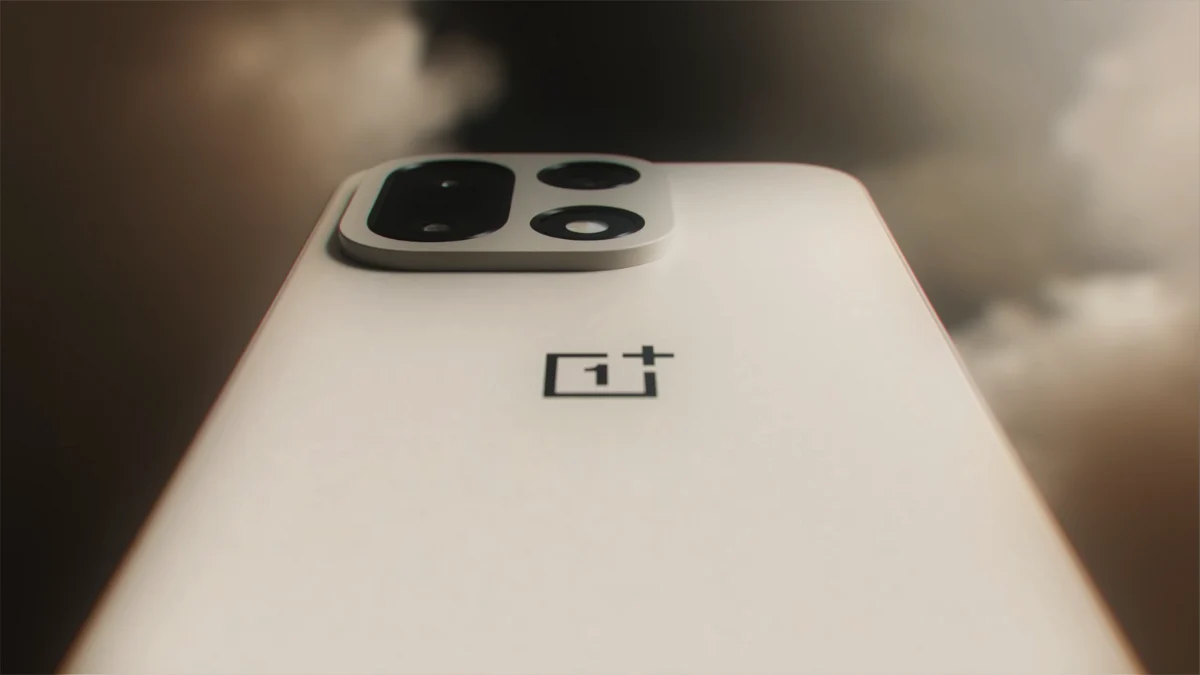
    Additionally, OnePlus emphasizes that its upcoming flagship with the Snapdragon 8 Elite Gen 5 will provide a comfortable grip, thanks to its “small arc edge” and “skin-friendly” coating. Some other newly revealed design aspects include a “golden R corner” that enhances one-handed usability, as well as a minimalist camera island that contributes to a sleek appearance.

    Source:
    Link


  • Xiaomi 17 Pro Max Leica Camera Review vs iPhone 17 Pro Max, Galaxy S25 Ultra

    Key Takeaways

    1. The Xiaomi 17 Pro series has significant hardware upgrades, including the new Light Hunter 950L sensor, which improves dynamic range and nighttime performance compared to its predecessor, the Xiaomi 15 Pro.

    2. The ultra-wide-angle camera on the Xiaomi 17 series has a narrower field of view (17mm) than the previous model (14mm), along with reduced brightness when zooming in.

    3. The Xiaomi 17 Pro Max has superior telephoto capabilities, achieving better color richness and 3D effects, especially in daylight, but both models outperform the iPhone 17 Pro Max in nighttime zoom shots.

    4. The Xiaomi 17 Pro can capture macro photos at a much closer distance (20 cm) than the iPhone 17 Pro (100 cm), enhancing its telemacro capabilities.

    5. In dynamic range assessments, the Xiaomi 17 Pro Max demonstrates a clear advantage over the Samsung Galaxy S25 Ultra, while also holding its own against the iPhone 17 Pro.


    Exactly one week ago, we examined some early reviews of the iPhone 17 Pro and iPhone 17 Pro Max cameras against the Galaxy S25 Ultra. However, this weekend, our focus shifts to another pair of camera powerhouses. With the rebranding of its Xiaomi 15 successors, Xiaomi has positioned its latest devices alongside Apple. Now, the Xiaomi 17 Pro flagships equipped with Leica cameras must demonstrate their capabilities. On the hardware side, the camera sensors have undergone significant changes compared to the Xiaomi 15 Pro. Whether these enhancements result in superior photo quality will be a crucial consideration for potential customers.

    Insights from Initial Reviews

    As there are currently no global reviews of the new Xiaomi 17 series available, and embedding a Chinese video from Weibo may not be very accessible for many readers, we will primarily include screenshots from a 4K video along with images shared on social media platforms such as Weibo or X. We will also link to some of the initial hands-on impressions from popular YouTubers, though their content tends to emphasize the secondary display on the rear rather than the new Leica camera features. More YouTube content should become available in the upcoming weeks, but only the standard Xiaomi 17 is anticipated to launch in Europe, while the Xiaomi 17 Ultra is expected to arrive next year.

    Examining Camera Performance

    The screenshots featured here are sourced from a test video by a prominent smartphone reviewer in China (Xiaobai Evaluation on Weibo). In these initial sample images, the benefits of the new Light Hunter 950L sensor in the 23mm main camera of the current Leica camera flagships are clearly evident. With an impressive dynamic range of 16.5 stops, it shows significant advancements compared to the previous Xiaomi 15 Pro and the similarly sized 1/1.28-inch sensor found in the iPhone 17 Pro Max.

    During nighttime, the new Xiaomi 17 Pro duo outperforms the Xiaomi 15 Pro in terms of dynamic range.

    The subsequent set of images compares the ultra-wide-angle cameras, revealing a distinct drawback for the new Xiaomi 17 series. The field of view has decreased from the equivalent of 14mm to 17mm. Additionally, brightness has slightly diminished, which is particularly noticeable when zooming in.

    Comparing Zoom and Telephoto Capabilities

    While the ultra-wide and main cameras on the Xiaomi 17 Pro and Xiaomi 17 Pro Max are the same, the Pro Max model features a larger 1/2-inch sensor and a wider aperture for its 5x telephoto lens. In daylight conditions, this difference may not be very apparent. In flower photographs, the richer colors are noticeable, and the Xiaomi 17 series creates a more pronounced 3D effect.

    Zoom shots at night have historically posed a challenge for smartphone cameras. Unless image processing tricks are applied, this scenario clearly highlights the advantages of the two Xiaomi 17 flagships over their predecessors and the iPhone 17 Pro Max. Both rivals struggle with bright light sources, resulting in blurriness and more visible optical artifacts. The iPhone 17 Pro Max also shows limited dynamic range in its night shot results.

    The video also showcases telemacro capabilities. For the iPhone 17 Pro, the required distance to capture subjects is about 100 cm (39 inches), making true macro photography nearly impossible. In contrast, the Xiaomi 17 Pro can achieve this at just 20 cm (7.9 inches), while 30 cm (11.8 inches) is sufficient for the Xiaomi 17 Pro Max. Below, there’s a telemacro photograph comparing the two Xiaomi 17 Pro models.

    Final Thoughts on Portrait and Dynamic Range

    In concluding this camera comparison, we will examine two portrait examples taken with these devices, although the differences are likely subjective.

    The well-known leaker Ice Universe has released several comparison photos of the Xiaomi 17 Pro Max alongside its competitors. The comparison with the Samsung Galaxy S25 Ultra is especially noteworthy, as Samsung’s flagship does not perform exceptionally well in this dynamic range assessment, while Apple’s new camera flagship holds its own reasonably well.

    When evaluating pure in-image dynamic range, a clear victor emerges between the 50MP 1/1.28-inch main camera of the Xiaomi 17 Pro Max and the similarly sized 200MP 1/1.3-inch sensor of the Samsung Galaxy S25 Ultra.

    This distinction becomes even more evident when closely examining the two tree images shared earlier.

    To conclude, we would like to present a 10x zoom comparison featuring a Labubu figure, as shared by Ice Universe on Weibo. None of the phones perform poorly in this test, although Samsung’s flagship appears to be the least vibrant in direct comparison.


    Source:
    Link



  • OnePlus 15 Sand Dune Colorway Unveiled: A Stunning Look

    OnePlus 15 Sand Dune Colorway Unveiled: A Stunning Look

    Key Takeaways

    1. OnePlus is expected to launch the OnePlus 15 soon, with details about its specifications and design gradually being revealed.
    2. The Sand Dune color variant features a light brown shade inspired by desert sand, alongside Black and Purple options.
    3. The Sand Dune variant includes a unique aerospace-grade nano-ceramic metal frame that is lighter and tougher than titanium.
    4. This premium version is likely to be priced higher and may be limited to specific configurations with more RAM and storage.
    5. Upcoming features include a 165Hz display, Qualcomm Snapdragon 8 Elite Gen 5 processor, and an in-house camera engine without Hasselblad branding.


    OnePlus is anticipated to reveal its upcoming flagship smartphone, the OnePlus 15, in the near future. Although the exact launch date has not been disclosed, the company has been gradually sharing information about the device, including specifications and design elements. Recently, they posted official renders on their Weibo account, showcasing one of the color options for the phone.

    Sand Dune Color Variant

    This specific color variant, known as Sand Dune, features a light brown shade that resembles the color of desert sand. OnePlus claims that this color draws inspiration from the appearance of sand dunes. It is one of three colors that the company plans to introduce, with the additional two colors being Black and Purple.

    Unique Frame Material

    OnePlus emphasizes that it’s not just the color that makes this version special. The Sand Dune variant of the OnePlus 15 is equipped with a distinctive frame made from aerospace-grade nano-ceramic metal. This material is said to be 26.3% lighter than titanium, yet it is 134% tougher and offers 26.6 times better heat dissipation than titanium. The other two variants will feature a different type of frame, which is somewhat heavier.

    Pricing and Availability

    Notably, OnePlus is not the first brand to apply different materials for various colors of the same device. However, it is clear that the version with the more luxurious build will come at a higher price. Therefore, we can anticipate that the Sand Dune color option will be priced higher than the other selections.

    It’s possible that OnePlus will limit this color to specific configurations, likely the one with the most RAM and storage, similar to what they did with the Midnight Ocean variant of the OnePlus 13 (currently available on Amazon for $929.99).

    Upcoming Features

    The OnePlus 15 is set to feature a 165Hz display, a Qualcomm Snapdragon 8 Elite Gen 5 processor, and a trio of rear cameras. Additionally, the OnePlus 15 is expected to introduce the brand’s in-house camera engine, as the latest renders do not include Hasselblad’s branding, which is surprisingly still found on the Oppo Find X9.

    Source:
    Link


  • OnePlus 15 Offers 165 FPS for Delta Force and Call of Duty Mobile

    OnePlus 15 Offers 165 FPS for Delta Force and Call of Duty Mobile

    Key Takeaways

    1. The OnePlus 15 will feature the Snapdragon 8 Elite Gen 5 processor for improved performance.
    2. It will introduce a 165Hz display, surpassing the predecessor’s 120Hz display.
    3. Users can expect 165 fps gameplay in popular mobile games like Call of Duty Mobile and League of Legends: Wild Rift.
    4. The OnePlus 15 shows a 25% performance improvement in Geekbench scores compared to the OnePlus 13.
    5. The launch price in China may be lower than the OnePlus 13, with more details to be revealed in mid-October.


    OnePlus has shared several exciting details about its next flagship smartphone. The OnePlus 15 will be powered by the Snapdragon 8 Elite Gen 5 processor. This model will also introduce a 165Hz display, making it the first device from OnePlus to feature this high refresh rate. In contrast, its predecessor only had a 120Hz display. Louis Lee, who is the president of OnePlus China, announced that the OnePlus 15 will enable 165 fps gameplay in several well-known mobile games.

    Gaming Performance

    A post on Weibo has confirmed that users will be able to play games like Delta Force, Call of Duty Mobile, Arena Breakout, League of Legends: Wild Rift, and Naruto Mobile at 165 fps on the OnePlus 15.

    In a review by Geekerwan on YouTube, it was noted that the OnePlus 15 achieved an average of 164.9 fps while playing Delta Force over a 30-minute period, with 1% lows hitting 148.4 fps, and the power consumption measured at 4.70 W.

    Game Compatibility

    It’s important to mention that not all games might support native 165 fps gameplay, as many may still be limited to 60 fps or 120 fps based on how well they are optimized. The Geekbench score for the OnePlus 15 indicates a 25% improvement in both single-core and multi-core performance when compared to the OnePlus 13, which also used the Snapdragon 8 Elite chipset. Additionally, a prior leak suggested that the launch price in China could be lower than that of the OnePlus 13. More information is expected to be revealed during the launch event, which is likely to take place in mid-October in China.

    Source:
    Link


  • OnePlus 15 Design Reveal Suggests Snapdragon 8 Elite Gen 5 Launch

    OnePlus 15 Design Reveal Suggests Snapdragon 8 Elite Gen 5 Launch

    Key Takeaways

    1. OnePlus is set to launch its first flagship phone, the OnePlus 15, powered by the Snapdragon 8 Elite Gen 5.
    2. A teaser image suggests the launch date in China is October 27, aligning with the expected release for the new processor.
    3. Pre-orders for the OnePlus 15 have started in China, indicating an upcoming launch.
    4. The phone features a display with 1.15 mm bezels, slimmer than competitors, and a durable mid-frame made from aerospace-grade nano-ceramic metal.
    5. The OnePlus 15 is rumored to be priced lower than its predecessor, potentially making it more affordable in the global market.


    OnePlus is preparing to unveil its very first flagship phone powered by the Snapdragon 8 Elite Gen 5, the OnePlus 15. Recently, the company has given us a sneak peek at the design features of this eagerly awaited smartphone. A teaser image might have even leaked the device’s launch date in China.

    Design Highlights

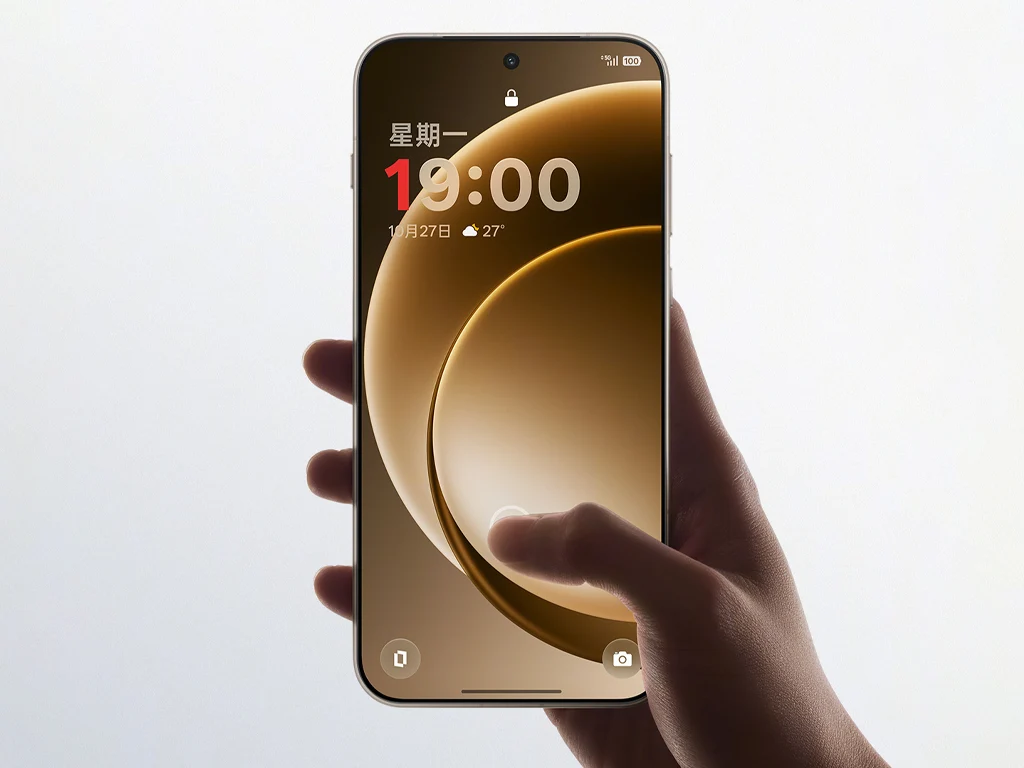
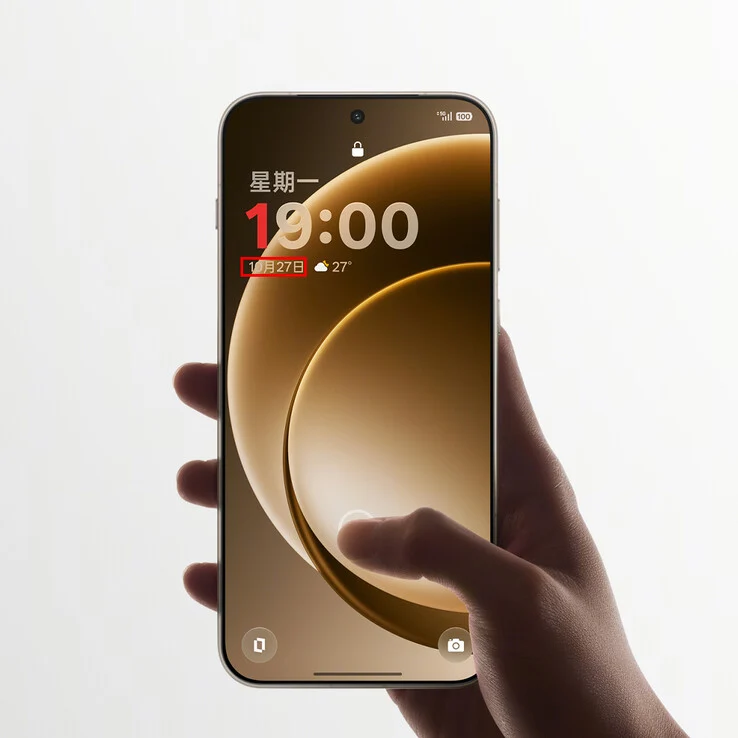
    The highlighted image displays the OnePlus 15’s screen, showcasing its narrower bezels. Curiously, the date October 27 appears on the screen, which aligns perfectly with the rumored launch window for the Snapdragon 8 Elite Gen 5 flagship.

    Additionally, OnePlus has commenced pre-orders for the new phone in China, indicating that the launch is indeed approaching. Although the global release details have not been officially shared, reports from sources like CNET and Tom’s Guide suggest that the international unveiling is expected in November 2025.

    Pricing and Specifications

    For those who haven’t caught up with the latest updates, OnePlus has shared that the Snapdragon 8 Elite Gen 5 phone will boast a display featuring 1.15 mm bezels, which is slimmer than the Xiaomi 17’s 1.18 mm bezels. The teasers have also confirmed that the device will include a mid-frame made from “aerospace-grade nano-ceramic metal,” which is said to be more durable than the chassis of the iPhone 17 Pro series.

    Interestingly, it’s rumored that the OnePlus 15 will be priced a bit lower than its predecessor in China, potentially making it less expensive than the previous generation flagship in the global market (512 GB currently priced at $929.99 on Amazon).

    Launch Confirmation

    OnePlus has shared all this info on Weibo, generating excitement among fans. With these details coming to light, it seems like the OnePlus 15 is set to make a significant impact in the smartphone arena.

    Source:
    Link


  • Xiaomi Redmi Note 15 Pro 5G Global Launch: Key Upgrades Revealed

    Xiaomi Redmi Note 15 Pro 5G Global Launch: Key Upgrades Revealed

    Key Takeaways

    1. The Redmi Note 15 Pro is set for international launch a few months after its initial unveiling in China on August 21.
    2. Xiaomi plans to offer both 4G and 5G versions of the Redmi Note 15 series for global markets.
    3. The phone features a MediaTek Dimensity 7400 Ultra processor, a 7,000 mAh battery, and a 50 MP main camera (Sony LYT-600).
    4. The Redmi Note 15 Pro 5G will use the same Samsung ISOCELL S5KHPE camera sensor as the Redmi Note 15 Pro Plus.
    5. The global version may differ from the Chinese model, with additional details on pricing and availability yet to be announced.


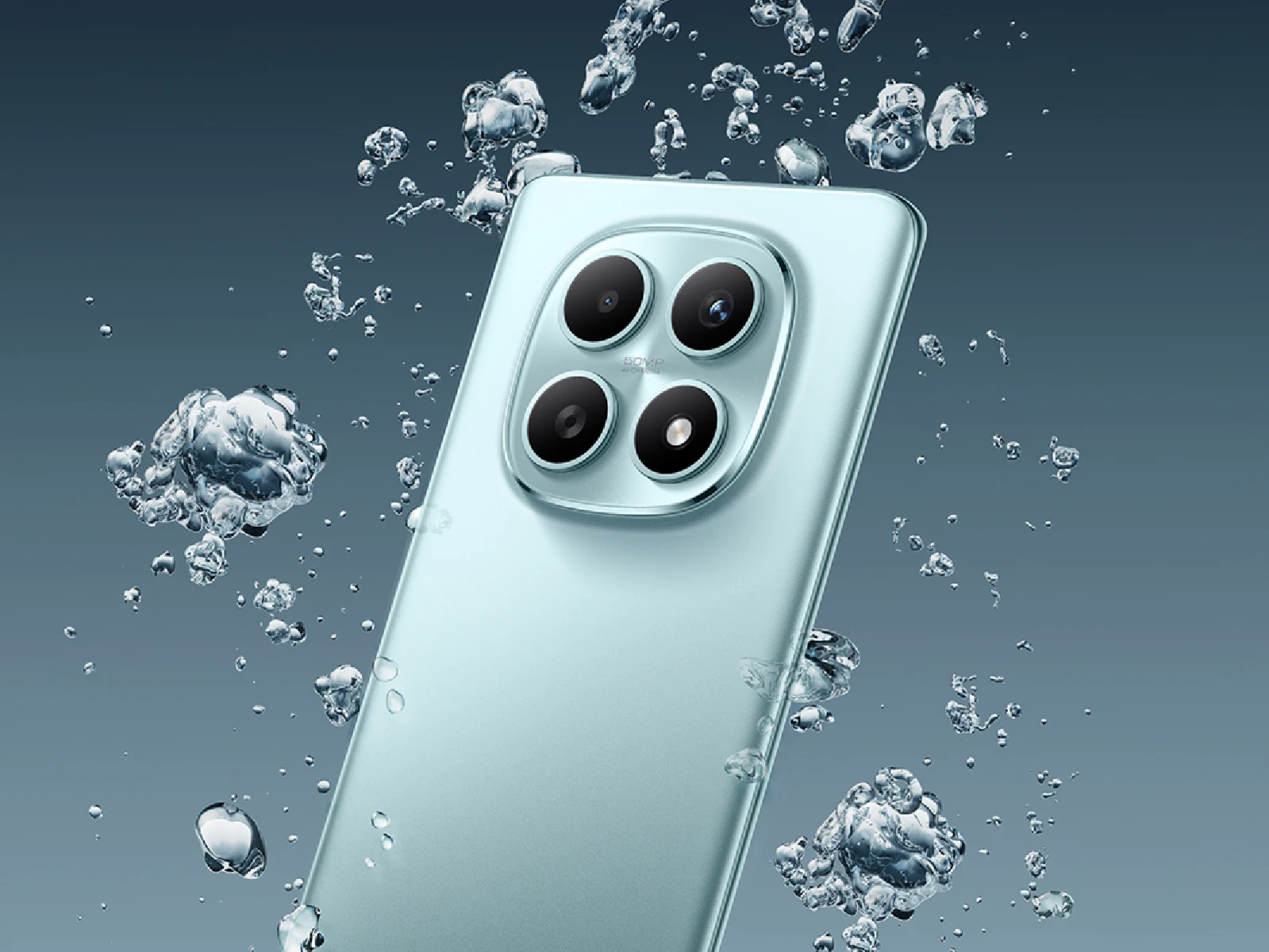
    The Redmi Note 15 Pro is expected to be a few months away from its international launch. Xiaomi plans to introduce 4G versions of the Redmi Note 15 series, which suggests that the name ‘5G’ will likely be added to the standard Redmi Note 15 Pro when they start selling it outside of China.

    Specifications Overview

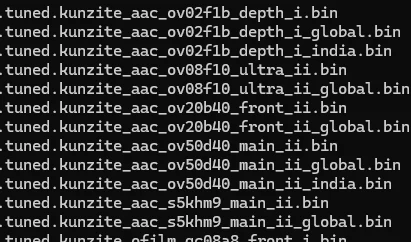
    The Redmi Note 15 Pro was unveiled in Xiaomi’s home country on August 21. It features a MediaTek Dimensity 7400 Ultra processor, a robust 7,000 mAh battery, and a Sony LYT-600, which acts as its 50 MP main camera. Initial firmware insights indicate that the global model of the Redmi Note 15 Pro might differ from its current Chinese version upon its release.

    Camera Features

    Earlier this month, similar details about the Redmi Note 15 Pro Plus surfaced. According to PaperKing13, the Redmi Note 15 Pro 5G will utilize the same Samsung ISOCELL S5KHPE camera sensor found in the Redmi Note 15 Pro Plus, setting it apart from the already available Redmi Note 14 Pro 5G (currently priced at $309 on Amazon).

    Future Innovations

    Sadly, advancements in camera technology may not go much further. On X, PaperKing13 mentioned that the OmniVision OV08F will be making a comeback from the Redmi Note 14 Pro 5G, featuring an 8 MP ultra-wide-angle lens. Likewise, the Redmi Note 15 Pro 5G will be equipped with a new 200 MP primary camera alongside a 20 MP front-facing camera. However, the complete details on global pricing and availability are still uncertain at this time.

    Source:
    Link


  • Xiaomi Redmi Note 15 Global Launch with Reduced Battery Capacity

    Xiaomi Redmi Note 15 Global Launch with Reduced Battery Capacity

    Key Takeaways

    1. The Xiaomi Redmi Note 15 launched on August 21, but global release details are still unclear.
    2. Early firmware suggests the global version may have a smaller battery than the Chinese version.
    3. The basic Redmi Note 15 features a 5,800 mAh battery with 45 W wired charging, but the global version may have 5,520 mAh.
    4. The global model will likely maintain a 108 MP main camera and additional sensors for ultra-wide and macro photography.
    5. The global Redmi Note 15 is expected to retain much of the hardware from the Chinese version, despite potential battery changes.


    The Xiaomi Redmi Note 15 has been available for a month, having launched on August 21 together with the Redmi Note 15 Pro and Redmi Note 15 Pro Plus. Although these models can be obtained from importers, Xiaomi has not yet indicated when it might release any of the Redmi Note 15 series for the global market.

    Possible Insights from Firmware

    Interestingly, the early firmware for the Redmi Note 15 seems to hint at what the global version might look like. Similar to the Xiaomi 17, it is believed that the global Redmi Note 15 will come with a smaller battery compared to the one currently offered in China.

    Battery and Charging Specifications

    To give you some perspective, the basic Redmi Note 15 uses silicon battery technology which allows it to have a peak capacity of 5,800 mAh, along with 45 W wired charging. While this charging feature is expected to remain the same, a user known as PaperKing13 has provided some proof indicating that the global version of the Redmi Note 15 could see its battery capacity reduced to 5,520 mAh.

    Camera Features

    Even so, this would still be an improvement over the Redmi Note 14 5G, which currently retails for $248.99 on Amazon and has a 5,110 mAh battery. Moreover, the device will retain a 108 MP main camera that features the Samsung S5KHM9, alongside 8 MP and 2 MP sensors on the rear, likely serving as ultra-wide-angle and macro cameras, respectively. Essentially, it appears that the global edition of the Redmi Note 15 will maintain a lot of the hardware from its Chinese counterpart.

    Source:
    Link


  • Sony Xperia 1 VII Review: Unique Features and Paywall Insights

    Sony Xperia 1 VII Review: Unique Features and Paywall Insights

    Key Takeaways

    1. The Sony Xperia 1 VII excels in image quality, but manual settings are necessary for optimal results.
    2. It features a triple-camera system, including a 48MP primary lens, but lacks a dedicated camera button.
    3. The design is unique with thick bezels, and the device is lightweight and IP68 water and dust resistant.
    4. Internal storage is limited to 256GB, but it supports microSD expansion up to 2TB and includes a 3.5mm headphone jack.
    5. The USB-C port supports high-speed data transfer and video output, but some advanced features require a subscription.


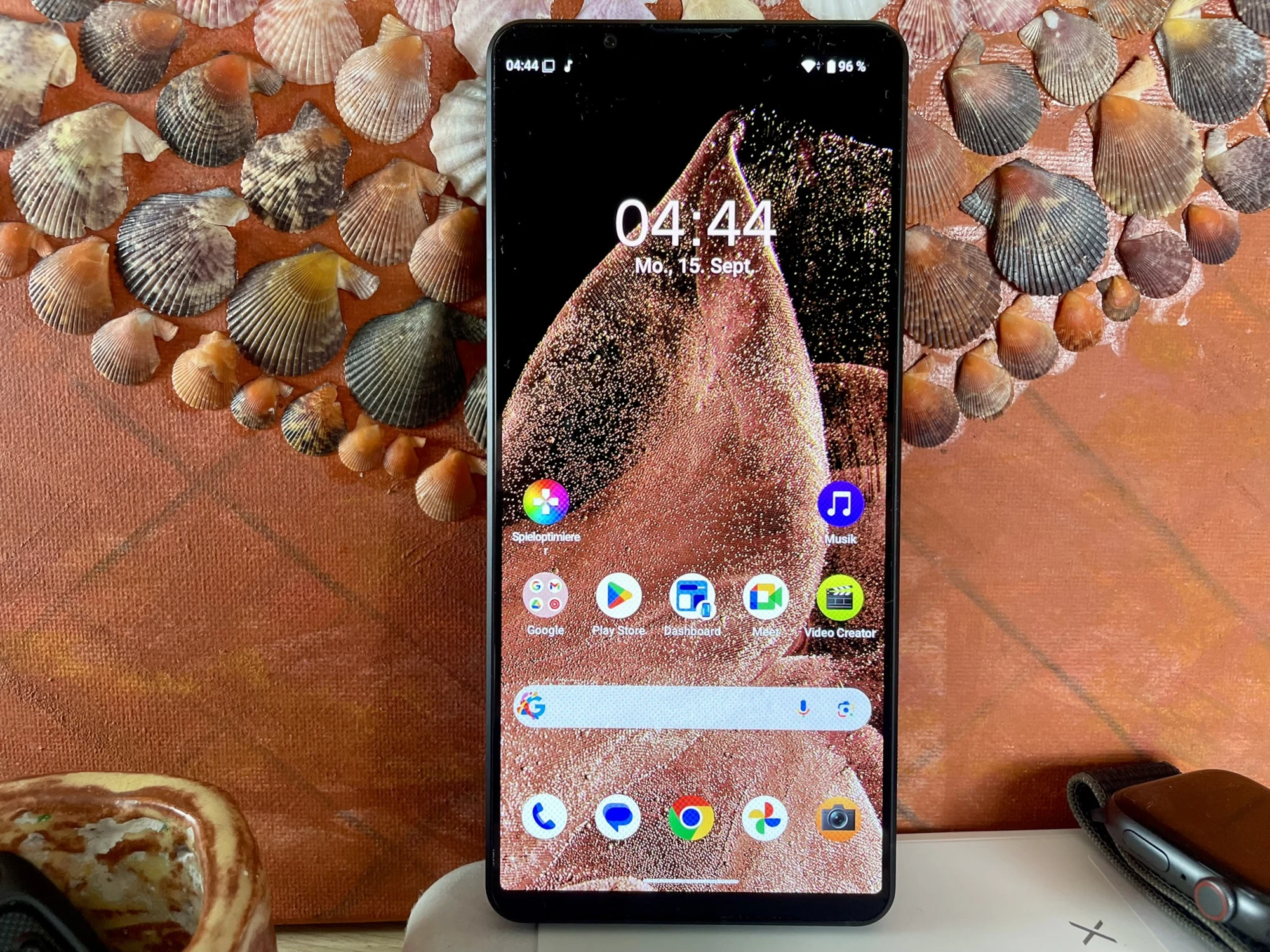
    Those investing €1499 in the Sony Xperia 1 VII likely anticipate top-notch image quality, as the company claims. Our evaluation shows that this is not just marketing talk. However, users should steer clear of the camera’s automatic mode, as this smartphone only outshines its premium rivals when all settings are manually adjusted. For the intended audience, this may not be seen as a downside.

    Camera Specifications

    When it comes to photography, the Sony Xperia 1 VII features a triple-camera array that includes a 48MP primary lens, a 48MP ultra-wide lens, and a 12MP telephoto lens capable of 7.1x optical zoom. Unlike Apple, Sony omitted a dedicated camera button on the right side, a trait that has been part of the Xperia lineup since the original Xperia 1.

    Design and Build Quality

    The fact that Sony is going against the grain with its flagship becomes clear in various aspects, including the design. Weighing in at 6.9 oz (197 grams), the Xperia 1 VII is pleasantly lightweight for a 6.5-inch device. Additionally, it boasts solid construction, a good grip, and is water and dust resistant according to IP68 standards. The aluminum and glass aesthetic doesn’t seem to be the main focus, as seen in the notably thick bezels at the top and bottom of the display. This gives the Xperia 1 VII a unique look compared to other flagship models. Another unconventional aspect for a device in this price range is its internal storage, which is limited to 256GB.

    Storage and Audio Features

    Nonetheless, users can extend the storage by an impressive 2TB through a microSD card, a feature becoming rare in high-end smartphones. The microSD slot also accommodates a SIM card and is designed for easy access without tools. Similarly, the Xperia 1 VII includes a 3.5mm headphone jack, a rarity these days. With a signal-to-noise ratio of 99.84 dBFS, this jack ensures very low noise levels. If you own quality headphones or external speakers, Sony’s flagship phone offers excellent audio performance.

    USB-C and Subscription Features

    Another notable aspect is the USB-C port on the Xperia 1 VII, which supports USB 3.1 Gen.1 speeds. In tests using an external Samsung 980 Pro SSD, it achieved a commendable 316.5 Mbps. Moreover, the USB-C port can also facilitate wired video output to HDMI or DisplayPort devices. However, a feature intended for camera enthusiasts is hidden behind a subscription paywall. The capability to utilize Xperia phones as external monitors for Sony cameras via USB-C is still available through Sony’s Monitor & Control App, but it comes at a cost. To access this feature, users must subscribe for €4.99 per month for the so-called “Basic” plan.

    Source:
    Link


  • Samsung’s Update Promise: Marketing vs. Reality Explained

    Samsung’s Update Promise: Marketing vs. Reality Explained

    Key Takeaways

    1. Samsung claims the Galaxy A17 5G will receive security updates and new Android releases until 2031, raising questions about feasibility.
    2. Many users are concerned about the duration of software updates, as devices often stop receiving them shortly after purchase.
    3. Manufacturers have been secretive about update commitments due to the resources required and uncertainty about future Android version support on existing hardware.
    4. Samsung offers a long update guarantee but includes caveats like “up to” six years and potential changes to its update policy.
    5. While Samsung has resources for updates, the reliability of its promises, especially for budget devices like the Galaxy A17 5G, remains uncertain.


    Security updates and new Android releases in 2031 might seem unrealistic, but Samsung is making this claim for its entry-level device, the Galaxy A17 5G. However, can the company actually follow through on this promise?

    The Update Dilemma

    The question of “How long will software updates be available?” has become important, as many users feel their smartphones are vulnerable, with some devices ceasing to receive updates shortly after they are bought.

    While Apple has been providing extensive update periods since the launch of its first iPhones, it hasn’t made any solid commitments. Meanwhile, companies in the Android sector have historically been tight-lipped about this matter.

    Why the Secrecy?

    So why have manufacturers been so secretive? First, creating regular updates demands both time and financial resources. Additionally, there has been an ongoing debate about whether future Android versions will support existing hardware.

    This narrative shifted a few years back as more manufacturers recognized that offering update guarantees could be a strong selling point. Nowadays, most leading brands provide at least some form of a short-term update promise.

    Samsung’s Update Commitment

    Samsung distinguishes itself with a notably extended update guarantee. In our recent evaluation of the Galaxy A17 5G, we were initially impressed by the claim of six years of updates.

    However, a closer examination of Samsung’s website revealed two caveats: the phrase “up to” and the statement that “The OS upgrade and security update policies specified above are subject to change.” This casts doubt on the update pledge for the Galaxy A17 5G and other devices, indicating that Samsung could halt updates at any time without being held to its pre-sale commitments.

    Samsung will probably strive to provide six years of updates. Given that the company predominantly utilizes its own System on Chips (SoCs), it likely has an advantage in ensuring driver compatibility. As a major entity, it possesses sufficient resources to manage updates.

    Nonetheless, failing to meet these promises could seriously tarnish its reputation. That said, the assurance of six years of updates isn’t as reliable as Samsung implies in its advertising, particularly for budget options like the Galaxy A17 5G, which may be the first to experience any cutbacks in updates.

    For those interested, we recommend checking out our comprehensive review to determine if the Samsung Galaxy A17 5G is a smart buy despite the uncertainties surrounding updates.

    Source:
    Link


  • Xiaomi 17 Ultra vs 17 Pro Max: Key Differences & Satellite Support

    Xiaomi 17 Ultra vs 17 Pro Max: Key Differences & Satellite Support

    Key Takeaways

    1. The Xiaomi 17 Pro and Pro Max feature large secondary screens and have set sales records in China.
    2. Only the Xiaomi 17 and Xiaomi 17 Ultra will be available globally, similar to previous models.
    3. The Xiaomi 17 Ultra is expected to have advanced camera technology but will lack a secondary display.
    4. The Xiaomi 17 Ultra will support satellite connectivity in some global variants, while the Indian model may not.
    5. The pricing for the smaller Xiaomi 17 is currently set at $890 on Amazon.


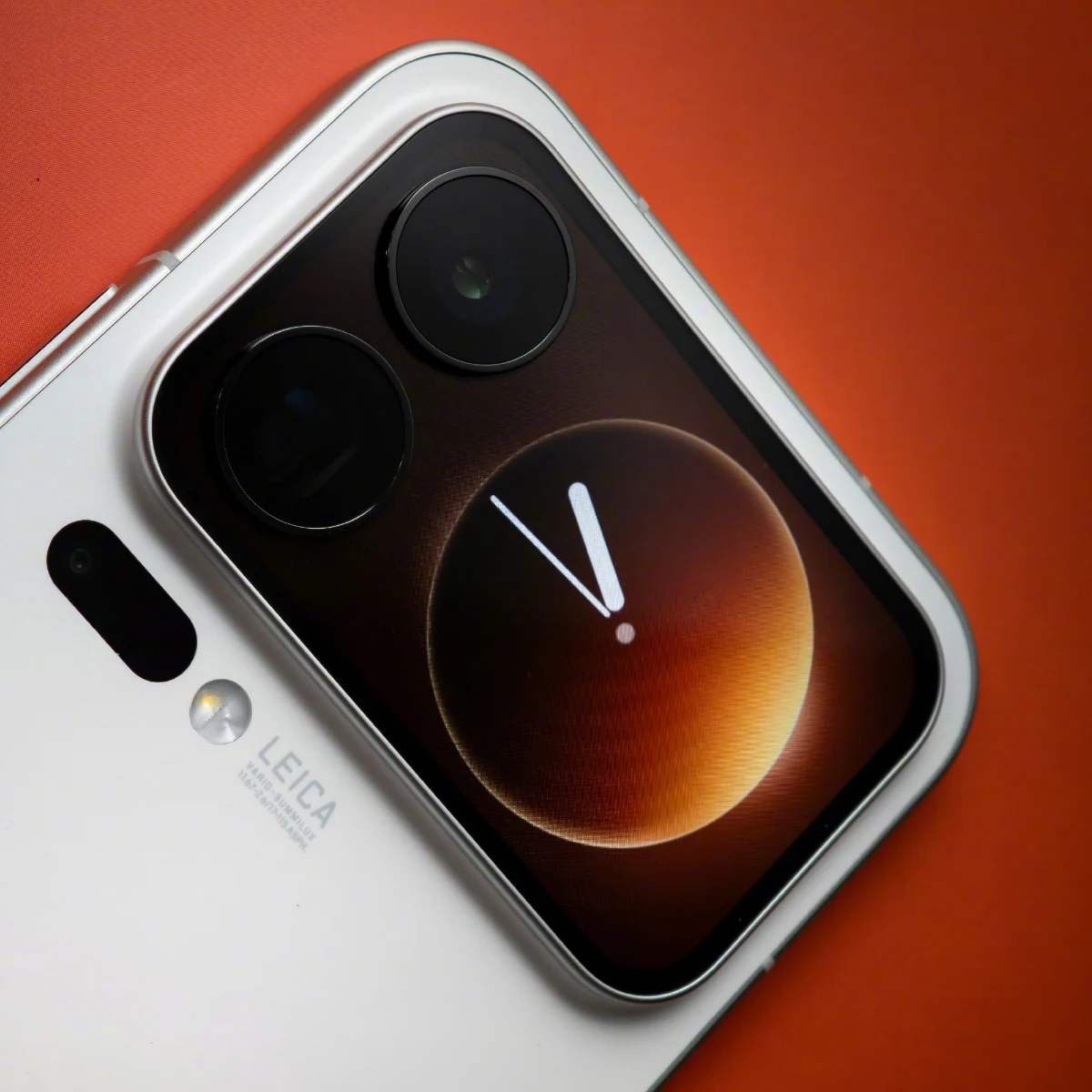
    The Xiaomi 17 Pro and Xiaomi 17 Pro Max are considered some of the most unique flagship smartphones released in recent times, primarily because of their large secondary screens. They remind us of the Mi 11 Ultra and are believed to have broken sales records in China. Sadly, early leaks indicate that these models might not be available outside of Xiaomi’s home country.

    Global Offerings

    For now, it seems that the Xiaomi 17 and Xiaomi 17 Ultra will be the models available worldwide, similar to what happened with the Xiaomi 15 Ultra and the smaller Xiaomi 15, which is currently priced at $890 on Amazon. The Xiaomi 17 Ultra is anticipated to come with more sophisticated camera technology compared to the other models in the Xiaomi 17 lineup. However, XiaomiTime reports that the Xiaomi 17 Ultra will lack a significant feature found in the Pro and Pro Max versions.

    Key Features Missing

    According to the website, Xiaomi will not incorporate a secondary display in its next Ultra-branded device, which contrasts with the Mi 11 Ultra. Instead, the Xiaomi 17 Ultra is rumored to support satellite connectivity across its global variants, the 2512BPNDAG and 2512BPNDAC. While India is also expected to get the Xiaomi 17 Ultra under the model number 2512BPNDAI, XiaomiTime suggests that this specific variant will not have satellite connectivity at all.

    Source:
    Link