Category: Phones

Stay updated with the latest phone news, reviews, and trends. Discover cutting-edge smartphones, features, and innovations in our Phones category at GizNewsDaily

  • OnePlus 15 Leak Reveals Configurations and Battery Size Details

    OnePlus 15 Leak Reveals Configurations and Battery Size Details

    Key Takeaways

    1. Storage and RAM Options: The OnePlus 15 will have five configurations: 12 GB + 256 GB, 12 GB + 512 GB, 16 GB + 256 GB, 16 GB + 512 GB, and 16 GB + 1 TB, although not all may be available globally.

    2. Impressive Battery Details: The device is expected to feature a 7,800 mAh battery with 120 W fast charging, providing a 30% increase in battery size compared to the OnePlus 13.

    3. Weight and Color Variants: The OnePlus 15 is rumored to weigh 214 grams and will be available in black, Quick Silver, and Flash White, with some colors possibly limited to China.

    4. Key Features: It will utilize the Snapdragon 8 Elite Gen 5 SoC, have a 165 Hz refresh rate display, and introduce a new imaging engine, ending the partnership with Hasselblad.

    5. Reveal Date: An official release date has not been confirmed, but teaser images suggest a reveal on October 27 in China.


    OnePlus has been dropping hints about the specs of its soon-to-arrive Snapdragon 8 Elite Gen 5 flagship, known as the OnePlus 15. Despite this, numerous leaks continue to emerge, revealing additional information about the device. The newest details come from a well-known leaker, covering various RAM and storage configurations, an impressive battery size, and color options.

    Storage and RAM Options

    According to Digital Chat Station, the OnePlus 15 will be available in five different configurations: 12 GB + 256 GB, 12 GB + 512 GB, 16 GB + 256 GB, 16 GB + 512 GB, and 16 GB + 1 TB. It’s likely that some of these options may not reach global markets, as the 1 TB version of the OnePlus 13 was limited to China. There was also a model with 24 GB of RAM for the OnePlus 13, but the leaker didn’t mention anything similar for the OnePlus 15.

    Impressive Battery Details

    The Weibo post also discusses the battery capacity, which has been rumored to exceed 7,000 mAh. The OnePlus 15 is expected to feature a 7,800 mAh battery that supports 120 W fast charging. This represents a 30% increase in battery size compared to the OnePlus 13, which already provided great performance in our battery tests. Back in May, the same leaker hinted at a Snapdragon 8 Elite flagship with a 7,800 mAh battery, but it was uncertain which phone it would be.

    Weight and Color Variants

    Digital Chat Station has reiterated some information regarding the weight and colors in the latest update. The OnePlus 15 is rumored to come in black, Quick Silver, and Flash White options, weighing 214 grams, just one gram more than its predecessor, despite the larger battery. Earlier claims suggested that the Sand Dune variant would weigh 211 grams, while the black and purple colors would be around 215 grams. It was also noted that there wouldn’t be a white variant, suggesting some colors might be limited to China.

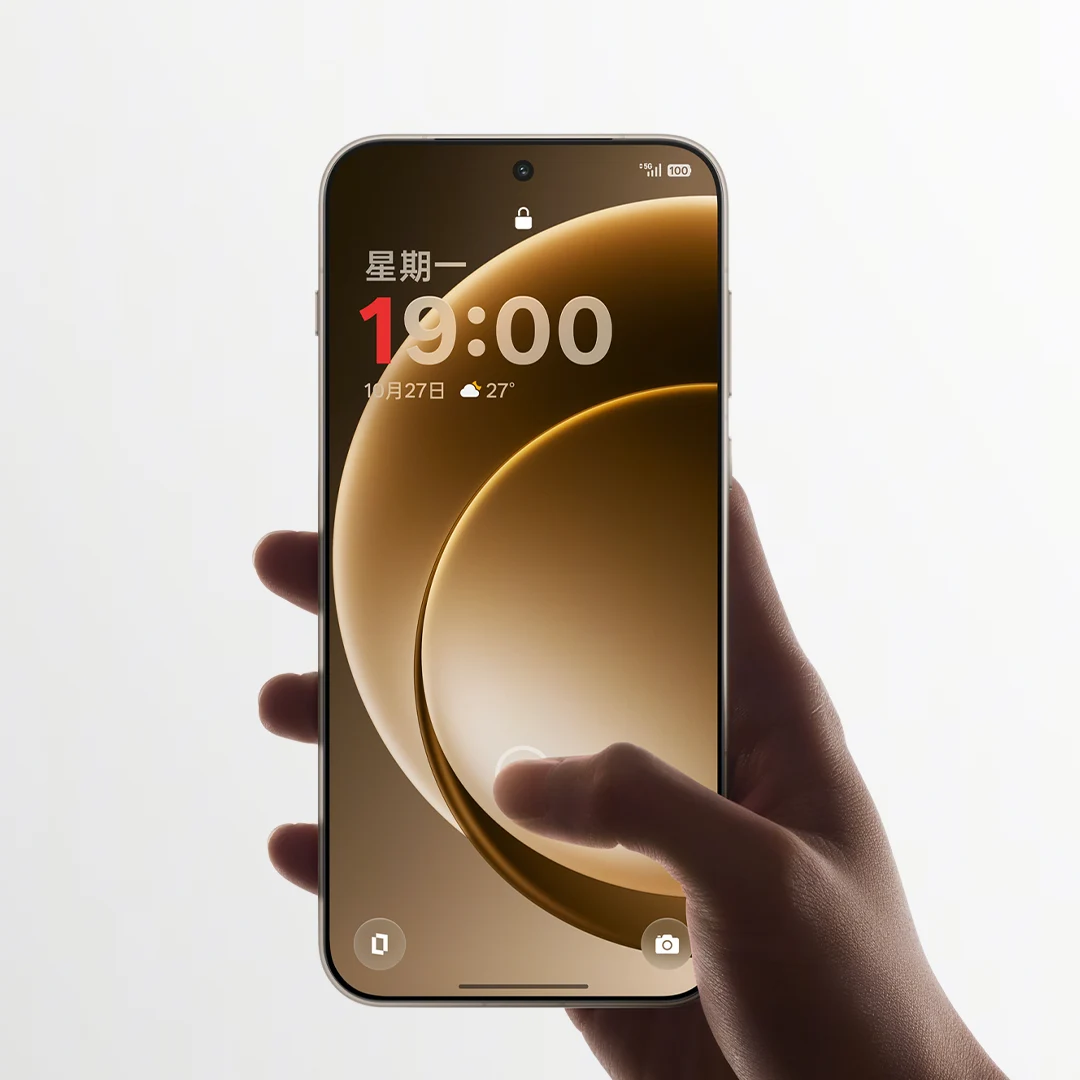
    In terms of confirmed features, the OnePlus 15 will use the Snapdragon 8 Elite Gen 5 Soc, have a display with a 165 Hz refresh rate, and include a Sand Dune colorway. Interestingly, OnePlus is introducing its own imaging engine, having ended its collaboration with Hasselblad. An official release date has yet to be announced, but one teaser image shared by the company displayed October 27 on the phone’s lock screen, which is thought to be the reveal date in China.

    Digital Chat Station on Weibo

    Source:
    Link



  • OnePlus 15 “Sand Storm” Edition Features Aerospace-Grade Ceramic

    OnePlus 15 “Sand Storm” Edition Features Aerospace-Grade Ceramic

    Key Takeaways

    1. The OnePlus 15 will launch with a new “Sand Storm” edition inspired by desert terrains.
    2. It features aerospace-grade Micro-Arc Oxidation (MAO) technology for enhanced durability, making it stronger than aluminum and titanium.
    3. The Sand Storm edition includes a lightweight fiberglass back for a comfortable and minimalist design.
    4. It will be one of the first smartphones to use the Snapdragon 8 Elite Gen 5 Mobile Platform for cutting-edge performance.
    5. Further specifications, including camera features and launch details, will be announced closer to the release date.


    OnePlus has announced that its new flagship phone, the OnePlus 15, will come in a fresh “Sand Storm” edition when it launches. This design takes inspiration from desert terrains and is touted as the first smartphone to utilize aerospace-grade Micro-Arc Oxidation (MAO) technology on its camera housing and middle frame.

    Advanced Durability

    The MAO technique employs high-voltage plasma to create a ceramic layer directly on the metal surface. OnePlus asserts that this process results in a material that is 3.4 times tougher than aluminum frames and 1.3 times as strong as titanium, thus enhancing durability while also being more eco-friendly.

    Comfortable Design

    The Sand Storm edition is said to include a super light fibreglass back, which combines the cool feel of ceramic with a warm, smooth grip for daily usability. As per the company, this blend produces a sculpted appearance that merges resilience with a minimalist aesthetic.

    Cutting-Edge Performance

    In terms of performance, OnePlus confirmed that the OnePlus 15 will be among the first smartphones to feature Qualcomm’s Snapdragon 8 Elite Gen 5 Mobile Platform. This processor will be equipped with OnePlus’ newest cooling system, which the company claims can uphold peak performance and efficiency even during intense activities like gaming or multitasking.

    While comprehensive specifications have not been fully revealed, OnePlus mentioned that additional details, including camera enhancements and launch availability, will be announced as the global release date approaches.

    @oneplus via X (formerly Twitter)

    Source:
    Link


  • Samsung Galaxy Z TriFold: Major Upgrades Over Galaxy Z Fold7

    Samsung Galaxy Z TriFold: Major Upgrades Over Galaxy Z Fold7

    Key Takeaways

    1. Samsung is set to launch its first tri-fold smartphone, tentatively named Galaxy G Fold or Galaxy Z TriFold, by late October or early November 2023.
    2. The Galaxy Z TriFold will feature enhanced productivity and multitasking capabilities, potentially including a built-in DeX mode.
    3. Standard multitasking options such as split-screen functionality and floating app windows will be available, but there will be no support for the S Pen.
    4. The device is expected to have a 100x digital camera zoom, significantly improving on the Galaxy Z Fold7’s 30x zoom.
    5. The Galaxy Z TriFold aims to be a competitor to the Huawei Mate XT and Mate XTs in the global market.


    Samsung is anticipated to introduce its first tri-fold smartphone by the end of this year. This device, which is said to be an alternative to the Huawei Mate XT and Mate XTs, is tentatively named the Galaxy G Fold or Galaxy Z TriFold, and it might be released globally. However, recent speculation indicates that Samsung could delay the launch until late October or early November.

    Exciting Features Revealed

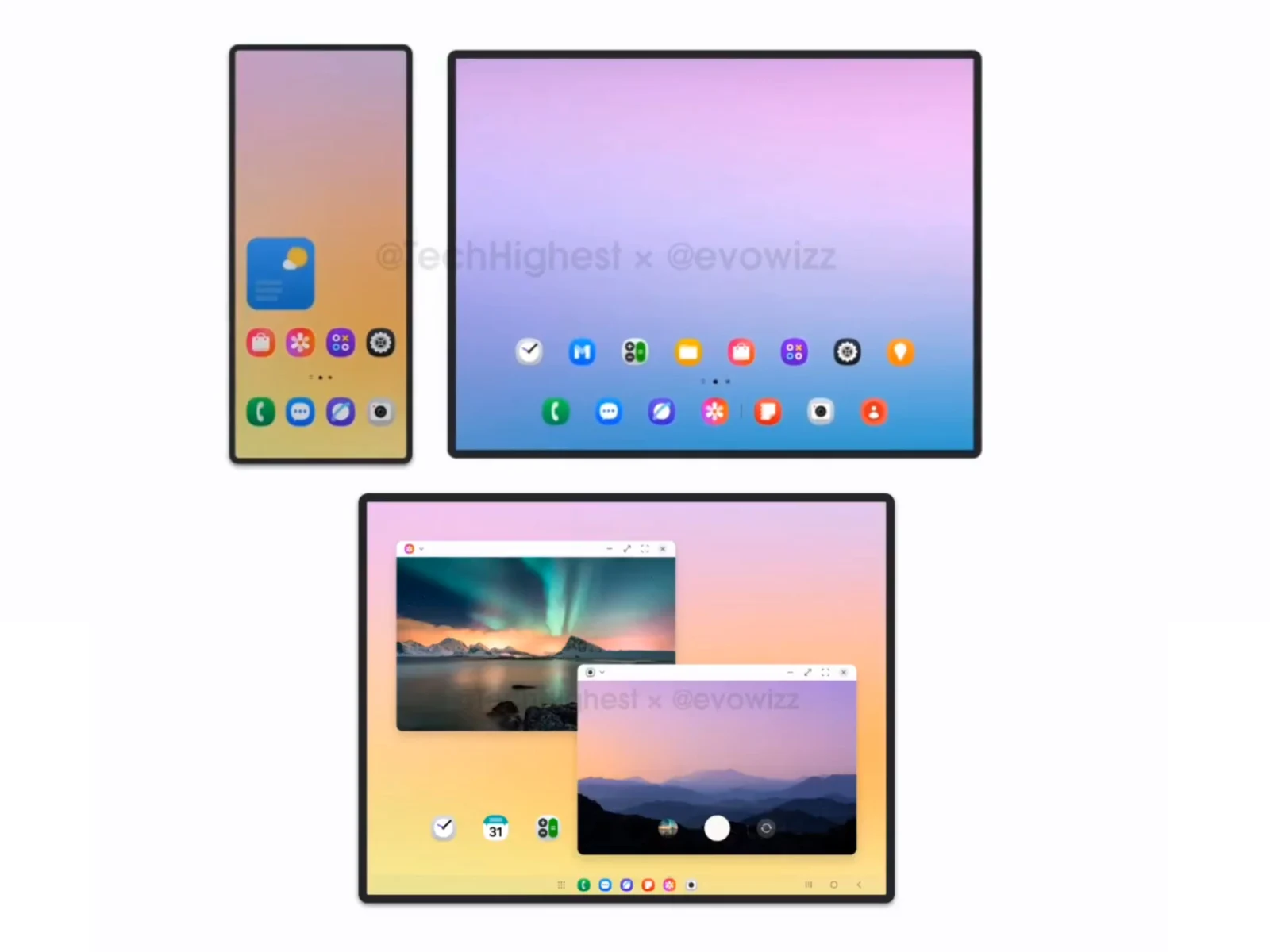
    Meanwhile, @TechHighest has shared numerous brief videos that appear to be official on its X account. These clips suggest that the Galaxy Z TriFold will not simply be a Galaxy Z Fold7 with an added display (currently priced at $1,669 for refurbished units on Amazon). Instead, the tri-folding device is expected to feature enhanced productivity and multitasking abilities, possibly including a built-in DeX mode similar to what’s found on the Galaxy Tab S11 or Galaxy Tab S11 Ultra.

    Multitasking Made Easy

    Furthermore, the Galaxy Z TriFold will come equipped with standard smartphone multitasking options like split-screen functionality and floating app windows. However, it appears that there will be no support for the S Pen. On a positive note, the Galaxy Z TriFold is rumored to include a 100x digital camera zoom, akin to the capabilities of the Galaxy S25 Ultra. In comparison, the Galaxy Z Fold7 only offers a maximum of 30x digital zoom. For more insights, check out the videos provided below.

    @TechHighest via 9to5Google

    Source:
    Link


  • Vivo V60e Leak: 200 MP Camera and 6,500 mAh Battery Insights

    Vivo V60e Leak: 200 MP Camera and 6,500 mAh Battery Insights

    Key Takeaways

    1. The Vivo V60e will feature a 200 MP main camera, significantly upgrading from the 50 MP cameras in previous models.
    2. The device will include an 8 MP ultra-wide-angle camera, a 50 MP front-facing camera, and optical image stabilization, but will lack Zeiss branding.
    3. It is expected to have a large 6,500 mAh battery with 90-watt charging capabilities via USB-C.
    4. The display will be an OLED panel with a 120 Hz refresh rate for smooth visuals.
    5. The smartphone will be powered by a MediaTek Dimensity 7300 chip and is set to launch on October 7 in India, starting at INR 28,999 (approximately $326).


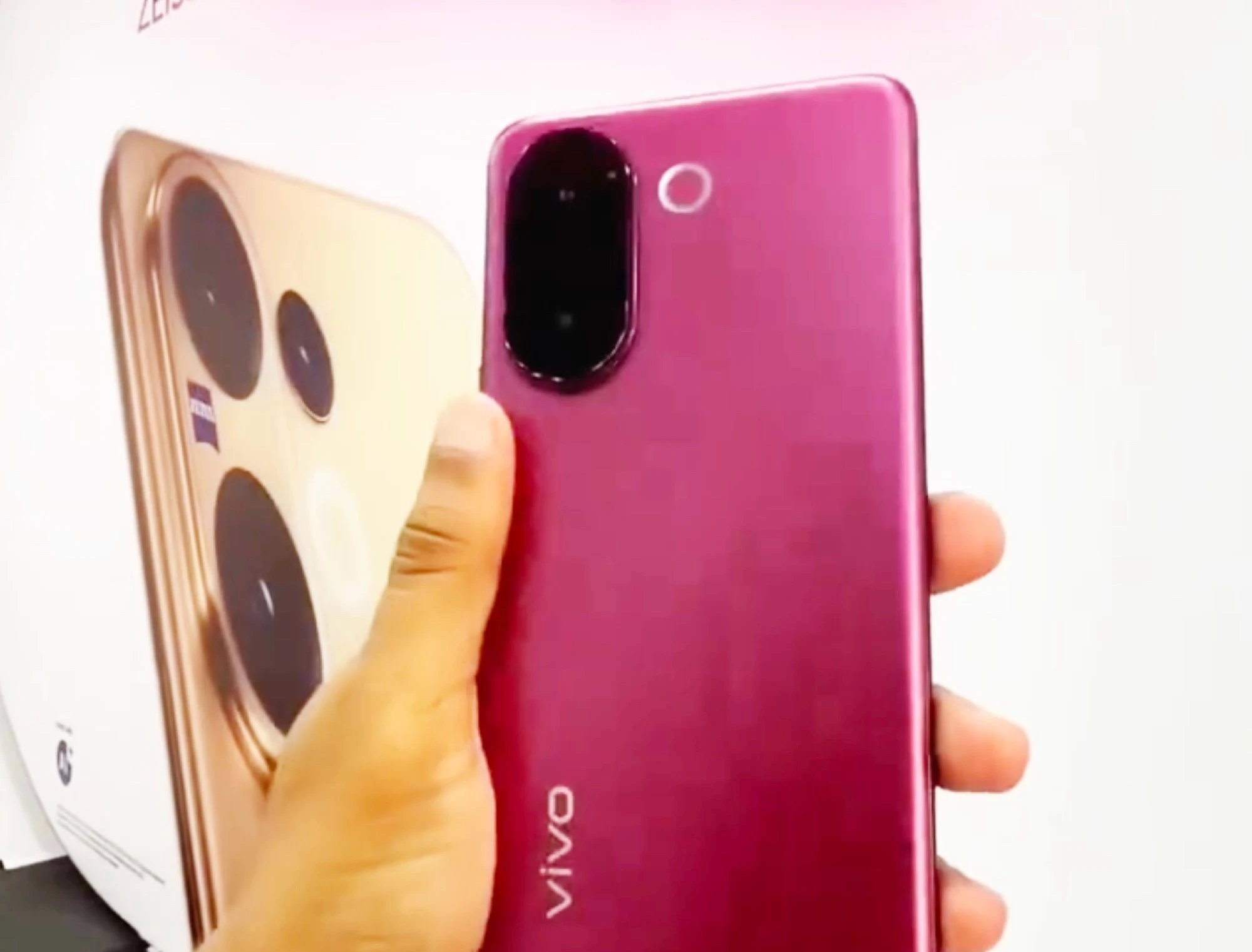
    Vivo’s upcoming mid-range smartphone has been previewed in a video released by Xpertpick. The design seems to have undergone some changes, with a vibrant pink being one of the color choices for the Vivo V60e. The specifications look promising: while the previous models, Vivo V50 and V60, had a 50 MP main camera, it looks like the V60e will feature an impressive 200 MP main camera.

    Camera and Features

    This camera will include optical image stabilization, although it appears that the Zeiss branding will not be included. Alongside the high-resolution main camera, Vivo is adding an 8 MP ultra-wide-angle camera and an LED flash, while the front-facing camera is expected to sport a 50 MP sensor. In addition to the camera features, the battery is predicted to be a standout aspect of the device, boasting a significant capacity of 6,500 mAh, with charging capabilities of up to 90 watts through a USB-C cable. Reports also suggest that the display will be an OLED panel, featuring a refresh rate of 120 Hz.

    Performance Specifications

    Rumors indicate that Vivo will equip the V60e with a MediaTek Dimensity 7300, a 4 nm ARM chip from last year. This chip contains four Cortex-A78 performance cores that can boost up to 2.5 GHz and another four Cortex-A55 efficiency cores that clock in at 2.0 GHz. Unfortunately, the Vivo V60e is still anticipated to launch with Android 15, and further information about software support has yet to be revealed. The mid-range smartphone is set to be officially launched on October 7 and will first be available in India, starting at a price of INR 28,999 (around $326).

    Xpertpick

    Source:
    Link


  • iPhone 17 Surpasses Xiaomi 17 Sales; Shipments Drop Below Xiaomi 15

    iPhone 17 Surpasses Xiaomi 17 Sales; Shipments Drop Below Xiaomi 15

    Key Takeaways

    1. Xiaomi unveiled the Xiaomi 17, Xiaomi 17 Pro, and Xiaomi 17 Pro Max on September 25th, featuring new designs, upgraded screens, and improved cameras.
    2. Analyst Ming-Chi Kuo predicts a 20% decline in shipments for the Xiaomi 17 series compared to the previous Xiaomi 15 series, with total shipments expected to fall short of 8 million units.
    3. The standard Xiaomi 17, initially expected to account for 50-55% of total shipments, may only represent 15-20% due to lower-than-anticipated demand.
    4. Strong competition from the iPhone 17, which has received positive reviews for its enhancements, is impacting the demand for the Xiaomi 17.
    5. The Xiaomi 17 Pro and 17 Pro Max will not be released outside of China, creating uncertainty about global sales performance.


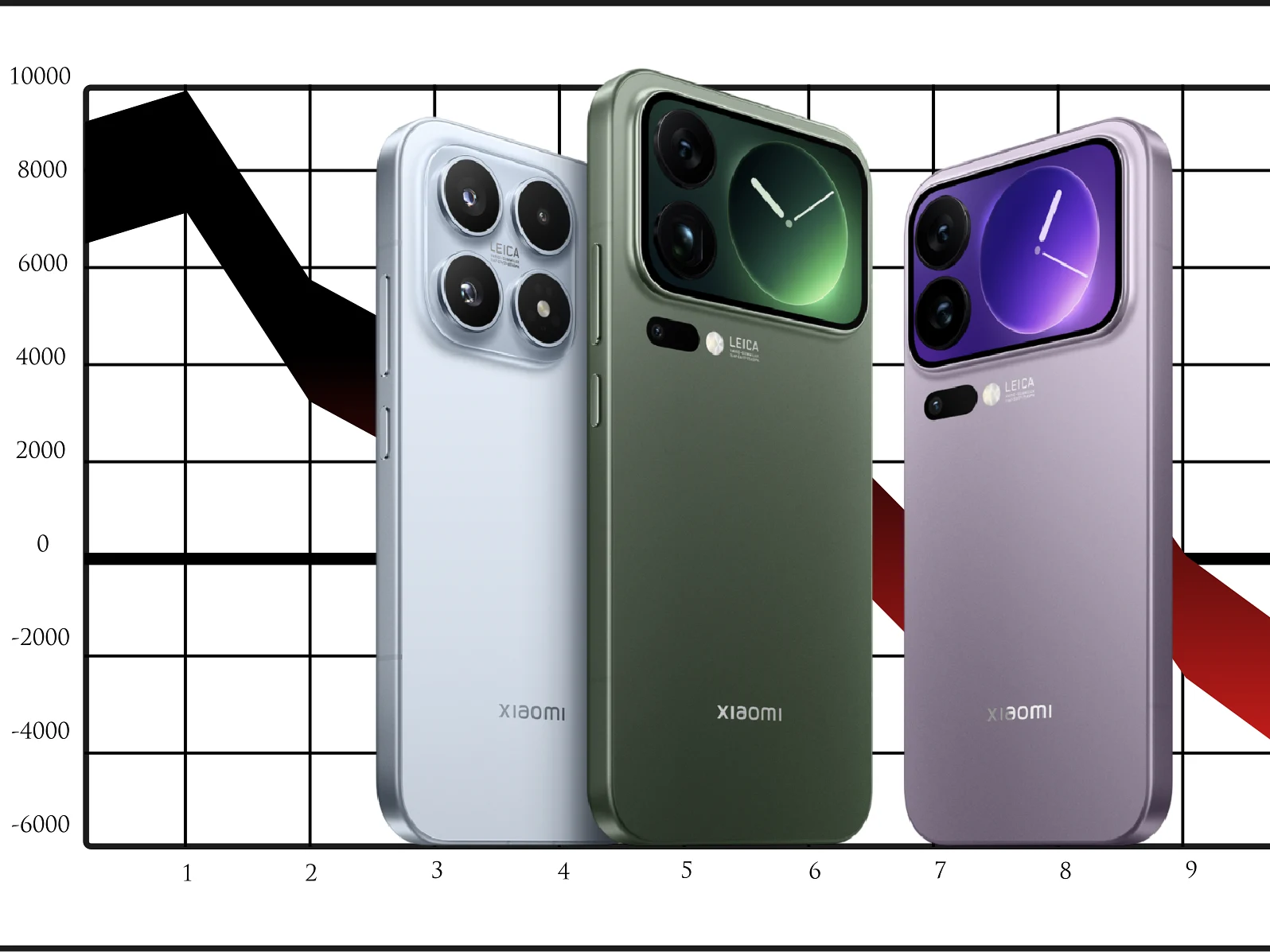
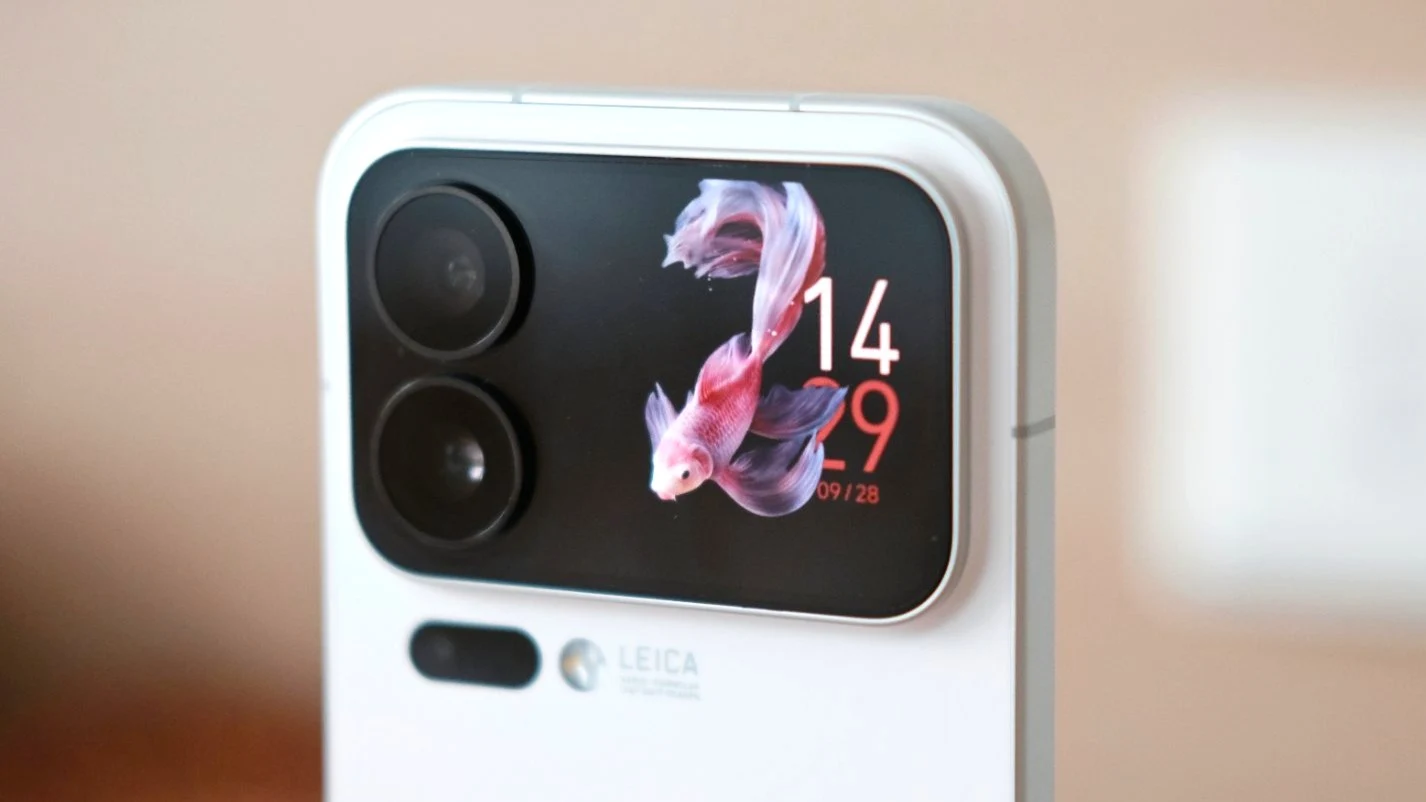
    After waiting for months filled with leaks and speculations, Xiaomi has officially unveiled the Xiaomi 17, Xiaomi 17 Pro, and Xiaomi 17 Pro Max on September 25th in China. These three devices come with eye-catching new designs, upgraded screens, substantial batteries, and entirely new camera setups. Notably, the Xiaomi 17 Pro and Xiaomi 17 Pro Max have stylish secondary displays on their backs. Nevertheless, renowned analyst Ming-Chi Kuo has pointed out that, despite the impressive hardware of the Xiaomi 17 lineup, these new models are expected to sell less than the previous Xiaomi 15 series.

    Demand Insights

    In a post on X, Ming-Chi Kuo highlighted that, according to their industry research, the current demand for the Xiaomi 17 suggests a 20% decline in shipments compared to the initial goal of 10 million units. This reduced shipment forecast is primarily due to low interest in the standard Xiaomi 17, leading to total shipments for the Xiaomi 17 series being projected to fall short of 8 million.

    Sales Expectations

    The standard Xiaomi 17 was predicted to be the leading model in the Xiaomi 17 series, making up 50-55% of total shipments. However, according to Ming-Chi Kuo, the weaker-than-anticipated demand for the basic Xiaomi 17 might only allow it to account for 15-20% of the overall shipments. It seems unlikely that the increased sales of the Xiaomi 17 Pro and Xiaomi 17 Pro Max will make up for this significant shortfall.

    At first glance, Ming-Chi Kuo’s recent shipment forecasts for the Xiaomi 17 series appear contradictory to Xiaomi’s announcement of record sales figures. However, the initial reception at launch might not be the best measure of the long-term demand for a smartphone. For the Xiaomi 17 to surpass the sales of the Xiaomi 15, it will need to attract new buyers, specifically those who are not already loyal customers.

    Market Competition

    So, what might be causing the Xiaomi 17 to lag behind the anticipated sales figures?

    Ming-Chi Kuo attributes this to the strong performance of the standard iPhone 17, which has significantly impacted the demand for the Xiaomi 17. Unlike earlier iPhone releases, this year’s base iPhone 17 has showcased major hardware enhancements, including a fresh 120 Hz display, new 48 MP Fusion cameras, and other features. These improvements have received positive feedback from both the public and the media, leading to the base iPhone 17 enjoying robust popularity in China.

    The analyst further speculates that if the demand for the Xiaomi 17 does not pick up during China’s National Day Golden Week, the company may need to consider reducing prices on certain models to boost sales.

    Future Outlook

    Ming-Chi Kuo’s recent sales analysis of the Xiaomi 17 focuses solely on the Chinese market, leaving it uncertain how the phones will perform on a global scale. Unfortunately, it’s disappointing that Xiaomi is not planning to release the Xiaomi 17 Pro and 17 Pro Max outside of China, as only the Xiaomi 17 and Xiaomi 17 Ultra are expected to have a worldwide launch.

    Source:
    Link


  • Lenovo Teases Slim and Lightweight New Motorola Phone Design

    Lenovo Teases Slim and Lightweight New Motorola Phone Design

    Key Takeaways

    1. Apple has launched the iPhone Air, emphasizing strong performance and a lightweight design, similar to Samsung’s Galaxy S25 Edge.
    2. Tecno has introduced the Pova Slim, a budget-friendly smartphone with a very slim profile, indicating a new trend in the smartphone market.
    3. Lenovo is teasing the Moto X70 Air for the Chinese market, promoting it as “as light as Air” with a focus on AI capabilities.
    4. The Moto X70 Air is expected to be marketed globally as the Motorola Edge 70, with a similar design but different color choices.
    5. Recent leaks indicate that the Motorola Edge 70 will feature a flat display, moving away from the curved screen seen in previous models.


    Following the introduction of the Galaxy S25 Edge, Apple has unveiled the iPhone Air. This new device, like Samsung’s model, maintains strong performance while featuring a sleek and lightweight design. The recent launches seem to signal the beginning of a new trend in the smartphone market. Tecno has also entered this space with the Pova Slim, a budget-friendly phone that boasts a very slim profile. Now, Lenovo is getting involved as well.

    Teasing the Moto X70 Air

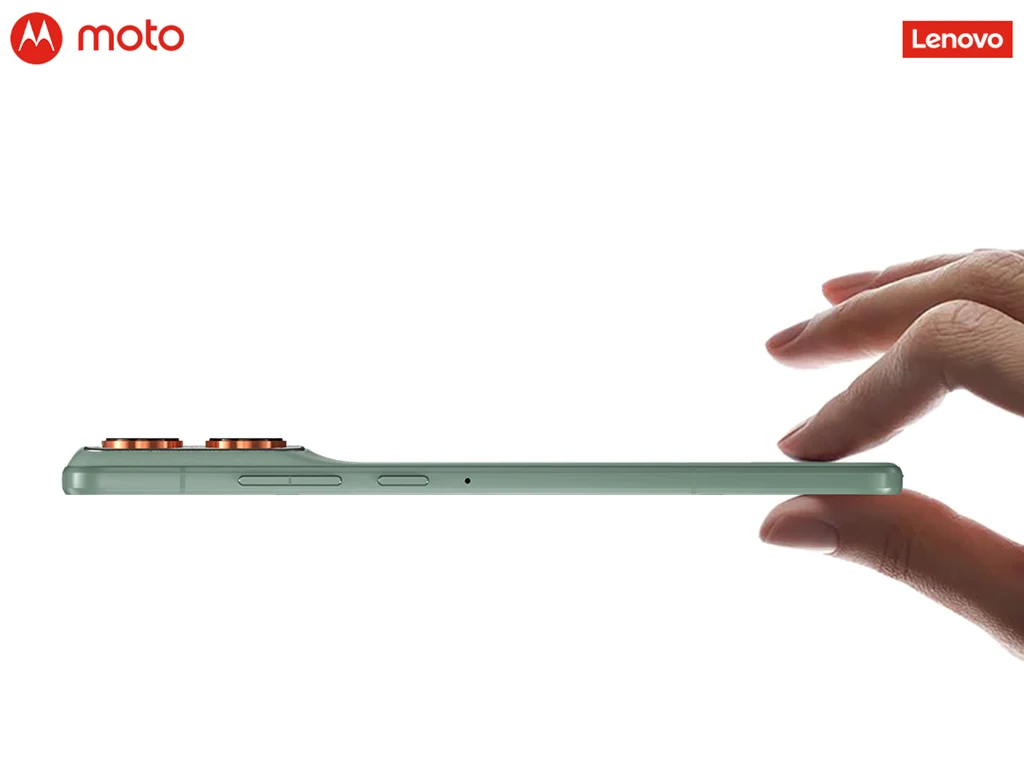
    Lenovo has officially teased the Moto X70 Air, aimed at the Chinese market. The teaser image released shows off an impressively slim device. Lenovo claims that this smartphone will be “as light as Air” and will focus heavily on AI capabilities.

    Marketing Strategy

    Interestingly, the Moto X70 Air is being promoted under the tagline “Air with AI.” While the company has only shared the teaser image so far, it seems likely that the Moto X70 Air will also make its way to the global market as the Motorola Edge 70.

    In fact, a promotional image of the Edge 70 has recently leaked, and its side design looks strikingly similar to what Lenovo has presented in the teaser. While the two models may differ in color choices, their internal components and overall design are likely to be quite similar.

    Expectations for the Edge 70

    Recent leaks suggest that the Motorola Edge 70 will feature a flat display, moving away from the curved screen seen in the Edge 2025. Lenovo is anticipated to provide more official information about this upcoming slim device in the near future.

    Source:
    Link


  • Xiaomi 15T and 17 Series Camera Hardware Review Post-Launch

    Xiaomi 15T and 17 Series Camera Hardware Review Post-Launch

    Key Takeaways

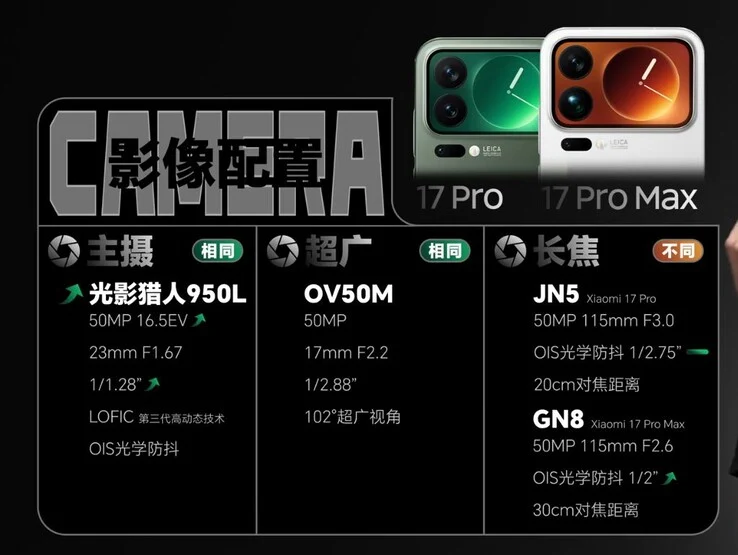
    1. The Xiaomi 17 features advanced camera technology, including a 50 MP Light Hunter 950 primary camera and multiple sensors for different shooting needs.
    2. The Xiaomi 17 Pro and Pro Max share a similar camera setup but differ in zoom lens specifications, with the Pro Max having a larger ISOCELL GN8 sensor.
    3. The Xiaomi 15T series has less advanced camera components compared to the 17 series, with the regular 15T using a 1/1.55-inch OVX8000 main camera.
    4. The 15T Pro includes a 5x periscope lens, while the standard 15T has a 2x lens, showcasing a difference in zoom capabilities.
    5. Both Xiaomi 17 models and the Xiaomi 15T series were launched in different markets, highlighting the company’s strategic product placement.


    Both the Xiaomi 15T series and the Xiaomi 17 lineup made their debut last week, though in separate markets. The company has enhanced its latest smartphones with better camera technology, and the specifics have been revealed after their launches.

    Camera Features of Xiaomi 17

    According to Sudhanshu Ambhore, the standard Xiaomi 17 is fitted with a 1/1.31-inch 50 MP Light Hunter 950 as its primary camera. This sensor works alongside a 1/2.76-inch ISOCELL JN5 under a 2.6x zoom lens, and for ultra-wide angle and selfies, it uses the 1/2.88 inch 50 MP OV50M.

    Differences in Xiaomi 17 Pro Models

    The Xiaomi 17 Pro and Xiaomi 17 Pro Max have the same camera setup, except for their zoom lenses. Both models include 5x periscope lenses, but the 17 Pro has a JN5 sensor, while the 17 Pro Max features the larger 1/1.95-inch ISOCELL GN8. They utilize the 1/1.28-inch Light Hunter A950L as their main camera, with the OV50M also acting as the selfie and ultra-wide angle cameras, similar to the regular Xiaomi 17.

    Camera Specifications for Xiaomi 15T

    The Xiaomi 15T devices are clearly not as high-end as the Xiaomi 17 series, and this difference is reflected in their camera components. The regular 15T comes with a 1/1.55-inch OVX8000 as its main camera, while the 15T Pro has a 1/1.31-inch OVX9100. Both phones share the same additional sensors: a 12 MP OV13B for ultra-wide angles, a 32 MP S5KKDS for selfies, and the common JN5 under the zoom lenses. However, it’s important to highlight that the Xiaomi 15T Pro features a 5x periscope lens, as opposed to the 15T’s 2x lens.

    Source:
    Link


  • MediaTek Dimensity 9500 vs Snapdragon 8 Elite Gen 5: Benchmark Showdown

    MediaTek Dimensity 9500 vs Snapdragon 8 Elite Gen 5: Benchmark Showdown

    Key Takeaways

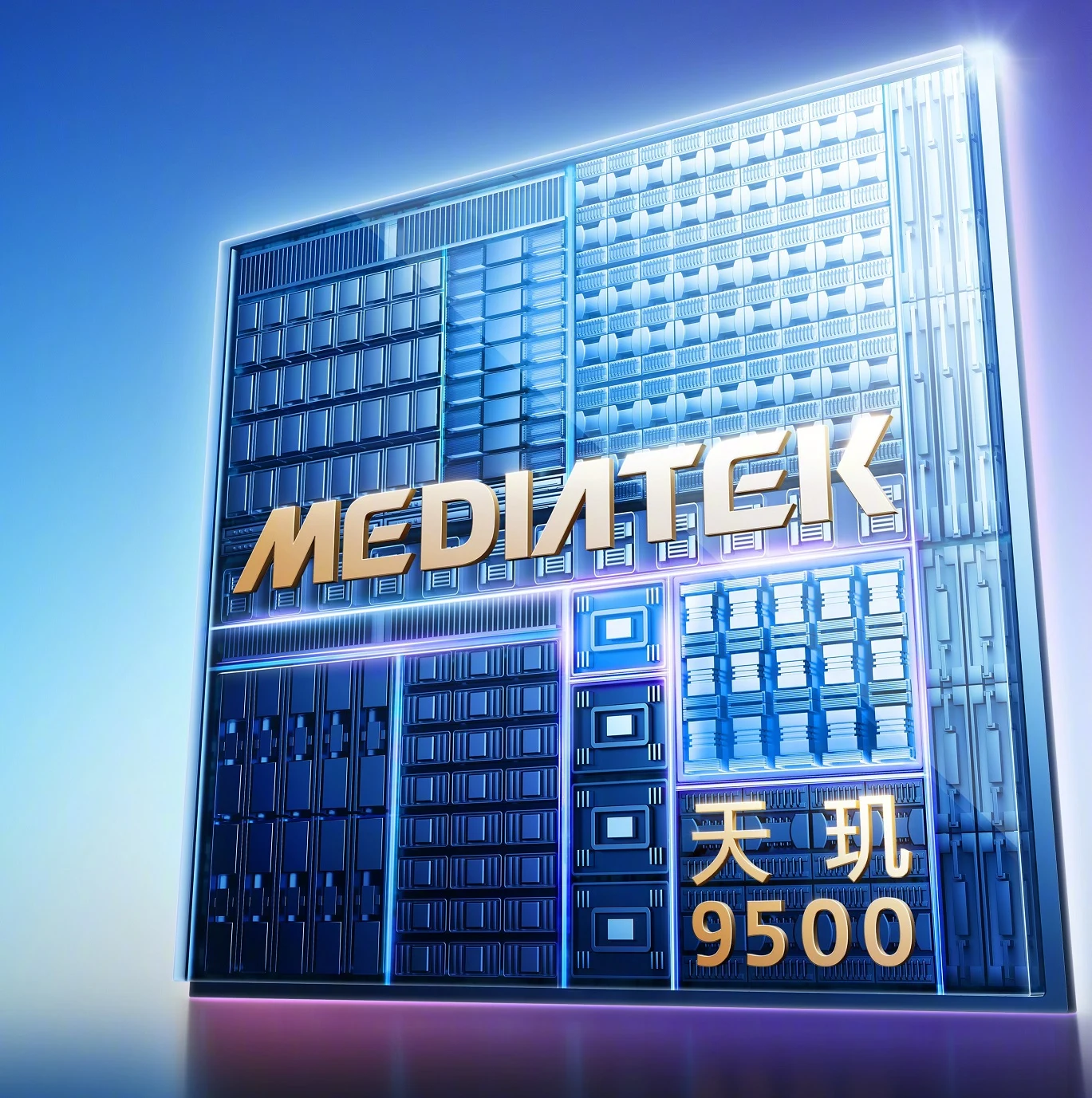
    1. Qualcomm and MediaTek launched new chipsets: Snapdragon 8 Elite Gen 5 and Dimensity 9500.
    2. Snapdragon 8 Elite Gen 5 outperformed Dimensity 9500 in Geekbench 6, with scores of 3,831 (single-core) and 12,459 (multi-core) versus 3,635 and 10,941, respectively.
    3. In graphics performance, Snapdragon 8 Elite Gen 5 scored 8,492 on the 3DMark WildLife Extreme test, while Dimensity 9500 scored 8,251.
    4. Both chipsets had similar results on GFXBench’s 1440P Aztec test, with Snapdragon at 157 FPS and Dimensity at 155 FPS.
    5. Overall, Snapdragon 8 Elite Gen 5 shows superior performance over Dimensity 9500 in both CPU and GPU tests during evaluations on reference design devices.


    Qualcomm and MediaTek recently unveiled their top-tier chipsets for this generation, the Snapdragon 8 Elite Gen 5 and Dimensity 9500, just last week. Although only the Qualcomm chipset is currently available in a smartphone—the Xiaomi 17 series—both have been tested on reference design devices to evaluate their performance against each other.

    Performance Benchmarks

    According to tests done by Xiaobai’s Tech Reviews, the Snapdragon 8 Elite Gen 5 achieved a single-core score of 3,831 and a multi-core score of 12,459 on Geekbench 6. In contrast, the Dimensity 9500 managed to score 3,635 in single-core and 10,941 in multi-core tests, clearly showing its weakness.

    Graphics Performance

    When it comes to GPU performance, the Snapdragon 8 Elite Gen 5 scored 8,492 on the 3DMark WildLife Extreme test. The Dimensity 9500 is close behind with a score of 8,251. Interestingly, both chipsets showed similar results on GFXBench’s 1440P Aztec test, with the Qualcomm chipset reaching 157 FPS compared to MediaTek’s 155 FPS. Notably, both chipsets significantly outperform the Apple A19 Pro in these benchmarks.

    Conclusion

    In summary, Qualcomm seems to have the upper hand over MediaTek once more. The Snapdragon 8 Elite Gen 5 surpasses the Dimensity 9500 in both CPU and GPU tests, although it’s important to mention that all evaluations were done using OEM reference design devices.

    Source:
    Link


  • Snapdragon 8 Elite Gen 5 Outperforms Apple A19 Pro in Gaming

    Snapdragon 8 Elite Gen 5 Outperforms Apple A19 Pro in Gaming

    Key Takeaways

    1. The Snapdragon 8 Elite Gen 5 is Qualcomm’s most advanced smartphone SoC, powering the Xiaomi 17 series.
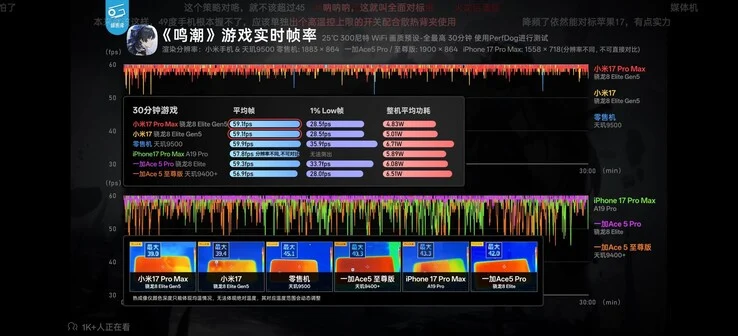
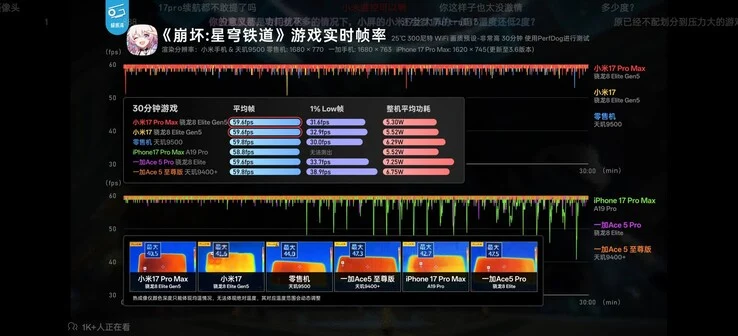
    2. The Xiaomi 17 Pro Max outperforms the iPhone 17 Pro Max in gaming benchmarks, achieving higher frame rates in Wuthering Waves and Honkai Impact 3rd.
    3. The Xiaomi 17 Pro Max is more power-efficient, consuming less power than the iPhone 17 Pro Max during gameplay.
    4. The Xiaomi device operates at slightly higher resolutions while maintaining better performance metrics.
    5. The Xiaomi 17 Pro Max runs cooler during testing, with lower peak temperatures compared to the iPhone 17 Pro Max.


    The Snapdragon 8 Elite Gen 5 stands out as Qualcomm’s most advanced smartphone system on a chip (SoC) to date. Building upon the Snapdragon 8 Elite, it fuels the fresh Xiaomi 17 series. The Xiaomi 17 Pro Max has been evaluated in several gaming benchmarks against the A19 Pro-equipped iPhone 17 Pro Max.

    Performance in Wuthering Waves

    When playing Wuthering Waves, the Xiaomi 17 Pro Max achieves an average frame rate of 59.1 FPS, slightly ahead of the iPhone 17 Pro Max’s 57.8 FPS. Even more noteworthy, the Xiaomi device consumes an average of 4.83 W of power, compared to the iPhone’s 5.89 W. It’s important to note that the Xiaomi phone operates at a marginally higher resolution than the iPhone 17 Pro Max.

    Honkai Impact 3rd Results

    The performance continues similarly in Honkai Impact 3rd. At the same resolution, the Xiaomi 17 Pro Max records an average of 59.6 FPS, while the iPhone 17 Pro Max lags behind at 58.8 FPS. The Snapdragon 8 Elite Gen 5 device is also more power-efficient, drawing 5.30 W compared to the iPhone’s 5.52 W.

    Temperature Comparison

    Beyond being more powerful and efficient, the Xiaomi 17 Pro Max remains cooler during testing than the iPhone 17 Pro Max. In the initial test, the Xiaomi device reaches a peak temperature of 39.0°C, while the iPhone rises to 43.3°C. In the second test, the temperatures were 40.5°C for the Xiaomi and 42.7°C for the iPhone, again highlighting the Xiaomi flagship’s advantage.

    Source:
    Link


  • Xiaomi 18 Unveils Snapdragon 8 Elite Gen 6 and New Modems

    Xiaomi 18 Unveils Snapdragon 8 Elite Gen 6 and New Modems

    Key Takeaways

    1. Erencan Yılmaz has uncovered hints about the Leica camera sensors in the Xiaomi 17 Ultra and future Xiaomi models.
    2. The Xiaomi 18 Pro is expected to compete with Apple’s iPhone 18 Pro in September 2026.
    3. The Snapdragon 8 Elite Generation 6 is likely to be released in 2026, with improved performance and efficiency.
    4. Qualcomm’s modem line continues with the expected introduction of the SDX90 and SDX95 modems in 2026 and 2027, respectively.
    5. The Snapdragon 8 Elite Gen 6 will be manufactured using the advanced TSMC 2nm process for the first time.


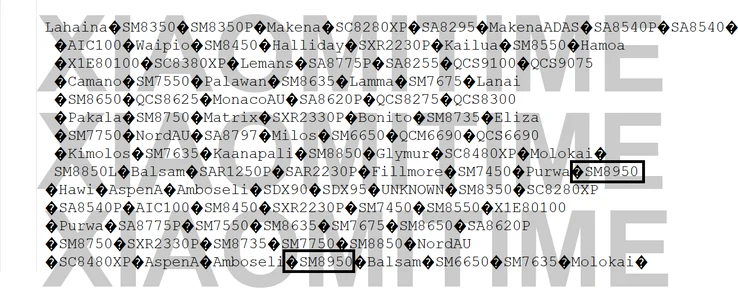
    Who is brave enough to look ahead? The famous code analyst Erencan Yılmaz, who has recently uncovered solid hints about the Leica camera sensors used in the Xiaomi 17 Ultra, has provided an early peek into September 2026. This is when the Xiaomi 18 Pro is expected to go up against Apple’s iPhone 18 Pro. As seen in the code snippets below, the current HyperOS 3 code already shows signs of future Qualcomm products, particularly a chipset identified by the model number SM8950, likely representing the Snapdragon 8 Elite Gen 6.

    Snapdragon 8 Elite Generation 6

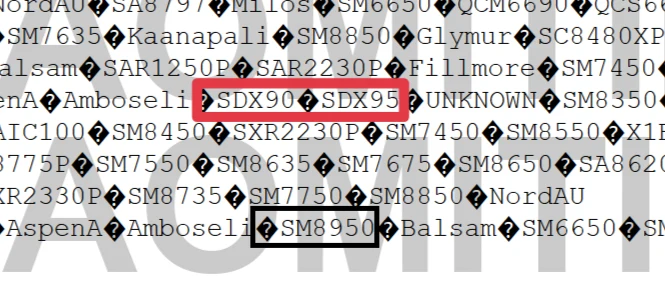
    In contrast to this year, where there was uncertainty about the name of the Snapdragon 8 Elite successor for quite some time, it seems that the release of the Snapdragon 8 Elite Generation 6 in 2026 is almost certain. The same goes for the continuation of the Qualcomm modem line, which transitioned from the Snapdragon brand to Qualcomm this year. Following the Snapdragon X80 and the existing Qualcomm X85 (featured in the Snapdragon 8 Elite Gen 5), it’s not surprising that the SDX90 and SDX95 modems are embedded in Xiaomi’s code. These are expected to be introduced as Qualcomm X90 in 2026 and Qualcomm X95 in 2027, likely during the Mobile World Congress, assuming the current release timeline stays the same. Of course, this information isn’t particularly useful for smartphone users right now, but the Snapdragon 8 Elite Gen 6 is anticipated to deliver a major boost in performance and efficiency, as it is expected to be made using the TSMC 2nm process for the very first time.

    Source:
    Link