Tag: 5G

  • Lenovo ThinkTab X11: Removable Battery, Waterproof

    Lenovo ThinkTab X11: Removable Battery, Waterproof

    Key Takeaway

    – Price starts at $499 (8GB/128GB) or $579 (256GB) via Lenovo USA; €699 for 256GB in Germany
    – Rugged business tablet with IP68 waterproof rating (with protective cover)
    – Replaceable 10,200 mAh battery with 17-hour web surfing battery life
    – 10.95-inch 90Hz IPS display (2560×1600, 800 nits)
    – Includes 5G modem, nano-SIM, Wi-Fi 6E, two USB-C ports, and headphone jack


    Lenovo ThinkTab X11 Now Available

    The Lenovo ThinkTab X11 was anounced at the Mobile World Congress and the tablet is finally available. The tablet can be ordered directly from Lenovo USA for $499 with 8 GB RAM and 128 GB storage, or for $579 with 256 GB. Lenovo Germany is offering the tablet exclusivly with 256 GB for €699. The storage can be expanded using a microSD card.

    Target Audience and Durability

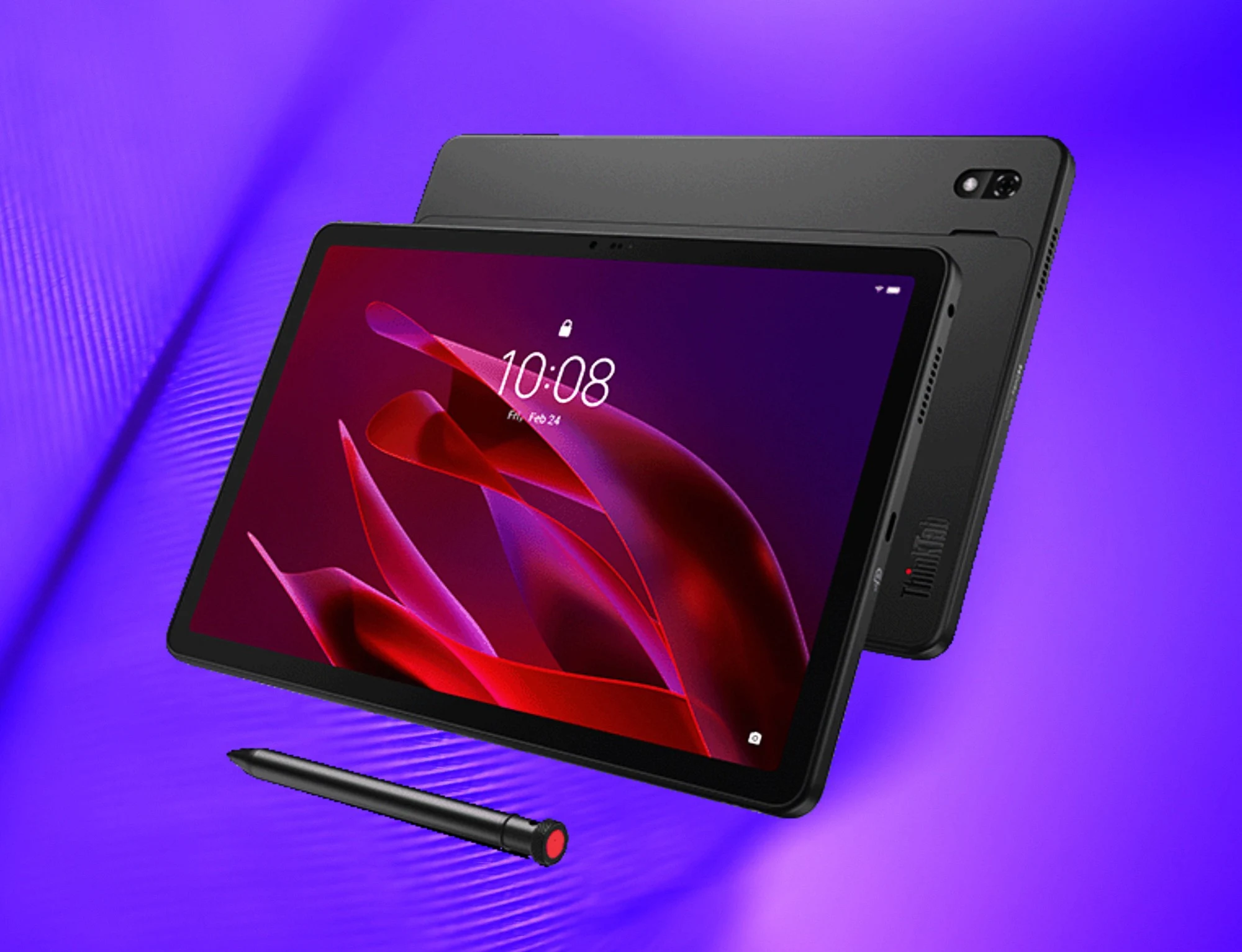
    The ThinkTab X11 is primarilly aimed at business customers, but the specs also make the device interesting for consumers who are looking for a particularly robust, durable tablet. Although the tablet, which is almost 1 centimeter thick and weighs 650 grams, is not particularly thin or light, the casing is IP68-certified and therefore waterproof – at least with the corresponding protective cover. Without the cover, the device is only IP52 certified.

    Connectivity and Display

    The integrated 5G modem and nano-SIM slot make it possible to access the internet on the go. The 10.95-inch touchscreen in 16:10 format is based on an IPS panel that achieves a resolution of 2,560 x 1,600 pixels, a frame rate of 90 Hz and a brightness of 800 nits; 72% of the NTSC color space can be displayed.

    Performance and Battery Life

    Inside the tablet is a Qualcomm Snapdragon 7s Gen 3. A special feature is that the 10,200 mAh battery can be easily replaced when the end of the 1,000 charge cycle lifespan is reached. Lenovo advertises a battery life of 17 hours when surfing the web. A fingerprint sensor in the power button, an 8 MP selfie camera, a 13 MP main camera, Wi-Fi 6E, two USB-C ports and a 3.5 mm headphone jack complete the package.

    Pricing Availibility

    • Lenovo USA: $499 (8GB/128GB) or $579 (256GB).
    • Lenovo Germany: €699 (256GB only).
    Sources
  • Hisense Teases New E Ink Smartphone for 2025

    Key Takeaway

    – Hisense A10 is a reported successor to the A9, featuring a 7-inch Carta 1300 E Ink display (up from 6.1-inch Carta 1200).
    – Specs include 6GB RAM, 128GB storage, a 4,500mAh battery, dual-SIM 5G, and 4K HDR camera.
    – Listed quad-core Cortex-A35 processor is likely an error, as the A9 used a more powerful Snapdragon 662 octa-core.
    – Release targeted for mid-2026, but no official confirmation from Hisense yet; info should be taken cautiously.


    In 2022, the Hisense A9 was announced as an Android smartphone with an E Ink display. Three years later, Hisense released a variant with more RAM and double the storage of the original. Now, report of a true successor has begun circulating.

    Specifications and Display Details

    The new model is said to be called the Hisense A10, and a teaser image alongside some key specifications have been revealed. According to reports, the A10 will have a larger display than the A9 — A 7-inch Carta 1300 E Ink display with a 300 PPI, to be precise. The Hisense A9 has a 6.1-inch Carta 1200 E Ink display.

    Processor and Performance Concerns

    The Hisense A10 is reported to be powered by an unnamed quad-core processor with Cortex-A35 cores. It has also been stated that the device has 6GB of RAM and 128GB of storage. Considering the Hisense A9 is powered by the Snapdragon 662 chipset which is an octa-core processor with CPU cores based on the Cortex-A73 and Cortex-A53 cores, a quad-core processor with significantly weaker CPU cores for the Hisense A10 is definitely an error.

    Other reported specifications include a camera that can record in 4K with HDR support, dual-SIM support with 5G, Bluetooth 5.1, and a 4,500mAh battery capacity which is a notable increase from the 4,000mAh battery of the previous generation. There’s no mention of the version of Android it will ship with.

    • 7-inch Carta 1300 E Ink display
    • 300 PPI resolution
    • Unnamed quad-core processor
    • 6GB of RAM
    • 128GB of storage
    • 4K HDR camera
    • Dual-SIM with 5G
    • Bluetooth 5.1
    • 4,500mAh battery

    Release Timeline and Reliability

    Hisense itself hasn’t shared any details of the device, so the information above should be taken with a grain of salt. However, if an earlier report from last December is to be believed, the Hisense A10 is scheduled for release in mid-2026, so we can expect an official announcement soon.

    Sources
  • HP Launches 13-Inch Laptop: 64GB RAM, 800 Nit Display, 4G

    HP Launches 13-Inch Laptop: 64GB RAM, 800 Nit Display, 4G

    Key Takeaway

    – EliteBook 8 Flip G2i 13 convertible now available globally
    – Entry-level Core Ultra 5 model is outperformed by the older generation
    – Higher-tier Panther Lake processors (e.g., Core Ultra 7 355, 356H, 366H) offer significant performance gains
    – Options include NFC, 5G, up to 2 TB PCIe Gen 5 storage, and a 62 Wh battery
    – Five 1200p 60 Hz IPS display choices, with some reaching 800 nits and 100% sRGB


    Global Launch of New Convertible Laptop

    HP is now selling a new 13-inch convertible laptop worldwide. For context, the company announced the EliteBook 8 G2 series over two months ago in many sizes, form factors and processor variants. Incidentally, the EliteBook 8 G2i 13 is already available to buy in multiple countries at this point.

    Comparisons with the Previous Model

    By contrast, HP’s new 13-inch convertible replaces the EliteBook 8 Flip G1i 13, as we reviewed in September 2025 featuring Intel’s Arrow Lake-U platform. According to our benchmarks, this SKU performs better than the EliteBook 8 Flip G2i 13’s entry-level model. While the Core Ultra 5 322 only contains 6 cores, HP also offers the convertible with some other Panther Lake processors available.

    Processor Options and UK Configurations

    For instance, the EliteBook 8 Flip G2i 13 starts with the Core Ultra 7 355 in Germany and the UK, which easily runs faster than the older Core Ultra 7 265U. Also, the UK has received Core Ultra 7 356H SKUs with 16 CPU cores and up to 64 GB of RAM memory. The moderately more powerful Core Ultra 7 366H is available in the US too, as are 24 GB, 32 GB and 64 GB RAM combos.

    Moreover, HP sells the EliteBook 8 Flip G2i 13 with optional NFC and 5G connectivity (MediaTek T700), up to 2 TB of PCIe Gen 5 storage and a 62 Wh battery across all SKUs they offer. Currently, the convertible can be purchased with a choice of five displays also. Although all are 1200p and 60 Hz IPS panels, some peak at 800 nits brightness with 100% sRGB colour space coverage. Pricing starts at $3,128 in the US, €2,539 in the Eurozone and £1,520 in the UK with different specifications depending on the model.


  • Dish Offers Starlink Internet with Free Hardware and Installation

    Dish Offers Starlink Internet with Free Hardware and Installation

    Key Takeaways

    1. Dish acquired spectrum from Sprint to become a major mobile carrier but shifted strategy to sell off the spectrum instead.
    2. AT&T purchased $23 billion worth of spectrum from Dish, impacting Dish’s original 5G network plans.
    3. SpaceX invested $19 billion in EchoStar for spectrum and licenses to enhance its Starlink satellite services.
    4. Dish is now a hybrid MVNO, offering both AT&T and Starlink services, including installation assistance.
    5. Starlink plans to introduce a low-cost $40 per month plan, with potential discounts for Dish customers.


    When Sprint had to sell its Boost Mobile division to get the merger with T-Mobile approved, the assets were acquired by Dish, a satellite TV company.

    Dish’s Ambitious Goals

    Dish originally had grand ambitions to utilize the spectrum it gained and become the fourth largest mobile carrier in America by launching its own 5G network. However, T-Mobile’s merger with Sprint allowed it to advance so quickly in 5G deployment that traditional competitors like Verizon and AT&T found themselves lagging behind.

    A Shift in Strategy

    Instead of constructing a 5G network, EchoStar, Dish’s parent company, chose to sell off its spectrum. This decision led AT&T to purchase $23 billion worth of 50 MHz low-band, 600 MHz, and 3.45 GHz spectrum. Consequently, Dish transitioned into a hybrid MVNO and began shutting down its existing towers.

    SpaceX’s Major Investment

    In a significant move, SpaceX paid $19 billion to EchoStar for additional 50 MHz spectrum and MSS licenses. This investment aims to enhance the capacity and speed of its Starlink direct-to-cell satellite system by a factor of 100. With this, SpaceX can compete with major players like T-Mobile, Verizon, and AT&T by providing 5G services from space, especially when it rolls out its large V3 satellites in 2026.

    Dish’s New Offerings

    Although Dish’s vision of becoming a leading American mobile carrier didn’t materialize and it turned into a hybrid MVNO, its collaboration with spectrum licensees has enabled it to provide both AT&T and Starlink services.

    Dish is now offering Starlink Internet, which comes with no upfront hardware costs and assistance with installation from its satellite service technicians. The Starlink subscription fee starts at $80 per month for speeds of up to 200 Mbps, while SpaceX’s satellite Internet service provides speeds over 400 Mbps for an additional $40.

    Potential Discounts for Customers

    Starlink is considering introducing its most affordable $40 per month plan with the Mini dish, which is currently available at a 40% discount on Amazon. Dish customers might also have the chance to benefit from this promotion.

    Source:
    Link


  • Xiaomi 17 Ultra Certification Confirms Leica Camera Launch Soon

    Xiaomi 17 Ultra Certification Confirms Leica Camera Launch Soon

    Key Takeaways

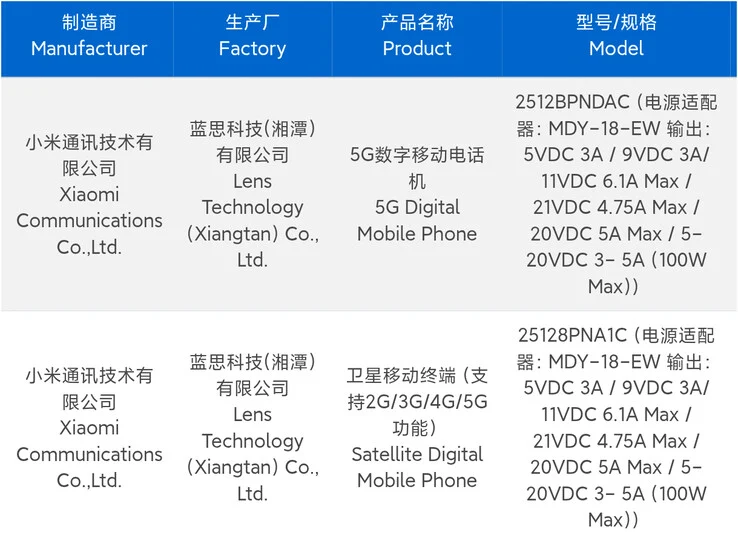
    1. The Xiaomi 15 Ultra’s successor, identified as Xiaomi 17 Ultra, has been found in China’s 3C certification database with two models: 2512BPNDAC (5G only) and 25128PNA1C (5G + satellite connectivity).
    2. Both models feature 100-watt fast charging, similar to the Xiaomi 17 series.
    3. The satellite-compatible model is rumored to support Beidou satellite SMS and Tiantong satellite calling.
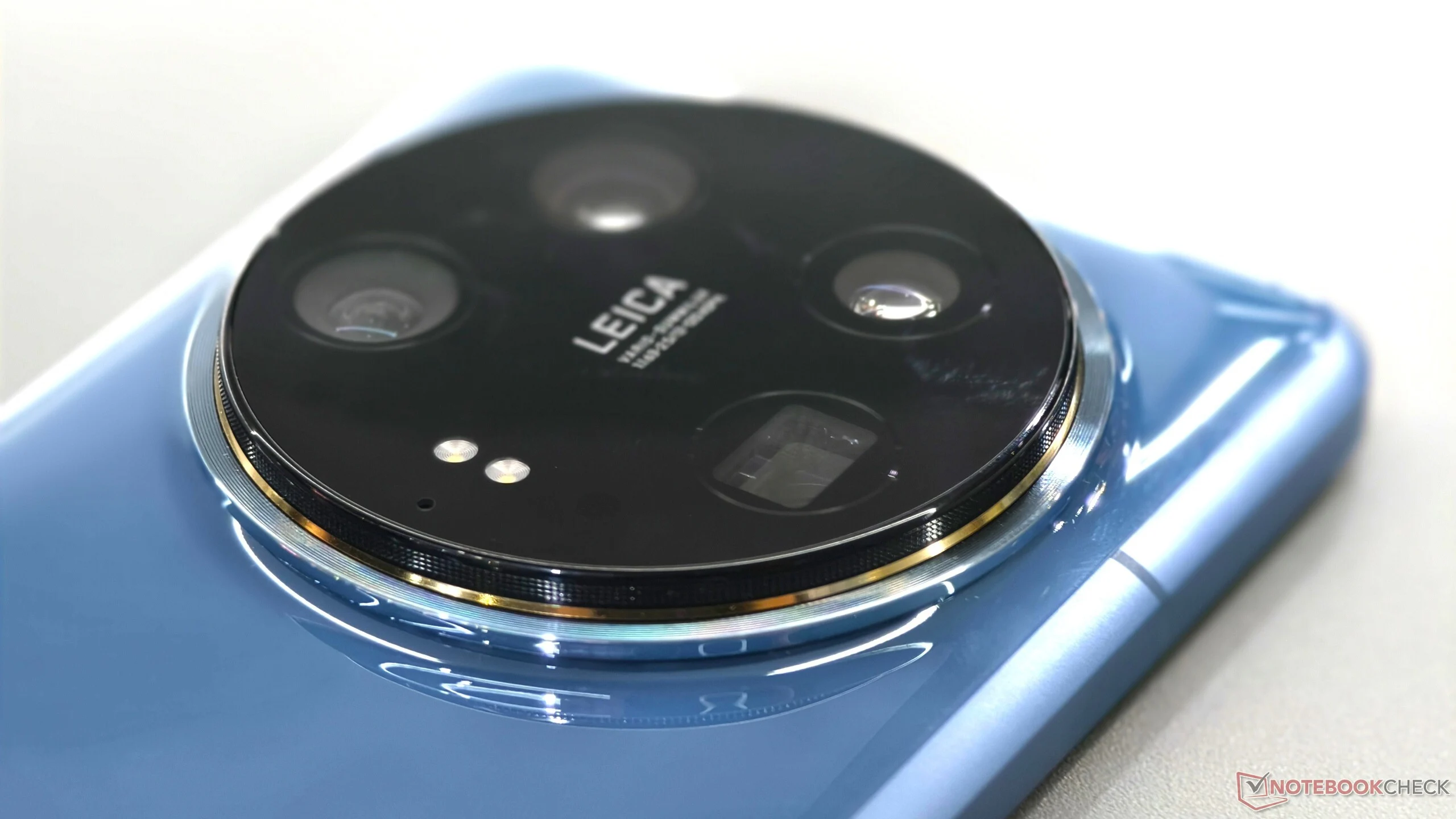
    4. The Xiaomi 17 Ultra may include an advanced external Leica camera module offering a “physical zoom” solution.
    5. The Xiaomi 17 Ultra is expected to launch in December, potentially ahead of competitors Vivo X300 Ultra and Oppo Find X9 Ultra.


    The Xiaomi 15 Ultra’s successor has been detected in China’s 3C certification database, featuring two unique models. The CCC listings validate that both versions offer 100-watt fast charging, akin to the Xiaomi 17, Xiaomi 17 Pro, and Xiaomi 17 Pro Max. The certification identifies models 2512BPNDAC and 25128PNA1C, which primarily differ in their mobile connectivity options. The first model is limited to 5G networks, while the second includes satellite connectivity (at least for China). Well-known leaker Digital Chat Station asserts that this version allows for Beidou satellite SMS and Tiantong satellite calling.

    Details Beyond Certification

    Nevertheless, the certification entries might not provide the entire story. In the past few weeks, more information has slowly come to light indicating that one of the two Xiaomi 17 Ultra versions – likely the pricier satellite-compatible variant – could also offer an external Leica camera module. This accessory is said to be more than just a simple teleconverter lens, like the optional attachments seen with Vivo X300 Pro or Oppo Find X9 Pro. The leaker mentions that it will be a much more advanced “physical zoom” solution, probably on par with a standard zoom lens. Additionally, Digital Chat Station has stirred up rumors that the Xiaomi 17 Ultra could hit the Chinese market before the Vivo X300 Ultra and Oppo Find X9 Ultra. While both Vivo and Oppo’s flagship phones are anticipated to launch globally around the end of Q1 2026, the Xiaomi 17 Ultra might make its debut as soon as this December.

    Rumblings in the Tech Community

    As news continues to unfold, the excitement around the Xiaomi 17 Ultra builds, especially considering its advanced features and capabilities. With its expected 100-watt fast charging and the intriguing possibility of a Leica camera module, tech enthusiasts are eager to see how it stacks up against competitors. The anticipation surrounding its early launch in December adds an extra layer of interest, particularly as it may precede other flagship devices by a noticeable margin. As we await more details, the landscape of premium smartphones is certainly heating up.

    Source:
    Link


  • Xiaomi Redmi Note 15 Pro 5G Global Launch: Key Upgrades Revealed

    Xiaomi Redmi Note 15 Pro 5G Global Launch: Key Upgrades Revealed

    Key Takeaways

    1. The Redmi Note 15 Pro is set for international launch a few months after its initial unveiling in China on August 21.
    2. Xiaomi plans to offer both 4G and 5G versions of the Redmi Note 15 series for global markets.
    3. The phone features a MediaTek Dimensity 7400 Ultra processor, a 7,000 mAh battery, and a 50 MP main camera (Sony LYT-600).
    4. The Redmi Note 15 Pro 5G will use the same Samsung ISOCELL S5KHPE camera sensor as the Redmi Note 15 Pro Plus.
    5. The global version may differ from the Chinese model, with additional details on pricing and availability yet to be announced.


    The Redmi Note 15 Pro is expected to be a few months away from its international launch. Xiaomi plans to introduce 4G versions of the Redmi Note 15 series, which suggests that the name ‘5G’ will likely be added to the standard Redmi Note 15 Pro when they start selling it outside of China.

    Specifications Overview

    The Redmi Note 15 Pro was unveiled in Xiaomi’s home country on August 21. It features a MediaTek Dimensity 7400 Ultra processor, a robust 7,000 mAh battery, and a Sony LYT-600, which acts as its 50 MP main camera. Initial firmware insights indicate that the global model of the Redmi Note 15 Pro might differ from its current Chinese version upon its release.

    Camera Features

    Earlier this month, similar details about the Redmi Note 15 Pro Plus surfaced. According to PaperKing13, the Redmi Note 15 Pro 5G will utilize the same Samsung ISOCELL S5KHPE camera sensor found in the Redmi Note 15 Pro Plus, setting it apart from the already available Redmi Note 14 Pro 5G (currently priced at $309 on Amazon).

    Future Innovations

    Sadly, advancements in camera technology may not go much further. On X, PaperKing13 mentioned that the OmniVision OV08F will be making a comeback from the Redmi Note 14 Pro 5G, featuring an 8 MP ultra-wide-angle lens. Likewise, the Redmi Note 15 Pro 5G will be equipped with a new 200 MP primary camera alongside a 20 MP front-facing camera. However, the complete details on global pricing and availability are still uncertain at this time.

    Source:
    Link


  • Samsung Launches Affordable Phone with Modern Design & 6 OS Updates

    Samsung Launches Affordable Phone with Modern Design & 6 OS Updates

    Key Takeaways

    1. The Samsung Galaxy F17 is the successor to the Galaxy F16, featuring similar specifications and design.
    2. It has a 6.7-inch Super AMOLED display with FHD+ resolution and a 90 Hz refresh rate, protected by Corning Gorilla Glass Victus.
    3. The camera setup includes a 50 MP primary camera, a 5 MP ultrawide lens, a 2 MP macro camera, and a 13 MP front camera, with software support for six major Android updates.
    4. Powered by the Exynos 1330 processor, it offers up to 8 GB of RAM, 128 GB of storage (expandable to 2 TB), and a 5,000 mAh battery with 25 W charging.
    5. The pricing starts at INR 14,999 ($163) for the base model and is available in neo black and violet pop colors.


    Samsung has launched the Galaxy F17, which is the successor to the earlier Galaxy F16 introduced this year. This new budget smartphone features very similar specifications and attributes to the Galaxy A17. Even the design closely resembles that of the previous model.

    Display Details

    The Samsung Galaxy F17 5G features a 6.7-inch Super AMOLED Infinity-U display, offering a FHD+ resolution and a 90 Hz refresh rate. The screen is safeguarded by Corning Gorilla Glass Victus, providing protection against unexpected drops and scratches. On the back, there’s a pill-shaped camera module that closely resembles the design of Samsung’s Galaxy Z Fold 6 (currently available for $919.95 on Amazon).

    Camera and Software

    In terms of camera capabilities, the F17 keeps the same specs as the F16. It boasts a primary camera of 50 MP with OIS, along with a 5 MP ultrawide lens and a 2 MP macro camera. The front also remains unchanged, sporting a 13 MP camera for selfies and video calls. The phone operates on Android 15 with One UI 7 and Samsung guarantees six significant Android OS updates (Android 16, 17, 18, 19, 20, and 21) along with six years of security updates, lasting until 2031.

    Performance and Pricing

    Regarding performance, the 5G smartphone is powered by the Exynos 1330 processor, the same chipset that was used in the previous model. It comes with up to 8 GB of RAM and 128 GB of internal storage, which can be expanded to 2 TB using a micro-SD card. The battery capacity mirrors that of its predecessor, featuring a 5,000 mAh battery with 25 W wired charging support. Additional features include a single speaker, side-mounted fingerprint sensor, IP54 rating for dust and water resistance, GPS, WiFi 5, NFC, and Bluetooth 5.3 connectivity.

    The Samsung Galaxy F17 5G is priced starting at INR 14,999 ($163) for the 4 GB + 128 GB basic model, while the 6 GB + 128 GB variant is available for INR 15,999 ($180). It can be purchased from Samsung’s official website, Flipkart, and other authorized retailers in India. The phone is offered in neo black and violet pop color choices.

    Source:
    Link


  • MIT Researchers Launch 5G Receiver 30x Better Than Traditional Models

    MIT Researchers Launch 5G Receiver 30x Better Than Traditional Models

    Key Takeaways

    1. 5G devices are causing increased signal interference for small, battery-operated gadgets like health trackers and environmental sensors.
    2. MIT has developed a passive filtering receiver that efficiently blocks unwanted signals using pre-charged capacitors and tiny switches.
    3. The new receiver operates on less than a milliwatt of power and occupies an area smaller than 0.05 square millimeters.
    4. It can block 30 times more harmonic interference compared to standard receivers, enhancing communication reliability.
    5. Future research aims to power IoT devices through ambient Wi-Fi or Bluetooth signals, potentially eliminating the need for batteries.


    As 5G devices become more prevalent, the airwaves are getting busier with signals. For small, battery-operated gadgets such as health trackers or environmental sensors, this noisy background can lead to interference that hampers communication. These compact devices can’t utilize the large, energy-consuming signal filters found in bigger electronics like smartphones.

    Innovative Solution

    The team at MIT has tackled this challenge by creating a receiver featuring a groundbreaking passive filtering method. This system incorporates a distinctive arrangement of pre-charged, stacked capacitors along with minuscule switches to prevent unwanted signals from being amplified. This innovative approach is highly efficient, allowing the whole receiver to use less than a milliwatt of power while maintaining an active area of less than 0.05 square millimeters. Remarkably, the new receiver is capable of blocking 30 times more harmonic interference compared to ordinary receivers.

    Engineering Excellence

    This level of efficiency is the result of smart engineering — employing the bootstrap clocking method to consistently power the switches, and taking advantage of the Miller effect, which enables small capacitors to function like much larger ones.

    The following Internet of Things (IoT) applications could gain the most from this advancement:

    Future Possibilities

    Researchers are currently investigating methods to power the chip by capturing ambient Wi-Fi or Bluetooth signals — a breakthrough that might eventually result in IoT devices that do not require batteries.

    Source:
    Link

  • Vivo Y300c Launch: 120Hz AMOLED, 6500mAh Battery, 5G Support

    Vivo Y300c Launch: 120Hz AMOLED, 6500mAh Battery, 5G Support

    Key Takeaways

    1. The Vivo Y300c is an affordable 5G smartphone available in China, featuring 12GB of RAM and storage options of 256GB or 512GB.
    2. It is powered by the MediaTek Dimensity 6300 processor and has a 6.77-inch AMOLED display with a resolution of 2392 x 1080 pixels and a 120Hz refresh rate.
    3. The smartphone includes a large 6,500mAh battery with 44-watt fast charging and reverse charging capabilities.
    4. The rear camera setup features a 50MP primary lens and a 2MP secondary lens, while the front camera is 8MP.
    5. The Vivo Y300c is priced at approximately 195 US dollars, with no current plans for release in other regions.


    Vivo has introduced its latest affordable 5G smartphone, the Y300c, to the market in China. This device is available in a trio of color choices and boasts 12GB of RAM. Customers have the option to select between 256GB and 512GB of storage space.

    Performance Specifications

    The Y300c operates on the MediaTek Dimensity 6300 processor, which comes with a built-in 5G modem. While it isn’t the most powerful chip out there, it works well for day-to-day tasks. The smartphone sports a 6.77-inch AMOLED screen that offers a resolution of 2392 x 1080 pixels and a refresh rate of 120Hz. When it comes to gaming, the touch sampling rate can hit up to 300Hz.

    Battery and Camera Features

    Equipped with a 6,500mAh battery, the Y300c supports 44-watt fast charging. Additionally, it features reverse charging, allowing users to charge devices such as wireless earbuds. For photography enthusiasts, the rear camera setup includes a 50MP primary lens along with a 2MP secondary lens that provides bokeh effects. The front-facing camera has an 8MP resolution.

    Pricing and Availability

    The Vivo Y300c is priced at approximately 195 US dollars in China. However, Vivo has yet to disclose any plans for releasing this model in other regions.

    Vivo is also set to unveil the X Fold 5 foldable smartphone by June 2025, which will include a Snapdragon 8 Gen 3 chipset, an 8.03-inch 2K+ AMOLED main display, and a 6.53-inch LTPO cover display—both featuring a 120Hz refresh rate. The device will be powered by a 6,000mAh battery with 90W wired and 30W wireless charging capabilities, as well as dual 32MP front cameras.

    Source:
    Link


  • BL7000 Rugged Smartphone: Night Vision & Reverse Charging Available

    BL7000 Rugged Smartphone: Night Vision & Reverse Charging Available

    Key Takeaways

    1. The Blackview BL7000 is a rugged smartphone with a MediaTek Dimensity 6300 processor and 5G capabilities.
    2. It features a dual SIM capability with one slot able to expand storage via microSD, and has 256GB of internal storage and 8GB of RAM.
    3. The phone measures 7.2 x 3.4 x 0.6 inches, weighs 12.6 ounces, and has IP68 and IP69 ratings for water and dust resistance.
    4. It has a 6.78-inch display with a resolution of 2460 x 1080 pixels and a 120Hz refresh rate.
    5. The camera setup includes a 50MP primary, a 20MP night vision camera, and a 32MP selfie camera, along with a 7,500mAh battery that supports 33W fast charging and reverse charging.


    The Blackview BL7000 has recently hit the market as a rugged smartphone and can be bought directly from the maker or several European sellers, like Amazon Germany. This device runs on a MediaTek Dimensity 6300 processor, which isn’t blazing fast but does have 5G capabilities. It also accommodates two SIM cards, with one slot working as a microSD slot to increase storage. Regarding storage, the phone features an internal capacity of 256GB, and it has a decent 8GB of RAM.

    Design and Durability

    The Blackview rugged phone is approximately 7.2 x 3.4 x 0.6 inches in size, weighs 12.6 ounces, and is built with strengthened edges and corners to help guard against drops. It boasts IP68 and IP69 ratings, indicating solid protection against both water and dust. Additionally, the device has a sizable 6.78-inch display that offers a resolution of 2460 x 1080 pixels and a smooth 120Hz refresh rate.

    Camera and Battery

    At the rear, the primary camera features a Samsung JN1 sensor with a resolution of 50 megapixels, paired with a 20MP night vision camera and a 32MP selfie camera. The battery capacity is impressive at 7,500mAh and it supports charging at a speed of up to 33 watts. Lastly, the phone has the capability to charge other devices with its reverse charging feature, offering up to 6W.

    Source:
    Link