Tag: 5G

  • Huawei Enjoy 70X: First Kirin 8000A Smartphone with Satellite Messaging

    Huawei Enjoy 70X: First Kirin 8000A Smartphone with Satellite Messaging

    Huawei is reportedly getting ready to introduce a new smartphone in its mid-range series called the Enjoy 70X. This device is expected to feature advanced satellite messaging through Beidou in China, along with support for 5G, as mentioned by a well-known leaker.

    Camera Features

    According to Digital Chat Station, the Enjoy 70X may come equipped with Huawei’s 50MP RYYB sensors on the rear. This technology was previously only found in the company’s high-end models, including the Mate 60, which also features a distinctive Star Ring camera design that has been seen in recent leaks about this new device.

    Variants and Specifications

    Rumors suggest that the 70X will be released in both 5G and 4G/LTE-only versions. The 5G model, known as Huawei “BRE-AL80,” is expected to utilize the Kirin 8000A chipset, while the chipset for the 4G version remains unknown.

    The 70X 5G may be offered in green or white colors, while the 4G variant (BRE-AL00a) could come in a dark purple shade. There are also suggestions that one or both models might feature a curved display, contrasting with newer devices like the Mate 70 that have flatter screens. However, there has been no information regarding the launch date of the Enjoy 70X series so far.

    Sources of Information

    The details were shared by Digital Chat Station on Weibo and reported by GizmoChina, with additional insights from TENAA via Huawei Central.

    Source: Link


    Image 1
    Image 1
    Image 1
    Image 1
    Image 1
  • Nubia Focus 2 Leaks: Affordable 5G Android with Unique Design

    Nubia Focus 2 Leaks: Affordable 5G Android with Unique Design

    The first version of the Nubia Focus 5G featured a camera bump that resembled a more affordable version of the one found in the Z60S Pro, which currently starts at $479 on Amazon. However, the same can’t be said for its successor, as a new leak suggests.

    New Camera Design

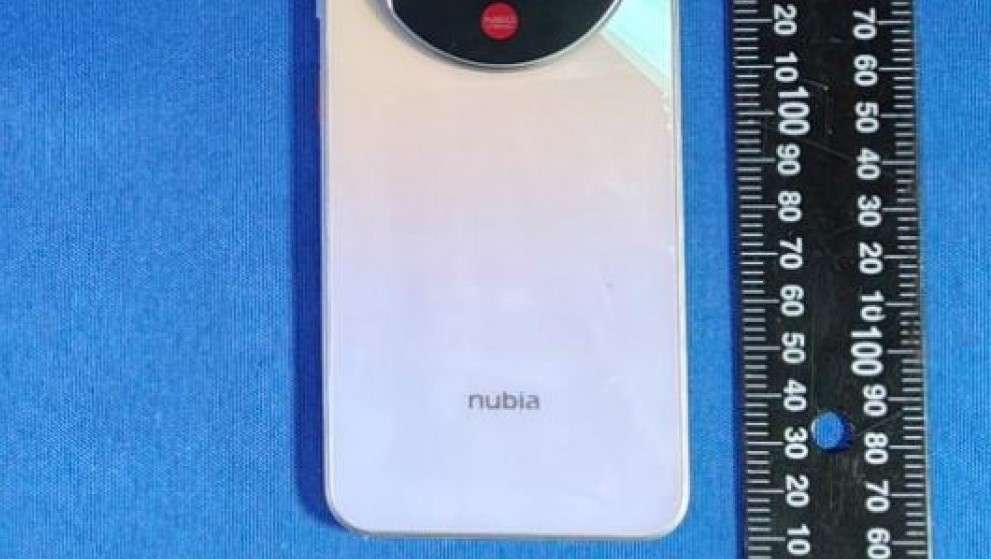
    The upcoming model, known as the "Focus 2," has appeared in what looks to be EU Declaration of Conformity documents, revealing the design of its camera hump for the first time. It seems Nubia has chosen to go with another round module for this device, but this time it comes with a uniquely artistic paint finish that may hint at a hardware switch or toggle.

    Unique Features

    In addition, the camera bump features Nubia’s distinctive ‘red sticker’ Neovision logo positioned near the top lens. The color scheme is primarily black and silver, while the remainder of the Focus 2’s back is constructed from a light pearl-like plastic or glass.

    Specifications and More

    The leak also suggests that the "Focus 2" (or Nubia Z2462N) will offer 5G connectivity, operate on NebulaOS 1.0.0, and comply with several EU health and safety regulations. However, details regarding the rest of the device’s specifications remain unknown at this time.

    ZTE Devices via GSMArena.

    Source: Link


    Image 1
  • Vivo Y300 5G Launch: 50MP Camera, Dimensity 6300, 44W Charge

    Vivo Y300 5G Launch: 50MP Camera, Dimensity 6300, 44W Charge

    Vivo has introduced its newest budget smartphone, the Vivo Y300 5G, which emphasizes impressive audio quality, a bright display, and robust durability. This phone is distinctive due to its features that are rare in this price segment, making it an appealing option for users in search of both entertainment and dependability.

    Features of the Vivo Y300

    The Y300 boasts a 6.77-inch FHD AMOLED screen with a 120Hz refresh rate for fluid visuals. With a peak brightness of 1800 nits, the display stays bright and clear even when exposed to direct sunlight. To enhance durability, Vivo employs Diamond Shield glass, which helps guard the screen against scratches and drops, providing added reassurance for daily use.

    Audio Performance

    A standout feature of the Y300 is its three-speaker system, which produces audio that is 600% louder than that of typical smartphones. The inclusion of 3D panoramic audio guarantees clear and immersive sound for watching videos, gaming, or enjoying music without needing headphones. This audio-centric approach differentiates the Y300 from many other devices in its class.

    Technical Specs

    Powered by the MediaTek Dimensity 6300 processor, the phone efficiently handles everyday tasks, web browsing, and light gaming. The Y300 offers configurations with up to 12GB of RAM and 512GB of storage, providing ample room for applications, photos, and videos without causing the device to lag.

    Camera Capabilities

    The camera array includes a 50MP primary camera with Optical Image Stabilization (OIS), ensuring crisp and clear images, even in dim environments. A 2MP depth sensor aids in capturing portrait images. For selfies, it features an 8MP front camera that performs well for video calls and casual photos.

    Battery and Durability

    The Y300 is equipped with a 6500mAh battery that supports fast charging at 44W. In terms of durability, the phone has an IP64 rating, making it resistant to dust and water splashes. Additionally, it has SGS five-star certification for drop and fall resistance, making it robust enough for everyday usage.

    Pricing and Availability

    The Vivo Y300 is priced starting at 1399 yuan (approximately $192) in China. Details regarding its global release have not been revealed yet.

    Source: Link


    Image 1
  • Xiaomi Redmi Note 14 Pro Plus 5G Launches Globally with Light Hunter 800 Camera

    Xiaomi Redmi Note 14 Pro Plus 5G Launches Globally with Light Hunter 800 Camera

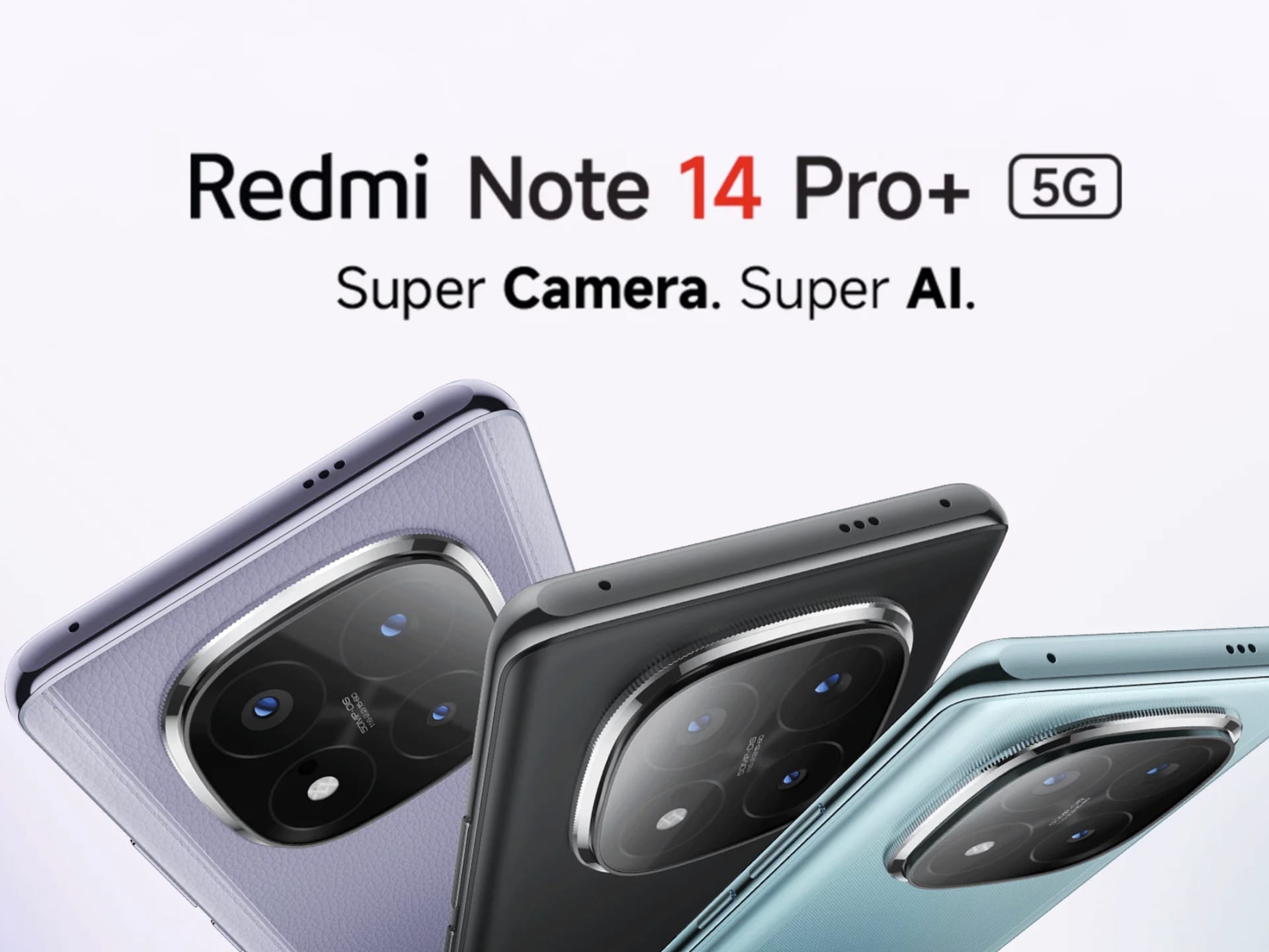
    The Redmi Note 14 Pro Plus has officially launched internationally, joining the Redmi Note 14 5G and Redmi Note 14 Pro 5G. Xiaomi has attached a ‘5G’ label to this model, similar to its siblings. While the company hasn’t confirmed it, the existence of the Redmi Note 13 4G and Redmi Note 13 Pro 4G (currently priced at $219 on Amazon) suggests there may also be 4G variants of the Redmi Note 14 series on the way, a notion supported by recent leaks.

    Key Features of the Device

    In terms of specifications, the Redmi Note 14 Pro Plus 5G retains everything from its original launch in China, featuring a 6.67-inch AMOLED screen housed in a frame measuring 162.5 x 74.7 x 8.8 mm. The display boasts a resolution of 2,712 x 1,220 pixels, a refresh rate of 120 Hz, and an impressive peak brightness of 3,000 nits, all protected by Corning Gorilla Glass Victus 2. Notably, this device holds an IP69 rating against dust and water, a feature not found in the Redmi Note 14 5G or the Redmi Note 14 Pro 5G.

    Performance and Battery Life

    The Redmi Note 14 Pro Plus 5G is powered by the Qualcomm Snapdragon 7s Gen 3 chipset, and it offers options for LPDDR4X/LPDDR5 RAM and UFS 2.2/UFS 3.1 storage based on the selected memory configuration. A standout feature is its 6,200 mAh battery, capable of charging at 90 W through a wired connection. Additionally, it includes a 50 MP main camera (Light Hunter 800), a telephoto camera (ISOCELL JN1), a 20 MP front camera (OV20B), and an 8 MP ultra-wide-angle camera (IMX355).

    Availability and Color Options

    The Redmi Note 14 Pro Plus 5G will be released on December 13, but only in India, with no information yet on availability in other countries. The device will come in three color options: Phantom Purple, Spectre Blue, and Titan Black, along with various memory configurations. Xiaomi has yet to provide details regarding the expansion of its market presence for this model.


    Image 1
    Image 1
  • Affordable 5G Satellite Service: Global Access for Just $6/Month

    Affordable 5G Satellite Service: Global Access for Just $6/Month

    Closing dead spots made simple: 5G is on its way to being accessible for all, not just in hard-to-reach rural areas, but also in the vast ocean. To achieve this, the European Space Agency (ESA) started its “Space for 5G & 6G” initiative in 2019. This led to the formation of a partnership that includes Airbus Defense and Space, the Fraunhofer Institute, and the University of the German Federal Armed Forces in Munich, which conducted a feasibility study.

    Promising Results

    The findings are quite impressive: initial networks could be operational by 2025, although they may have lower bandwidths. The complete capability of 5G through satellite is anticipated to be available by 2032, which is just eight years away. This innovative system is expected to be relatively cost-effective, with a realistic monthly price for individual users being just above $6. However, for full access featuring high data volume and maximum transfer speeds, the costs may be significantly higher.

    Further Developments Needed

    The research indicates that additional advancements and enhancements are necessary to launch such a mobile communication system into space. For instance, satellites that are heavier than normal will be required, necessitating more efficient and advanced propulsion systems to maintain their positions. Furthermore, improvements in antenna technology are essential to manage the anticipated data loads. Research efforts in these areas have already begun under the “Space for 5G & 6G” project, and these challenges are not expected to be major technological barriers.

    The Future of Connectivity

    By integrating terrestrial and orbital systems, comprehensive mobile communication and internet access could soon become a reality, starting in developed nations, with the potential for global coverage in the future.

    Source: Link

  • Armor Mini 20 Pro: Compact, Durable, and Affordable Rugged Smartphone

    Armor Mini 20 Pro: Compact, Durable, and Affordable Rugged Smartphone

    The Ulefone Armor Mini 20 Pro is now ready for direct import priced at $265. Shipping is free, and if you place an order today, it should arrive by November 7. It’s important for customers to keep in mind that warranty rights may be difficult to enforce in case of any claims.

    Compact Design and Features

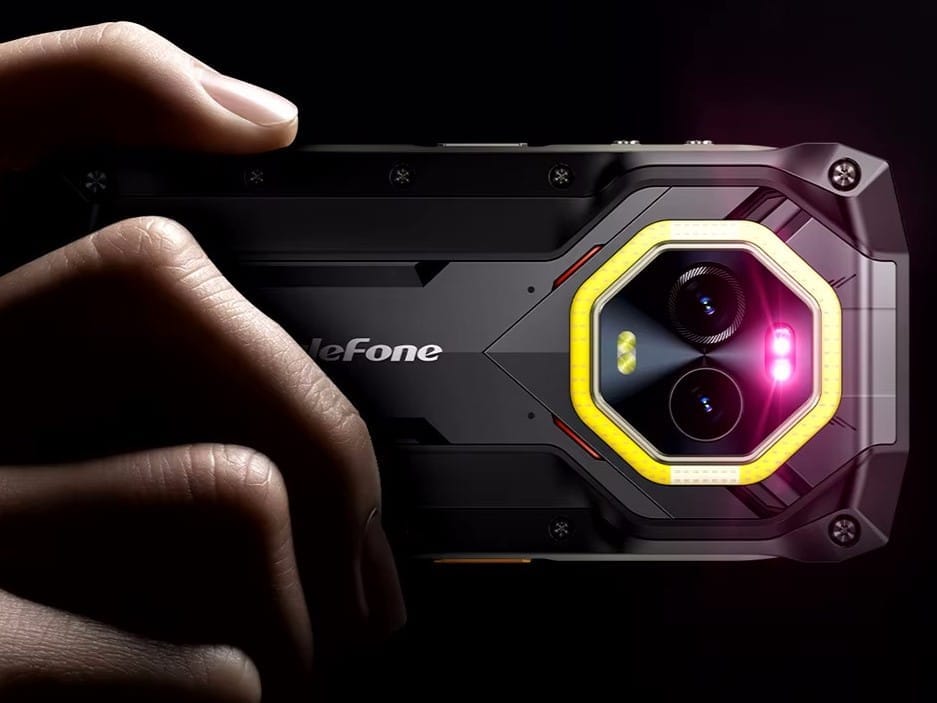
    The Armor Mini 20 Pro 5G is a small rugged smartphone with a 4.7-inch diagonal screen and a resolution of 720 x 1,600, featuring a refresh rate of 90 Hz. This device is nearly 25 millimeters thick and boasts IP68, IP69K, and MIL-STD-810H certifications. At its core, it runs on a MediaTek Dimensity 6300 SoC. The phone supports 5G and dual SIM functionality; however, using a second SIM card means you cannot expand storage. Additionally, it includes an IR blaster and an NFC module.

    Impressive Battery and Camera

    With a 6,200 mAh battery, the Armor Mini 20 Pro can be charged wirelessly. It can also wirelessly charge other devices at a rate of up to 5 watts. When it comes to wired charging, it supports a robust 33 watts. The phone features a night vision camera with 64 MP resolution and includes a bright 500-lumen LED. There are also blue and red LEDs that can function as warning lights. Finally, the Mini 20 Pro 5G has 8 GB of RAM and offers 256 GB of internal storage.

    Availability and Alternatives

    For those who prefer not to import, the Armor Mini 20 Pro 5G may become available on online platforms like Amazon in the future. However, if you don’t want to wait, consider the Ulefone Armor 22. While it’s not as compact, it remains a robust option for users looking for a solid rugged smartphone.


    Image 1
  • UCL Research Sets Wireless Speed Record at 938 Gb/s, 9,400x Faster

    UCL Research Sets Wireless Speed Record at 938 Gb/s, 9,400x Faster

    Researchers at UCL have made a significant breakthrough in wireless data transfer, achieving an impressive speed of 938 Gigabits per second (Gb/s) within a frequency range of 5–150 Gigahertz (GHz). This remarkable speed is almost 9,400 times quicker than the average 5G download speed in the UK, which stands at 100 Megabits per second (Mb/s). The findings are detailed in the Journal of Lightwave Technology, where they reveal that the team has surpassed previous records in wireless transmission by using a bandwidth nearly five times larger than what has been used before.

    Addressing Frequency Limitations

    Wireless networks usually work at lower frequencies, typically below 6GHz, which often causes network congestion and restricts data transmission speeds. The team at UCL tackled this issue by merging radio and optical technologies, resulting in a much more efficient method for sending data across a broader frequency range. This innovative approach opens up new possibilities for data transmission.

    Future Implications

    This technology is anticipated to be a major advancement in wireless communication by offering faster and more dependable connections for devices. It holds promise for enhancing Wi-Fi speeds in homes, improving mobile internet access in crowded areas, and aiding the development of future 5G and 6G networks. The implications of this research could transform how we connect and communicate in the future.

    Despite being in the experimental phase, researchers are already looking ahead to create a commercial prototype in the next few years, aiming to bring this technology to consumers and businesses alike.

    Conclusion

    With such significant advancements in wireless technology, the future of data transmission looks promising. By addressing current limitations and pushing the boundaries of speed and efficiency, UCL’s research paves the way for a new era in wireless communications.

    Published by IEEE Explore and highlighted in Interesting Engineering.


    Image 1