Category: Other

  • New Tessan Aero 70 Smart Travel Adapter Pre-Launches

    New Tessan Aero 70 Smart Travel Adapter Pre-Launches

    Key Takeaway

    – Credit-card sized travel adapter with retractable plugs for Type A, C, G, and I sockets.
    – Charges up to 4 USB devices simultaneously, with one 70W USB-C port and a built-in LCD for power monitoring.
    – Compatible with 100-250V AC devices (up to 2,500W), but does not convert voltage.
    – Kickstarter launch on June 30, 2026; special day-one price of $69 (MSRP $129).


    Tessan Aero 70 Smart Travel Adapter Pre-Launch

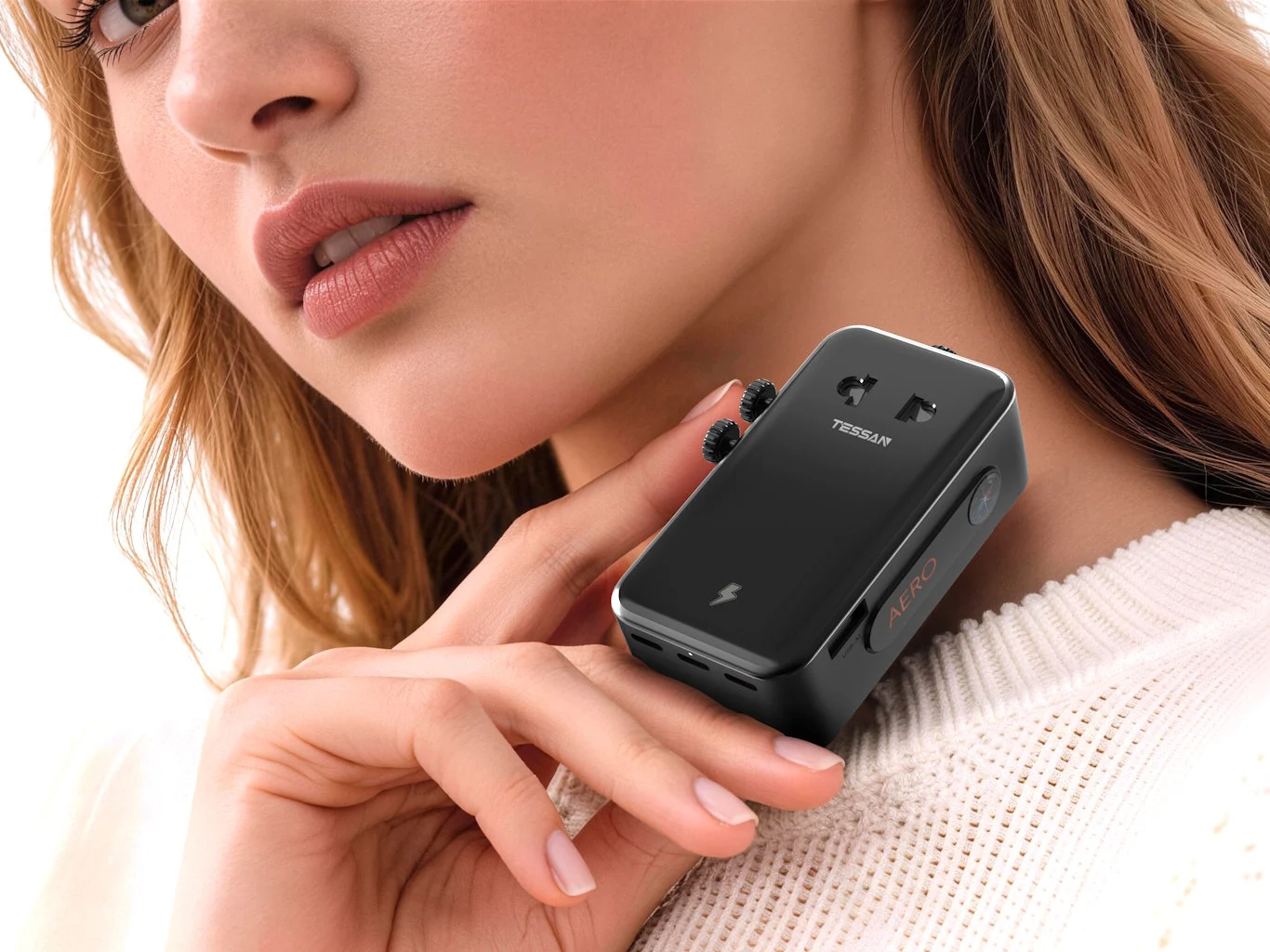
    Tessan have officially announced the pre-launch its thin Tessan Aero 70 Smart Travel Adapter. This is a credit-card sized accessory, designed to easily fit into a suitcase or rucksack.

    Global Socket Compatibility

    As its name suggests, the Tessan Aero 70 can be used in many differenter countries. It offers three types of AC plugs: Type A (US, Japan, Central and South America), Type C (EU countries and China), Type G (UK), and Type I (Australia and New Zealand). Each plug can be revealed from the housing using sliders on the sides of the accessory.

    Multi-Device Charging with Display

    You can uses this Tessan travel adapter to charge up to four USB devices simultaneously while providing pass-through AC power to another device. Power delivery can be monitored on the Aero 70’s built-in multi-screen LCD display, which shows voltage, wattage, socket current, and temperature.

    USB Ports and Electrical Specs

    There is one 70W USB-C port (PD3.0, QC3.0, PPS), two 20W USB-C ports, and one 18W (QC3.0) USB-A port. It can be used with AC devices that support 100-250V, 50/60Hz dual voltage at up to 2,500W, with the company emphasizing that it cannot convert voltage.

    Design, Compass, and Dimensions

    The adapter has a black desiggn with a small magnetic compass embedded in one side. It measures 3.52 x 1.97 x 1.57 inches (89.5 x 50 x 40 mm) and weighs 6.35 oz (180 g).

    Kickstarter Launch Pricing

    The Aero 70 will recieve a special Kickstarter launch day price of $69 on June 30, 2026, a substantial discount of $60 off its MSRP of $129. Thereafter, its Early Bird price will be $79.

    Other Products and Contact

    Readers who do not need a travel adapter with a display can look at other travel adapters in the Tessan store. Tessan on Prelaunch, Tessan on Kickstarter, Tessan



  • xTool M2 Laser Engraver: Cut Wood & Print in Color

    Key Takeaway

    – xTool M2 starting price is $549, with packages including a versatile inkjet module for CMYK printing on various materials.
    – Laser options include a 10W or 20W diode laser for cutting/engraving, plus a 3W IR laser for metal engraving.
    – Maximum working area is 426 × 320 mm, though reduced when using the IR laser or inkjet module.
    – Features dual cameras for live preview, material recognition, and intelligent alignment, with positioning accuracy up to 0.2 mm.
    – Ink cartridges cost $99 each, a notable ongoing expense.


    New Multifunctional M2 Launched by xTool

    So xTool, which makes smart laser cutters and engravers and craft machines, have just released the M2. Its being marketed as a multipurpose tool for makers that comes in different packages, for instance one with an inkjet addon, and the base price is $549. According to the company, the fully kitted-out M2 is very flexable and can be used not only for laser engraving and cutting but also for full color CMYK inkjet printing.

    Specifications and Pricing Details

    For cutting and engraving it uses diode lasers with a power output of either 10 or 20 watts. An infrared laser with 3 watts of power is also included for engraving onto metal. You can install a inkjet module as an extra option too. The 20-watt diode laser is said to be capable of slicing through 10 mm thick basswood and 8-millimeter-thick black acrylic. The inkjet module, the manufacturer says, can print not just on paper and cardboard, but also onto surfaces like wood and canvas. A single ink cartridge is priced at a hefty $99.

    • Diode laser options: 10W or 20W
    • Infrared laser: 3W for metal engraving
    • Inkjet module add-on available
    • 20W diode cuts 10mm basswood, 8mm black acrylic
    • Ink cartridge cost: $99 each

    Physical Dimensions and Accuracy

    The model measures 610 x 569 x 180 millimeters, so it slot onto a desk fairly well we think. The weight is just 2.3 kilograms. Its maximum working area is 426 × 320 millimeters, altho this area shrinks when you use the IR laser or the inkjet module. With two cameras offering live preview, material recognition, and smart alignment, using it is ment to be simple. The positioning accuracy—or more specifically, the deviation—is up to 0.2 millimeters, and the measurement accuracy is 0.1 millimeters.


    Sources

  • Apple Watch Ultra Gets Short Update Support for No Reason

    Apple Watch Ultra Gets Short Update Support for No Reason

    Key Takeaway

    – watchOS 27 drops support for Series 6, 7, 8, and 9, requiring Series 10/11, Ultra 2/3, or SE 3.
    – Series 9 (with S9 chip) is excluded, while the same-chip Ultra 2 is supported, creating inconsistency.
    – Apple Watch software support is no longer reliable, cutting off devices after just two major updates.
    – Long-term updates, once a key advantage over competitors, are no longer guaranteed for Apple Watch.


    watchOS 27 Anounced at WWDC With New Restrictions

    Apple introduced watchOS 27 at WWDC today, which is a big new operating system update for the Apple Watch that should be coming out in the fall. Excluding the Siri AI and the new chatbot built on Google Gemini, there are not many fresh features to get excited about. But, the software support for older watches is going to be heavily cut down, which is a massive change from before.

    Which Apple Watch Models Are Compatible

    Even though watchOS 26 worked with the Apple Watch Series 6, 7, 8, and 9, as well as the first-gen Ultra and the second-gen SE, Apple has slashed support by four generations all at once. To run watchOS 27, you will need a Series 10 or Series 11 ($299 on Amazon), an Apple Watch Ultra 2 or 3, or an Apple Watch SE 3. That means the Series 9, which launched only two and a half years back, has only got two major software updates.

    Performance and Chip Similarities

    This is really bothersome, mainly because the Series 9 watch uses the exact same Apple S9 chip which is also inside the Apple Watch Ultra 2. That Ultra 2 model came out at the same time and is confirmed to work with watchOS 27, so the inconsistency is confusing. Since the S6, S7, and S8 chips from the earlier generations were practically identical, maybe there is some technical reasons for dropping support for those models.

    Long-Term Support and Consumer Trust

    Apple is leaving customers who bought a costly smartwatch just two years ago out in the cold, which shows that you cannot always count on future updates. People who purchase an Apple Watch now should not expect long-term software support anymore, which is a shame. In the smartwatch market especially, having long updates was a real plus for the Apple Watch compared to many of its rivals.

    Sources
  • Acebeam K1 Hands-on: EDC Flashlight with Red/White & Optional Laser

    Key Takeaway

    – New K1 versions: white/red/green laser (standard) and red light + cyan laser (special edition)
    – Cyan laser special edition is dimmer than green, but offers a unique look; higher price
    – Red light replaces UV light, is much brighter, and otherwise no design or control changes
    – Removable USB-C battery, unscrew head to charge, no price increase expected
    – General availability late June; cyan special edition only via Acebeam’s website


    Compact Flashlight Gets a Revamp

    Acebeams compact K1 flashlight, equiped with a removible USB-C battery, is comming in a fresher version. At the companys base in Shenzhen, Guangdong Province, we got a quick chance to check out both editions while heading back from Computex.

    New Light and Laser Options

    Until recently, we only new that the regular K1 would launch with white light, red light, and a green laser—we already reported on that from IWA in Germany. But now, Acebeam also revealed a special edition that comes with a cyan laser and a red light, which replaces the K1s UV light.

    Apart from the red light, nothing els changed about the design. In usage, the K1 with the red light worked just as expected. With its two brightness levels, the red light seems way brighter than the UV light, even when shined at a white sheet of paper.

    Cyan Laser vs Green Laser

    The cyan laser was interesting, giving us the first time to compare it side-to-side with the green laser. However, the Chinese model we saw uses a 3R laser class, while in Europe the weaker Class 1 version wil be send out. The cyan laser looks a bit dimmer than the green one, but its unusal look more than makes up for it.

    Laser pointers are usally either green or red, so the unusual cyan was pretty appealing. Still, the extra cost is quite steep. Nothing changed about the flashlights build or controls, and the process of unscrewing the head to charge the USB-C battery stays the same.

    Pricing and Availability

    According to Acebeam, pricing shouldnt change much. The K1 with white/UV/green laser normally costs around $55 on Amazon but is currently marked down to $40. The version with red light instead of UV light should cost about $64 when its out. Acebeam says that shoud be in a few weeks, near the end of June.

    The special edition with the cyan laser will also be available then, but theres a catch—it will only be sold through Acebeams own website. Thats the same deal as the previous model, which retails with UV light for around $90.


    Sources

    • WWDC: Apple unveils new parental controls for kids

      WWDC: Apple unveils new parental controls for kids

      Key Takeaway

      – Apple introduces Child Accounts with parental controls for monitoring and limiting device use.
      – Parents can whitelist apps, websites, and contacts, and authorize new app requests from children.
      – Message and FaceTime filtering automatically blocks nudity, gore, and other harmful graphics.
      – Screen time for entertainment, gaming, and social media can be tracked and limited per day.
      – Apple provides usage time recommendations based on guidelines from organizations like the American Academy of Pediatrics.


      Parental Controls Unveiled by Apple

      Apple has detailed upcoming parental controlls for its products, allowing parents to monitor and controll device use, while protecting children from naughty and dangerous messaging. Any young person can be added to the new Child Account, which enables features such as age and site access restrictions, app access and usage, website whitelisting, contact whitelisting, and message filtering.

      App Management and Usage Limits

      Age-appropriate apps are recommended, but parents have ultimate say over what can be added to a child’s Apple device. Parents can remotely track the amount of time each app has been used, while limiting total use time per day. Entertainment, gaming, and social media use can be tracked and limited, too. Recommendations for total use times are provided by Apple, developed with third-party organizations such as the American Academy of Pediatrics.

      Request and Whitelist System

      Children can ask for authorization of new apps from their devices, and each request is reviewed by parents prior to authorization. The same whitelisting of apps prior to access also applies to websites and contacts, helping protect them from dangerous websites, child traffickers, and other unknown people. To further protect children from criminals and themselves, all messages and FaceTime communications can be automatically filtered for nudity, gore, and other undesirable graphics.

      Developer Access

      Apple developers gain access to these new features through a variety of safety APIs that can be utilized within apps. Apple WWDC, Apple Child Safety, Apple Developer


    • The Large Magellanic Cloud Warps Its Galactic Neighbor

      The Large Magellanic Cloud Warps Its Galactic Neighbor

      Key Takeaway

      – The Large Magellanic Cloud distorts the Small Magellanic Cloud through gravitational pull.
      – Infrared observation by the Vista telescope over 11 years enabled detailed study of stellar motions.
      – Stars in the Small Magellanic Cloud’s center move away at 17 km/s due to this gravitational force.
      – The Small Magellanic Cloud was likely more compact in the past than its current shape.


      The Large Magellanic Cloud is a satellite galaxy of the Milky Way, located about 163,000 light-years away. Although it is frequently observed by astronomers, a new study has revealed its effect on the Small Magellanic Cloud.

      Observations with the Vista Telescope

      This dwarf galaxy, located 200,000 light-years from Earth, was observed during eleven years with the Vista telescope (Visible and Infrared Survey Telescope for Astronomy) in Chile. According to astronomers, this celestial object is distorted not only by the Milky Way but also by the Large Magellanic Cloud. The infared vision of this telescope was key for seeing through interstellar dust, allowing researchers to study the motion of stars within the Small Magellanic Cloud.

      Researchers Reaction to the Results

      Thus, it was thanks to the infrared vision of this telescope that this observation was possible. Researchers were able to see through interstellar dust and study the motion of stars within the Small Magellanic Cloud, providing interesting results, as Florian Niederhofer explains in a statement: “When I saw the results for the first time, I was amazed by the quality of the measured stellar motions. By combining observations that have been taken over a time baseline of more than a decade, we were able to map the internal kinematics of the Small Magellanic Cloud with a level of detail that is outstanding for observations from the ground.”

      Key Phenomenon and Speed Data

      While results had been revealed in previous years, this new study highlights a specific phenomenon. Indeed, the stars located at the heart of this dwarf galaxy are moving away from its center at a speed of 10.6 miles (17 kilometers) per second. This specific speed measurement is critical for understanding the gravitational dynamics between the two galaxies.

      Gravitational Pull and Past Structure

      Therefore, these results highlight the gravitational pull exerted by the Large Magellanic Cloud on its companion. And that’s not all, because according to astronomers, the Small Magellanic Cloud would have had a more compact structure in the past, very different from its current shape. The study provides evidence that the smaller galaxy once looked nothing like it does today.

      Astronomy & Astrophysics


      Sources

    • Navee CEO Tests First $200K Water & Air Vehicle

      Navee CEO Tests First $200K Water & Air Vehicle

      Key Takeaway

      – WaveFly 5X is a luxury hybrid water-and-air vehicle, blending speedboat and aircraft features.
      – No pilot’s license required; vehicle lifts just above water for a smoother, flying-like ride.
      – Top speed of 53 MPH, 80-minute runtime, and 50-mile range; all-electric.
      – Priced at $199,999 USD, targeted at luxury resorts and high-net-worth individuals.
      – First unit already ordered; CEO performed the inaugural ride across Taihu Lake.


      Navee Just Dropped Their WaveFly 5X, It’s a Luxury Thing That Blurs the Line Between a Speedboat and a Personal Aircraft

      It has a dual-passenger capacity and a top speed of 53 MPH, the WaveFly 5X is designed to provide a novel riding experience while it also addressing the transportation shortcomings of traditional boats for short distances. This vehicle is suppossed to be a new way to get around on the water, making short trips more exciting and less rough. Many people might find it interesting for quick coastal travel.

      CEO Lu Juian Took the First Ride Across Taihu Lake for Its Launch

      To celebrate the release of the all-new WaveFly 5X, the CEO, Lu Juian, took the new water-and-air vehicle on its first ride across Taihu Lake, near their headquarters. While it was a short ride, it represented the launch of the company’s most ambitious transportation solution yet, showing off what they can do. This event was meant to demonstrate the vehicles capabilities and generate buzz.

      Pricing, Range, and Specs Starting at $199,999 USD per Unit

      The WaveFly 5X is a hybrid water-and-air vehicle that lifts users just above the water’s surface to create the sensation of flying without needing a pesky pilot’s license. Being slightly airborne also provides the added benefit of creating a cushion of air between passengers and the waves, effectively reducing the bumpy ride one would experience on a traditional speedboat. Other features of the all-electric WaveFly 5X are an 80-minute runtime, a top speed of 53 miles per hour, and an estimated range of 50 miles. So you get a smoother ride and that flying feeling.

      For Most People It Is Cost-Prohibitive But Luxury Resorts Might Want It

      For most, the Navvee WaveFly 5X is cost-prohibitive, but for luxury resorts, this is exactly the type of vehicle that could entice prospective guests looking for a unique experience. However, that’s not to say that there aren’t interested buyers, as Navee shared with us that there is already an order for someone’s very own Navee WaveFly 5X. So some individuals are already putting down money for this expensive toy.

      • Dual-passenger capacity.
      • Top speed of 53 miles per hour.
      • 80-minute runtime.
      • Estimated range of 50 miles.
      • Starting at $199,999 USD.
      • All-electric hybrid water-and-air design.
      Sources
      • Ugreen Unveils Affordable 2-Bay NAS with 80 TB Launch Discount

        Ugreen Unveils Affordable 2-Bay NAS with 80 TB Launch Discount

        Key Takeaway

        – AMD Ryzen R2514 processor and 8GB DDR4 RAM (upgradable to 64GB)
        – Upgraded 10 GbE LAN port (replaces 2.5 GbE)
        – Maximum 80TB storage (2x SATA + 2x M.2 SSDs)
        – Black and gold chassis design
        – Launch price: $407.99 after 20% discount (from $509.99)


        New NAS Design Details

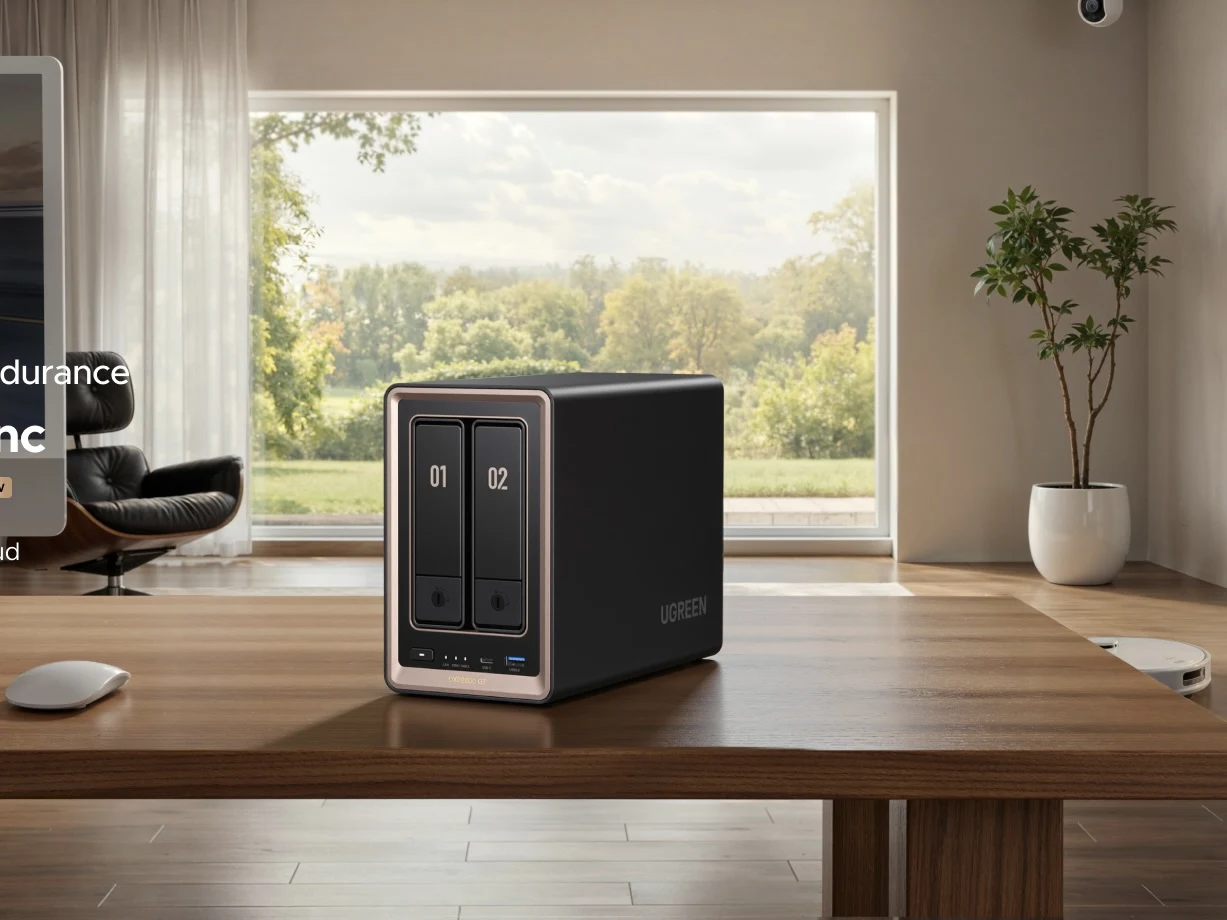
        Ugreen has officially unveiled the NASync DXP2800 GT NAS in the global market. Alongside the 2-bay NAS, the company has also introduced the DXP4800 GT 4-bay NAS, which we have covered separately and you can read about it here. The new NASync DXP2800 GT now features a black and gold finished chassis, replacing the regular silver finish used on the last generation model.

        Processor and Memory Specs

        The GT model is powered by an AMD Ryzen Embedded R2514 processor paired with 8 GB of DDR4 RAM. For context, this processor is more powerful than the Intel X86 12th Gen found on the DXP2800 model. Furthermore, the NAS supports up to 64 GB of RAM expansion. The device is designed for demanding enthusiasts or even content creators.

        Storage and Drive Compatibility

        Like the other variants, the NAS is compatible with a wide range of storage drives, including 3.5”/2.5” SATA drives and M.2 SSDs. There’s no upgrade in the storage department. The GT supports up to 80 TB of storage (2 SATA drives, up to 32 TB each and 2 M.2 SSDs, up to 16 TB each), like its predecessor.

        Connectivity and Ports

        For connectivity, the DXP2800 GT upgrades to a 10 GbE LAN port on the rear, replacing the 2.5 GbE setup found on the previous model. The rest of the ports remain the same, with 10 Gbps USB-A, 10 Gbps USB-C, 5 Gbps USB-A, two USB-A 2.0 ports, and an HDMI. Unfortunately, it lacks an SD card slot.

        Pricing and Launch Offers

        The Ugreen NASync 2800 GT is priced at $509.99. As a part of the launch offer, the company is offering a 20% discount, bringing its price down from $509.99 to $407.99 for a limited time. Interested buyers can now purchase the NAS directly from Ugreen’s official store and Amazon. Ugreen pre released material


        Sources

        • Nitecore P17iX: Compact EDC Flashlight Launches

          Nitecore P17iX: Compact EDC Flashlight Launches

          Key Takeaway

          – Nitecore P17iX costs $129, about $30 less than the P27iX.
          – Uses a replaceable 21700 battery with USB-C charging; design and controls are nearly identical to the P27iX.
          – Rated at 5,000 lumens but has a shorter beam range (1,083 feet) than the P27iX (1,411 feet).
          – Slightly lighter at 3.6 oz (including battery) and 0.8 oz lighter than the P27iX.
          – Rugged with IP68 rating, waterproof to 6.6 feet, and drop-resistant from up to 6.6 feet.


          Pricing and Specs of the Nitecore P17iX

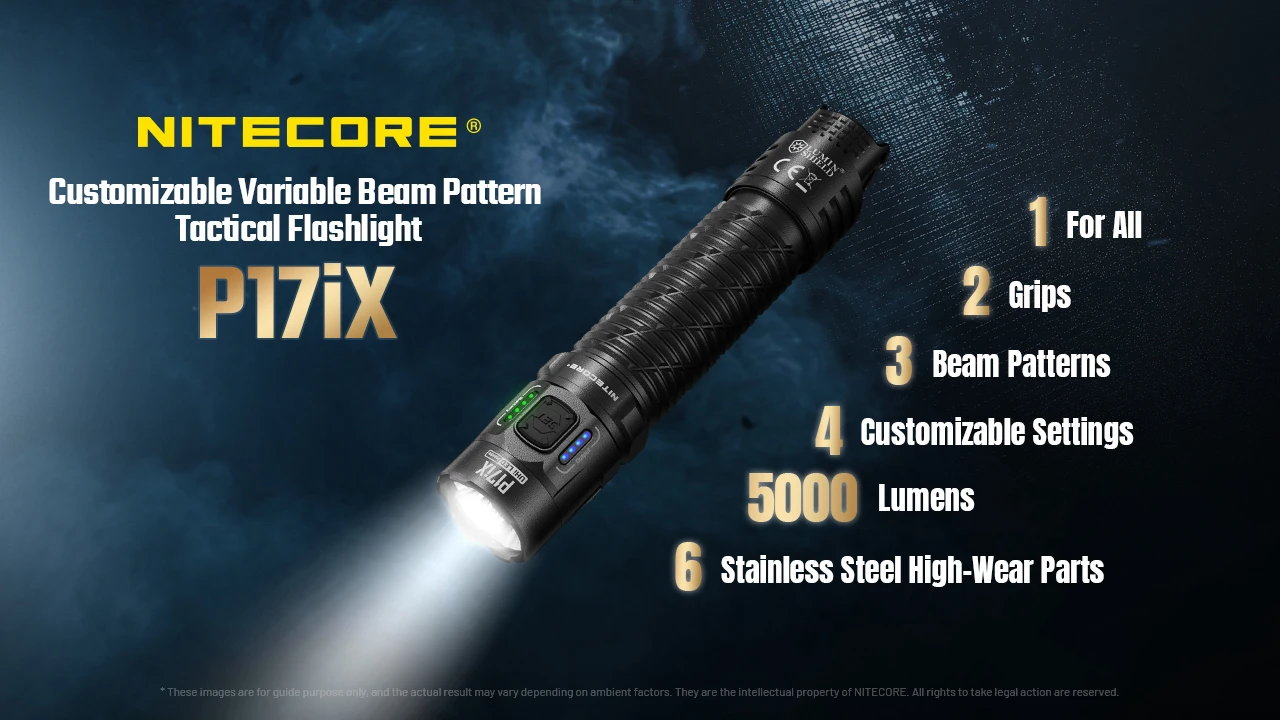
          The Nitecore P17iX is now avalible. The smaller sibling of the P27iX is at stock at some retailers with cost around $129 dollers. That is about $30 less than the P27iX. They are barely different in design. Both use a Nitecore NL2155HPi battery that is replaceable. The battery charges via the USB-C port on the flashlight wich is protected.

          Battry Options and Controls

          Alternatively, CR123 cells can be used. The controls are identical and configurable, including button layout and the protective slide switch for locking the flashlight. If you have used the P27iX you should have no trouble using the smaller P17iX at all.

          Light Output and Runtimes

          As before, there is a floodlight and spotlight that can be biefly activated until the flashlight gets too hot. There are constant-on modes. The diffrence is still significant even though both are rated at 5,000 lumens. However, the P17iX beam only offers 1,083 feet of range. The 27 model reaches 328 feet farther. It is also 0.8 oz lighter cause the head is smaller, and weights 3.6 oz including the battery according to the manufacturer.

          Battery Life in Modes

          Battery life in the lowest mode of 15 lumens is around 100 hours. In turbo mode at 1,500 lumens, the P17iX lasts half an hour longer and therefor manages at least 3 hours of runtime. The model is very rugged and IP68-rated. Brief immersion down to 6.6 feet is permited. According to Nitecore drops from up to 6.6 feet are possible too.

          Sources
        • Mac-Inspired Nvidia RTX Spark Dell XPS Mini PC: 128GB RAM

          Mac-Inspired Nvidia RTX Spark Dell XPS Mini PC: 128GB RAM

          Key Takeaway

          – Dell XPS RTX Spark Mini PC is a direct competitor to Apple Silicon Macs, launching the new Spark RTX platform.
          – The dark gray design resembles the Mac Studio, with side vents and a removable bottom lid for SSD access.
          – Port selection and thermal headroom vary by manufacturer; Dell’s cooling capacity is unconfirmed.
          – The RTX Spark platform comes in N1x and N1 variants, with pricing and availability still unannounced by Dell.


          Dell’s New XPS Mini PC

          Computex 2026 has been one of the most important tech events for Nvidia and Windows in recent years, and that’s all thanks to the brand-new Spark RTX platform, which is the direct competitor to the ARM-based Apple Silicon found in Macs, which has been a game-changer in modern computing. And with a bit of a delay, we now have our first look at the “Dell XPS RTX Spark Desktop”, the company’s first mini PC utilizing the new Spark RTX series of chips.

          Design and Build

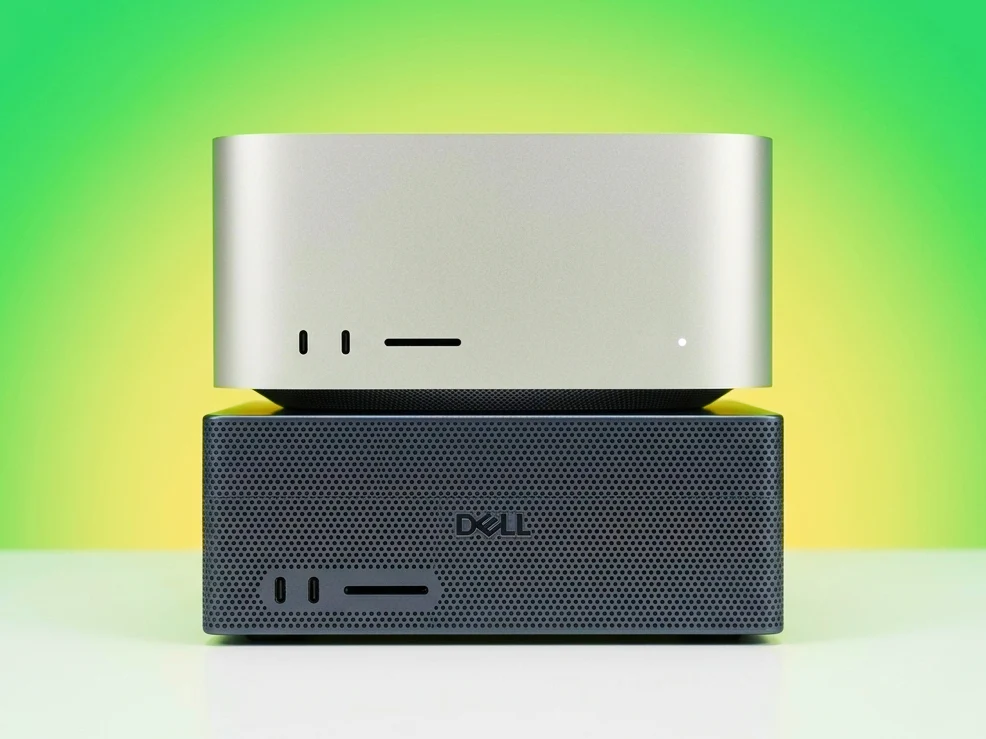
          And yes, for the record, the dark gray Dell PC is the most Mac Studio-looking Nvidia RTX Spark mini PC we’ve seen yet (at least from the front). Reportedly, the vents are on the sides of the chassis, and the removable bottom lid should give you access to the SSD. The port selection on the new Dell XPS RTX Spark Mini PC is as follows:

          • USB-C with Thunderbolt support
          • USB-A ports
          • HDMI 2.1
          • Ethernet
          • Headphone jack

          While the RTX Spark-powered Asus ProArt Mini PC is built around 140W of thermal headroom, we can’t assume Dell is targeting the same number, because cooling capacity depends on each manufacturer’s specific chassis design and performance priorities.

          Platform Scalability and Performance

          The RTX Spark platform is scalable, and different manufacturers may choose lower power targets to prioritize factors like fan noise, portability, or cost. In case it’s unclear, the Dell XPS RTX Spark Mini PC uses the exact same RTX Spark platform as the newly-announced Dell XPS 16 Creator Edition laptop. The RTX Spark is expected to arrive in two main flavors, dubbed the N1x and N1. Configurations and pricing will vary widely, depending on RAM and SSD size.

          Pricing and Availability

          Just like with all other Nvidia Spark RTX laptops and mini PCs, Dell is yet to announce pricing and availability for the Dell XPS RTX Spark Mini PC. In fact, this early reveal is a collection of official specs and features based on hands-on previews. Strangely enough, Dell is one of the few OEMs refusing to publish press releases on their new RTX Spark mini PCs, even though they were officially revealed at Computex 2026.


          Sources