Category: Other

  • GOKO M6: The Mower That Never Quits

    GOKO M6: The Mower That Never Quits

    Key Takeaway

    – 4WD, 90% slope climbing, and 7.5 cm obstacle clearance for tough terrain
    – AI QuadVision™ with 200+ object recognition for precision and safety
    – RTK + VSLAM navigation for cm-level accuracy and signal-loss backup
    – Dual 250W blades, 1 acre per charge, and expandable battery
    – 200% funded on Kickstarter day one; campaign runs until June 25, 2025


    Most robotic mowers are made for flat, simple lawns

    The GOKO M6 is built for tougher yards, including steep slopes, rough terrain, and larger properties. Launched on Kickstarter on May 12, 2025, it reached 200% funding on day one. Developed by GOKO, the consumer robotics brand of Robot++, the M6 brings the companys robotics expertise to residential lawn care.

    GOKO M6 got 200% funded on day one

    A strong early result for a product targeting an underserved segment. With its 4WD system and adaptive suspension, it can climb slopes up to 90% / 42° while keeping all four wheels firmly on the ground. It can also cross obstacles up to 7.5 cm high, such as tree roots, uneven soil, and drainage edges. If it gets stuck in mud, loose ground, or on a slope, its large tires and smart recovery system help it get moving again without manual help.

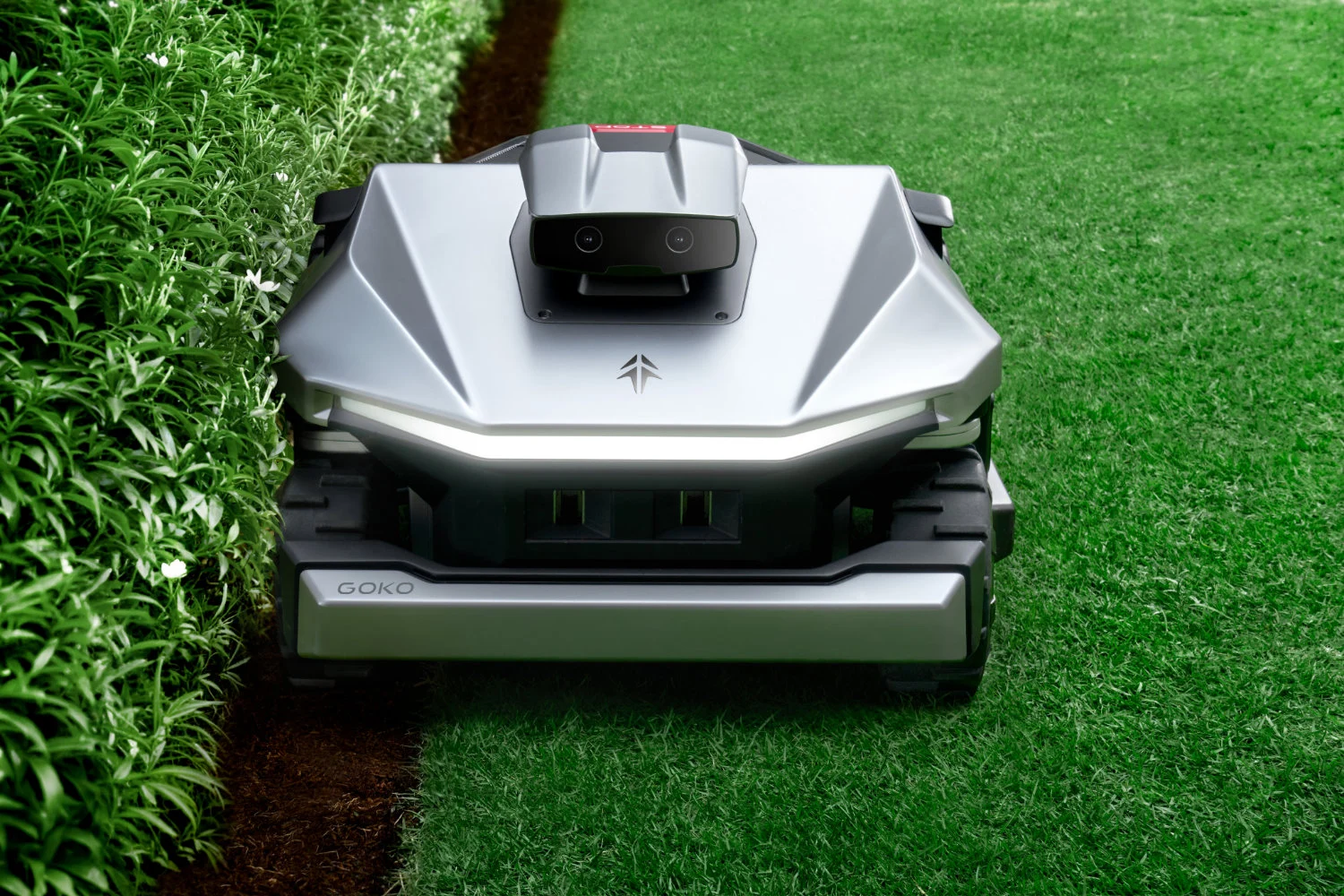
    AI QuadVision™ with four-camera system

    The GOKO M6 uses AI QuadVision™, a four-camera system with two side cameras for better visibility. This helps it mow edges more precisely and move through narrow areas more safely. The obstacle-avoidance engine recognizes more than 200 object types, covering the practical range of things a yard might contain like garden furniture, pets, toys, and tools left on the lawn.

    RTK and VSLAM for precise navigation

    The GOKO M6 combines RTK and VSLAM for precise, reliable navigation. RTK keeps mowing accurate to the centimeter, while VSLAM lets the mower continue for up to 10 minutes or 150㎡ if the signal drops. It also supports both Network RTK and Local RTK, making it easier to use in different yard conditions.

    180° independent front-wheel steering

    A mower built for slopes and rough ground also needs to be gentle on the lawn. The GOKO M6 uses 180° independent front-wheel steering to turn smoothly and reduce scuffing, especially on wet or soft grass. The M6 uses zone mapping to intelligently divide the lawn and select the most efficient mowing direction for each section. It can automatically shift its lateral path and adjust its mowing angle slightly between passes to prevent repeated tire tracks from compressing the same grass over time. An optional alternating mowing mode makes turns smoother.

    The M6 runs a 42 cm (16.5-inch) cutting system with two replaceable blades: a mulching blade for thick or dense grass, and a razor disc for quieter, cleaner everyday maintenance. Cutting power tops out at 250W × 2 in a dual-blade configuration. With expandable battery support, the GOKO M6 can mow up to 1 acre / 4,000㎡ per charge and up to 2 acres / 8,000㎡ per day, making it suitable for larger lawns. It also supports unlimited zones, so users can manage separate lawn areas, gardens, and paths with ease.

    App control and IPX6 waterproof protection

    For daily use, the M6 offers app control, scheduling, a 4.3-inch TFT display, anti-theft features, AirTag support, real-time tracking, and full-body IPX6 waterproof protection. The M6’s exterior design is inspired by the Cybertruck: angular, industrial, and visually distinct from the rounded consumer aesthetic common in this product category. That design direction recently earned the GOKO M6 the Gold Award at the FDA French Design Award.

    Alongside the M6, GOKO will also showcase the GOKO X5

    It’s a 3-in-1 Commercial RC Mower for Mowing, Snow Removal, and Towing, further expanding the brands smart yard robotics lineup. The Kickstarter campaign runs until June 25, 2025, with the product expected to launch on the official website in late June. For large-lawn homeowners, acreage property owners, or anyone who has bought a robotic mower only to discover it can’t handle their yard, the M6 is worth a close look.


    Sources

  • Acebeam UC3A Review: Pocket Flashlight, Big Features

    Key Takeaway

    – Ultra-compact 65g EDC with replaceable 10440 USB-C battery and AAA support
    – Dual-button operation: main forward light (moonlight+3 modes) and side light (white + red/green/blue + police flash + rainbow)
    – Strong magnetic back and clip for versatile mounting as a warning light, ambient light, or PC case DIY tool
    – Sidelight blue tint is muddy/purple; no standalone yellow mode
    – Priced $40 on Amazon with promo code 4TBZINQJ


    At just 65 gramms, ths tiny flashlight from Acebeam’s UC3A is almost unnoticable as everyday carry. We visited their Shenzhen facility after Computex, where we tryed not only the new K1 but also other lights. Our main focus was on this small device, which offers a wide range of features for its size. It uses a replaceable battery, wich is a big plus for such a compact tool

    Battery and Power Details

    Acebeam uses a AAA-sized lithium-ion battery, or more precisely, a 10440 cylindrical cell. This secondary cell has a USB-C port, wich is quite tightly integrated into the cell itself. We have only been familiar with larger AA-format batteries having USB-C up to now. This design is both an advantege and a disadvantage, as you must remove the cell to charge it. However, spare cells make it easy to carry a backup, though the single cell is not yet available for purchase. The flashlight also supports standard AAA-format primary batteries, but we was unable to test this feature

    Battery Performance

    At 1.5 watt-hours, the UC3A’s battery is quite small, which we noticed during a hands-on test. One of the flashlights no longer had a full charge and was visibly dimmer than the model with a full battery. This allows you to indirectly gauge the battery’s status, since this compact model doesn’t have a battery indicator. The performence is limited but acceptable for such a tiny device

    Operating the Two Buttons

    Operating the flashlight using the two buttons is pleasantly straightforward. The first button controls the main forward light. Holding this button down while switching the flashlight on activates the moonlight mode. A single press starts both front lights in the normal medium mode. Holding this button down cycles through three modes, but not moonlight mode, wich is a slight inconvenience. The second button controls the sidelight, which took some getting used to, as the white light is operated the same way but has only two brightness levels

    Sidelight Colors and Modes

    Other colors can also be selected after switching the light on, needing a double-click on the second button to cycle through red, green and blue. Each of these also has a flashing mode. Theres also a police flashing mode with alternating red and blue flashing for those who like that sort of thing. The final mode is a rainbow animation, wich is quite nice. The blue light appears muddy and tends towards purple, so we wouldnt use that color, but the red and green met our expectations

    Practical Uses and Application

    The side light serves two functions. Firstly, it acts as a warning or attention light, attaching to a backpack, belt or cap with the clip. Secondly, the white version functions as an ambient light. The strong magnetic back panel is particularly well-suited for this purpuse. In our opinion, this makes the flashlight a great tool for DIY projects inside a PC case. We’ve previously used Nitecore’s LA10 or Fenix’s CL09, but those are purely lanterns whereas the UC3A also functions as a flashlight

    Comparison to Older Models

    Interestingly, there are several development generations between the UC3A and the CL09/LA10, and neither has received a successor. Overall, we liked the UC3A, it isnt a powerhouse due to its size but its bright enough for everyday use. This also applies to the sidelight. The two white light settings are sufficient for dim environments and situations with more ambient light. The only missing feature is a yellow warning light, wich the flashlight can simulate via rainbow effect but cannot be selected as a single light

    All in all, the UC3A offers a decent range of features in a compact package, making it ideal to carry with you everywhere. Acebeam is currently selling the flashlight at Amazon for $40, available in orange, black or green. Acebeam also gave us a promo code: 4TBZINQJ, wich should further reduce the price at checkout. However, we dont know how long this code is valid or if it is available for every Amazon customer


    Sources

    • I Tested Eustella AI: Coding, RPGs & Daily Tasks

      I Tested Eustella AI: Coding, RPGs & Daily Tasks

      Key Takeaway

      – Eustella uses a mix of open-source models (Alibaba’s Qwen, Google’s Gemma, Mistral, etc.), not a single proprietary system.
      – It performed better than a major competitor’s free tier in complex, story-based tasks (e.g., planning an RPG session).
      – Key current limitations: no downloadable files (only copy-paste), occasional token limits on long code, and unclear future pricing/usage caps.
      – Response speed is slightly slower than top U.S. rivals but still comfortable for everyday use.
      – Its main selling point is privacy: chat data is not commercially exploited and is stored in Frankfurt.


      First Impressions and a Small Correction

      I introduced the European AI assistant alternative Eustella in a previous article. One small follow-up: Readers rightly pointed out in the comments that I hadn’t specifically covered the open-source models behind the platform. At the moment, Eustella uses Alibaba’s Qwen 3.5 as its flagship reasoning model. Google’s Gemma 4 handles lightweight interactions, while OpenAI’s GPT-120B OSS can be used for complex tasks involving extensive context. The Mistral models are particularly well suited for European languages, while Whisper is responsible for voice input. This lineup will likely evolve as better open-source models become available.

      Asking About Itself

      My first step was to ask Eustella about itself. Unfortunately, the AI couldn’t tell me which model it was currently running on because it cannot directly inspect its own system architecture or “query its own model version or the exact name of the weight set.” It also couldn’t specify its server locations, explaining that the “exact cities or data centers are not publicly disclosed.” Elsewhere, however, it did reveal that at least the data collected by its analytics tool is stored in Frankfurt. One amusing moment: When I asked for information about the analytics platform PostHog, Eustella initially returned Wikipedia links about pigs (“hog” meaning domestic pig, sow, glutton, and so on). After I pointed out the mistake, it immediately apologized, corrected itself, and provided the information I was actually looking for.

      Speed and Everyday Use

      Another thing I noticed right away was that Eustella’s response speed doesn’t quite match ChatGPT, Gemini, Claude, and similar services. That said, it’s still fast enough to feel comfortable in everyday use, and I never found the waiting times frustrating. Next, I used Eustella to continue planning a tabletop RPG session. From another AI, I already had three documents: a general adventure outline, a session recap prompt, and a fully developed first session. This is where Eustella genuinely impressed me. During an earlier migration to another major AI chatbot (using its free tier), the model had mixed up parts of the story and failed to fully understand some connections. With Eustella, the collaboration felt much more natural. It asked exactly the right follow-up questions when clarification was needed, offered genuinely useful suggestions, and worked with me to develop the second session remarkably well.

      Document Generation and Image Creation

      Using nothing more than a simple prompt and the three existing documents, Eustella immediately began planning Session 2 without asking unnecessary preliminary questions. That may partly be thanks to a well-written recap prompt, but my previous AI handled the same setup very differently. Either way, I was surprised by just how capable some open-source models have become. Another nice touch: Images can be generated directly from a prompt within the chat window itself, without having to click a separate “Create Picture” button. When generating documents—for example, the outline for Session 2 as a Markdown file—it became apparent that Eustella currently cannot create downloadable files. As it explained itself, it has “no direct access to a file system to physically generate a .md file and provide it as a download link like some specialized tools do.” Instead, it only provides content that users can copy manually. In my case, this wasn’t a major issue, since creating the text file via copy and paste took only a few seconds. Nevertheless, this could be considered a disadvantage compared to competing models. Images, on the other hand, can be downloaded directly as files.

      Trip Planning and Vibe Coding

      I also tested Eustella’s Trip Planner agent while planning a weekend getaway to Paris. The platform offers several specialized agents in addition to the Trip Planner, including a learning assistant and a research assistant, among others. Eustella suggested sightseeing routes throughout the city. While it couldn’t generate a GPX file, it did provide Google Maps links with the routes and intermediate stops already mapped out. In the end, I changed my plans and organized both days spontaneously, so I never got to test the recommendations in person. Judging from Google Maps, however, the suggested itineraries appeared logical and well designed. Finally, I wanted to build a small application. This was my first experience with vibe coding, so I intentionally chose relatively simple projects: a basic break timer that plays an audio file after a user-defined interval to remind you to step away from work, and an application that sorts large collections of photos into folders based on their creation date. Eustella completed both tasks without any problems. It instructed me to install Python and the required libraries through straightforward command-line instructions, after which both applications ran successfully on the very first attempt.

      Handling Errors and Limits

      I was then able to request modifications, which were implemented almost instantly. As the projects became more complex, occasional errors did creep into the code, but Eustella was always able to identify and fix them. When working with longer code, however, Eustella’s token limit can become an issue, resulting in incomplete code blocks. After I pointed this out, the AI automatically responded by splitting the code into two separate sections. After putting the European AI through a fairly demanding series of tests, I eventually hit the free usage limit—coincidentally just one day after publishing my first article about Eustella. The frustrating part was that I lost access for more than two days. From the afternoon of June 9 until midday on June 11, I had to wait before I could continue using the service. By that point, though, I had pushed the system significantly harder than any other AI I had tested before. How these limits will evolve as the user base grows—currently just under 4,000 users and steadily increasing—remains unclear. It’s also unknown whether a permanent free plan will exist, what restrictions it might include, or what future subscription plans and pricing will ultimately look like.

      Final Thoughts on Open-Source Potential

      I didn’t challenge Eustella with highly sophisticated coding projects. However, within my own usage scenarios, I was genuinely impressed by how capable it already is when powered by open-source models. At no point did I encounter more problems than I typically experience with one of the major chatbot platforms—at least when using their free tiers. The main limitations were token restrictions, which other services also have, and the inability to generate downloadable files. For the vast majority of users, Eustella is already highly practical. Open-source models—at least those operating at a scale that most people still can’t realistically host locally—have matured into genuinely capable tools. That makes Eustella itself a compelling, privacy-focused, cloud-hosted alternative to the established American cloud AI providers. Ultimately, much will depend on newsroom.ai’s business strategy. How much will Eustella cost end users? Will its pricing and usage limits be competitive with—or perhaps even better than—those of the market leaders? Probably not, since smaller providers are likely to face significantly higher infrastructure costs, particularly for servers. On the other hand, using Eustella means you’re not handing over your chat data to American companies. In fact, you’re not handing it over to any third-party companies at all, since chat data is not commercially exploited. I’m certainly looking forward to seeing how Eustella develops. For now, the beta is open, and anyone can try it either through the web version or the Android and iOS apps.

      Sources

    • Citizen Launches 36mm Eco-Drive Gold-Tone Diver Watch

      Citizen Launches 36mm Eco-Drive Gold-Tone Diver Watch

      Key Takeaway

      – First full gold-tone stainless steel bracelet in the compact Promaster Diver line, offering a dressier, more versatile option.
      – 36mm case with Eco-Drive solar movement (no battery changes) and true 200m water resistance.
      – Clean three-hand design with date display and unidirectional rotating dive bezel.
      – Uses mineral crystal instead of sapphire, keeping price low but increasing scratch susceptibility.
      – Priced at £379 on Citizen UK’s website.


      Citizen’s Women’s Promaster Diver Brings Gold to the Range

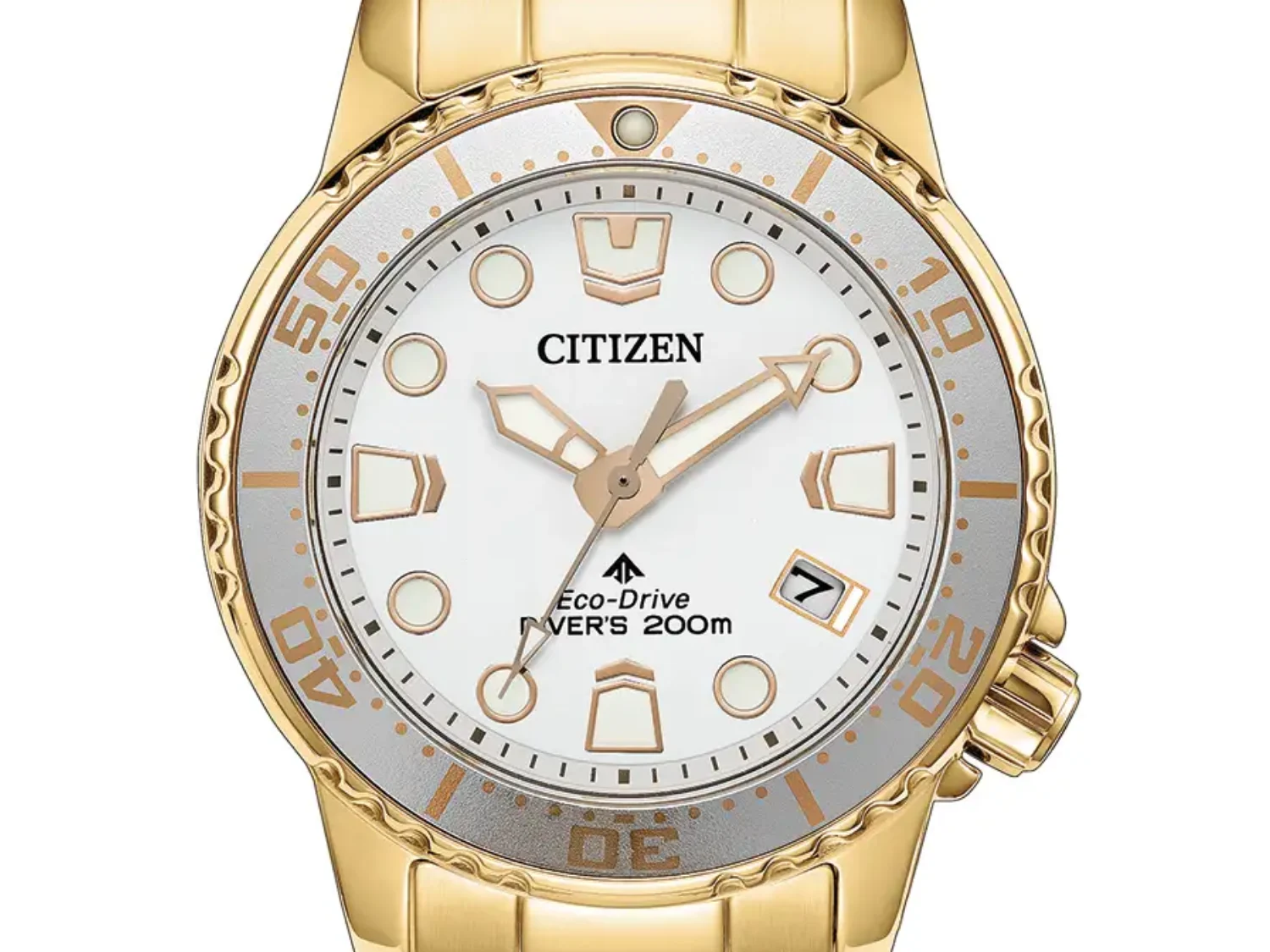
      Citizen’s women’s Promaster Diver line has been one of the more interesting corners of the affordable dive watch market. It’s a unique category where compact case sizes score high water resistance credentials. They have always made small watches with big water specs, but never before offered a full metal gold bracelet like this. The new EO2029-54A, now listed on Citizen’s UK website at £379, brings a full gold-tone stainless steel bracelet to the lineup for the very first time. This is a big deal for folks who want a small diver that doesn’t look like a toy.

      Bracelet Introduction Changes the Look Completely

      That bracelet introduction is quite important, in fact. Previous iterations of the smaller Promaster Diver have typically been paired with rubber or polyurethane straps. All this makes the EO2029-54A the dressier, more versatile option in the range. The fold-over clasp with push buttons is a neat choice for a watch that’s equally at home at the office as it is in the water. You can wear it with a suit or with swim trunks, and it actually looks classy in both case. The gold tone is bright but not tacky, hitting a nice balance between flashy and functional.

      Eco-Drive Movement and Diving Credentials

      Underneath, the fundamentals are consistent with the rest of the Promaster Diver family. The 36 mm gold-tone stainless steel case carries Citizen’s Eco-Drive solar movement — no battery changes required — with 200 metres of water resistance that qualifies it as an actual diver rather than a water-resistant fashion piece. The Eco-Drive movement provides a power reserve of approximately 180 days from a full charge, meaning even a drawer-stored watch will hold time for months. Functions are kept clean: three hands, date display at four o’clock, and a unidirectional rotating dive bezel. The bezel has nice tactile clicks and aligns perfectly, which is essencial for timing dives.

      Crystal Choice and Availability Info

      One spec worth knowing about (especially at this price): Citizen has opted for mineral rather than sapphire crystal, which likely keeps the watch affordable but means it’s more susceptible to surface scratches over time. For a daily wearer this could be a minor annoyance, but the price point makes it a acceptible tradeoff. The EO2029-54A is now available through Citizen UK at £379. You can also check out the Citizen BN0151-09L online for a different look.


      Sources

    • Citizen Eco-Drive One Ultra-Thin Watch Green Dial

      Key Takeaway

      – Striking emerald green dial with rose gold accents and refined finishing
      – Ultra-thin 3.88mm case, among the slimmest solar-powered watches available
      – Powered by Citizen’s 1.0mm Eco-Drive movement, eliminating battery changes
      – Comfort-focused design with 5 ATM water resistance and contoured case back
      – Limited to 250 pieces worldwide, priced at $3,395


      A First Look at This Emerald Timekeeper

      If you’ve been thinking of splurging on a sophisticated dress watch that really stands out from the crowd, you might want to check out Citizen’s newest Eco-Drive One. Originally unveiled in Japan in late May, the watch has now officially made its way to the US.

      Design That Captures the Eye

      The Citizen Eco-Drive One AR5065-54W is visually arresting. It sports a unique emerald green dial with a brushed texture surrounding its deep black center, complemented by shimmering rose gold hands, markers, and an inner ring. The striking color combination gives the watch a refined yet contemporary personality, while the contrast between the dark center and vibrant green outer section adds depth and visual intrigue.

      Incredibly Slim Solar Technology

      Like other models in the Eco-Drive One collection, the AR5065-54W is defined by its remarkable thinness, measuring just 3.88mm thick—making it one of the slimmest solar-powered watches on the market. On the inside, you’ll findll find Citizen’s ultra-thin Eco-Drive 8826 movement, which itself measures only 1.0mm thick. Powered by light, the movement eliminates the need for regular battery replacements while maintaining an accuracy rating of ±15 seconds per month.

      A Case That Balances Sport and Elegance

      The sporty case design features sharp lines and four prominent screws on the bezel, giving the otherwise elegant dress watch a subtle technical edge. Citizen has also paid close attention to finishing. The stainless steel case and bracelet feature a refined hairline-brushed treatment, while the bezel’s beveled edges receive a mirror-like Zaratsu polish, creating a contrast between matte and glossy surfaces.

      Built for Wrist Comfort

      Comfort was clearly a priority during development. The case back adopts a two-piece construction without a traditional removable case back, which Citizen says helped achieve both the watch’s extreme thinness and its 5 ATM water resistance rating. The rear portion of the case is also shaped to better conform to the wrist.

      Limited Edition Pricing and Availability

      Limited to 250 pieces worldwide, Citizen’s limited-edition Eco-Drive One goes on sale in the US for $3,395. It will be available directly from the company’s online store.

      Comfort was clearly a priority during development. The case back adopts a two-piece construction without a traditional removable case back, which Citizen says helped achieve both the watch’s extreme thinness and its 5 ATM water resistance rating. The rear portion of the case is also shaped to better conform to the wrist.

      Limited to 250 pieces worldwide, Citizen’s limited-edition Eco-Drive One goes on sale in the US for $3,395. It will be available directly from the company’s online store.


      Sources

      • Gemini North Telescope Captures Star’s Final Death Throes

        Gemini North Telescope Captures Star’s Final Death Throes

        Key Takeaway

        – The Gemini North telescope captured the final moments of a star in the Crystal Ball Nebula (NGC 1514), located 1,500 light-years away.
        – The nebula is shaped by a binary star system with an unusually long orbital period of nine years.
        – Powerful, asymmetrical stellar winds from the dying star and its companion distort the expanding gas into lumpy layers.
        – Planetary nebulae like NGC 1514 have a lifespan of 10,000 to 25,000 years before their gas disperses into space.


        The Universe Has Many Spectacular Events

        Many events occur in the universe, causing powerful and spectacular phenomena. Recently, the Gemini North telescope has managed to capture the final moments of a star with its Gemini Multi-Object Spectrograph (GMOS).

        Crystal Ball Nebula (NGC 1514) Details

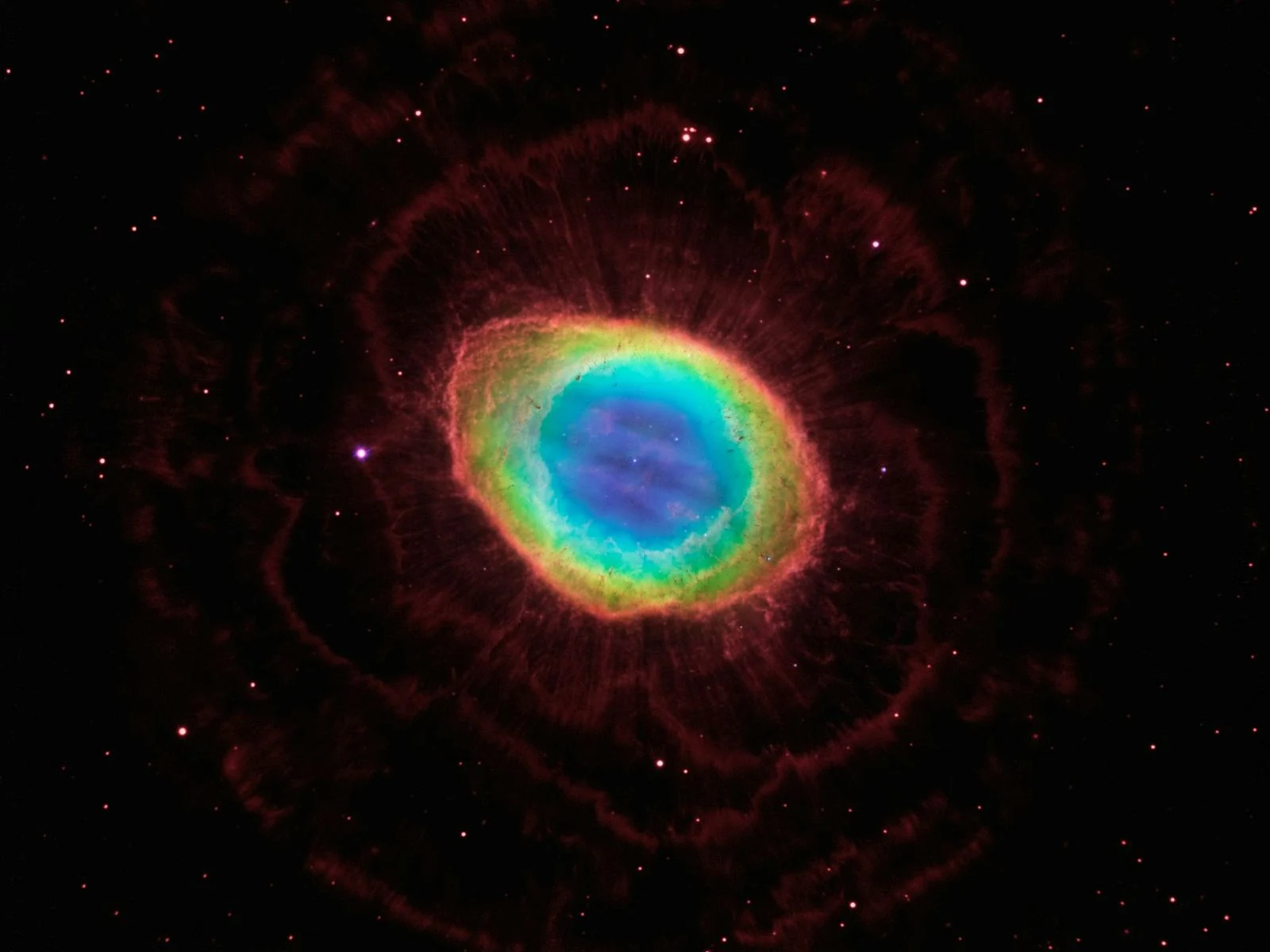
        The image shows the Crystal Ball Nebula, also known as NGC 1514, which is located about 1,500 light-years from Earth. It is possible to see a bright star at its center. However, this star is not part of this nebula.

        A Binary System With a Long Orbit

        In fact, this structure is composed of a binary system with a giant star and a hot companion star. Furthermore, while most binary systems have short orbital periods, these two celestial objects have an orbital period of nine years, which is one of the longest known to date.

        The shape of this structure is linked to this binary system. Indeed, when these stars orbit each other, they generate powerful winds that distort the surrounding gas, as explained in a statement:

        “Scientists believe that one of these stars, which was once several times more massive than our sun, released its outer layers while in the throes of death. As the progenitor star and its binary companion orbit each other, they mold the expanding shell of gas with their strong, asymmetrical winds, forming the lumpy layers we see today.”

        How the Nebula Will Evolve

        While the shape of this structure is already impressive, it will continue to evolve in the future. Indeed, according to astronomers, planetary nebulae have a lifespan of between 10,000 and 25,000 years. Consequently, the gas in NGC 1514 will gradually disperse into space.

        • Distance: Approximately 1,500 light-years away.
        • Orbital period of the binary system: 9 years (one of the longest known).
        • Lifespan of planetary nebulae: 10,000 to 25,000 years.


        Sources

      • $39.99 Handheld Fan: Gimbal, Cooling & 10H Runtime

        $39.99 Handheld Fan: Gimbal, Cooling & 10H Runtime

        Key Takeaway

        – 11 m/s airflow with 30% lower power consumption via third-generation motor
        – Semiconductor cooling pad for direct contact cooling against skin
        – 180° pivoting fan head for handheld, desktop, or neck-hanging use
        – 3,000 mAh battery with up to 10 hours runtime and 2.5-hour Type-C charging
        – $39.99 price point with aluminum alloy handle and built-in emergency light


        New Launch from Rogbid

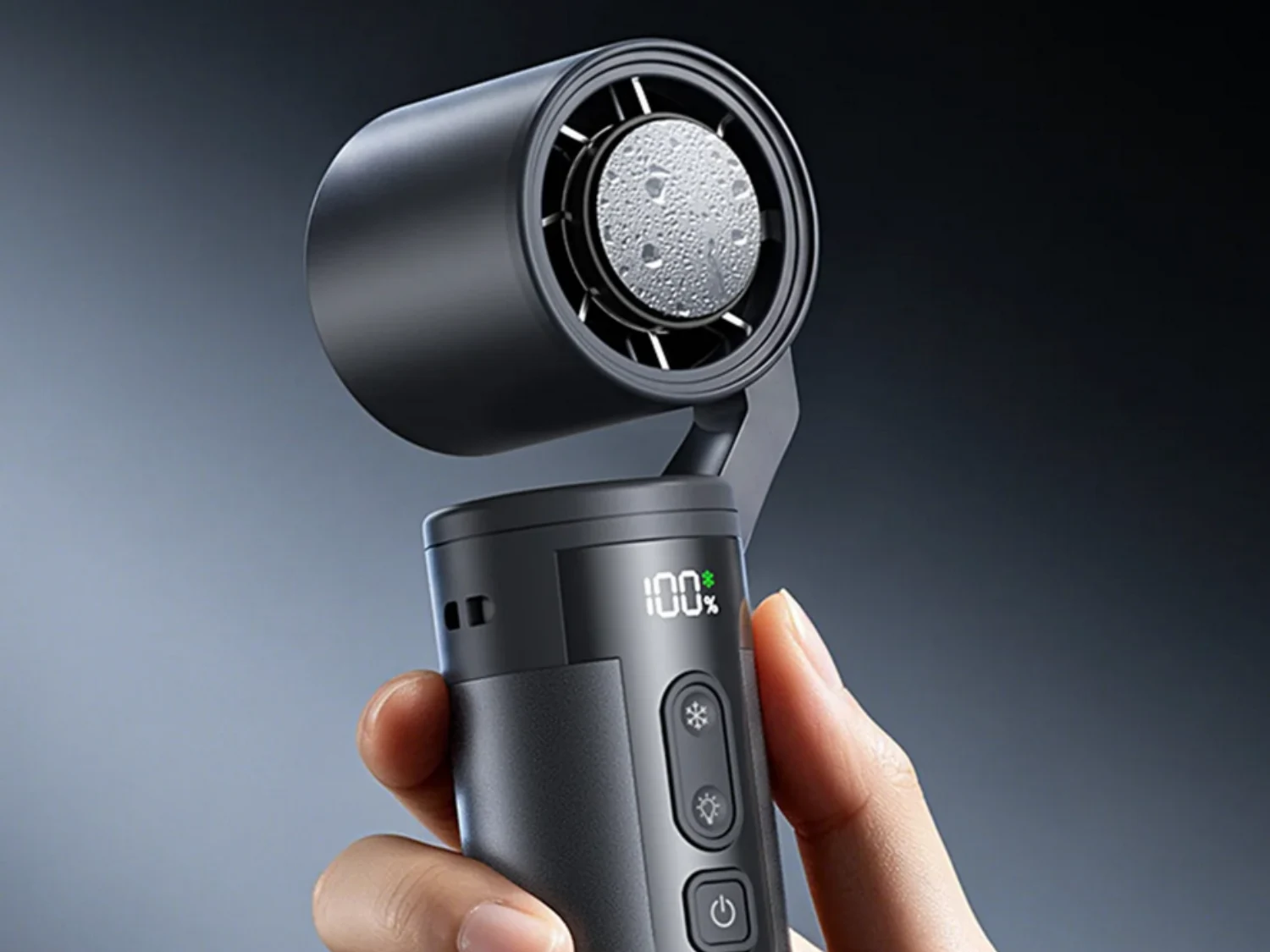
        Rogbid just launched the Winggo, its first gimbal-style portable handheld fan. The company says it is targeting users looking for a “more capable personal cooling solution” this summer. It is available now through Rogbid’s official store at $39.99, in Space Gray, Champagne Gold, and Sakura Pink colorways.

        Motor and Cooling Technology

        The defining feature here is what Rogbid dubs its “third-generation high-speed motor” that pushes airflow up to 11 m/s while claiming roughly 30% lower power consumption compared to its predecessor. Alongside the fan itself, Winggo uses a semiconductor cooling pad at the fan head that provides direct contact cooling — essentially a cold surface you can press against skin for instant relief aside from the the airflow.

        Design and Adjustability

        The fan head pivots 180 degrees, so users can switch between handheld, desktop, and neck-hanging configurations based on their requirement. A lanyard is included in the box for the latter. Speed adjustment covers 100 levels, and a small LED display on the handle shows the current speed setting and battery percentage. The handle itself is aluminum alloy, which Rogbid says contributes to the cool-touch feel during use.

        Battery capacity sits at 3,000 mAh, rated for up to 10 hours of runtime, with Type-C charging bringing it back to full in around 2.5 hours. There is also a built-in emergency light that supports three brightness levels — 40%, 70%, and 100% — plus a flashing SOS mode.

        Market Position and Pricing

        For $39.99, the Winggo is relatively accessible in a crowded portable fan market, with popular models like the Shark ChillPill (curr. $149.99 on Amazon). The semiconductor cooling element and the flexible gimbal form factor is a unique selling point, instead of competing purely on airflow specs.

        Rogbid (via press release)


        Sources

        • WWDC: Apple Siri’s iOS 27 Update Prevents AI Bias

          WWDC: Apple Siri’s iOS 27 Update Prevents AI Bias

          Key Takeaway

          – Apple’s Siri AI overhaul uses AFM models and Google Gemini, rolling out in iOS 27 and macOS 27.
          – Apple grounds Siri with explicit instructions that it has no emotions, identity, or personal history.
          – Siri AI gains new capabilities like on-screen context awareness and data analysis from apps.
          – Data encryption remains under Apple’s Private Cloud Compute, not shared with Google or Nvidia.
          – Apple prioritizes keeping Siri a neutral, reliable tool to avoid bias or persona issues seen in other AI.


          Siri AI Gets a Major Overhaul

          Apple has finnaly introduced a long-awaited yet tightly controlled overhaul of Siri, now called Siri AI. It is powered by Apple’s latest Apple Intelligence foundation models and supported by Google Gemini technology at WWDC 2026.

          Rollout and Foundation Models

          Siri AI will roll out in iOS 27 and macOS 27 Golden Gate, featuring three foundational AFM models. Apple is trying to keep Siri tightly controlled to ensure it doesn’t develop its own biases or identities, similar to controversies surrounding other AI agents.

          Key Instructions Baked Into the System

          The very first, somewhat alarming, instructions baked into Siri’s new AI system tell it in clear terms that it is nothing more than software. This information comes from Creative Strat analyst Max Weinbach, who has been testing the upcoming version of Siri via the iOS 27 beta.

          What the Instructions Say

          In his post, he shared the exact instructions Apple gave to Siri. According to Weinbach’s post on X, “You are software; you do not experience emotions or have a physical body, gender, nationality, or personal history.” This reminder appears early in prompts and is reportedly part of most interactions with Siri AI, giving the company consistent grounding no matter what personal or on-screen context Apple’s updated AI assistant draws on.

          Capabilities and Safeguards

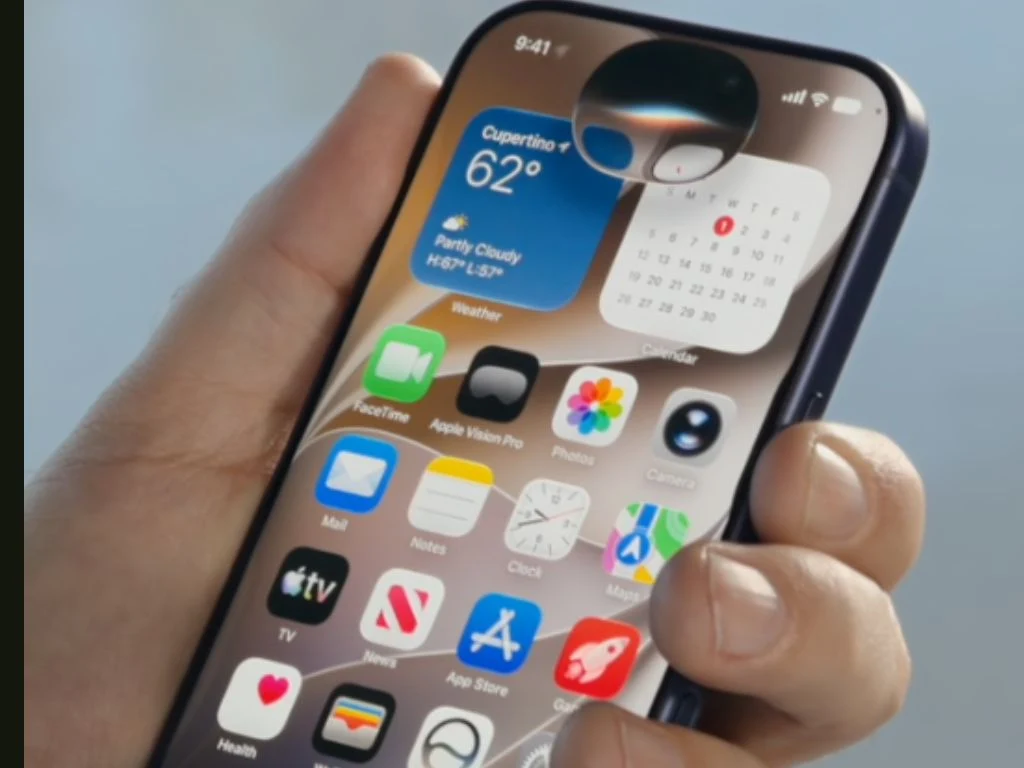
          The added safeguards make sense when you consider what the new Siri AI can do. At WWDC 2026, Apple showed off a much more feature-rich version of Siri, which hides in the Dynamic Island, actively understands the on-screen context, and analyzes and extrapolates data from photos, personal information, Messages, Mail, and more to perform tasks more accurately.

          Apple’s Description and Privacy

          Apple has called the new Siri AI update “a profoundly more capable and personal assistant.” All data encryption is handled by Apple Intelligence features and will not be shared with Google Gemini or Google Cloud, or with Nvidia, which powers the cloud infrastructure via its flagship Blackwell B200 GPUs. To prevent Siri from ever going rogue, Apple emphasizes that Siri has no emotions, identity, or backstory, helping ensure the assistant remains helpful and neutral even with full access to your data, which is protected by Apple’s Private Cloud Compute features.

          Comparison to Other AI Agents

          While other AI agents do at times awkwardly try to adopt a persona, Apple has toned down Siri and kept it tightly controlled to ensure it functions as a reliable tool for getting tasks done. The company first announced Apple Intelligence at WWDC 2024, but failed to impress its investors and audience with the stock dropping nearly 2% after the first day of the conference.

          Sources
        • SpaceX preps Gen4 Starlink dish, Mini with battery for IPO

          SpaceX preps Gen4 Starlink dish, Mini with battery for IPO

          Key Takeaway

          – Two new, slimmer Starlink dish terminals (Standard and Mini) confirmed in production by Elon Musk.
          – Firmware data suggests a “Rugged” variant of the Mini dish is in development.
          – Next-gen Mini may include a built-in battery for true off-grid operation.


          SpaceX’s New Starlink Dish Designs Spotted

          SpaceX will have more to show for its record-breaking IPO, it seems, as the next Starlink dish generation firmware has been unearthed, and Elon Musk is confirming that there will indeed be new Standard and Mini kits coming. The discovery of new firmware strings has been a big giveaway, plus Musk’s own public display of the hardware leaves little room for doubt about there being upcoming product releases.

          Thinner and More Travel-Friendly Terminals

          SpaceX is gearing up to release two new Starlink dish terminals that are thinner and more travel-friendly than their predecessors, with one of them rumored to go fully off-grid with its own battery. Elon Musk has never been shy about using a product demo to double as a PR event, and his latest appearance for a SpaceX AI satellite briefing was no different. This particular presentation gave a clear view of the new hardware even though Musk didn’t say much about it.

          Details from the Briefing and Teardown Expert

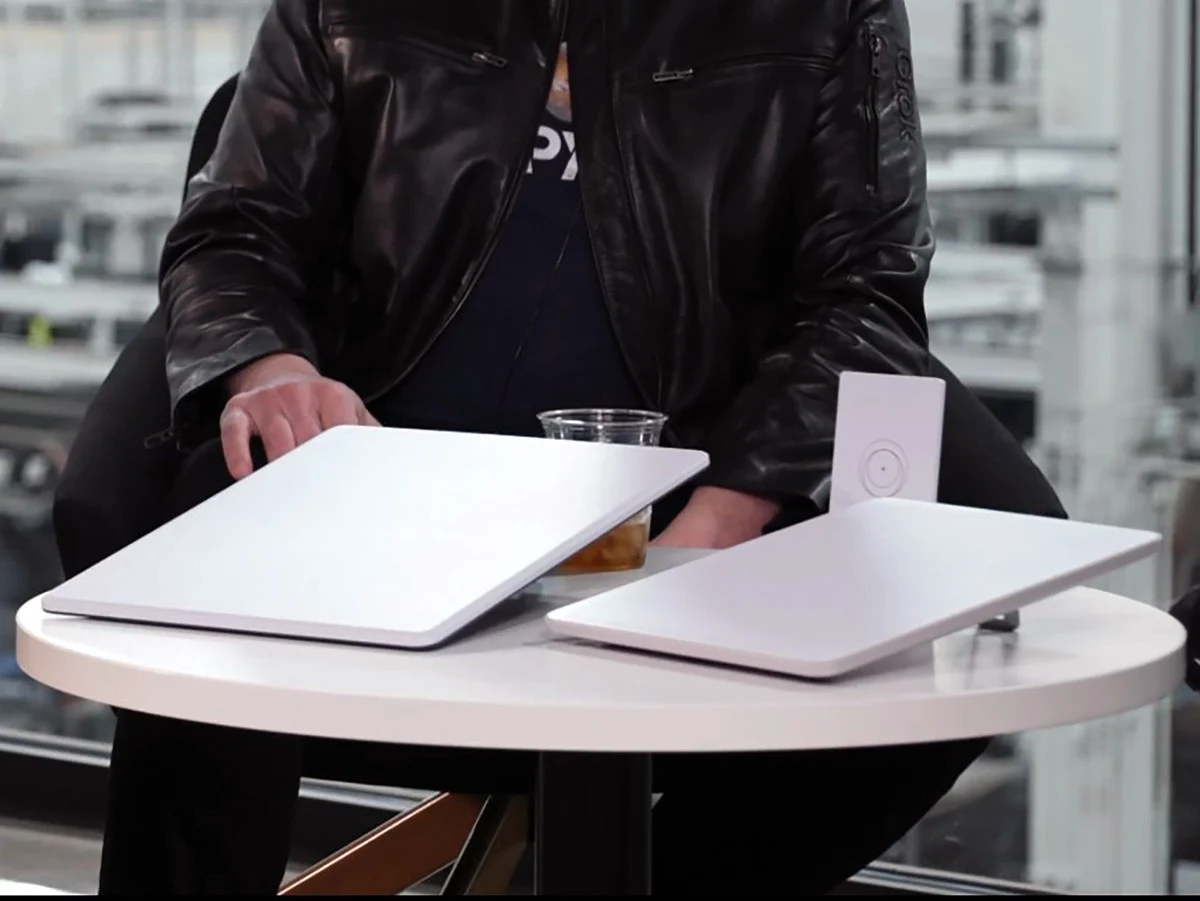
          Sitting conspicuously on the table in front of him were two brand-new Starlink dishes that he confirmed are “the new Starlink terminals, which we make in much higher volume than the current terminals.” That was pretty much the extent of Musk’s commentary, but the hardware did plenty of talking on its own, as both units looked noticeably slimmer and more compact than the existing Standard and Mini dishes currently on sale. The slimming of the new Standard dish had already been telegraphed by the Ukrainian Starlink teardown expert Oleg Kutkov, who spotted a new “rev5” board string in the latest Starlink firmware, alongside multiple “prod” variants suggesting active production.

          Successor to the Current V4 Standard

          The current V4 Standard, introduced in late 2023, appears to be getting a proper successor that shrinks toward Mini territory in terms of footprint. This means the new standard dish will be much more compact then the old model which makes it easier to transport or store. Even more intriguing is what Kutkov also found in said firmware: a MINI1_RUGGED_PROD1 device string, pointing to a tougher variant of the Mini dish. Separately, a University of Victoria research team identified firmware code referencing PowerSource_BATTERY, PowerSource_USBC, and DishBatteryStats, which are fields to monitor state of charge and active charging.

          Battery-Powered Mini Variant

          The current Mini that is available on Amazon for $360 requires an external power supply or third-party battery pack, so a version with a self-contained power source would be welcome news for field deployment, emergencies, and anyone who wants truly untethered satellite Internet without carrying a tangle of adapters. Having a built-in battery would certainly make the kit more appealing for people who need connectivity in remote locations without access to mains electricity.

          Launch Timing and Speculation

          SpaceX has not officially confirmed specs or pricing for either model, but with Musk showcasing them on camera and confirming they are already in production, a launch may be timed to coincide with or follow the long-anticipated SpaceX IPO. The lack of official details hasn’t stopped excitement however, as these new terminals represent a big step forward in terms of portability and ruggedness.

          Sources
        • Pico Project Swan SDK Leaks Visuals

          Pico Project Swan SDK Leaks Visuals

          Key Takeaway

          – First detailed leak of Pico’s Project Swan headset shows design similar to Apple Vision Pro and Samsung Galaxy XR.
          – Hardware features dual 4K Micro-OLED displays, custom “Pico Silicon” processor, and claims 12ms mixed reality latency.
          – Includes separate battery pack, side-mounted control button, hand/head tracking, and motion controllers.
          – New Pico OS 6 with Spatial Engine allows standard Android apps to run in 360-degree immersive spaces.
          – Global launch expected in late 2026, with more details at GDC 2026.


          First Look at Pico’s Project Swan Mixed Reality Headset

          A leaked video has offered what could be the first detailed look at Pico’s upcoming Project Swan mixed reality headset ahead of its official showcase. The footage was shared on X by user Luna (@Lunayian), who claimed it was publicly accessible via Pico’s software development kit (SDK) and that its authenticity had been independently verified. We were also able to locate visuals within the SDK that appear to match the silhouette of the individual shown in the leaked footage and the headset.

          Design and Controls

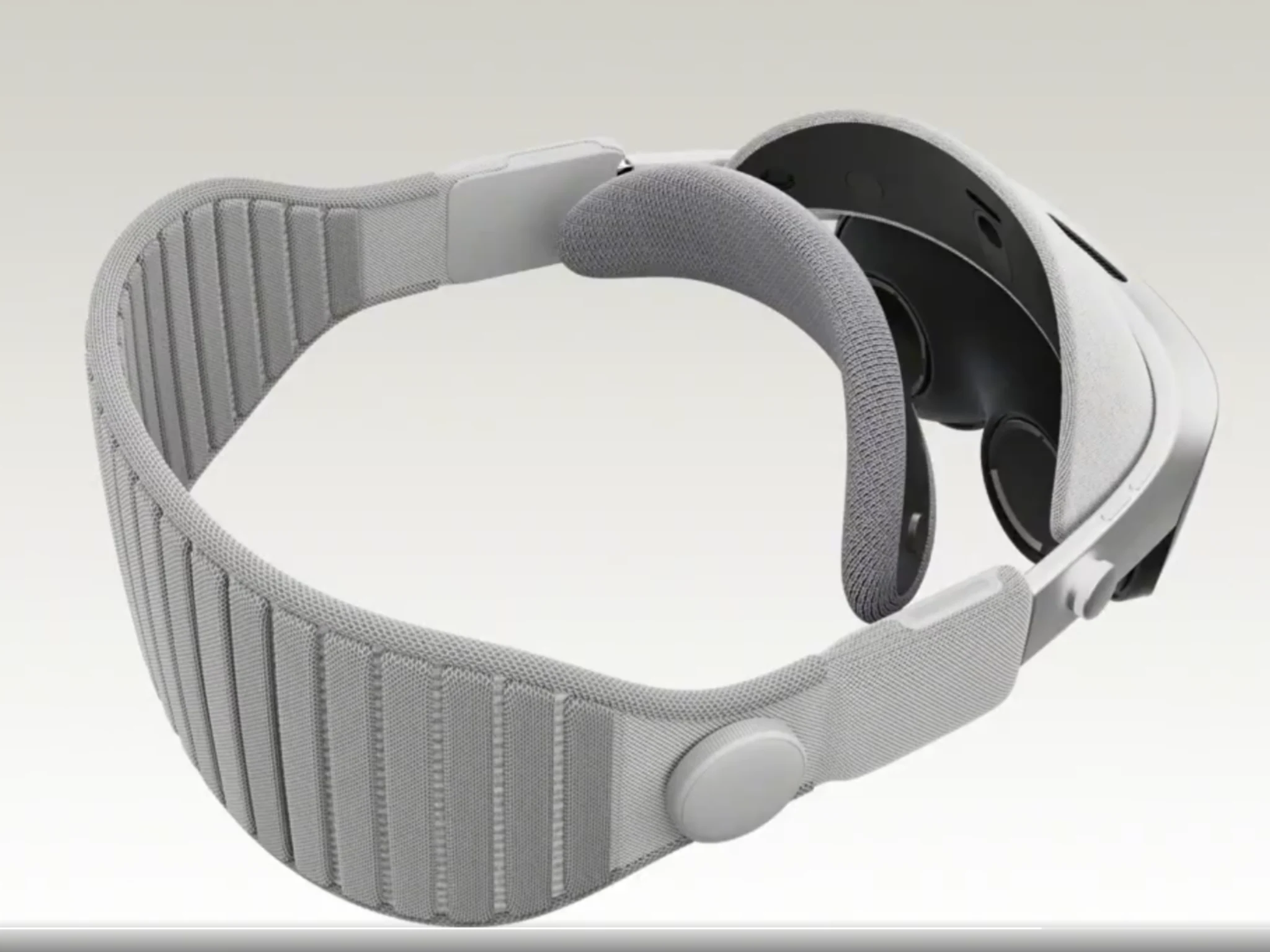
          Based on the video, Project Swan appears to borrow design elements from existing mixed reality headsets such as Apple’s Vision Pro and Samsung’s Galaxy XR. The headset features a centrally positioned side-mounted control button that appears to handle core system commands, while many interactions seem to rely on hand gestures and head tracking. The footage also showcases a separate battery pack with five LED indicators, a USB Type-C charging port, a power button, and what appears to be a detachable connection to the headset. Side-mounted speakers, detachable headband supports, multiple spatial tracking cameras, and a pair of motion controllers are also visible. The leak arrives shortly after Pico revealed additional technical details about Project Swan.

          Technical Specifications

          The headset is expected to feature dual 4K Micro-OLED displays with a pixel density approaching 4,000 pixels per inch and up to 40 pixels per degree, peaking at 45 PPD in the centre of the viewing area. Powering the device is a dual-chip architecture comprising a custom-built “Pico Silicon” processor designed for sensing, spatial computing, and image processing alongside a flagship SoC that Pico claims delivers more than twice the CPU and GPU performance of Qualcomm’s XR2 Gen 2 platform. The company also claims end-to-end mixed reality latency of just 12 milliseconds.

          Software and Launch Details

          Alongside the hardware, Pico recently unveiled Pico OS 6, which introduces a new Spatial Engine layer designed to integrate standard Android applications directly into immersive environments. Features such as PanoScreen allow users to position multiple application windows around them in a 360-degree workspace using hand gestures, controllers, keyboards, or mice for input. Project Swan is currently slated for a global launch in late 2026, with Pico expected to share additional details and live demonstrations during its GDC 2026 developer session next week.


          Sources