Category: Other

  • Steam Machine Leak: Announcement & Reservation Dates

    Key Takeaway

    – Valve’s “Steam Machine” unveiling is reportedly scheduled for June 23, with reservations starting June 30.
    – Official announcement and first reviews may go live simultaneously on June 23.
    – Fans are cautiously optimistic but worry about potential disappointment due to past rumors.
    – Expected price is $600–$800, though some fear it could exceed $1,000 following the Steam Deck price increase.
    – All details remain speculation until Valve makes an official statement.


    Last week, a leak about allegedly shipped test units attracted a lot of attention. Now, the leaker has spoken up again and provided more specific details. As Steam Hardware Updates writes on X, Valve is expected to unveil its living room PC on June 23 1 p.m. EDT / 10 a.m. PDT. Reservations are then said to begin one week later, on June 30, also 1 p.m. EDT / 10 a.m. PDT.

    Further Details on the Announcement

    According to Steam Hardware Updates, their source stated that videos may be published after June 23. The official announcement and the first reviews could therefore go live on the same day. That sounds entirely plausible, as Valve followed the same approach with the Steam Controller. However, they also stress that they are “not 100% yet”, although the dates mentioned make the most sense based on the information they have received.

    Fan Reactions and Price Concerns

    The updated leak has also already reached Reddit, where fans remain cautiously optimistic. Many users are excited and hope that the Steam Machine will launch soon. However, after the many recent rumors surrounding hardware imports, some are worried that this could lead to yet another disappointment. The potential price remains another major concern. Fans are hoping for a price similar to traditional consoles – roughly $600 to $800 – but given the recent price increase for the Steam Deck, some now expect the Steam Machine to cost more than $1,000. Until Valve makes an official statement, both the release date and the price of the Steam Machine remain pure speculation.

    Sources
  • Garmin Express Update Fixes Maps & Sync Issues

    Garmin Express Update Fixes Maps & Sync Issues

    Key Takeaway

    – Garmin Express 7.29.0 is now available via the built-in update function.
    – The update fixes a bug that prevented users from redeeming purchased content.
    – A problem with the update queue has been resolved.
    – A translation error affecting traditional Chinese characters has been corrected.
    – Map management functionality has been restored, allowing proper organization of installed maps.


    Garmin is best known for its smartwatches, which can typically be used for years without ever needing to connect to a computer. Syncing and updates are usually handled via Bluetooth or, depending on the model, Wi-Fi. However, Garmin Express remains an important companion tool, enabling users to connect their devices via USB to install firmware updates, manage maps, and add Connect IQ apps. Garmin has now released Garmin Express 7.29.0. The update can be installed via the built-in update function.

    Changelog Details and Bug Fixes

    The official changelog is brief and includes a general note about various minor bug fixes and improvements, without going into detail. One specifically addressed issue could previously prevent users from redeeming purchased content. In addition, a problem with the update queue has reportedly been resolved. A translation error affecting traditional Chinese characters has also been fixed, though this is unlikely to impact most European users. Another fix is not listed in the changelog but mentioned in a forum post: Garmin Express 7.29.0 should restore proper map management functionality, allowing users to organise installed maps correctly once again.

    Map Management and Translation Corrections

    Thier is a new fix that ain’t in the changelog but its talked about on the forums, and this version should bring back the ability to handle maps correctly. So now, users can sort out their installed maps without any hassle. Additionally, the traditional Chinese translation was off but thats now corrected, although most Europeans wont even notice this change. The update queue problem was also sorted out, which should make the whole update process smoother.

    • Minor bug fixes and improvements were added.
    • Problem with redeeming purchased content is fixed.
    • Update queue issue has been resolved.
    • Traditional Chinese translation error corrected.
    • Map management functionality restored for proper organisation.
    Sources
  • Free Wear OS Watch Face Turns Smartwatch Into World Cup Scoreboard

    Free Wear OS Watch Face Turns Smartwatch Into World Cup Scoreboard

    Key Takeaway

    – World Cup 2026 has 48 teams (up from 32), hosted by US, Mexico, and Canada.
    – Expansion praised for inclusivity, but criticized for diluting competition and increasing player fatigue.
    – New “Kick It” watch face turns Wear OS smartwatches into live World Cup scoreboards.
    – Users pick a favorite team; watch face shows live scores, standings, and upcoming match info.
    – Available in US, UK, Canada, and Japan for Wear OS 6 and above.


    FIFA World Cup 2026 is now fully underway

    The tournament is being co-hosted by the United States, Mexico and Canada this time around. An other unusual aspect of the quadrennial event is that it has been expanded to include 48 teams, which is an additional 16 squads over the traditional 32-team format. The controversial move has drawn praise from some corners, who claim that such a change will increase inclusivity among underrepresented nations.

    Critical voices have other opinions

    Meanwhile the more critical voices suggest that it will dilute overall competitive balance, increase player fatigue, and potentially lower match quality during the group stage. Either way, keeping track of matches and scores may prove bothersome for some people, especially those with busy lives and demanding schedules. In this regard, Facer and Citizen’s Riiiver development team recently launched a free dynamic watch face.

    The watch face is called “Kick It”

    This new feature turns a Wear OS compatible smartwatch such as the Samsung Galaxy Watch 7 into a live scoreboard for the duration of the World Cup tournament. In the Facer mobile app, users can pick their favorite national team, and then the watch face automatically switches to that country’s official colors and flag. Powered by live data, the face refreshes in real time with match statuses.

    Live data provides current scores

    You can see current scores, group standings, tournament rankings, and headlines for upcoming games directly on your wrist. The Kick It watch face is now available in the US, UK, Canada and Japan for smartwatches running Google Wear OS 6. Support will likely carry over once Wear OS 7 debuts next month on Samsung’s next-generation hardware from Facer.

    Sources
  • Tested: Bluetooth QR Ticket on Taiwan THSR Bullet Train

    Key Takeaway

    1. Tourists can buy spontaneous, non-reserved THSR tickets via the THSR app and an account, using Bluetooth to verify proximity to a ticket gate.
    2. The system uses QR codes for entry, with slightly lower prices than reserved seats; tickets are flexible and can be canceled or used on the next train.
    3. Non-reserved cars (10–12, plus additional cars on local-type trains) allow standing, and the system includes step-free boarding with high platforms.
    4. THSR offers moderate surcharges (e.g., 35 TWD for an eight-minute ride), but is not integrated with local transit, requiring separate fares for connections.
    5. The system is punctual, enables eating and drinking on board, and includes convenience stores and affordable snacks, but can be overcrowded during peak times.


    Easy Ticketing for Tourists

    High-speed rail systems are often also used like regional trains. This is especially true of Shinkansen systems, whether in Japan or, as in our case during Computex Taipei, in Taiwan. Access to this option is usually tied to time-consuming ticket purchases and waiting in line, especially for tourist. Taiwan High Speed Rail (THSR) handles this somewhat differently. Tourists can also buy spontaneous tickets comparatively quickly and easily in order to ride the Shinkansen-style system.

    Setup and Bluetooth Purchase

    All that is needed is the THSR app and a THSR account, which can be set up without much difficulty. After that, a ticket without a guaranteed seat can be purchased directly in front of the ticket gate, but only there. Similar to Japan’s Shinkansen, THSR also offers non-reserved cars, but more on that later. Bluetooth is mandatory for the purchase. The system uses Bluetooth to detect whether the user is near a ticket gate. If that is the case, a destination can be selected and a ticket purchased. Prices are slightly lower than for tickets with seat reservations, see price table.

    • Bluetooth detection at gate
    • Apple Pay accepted
    • Internet access required

    Gate Tech and Local Options

    Since we did not have a credit card saved, we simply paid for the ticket with Apple Pay and selected our card. Anyone who does this more often can, with some practice, even complete the process almost while walking toward the ticket gate, since the Bluetooth beacons have a certain range. Internet access is required, of course. Within seconds, the ticket is then available and can be tapped to show the QR code. In addition to paper tickets and RFID readers, THSR gates also have QR code readers. The reader is comparatively fast, especially when compared with QR code readers on European local transit systems. However, it does not quite match the very fast QR code readers in Japan, such as those used in the new Mobiry Days system in Hiroshima. In practice, this means that in Taiwan, passengers have to slow down slightly when going through the ticket gate to avoid running into the closed barrier.

    EasyCard and Local Transit

    There is, of course, an easier and faster option. Those with a local EasyCard credit card combo, for example, can ride even more easily by simply tapping the card at the ticket gate. A regular EasyCard is not accepted, however. The situation is similar in Japan, where the EX system is also primarily intended for locals. In some cases, two different RFID cards are read while stacked on top of each other. Once through the ticket gate, passengers can go directly to the platform. However, if the train is currently being cleaned, which always happens at the terminal station in Taiwan, passengers have to wait a little. Taiwan High Speed Rail is not a typical local transit system, even though we saw a surprising number of commuting passengers. The tickets are still typical long-distance tickets.

    Cost Comparision and Flexibility

    Costs remain manageable. THSR charges 35 TWD, or roughly $1, for the eight-minute ride from Taipei Main Station to Taipei-Nangang. That makes it difficult to compare purchasing power, however. Another comparison works somewhat better, since the inner-city THSR ticket costs about half as much as a Big Mac. Compared with local transit, it is still a noticeable surcharge. A trip only using the Taipei MRT would have cost us just 30 TWD. Since THSR tickets are not integrated into local transit, we had to pay another 20 TWD for the transfer between Nangang and Nangang Exhibition Center, where Computex Taipei takes place. In the end, we paid 55 TWD, or about $2. That is a price quite a few people in the local population are willing to pay. Incidentally, the THSR ticket can even be canceled until the end of the day if it is not used. We did not try this since we always made our train. In any case, the next train can also be used, since the ticket is flexible despite being cheaper.

    Seating and Car Availability

    There are several advantages in return: seats are usually still available on the final segment, and passengers always sit facing the direction of travel. The non-reserved cars 10, 11, and 12 can be used. However, there are differences. Some trains have a stopping pattern similar to S-Bahn or regional rail. For example, there are effectively supplemental trains between Taipei-Nangang and Taichung. These stop practically everywhere, as the saying goes, and on these trains, cars 1 through 4 as well as 8 and 9 are additionally available. These trains are therefore explicitly intended for local travel, even though the trainsets are the same. Of course, the distances between stations are longer. But the greater Taipei area still has three stations.

    Operating Patterns and Amenities

    The faster trains do not block these high-speed regional services. As with Japan’s Shinkansen, the stations are designed so faster service categories can pass slower ones, and the timetable is coordinated accordingly. Passenger turnover is also comparatively fast on Shinkansen-style systems, even though there are only a few doors. This is also due to step-free boarding, since the platforms in this system are very high. As a result, passengers with suitcases do not block boarding for as long as they do on other express trains. Other advantages of THSR: Eating is allowed on the trains. That is not permitted on the Taipei MRT. Passengers can even buy drinks from a vending machine on the train. Prices are normal compared with the city. A can of soft drink costs about 25 TWD, roughly 5 TWD more. That is nothing like the surcharges typically found on trains in Europe. However, there is no dining car. Snacks are sold from a cart, and those who want to can even buy a bento box, so lunch is available for about $4. These are also fairly normal prices.

    Station Stores and Service

    The stations also have the convenience stores typical of East Asia, such as FamilyMart. Quick, fresh food can be bought there and taken directly onto the train. The stores are often even located behind the ticket gates in the waiting area. Thanks to generous seating areas, passengers can decide whether to eat on the train or while waiting at the station. Cellular service on the trains is excellent, although that is not unusual in Taiwan. THSR also offers Wi-Fi, but we did not try it. However, THSR is not as easy to use everywhere as it was in our case. Those coming from slightly farther away, such as from Banqiao toward the city center, usually still have a good chance of getting a seat because many passengers get off in Banqiao. From Taoyuan, where the city’s main airport is located, it is already more difficult. Standing room is normal there, as we found several times last year. This route is therefore better reserved in advance, although that comes with deadlines. Those who want to travel spontaneously have to stand, which many passengers do.

    Overwhelmed by Success

    This shows that Taiwan’s high-speed rail project is being overwhelmed by its own success. Trains can already run roughly every 5 to 10 minutes at times, but THSR simply does not have enough trains for that. There are days when everything is sold out, especially during popular holiday periods. That is not surprising, however, since THSR is a very attractive long-distance rail system. The stations are often located outside city centers, but the trains run at high speeds of up to 186 mph. Japan is expected to deliver new trains soon, but it will likely take another year before the additional capacity enters service. THSR then plans to offer 25% more capacity during rush hour. Even if it can get stressful during rush hour. Taken together, all of this also makes Taiwan’s high-speed rail system interesting for local commuting or spontaneous trips. The surcharge is moderate, and the system serves three stations on the important east-west axis through the Taipei metropolitan area. Anyone familiar with the subway system running parallel to it, the often heavily used Bannan Line, will appreciate being able to cover the distance quickly, even while standing.

    Alternatives and Final Observations

    However, the schedule is designed for long-distance service. There are some larger gaps between trains, so taking the Bannan Line on the Taipei Metro can still make sense in terms of travel time. Those who want to can also use the TRA on the parallel route, which serves a few more stations. This is the Taiwan Railway, which runs on separate tracks. High-speed rail traffic in Taiwan is separated from other rail traffic. An EasyCard can be used here without any issue, but passengers need to pay attention to the train category. For this test, we rode between Nangang and Taipei Main Station a total of five times. There was also one trip to Taoyuan. Punctuality was 100%, without any statistical tricks. In previous years, we also could not recall any delayed trains. The following screenshots show what this looks like in the app and were taken on different days.



    Sources

    • Acebeam X35 Searchlight: USB-C, Dual 21700, Side Light

      Acebeam X35 Searchlight: USB-C, Dual 21700, Side Light

      Key Takeaway

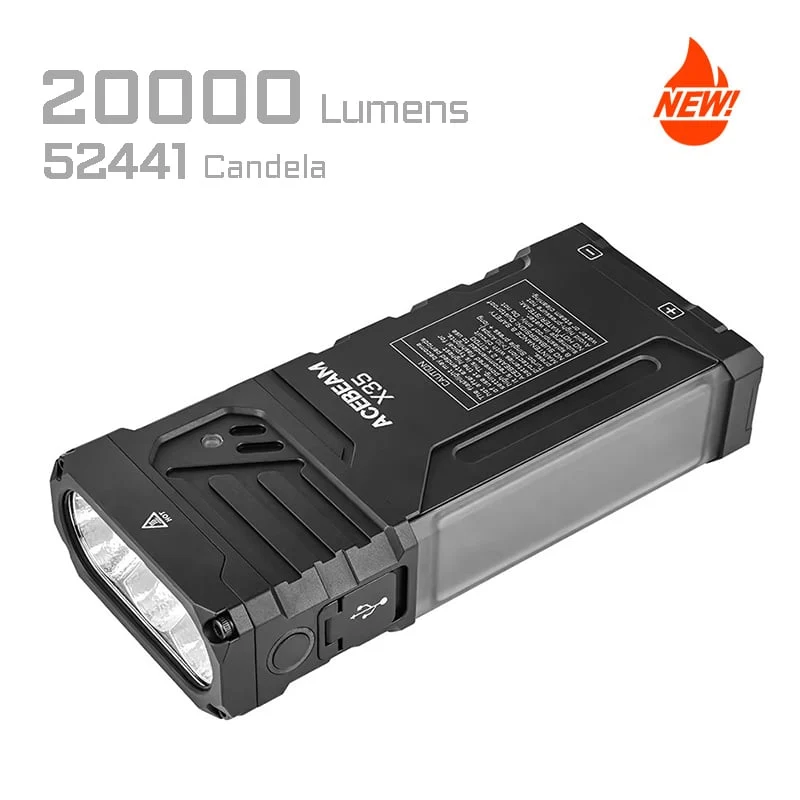
      – 20,000 lumens with 458-meter beam distance, but weighs nearly 500g (more like a rugged phone than a compact one).
      – Powered by two replaceable 21700 batteries (36 Wh total), with USB-C charging and IP66 rating.
      – Dual lighting: main beam (up to 58h at 40 lumens) plus a lantern-style side light.
      – Turbo mode (20,000 lumens) runtime unlisted; 3,000-lumen mode lasts 10 min before dimming to 2,000.
      – Pre-order at $172.40, shipping from China around June 18, 2026; includes magnetic base and optional handle.


      Big Light, Big Claims

      Acebeam have officially unveiled the X35, a rather large flashlight that just barely fits into large trouser pockets. This is due to its 20,000 lumens and a beam distance of 458 meters. Acebeam nevertheless presents the flashlight as a compact model, comparing it to a smartphone. The X35 is indeed comparable in size to what are deemed compact smartphones nowadays. However, at almost 500 grams, the Acebeam surpasses even heavy smartphones and falls more into the rugged phone category. Compared to small EDC flashlights, the X35 is very large, as the following photo, which we took during our UC3A hands-on, clearly shows.

      Battery and Power Specs

      The X35 requires the large volume not only for the three Cree XHP70.2 LEDs on the front, but also for the two batteries. Acebeam installs two replaceable 21700 cylindrical cells with a total capacity of 36 watt-hours. However, the batteries can remain in the flashlight, as it features a USB-C port with a protective cover. The X35 has an IP66 rating.

      Lighting Modes and Run Times

      In addition to the main light, which lasts 58 hours at 40 lumens and 5.1 hours at 1050 lumens, there’s also a side light that functions like a lantern. As Acebeam informed us, the internal design is comparable to the side light of the UC3A, just larger. Runtimes for the side light are not specified, nor is the runtime for the 20,000-lumen turbo mode. At 3,000 lumens, the flashlight lasts for 10 minutes before dimming to 2,000 lumens.

      Mounting and Features

      Thanks to a magnetic back, the nearly 500-gram flashlight can be attached without a mount. Speaking of mounts, a handle can be attached to the power switch for easier carrying. The button is mechanically guided through the handle. Due to its many functions, operating the flashlight is somewhat complex. The diagram from Acebeam at the end of this article illustrates this.

      Pricing and Availability

      The flashlight can be pre-ordered directly from Acebeam for $172.40 and will be shipped from China. Delivery is expected to begin around June 18, 2026, and availability at Amazon is expected to follow soon.


      Sources

    • 70mai 4K Dashcam with Rear Camera & SD Card at 40% Off

      70mai 4K Dashcam with Rear Camera & SD Card at 40% Off

      Key Takeaway

      – 40% discount drops price to $89.95, includes front 4K camera, rear 1080p camera, and a 64GB microSD card.
      – Front camera delivers excellent daytime clarity and good low-light exposure; rear camera struggles with glare and noise at night.
      – Features a durable supercapacitor (heat-resistant up to 85°C) instead of a volatile lithium-ion battery.
      – Dual-channel mode reduces front recording speed to 24-25 fps, causing motion blur on fast-moving traffic.
      – Strong entry point for an affordable, multi-lens system with robust thermal resilience.


      Amazon Drops Price on 70mai Dash Cam 4K A810 Lite Bundle to $89.95

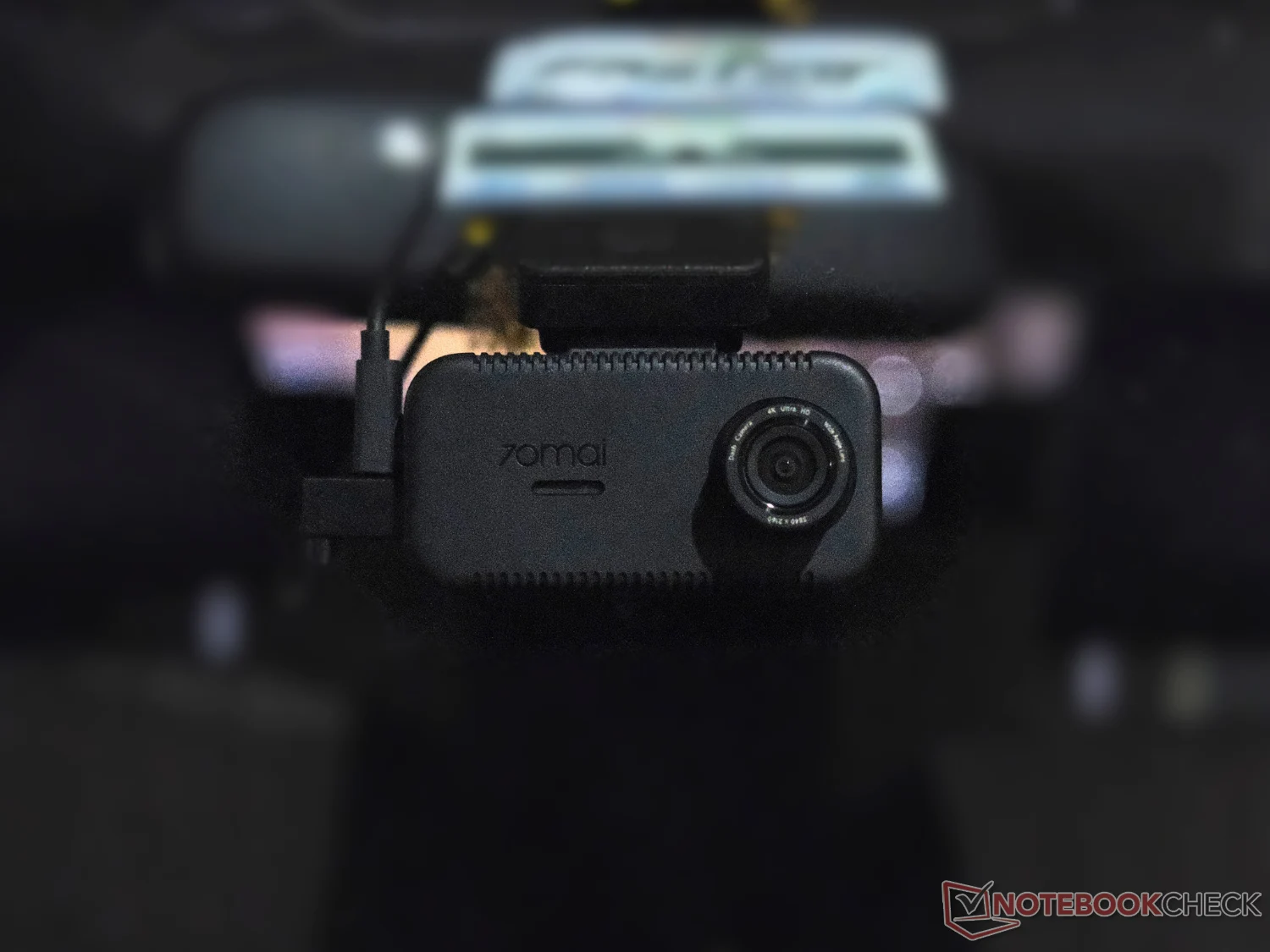
      Amazon has just introduced a limited-time deal on the 70mai Dash Cam 4K A810 Lite dual-channel bundle, cutting the price to $89.95. Pushed as a 40 percent discount from its standard 149.99 dollar list price, the promotional package bundles the main 4K front-facing shooter, an RC21 1080p rearview companion camera, and an included 64 GB microSD card to handle immediate storage needs. The deal has already gained traction, tracking over 2,000 units purchased within the past month alone on the platform.

      Our Testing Revealed Excellent Daytime Clarity and Heat Resistant Design

      Our extensive hands-on testing confirmed that the front-facing sensor gets you excellent daytime clarity and respectable exposure mapping on unlit roads after dark. Moving past traditional, volatile lithium-ion batteries that come with structural risks, especially in summer heat, 70mai equips this chassis with a durable, heat-resistant supercapacitor rated to withstand cabin environments up to 85°C. For quick and seamless data offloading, the device utilizes dual-band Wi-Fi 6 to accelerate large video file transfers directly to a smartphone app, making it a very convient option for daily drivers.

      Real-World Concessions Appear When Using Dual-Channel Recording Modes

      However, hitting this sub-100 dollar threshold involves real-world concessions. Activating dual-channel mode forces the front recording speed to drop from a fluid 30 frames per second down to 24 or 25 frames per second, which renders slight motion blur on fast-moving highway traffic. Additionally, while the front camera maintains clean target exposure in low light, the secondary 1080p rear window camera struggles much more under dark conditions, suffering from intense headlight glare and digital noise which can make night recordings look grainy and less usable for identifying plates.

      Discount Provides a Great Entry Point for Multi-Lens Surveillance Systems

      Regardless, for buyers looking for an accessible, multi-lens surveillance system with robust thermal resilience, this discount is a great entry point, especially considering that it’s still a relatively newer model. The storage included means you dont have to buy a seperate card right away, and the front 4K clarity outshines many older budget options on the market. Just be aware of the frame rate drop if you plan on using both cameras at the same time its a small trade off for the price.

      • Dash Cam 4K A810 Lite front camera with 4K resolution
      • RC21 1080p rearview companion camera included
      • 64 GB microSD card included for immediate storage
      • Durable supercapacitor rated up to 85°C
      • Dual-band Wi-Fi 6 for file transfers

      Disclaimer: We are not responsible for price changes carried out by retailers. The discounted price or deal mentioned in this item was available at the time of writing and may be subject to time restrictions and/or limited unit availability.


      Sources

      • DOOM Neo Geo AES progress: closer than ever

        DOOM Neo Geo AES progress: closer than ever

        Key Takeaway

        – DOOM is highly portable, but the Neo Geo AES struggles due to its 2D sprite-focused architecture, making 3D rendering difficult.
        – Simple raycasting is possible on the Neo Geo using sprite-scaling tricks, but early versions ran at only 8 FPS.
        – The DoomGeo project has expanded the port to include a full DOOM-style HUD, monsters, weapons, and gameplay elements.
        – The modding community rapidly took on the challenge after MVG’s proof-of-concept, proving “impossible” ports are often achievable.


        The Eternal Porting of DOOM

        Over the yers, classic DOOM has been ported over to a variety of devices ranging from thermal printers, calculators, smart fridges, pregnancy tests, and more. It ushered in a renaissance of the “can it run DOOM?” meme era, which continues to this day, and it does so for good reason. It’s because id Software’s 1993 FPS shooter is incredibly portable. However, one machine has resisted attempts at a DOOM port: SNK’s 1990 Neo Geo AES.

        Hardware Limitations and Possibilities

        The Neo Geo AES packed some extremely powerful hardware for the ’90s, with its 68000 CPU and advanced sprite hardware for 2D games and shooters. Theoretically, the Neo Geo AES should run DOOM with relative ease. However, in practice, its architecture makes rendering 3D environments cumbersome. This insight comes from veteran retro YouTuber Modern Vintage Gamer (MVG), who explained it clearly in a recent video: “DOOM runs on everything. Well, almost everything. The SNK Neo Geo AES console is a 2D sprite-pushing beast, but when it comes to 3D, it’s not architected to handle it. However, with some hardware tricks, it IS possible to build a simple raycaster that runs on Neo Geo hardware, but does this mean DOOM is possible?”

        A Raycaster at 8 Frames Per Second

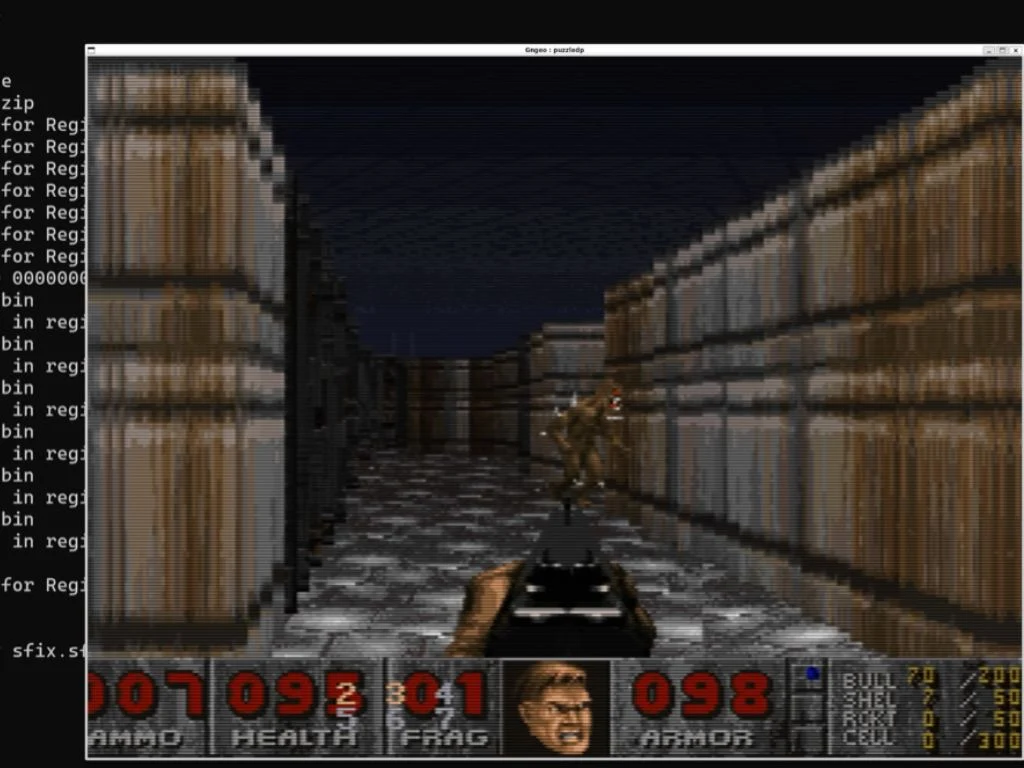
        MVG used the Neo Geo’s sprite-scaling ability to create environments from vertically stretched sprites for walls, floors, ceilings, corridors, and nothing more, which rendered at around 8 frames per second. MVG further stated in his video, “I don’t want to say it’s impossible, because as soon as you say that something is impossible, the gauntlet has been thrown down.” The modding community took on the DOOM Neo Geo AES port challenge almost immediately.

        The Gauntlet is Picked Up

        On June 7, MVG woke up, checked X, and was shocked. He wrote on X: “Wow, my Neo Geo raycaster has been modified to push Doom-like gameplay through the hardware. Another step closer to Neo Geo DOOM!” He also posted an update video on YouTube, complimenting the team behind the project. The gauntlet has been picked up by the DoomGeo project, which has expanded what’s possible on the hardware while respecting its limitations.

        What the DoomGeo Project Achieved

        The developers have managed to add a full DOOM-style HUD with status bar, Doomguy’s mugshot, ammo counters, the BFG, monsters, and much more. This is still running on original Neo Geo AES hardware with no modifications, just clever programming to squeeze 3D through a 2D sprite-pushing beast.

        Sources
      • Hideo Kojima: AI Won’t Create Real Art in My Lifetime

        Hideo Kojima: AI Won’t Create Real Art in My Lifetime

        Key Takeaway

        – Kojima views generative AI as a tool for speeding up development workflows, not for creating art.
        – He does not believe AI will create “true art” within his lifetime.
        – Kojima emphasizes that humans must remain central to the artistic process; AI is only a “janitor for creative chores.”
        – He is more interested in using AI for control systems than for generating visuals or artwork.
        – It is unlikely his upcoming games (e.g., OD, Physint) will incorporate generative AI-generated artwork or designs.


        Hideo Kojima Clarifies His Stance on AI in New Interview

        Hideo Kojima has recently expressed enthusiam for generative AI, thou his latest comments reveal a more nuaced perspective. In an interview with the Washington Post, he clarified that while AI can speed up development workflows, he dosen’t believe it will play a role in creating ‘true art’ within his lifetime. He discussed this at a high-profile Prada art event held at New York’s Chelsea Hotel, shortly after a promotional short film featuring AI-driven marketing drew widespread critisism.

        AI as a “Janitor” for Creative Chores

        Kojima explained that art is life, but in fifty years or a hundred years, maybe AI could create art, but while he lives, he dosent think he’ll see it. He finds no interest in the prospect of AI-generated art. The Washington Post reported that Kojima views AI as essentially “a janitor for creative chores,” emphasizing that humans must “stay in the room where art gets made.” He further suggested society might find a good way to use the technology, but it will be up to the younger generation to figure that out.

        Evolving Views and Future Projects

        His earlier comments about AI were more ambiguous and conveyed far greater enthusiam. However, this recent interview offers a more grounded view. He previously noted AI would be useful for non-visual purposes, saying he’s more intersted in using AI in control systems rather than for creating visuals. Given these evolving views, it now seems unlikely Kojima will incorporate generative AI-generated artwork in upcoming titles like the Xbox-exclusive horror game OD or the PlayStation-exclusive Physint, which is not expected until 2030.

        The Human Element Remains Paramount

        The human element remains paramount for Kojima, with generative AI being nothing more than a utilitarian tool in his view. The promotional video featuring a digital version of him with Nicolas Winding Refn was labeled as “AI slop” by fans. He addressed the broader conversation surrounding art and AI head-on, explaining history and creativity require a human touch. The technology may evolve, but Kojima’s stance is clear: true art requires a human presence.

        Sources
      • Masked Thieves Steal $15K Pokémon Cards in 40-Second Raid

        Masked Thieves Steal $15K Pokémon Cards in 40-Second Raid

        Key Takeaway

        – Pokémon card heist at The Card Lab in Brentwood, CA lasted 40 seconds.
        – Thieves stole over $15,000 worth of high-end booster boxes, including a $5,000 Roaring Skies set.
        – The criminals were masked, targeted specific items, and likely had prior knowledge of the store.
        – The store owner seeks consequences and awareness to prevent future thefts.
        – The shop temporarily closed to add security; police treat it as high-profile grand theft.


        Pokémon Card Heist in California Leaves Store Devastated

        A recent Pokémon card heist in Brentwood, California, played out almost exactly like a scene from the Pokémon anime. However, this time the bad guys weren’t Team Rocket, but masked individuals wearing ski masks. The Pokémon card robbery started and ended in a lightning-fast 40 seconds at a brand-new trading card shop in the Bay Area called The Card Lab, and the criminals made off with over $15,000 worth of valuable Pokémon cards.

        Surveillance Captures the Quick Robbery

        As reported by ABC7 News, surveillance video of the entire heist was captured by a Ring camera as the trio of criminals rushed in right after closing time on Saturday night, June 8. The burglars vaulted over the display cases and zeroed in on the most valuable booster box sets available in the collection. The trio then stuffed the Pokémon card boxes into duffel bags and sped off in a Nissan Altima. The whole heist took just under 40 seconds.

        The owner of The Card Lab, Ronnie Hackett, spoke to reporters, including NBC Bay Area, and said he was relieved that the store’s manager was upstairs and safe, finishing end-of-day tasks when everything happened. He further spoke about the incident and expressed his anguish, stating, “At the end of the day, I want these guys to be found. Granted, we may or may not get our stuff back, but there have got to be consequences for doing what they’re doing. I would really hate for them to continue doing this, so bringing awareness is important to me.”

        Stolen Items Include Rare Booster Boxes

        Hackett continued to explain what the thieves actually stole from The Card Lab. The trio snagged high-end booster boxes, including a Roaring Skies set estimated at around $5,000, two Sun and Moon–era boxes valued between $1,500 and $2,000 each, plus several UPCs and ETBs. Given the targeted nature of the heist, it’s evident that the thieves knew what was in the store, exactly what they were after, and had done their homework.

        Store Temporarily Closes After Just Two Months

        The unfortunate part of this situation is that The Card Lab had only opened about two months before the robbery. Hackett said he was pleased that the store had become a popular spot among kids and teenagers. Now, The Card Lab is temporarily closed as the team adds extra security measures. Meanwhile, police are treating the robbery as a high-profile grand theft case while the suspects remain at large.

        Sources
      • Supernova Remnant Found in Milky Way Galaxy

        Supernova Remnant Found in Milky Way Galaxy

        Key Takeaway

        – Chandra telescope captured possible supernova remnant 26,000 light-years away
        – Structure expands at 2 million mph and formed about 1,700 years ago
        – Image combines X-ray data from Chandra and XMM-Newton with radio data from MeerKAT
        – Supernova remnants eject matter enabling new star and planet formation
        – Alternative hypothesis of massive star cluster unlikely due to extreme brightness


        Space Telescope Observes Celestial Event

        The Chandra X-ray Observatory was launched in 1999 aboard the space shuttle Columbia and is one of the most powerful space telescopes. Thanks to instruments such as the Advanced CCD Imaging Spectrometer and the High Resolution Camera, it is capable of observing X-rays emitted by celestial objects. Recently, NASA released an image captured by this telescope, showing what may be the remnant of a supernova in our galaxy.

        Location and Speed of the Structure

        This structure is located about 26,000 light-years from Earth, within a bubble of gas surrounding a massive star. According to astronomers, it is expanding at a speed of two million miles per hour and is thought to have formed about 1,700 years ago.

        Combined Telescope Data Reveals Details

        In this image, which combines X-ray data from the Chandra and XMM-Newton telescopes with radio data from the MeerKAT telescope, it is possible to see long filaments caused by particles.

        Astronomical Interest and Hypotheses

        However, this remnant could be of interest to astronomers. Indeed, during these events, huge amounts of matter are ejected into space, allowing the formation of new stars and planets. Nevertheless, another hypothesis has been put forward regarding this structure.

        Alternative Explanation Rejected

        According to some astronomers, it could also be a cluster of massive stars. But its brightness is ten times greater than that of other star clusters, making this hypothesis unlikely.


        Sources