Category: Other

  • M4 Developer Bypasses Apple AI Restrictions

    M4 Developer Bypasses Apple AI Restrictions

    Key Takeaway

    – M4 Neural Engine is locked to inference by default; developer bypassed restrictions to unlock 15.8 TFLOPS for training
    – Custom Model Intermediate Language built from scratch, bypassing Apple’s official tools like CoreML and Metal
    – Workaround uses system RAM instead of NAND flash to maintain speed during intensive training
    – Special execute command respawns stuck processes to prevent crashes during backpropagation
    – Breakthrough proves M4 hardware is fully capable of local AI training despite Apple’s limitations


    Apple’s M4 Neural Engine Unlocked

    Apple’s M4 processors pack a massive amount of AI computing power, but the company has historically kept the hardware tightly locked down. By default, the Neural Engine inside the M4 is restricted entirely to inference. This means developers can only use it to run pre-trained AI models rather than actually training new ones from scratch.

    Hidden Performance Revealed

    How ever, a developer has managed to bypass these strict software limitations, fully reverse-engineering the chip to unlock 15.8 TFLOPS of hidden AI crunching power. The breakthrough comes from a researcher known as 0x0SojalSec, who recently shared code on GitHub detailing how they tapped into the true potential of the M4. What makes this achievement particularly impressive is that it was done completly outside of Apple’s official development ecosystem.

    Custom Software Solution

    Because Apple does not grant the necessary permission levels to communicate directly with the Neural Engine for these advanced tasks, the developer had to figure out a way to work without using standard tools like CoreML, Metal, or even relying on the graphics processing unit. To pull this off, they built a custom Model Intermediate Language from the ground up. This custom software successfully bridged the gap, allowing for full backpropagation and transformer training directly on the Apple Neural Engine.

    Stability Workarounds

    Since the hardware is heavily restricted by design, the developer also had to use some very clever workarounds to keep the system stable. For example, if a process gets stuck during the intensive training phase, the custom language uses a specific execute command to essencially respawn the process. This allows the system to refresh its current state and pick the machine learning right back up without crashing the entire program.

    Memory Optimization

    Speed was also a major factor in getting this heavy workload to run effectively. To ensure the training operated as smoothly as possible, the developer configured the process to write everything entirely to the system RAM. By actively avoiding the much slower NAND flash storage, the entire operation remained increadibly fast. For anyone using an M4 equipped Mac or iPad, this fascinating workaround proves that the silicon is more than capable of handling heavy duty AI training workloads, even if Apple officially prefers to keep those specific capabilities locked away.


    Sources
  • Kodak Charmera: 7 New Retro Versions of Tiny Compact Camera

    Kodak Charmera: 7 New Retro Versions of Tiny Compact Camera

    Key Takeaway

    – Seven new Kodak Charmera variants launched, sold as mystery boxes
    – New colorful, metallic bodies and additional photo filters
    – Compact keychain size (58 x 24.5 x 20 mm) with unchanged hardware
    – Specs: 1.6 MP sensor, 35 mm f/2.4 lens, 1,440 x 1,080 JPEG photos
    – Pre-order on Amazon for $34.99; requires microSD card (not included)


    Thanks to its combination of a tiny body, retro design, and affordable price, the Kodak Charmera was a real hit last year. Retro is now trying to build on the camera’s success by launching seven new variants at once. Just like the older model, the Millennium Edition is sold as a mystery box, so which of the seven designs you receive is a matter of chance.

    New Colors and Filters

    The Millennium Edition not only features a colorful body with a metallic look, but Retro has also equipped the Kodak Charmera with a range of new filters to customize the look of your photos. The dimensions remain unchanged at 58 x 24.5 x 20 millimeters, so the Kodak Charmera is still small enough to fit on a keychain. The hardware itself remains unchanged.

    Specifications and Pricing

    The Kodak Charmera combines a 1.6-megapixel CMOS sensor in a 1/4-inch format with a 35 mm f/2.4 lens. Photos are saved in JPEG format with a resolution of 1,440 x 1,080 pixels. The image quality is therefore more reminiscent of old toy cameras. The 200 mAh battery can be charged via USB-C. A microSD memory card is required for use, but is not included.

    • Sensor: 1.6-megapixel CMOS, 1/4-inch format
    • Lens: 35 mm f/2.4
    • Photo resolution: 1,440 x 1,080 pixels
    • Battery: 200 mAh, charges via USB-C
    • Memory: microSD card required (not included)
    • Price: $34.99

    Availability

    The Kodak Charmera Millennium Edition is now available for pre-order on Amazon. The camera costs $34.99. More details are available on the official product page.


  • Bluetti’s Compact Power Station Now on Sale in US

    Key Takeaway

    – FridgePower ultra-slim portable power station now available for $849 (35% off MSRP $1,299) with an extra 5% discount code BLUETTI5OFF.
    – Designed specifically for household refrigerators with plug-and-play setup, measuring 22.83 x 13.78 x 2.95 inches at 37.9 lbs.
    – Features a 2,106 Wh LiFePO4 battery rated for 4,000 discharge cycles, delivering up to 1,800 W output.
    – Expandable up to 8,064 Wh with up to three BlueCell 200 batteries, providing up to four days of backup power.
    – Includes 10 ms UPS switchover, app/voice control (Home Assistant, Alexa, Google Home), and optional Display 1 magnetic screen.


    FridgePower Officially Launches

    Earlier this year, Bluetti introduced the FridgePower ultra-slim portable power station. Now, the company’s new compact gadget is officially available for purchase on Bluetti’s website and Amazon. Speaking of price, the FridgerPower (standalone) has an MSRP of $1,299. As a part of the launch offer, interested buyers can now grab the power station for $849—a straight 35% off its original retail price. Plus, Bluetti is also offering an additional 5% discount via the BLUETTI5OFF code, which can be applied during checkout.

    Available Bundle Packs and Pricing

    Alongside the standalone unit, the company is also offering bundle packs. The FridgerPower + 1 BlueCell 200 (4,032 Wh) pack costs $1,598, while the 2 BlueCell 200 (6,048 Wh) and 3 BlueCell (8,064 Wh) bundles are priced at $2,347 and $3,099, respectively.

    Design and Battery Specifications

    The FridgePower power station is specifically built for household refrigerators. With a simple plug-and-play design, it has a quite tiny footprint. Speaking more precisely, it measures 580 x 350 x 75 mm (22.83 x 13.78 x 2.95 inches) and weighs around 17.3 kg (37.9 lbs). The portable power station boasts a 2,106 Wh LiFePO4 battery. Like the Bluetti Pioneer NA sodium-ion battery, the gadget’s LiFePO4 battery has been rated for 4,000 discharge cycles.

    Output and Expansion Capabilities

    As for output, it is said to deliver a maximum 1,800 W. Interestingly, the small powerhouse also has expansion capabilities. You can expand the FridgePower up to a massive 8,064 Wh capacity, thanks to three BlueCell 200 expansion batteries. Bluetti claims that the power station can offer four full days of backup with expansion batteries. On top of these features, it has a 10 ms UPS switchover, which ensures uninterrupted operation during sudden outages.

    Smart Control and App Integration

    Furthermore, like other Bluetti power stations, you can also monitor the performance and tweak the settings of the FridgePower directly via the Bluetti companion app. Alternatively, it’s also compatible with the Display 1 magnetic screen, which further offers detailed insights. Note that the magnetic display isn’t included in the box; you have to purchase it separately. Nevertheless, you can control the device via voice commands (Home Assistant, Alexa, and Google Home).

    • Standalone unit MSRP: $1,299, launch price: $849
    • FridgerPower + 1 BlueCell 200: $1,598
    • 2 BlueCell 200 bundle: $2,347
    • 3 BlueCell 200 bundle: $3,099
    • Dimensions: 580 x 350 x 75 mm, weight: 17.3 kg
    • Battery: 2,106 Wh LiFePO4, 4,000 cycles
    • Max output: 1,800 W, expandable up to 8,064 Wh
    • Features: 10 ms UPS switchover, app control, voice commands


    Sources

    • Chipolo Loop Bluetooth Tracker Gets 2 New Colors and Mercedes Edition

      Chipolo Loop Bluetooth Tracker Gets 2 New Colors and Mercedes Edition

      Key Takeaway

      – Chipolo Loop gains two new limited-edition colors (Deep Sunset and Morning Mist), co-created with the community.
      – Pricing remains $39/€45 for a single unit, with multi-pack discounts available (except for the Mercedes-Benz edition).
      – Battery life rating officially updated from 6 months to 1 year based on real-world usage.


      New Limited Edition Chipolo Loop Colors Announced

      Its been almost a year since Chipolo announced the Loop Bluetooth tracker, which is one of the two rechargeable trackers it offers. Since its release in October, the tracker has been available to buy in six colors, but that changes now as Chipolo has added two limited edition colors. The new colors are Deep Sunset, which is Navy with a Honey silicone loop; and Morning Mist, which is Mint with a Navy silicone loop. Chipolo says the new colors were co-created with its community. Although, rather than being entirely new colors, they are just a mix of four of the original colors.

      Pricing and Discounts

      Thankfully, they cost the same as the regular colors, which is $39 in the US and €45 in Europe for a single unit. They are available to buy on Chipolo’s website as well as on Amazon US and Amazon.de. Chipolo is also offering buyers a discount when they buy multiple units. Two Loop trackers cost €79/$69 instead of €90/$78, four trackers will set you back €145/$125 instead of €180/$156, and a pack of six is €199/$175 instead of €270/$234.

      Previous Mercedes-Benz Edition

      The two new limited edition colors are not the only new variants of the Chipolo Loop. Last month, Chipolo announced a Mercedes-Benz edition of the Loop which has a matte black shell, a brushed metal loop, and the famous Mercedes logo in the middle. The Chipolo Loop Mercedes-Benz edition has the same price tag as the other colors, but you don’t get a discount when you buy more than one unit.

      Battery Life Update

      Save for the cosmetic change, the features of the Chipolo Loop remain the same as they were at launch, save for the battery life. Back in April, Chipolo published a blog post that said it was increasing the battery life rating of the Loop and Card trackers from 6 months to 1 year. It said the increased battery life was necessary after real life usage of the two trackers by members of its team revealed the batteries can last up to a year on a single full charge, instead of the initially advertised six months. The latter was an estimate based on controlled tests and simulations rather than real-world usage.

    • Solar Overtakes Coal in US for First Time

      Solar Overtakes Coal in US for First Time

      Key Takeaway

      – Scientific consensus confirms human activity, especially fossil fuels, is the primary driver of modern climate change.
      – Continued “business as usual” will have overwhelmingly negative consequences for society and the environment.
      – Solar energy overtook coal in US electricity generation for the first time in May 2026.
      – Solar’s share more than doubled in five years, while coal’s share nearly halved.
      – Renewable energy records are growing despite a divided political climate and counterproductive policies.


      Climate Views and the Scientific Truth

      Peoples opinions on climate change typicaly splits into five groups, as seen in statements like that. No matter which one fits your thinking, the scientific community agrees our planet is warming and its manly because of human actions, like burning fossil fuels, cutting down forest, and other greenhouse gas releases—these are the main drivers of the dramatic shifts we’ve seen since the mid-1900s. More crucially, experts warn that if we stick with a “business as usual” approach, itll bring lots of bad outcomes for both societys and the environment in general.

      Renewable Energy’s Critical Role

      Switching to renewable power is absolutely necessary for fighting climate change caused by people, given that fossil fuels still supply 80% of global energy. In this context, solar energy in the US surpassed coal production for the first time ever in May 2026, delivering 12.8% of electricity compared to coal’s 12.2%.

      • Coal’s share in the US electricity mix fell from 19.7% in May 2021 to 12.2% in May 2026, almost halving.
      • Solar’s contribution more than doubled in the same timeframe, rising from 5.4% to 12.8%.
      • This marks a big change in the US energy landscape over the last five years.

      Milestones and Future Implications

      These events happened after another clean energy highlight in March, when renewables togeather outpaced natural gas for the first time nationwide. Overal, the new records point to the growing presence of renewable energy across the United States, even though the political scene remains split and some policies actually work against climate sustainability efforts. Its a mixed picture of progress and hurdles.

      Sources
    • Jackery & Red Cross Launch 3 New Power Stations

      Key Takeaway

      – Jackery and the American Red Cross launched the “Power the Rescuers” campaign with co-branded HomePower Emergency Pro series battery backups.
      – Jackery will donate 10% of profits from the co-branded series to frontline organizations in the form of mobile power equipment.
      – Three models are available: 3600 Plus (3.6 kWh), 2000 Plus v2 (2 kWh), and 1000 Plus v2 (1 kWh), designed for heavy-duty crisis scenarios.
      – The units are capable of powering critical equipment like communication arrays, ventilators, defibrillators, and cold-preservation units.
      – The series will be available to relief organizations and the public on Jackery’s website starting September 2026.


      Jackery and American Red Cross Join Forces

      Jackery has anounced the Power the Rescuers campaing, a long-term initiative launched in collabration with the American Red Cross to offer crisis-ready battery backups. The HomePower Emergency Pro series is a co-branded effort between Jackery and the American Red Cross. According to the press release, Jackery will donate 10% of profits from the co-branded HomePower Emergency Pro series to frontline organizations in the form of mobile power equipment.

      Three Red Cross Edition Models Unveiled

      The HomePower Emergency Pro series features three models, namely, the Jackery HomePower 3600 Plus Red Cross Edition, the Jackery HomePower 2000 Plus v2 Red Cross Edition, and the Jackery HomePower 1000 Plus v2 Red Cross Edition. Designed for heavy-duty, frontline crisis scenarios, all three models feature a bold rescue-red color scheme and the American Red Cross logo.

      Heavy-Duty Power Station Specifications

      The Jackery HomePower 3600 Plus Red Cross Edition is a heavy-duty power station that boasts a massive 3.6 kWh battery. The power station is said to be capable of powering multi-channel communication arrays, perimeter lighting, and high-draw extrication equipment like hydraulic spreaders and rotary hammers. On the other hand, the Jackery HomePower 2000 Plus v2 Red Cross Edition and the Jackery HomePower 1000 Plus v2 Red Cross Edition boast 2 kWh and 1 kWh batteries, respectivly.

      Critical Medical and Field Equipment Compatibility

      According to Jackery, both models are efficient enough to power ventilators, defibrillators, infusion pumps, cold-preservation units for organs and vaccines, GPS devices, tactical headlamps, smartphones, fans, and two-way radios. There is no information available on the HomePower Emergency Pro series power output and other features at the time of writing. Jackery’s latest HomePower Emergency Pro series is available to relief organizations and the public on Jackery’s official website begining in September 2026.


      Sources

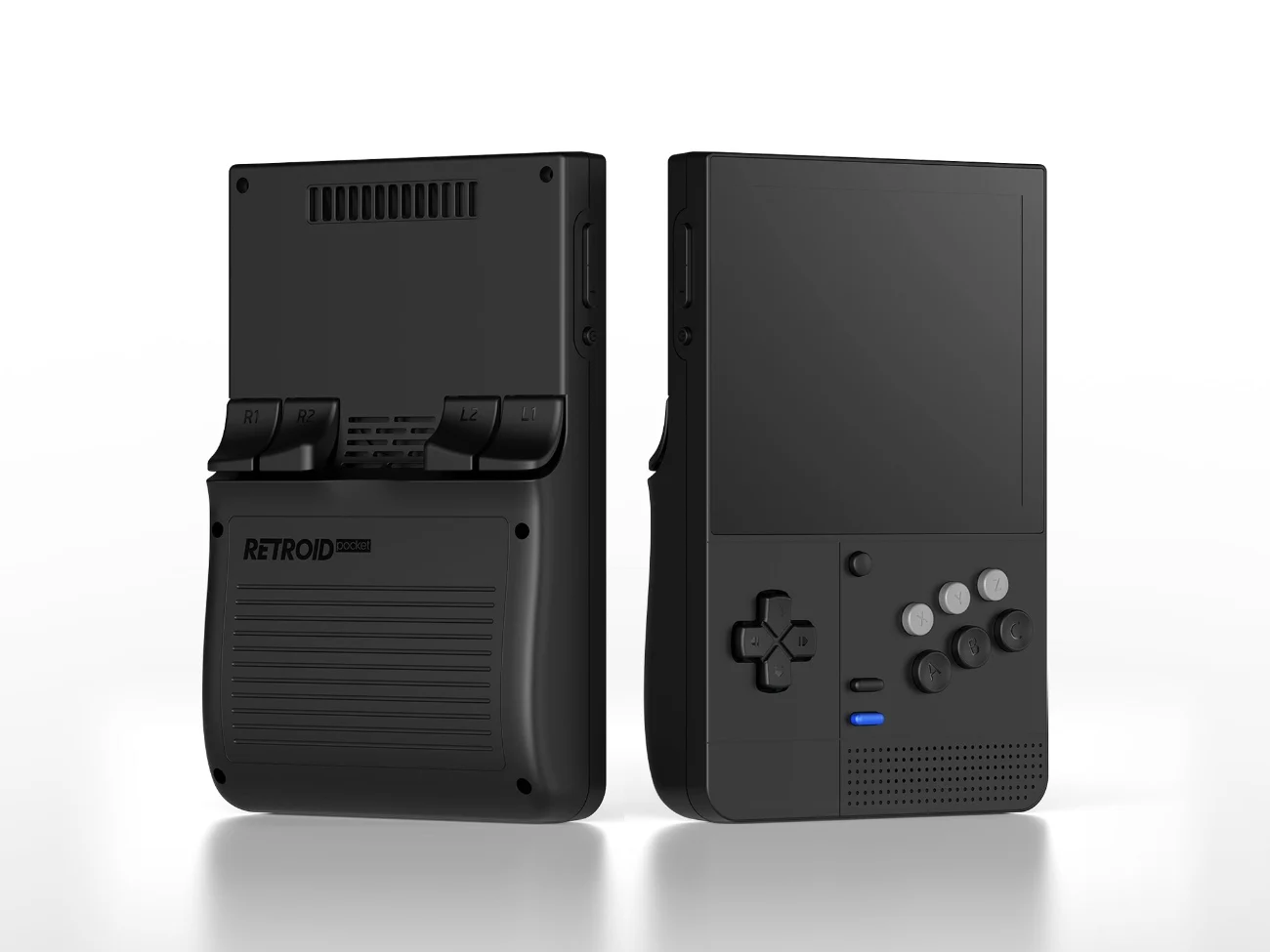
      • Retroid Handhelds Discounted for 618, One Model Missing

        Retroid Handhelds Discounted for 618, One Model Missing

        Key Takeaway

        – Retroid is offering $10–$20 discounts on select handhelds for the 618 Shopping Festival (June 16–23, 2026).
        – The Retroid Pocket 6 is not included in the promotion.
        – Coupon codes must be applied at checkout: “RPC20” ($20 off for Pocket Classic) and “RP10” ($10 off for Pocket 5, Pocket 4 Pro, and Pocket Flip 2).
        – Discounts apply only to specific models and color variants.


        Retroid has announced that it is slashing the prices of some of its handhelds in celebration of the 618 Shopping Festival. The discount applies to a handful of handhelds, but suprisingly doesnt include the Retroid Pocket 6.

        How to apply the discount coupon

        To get the discount, Retroid says users have to apply a coupon code at check out to applicable handhelds on its website. When you add a handheld to your cart, click on “Check out”, and click on “Order summary” on the next page. Enter the coupon code in the “Discount code” box, and click on “Apply”.

        Discount period and amount

        The discount ranges from $10 to $20, and will be available starting today, June 16, until June 23, 2026. Below are the coupon codes and the aplication devices:

        Retroid Pocket Classic

        Currently priced at $149 for the 6GB RAM plus 128GB version, buyers can score a $20 discount when they apply the coupon code “RPC20” at checkout. Retroid no longer sells the 4GB plus 64GB version of the Retroid Pocket Classic. The available colors are also limited to the four button Retro variant and the six button Classic 6 and Classic 6 SG released last year.

        Retroid Pocket 5

        The Retroid Pocket 5 will also be available to buy for $10 less using the coupon code “RP10”. The handheld is currently priced at $199, and is available in five colours including the new Turquoise and Yellow released a few months ago.

        Retroid Pocket 4 Pro

        Retroid is also slashing the price of the Retroid Pocket 4 Pro which was released in December 2023 and was available to buy in January 2024. Currently priced at $159 for the Dimensity 1100 version, using the coupon code RP10 will bring the price down to $149. Available colors are Black, 16Bit US, and Crystal.

        Retroid Pocket Flip 2

        Last but not least is the Pocket Flip 2 which is currently $209 for the Snapdragon 865 powered version. However, using the RP10 coupon code brings the price down to $199. Available colors are 16Bit US, Ice Blue, GC, and Black.

        Sources
      • RAMageddon: How Much Will Your 2026 PC Cost?

        Key Takeaway

        – DDR5 memory prices have surged 3-4x year-over-year, driven by AI data centers consuming wafer capacity for high-margin HBM.
        – Memory now accounts for ~35% of a laptop’s component cost (up from 15-18%), leading to 15-30% price hikes from major PC brands.
        – The shortage has reversed the move to 16 GB RAM standard, with 8 GB notebooks returning to the market.
        – No relief expected before late 2027 to 2028, as new fabrication plants won’t reach volume production until then.
        – Decision advice: buy now if you need more memory; only wait if the upgrade is discretionary and you can risk further price increases.


        RAMageddon Hits Notebooks Hard

        The RAM shortage has spreaded from cheap DIY memory kits to the prices of whole notebooks, with the cheapest 32 GB DDR5 kit costing around $439 on June 15, up from about $375 less than two weeks prior. Last year, the same kit cost only $80 to $120, a massive three to four times price jump. Memory is now the most unstable cost part in a laptop, and the lack of supply has went from a issue only for PC builders to one that hits everyone.

        Why AI Data Centers Are to Blame

        The cause behind this huge price rise is simple: AI data centers. They’re taking up a bigger and bigger piece of global memory production, backed by roughly $650 billion in 2026 AI spending from four big U.S. companies. The three main suppliers, Samsung, SK Hynix, and Micron, are moving wafers from regular DDR5 to higher-profit HBM. There is also a structural detail that makes this different from past memory shortages: 1 GB of HBM uses about three to four times the wafer space of standard DRAM, so every AI-focused wafer is one taken away from PC memory.

        Consumers Feel It in Laptop Prices

        Consumers feel this directly in laptop costs too. HP told investors that memory now makes up about 35 percent of a PC’s part cost, up from 15 to 18 percent just one quarter earlier. Other brands, such as Dell, Lenovo, Acer, and ASUS, have raised prices by 15 to 30 percent, meaning midrange notebooks that used to cost $900 could go above $1,200. There is also another side to this ongoing shortage: 8 GB laptops, which once seemed to be dieing out, are now coming back, replacing the 16 GB standard.

        No Relief Until Late 2027

        Experts agree that there will be no real relief before late 2027, possibly going into 2028, as new factories wont reach full production until then. Gartner predicts a combined DRAM and SSD price surge of over 130 percent by the end of the year, with PC prices riseing by an average of 17 percent and shipments falling by 10.4 percent. This means the shortage is not going away any time soon for consumers.

        What to Do About Your Upgrade

        In the end, anyone planing an upgrade faces a choice that comes down to need. If a machine needs more memory or storage now, it is worth buying today; waiting for 2025 prices means betting against providers whose production is fully booked, and it risks more increases. Only a not-necessary upgrade justifies waiting, given the slight softening that may happen as buyers hesitate and stop buying. The decison is tough but clear.

      • Ninkear M8_226V Mini PC: OCuLink & USB4 Spotted

        Ninkear M8_226V Mini PC: OCuLink & USB4 Spotted

        Key Takeaway

        – OCuLink and USB4 are now included, addressing previous connectivity gaps.
        – Powered by Intel Core Ultra 5 226V (Lunar Lake) with 16 GB non-upgradeable on-package RAM.
        – Compact 128×128 mm chassis with front-mounted OCuPort for easier eGPU access.
        – Rear panel features dual HDMI, DisplayPort, 2.5GbE, and additional USB-A ports.
        – Still an engineering sample with no pricing or release date announced.


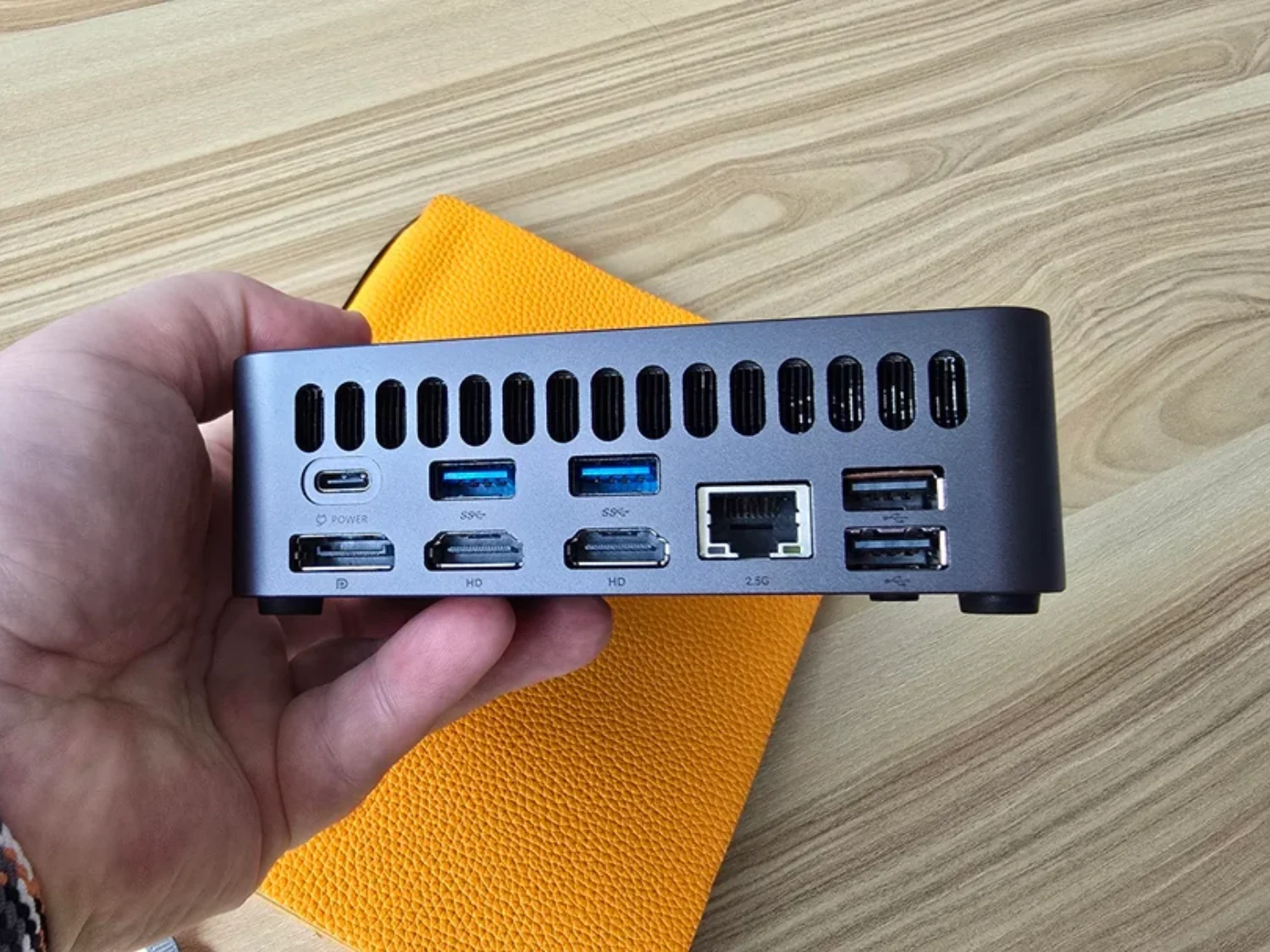
        A pre-release engineering sample of the Ninkear M8_226V has surfaced on r/MiniPCs. The original poster gave us a detailed look at what looks like a Lunar Lake upgrade to the brands existing M8 platform — and with a connectivity loadout that is honestly quite impressive, especially for its size class. When we reviewed the Ninkear M8 earler this year, we flagged the absence of USB4 and OCuLink as big gaps. This Lunar Lake variant ships with both of them.

        Core Specifications and Chipset Details

        The M8_226V is powered by Intel’s Core Ultra 5 226V, a Lunar Lake chip that was built on TSMC’s 3 nm node. It packs 4 Lion Cove P-cores and 4 Skymont E-cores alongside Intel’s Arc 130V iGPU, a 40 TOPS NPU, and 16 GB of on-package LPDDR5x-8533 RAM — that last point being a key caveat, as Lunar Lake’s on-package memory is not upgradeable at all. The chip has a base TDP of 17 W with boost headroom up to 37 W, which would make it great for a compact, passively-manageable chassis without too much thermal stress.

        Physical Dimensions and Port Configuration

        At 128×128 mm and approximately 675 g, the M8_226V shares its footprint with the existing AMD-powered M8. What’s different is the port layout — and it’s the most interesting part of this particular design. The front panel has an OCuLink port alongside USB4. This combination allows eGPU connectivity with way more bandwidth then Thunderbolt alone could provide. Having OCuLink on the front rather than the rear is an unusual choice, but it should make enclosure attachment and removal considerably less awkward for users with big hands. The rear panel adds two HDMI outputs, a DisplayPort, 2.5GbE, and additional USB-A ports for legacy devices.

        Hands-on photos also show the internals pretty clearly — a single M.2 slot is visible alongside the large SoC heat spreader, and the bottom label confirms 20V/5A power delivery which gives a maximum of 100 W. No pricing or release date has been announced yet. The poster has added that this is purely an engineering sample with full testing still pending, so we shouldnt expect retail units anytime soon.

        Sources
      • Pocket Micro 2: Ayaneo Reveals Processor & More Details

        Pocket Micro 2: Ayaneo Reveals Processor & More Details

        Key Takeaway

        – Upgrade to Snapdragon processor (replacing Helio G99)
        – Improved ergonomics and more comfortable controls
        – Longer battery life
        – Retains premium metal shell and glass front design
        – Likely higher starting price than the original Pocket Micro


        Pocket Micro 2 Gets Official Nod

        Ayaneo unveiled that its smallest handheld, the Pocket Micro is getting a successor. While that announcement didn’t come with lots of details, Ayaneo has now disclosed more specifics about the upcoming handheld which will debut as the Pocket Micro 2. The firm positions this gadget as a significent step up from its predecessor.

        Design and Ergonomics Enhancements

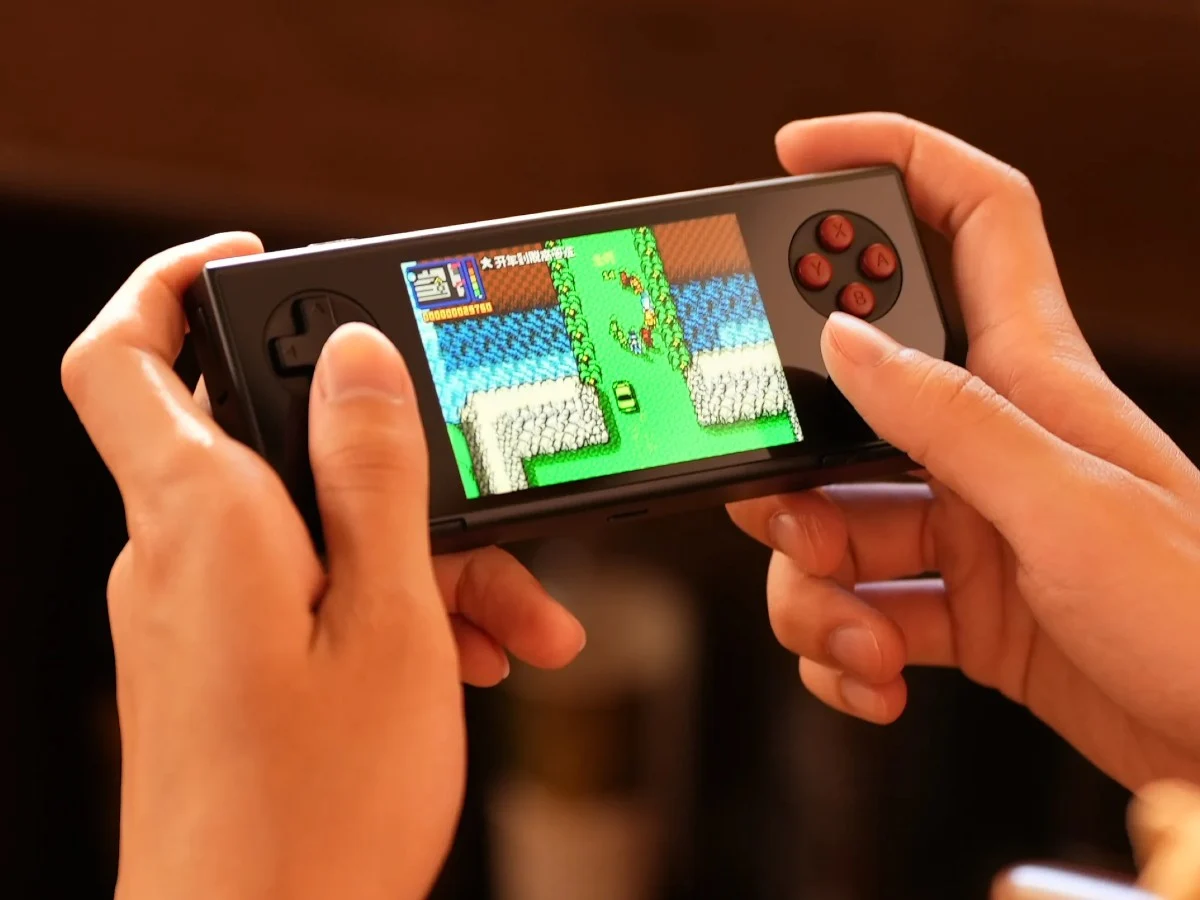
        Ayaneo describes the Pocket Micro 2 as a thoroughly upgraded horizontal retro Android handheld. First, it says the device will have superior ergonomics, which could be interpreted to suggest the Pocket Micro 2 might deviate from the flat back or boxy design of the Pocket Micro. Alternatively, it could keep the outward appearance of its predecessor but be more pleasant to grasp for extended periods. This is a key focus for the company.

        • Better ergonomics means potentionally a more curved back.
        • May retain metal shell and glass front of original.

        Ayaneo is also guaranteeing a dramatic improvement in performance. While the exact chipset isn’t revealed yet, it has been verified that the Helio G99 chip in the Pocket Micro will be swapped out with a Snapdragon processor. The more robust chip should grant the Pocket Micro 2 the ability to more effectively emulate retro gaming systems and handle more intensive games. This performance jump is crucial for emulation enthusiasts.

        Controls and Battery Life Upgrades

        Some critiques of the Pocket Micro pointed out the controls as being among its shortcomings. Ayaneo seems to have acknowledged that feedback, as it states the Pocket Micro 2 will include more comfortable controls. It also mentions the battery endurance will be extended, which was another flaw of the Pocket Micro. These fixes directly address user complaints from the original launch.

        Pricing and Retention of Premium Build

        Last but not least is that the Pocket Micro 2 will retain the upscale design of the original. So we can expect a metal chassis and glass front screen. Although, this also suggests it won’t be inexpensive, and with the high expense of RAM and storage, there’s a chance the Ayaneo Pocket Micro 2 will have a higher initial price point than its predecessor. This could make it a niche product for dedicated collectors.

        There’s still no release date yet for the gadget, but it seems Ayaneo’s approach is to slowly feed us information about the handheld. The company has been active on social media teasing features without committing to a timeline. Enthusiasts are left waiting for more concrete details.

        Sources