Tag: Climate Change

  • Solar Overtakes Coal in US for First Time

    Solar Overtakes Coal in US for First Time

    Key Takeaway

    – Scientific consensus confirms human activity, especially fossil fuels, is the primary driver of modern climate change.
    – Continued “business as usual” will have overwhelmingly negative consequences for society and the environment.
    – Solar energy overtook coal in US electricity generation for the first time in May 2026.
    – Solar’s share more than doubled in five years, while coal’s share nearly halved.
    – Renewable energy records are growing despite a divided political climate and counterproductive policies.


    Climate Views and the Scientific Truth

    Peoples opinions on climate change typicaly splits into five groups, as seen in statements like that. No matter which one fits your thinking, the scientific community agrees our planet is warming and its manly because of human actions, like burning fossil fuels, cutting down forest, and other greenhouse gas releases—these are the main drivers of the dramatic shifts we’ve seen since the mid-1900s. More crucially, experts warn that if we stick with a “business as usual” approach, itll bring lots of bad outcomes for both societys and the environment in general.

    Renewable Energy’s Critical Role

    Switching to renewable power is absolutely necessary for fighting climate change caused by people, given that fossil fuels still supply 80% of global energy. In this context, solar energy in the US surpassed coal production for the first time ever in May 2026, delivering 12.8% of electricity compared to coal’s 12.2%.

    • Coal’s share in the US electricity mix fell from 19.7% in May 2021 to 12.2% in May 2026, almost halving.
    • Solar’s contribution more than doubled in the same timeframe, rising from 5.4% to 12.8%.
    • This marks a big change in the US energy landscape over the last five years.

    Milestones and Future Implications

    These events happened after another clean energy highlight in March, when renewables togeather outpaced natural gas for the first time nationwide. Overal, the new records point to the growing presence of renewable energy across the United States, even though the political scene remains split and some policies actually work against climate sustainability efforts. Its a mixed picture of progress and hurdles.


    Sources
  • Latest Climate Report Insights: What It Means for Our Planet

    Latest Climate Report Insights: What It Means for Our Planet

    Key Takeaways

    1. The planet is warming faster than expected, with 2024 projected to be the hottest year on record.
    2. Oceans are heating up at an alarming rate, impacting marine ecosystems.
    3. Land is losing its ability to absorb carbon dioxide effectively.
    4. Climate change and biodiversity loss are closely linked and need to be addressed together.
    5. Groundwater resources are being depleted rapidly, requiring immediate attention.


    Each year, Future Earth, the Earth League, and the World Climate Research Programme join forces to analyze and look into climate trends. The findings from the 2025 edition are quite alarming, showing faster ocean warming, a reduced ability of land to absorb carbon, and an imbalance in Earth’s energy.

    Key Findings

    The research was put together in a paper along with a report that highlights ten main insights. Firstly, the planet is warming up quicker than we thought, with 2024 set to be the hottest year ever recorded. Secondly, the oceans are heating up at an alarming rate. Thirdly, land is not able to absorb as much carbon as before. Fourthly, climate change and loss of biodiversity are interconnected. Fifthly, groundwater resources are being used up at a faster rate. Sixth, there’s an increase in the spread of dengue fever, which is linked to more mosquitoes surviving in the warmer climate. Seventh, high temperatures are affecting work productivity. Eighth, there’s a pressing need to remove carbon from the atmosphere. Ninth, the carbon credit market has serious issues. Finally, strong combined policies are crucial.

    Urgency of Solutions

    Data for these insights was gathered from satellites that monitor our planet, serving as a warning sign if we don’t act quickly. By sharing these results, the report hopes to push for essential decisions to tackle these urgent matters.

    Source:
    Link


  • Elon Musk’s Plan to Dim the Sun and Combat Climate Change

    Elon Musk’s Plan to Dim the Sun and Combat Climate Change

    Key Takeaways

    1. Elon Musk is exploring the idea of dimming the sun to combat climate change using AI-operated satellites as a sunshade.
    2. The concept is similar to Solar Radiation Management (SRM), which aims to cool the Earth by reflecting sunlight.
    3. The satellites could be launched by SpaceX and operated by AI from Musk’s company xAI to monitor solar radiation and temperature.
    4. Experts warn of potential dangers, including unpredictable side effects like altered rainfall patterns and impacts on agriculture.
    5. Concerns about “termination shock” highlight risks of rapidly rising temperatures if the satellite program were to stop suddenly.


    Tech tycoon Elon Musk is well-known for his out-of-the-box thinking. His recent announcement about launching a marketplace on his messaging platform, X, where users can purchase usernames for exorbitant amounts, is just one example. But that idea seems pretty tame compared to his latest one. On November 3, Musk shared on X that he’s contemplating the notion of dimming the sun as a solution to climate change.

    A Bold Plan

    The strategy involves sending a fleet of AI-operated satellites into space. Musk stated, “A large solar-powered AI satellite constellation would be able to prevent global warming by making tiny adjustments in how much solar energy reached Earth.” The goal is to have these satellites—possibly numbering in the hundreds or thousands—act as a gigantic sunshade to intentionally reduce sunlight and thereby cool the planet.

    Similar Concepts

    This idea resembles what’s known as Solar Radiation Management (SRM), a technique aimed at cooling the Earth by reflecting or blocking some sunlight. Musk could potentially design and launch these satellites via his aerospace firm, SpaceX. Once in orbit, the operation would probably be overseen by an AI system that employs self-learning algorithms to continually assess solar radiation and global temperature data. This AI might come from xAI, Musk’s own artificial intelligence venture.

    Potential Hazards

    It’s still uncertain how serious Musk is about this proposal, but recognizing the potential dangers is crucial—especially if it is grounded in the SRM strategy. Experts from the Columbia Climate School caution that while modifying solar radiation may provide short-term cooling benefits, it could also lead to unpredictable side effects. These could include alterations in global rainfall patterns, harm to the ozone layer, and adverse effects on agricultural production.

    The Risk of Termination Shock

    Another significant worry is the phenomenon known as “termination shock.” If such a program were to abruptly stop—be it due to technical issues or political disagreements—the artificially lowered temperatures could spike back up quickly. Research from NOAA and Indiana University indicates that global temperatures could increase significantly in just a few years.

    On X, the responses have largely been critical or sarcastic, with some users likening Musk to villains from comic books. One user quipped, “Mr. Burns had the same idea,” referencing a character from The Simpsons. Others expressed worries about the concentration of power and control, asking: “If people can’t agree on simple matters, how can they effectively manage the global climate?” Some also raised questions about the security of such a system, pondering: “Who exactly controls the thermostat?”

    Source:
    Link


  • Jeff Bezos’ Revolutionary Satellite Goes Missing in Space

    Jeff Bezos’ Revolutionary Satellite Goes Missing in Space

    Key Takeaways

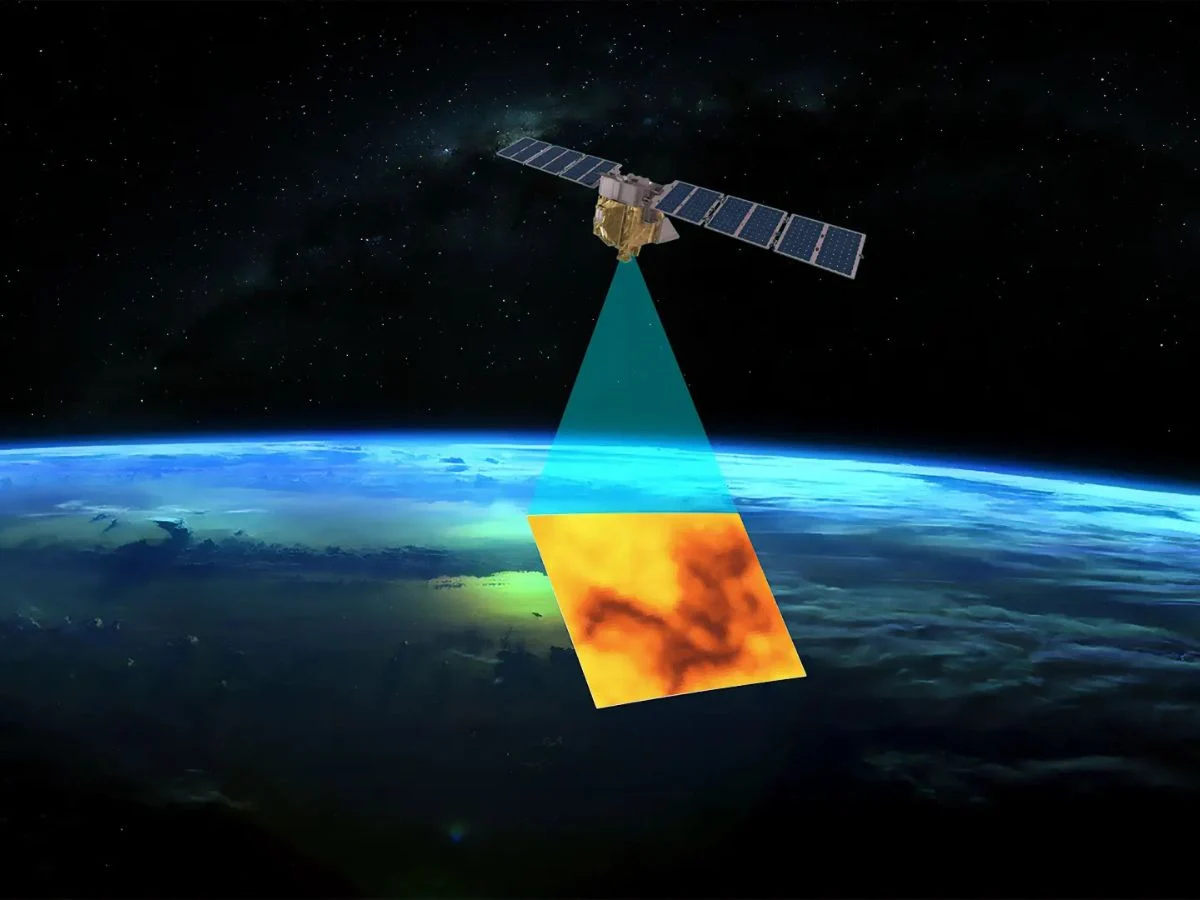
    1. Jeff Bezos’s MethaneSAT satellite, valued at $88 million, is now missing in space and cannot be located.
    2. The satellite was designed to measure and identify global methane emissions, playing a crucial role in addressing climate change.
    3. MethaneSAT had successfully operated for over a year, significantly contributing to understanding methane emissions from the oil and gas industry.
    4. The satellite stopped transmitting signals on June 20, and extensive efforts to regain contact have failed, leading to its presumed loss.
    5. The Environmental Defense Fund and its team express disappointment over the loss but aim to continue efforts in addressing climate issues through new partnerships.


    This is not good news for Jeff Bezos, the founder of Amazon. His MethaneSAT satellite, which is valued at $88 million, is now missing in space, and no one can locate it.

    Revolutionary Technology at Stake

    This situation is a significant setback, as the satellite was groundbreaking, meant to measure and identify sources of methane emissions globally, contributing to global warming. The goal was to help authorities address these emissions and lessen their environmental impact. This mission had been successfully executed for more than a year.

    Moreover, the satellite had effectively pinpointed industrial sources, including those from the oil and gas sector, that contribute to large emissions. The Environmental Defense Fund (EDF) noted its usefulness: “With MethaneSAT, we gained critical insight into the distribution and volume of methane released from oil and gas production areas. We’ve also achieved an unparalleled ability to interpret space measurements and convert them into methane volume estimates. This skill will be useful for other missions.”

    A Deep Loss

    However, we speak of it in the past tense because it is no longer operational. The satellite ceased to transmit signals on June 20. Despite extensive efforts from the mission controllers, it remains unresponsive. Consequently, the EDF believes it is entirely lost, possibly drifting aimlessly through the void of space or endlessly orbiting Earth.

    On this matter, Steven Hamburg, the chief scientist at EDF and leader of the MethaneSAT mission, expressed his feelings: “We’re going to take a pause. Clearly, we’ve encountered a loss. I have a large team who dedicated their hearts and souls to what many thought was impossible.” Therefore, this loss is a significant disappointment for those involved, although MethaneSAT seeks to find new partners: “Addressing the climate crisis needs bold actions and risks, and this satellite was at the forefront of science, technology, and advocacy.”

    Source:
    Link

  • Supernovae Impact on Climate: Past Events and Future Risks

    Supernovae Impact on Climate: Past Events and Future Risks

    Key Takeaways

    1. Supernovae are massive star explosions that release huge amounts of energy, capable of traveling across vast distances in space.
    2. Recent research links supernovae to historical climate changes on Earth, affecting the ozone layer and atmospheric methane levels.
    3. Researcher Robert Brakenridge identified 11 spikes of radioactive carbon in tree growth rings that correspond with known supernova events over 15,000 years.
    4. The energy from supernovae can weaken the ozone layer, decrease methane levels, cause global cooling, and increase UV radiation, posing threats to biodiversity.
    5. The star Betelgeuse may go supernova at any time, and its potential explosion could provide insights into climate impacts, although we wouldn’t see it for another 300 years.


    Located within our solar system, Earth is influenced by various phenomena that emerge from both our galaxy and the vastness of outer space. It seems that supernovae have impacted Earth’s climate in the past, and there is potential for this to occur again down the line.

    What is a Supernova?

    First off, you gotta know that a supernova is an enormous star explosion, possibly the biggest one we’ve ever seen, capable of unleashing an incredible amount of energy. Nothing in space can contain this energy, allowing it to travel across vast distances for a long time. This energy can reach planets and stars that are sometimes thousands of light-years away, showing just how massive this event really is.

    Recent Research Findings

    Recently, researcher Robert Brakenridge released a study in the Monthly Notices of the Royal Astronomical Society. He made a connection between supernovae and historical climate changes on Earth by using a model that illustrates how these intense rays can influence the Earth’s ozone layer and levels of atmospheric methane.

    To accomplish this, he examined the growth rings in trees. Brakenridge discovered 11 spikes of radioactive carbon over a span of 15,000 years, which align with known supernova events.

    Impact on Earth’s Climate

    When discussing the effects of these explosions on Earth’s climate, it’s crucial to grasp the immense energy released during such an event. Once this energy hits our planet, it can change its chemical makeup by weakening the ozone layer and decreasing methane levels. This can lead to global cooling, as well as an increase in UV radiation that reaches us. Some research points to serious threats to biodiversity and a marked rise in fire incidents.

    It’s worth mentioning that the star Betelgeuse might go supernova at any given moment due to its significant light fluctuations. Should this occur, scientists would be able to analyze the impact on our climate. But we need to be patient, as if it were to explode today, we wouldn’t witness it for another 300 years— that’s how long it takes for its light to reach us.

    Source:
    Link