
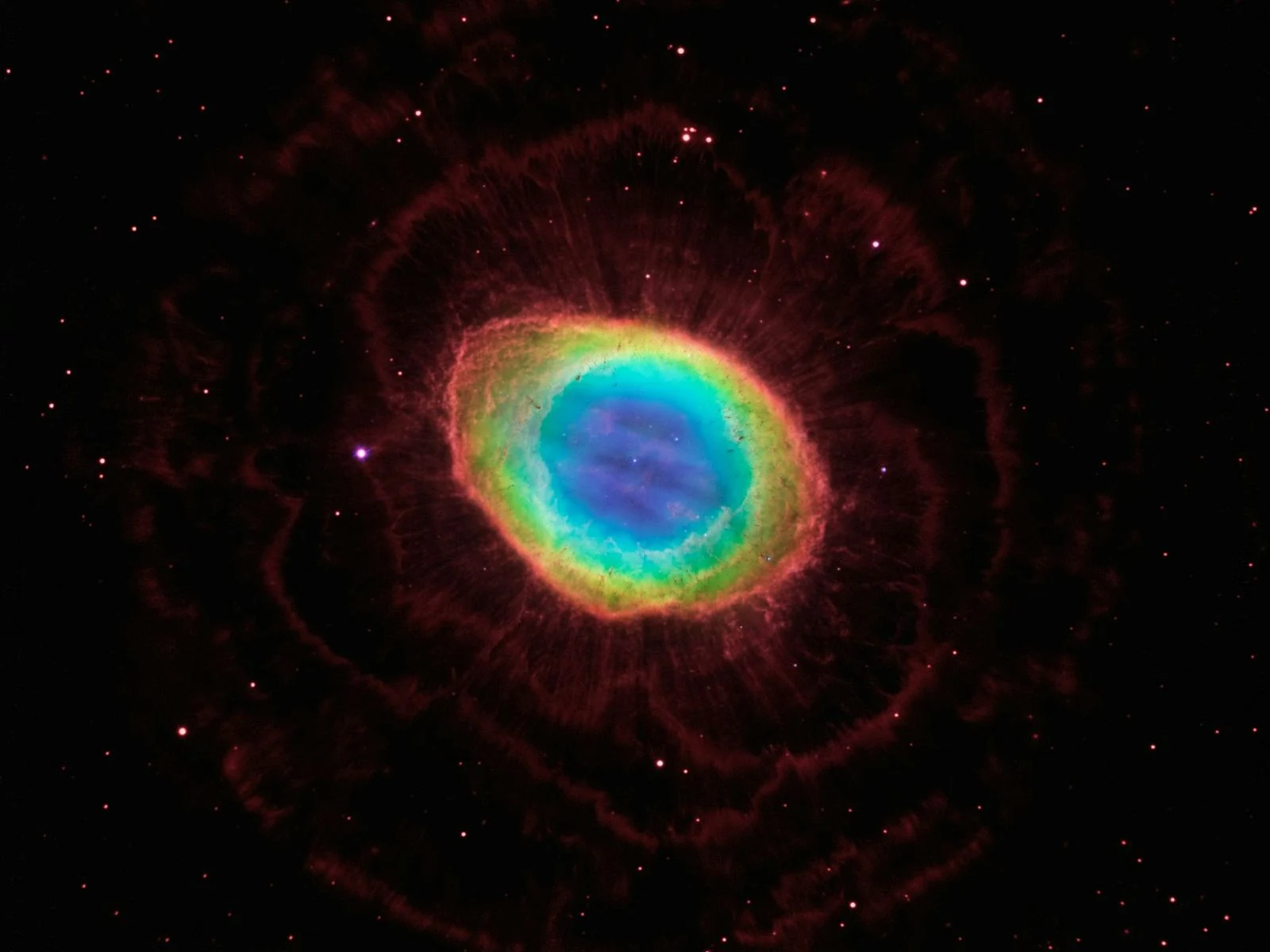
– The Gemini North telescope captured the final moments of a star in the Crystal Ball Nebula (NGC 1514), located 1,500 light-years away.
– The nebula is shaped by a binary star system with an unusually long orbital period of nine years.
– Powerful, asymmetrical stellar winds from the dying star and its companion distort the expanding gas into lumpy layers.
– Planetary nebulae like NGC 1514 have a lifespan of 10,000 to 25,000 years before their gas disperses into space.
The Universe Has Many Spectacular Events
Many events occur in the universe, causing powerful and spectacular phenomena. Recently, the Gemini North telescope has managed to capture the final moments of a star with its Gemini Multi-Object Spectrograph (GMOS).
Crystal Ball Nebula (NGC 1514) Details
The image shows the Crystal Ball Nebula, also known as NGC 1514, which is located about 1,500 light-years from Earth. It is possible to see a bright star at its center. However, this star is not part of this nebula.
A Binary System With a Long Orbit
In fact, this structure is composed of a binary system with a giant star and a hot companion star. Furthermore, while most binary systems have short orbital periods, these two celestial objects have an orbital period of nine years, which is one of the longest known to date.
The shape of this structure is linked to this binary system. Indeed, when these stars orbit each other, they generate powerful winds that distort the surrounding gas, as explained in a statement:
“Scientists believe that one of these stars, which was once several times more massive than our sun, released its outer layers while in the throes of death. As the progenitor star and its binary companion orbit each other, they mold the expanding shell of gas with their strong, asymmetrical winds, forming the lumpy layers we see today.”
How the Nebula Will Evolve
While the shape of this structure is already impressive, it will continue to evolve in the future. Indeed, according to astronomers, planetary nebulae have a lifespan of between 10,000 and 25,000 years. Consequently, the gas in NGC 1514 will gradually disperse into space.
- Distance: Approximately 1,500 light-years away.
- Orbital period of the binary system: 9 years (one of the longest known).
- Lifespan of planetary nebulae: 10,000 to 25,000 years.