Category: Computers

  • French Mini PC with Colorful Design and Up to 16-Core Intel CPU

    French Mini PC with Colorful Design and Up to 16-Core Intel CPU

    Key Takeaway

    1. The Kubb Essential mini PC features a box-shaped design with customizable color options and is powered by Intel’s Core Ultra 200H CPUs, suitable for everyday workloads.
    2. It offers up to 96 GB DDR5 RAM, 512 GB NVMe storage, and additional storage via a 2.5-inch drive bay, though upgradeability is uncertain.
    3. The compact device lacks discrete graphics, relying on integrated GPU capabilities for basic tasks and light gaming, with no current global release or pricing details announced.

    The Rise of Unique Mini PCs

    In recent years, we have saw many exciting mini pcs with cool designs and strong hardware. This market grew a lot in a short span, it feels like nearly each day we hear about a new mini PC launch packed with some special feature or trait. The mini PC scene has become quite lively, with innovative shapes and tech features catching people’s attention.

    Introducing the Kubb Essential by Bleujour

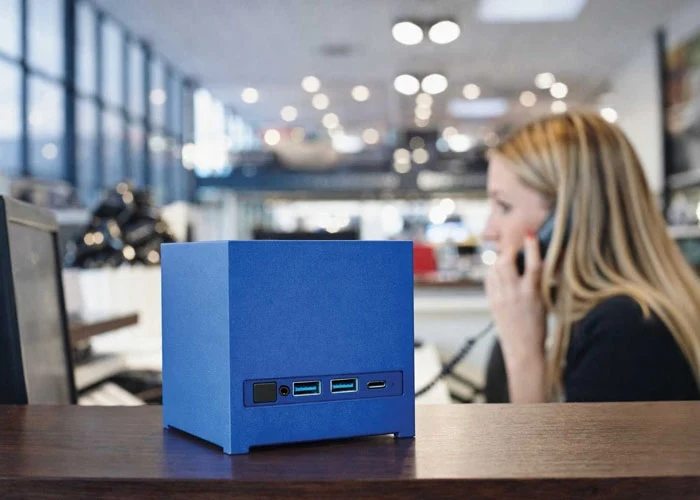
    This past month, the Kubb Essential mini PC was officially presented by Bleujour, a relatively small French tech firm. The design is a simple square-shaped box available in colors like white, black, blue, and magenta. The look is minimalistic, yet it offers enough variety for buyers to pick their favorite style.

    Hardware and Performance Specs

    Deep inside, it runs on Intel’s Core Ultra 200H processors. Customers are offered a choice between the 14-core Core Ultra 5 255H, and the 16-core Core Ultra 7 255H. The 5 255H is about 15% slower than the 7 255H in tests that measure multiple threads. But, for most everyday tasks, both CPUs should work just fine, ensuring smooth operation for typical users. The mini PC supports *up to* 96 GB of DDR5 RAM and 512 GB of NVMe storage. There is also a slot for an extra 2.5-inch drive, though it remains uncertain if the main storage can be upgraded easily. The ports available on the device are quite good, including various options for connectivity and expansion.

    Design Limitations and Visual Capabilities

    Its tiny size, just 12 x 12 x 12 cm (or 4.7 x 4.7 x 4.7 inches), means it can’t house a dedicated graphics card. Still, the built-in integrated graphics like Arc 130T/140T are enough for light gaming and basic multimedia tasks at low settings. The small form factor keeps it portable and ideal for users needing a compact system without high-end gaming capabilities. It looks like a handy option for daily use and casual entertainment but not serious gaming or intensive graphic work.

    Availability and Alternative Options

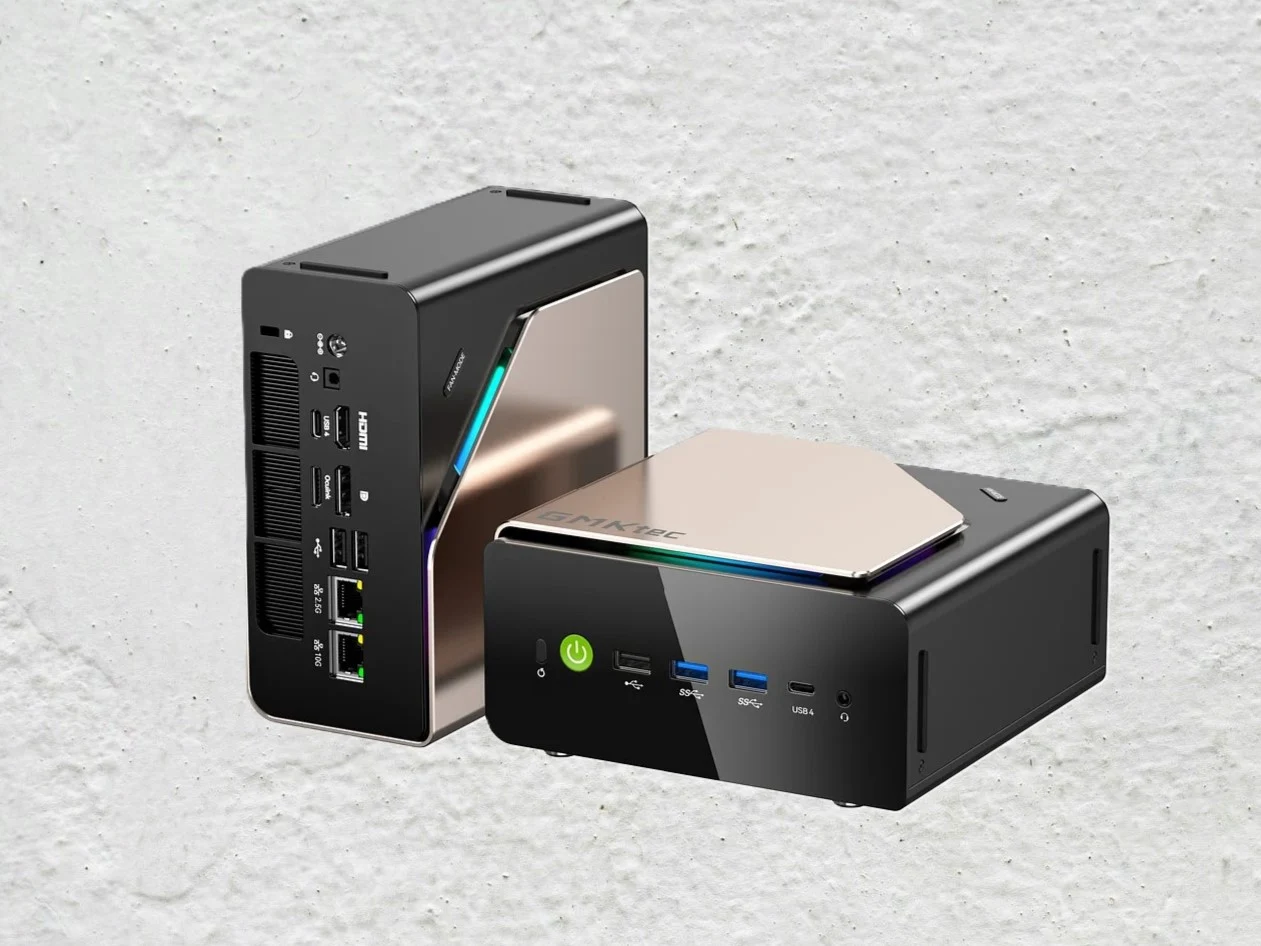
    As for the price and when it will be available the details are not clear right now. The brand hasn’t announced a global launch yet, but it tends to aim at markets like the US in future. For folks wanting a decent mid-range mini PC today, products like the GMKtec K16 are available at around $640. So, while the Kubb Essential looks promising, it’s not yet clear when it will be ready for purchase or how much it will cost once released.

    Sources

  • Nokia Rugged Laptop with 1000 Nits Display and 5G Leak

    Nokia Rugged Laptop with 1000 Nits Display and 5G Leak

    Key Takeaway

    1. The Nokia Booklet X15 Enterprise is a rugged, industrial-grade notebook with high durability, featuring IP65 certification, MIL-STD-810H/G, and shock resistance up to 1.8 meters.
    2. It has a 15.6-inch IPS touchscreen with a 1,000 nits brightness for excellent outdoor visibility.
    3. The device is powered by an Intel Core Ultra 5 125H processor, supporting 16-64 GB RAM, up to 2 TB SSD, and includes features like Wi-Fi 7, 5G, and Windows 11 Enterprise.
    4. Additional features include a modular bay, a 5MP webcam with facial recognition, and extensive protection against environmental challenges.

    Leaked Details about Nokia’s Rugged Notebook

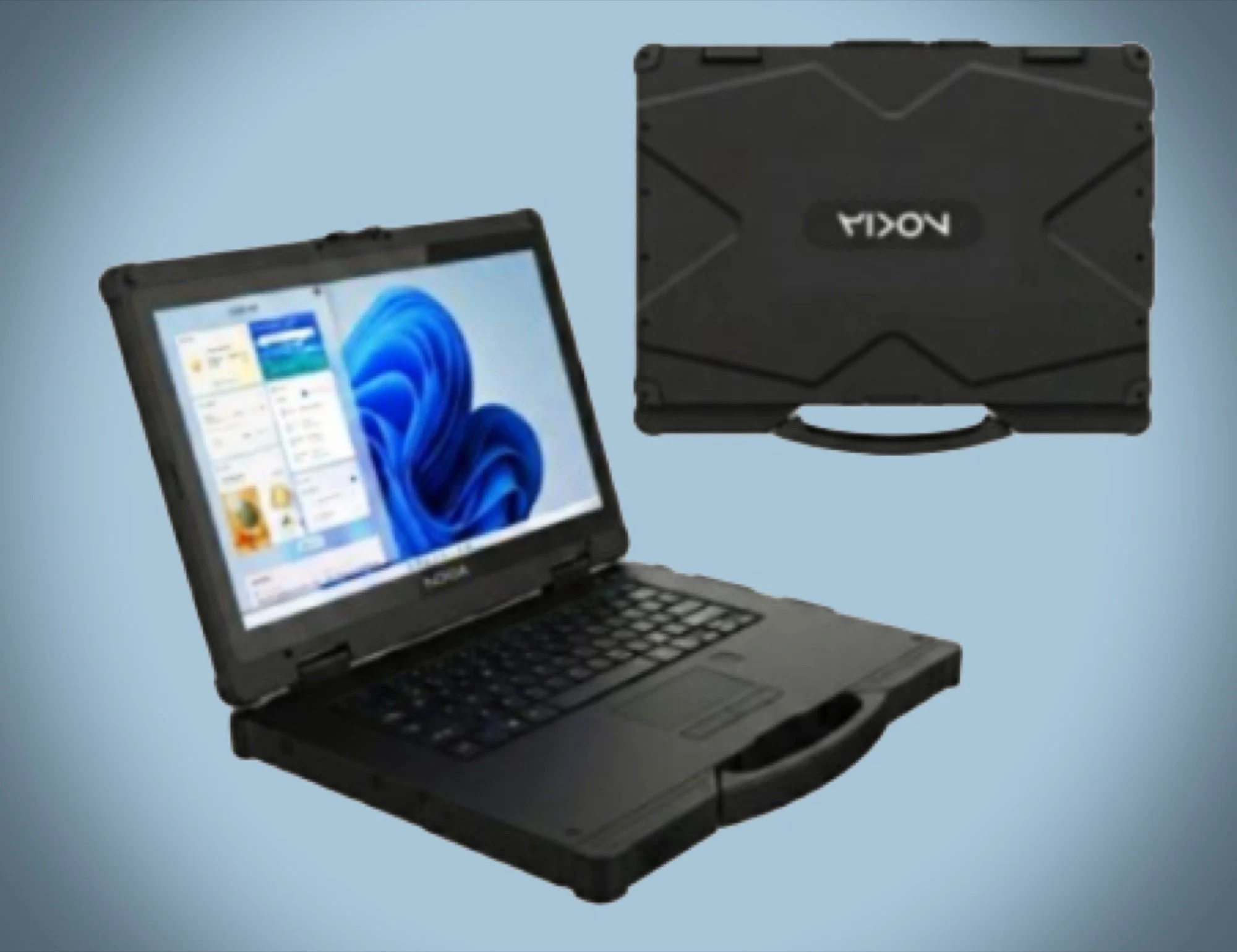
    Recently, the Nokia Mission-Safe Phone 2 leaks started showing up, and now the focus shifts to something more powerful and durable—it’s the Nokia Booklet X15 Enterprise. This device is aimed at industrial clients, so it’s built tough enough to handle rough environments. It looks like it has a small trackpad but packs a big 15.6-inch touchscreen for ease of use. The leaks come from the trusted tipster @smashx_60, who shared the first images and specs.

    Display and Durability Features

    On the visual side, the display is an IPS panel with full high-definition resolution of 1920×1080 pixels. What makes it stand out though isn’t just the clarity but its super bright screen of 1000 nits brightness, intended for sunny outdoor conditions or bright workspaces. When you close the lid, the chassis is said to survive drops from up to 1.8 meters, which is pretty good for harsh, industrial environments. Plus, the IP65 certification means it’s protected against elements like rain, dust, and water splashes, making it suitable for outdoor or rugged settings.

    Performance and Connectivity

    The X15 Enterprise is powered by a 2023-era Intel Core Ultra 5 125H processor, which provides solid performance for demanding tasks. It supports anywhere from 16 GB up to 64 GB RAM and offers storage options between 512 GB and 2 TB SSD. A 5-megapixel camera allows for facial recognition login, thanks to an infrared sensor—adding to its secure features. The device also comes with Wi-Fi 7, Bluetooth 5.4, a 5G modem, and runs Windows 11 Enterprise, ensuring it’s ready for enterprise level use. However, the price and the release date haven’t been announced yet.

    Sources
  • Mini PC GMKtec EVO-T2 with Intel Panther Lake for 1440p AAA Gaming over 70 FPS

    Mini PC GMKtec EVO-T2 with Intel Panther Lake for 1440p AAA Gaming over 70 FPS

    Key Takeaway

    1. Intel Panther Lake APUs, especially the X series with Arc B390 iGPU, are highly capable for gaming and productivity in Mini PCs, eliminating the need for discrete GPUs.
    2. The GMKtec EVO-T2 Mini PC, equipped with an Intel Core Ultra X7 358H, demonstrates impressive gaming performance at 1400p and can achieve high frame rates in supported titles using XeSS 3 Multi-Frame Generation.
    3. The same setup outperforms some high-end CPUs like the Threadripper 2990WX in multi-core and Apple M1 Ultra in single-core tests, showcasing its strong overall performance.
    4. The GMKtec EVO-T2 is currently priced at $1,899, with the faster EVO-X2 variant costing $1,999, reflecting the premium cost for high-performance Mini PCs with powerful iGPUs.

    Mini PC Powerhouses with Intel Panther Lake APUs

    Beyond just slim notebooks, the Intel Panther Lake APUs are also a really good option for small form factor computers like mini PCs. Especially the X series with their strong Arc B390 integrated GPU that enable these tiny machines to run AAA games without needing a dedicated graphics card. The GMKtec EVO-T2 Mini PC really highlights this point, as showed in ETA Prime’s review.

    Specifications and Storage Flexibility

    This particular model tested by ETA Prime comes with an Intel Core Ultra X7 358H CPU, paired with the powerful Arc B390 iGPU, 64 GB of LPDDR5x RAM, and 1 TB of storage. You are able to upgrade the storage later if needed, thanks to the two M.2 slots that are present on the device.

    Gaming Performance Insights

    Starting with game performance, the Core Ultra X7 358H chip in the GMKtec EVO-T2 is a highlight for being both quick and energy-efficient. According to ETA Prime, the system handles 1400p gaming smoothly without using XeSS or FSR for older and less demanding AAA games. But in more intense titles like Cyberpunk 2077, the Arc B390 still relies on XeSS to hit a steady 1440p frame rate.

    Advanced Features for Better Gaming

    • XeSS 3 Multi-Frame Generation (MFG) support enables increasing Cyberpunk 2077’s frame rate from 50 FPS to over 100 FPS when using 4x MFG.
    • This means you could use these Intel APUs for high-refresh-rate gaming in compatible titles, making the experience more fluid.

    Multitasking and Productivity Capabilities

    The GMKtec EVO-T2 also packs enough punch for productivity tasks. Based on ETA Prime’s tests, the Core Ultra X7 358H turns out to be faster than a 32-core Threadripper 2990WX and older Mac M1 Ultra in multi-core performance, and surpasses it in single-core speed as well, which is quite impressive for a mini PC.

    Cost and Availability

    Overall, the GMKtec EVO-T2 appears as a highly capable small PC. However, it currently costs around $1,899 for the SKU with the Core Ultra X7 358H. For comparison, a similar model with Ryzen AI Max+ 395, 64 GB RAM, and 2 TB storage is priced at $1,999, available through online retailers.

    Conclusion

    If you’re looking for a mini PC with a powerful integrated GPU and high-speed processing, be prepared to pay a substantial price premium whether opting for Intel or AMD options. These machines are certainly not cheap, but they deliver impressive performance for their size. ETA Prime’s review reflects a high-end capability that suits enthusiast and professional needs alike.


    Sources

  • Microsoft raises prices on all Surface notebooks unexpectedly

    Microsoft raises prices on all Surface notebooks unexpectedly

    Key Takeaway

    1. Microsoft has increased prices on its entry-level Surface laptops due to rising component and memory costs.
    2. The price hike affects models with 16 GB RAM and 512 GB storage, powered by Snapdragon X Plus/Elite SoCs.
    3. The original SoCs in these laptops were already less powerful, making the price increase less justifiable compared to competitors like Apple.
    4. The rise may be influenced by plans to set pricing expectations for upcoming Snapdragon X2 Plus-powered Surface models.

    Rising Costs Impact Microsoft Laptops

    Recently, prices of many gadgets and devices have been on the increase. Things like game consoles, including the PlayStation 5 Pro, Ayaneo Pocket Air Mini, and Pocket Vert, are now costing more than before. Even streaming services like YouTube Premium are not immune to this trend. The latest reports reveal that Microsoft Laptops are also experiencing price hikes, as told by Windows Central. Below, you’ll find a list of the affected SKUs along with their updated prices.

    Details on the Current Price Changes

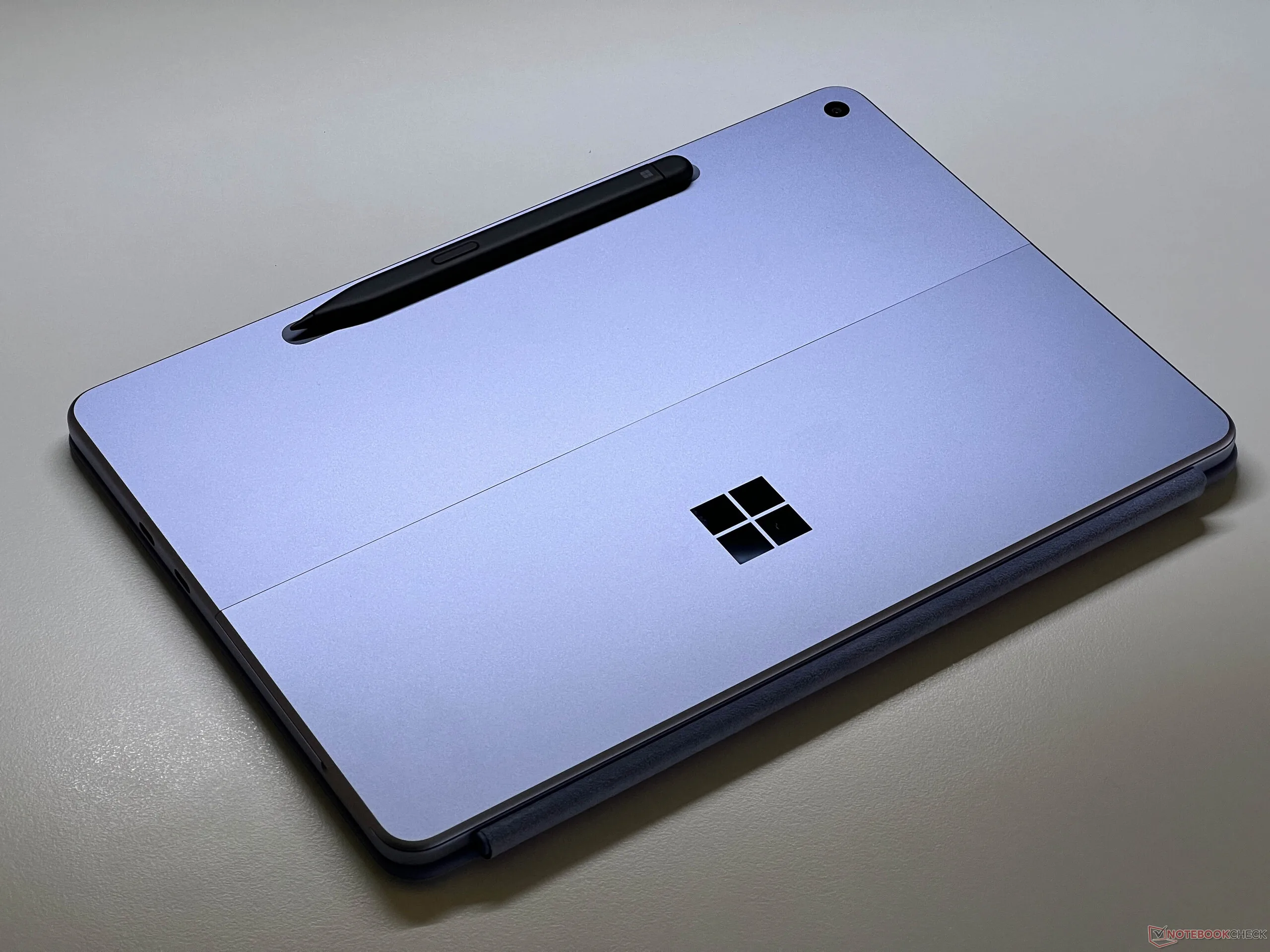
    These price hikes mainly affect the basic models, which come with 16 GB of RAM, 512 GB storage, and a Snapdragon X Plus processor (or Snapdragon X Elite for the Surface Laptop 15). These models are targeted at budget-conscious buyers. The processors in these laptops are not high-end, and now paying up to $300 more seems even less justifiable, especially considering Apple’s options that are equally affordable. A Microsoft representative said, “Because of recent increases in costs for memory and components, Surface is adjusting its prices on Microsoft.com for its current hardware lineup.”

    Why Are Prices Actually Going Up?

    Though their reasoning sounds reasonable, the increase in RAM prices has mostly stopped and is expected to decrease in the upcoming months. This indicates that the rise may not just be about memory costs. More likely, it’s about setting benchmark prices for upcoming Snapdragon X2 Plus models, which could arrive soon now that some Snapdragon X2 Elite laptops are already available. So, in the end, it looks like those hikes are more about preparing for future releases than just current component costs.

    Sources
  • Intel Nova Lake Desktop Leak Confirms bLLC on Three Models

    Intel Nova Lake Desktop Leak Confirms bLLC on Three Models

    Key Takeaway

    1. The Intel Core Ultra 400 Nova Lake lineup will feature 12 SKUs, with top models boasting up to 52 cores and 400W power consumption.
    2. Several SKUs will include large L3 cache (bLLC), competing with AMD’s X3D lineup.
    3. All CPUs will support Thunderbolt 5.0, two-channel DDR5 RAM, and 24 PCIe Gen5 lanes, with integrated Xe3 iGPU and a dedicated NPU.

    Upcoming Intel Core Ultra 400 Nova Lake Lineup

    Leaked info about Intel’s next generation chips shows that the Core Ultra 400 Nova Lake series is shaping up to be quite a puncher. It’s expected to directly go head-to-head with AMD’s X3D series, mainly because of its significant L3 cache, known by Intel as bLLC. What’s really crazy is that the highest-end chip might pack as many as 52 cores and be able to draw over 400 Watts when it’s pushing hard. But hey, what about the other models? Thanks to Videocardz, we got some first insights into the whole lineup.

    Lineup Breakdown and Core Configurations

    Nova Lake desktop CPUs will carry the Core Ultra 400 branding and will offer a total of twelve different SKUs. Out of these, three are expected to include bLLC, giving them a key edge in cache size. The flagship Core Ultra 9 will boast 52 cores, with a TDP of around 125 Watts. Following that, there’s a Core Ultra 7 with 48 cores, also rated at 125 Watts. Another Core Ultra 9 variant is on the list, but with only 22 cores (8+12+4), and it’s supposed to be more energy-friendly with a 65 Watt power limit. Notably, the 52-core and 48-core CPUs are designed for high performance, while the 22-core kind is aimed at efficiency.

    SKUs and Power Variations

    Seems like Intel plans a few versions of the Core Ultra 7 and Ultra 5 with the same core counts but different power specifications. The higher TDP models probably will be the K and KF series chips, dedicated for overclockers and power users. Confusingly, there’s some debate about how much power the Core Ultra 5 K/KF models consume. According to leaked data, these could either be capped at 65 Watts or able to go up to 125 Watts depending on the cooling and setup. This variance might influence how users pick their chips based on their cooling setups and power needs.

    Features and Connectivity

    All of the new Intel Nova Lake desktop processors are expected to include the latest Thunderbolt 5.0 controller — supporting up to two TB5 ports, although these might be limited to premium X-series motherboards. On the graphics side, each CPU will feature a dual-core Xe3 integrated GPU and even an NPU for AI workloads. The platform is designed for high-end performance with support for DDR5 dual-channel RAM and a hefty 24 PCIe Gen5 lanes, making it suitable for demanding gaming, content creation, and server tasks.

    Sources
  • Xiaomi Announces Launch Date for Budget MacBook Pro Rival with Panther Lake

    Xiaomi Announces Launch Date for Budget MacBook Pro Rival with Panther Lake

    Key Takeaway

    1. Xiaomi announces the Redmi Book Pro 2026 lineup, featuring 14-inch and 16-inch display options with mid-range and high-end configurations.
    2. The lineup is set to launch in China on April 21, 2026, alongside the Redmi K90 Max.
    3. The laptops will feature Intel Core Ultra processors, high-capacity batteries, fast charging support, and high-resolution LCD screens.
    4. The Redmi Book Pro 2026 aims to offer a more affordable alternative to the existing Panther Lake Xiaomi Book Pro series, with lower initial pricing.
    5. The top-end models are positioned to compete with premium laptops like the MacBook Pro M5, while entry-level options target budget-friendly markets.

    Redmi Book Pro 2026 Series Introduction

    Xiaomi annouced their new Redmi Book Pro 2026 lineup, which is going to be a budget-friendly alternative then their previous Panther Lake Xiaomi Book Pro, and now we know exactly when it gonna be out in China. They confirmed that the release date for the launch will be on April 21, 2026, in China. At this event, they also gonna unveil the Redmi-branded Panther Lake laptops which will have two different sizes: one with a 14-inch display and the other with a big 16-inch screen. This shift is clearly a move to cater a broader range of users.

    Configuration and Specs

    Both of these models will come with several configurations, and the premium options gonna be powered by the Intel Core Ultra X7 358H processor, which sports a powerful Arc B390 iGPU. The lower models are expected to feature the Core Ultra 5 325, with the mid-range probably getting the Core Ultra 5 338H. The smaller 14-inch laptop is expected to equip a strong 92 Wh battery, while the larger 16-inch model will get a 99 Wh unit. Even with a smaller battery pack, Xiaomi teases that the Redmi Book Pro 14 2026 might give you up to 37 hours of local playback after a full charge. With fast charging support up to 90 W and compatibility with PPS protocols, these laptops seem quite feature-rich.

    Display and Additional Features

    Though there’s no confirmed detail about the display specs yet, it’s anticipated that both models will feature high-res LCD screens, ensuring sharp visuals for users. This makes the series a compelling option with flagship aspirations, yet likely at a more accessible price point that could challenge premium MacBooks and budget-friendly alternatives alike. Xiaomi appears to be targeting a broad audience, from casual users to professionals seeking portable yet powerful laptops.

    Pricing and Market Positioning

    Reflecting on their market positioning, the previously released Xiaomi Book Pro with Panther Lake processors started at about CNY 7,999 (roughly $1,171), with the top model reaching CNY 9,999 (about $1,464). The upcoming Redmi models are expected to launch at prices more affordable than these figures, offering a better value proposition for customers. This roadmap suggests Xiaomi aims to expand their flagship and entry-level segment, making high-end features more accessible to everyday users. Despite the absence of detailed pricing info, anticipation is high that the Redmi Book Pro 2026 series will deliver powerful specs without breaking the bank.


    Sources

  • Lenovo Launches New 15-Inch Laptop with 165Hz OLED Display and 70Wh Battery

    Lenovo Launches New 15-Inch Laptop with 165Hz OLED Display and 70Wh Battery

    Key Takeaway

    1. Lenovo has expanded the IdeaPad Slim 5x 15Q8Y11 availability to Europe, offering various display options including IPS and OLED with high refresh rates.
    2. The laptop features a Qualcomm Snapdragon X2 Plus X2P-42-100 chipset, up to 32 GB RAM, and optional battery sizes up to 70 Wh.
    3. Pricing in Europe ranges from €1,199 to €1,259, with configurations mirroring the North American offerings, while Australia has higher starting prices and exclusive display options.

    Lenovo Launches New IdeaPad Slim 5x 15Q8Y11 in Europe

    Lenovo is extending the availability of some of its latest laptops into the European market, adding to its lineup which already includes some recent models. Recently in North America, the company introduced the IdeaPad Slim 5x 15Q8Y11. Soon after this, a smaller yet more robust model, the 13Q8Y11, was released in Europe, serving as an alternative to the IdeaPad Slim 5 14Q8X9 (which costs around $775 on Amazon). It’s quite interesting how Lenovo is expanding this series.

    Specifications and Display Options

    The new 15Q8Y11 variant offers a mix of power and flexibility, featuring Qualcomm’s Snapdragon X2 Plus X2P-42-100 chipset paired with LPDDR5X-9523 RAM, plus an optional 70 Wh battery. For display options, users can choose between a 1200p IPS screen or a 1600p OLED display, which boasts a smooth 120 Hz or 165 Hz refresh rate. The balance of specs aims to attract a wide range of users, from casual to professional use. The price for this specific model starts at around £1,440, with configurations that include 32 GB of RAM and 1 TB of storage, maintaining the Snapdragon chipset. Interestingly, if you go for the OLED display, it costs just £40 extra, and the 70 Wh battery comes at no additional charge.

    Pricing Across Regions

    In Europe, the starting prices are varying between €1,199 and €1,259, depending on the country, but the core features such as battery capacity, memory, and display type remain consistent across regions like the UK. On the other hand, in Australia, this newest model costs at least AUD 2,449, which is quite a notable difference. The Australian market only offers the 1600p OLED display variant with a 15.3-inch ARM architecture-based chipset. This narrower selection might be due to regional preferences or logistical reasons. Overall, Lenovo’s pricing strategies reflect regional market conditions, ensuring that customers get options tailored to their needs and budgets.

    Market Availability and Regional Variations

    While the European launch introduces these impressive configurations to a new audience, the Australian market’s offerings are more limited, with only the high-end OLED display models available. Different markets exhibit variant stocking choices, and Lenovo adapts its product lineup accordingly. The global rollout demonstrates Lenovo’s flexibility when it comes to cater to local demands and preferences. As they continue to expand, consumers in Europe will now have access to these powerful and stylish laptops, although will need to consider regional pricing differences. All in all, this move marks a significant step for Lenovo’s European presence, and the company’s focus on delivering versatile options tailored to diverse markets cannot be understated.


  • Apple to Increase Production of MacBook Neo to Meet Growing Demand

    Apple to Increase Production of MacBook Neo to Meet Growing Demand

    Key Takeaway

    1. Apple has increased the production target of the MacBook Neo to 10 million units due to high demand.
    2. The shortage of the Apple A18 Pro SoC has been a key factor, with Apple utilizing binned chips in the current models.
    3. The increased production is likely to benefit sales during upcoming US shopping events, especially the back-to-school season.
    4. There is speculation that Apple may focus on higher-margin versions of the MacBook Neo to maintain profitability.
    5. The market may see competitive responses from Windows laptop OEMs at upcoming industry events like Computex 2026.

    Demand for the MacBook Neo is soaring high

    The MacBook Neo has become incredibly popular, so much so, that Apple might be struggling with the supply of a key part for this model. That critical component is the Apple A18 Pro SoC, which seems to be running out quickly as Apple just can’t seem to keep up with the demand for the Neo. To counter this, it looks like Apple has decided to increase their production plans to 10 million units, which is quite a jump from their initial projections.

    Specifications and Pricing Details

    • Starting at an affordable $599
    • Production target raised from 5-8 million to 10 million units
    • Uses Apple A18 Pro SoC (likely the binned-down chips not used in iPhone 16 Pro)

    Implication for Apple’s production strategy

    If Apple really is pushing out 10 million MacBook Neos, it clearly means they are making more of the A18 Pro chips. Interestingly, the chips in the current Neo models are probably the less powerful versions that didn’t qualify for the iPhone 16 Pro and Max, which could mean that Apple is focusing more on boosting availability than on high-end performance. This shift might slightly cut into profit margins, since the chips used are probably the cheaper, lower-grade ones.

    What about pricing and market response?

    The $599 price tag for the entry-level MacBook Neo is unlikely to change, but Apple might prefer to push the $699 version more. This strategy could help maximize profits during these high-demand periods, especially since they might prefer to sell more expensive variants. However, given the markets and sales events coming up – like back-to-school and holiday seasons – having loads of these devices available will surely give Apple a boost.

    Future competition and market movements

    It’ll be interesting if any Windows-based laptops are getting ready to challenge the MacBook Neo. With Computex 2026 just around, we shall see if any manufacturers announce innovative models that could rival Apple’s offering. Keep your eyes peeled for news and updates on this front.

    Sources
    • Choose the Dell XPS 16 with Core Ultra X7 Instead of New XPS 16 Core Ultra 7

      Choose the Dell XPS 16 with Core Ultra X7 Instead of New XPS 16 Core Ultra 7

      Key Takeaway

      1. The performance difference between the Core Ultra 5 and Core Ultra 7 is minimal, making the Ultra 7 a less cost-effective choice.
      2. Upgrading from the Core Ultra 5 or 7 to the Ultra X7 results in significant performance gains of up to 70% CPU and 150% GPU.
      3. It may be more beneficial to allocate budget towards storage or a higher-quality display instead of the more expensive, similar-performance Ultra 7 option.

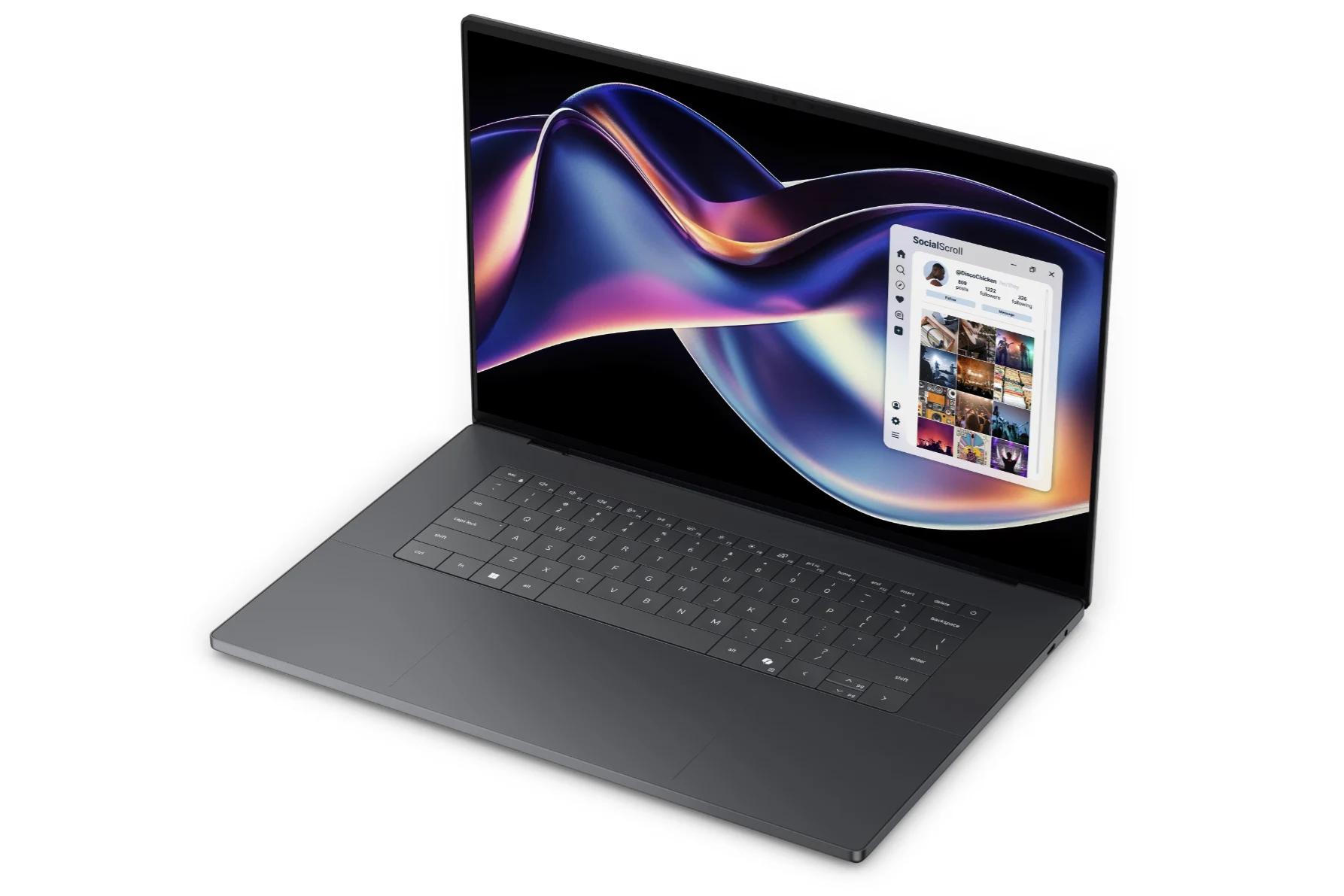
      Introduction of the 2026 XPS 16 and Its Processors

      The brand new 2026 XPS 16 comes with three different Panther Lake processors that its currently able to be configured with: the Core Ultra 5 325, the Core Ultra 7 355, and the more powerful Core Ultra X7 358H. Surprisingly enough, you might think that the performance gap between these CPUs would just grow in a straight line, but that’s not really the case at all.

      Performance Differences Between CPU Options

      When comparing how well each of these CPU options does, the charts below show a clear difference between the XPS 16 Core Ultra 5, the XPS 14 Core Ultra 7, and the XPS 16 Core Ultra X7 setups. We haven’t tested the XPS 16 Core Ultra 7 yet, but it’s expected that it performs pretty much the same as the XPS 14 Core Ultra 7. Moving from the Ultra 5 to the Ultra 7 doesn’t seem to give you much extra power, despite it costing more, so if your thinking about buying the new XPS 16, it might be wise to skip the Ultra 7 and spend that cash elsewhere, maybe more storage or a OLED screen.

      Why the Ultra X7 Is a Game Changer

      If you upgrade from the Core Ultra 5 or Ultra 7 to the Ultra X7, that’s where the XPS 16 truly stands out. The performance of both CPU and GPU can jump by up to 70% and 150% respectively. Interestingly, this significant boost comes with just around 35% more power usage. Some might say Dell should have just dropped the Ultra 7 entirely since customers end up paying more for very little extra, but the Ultra X7 really is where the power upgrades shine brightest.

      Additional Benchmarks and Performance Insights

      Furthermore, if you want to dive deeper into the performance metrics, plenty more benchmark comparisons are available on our detailed review of the XPS 16 with the Ultra X7 setup, giving you all the granular details you might need.

      Sources
      • PocketTerm35 Handheld with Touchscreen, Keyboard & Raspberry Pi 5

        PocketTerm35 Handheld with Touchscreen, Keyboard & Raspberry Pi 5

        Key Takeaway

        1. The PocketTerm35 is a handheld device powered by Raspberry Pi 4 or Pi 5, with different RAM and storage options.
        2. It features a 3.5″ touchscreen, multiple ports including USB and Ethernet, and an integrated 5,000mAh battery for portability.
        3. The device includes a six-row keyboard, suitable for typing and gaming, with additional arrow and action buttons.
        4. Design incorporates a bulge for housing the single-board computer, increasing thickness but supporting standard ports.
        5. The PocketTerm35-Pi5 is priced at $149, emphasizing its versatile, portable computing capabilities.

        Introduction to the PocketTerm35 Handheld

        The PocketTerm35 is a new portable device based on Raspberry Pi, designed for those who wants a compact computer for various uses. It comes in two main versions, the PocketTerm35-Pi5 and the PocketTerm35-Pi4, both offering different Raspberry Pi options and features that suit varied needs. The device is designed with portability and functionality in mind, making it perfect for on-the-go use or hobbyist projects.

        Design and Hardware Features

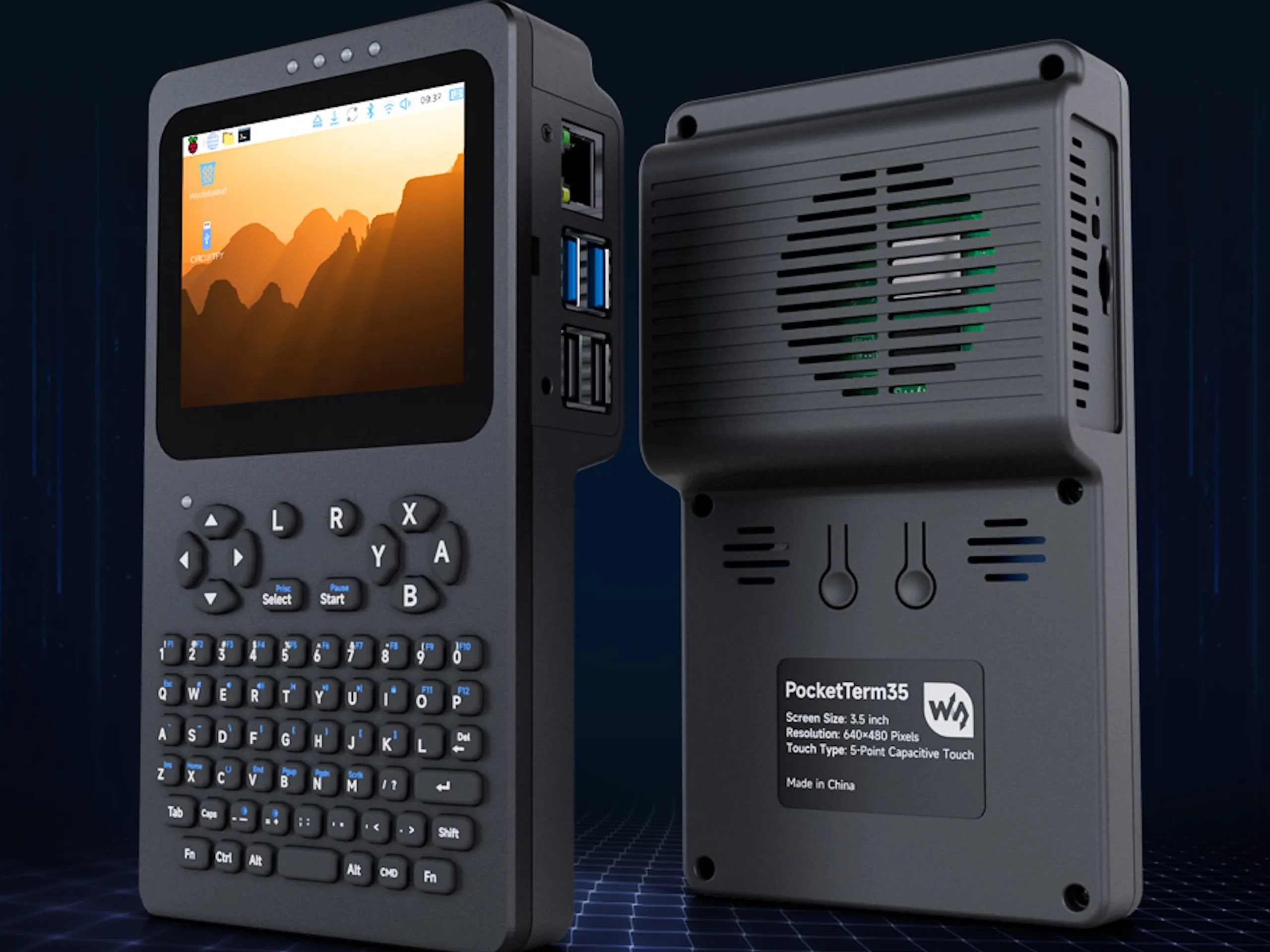
        The PocketTerm35-Pi5 hosts the powerful Raspberry Pi 5 with only 1GB of RAM and ships with a 64GB preinstalled storage card. The design displays a noticeable bulge behind the screen, where the single-board computer is situated, causing the device’s thickness to increase from about 0.8 inches to approximately 1.5 inches. The PocketTerm35-Pi4 on the other hand uses the Raspberry Pi 4 with 2GB RAM, maintaining the overall look reminiscent of standard single-board computer setups with accessible ports.

        Connectivity Options and Battery

        Standard ports including multiple USB ports and Ethernet are available on this device owing to its design. It also packs a substantial 5,000mAh battery, allowing users to operate the device while mobile without relying solely on external power sources. This makes it versatile enough for casual use or fieldwork without worrying about quick power drainage.

        Input Devices and Display

        The device features a six-row keyboard which allows for direct number input, eliminating the need to use secondary functions for numerals. Additionally, it includes arrow keys and buttons for action, making it suitable for certain gaming activities, although the silicone keyboard might not deliver the crisp response typists expect. The PocketTerm35 sports a 3.5-inch touchscreen with a resolution of 640 x 480 pixels, complemented with video output options via HDMI and a headphone jack for audio.

        Pricing and Summary

        According to Waveshare, the PocketTerm35-Pi5 is priced at $149, offering an affordable portable Raspberry Pi experience with powerful hardware and flexible features. Overall, this handheld provides a neat combination of portability, connectivity, and functionality, targeting Raspberry Pi enthusiasts and casual users alike.


        Sources