Category: Computers

  • Huawei Offers Triple Salary to Attract TSMC Employees

    Huawei Offers Triple Salary to Attract TSMC Employees

    Chinese tech behemoth Huawei is said to be increasing its hiring initiatives, specifically looking to recruit prominent employees from Taiwan’s TSMC, which is the top semiconductor manufacturer in the world.

    High Salaries Offered

    Industry insiders claim that Huawei is providing salaries that are more than three times the current earnings of TSMC staff. As a key player in the fields of telecommunications and hardware, Huawei has consistently sought to enhance its internal semiconductor knowledge. With the global chip shortage starting to ease, it seems the company is preparing for a strategic move in this vital industry. TSMC, recognized for its cutting-edge technology and manufacturing capabilities, has become a major target in this talent acquisition race. Huawei insists that its hiring campaign is just a normal business operation.

    Concerns Over Talent Acquisition

    The success of TSMC is deeply rooted in its unique processes and technical expertise, and the thought of financially-driven employees possibly leaking these secrets to a rival raises significant alarms for TSMC and the broader Taiwanese tech sector. This bold hiring tactic aligns with Huawei’s mixed financial results. The company recently announced record-high revenue but also experienced a drop in profits, indicating heavy investments in research and development. This has sparked rumors about a major product launch on the horizon.

    Implications for the Semiconductor Industry

    If Huawei manages to attract talent from TSMC, it could not only acquire skilled workers but also gain potentially crucial technical insights. Understanding TSMC’s methods could fast-track Huawei’s ambitions to become a leading semiconductor manufacturer, heightening competition in the already intense global chip market. Meanwhile, Taiwanese authorities, including the Justice Investigation Bureau, are reportedly increasing scrutiny on recruitment practices aimed at local semiconductor talent. Firms suspected of misrepresenting job roles or offering inflated salaries to facilitate knowledge transfer could face legal repercussions.
  • Strix Halo Gaming Laptops: Specs, Performance, and Release Info

    Strix Halo Gaming Laptops: Specs, Performance, and Release Info

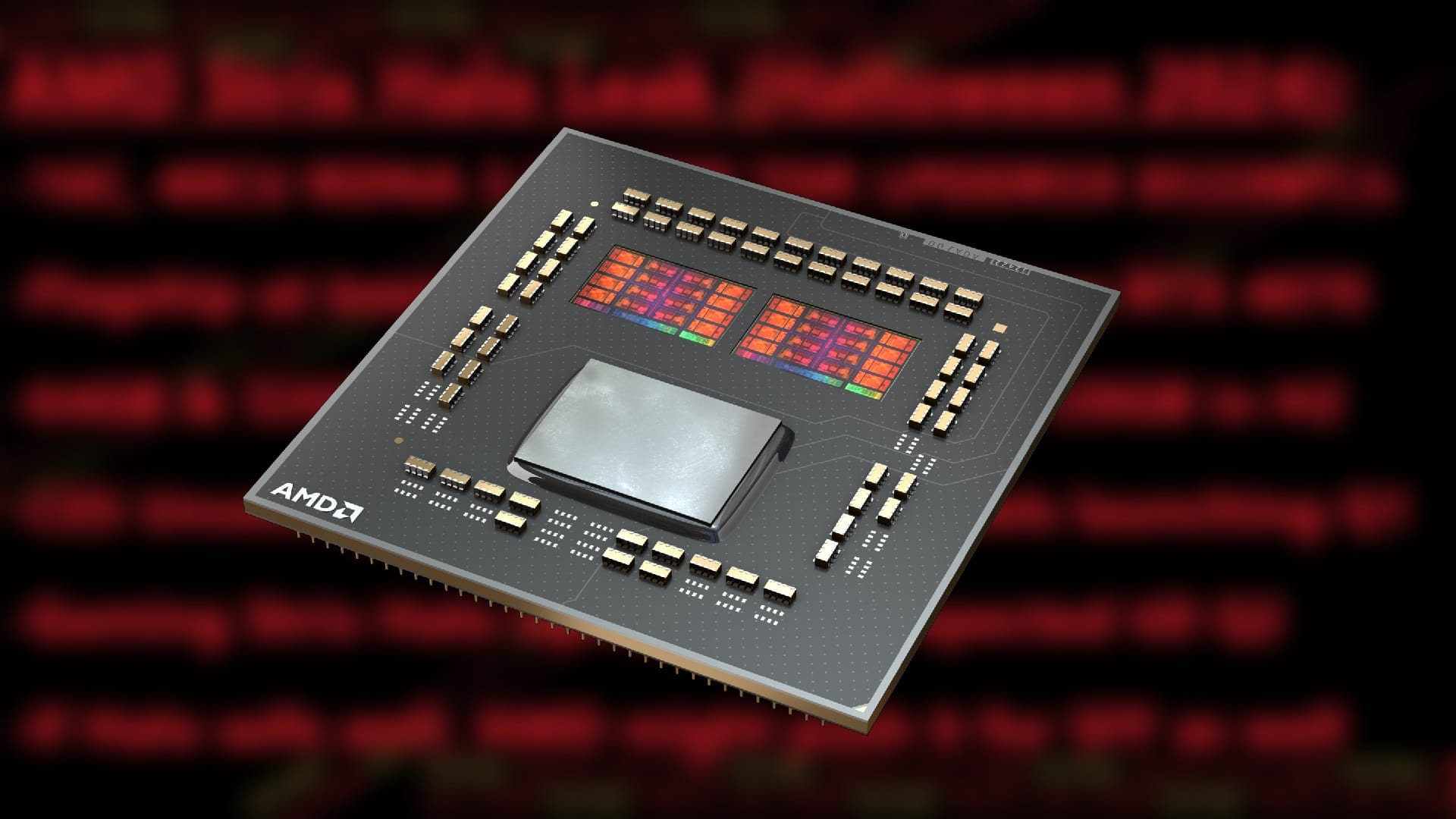
    AMD’s Strix Halo and Ryzen AI Max 300 APUs are projected to launch at CES 2025, presenting three unique products.

    Powerhouse Specifications

    These new APUs are anticipated to include up to 16 Zen 5 cores and a robust RDNA 3.5 iGPU that competes with dedicated laptop GPUs. According to a recent leak from Moore’s Law Is Dead, the Strix Halo APUs will be introduced under the “Ryzen AI Max Pro” label. The leaker has also verified the specifications, iGPU performance, and the timeline for the Strix Halo machines.

    Key Features

    Focusing on the key specifications, MLID has confirmed that the leading Strix Halo APU, likely to be named Ryzen AI Max+ 395, will have 16 Zen 5 cores, a 40 CU RDNA 3.5 iGPU, and a TDP of 120 W. Furthermore, the Strix Halo APUs are said to support LPDDR5X 8533 MT/s memory, with a maximum memory capacity of 128 GB.

    The 128 GB memory option is primarily intended for workstation use. Systems with this memory capacity are expected to launch in Q2 2025, while models featuring 32 and 64 GB are anticipated for a Q1 2025 release.

    Launch Timeline

    Regarding the launch timeline, MLID suggests that after their reveal at CES, workstations with the Ryzen AI Max APUs will arrive in Q1, followed by gaming laptops in Q2 2025. The leaker adds that should these new APUs gain popularity, we might see Strix Halo small form factor Mini PCs in the future.

    While the 16-core Zen 5 CPU plays a significant role in the Strix Halo design, the new RDNA 3.5 iGPU is clearly the highlight. MLID reaffirms the claim from June 2024 that the iGPU performance matches that of RTX 4070 laptop GPUs, indicating that the flagship Strix Halo “at minimum trades blows” with the RTX 4070 laptop GPU.

    If the Strix Halo iGPU indeed performs similarly to the RTX 4070 laptop, it would represent a remarkable leap from the current AMD leader, the Radeon 890M, and would place the company well ahead of the Intel Arc 140V. However, it is important to note that we cannot directly compare these iGPUs as the Strix Halo will likely consume more power.

    Moore’s Law Is Dead on YouTube


    Image 1
    Image 1
  • AMD Ryzen AI 300 Strix Point CPUs Receive RAM Speed Boost

    AMD Ryzen AI 300 Strix Point CPUs Receive RAM Speed Boost

    AMD’s Strix Point laptops have been available for some time now. The Ryzen AI 9 HX 370 chip has also begun to appear in portable gaming consoles. Yet, those who were among the first to use AMD’s Zen 5 laptop chips might find themselves at a disadvantage. This is because the company has quietly made improvements to all future Strix Point models.

    Memory Upgrades

    A leaker known as @AnhPhuH recently noticed these changes on AMD’s website. The Ryzen AI chips now come with support for LPDDR5X-8000 memory, which is 500 MT/s faster than the LPDDR5-7500 memory seen in the original versions. For those using non-soldered options, the speed remains unchanged at DDR5-5600. However, the new platform limits support to just two DIMMs operating at DDR5-5600, instead of the previous four. The maximum memory capacity for Strix Point stays the same at 256 GB.

    Performance Implications

    This slight enhancement in memory speed should theoretically lead to an increase in GPU performance as well. Other Strix Point models, like the Ryzen Z2 Extreme set to launch in 2025, are also expected to gain from the quicker RAM. However, it appears that it will not feature the RDNA 3.5-based Radeon 890M. At this moment, it’s unclear when these upgrades will take effect, but the updates on AMD’s official site imply they may have already rolled out.

    @AnhPhuH on X


    Image 1
  • Lenovo Product Manager Hints at Early 2026 Panther Lake-H Release

    Lenovo Product Manager Hints at Early 2026 Panther Lake-H Release

    We recently got to see Intel’s new Arrow Lake-H CPU, the Core Ultra 9 285H, on Geekbench for the first time. This CPU is expected to be launched at CES 2025, along with the Arrow Lake-HX and upgraded Raptor Lake CPUs. Additionally, the next generation, Panther Lake (Core Ultra 300), is rumored to debut around the same timeframe next year.

    Insights from Lenovo

    This information was shared by a Lenovo product manager through ITHome, with a mention of @harukaze5719 on X. On the other hand, the user @SquashBionic, who has a good track record of leaking Intel-related information, suggests that Panther Lake might see an earlier paper launch within the year. This seems possible, and Intel might introduce Panther Lake close to the launch date of Lunar Lake.

    CEO’s Promises

    SquashBionic’s comments align with what Intel’s CEO Pat Gelsinger has stated about a Panther Lake launch in 2025. Given that a Panther Lake chip has been powered on already, we shouldn’t expect mass production and an official launch to be very far off. Alternatively, Intel might reveal some of the Panther Lake series in 2025 and unveil the remaining models in 2026. Currently, at least five Panther Lake SKUs are known, with the highest-spec version limited to 45 Watts.

    Memory Restrictions

    According to the ITHome report, Panther Lake will not feature on-package memory like Lunar Lake does. However, there is a specific case that isn’t part of Panther Lake-U, which means at least one CPU from the Panther Lake lineup will come with non-upgradable RAM. Supply chain analyst Ming-Chi Kuo has also echoed this in a recent Medium article, noting that original equipment manufacturers (OEMs) weren’t too happy about the memory limitations and that Intel had limited influence over DRAM pricing.

  • Intel Core Ultra 9 285H Launches: 16-Core CPU and Throttling Issues

    Intel Core Ultra 9 285H Launches: 16-Core CPU and Throttling Issues

    A recent leak had indicated that Intel’s upcoming Arrow Lake-H processors would feature a combination of three distinct CPU core designs: Lion Cove (P-core), Skymont (E-core), and Crestmont (LP E-core). However, new information from a Geekbench listing for the Core Ultra 9 285H suggests a different outcome. Intel is set to unveil Arrow Lake-H, Arrow Lake-HX, and an additional Raptor Lake refresh during CES 2025.

    Performance Metrics

    The top-tier Arrow Lake-H CPU appeared on Geekbench, achieving scores of 2,665 in single-core and 15,330 in multi-core tests. It was tested in conjunction with a Dell laptop equipped with 64 GB of DDR5-6400 memory, hinting that it might be targeted towards workstation users. The Core Ultra 9 285H features a total of 16 CPU cores arranged in a 6+10 setup, with the P-core boost clock advertised at 5.4 GHz. Nevertheless, it appears that the CPU is experiencing significant throttling, failing to reach the promised boost clock speeds.

    Comparison with Competitors

    Due to this throttling issue, the Core Ultra 9 285H is only 6% faster than the Meteor Lake-based Core Ultra 9 185H (which scored 2,506 in single-core and 13,972 in multi-core tests) and 9% faster in multi-core performance. It falls short when compared to the Ryzen AI 9 HX 370, which managed to score 2,857 and 15,221 points in the same benchmarks. Curiously, even the Lunar Lake-based Core Ultra 9 288V outperforms it in single-core tasks.

    Future Expectations

    While it’s expected that performance will likely improve by the time of launch, the Core Ultra 9 285H does not seem to offer a substantial upgrade over Meteor Lake. It is hoped that there will be a notable enhancement in power efficiency, which Intel has been focusing on since the launch of Lunar Lake earlier this year.


    Image 1
    Image 1
  • Garmin X40 Edge Bike Computer Q4 Update Now Rolling Out

    Garmin X40 Edge Bike Computer Q4 Update Now Rolling Out

    Garmin has revealed a Q4 update for its Edge 540, Edge 840, and Edge 1040 bike computers. This software update is currently being distributed in beta form and includes several new features, enhancements, and bug fixes for these devices.

    New Connection Method

    There’s a significant change in how the X40 Edge series devices connect to a PC, now utilizing the Media Transfer Protocol (MTP). According to Garmin, this switch aims to bolster file security. Consequently, the update process is a bit unusual. Users of the X40 Edge series need to first install beta version 24.54 by navigating to Main Menu > System > About > Check for Updates, followed by allowing their device to reboot. This step will enable the device to use MTP. After that, users can repeat the process for beta version 25.17 to access the additional features and fixes.

    Update Highlights

    The change log for beta version 25.17 mentions that the sound for electronic shifting over-shift has been restored, while the previous Functional Threshold Power (FTP) test has been eliminated. Now, Lactate Threshold estimates can be automatically calculated as long as a heart rate is recorded during workouts. Moreover, users will see a new confirmation message when they successfully pair an altimeter manually. Below is the complete change log for beta version 25.17 for the Edge 540, Edge 840, and Edge 1040 cycling devices.

    Garmin (Edge 540, Edge 840, Edge 1040)


    Image 1
  • Raspberry Pi Touch Display 2 Now with Enhanced Resolution

    Raspberry Pi Touch Display 2 Now with Enhanced Resolution

    The Raspberry Pi Touch Screen Display, regarded as having a low resolution even nine years ago, has been a popular accessory for the Raspberry Pi due to its compatibility with the Raspberry Pi DSI connector, power options through GPIO pins, and support from Raspberry Pi OS.

    New Touch Screen Release

    Ebon Upton, the founder of Raspberry Pi Trading, announced today the launch of the Official Touch Screen 2. This latest version comes with a built-in touch screen controller, which replaces the external ribbon and daughter board found in the previous model, making it thinner overall.

    Improved Specifications

    The new Display 2 features a resolution of 1280×720. While this may still seem low compared to today’s standards, it is an improvement from the older version. You can still power the unit using GPIO pins on your preferred Raspberry Pi and it supports multi-touch, though the number of fingers recognized has decreased from 10 to just 5. One notable change is that this display is designed for portrait mode, so you will need to adjust the screen rotation in your operating system to view it in landscape.

    Compatibility and Pricing

    Similar to the previous model, the Pi can be attached to the back of the display and is compatible with all Raspberry Pi models that have a DSI connector. The package provides ribbon cables for both the smaller DSI on the Pi 5 and the full-size DSI connector used in the Pi 4 and older models. However, the mounting holes on the new model differ from those on the old one, meaning that direct replacements in projects using the old holes will require modifications.

    Currently, the Raspberry Pi Touch Display 2 isn‘t available on Amazon, where only the older version can be found. However, you can buy the new model from retailers like Pimoroni and Sparkfun for the same price of $60.


    Image 1
  • Anker Unveils Enhanced USB-C to USB-C Cable for Faster Charging

    Anker Unveils Enhanced USB-C to USB-C Cable for Faster Charging

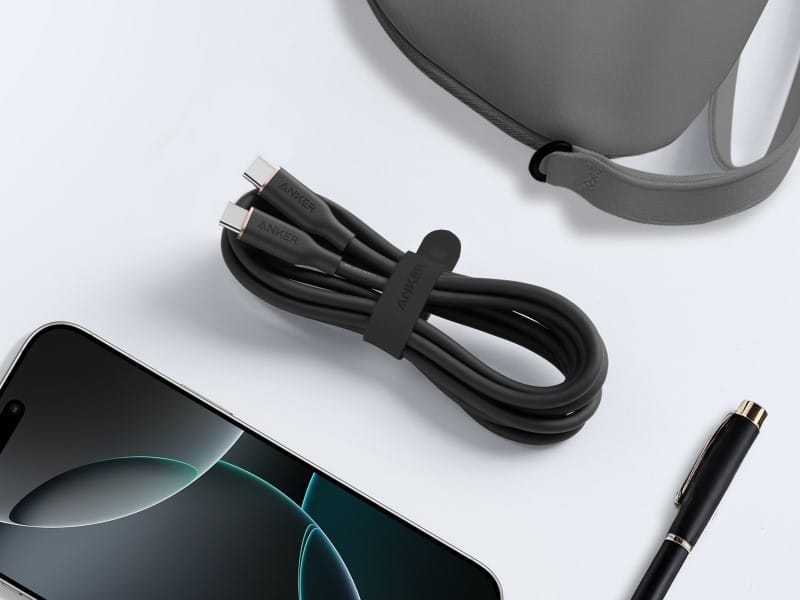
    Anker has introduced the USB-C to USB-C Cable (240W, Silicone) in both the US and EU markets. This new product is an enhanced version of the previous 643 USB-C to USB-C Cable (Flow, Silicone), maintaining the same soft silicone design and copper details.

    Durable Design and Performance

    The updated USB-C to USB-C Cable comes in two different lengths: 3 ft/90 cm and 6 ft/180 cm. Similar to the earlier model, this cable is designed to resist up to 25,000 bends or carry a weight of up to 220 lbs (~100 kg). Its silicone exterior also helps prevent tangling. The main upgrade in this version is its charging capability; while the old version supported 100W, this new cable can charge devices at a powerful 240W. Anker claims that with this cable, you can charge a MacBook Pro 16 (M3 Pro) to 50% in just 26 minutes. Both cables feature a 480 Mbps data transfer speed and are backed by an 18-month warranty.

    Pricing and Availability

    You can grab the Anker USB-C to USB-C Cable (3 ft, 240W, Silicone) for $16.99/€16.99 and the Anker USB-C to USB-C Cable (6 ft, 240W, Silicone) for $18.99/€18.99. In the US, these prices are only a slight increase over the older 100W versions, which are available for $15.99 and $17.99, respectively. In Europe, the 100W cables are priced at €12.99 and €19.99.


    Image 1
  • Apple Analyst Reveals Timeline for 2nm Processors and MacBook Pro Updates

    Apple Analyst Reveals Timeline for 2nm Processors and MacBook Pro Updates

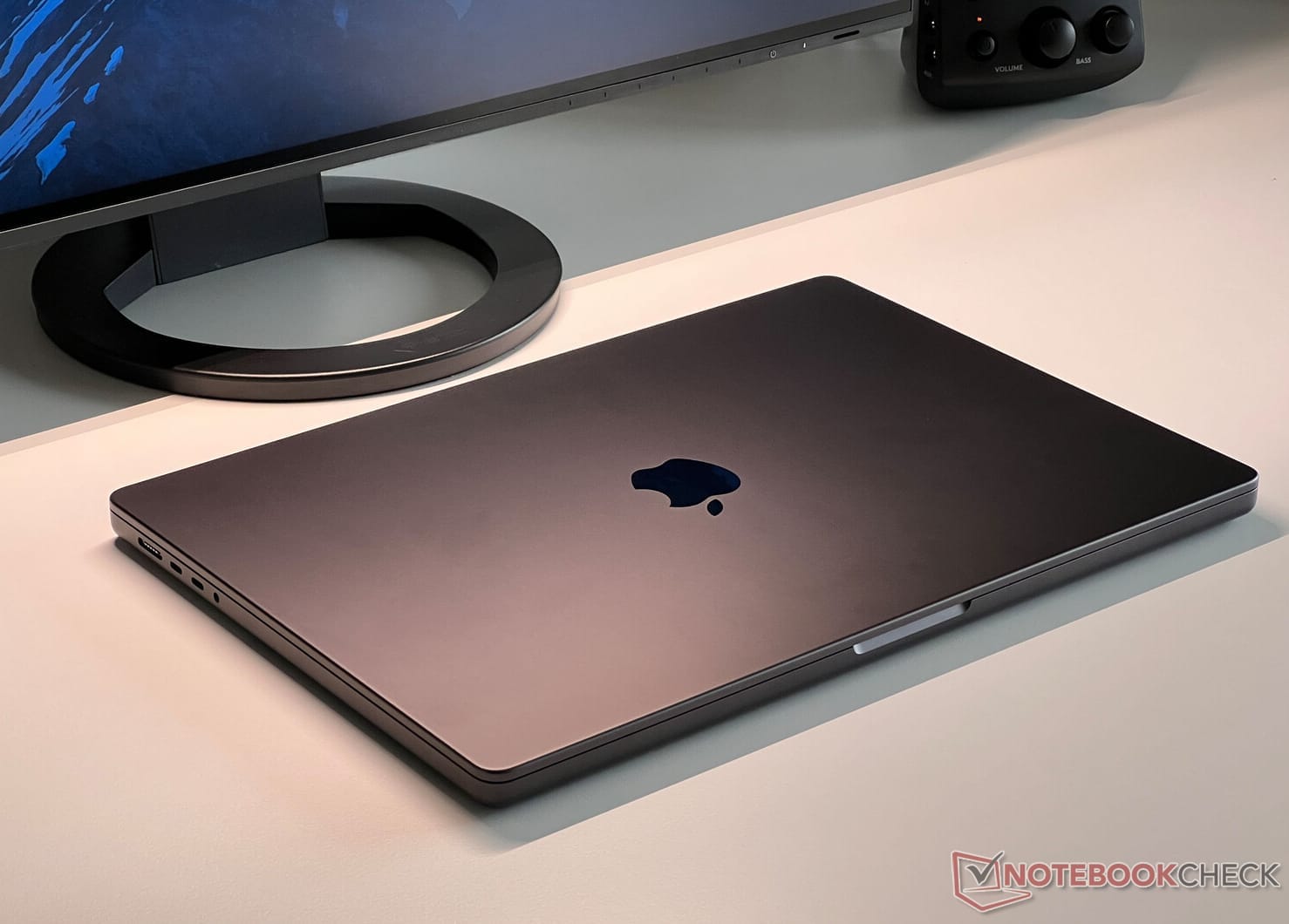
    Apple has yet to begin shipping the new Mac products that were announced last week. However, Mark Gurman is already looking ahead to what the company might reveal for future MacBook Pro devices as far ahead as 2026. Just to give some background, Apple updated the 24-inch iMac, Mac mini, MacBook Pro 14, and MacBook Pro 16 at the end of October, introducing the new M4 Pro and M4 Max chipsets.

    Only One Redesigned Product

    Out of these updates, only the Mac mini (currently $799 – 512 GB on Amazon) received a complete redesign. Historically, Apple has refreshed the design of the MacBook Pro every four years. However, the last update was delayed by an additional year, which aligned with the launch of the Apple M1 chipsets.

    Future Designs and Delays

    Gurman indicates that Apple is likely to take a similar amount of time again before introducing new designs for the MacBook Pro lineup. This delay appears to be linked to production issues with the expected tandem OLED panels, which Apple aimed to have ready by next year. Consequently, the MacBook Pro models expected next year will primarily feature the M5, M5 Pro, and M5 Max chipsets.

    What’s Coming in 2026

    In contrast, the next generation of MacBook Pros is anticipated to integrate a new design alongside tandem OLED displays for the very first time. Additionally, Gurman mentions that the Apple M6 chipsets will transition to a 2 nm manufacturing process, down from the 3 nm process used for the M4 and M5 series. Therefore, the MacBook Pros released in 2026 are expected to be much more efficient compared to the current models, while also providing a significant improvement in performance and maximum display brightness.

    Mark Gurman & Bloomberg via 9to5Mac

  • Pre-Order New M4 Macs & Enjoy Discounts on Old Models

    Pre-Order New M4 Macs & Enjoy Discounts on Old Models

    The Apple M4 MacBooks have just been released and they are ready for purchase. Retailers like Amazon and Best Buy are offering attractive discounts on the previous models. Alongside the new M4 MacBooks, Apple has also updated the older Mac versions to include 16GB RAM as the standard configuration. This change seems to have made sellers hesitant to clear out their inventory of the earlier models.

    Pricing Details for New Models

    The Apple MacBook Pro 14.2-inch with M4 is priced at $1600 on Amazon US. Additionally, the M4 Pro model with 24GB RAM and 512GB storage is tagged at $2000. For those looking for more storage, the Apple MacBook Pro 14.2-inch 2024 model equipped with the M4 Max, featuring 32GB RAM and 1TB storage, is available for $3200.

    Larger Variants and Their Costs

    The larger 16.2-inch model comes solely with M4 Pro and M4 Max configurations, offering 24GB and 36GB RAM. To purchase the M4 Pro version, customers will need to pay $2500, while the M4 Max is priced at $3500.

    Discounts on Previous Models

    With the launch of a new 16GB variant, the 2022 Apple MacBook Air 13.6-inch is now available for $700 on Amazon US. Meanwhile, the 2024 Apple MacBook Air 13.6-inch model is being sold at a discounted rate of $250, thanks to a $150 coupon. The final price for this model on Amazon US comes to $850.

    Upgrades in the New Apple M4 Macs

    Apple has rolled out multiple upgrades alongside the new System on Chips (SoCs). The 14.2-inch MacBook Pro now features three ports, and the display has been enhanced to a 120Hz Liquid Retina XDR. There are also improved 12MP cameras with Center Stage functionality. Additionally, if you purchase the M4 Max MacBook, it includes Thunderbolt 4. On the other hand, the M4 Pro and M4 Max models come equipped with Thunderbolt 5.


    Image 1