Category: Computers

  • ASRock BIOS Update Fixes Ryzen 9000 Series Boot Problems

    ASRock BIOS Update Fixes Ryzen 9000 Series Boot Problems

    Key Takeaways

    1. ASRock has released a BIOS update (3.20) to address boot issues with Ryzen 9000 series CPUs, especially the Ryzen 9800X3D, on various motherboards.
    2. Users have reported similar boot problems with motherboards from other brands like Gigabyte, MSI, and Asus, but most complaints are from ASRock users.
    3. Severe cases of CPU failures during boot with the 9800X3D on ASRock motherboards have been acknowledged, prompting users to report their experiences.
    4. ASRock Japan linked the boot issues to memory compatibility problems, with at least 40 reported incidents across multiple motherboard models.
    5. The BIOS update aims to improve boot stability for AMD 9000 Series CPUs, specifically targeting the issues mentioned by users.


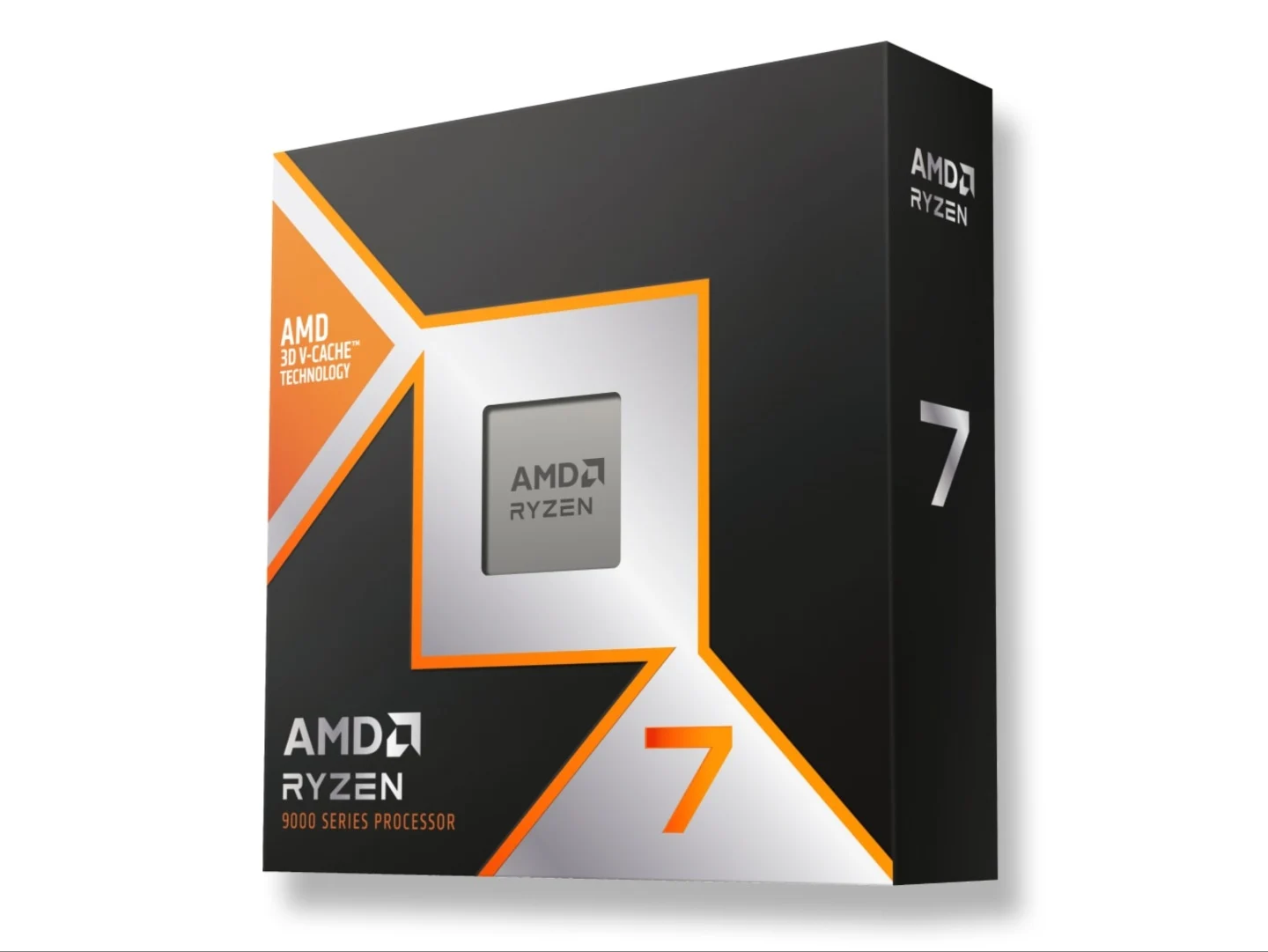
    Several users have shared their troubles with booting their ASRock motherboards alongside Ryzen 9000 series CPUs on the ASRock subreddit. In response, the company has launched a BIOS update aimed at fixing these problems. The 3.20 update has been rolled out for various X870, B850, B650, and A620 motherboards, specifically targeting the Ryzen 9000 series, focusing on the Ryzen 9800X3D, which was frequently mentioned in complaints.

    Reports on Other Brands

    Users have also reported similar boot issues with motherboards from Gigabyte, MSI, and Asus, but most of the complaints have come from ASRock board owners. The ASRock subreddit hosts a dedicated thread called “9800X3D Failures/Deaths Megathread,” where moderators have been addressing the concerns of the users. The problems related to instability and failures involving the Ryzen 9800X3D have been recognized, and the initial recommendation was to revert to an earlier BIOS version.

    Severe Cases Noted

    Some users faced severe issues, with their 9800X3D CPUs supposedly failing during the boot process when used with an ASRock motherboard. The moderators at ASRock acknowledged these serious cases and provided a form for users to report their experiences for further examination.

    Now, the company has introduced the 3.20 Beta update for AM5 series motherboards, which is anticipated to resolve these concerns. While ASRock global hasn’t disclosed the specific reasons behind these boot problems, ASRock Japan has attributed them to memory compatibility issues, mentioning that there have been at least 40 reported incidents. The motherboards affected include two models of B650M Pro, three A620M, eleven B850, and seven X870 models. The release note simply states, “Improve minority proportion of AMD 9000 Series CPU boot issues.”

    Source:
    Link
  • Framework 12: Repairable Entry-Level 2-in-1 Laptop with Rugged Design

    Framework 12: Repairable Entry-Level 2-in-1 Laptop with Rugged Design

    Key Takeaways

    1. The new Framework Laptop 13 features AMD’s Strix Point APUs and emphasizes repairability and upgradeability.
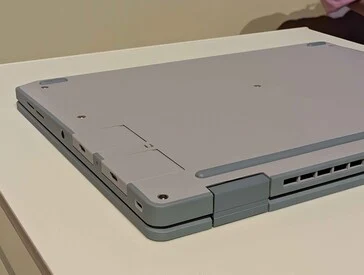
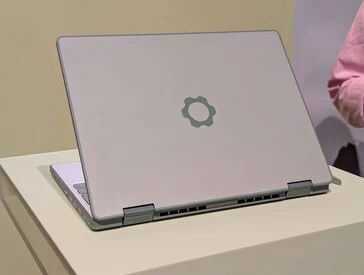
    2. Framework is developing the Framework 12, a convertible laptop designed for students and field workers, with a focus on durability and user feedback.
    3. The Framework 12 includes a 1,920 × 1,200-pixel touch display, with impressive internal specs like Intel 13th-Gen CPUs, up to 48 GB of RAM, and 2 TB of NVMe storage.
    4. The laptop is made from polycarbonate and ABS materials for cost-effectiveness and durability, while maintaining a minimalist design.
    5. Pre-orders for the Framework 12 will begin in April, with shipping expected by mid-2025, though pricing details are yet to be announced.


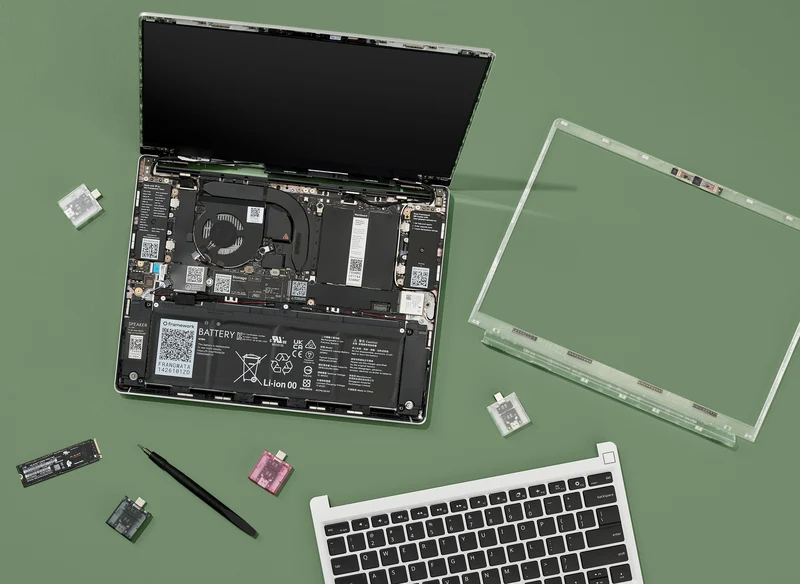
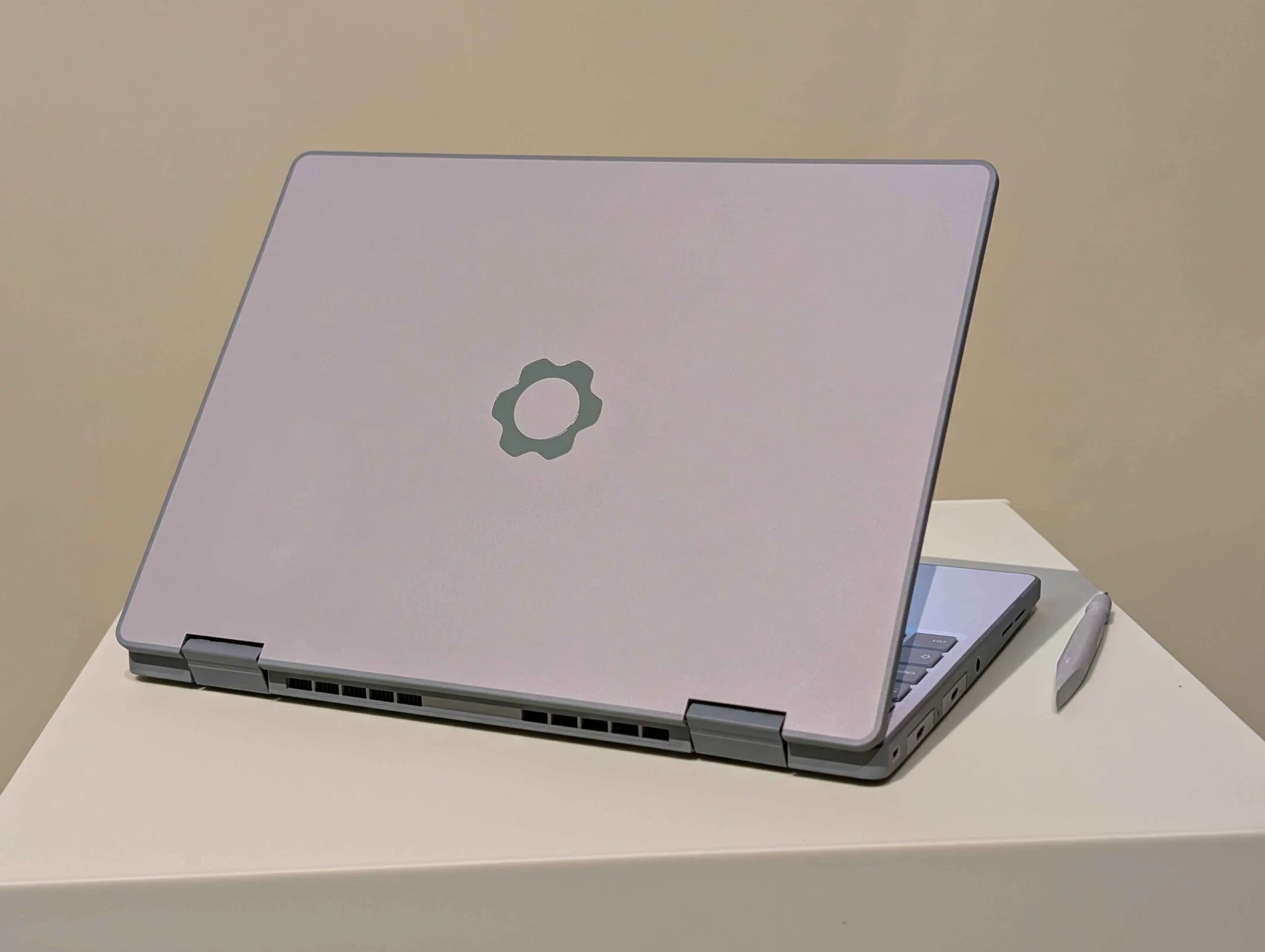
    Framework has shared news about the new Framework Laptop 13, which now features AMD’s Strix Point APUs, along with a Framework Desktop powered by AMD Strix Halo. As always, these products prioritize repairability and upgradeability. Additionally, Framework revealed that they are developing the Framework 12 — a convertible laptop designed to be repairable and upgradable, intended to endure the rough treatment often faced by students and field workers.

    Target Audience Expansion

    Initially, Framework created the Framework 12 with students in mind, but they broadened their focus based on early feedback.

    “Although students were our primary focus when we started working on this product two years ago, we discovered that every adult who tested it wanted one too!”

    Impressive Specifications

    The Framework 12 will come with a 1,920 × 1,200-pixel touch display and stylus support, although it remains unclear if the stylus will be pressure-sensitive. This screen is expected to deliver at least 400 nits of brightness, making it suitable for various indoor settings and some outdoor applications. The internal components of the Framework 12 are notably more impressive than those typical education laptops, featuring either an Intel 13th-Gen Core i3 or Core i5 CPU, with up to 48 GB of DDR5-5200 RAM and 2 TB of NVMe storage.

    Design Choices

    To manage costs while ensuring durability, Framework has chosen to use a polycarbonate (PC) and ABS (acrylonitrile butadiene styrene) casing instead of a metal frame. This is complemented by a shock-absorbent TPU (thermoplastic polyurethane) overmold that protects the outer plastic shell. Despite these more economical materials, the Framework 12 maintains an adult-friendly aesthetic, adhering to Framework’s minimalist industrial design principles.

    The new Framework 12 will likely feature the same expansion ports as the Framework 13 and 16, keeping the standard four-port arrangement found in the larger models. As is customary, Framework will provide support for both Windows and Linux operating systems.

    Anticipated Release

    While Framework has not yet revealed a price for the Framework 12, more information is expected soon. Pre-orders for the Framework 12 are set to begin in April, with the aim to commence shipping production units by mid-2025, although a precise shipment date has yet to be announced.


  • Razer Blade 16 2025 Pre-Orders Start at $2,799 with Ryzen 9, RTX 5090

    Razer Blade 16 2025 Pre-Orders Start at $2,799 with Ryzen 9, RTX 5090

    Key Takeaways

    1. The Razer Blade 16 2025 is 30% smaller than the previous model, making it nearly as thin and light as the MacBook Pro 16.
    2. It offers options for AMD Ryzen AI 9 365 or Ryzen AI 9 HX 370 APUs and Nvidia GeForce RTX 5070 Ti, RTX 5080, or RTX 5090 GPUs.
    3. The default configuration includes 32 GB of RAM, upgradeable to 64 GB, and storage options of 1 TB, 2 TB, or 4 TB.
    4. All configurations feature a QHD+ OLED display with a 240 Hz refresh rate and a 90 Wh battery that charges to 80% in 48 minutes.
    5. The starting price is $2,799.99, with high configurations reaching up to $4,599.99.


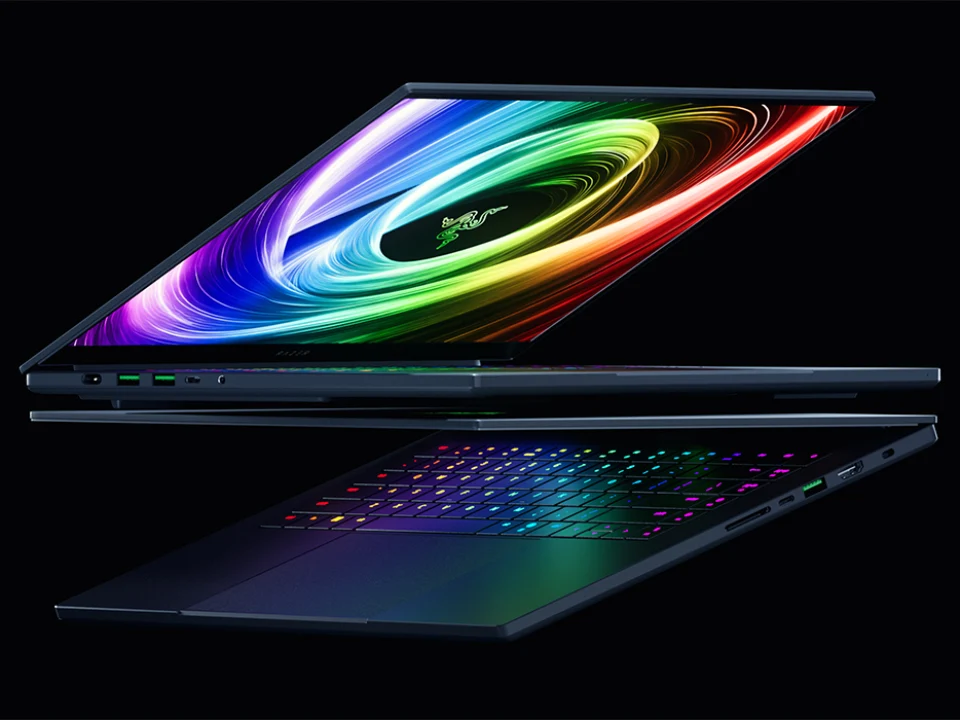
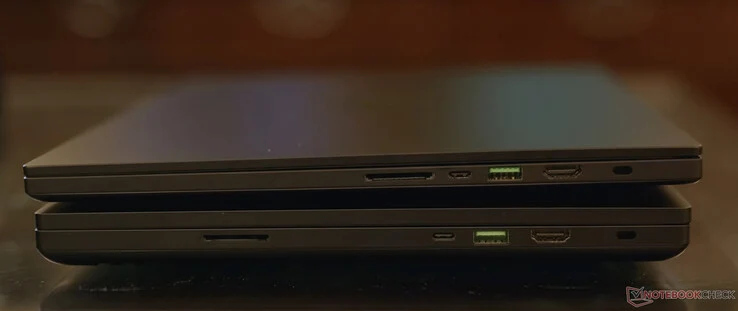
    Almost two months ago, Razer launched a new Blade 16 to take the place of the 2024 version we reviewed just a little over a year back. As we mentioned at CES 2025, the Blade 16 2025 is now 30% smaller than the previous model. Because of this, the Blade 16 is now nearly as thin and light as the latest MacBook Pro 16, which is currently priced at $2,239 on Amazon.

    Upgraded Components

    Razer has paired this reduction in size with a selection between AMD’s Ryzen AI 9 365 and Ryzen AI 9 HX 370 APUs. In addition, the Blade 16 2025 can be set up with one of Nvidia’s GeForce RTX 5070 Ti, RTX 5080, or RTX 5090 GPUs, which come with 12 GB GDDR7, 16 GB GDDR7, and 24 GB GDDR7 VRAM, respectively. The new 16-inch laptop includes 32 GB of LPDDR5X-8000 RAM by default, but users can upgrade it to 64 GB during the configuration.

    Storage and Display

    Moreover, Razer provides options for the Blade 16 2025 with 1 TB, 2 TB, or 4 TB of storage, with the maximum split across both M.2 slots using two 2 TB drives. A QHD+ (2,560 x 1,600) OLED display with a 240 Hz refresh rate is included in all configurations. To top it off, this hardware is complemented by a 90 Wh battery that can be charged up to 80% in just 48 minutes, thanks to a 200 W power adapter.

    The starting price for the Razer Blade 16 2025 is $2,799.99, which includes a Ryzen AI 9 365, 32 GB of RAM, a 1 TB SSD, and an RTX 5070 Ti GPU. However, as you move to more powerful models, prices can quickly exceed $3,000; for instance, switching to an RTX 5080 adds an additional $400. In its highest configuration, the Blade 16 2025 can reach a price of $4,599.99, which includes a Ryzen AI 9 HX 370, 64 GB of RAM, 4 TB of storage, and an RTX 5090 GPU. For further information, check Razer’s website.

    Source:
    Link


  • Asus Launches New ROG Zephyrus G14 and G16 Gaming Laptops

    Asus Launches New ROG Zephyrus G14 and G16 Gaming Laptops

    Key Takeaways

    1. Asus has started pre-orders for the ROG Zephyrus G14 and G16 laptops, replacing the GA403 and GU605 models.
    2. The ROG Zephyrus G14 is priced starting at $2,499 with an AMD Ryzen AI 9 HX 370 APU, 32 GB of RAM, and an RTX 5070 Ti GPU.
    3. The highest-end ROG Zephyrus G14 model costs $3,199.99 and features an RTX 5080 with the same RAM and storage.
    4. The ROG Zephyrus G16 offers five configurations, priced between $2,799 and $4,599.99, with varying specifications.
    5. The top model of the G16 includes an Intel Core Ultra 9 285H processor, 64 GB of RAM, and an RTX 5090 GPU.


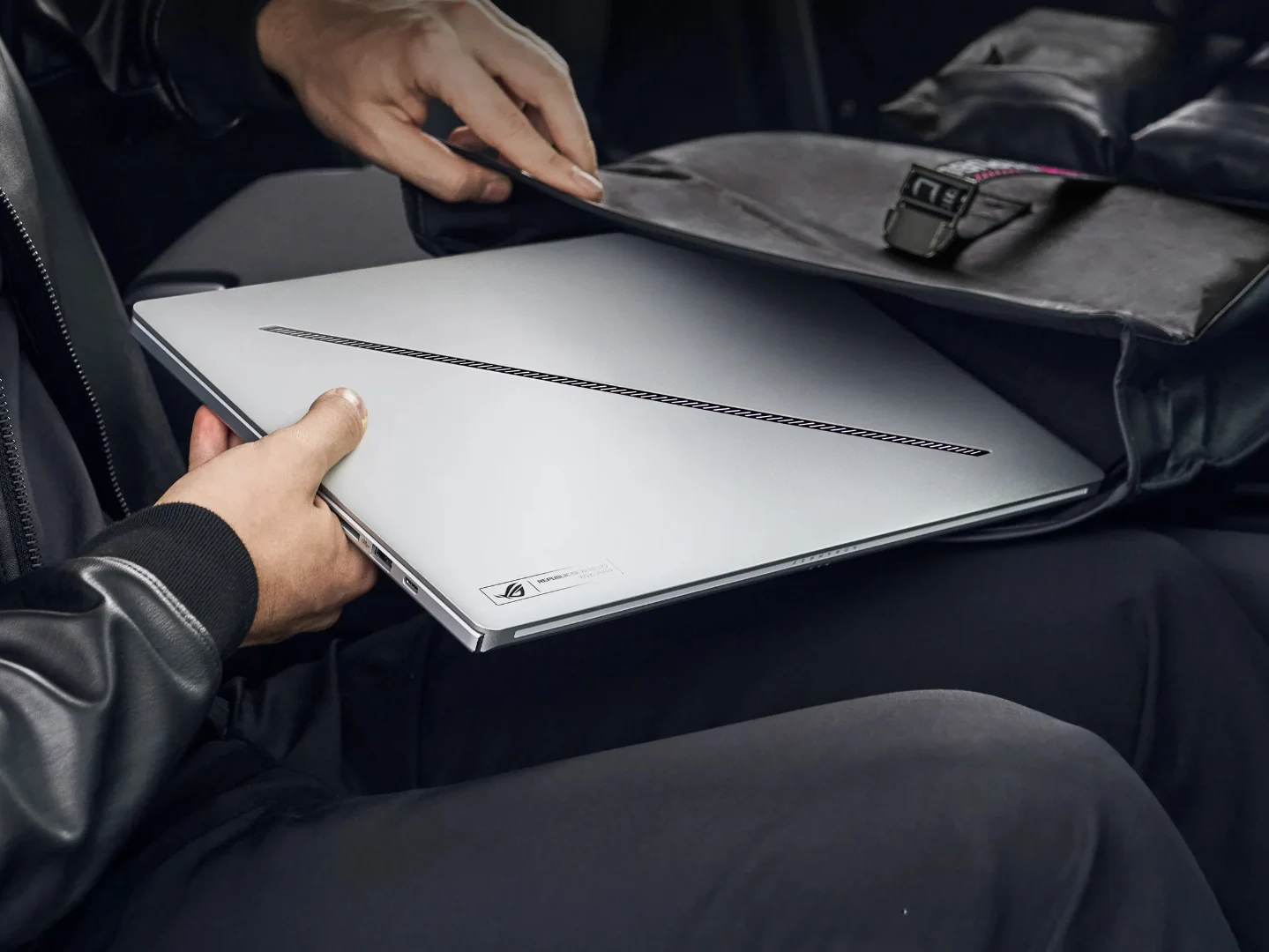
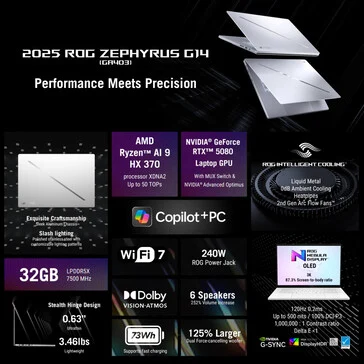
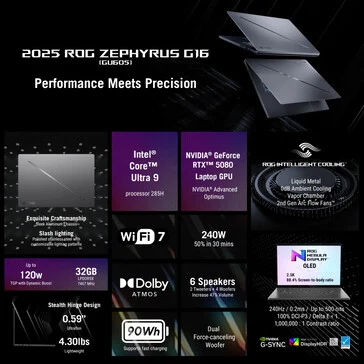
    Asus has kicked off pre-orders for its new ROG Zephyrus G14 and ROG Zephyrus G16 laptops, which take the place of the GA403 and GU605 models (curr. $1,848 on Amazon). Just to remind you, the company unveiled these models last month at CES 2025 in Las Vegas. Asus had mentioned that the ROG Zephyrus G14 and G16 would start at $2,199.99 and $1,999, but those prices are not available yet.

    Pricing Details

    Currently, the ROG Zephyrus G14 is priced starting at $2,499, featuring an AMD Ryzen AI 9 HX 370 APU, 32 GB of RAM, and an RTX 5070 Ti GPU. This leads us to believe Asus will eventually offer an RTX 5070 option at the $2,199.99 price they quoted during CES 2025. On the other hand, the highest-end ROG Zephyrus G14 reaches $3,199.99, equipped with an RTX 5080, while still maintaining 32 GB of RAM and 2 TB of storage like the other configurations.

    ROG Zephyrus G16 Options

    Asus is also launching five different ROG Zephyrus G16 configurations, with prices ranging from $2,799 to $4,599.99. On the lower end, you’ll find an Intel Core Ultra 9 285H processor along with an RTX 5070 Ti GPU, supported by 32 GB of RAM and 2 TB of storage. Meanwhile, the top model of the Zephyrus G16 shares the same processor and storage, but upgrades to an RTX 5090 and bumps the RAM up to 64 GB. For further information, check out Asus’ official website links provided below.

    Source:
    Link


  • Iqunix MQ80 Low-Profile Mechanical Keyboard Launches with Discounts

    Iqunix MQ80 Low-Profile Mechanical Keyboard Launches with Discounts

    Key Takeaways

    1. The Iqunix MQ80 is an 80% low-profile mechanical keyboard now available on Kickstarter with early bird discounts.
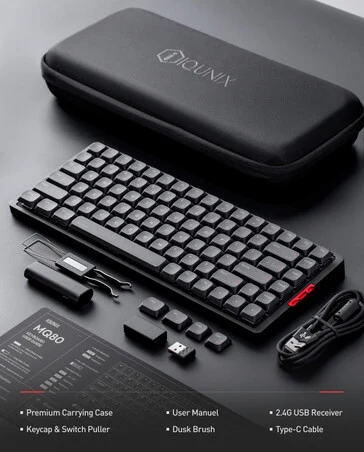
    2. It features a Le-Tray gasket mount, a premium hard-shell carrying case, and accessories like a dust brush and coiled USB type-C cable.
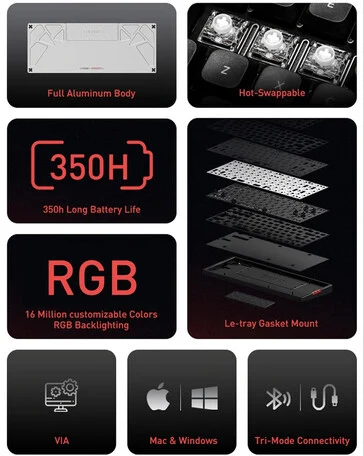
    3. The keyboard has a 10.2 mm front case height, aluminum casing, and a 4,000 mAh battery that lasts up to 350 hours.
    4. It supports Bluetooth and 2.4 GHz connections, with low-profile PBT keycaps for a comfortable typing experience.
    5. Early bird pricing is $119, while the retail price is expected to be around $199 when officially launched in April to May.


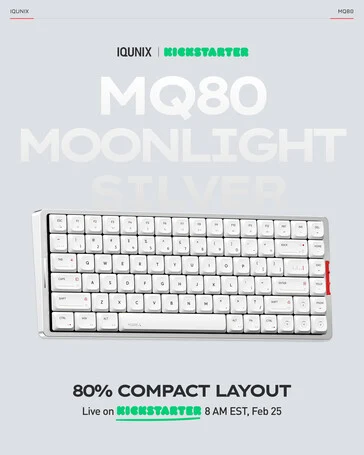
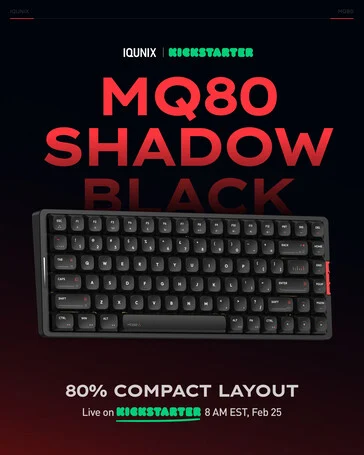
    Iqunix has announced the release of the MQ80 on Kickstarter, sharing more details about this new 80% low-profile mechanical keyboard and its exciting accessory set. Although the Super Early Bird offer with a 50% discount has already sold out, there are still more than 200 units available at the 40% off Early Bird price, which brings the total to only $119. Plus, all pre-orders made through the Kickstarter page will come with free shipping to “anywhere in the world.”

    Features and Accessories

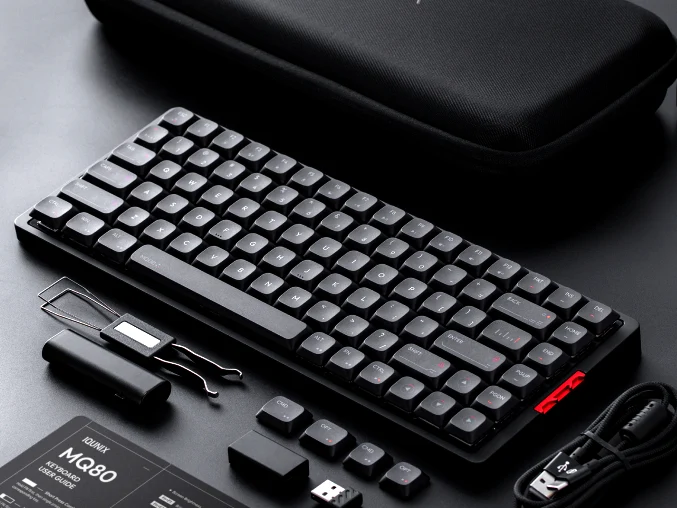
    We knew that the Iqunix MQ80 would have the same Le-Tray gasket mount as the Magi65 Pro, which we are currently reviewing. The updated Kickstarter details have also shown that the MQ80 will include a premium hard-shell carrying case, a dust brush, and a coiled USB type-C cable, similar to what was provided in the Iqunix EZ63 (which is currently priced at $179.99 on Amazon). The MQ80 will be available in two colors: off-white (Moonlight Silver) and black (Shadow Black), both featuring a subtle keycap design that aligns with a productivity-focused aesthetic.

    Specifications and Battery Life

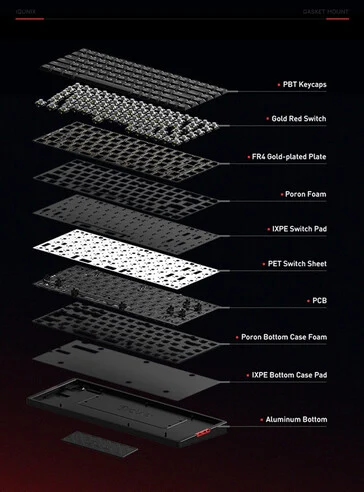
    The Iqunix MQ80 features a front case height of only 10.2 mm, a complete aluminum casing, and a 4,000 mAh battery. Iqunix claims that this battery can last up to 350 hours, and the keyboard supports Bluetooth for low energy use and 2.4 GHz for lower latency, though this does increase power consumption. The MQ80’s low-profile keycaps are made from PBT, which, along with the Le-Tray mount, sound dampening materials, and flex-cut FR4 plate, should lead to a comfortable, bouncy typing experience along with a satisfying sound.

    Pricing Information

    Looking at the significant early discounts on Kickstarter, it seems that the Iqunix MQ80 will retail for about $199 when it officially launches later this year. Iqunix has confirmed that they are aiming for an April to May timeframe for the official launch on their online store. They also mentioned that the price for the in-stock model could change based on how well the Kickstarter campaign performs.

    – Super Early Bird (ended): $99 (50% off)
    – Early Bird: $119 (40% off)
    – Final Edition: $139 (30% off)

    Source:
    Link


  • Framework Laptop 13 Upgrade: AMD Strix Point, Wi-Fi 7, New Keyboard

    Framework Laptop 13 Upgrade: AMD Strix Point, Wi-Fi 7, New Keyboard

    Key Takeaways

    1. New Hardware: The Framework Laptop 13 features upgraded AMD Strix Point hardware, including the option for a Ryzen AI 9 HX 370 processor.

    2. Quality Improvements: Enhancements include Wi-Fi 7 support, a new thermal compound, and an upgraded keyboard with a travel distance of 1.5 mm, plus a Co-Pilot key for Windows users.

    3. Specs and Compatibility: The laptop supports up to 96 GB of DDR5-5600 RAM, up to 8 TB of storage, and can connect up to four devices through USB-C/HDMI ports.

    4. Pricing and Options: The entry-level version starts at $749 with a previous generation processor, while the new Strix Point version starts at $899 for a 2.8K display.

    5. Availability: Pre-orders for the Framework Laptop 13 are open, with shipping set to begin shortly.


    Along with its Framework Desktop, the Framework Laptop 13 has been updated with new hardware from AMD. However, it’s not the Strix Halo, as that is only for desktops. Instead, you get something really good: Strix Point. You can now upgrade to a Ryzen AI 9 HX 370, which is the best option available from Strix Point.

    Quality Improvements

    Additionally, the Framework Laptop 13 comes with several enhancements for user convenience. It now supports Wi-Fi 7 and uses a new Honeywell PTM7958 thermal compound. The keyboard has been upgraded to the second generation, featuring new keys with a travel distance of 1.5 mm. There’s also a Co-Pilot key available for the models that include Windows. If you prefer Linux, you can even print the logo of your favorite Linux distribution on the key.

    Specs and Compatibility

    Most of the specifications of the Framework Laptop 13 remain unchanged. For instance, the DDR5-5600 RAM is still there, but now you can have up to 96 GB. Storage options have also improved, allowing for up to 8 TB through the M.2 NVMe slot. Furthermore, there are some internal upgrades; all four modules can now output display signals. This means you can connect up to four devices using 4 USB-C/HDMI ports simultaneously.

    Pricing and Availability

    The Framework Laptop 13 is now priced more competitively than before. The entry-level version starts at $749, but this only includes a previous generation AMD Ryzen 7040 model. If you want the Strix Point (Ryzen AI 300), you’ll need to pay a minimum of $899, which includes a 2.8K 120 Hz 3:2 display. Alternatively, you can purchase a motherboard for $499 to upgrade your existing Framework Laptop 13. Pre-orders are open now, and shipping will begin shortly.

  • AMD Strix Halo CPUs: Affordable Framework Desktop with Customization

    AMD Strix Halo CPUs: Affordable Framework Desktop with Customization

    Key Takeaways

    1. Integration of Strix Halo into Framework products includes a new mini-PC called the Framework Desktop.
    2. The top-tier model features an AMD Ryzen AI Max 395+ Strix Halo processor with 16 Zen 5 cores and 128 GB of LPDDR5x memory.
    3. The Framework Desktop has customizable front ports and supports additional storage via two NVMe slots, but RAM is not expandable.
    4. It includes a 120 mm cooler, a Noctua fan, and offers modular design options for appearance customization.
    5. Pricing starts at $1,099 for the entry-level model, with pre-orders available now and shipping expected in Q3 2025.


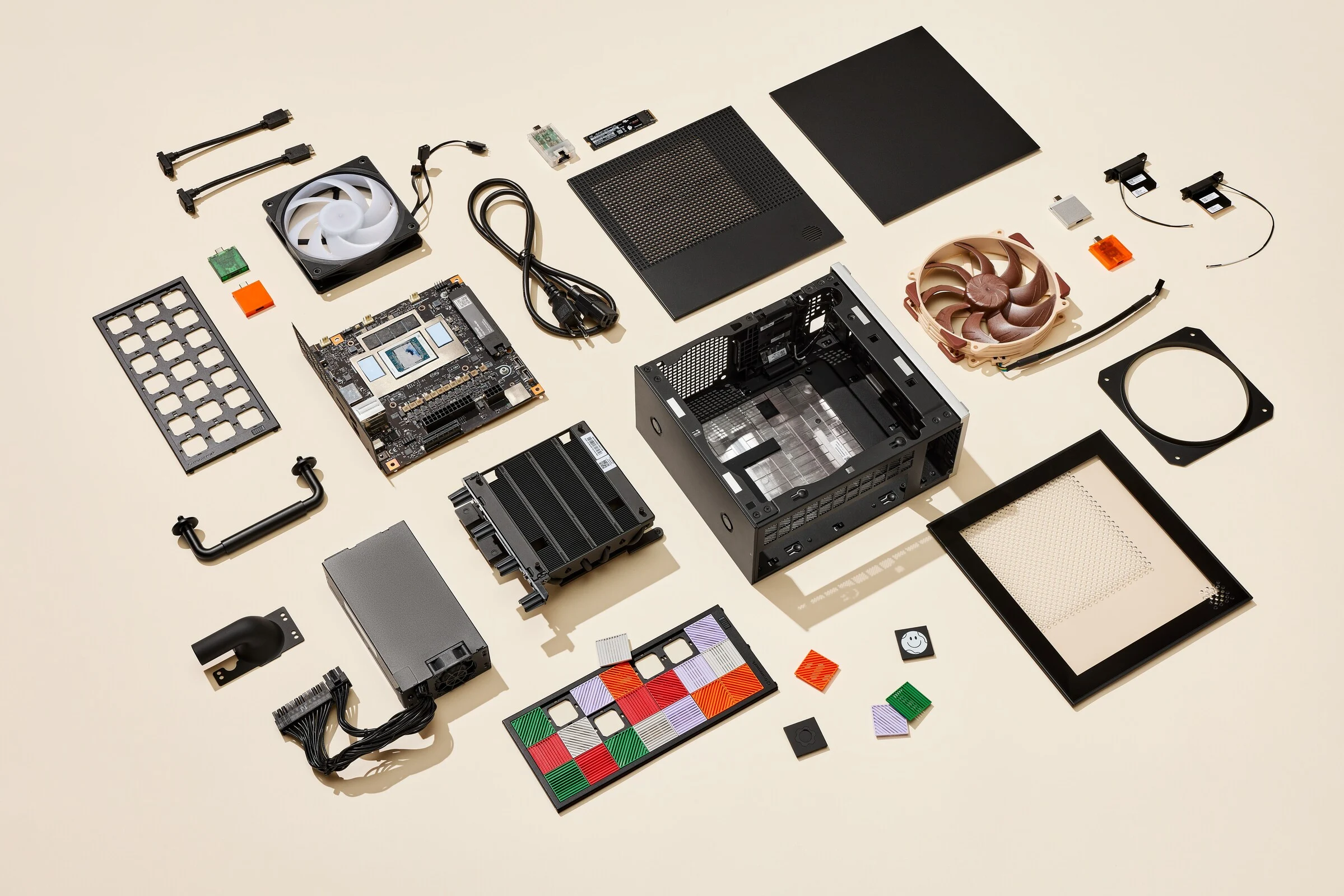
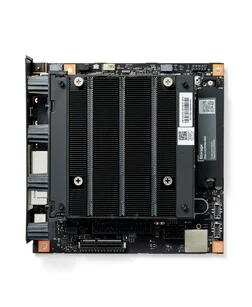
    AMD’s Frank Azor subtly hinted at the integration of Strix Halo into Framework’s products. The exciting news is that this has happened, and it comes in a new form factor: a desktop. The Framework Desktop is more of a mini-PC, but it features a PCIe Gen4 slot along with a variety of I/O options, including 2x USB 4.0 ports, 2x DisplayPort ports, 1x HDMI port, and 5 Gb/s Ethernet. True to Framework’s design philosophy, the front ports are customizable.

    Specifications Overview

    The top-tier model is equipped with an AMD Ryzen AI Max 395+ Strix Halo processor, boasting 16 Zen 5 cores, 40 RDNA 3.5 compute units, and 128 GB of LPDDR5x memory on the package. There’s also a lower-end model with an 8-core Ryzen AI Max 385 available. However, RAM cannot be expanded, but you can increase storage by adding up to 16 GB through two NVMe slots. Additionally, the Framework Desktop comes with a built-in Wi-Fi 7 module. Powering this setup is a 400 Watt Flexi-ATX power supply unit.

    Performance and Cooling

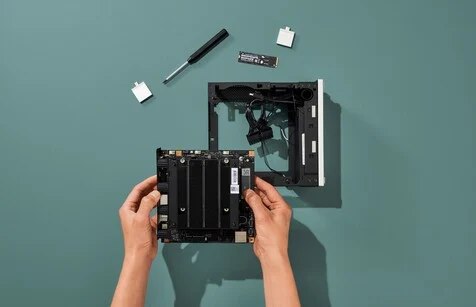
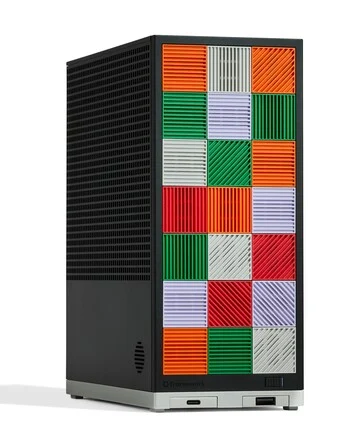
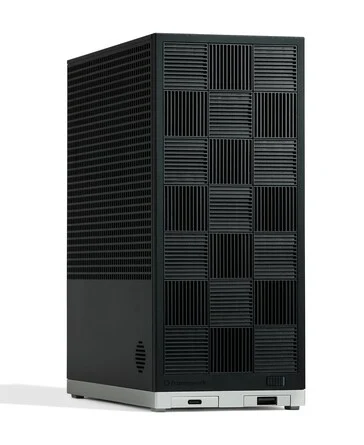
    Although Strix Halo is not extremely power-hungry compared to other desktop chips, it can consume as much as 86 Watts at full load. To manage this wattage, Framework has included a 120 mm cooler and a Noctua fan to maintain optimal temperatures for the mini-PC. If you prefer a different cooling solution, you’re welcome to use that. The Framework Desktop also features 21 modular tile-like blocks that allow for customization in appearance. Plus, you can attach a carrying handle for easier transport. Essentially, all you need to provide is a power supply and the motherboard from Framework; the rest is customizable, which is a common theme in the company’s products.

    Pricing and Availability

    The high-end Framework Desktop with the 16-core Strix Halo CPU and 128 GB of RAM will cost $1,999. This price is significantly lower than what Asus charges, although some might argue that the premium is warranted since Asus offers a fully functional laptop instead of just a mini-PC. The entry-level model with the 8-core CPU and 32 GB of RAM is priced at $1,099, which is also a reasonable price point. Pre-orders are available now, but shipping will only start in Q3 of 2025, so there’s plenty of time to save up some money.


  • Samsung 9100 PRO Launches with Upcoming 8TB Variant Later This Year

    Samsung 9100 PRO Launches with Upcoming 8TB Variant Later This Year

    Key Takeaways

    1. Samsung has launched the 9100 PRO, its first PCIe 5.0 SSDs, with significant upgrades over the 990 PRO.
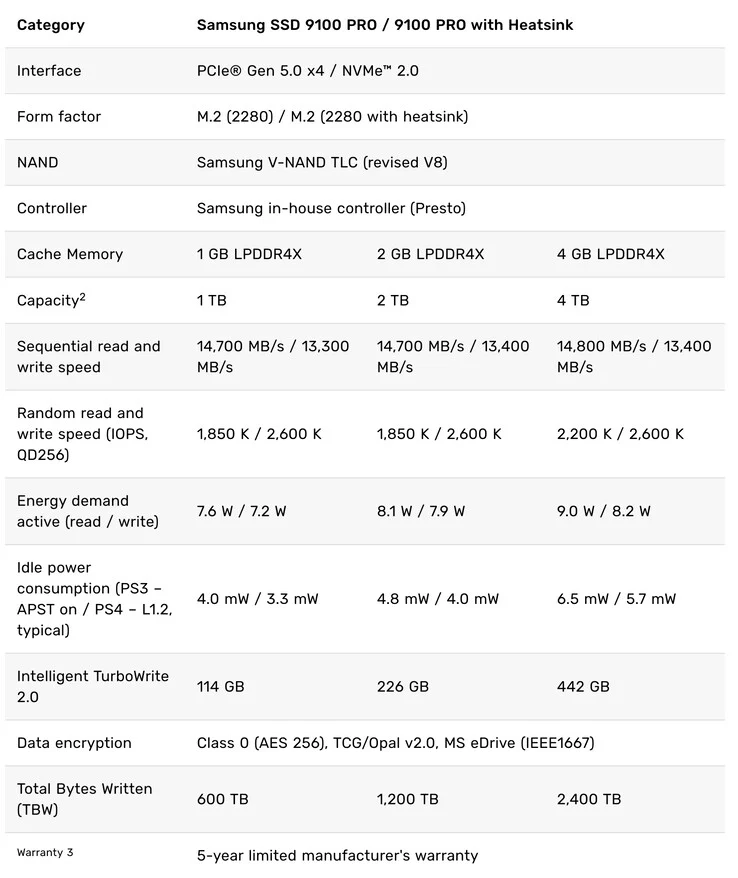
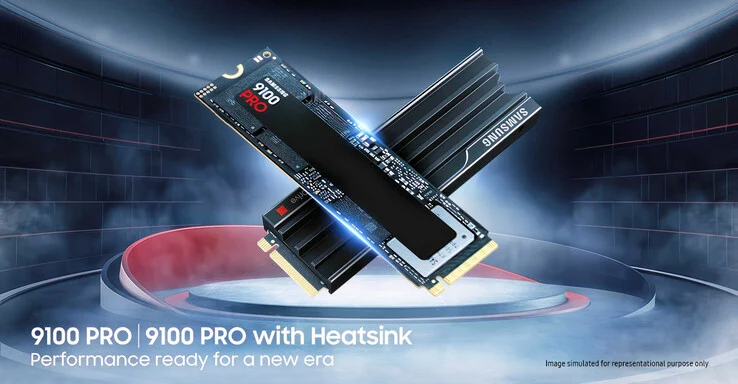
    2. The 9100 PRO features write speeds of up to 13,400 MB/s and read speeds of 14,800 MB/s, alongside a new ‘Presto’ memory controller.
    3. Despite claims of increased energy efficiency, power usage actually rises to 9 W, but faster transfer speeds may lead to effective power savings.
    4. The series offers durability ratings of 600-2,400 TBW and comes with a five-year warranty, along with thermal management features.
    5. The 9100 PRO will be available starting March 18 in 1 TB, 2 TB, and 4 TB configurations, with an 8 TB version expected later this year.


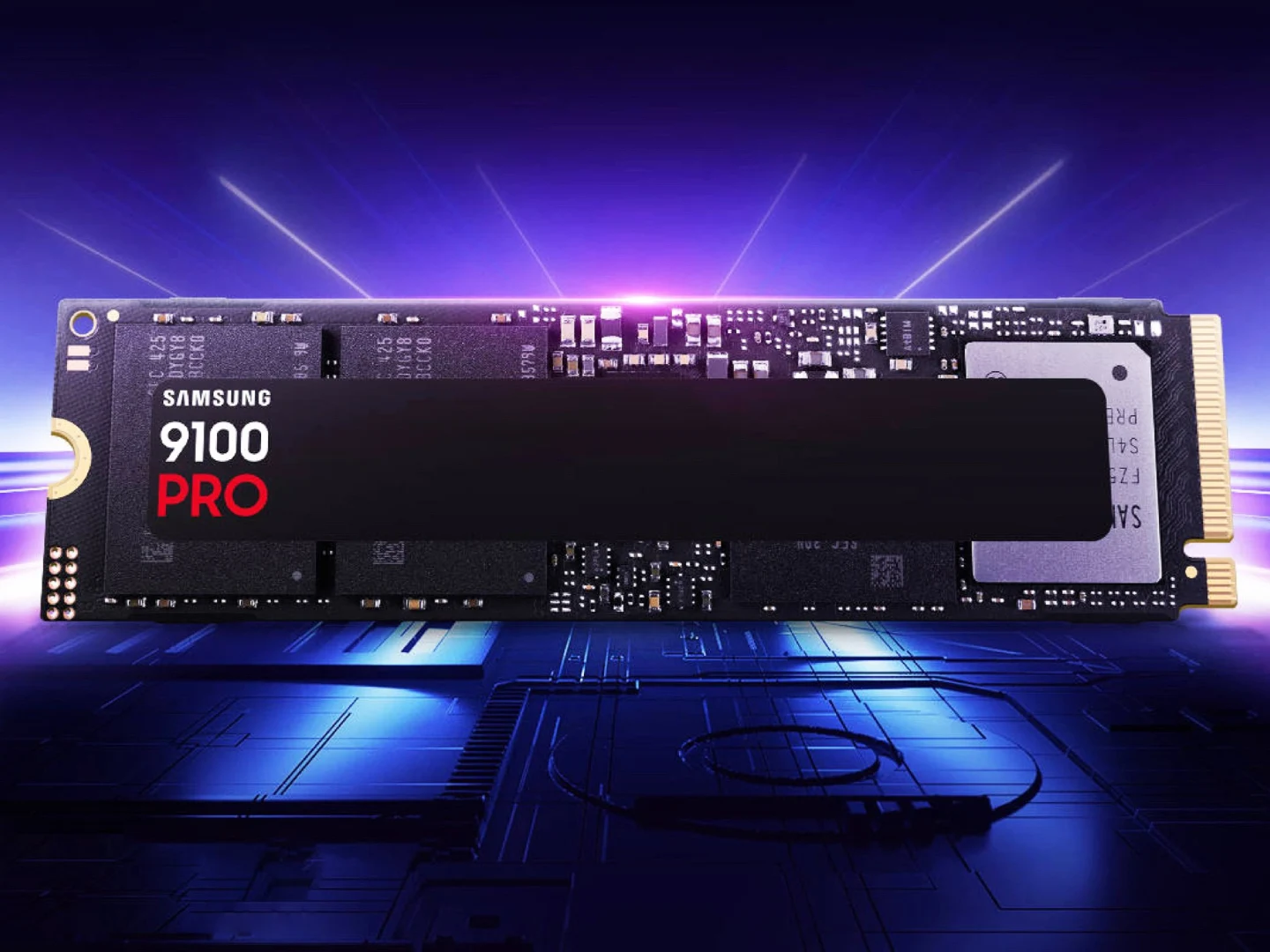
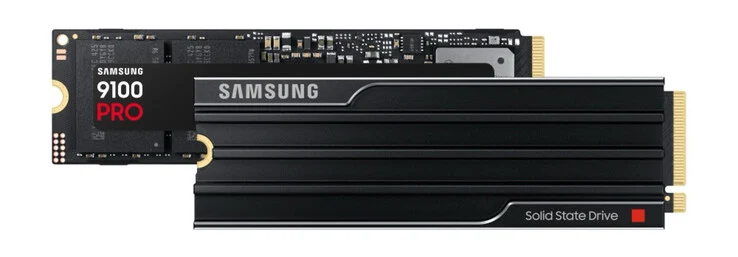
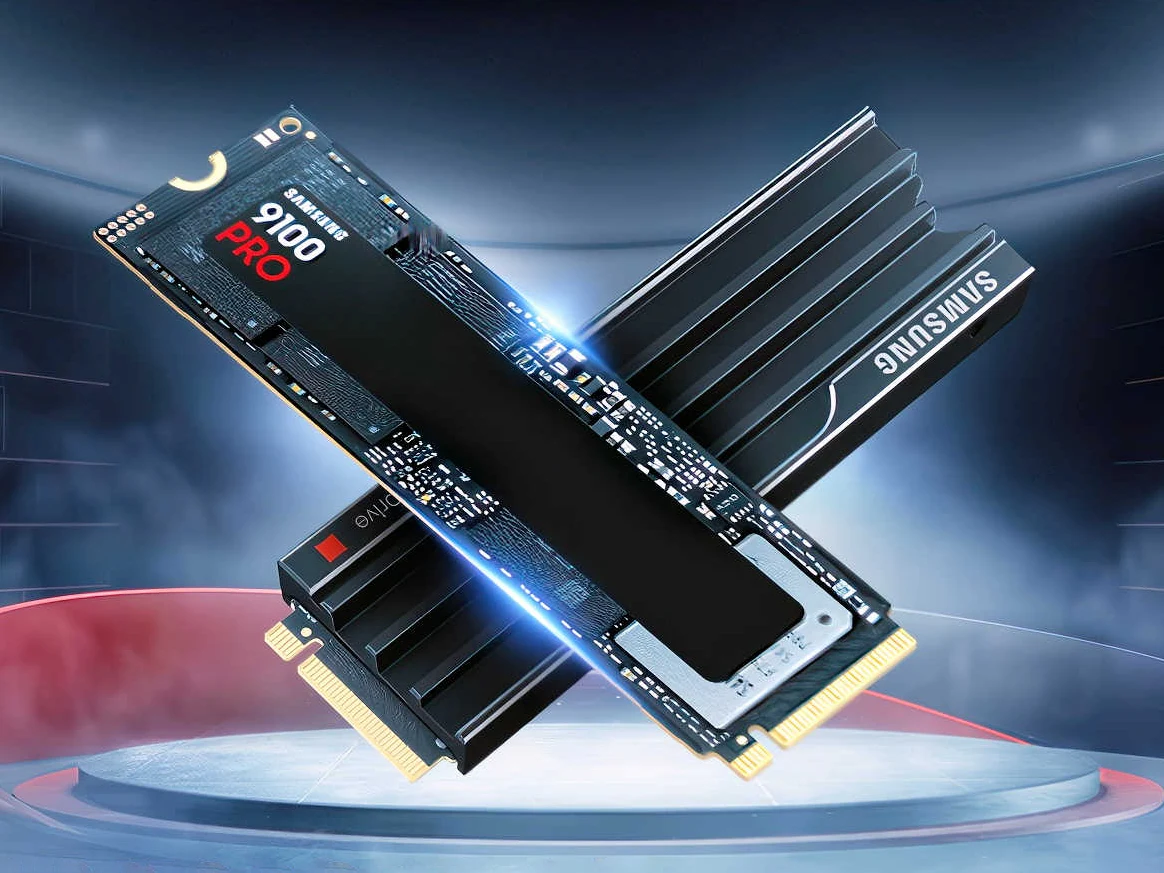
    Samsung has officially unveiled the 9100 PRO, sharing insights about its first PCIe 5.0 SSDs today. Although some details about the 9100 PRO series were leaked ahead of the official announcement, the German press release provides a more thorough look at the upgrades Samsung has implemented compared to the previous 990 PRO.

    Updated Performance Specs

    Key improvements include a revamped TLC NAND and a new ‘Presto’ memory controller, achieving write speeds of up to 13,400 MB/s alongside the previously mentioned read speeds of 14,800 MB/s. The 9100 PRO is promoted as being more energy efficient than the 990 PRO, which currently retails for $124 on Amazon; however, this claim isn’t entirely accurate.

    Instead of being more efficient, the actual power usage increases by 2.5 W, bringing it up to 9 W. Yet, the enhanced transfer speeds could enable the 9100 PRO to finish tasks faster than the 990 PRO, leading to an effective power consumption reduction of about 49%.

    Endurance and Warranty

    Samsung designates the 9100 PRO series with a durability rating of 600-2,400 TB (TBW), depending on the specific model selected, and every SKU comes with a five-year warranty. Additionally, the series features a rear-mounted heat spreader and a nickel-coated controller aimed at maximizing lifespan. The cache included ranges between 1 GB and 4 GB of LPDDR4X, with more specifics available in the table below.

    The 9100 PRO series is set to be available starting March 18, offered in 1 TB, 2 TB, and 4 TB configurations, with prices beginning at €182.99. Samsung also mentions that an 8 TB version will be released later this year. Here’s the complete pricing for the Eurozone:

    Source:
    Link


  • Samsung 9100 PRO PCIe 5.0 SSD Leaks: 14,800 MB/s Speeds

    Samsung 9100 PRO PCIe 5.0 SSD Leaks: 14,800 MB/s Speeds

    Key Takeaways

    1. Samsung’s first PCIe 5.0 SSDs, the 9100 PRO series, are set to replace the 990 PRO, which has been available for over two and a half years.
    2. A press release from Samsung India was removed, indicating a potential leak of information about the 9100 PRO before its official announcement.
    3. The 9100 PRO series will offer impressive transfer speeds of up to 14,800 MB/s and nearly 50% better power efficiency compared to the 990 PRO.
    4. The new SSDs are expected to achieve IOPS of 2,200K for read operations and 2,600K for write operations, although actual performance may vary in real-world use.
    5. The 9100 PRO will be available in sizes of 1 TB, 2 TB, 4 TB, and 8 TB, with some pricing details revealed, but it’s unclear if prices will be the same in other regions.


    It looks like Samsung’s first PCIe 5.0 SSDs are almost ready to hit the market. At first, it seemed the company was ready to reveal the new models that would replace the 990 PRO, which has been on sale for over two and a half years in sizes of 1 TB, 2 TB, and 4 TB (currently priced at $319.95 on Amazon).

    Press Release Gone

    However, Samsung India has removed its press release that shared details about the 9100 PRO and its various enhancements compared to the 990 PRO series. This suggests that Samsung India has unintentionally leaked information about the 9100 PRO before its official announcement. An official introduction should happen soon.

    Impressive Specifications

    While we wait, Samsung India’s now-removed press release revealed that the 9100 PRO series will offer impressive transfer speeds of up to 14,800 MB/s and nearly 50% better power efficiency than the existing 990 PRO drives. The new SSDs are also expected to achieve Input/output operations per second (IOPS) of 2,200K during read operations and 2,600K for writing; it’s important to remember that these numbers may not reflect actual use cases.

    Storage Options and Pricing

    Samsung India noted that the 9100 PRO will come in sizes of 1 TB, 2 TB, 4 TB, and 8 TB. The press release included pricing details for all but the 8 TB option, though it’s unclear if these prices will apply to other regions as well. Nevertheless, Samsung India indicated that the 9100 PRO will be priced as follows:

    Source:
    Link


  • AMD Ryzen 9 9950X3D Benchmark Results vs Non-X3D Chips

    AMD Ryzen 9 9950X3D Benchmark Results vs Non-X3D Chips

    Key Takeaways

    1. The AMD Ryzen 9 9950X3D is set to release on March 12, with reviews under embargo until March 11.
    2. Benchmarks indicate the Ryzen 9 9950X3D outperforms the Ryzen 9 7950X3D in productivity tests, showing a 17% advantage in Cinebench multicore tests.
    3. The Ryzen 9 9950X3D has a slight edge over the Ryzen 9 9950X in single-core tests, with only a 3.5% difference.
    4. In gaming performance, the Ryzen 9 7950X3D may still outperform the 9950X3D in some benchmarks, showing a close competition.
    5. The Ryzen 9 7950X3D remains a strong contender in gaming despite the introduction of the 9950X3D.


    The AMD Ryzen 9 9950X3D is expected to be released on March 12, with reviews reportedly under embargo until March 11. Even though the release is over two weeks away, a set of benchmarks seems to have been published prematurely, showcasing some strong productivity results from the Ryzen 9 9950X3D.

    Benchmarks and Performance

    According to the benchmarks shared by PCBuild on Facebook (now deleted), the performance leaks we mentioned earlier this week appear to be quite accurate. The Bulgarian hardware retailer and system builder apparently tested the Ryzen 9 9950X3D using Cinebench R23 and PCMark Time Spy. The average scores indicate it outperforms the Ryzen 9 7950X3D in both tests, although the advantage in gaming performance isn’t that substantial.

    Detailed Comparisons

    When we look at the benchmark images compared to our own tests and database, the 9950X3D surpasses the 7950X3D by nearly 17% in Cinebench multicore tests. On the other hand, the Ryzen 9 9950X (currently priced at $559.75 on Amazon) is not too far behind, lagging by about 3.7% in Cinebench R23. In the single-core tests of Cinebench R23, the difference between the Ryzen 9 9950X3D and the standard 9950X is just 72 points, or 3.5%. The 9950X3D notably leads the 7950X3D by around 11%.

    Gaming Performance Insights

    However, gaming benchmarks tell a different tale. In comparison with previous results from our testing, the 3DMark Time Spy CPU scores show that the older Ryzen 9 7950X3D actually outperforms the Zen 5 9950X3D in one of the leaked benchmarks, leading by 3.7%. Another Time Spy result from the leak shows a maximum CPU score of 17,234 points, suggesting the Ryzen 9 9950X3D edges out the 7950X3D by a mere 118 points—a very slight margin.

    These two benchmark results alone don’t give a full view of gaming performance, which can differ widely depending on the game. However, they do hint at what we might expect when the Ryzen 9 9950X3D launches in March. It also suggests that the AMD Ryzen 9 7950X3D (currently priced at $740 on Amazon) is likely to remain a strong competitor in gaming, despite AMD’s adjustments to the 3D V-Cache specifications and design.

    Source:
    Link