Tag: Framework Laptop 13

  • Framework Laptop 13 Now Features 12-Core ARM Processor Upgrade

    Framework Laptop 13 Now Features 12-Core ARM Processor Upgrade

    Key Takeaways

    1. Qualcomm’s Snapdragon X Plus and Snapdragon X Elite show that ARM processors are now viable for laptops, as seen in devices like the Lenovo IdeaPad Slim 5, which offers great battery life and affordability.

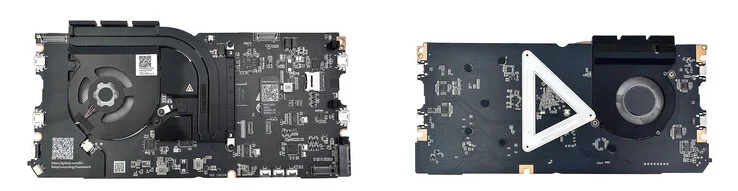
    2. MetaComputing has introduced a new competitor in the market with a mainboard featuring the CIX CP8180 ARM chipset, suitable for the Framework Laptop 13 or mini PC cases.

    3. The MetaComputing mainboard includes eight ARM Cortex-A720 performance cores and four Cortex-A520 efficiency cores, along with an ARM Immortalis-G720 GPU and an AI accelerator.

    4. Although the new chipset may not match the speed of top-tier Snapdragon processors, it is expected to handle common tasks effectively, but its power consumption may limit battery life in certain setups.

    5. The MetaComputing ARM AI PC Kit starts at $549 for an entry-level model, with a bundle including the Framework Laptop priced at $999, and additional RAM upgrades available for $100.


    Qualcomm’s Snapdragon X Plus and Snapdragon X Elite have shown that ARM processors are now a valid option in the laptop sector. Devices such as the Lenovo IdeaPad Slim 5 highlight this with their impressive battery life and budget-friendly pricing.

    New Competitor in the Market

    MetaComputing has launched an alternative to established brands like Intel, AMD, and the Snapdragon X series. The company has released a mainboard that can be fitted into the Framework Laptop 13 or a mini PC case. This mainboard features a CIX CP8180 ARM chipset, which is also present in the Minisforum MS-R1. The processor includes eight ARM Cortex-A720 performance cores, with the two fastest capable of reaching boost clock speeds of 2.6 GHz. Additionally, it has four Cortex-A520 efficiency cores.

    Performance Overview

    This setup includes an ARM Immortalis-G720 GPU with ten cores, alongside an AI accelerator that boasts a performance of 30 TOPS. While this chipset may not match the speed of the Snapdragon X Elite or the latest flagship smartphone processors, it should still handle many common tasks effectively. Nonetheless, this mainboard upgrade appears to be primarily aimed at developers, as initial tests indicate that the SoC consumes around 16 watts while idle. This suggests that when paired with the 55Wh battery in the Framework Laptop 13, the battery life may be limited.

    Pricing and Availability

    You can now purchase the MetaComputing ARM AI PC Kit from the manufacturer’s official online store. The entry-level model, which includes 16GB of RAM, a 1TB SSD, and a mini PC case, is priced at $549. The mainboard can also be installed in a previously acquired Framework Laptop 13. For those without a Framework Laptop, a bundle including the notebook is available for $999. MetaComputing also offers an upgrade to 32GB of RAM for an extra $100. While shipping is free globally, the listed prices do not cover import taxes or fees.

    Source:
    Link


  • Modder Creates 90s-Style All-Aluminium Framework Laptop

    Modder Creates 90s-Style All-Aluminium Framework Laptop

    Key Takeaways

    1. Flurples redesigned the Framework 13 laptop to improve typing experience with a custom low-profile mechanical keyboard and enhanced chassis.
    2. The project utilized premium materials, including CNC-cut aluminum and 3D printed components, to achieve a sleek appearance.
    3. The keyboard features Kailh Choc Sunset switches, MBK profile keycaps, and programmable rotary encoders, but is not hot-swappable for reliability.
    4. A custom internal USB hub was added, incorporating extra ports while maintaining the laptop’s original size, despite its complexity rendering it non-functional.
    5. The keyboard is equipped with custom QMK firmware, providing advanced configuration options for improved functionality.


    Flurples, a YouTube content creator famous for his unique cursed cardboard keyboard that sounds surprisingly good, is once again diving into the world of wild modifications. This time, he’s taken things to the next level by completely reconstructing a laptop to enhance the typing experience. He kicked off what he calls the Campus Laptop project with a standard Framework 13, whose keyboard provided a lackluster typing sensation and sound when compared to a standalone mechanical keyboard.

    Innovative Redesign

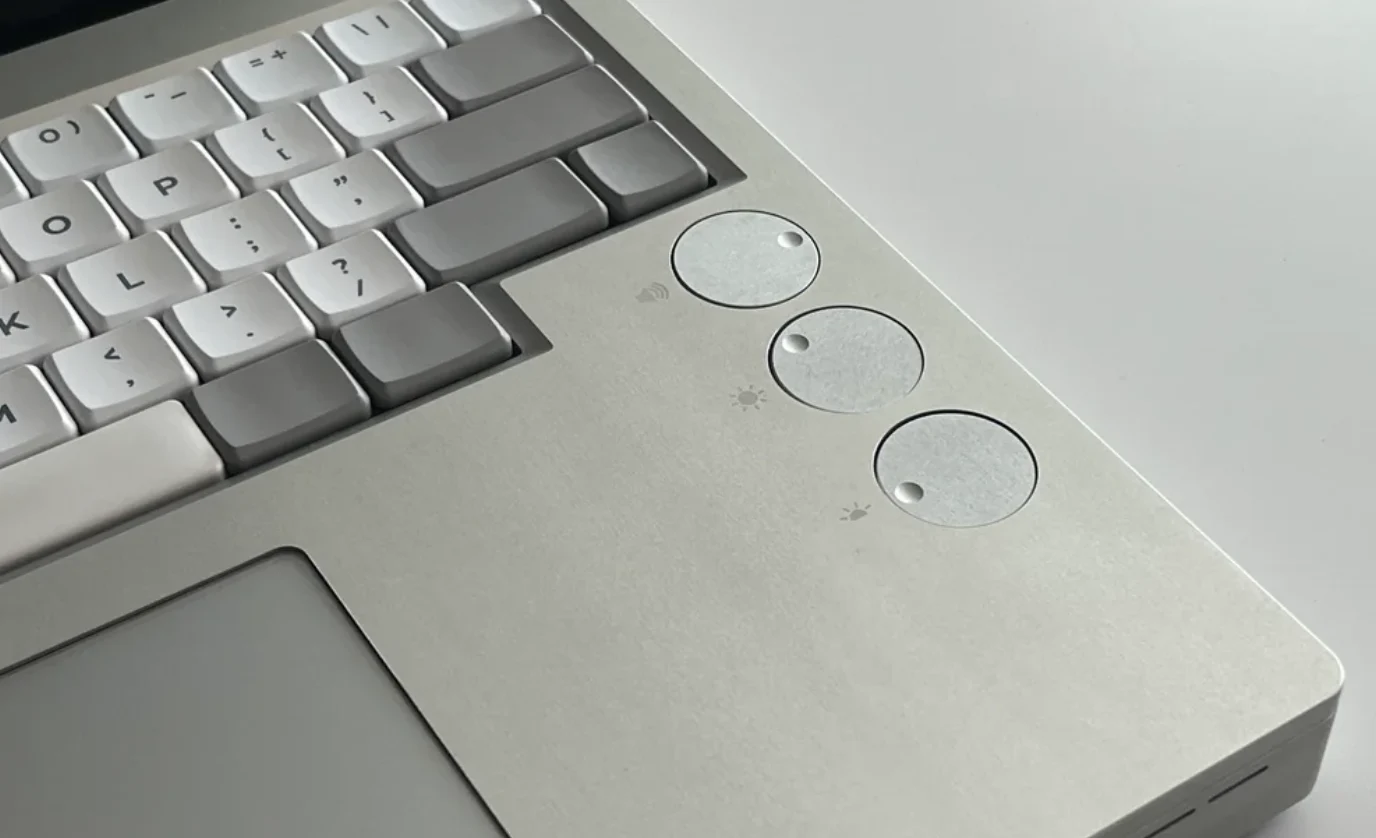
    To tackle this issue, the modder reversed engineered the Framework 13’s chassis, redesigning the entire bottom part while duplicating all the original mounting elements for components like the motherboard, battery, hinges, and trackpad. Additionally, the bottom housing needed to support the keyboard, which was mounted to the top section of the bottom case using a gasket top-mount design. Alongside adding a low-profile mechanical keyboard to the Framework laptop, Flurples also designed the space and mounting points for programmable rotary encoders. He had to modify the top case and hinge mounting points to fit the thicker bottom chassis.

    Premium Quality Parts

    The components were 3D printed to ensure they fit and looked good, but in the end, all the final parts, except for the display bezel, were made using CNC-cut aluminum, which gave the project a sleek and high-quality appearance.

    The mechanical keyboard used for the Framework Laptop is a fully customized design in a compact 60% HHKB layout, inspired by keyboards such as the HHKB Hybrid Type-S, which can be found for $259 on Amazon. It features Kailh Choc Sunset tactile switches and MBK profile keycaps, plus it manages three rotary encoders. A custom internal USB hub links the keyboard to the motherboard. This USB hub occupies the spot where one of the Framework Laptop 13’s USB-C expansion cards used to be, but Flurples ingeniously incorporated a microSD expansion slot, HDMI port, and USB port into the hub. As a result, the Campus laptop maintains the same size as the original model, despite the added hardware and bulkier design. Sadly, the complexity of the USB hub’s design meant that it couldn’t be made functional.

    Soldered Switches for Reliability

    The keyboard is not hot-swappable, meaning the switches are soldered in place. This decision was likely made to conserve space since hot-swap sockets would add extra thickness to the PCB’s back. Soldered keyboards also tend to be more reliable than their hot-swappable counterparts, which might have factored into this choice.

    The keyboard is equipped with custom QMK firmware, allowing for a high level of customization. Although it doesn’t have advanced Hall effect features like the Keychron K4 HE that we reviewed recently, it does provide advanced configuration options. Features such as multiple programmable layers, home row modifications, mod tap, and tap dance can enhance the functionality of smaller layouts like the HHKB.

    For more detailed insights, Flurples has covered several other aspects in his YouTube video detailing the design and building process, so be sure to check it out below. Ultimately, he ended up with a remarkably clean, albeit thick, Framework Laptop 13 that boasts significant improvements to the typing sound and feel, according to his own assessment.

    Source:
    Link


  • Big Framework Teaser Suggests 18-Inch Gaming Laptop Release

    Big Framework Teaser Suggests 18-Inch Gaming Laptop Release

    Key Takeaways

    1. New Product Reveal: Framework is set to unveil a new product on August 26, creating excitement among fans.

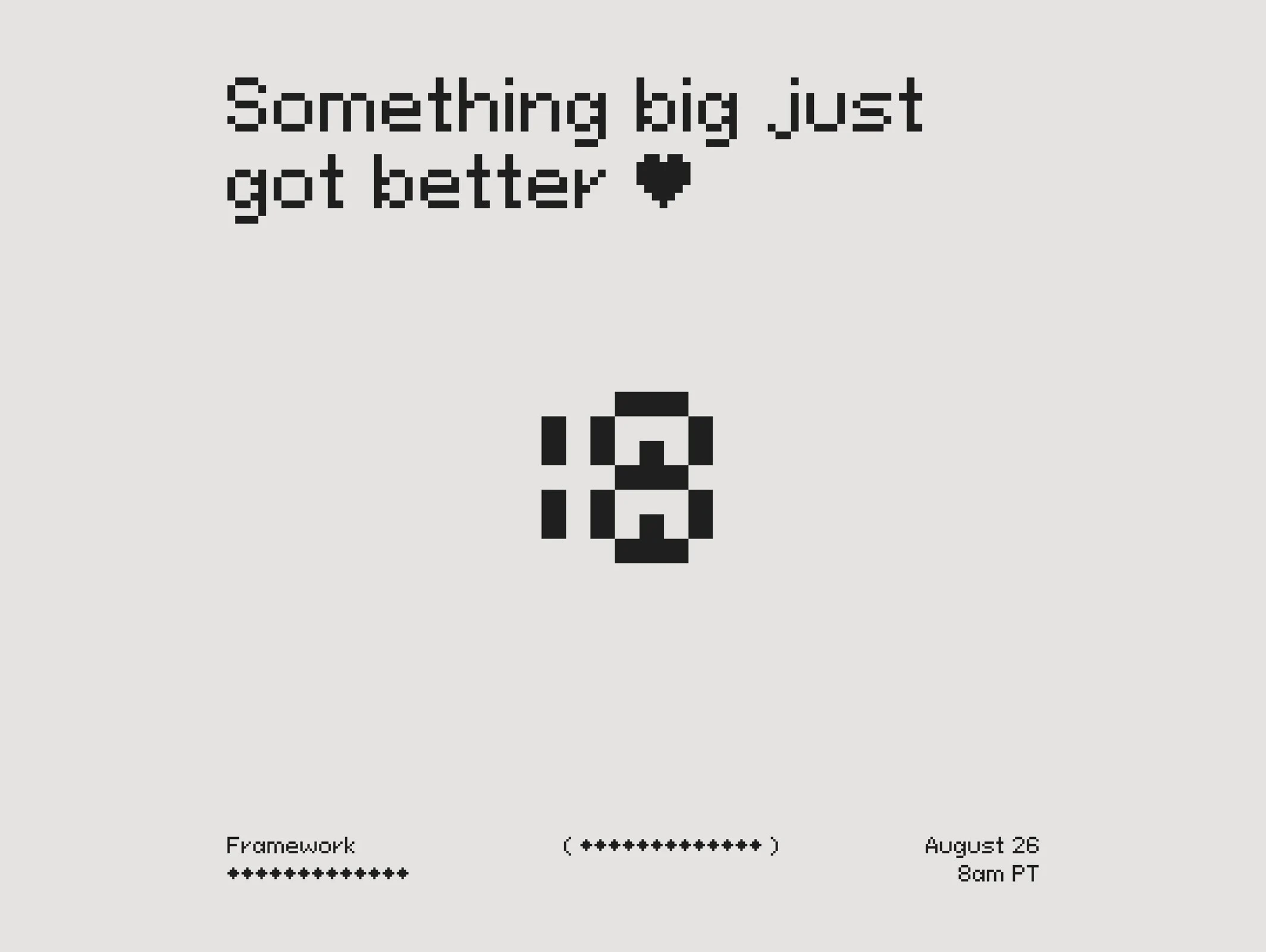
    2. Teaser Clues: The teaser hints include a central image and the phrase “Something big just got better,” suggesting a potential new laptop model.

    3. Emoji Interpretation: The side-eye emoji in the teaser may represent the number 18, leading to speculation about an 18-inch laptop model.

    4. Speculation Challenges: Concerns arise about fitting an 18-inch display into the existing Framework 16 chassis and potential compatibility issues with current upgrades.

    5. Countdown to Launch: The product launch will take place on August 26 at 8 AM PT (3 PM UTC).


    Framework, known for its DIY-friendly laptops, is stirring excitement with a new product reveal set for August 26, as hinted in a recent post on X. Although details are limited, similar to the mysterious emoji hints seen before the Framework Desktop and Laptop 12 launch, the company has once again provided clues that fans are eager to decipher. Enthusiasts are digging into the teasers for any hints they can find.

    Clues in the Teaser

    While many fans are focusing on the scattered dots in the teaser image, two significant hints may be easily missed. The central image of the teaser and the phrase “Something big just got better” could indicate the introduction of a new laptop to expand Framework’s offerings.

    The Emoji Theory

    Emojis, or rather emoticons, may play a crucial role again. The side-eye emoji featured in the teaser images appears to resemble the number 18 when rotated 90° to the left. Although this isn’t definitive proof, it’s one of several theories circulating. Recently, Framework unveiled the smaller Laptop 12, making it feasible for them to introduce an 18-inch model to rival competitors like the Asus Strix Scar 18, currently priced at $2,349 on Amazon.

    Speculation and Concerns

    However, this speculation does come with its challenges. For one, it seems unlikely that Framework could fit an 18-inch display into the existing Framework 16 chassis. Launching a completely new 18-inch device just two years after the Framework Laptop 16 would go against the company’s focus on minimizing waste. It’s conceivable that Framework might design a new chassis for the Laptop 16, but this could lead to compatibility issues with the current 16’s port and GPU upgrade modules.

    Some alternative theories suggest interpreting the number of dots for potential meanings, such as the seven dots in brackets and the 13 outside possibly indicating a seventh-generation update for the Framework Laptop 13 (read our review of the latest Framework 13 featuring the AMD Ryzen AI 9 HX 370). This interpretation contrasts with the more apparent “something big” message, and Framework has already rolled out seven generations of motherboards for the Framework 13.

    Countdown to Launch

    Whatever the new product entails, the wait is almost over. The launch is set for August 26 at 8 AM PT (3 PM UTC).

    Source:
    Link


  • Framework Laptop 13 Upgrade: AMD Strix Point, Wi-Fi 7, New Keyboard

    Framework Laptop 13 Upgrade: AMD Strix Point, Wi-Fi 7, New Keyboard

    Key Takeaways

    1. New Hardware: The Framework Laptop 13 features upgraded AMD Strix Point hardware, including the option for a Ryzen AI 9 HX 370 processor.

    2. Quality Improvements: Enhancements include Wi-Fi 7 support, a new thermal compound, and an upgraded keyboard with a travel distance of 1.5 mm, plus a Co-Pilot key for Windows users.

    3. Specs and Compatibility: The laptop supports up to 96 GB of DDR5-5600 RAM, up to 8 TB of storage, and can connect up to four devices through USB-C/HDMI ports.

    4. Pricing and Options: The entry-level version starts at $749 with a previous generation processor, while the new Strix Point version starts at $899 for a 2.8K display.

    5. Availability: Pre-orders for the Framework Laptop 13 are open, with shipping set to begin shortly.


    Along with its Framework Desktop, the Framework Laptop 13 has been updated with new hardware from AMD. However, it’s not the Strix Halo, as that is only for desktops. Instead, you get something really good: Strix Point. You can now upgrade to a Ryzen AI 9 HX 370, which is the best option available from Strix Point.

    Quality Improvements

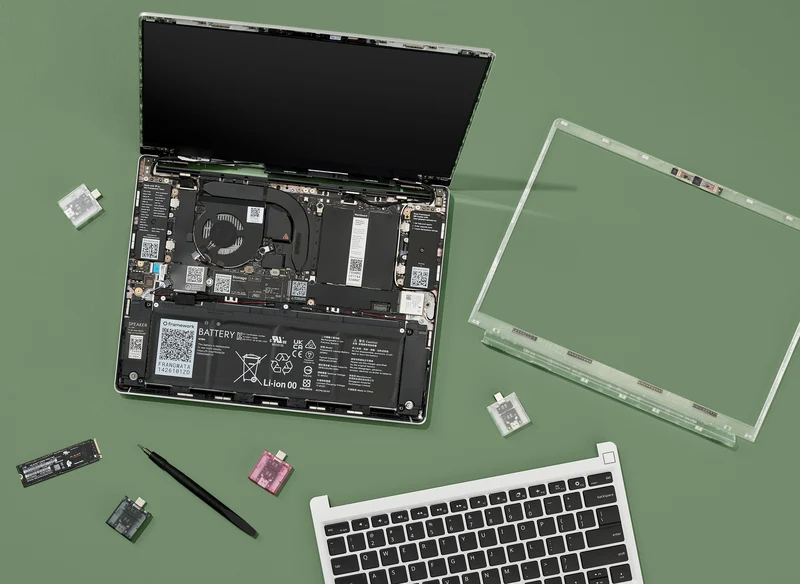
    Additionally, the Framework Laptop 13 comes with several enhancements for user convenience. It now supports Wi-Fi 7 and uses a new Honeywell PTM7958 thermal compound. The keyboard has been upgraded to the second generation, featuring new keys with a travel distance of 1.5 mm. There’s also a Co-Pilot key available for the models that include Windows. If you prefer Linux, you can even print the logo of your favorite Linux distribution on the key.

    Specs and Compatibility

    Most of the specifications of the Framework Laptop 13 remain unchanged. For instance, the DDR5-5600 RAM is still there, but now you can have up to 96 GB. Storage options have also improved, allowing for up to 8 TB through the M.2 NVMe slot. Furthermore, there are some internal upgrades; all four modules can now output display signals. This means you can connect up to four devices using 4 USB-C/HDMI ports simultaneously.

    Pricing and Availability

    The Framework Laptop 13 is now priced more competitively than before. The entry-level version starts at $749, but this only includes a previous generation AMD Ryzen 7040 model. If you want the Strix Point (Ryzen AI 300), you’ll need to pay a minimum of $899, which includes a 2.8K 120 Hz 3:2 display. Alternatively, you can purchase a motherboard for $499 to upgrade your existing Framework Laptop 13. Pre-orders are open now, and shipping will begin shortly.

  • RISC-V Mainboard for Desktop and Laptop Configurations

    RISC-V Mainboard for Desktop and Laptop Configurations

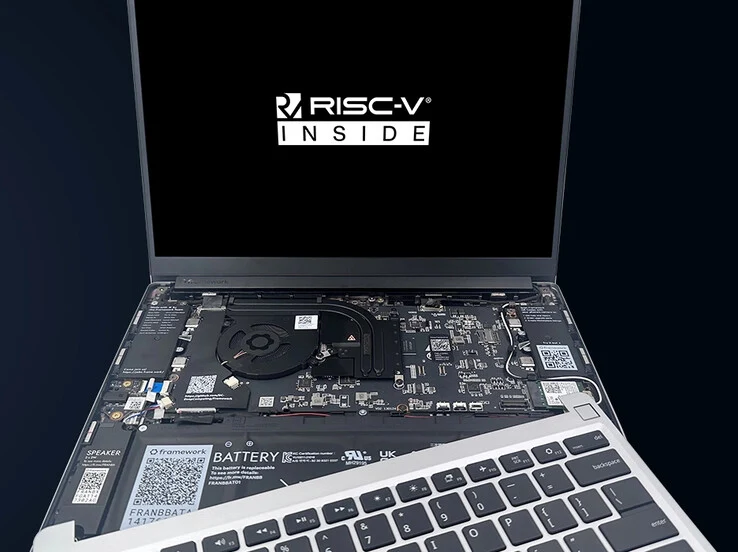
    Framework has recently launched its first RISC-V mainboard, but there’s an important point to consider about how it should be used. Last June, the company partnered with DeepComputing to announce the RISC-V Mainboard and then introduced it to an early access program five months later.

    Availability and Usage

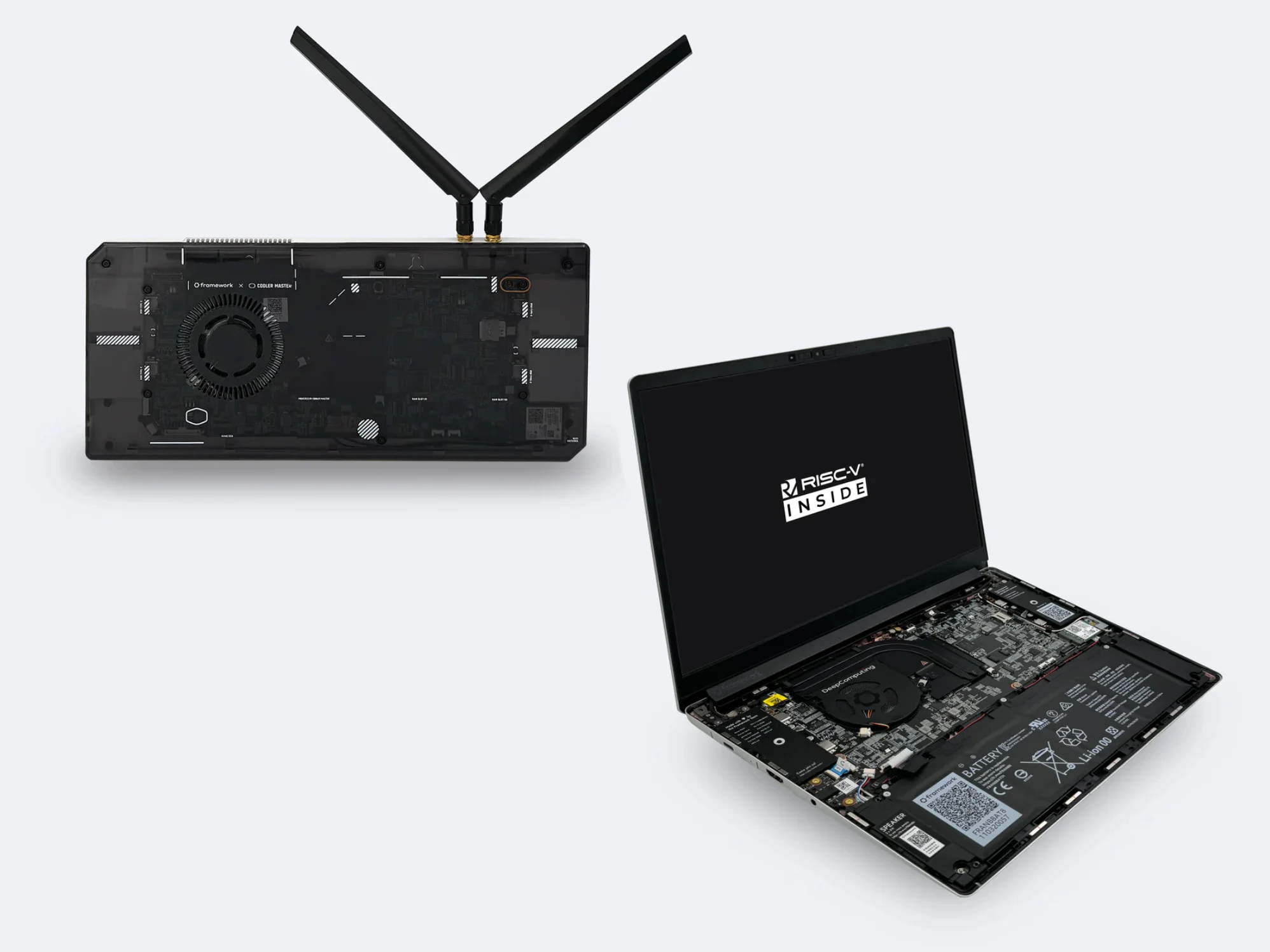
    Now, anyone can purchase the RISC-V Mainboard as a drop-in replacement for AMD Ryzen or Intel Core mainboards that are meant for the Framework Laptop 13. Additionally, this new mainboard can be placed into a Cooler Master Mainboard Case, allowing for a desktop setup, which is priced at $39.

    Specifications and Features

    In essence, the RISC-V Mainboard has the same dimensions as the current Framework Laptop 13 Mainboards, but it includes four USB 3.2 Gen 1 Type-C ports. Among these, two ports are capable of providing 60 W through USB Power Delivery, while only one supports DisplayPort 1.4 Alt Mode. Framework also mentioned in its blog that:

    This board is primarily for developers to help speed up the growth of the RISC-V software ecosystem, so if you’re after a ready-to-use product for consumers, it might be better to wait for future offerings.

    Pricing Information

    As of now, the Framework Marketplace lists the RISC-V Mainboard at a price of $199. It’s interesting to note that the StarFive JH7100 processor is available for a much lower price in a Waveshare single-board computer, currently going for $109.99 on Amazon, and it comes with a wider range of ports. For more information, check out Framework’s official website.

    Source:
    Link