Category: Computers

  • China PC Market Q1 2025: Lenovo Ranks First in Sales

    China PC Market Q1 2025: Lenovo Ranks First in Sales

    Key Takeaways

    1. PC Shipments Growth: PC shipments in mainland China reached 8.9 million units, marking a 12% year-over-year increase.

    2. Surge in Tablet Shipments: Tablet shipments rose to 8.7 million units, showing a 19% increase, driven by government subsidies encouraging device upgrades.

    3. Mixed Commercial Sector Trends: The commercial PC market remains stagnant, with large enterprises’ purchases unchanged and SMBs showing a slight 2% recovery.

    4. Lenovo’s Market Leadership: Lenovo maintained its top position with 2.63 million units shipped, holding a 30% market share despite a 3% decline from the previous year.

    5. Future Market Predictions: Canalys forecasts a flat PC market for the rest of 2025, with a slight growth of 6% expected in 2026, while tablet growth is anticipated to be 5% this year, followed by an 8% decline next year.


    PC and tablet shipments in mainland China experienced moderate growth in the first quarter of 2025, as per fresh insights from Canalys. The data indicates that PC shipments, excluding tablets, hit 8.9 million units in the region, marking a 12% increase year-over-year.

    Tablet Growth Surges

    On the other hand, tablet shipments rose to 8.7 million units, showcasing a 19% increase compared to the same timeframe last year. The report highlights that the Chinese government’s subsidy program is significantly contributing to this growth. These incentives are encouraging consumers to replace older devices, notably notebooks, which observed a notable rise of 20% versus Q1 2024.

    Mixed Signals in the Commercial Sector

    Despite positive trends in some areas, not all sectors are experiencing growth. The commercial PC market has been somewhat stagnant. According to Canalys, purchases by large enterprises remained unchanged, while the small and medium-sized business (SMB) sector exhibited a slight recovery after nearly three years of decline, growing by 2% over the past year.

    Lenovo Remains Dominant

    In terms of PC vendors, Lenovo held the top position with 2.63 million units shipped, capturing a 30% market share. Nonetheless, this was a 3% drop compared to Q1 2024. Huawei followed closely with 1.04 million units shipped, securing a 12% market share and an 8% growth. iSoftStone, another Chinese PC manufacturer, shipped 890,000 units in the first quarter of 2025, reflecting a remarkable 111% year-over-year growth, thus reaching a 10% market share.

    Apple and HP’s Performance

    Apple and HP completed the top five, with Apple experiencing a 43% increase to 680,000 units, equating to an 8% market share, while HP saw a 7% decline, shipping 640,000 units for a 7% market share.

    Tablet Market Leaders

    In the tablet sector, Huawei led with 2.3 million units shipped, achieving a 26% market share, closely trailed by Apple at 2.1 million units, which is a 24% share. Xiaomi recorded the highest year-over-year growth at 57%, with 1.4 million units shipped. Honor and Lenovo followed, with Honor increasing by 41% to 900,000 units, and Lenovo experiencing a 23% decline to 500,000 units.

    Future Outlook

    Looking forward, Canalys predicts a flat PC market for the remainder of 2025, with a slight 6% growth anticipated for 2026. The tablet market is expected to grow by 5% this year, but it will face an 8% decline in the following year.

    Source:
    Link


  • ASUS Vivobook S14, S16 Laptops Launched in India: From Rs 69,900

    ASUS Vivobook S14, S16 Laptops Launched in India: From Rs 69,900

    Key Takeaways

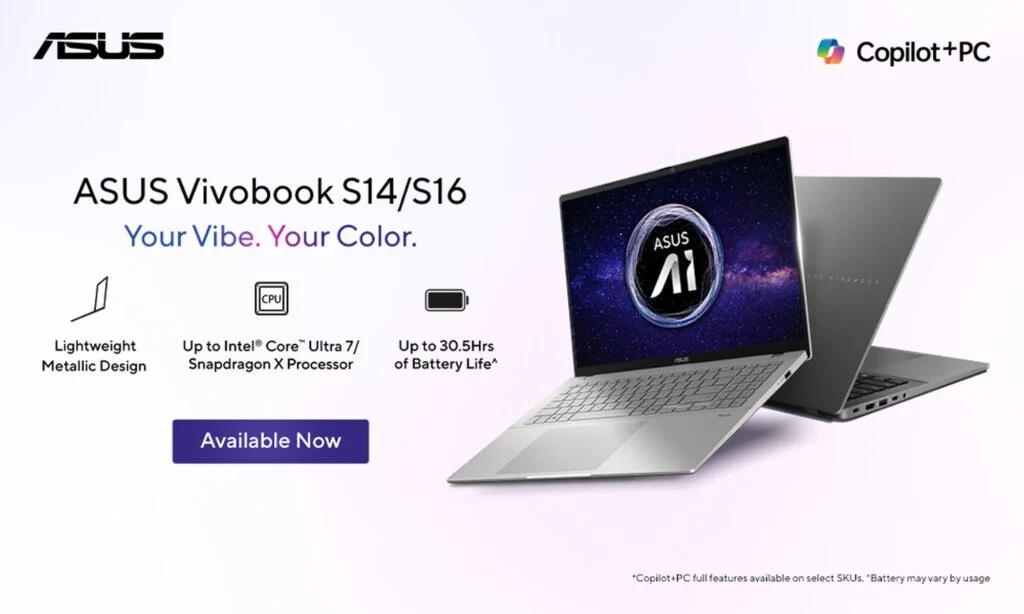
    1. Asus launched four new laptops in the Vivobook S series in India, targeting students, professionals, and creators with portable and AI-ready designs.
    2. The Vivobook S14 (S3407QA) features a Qualcomm Snapdragon X processor, 30.5-hour battery life, and a lightweight design, making it ideal for on-the-go users.
    3. The Vivobook S14 (S3407CA) is powered by an Intel Core Ultra 7 processor, offers up to 20 hours of battery life, and includes features like DDR5 memory and a privacy shutter camera.
    4. The Vivobook S16 OLED (S3607CA) provides a larger 16-inch display with AI optimization, while the Vivobook S16 (S3607VA) offers strong performance with an Intel Core i7 processor at an affordable price.
    5. Prices for the new models range from Rs 69,990 to Rs 82,990, with availability on platforms like Amazon and Flipkart, as well as in physical stores.


    Asus has launched four brand new laptops in its Vivobook S series in India. The company has provided detailed information about the specifications, features, and pricing of the new Vivobook S14 and S16 models. These laptops are designed for students, professionals, and creators who need portable, AI-ready devices with reliable battery life and a contemporary design.

    Vivobook S14 (S3407QA) with Snapdragon X and 30-hour battery life

    The Vivobook S14 (S3407QA) is an AI-centric laptop that features the Qualcomm Snapdragon X Series processor, complete with a 45 TOPS NPU. This Copilot+ PC is optimized for next-level AI tasks and comes with ASUS AI applications pre-installed. It boasts a 14-inch 2.5K IPS display with a brightness of 400 nits, 100% sRGB coverage, and an impressive 86% screen-to-body ratio. Weighing about 1.35 kg, its lightweight metal design and a 70WHr battery promise up to 30.5 hours of usage, making it a great choice for on-the-go users. It also supports Wi-Fi 6E and includes an FHD IR camera with a privacy shutter, along with several USB 3.2 and USB 4.0 ports.

    Vivobook S14 (S3407CA) for daily productivity

    The Vivobook S14 is powered by an Intel Core Ultra 7 255H processor, paired with Intel Graphics and a 13 TOPS AI NPU. It features a 14-inch FHD+ IPS display that has TÜV Rheinland certification to reduce blue light emissions, and it comes with a 16:10 aspect ratio. The 70WHr battery offers a backup of up to 20 hours. Weighing in at just 1.39 kg, it has a sleek profile due to its sandwich metal construction. Key features include DDR5 memory with upgrade options, Wi-Fi 6, Bluetooth 5.3, and a Windows Hello-compatible IR camera with a privacy shutter.

    Vivobook S16 OLED (S3607CA) comes with a larger display, everyday AI

    For those who want a bigger screen, the Vivobook S16 OLED (S3607CA) is available with a 16-inch display, offering either a 144Hz IPS panel or an OLED screen featuring an 89% screen-to-body ratio. It operates on an Intel Core Ultra 7 255H processor optimized for AI tasks and includes 16GB of DDR5 RAM and a 512GB PCIe 4.0 SSD. This laptop weighs around 1.4 kg and shares the same battery life and build quality as its smaller counterpart, providing versatility without adding unnecessary weight.

    Vivobook S16 (S3607VA), an Intel Core i7 PC with affordable pricing

    This model is powered by an Intel Core i7-13620H processor, 16GB DDR5 memory, and a 144Hz 16-inch FHD+ IPS display, making it a great option for users who need fast performance for multitasking or media consumption. The laptop is built to military-grade standards, features stereo speakers with Dolby Atmos, and includes all necessary I/O ports for connectivity. Weighing in at 1.4 kg, it is both sturdy and lightweight, supported by a 70WHr battery that comes with 65W fast charging.

    Price and availability

    The Vivobook S14 (S3407QA) is priced at Rs 74,990 and can be purchased on Flipkart. The Vivobook S14 (S3407CA) starts at Rs 80,990 and is available online at Amazon, Flipkart, and offline at ASUS Exclusive Stores, Croma, and Vijay Sales. The Vivobook S16 OLED (S3607CA) can be found for Rs 82,990 on Amazon. Finally, the Vivobook S16 (S3607VA) is the most budget-friendly option at Rs 69,990, also listed on Amazon. All four models will be available through Asus India’s e-shop.

  • Intel Nova Lake Core Count and TDP Details Leaked

    Intel Nova Lake Core Count and TDP Details Leaked

    Key Takeaways

    1. Intel’s Core Ultra 400 Nova Lake processors will focus on increasing core count to enhance multicore performance, with hyperthreading largely removed.
    2. The Core Ultra 9 processor is expected to feature a high core count and improved performance with new Coyote Cove P-cores and Arctic Wolf E-cores.
    3. Anticipated IPC (Instructions Per Cycle) increase of 20-40% compared to the previous Arrow Lake generation.
    4. Nova Lake processors are projected for release in 2026, with potential X3D-like models incorporating additional L3 cache.
    5. The Nova Lake CPU tile is likely to be manufactured using TSMC’s N2 node instead of Intel’s own advanced 18A/18AP process.


    Earlier predictions suggested that Intel would significantly boost the core count in its Core Ultra 400 Nova Lake processors. With hyperthreading largely removed, increasing the number of cores is the main way to enhance multicore performance in the new chips. A reliable leaker, @g01d3nm4ng0, has now disclosed the core counts for each CPU model.

    Tentative CPU Names

    The CPU names mentioned above are provisional and may be altered by the time they launch. However, the Core Ultra 9 processor is expected to stand out due to its massive core count. Moreover, its new Coyote Cove P-cores and Arctic Wolf E-cores are anticipated to deliver an IPC increase of around 20-40% compared to Arrow Lake. Additionally, the integrated GPU will combine elements from Celestial and Druid designs.

    A Long Wait Ahead

    Regardless, it’ll take some time before we get definitive details, as Nova Lake is not expected to be available until 2026. Still, the anticipation might be justified since Intel could introduce X3D-like models by pairing a CPU tile with additional L3 cache through Foveros 3D packaging technology. Lastly, it is widely believed that the Nova Lake CPU tile will be produced using TSMC’s N2 node rather than Intel’s advanced 18A/18AP process.

    Source:
    Link

  • Tuxedo Nano Pro Gen 14: New AMD Krackan Point Mini PC Launch

    Tuxedo Nano Pro Gen 14: New AMD Krackan Point Mini PC Launch

    Key Takeaways

    1. Tuxedo launched the Nano Pro Gen 14 with AMD’s Krackan Point APUs, offering Ryzen AI 5 340 and AI 7 350 options.
    2. The AI 7 350 features the Radeon 860M, making it a good choice for casual gamers.
    3. The system supports up to 96 GB of DDR5 5600 MHz RAM and offers up to 10 TB of storage.
    4. The compact design measures 110×117.5×49 mm and weighs just 1 kg, enhancing portability.
    5. It includes WiFi 6E, Bluetooth 5.2, and options for various operating systems, with a base price starting at €840.


    Tuxedo recently launched the Nano Pro Gen 14, featuring AMD’s Krackan Point APUs. You can choose between the Ryzen AI 5 340 and the AI 7 350 for this system. The AI 7 350 is particularly notable as it includes the capable Radeon 860M, making it a solid option for casual gamers.

    Memory and Storage Options

    Both setups support up to 96 GB of DDR5 5600 MHz RAM and offer a staggering 10 TB of storage. It’s important to note that the second M.2 slot is limited to a 2242 SSD, such as the 1 TB Corsair MP600, currently priced at $94.99 on Amazon. Another interesting feature of the Tuxedo Nano Pro Gen 14 is its “almost palm-sized” design.

    Compact Design

    Specifically, Tuxedo claims that the Nano Pro Gen 14 has dimensions of 110×117.5×49 mm, and it weighs just 1 kg, making it quite portable. Additionally, it offers a variety of connectivity ports to meet your needs, including:

    For wireless capabilities, the Tuxedo Nano Pro Gen 14 supports WiFi 6E and Bluetooth 5.2. You can choose from several operating systems, like Windows 11, Tuxedo OS, and Ubuntu. The base price starts at €840, which is about $974, but can exceed €2,800 based on the selected configuration. For more details on the mini PC, be sure to check the complete spec sheet below.

    Source:
    Link


  • Apple Offers Free Repairs for M2 Mac Minis with Power Issues

    Apple Offers Free Repairs for M2 Mac Minis with Power Issues

    Key Takeaways

    1. Apple is launching a global service program for Mac mini units that may not turn on, affecting a “very small percentage” of devices made between June 16, 2024, and November 23, 2024.
    2. Users can check their device’s eligibility by entering the serial number on a designated site, even if they haven’t experienced any issues.
    3. Eligible devices can be serviced for free by Apple or certified service providers, but any pre-existing damages must be fixed first at additional costs.
    4. The service program is available for three years from the initial retail sale of the Mac mini.
    5. Users are encouraged to act quickly and prepare their Macs for servicing by following guidance provided on Apple’s dedicated support page.


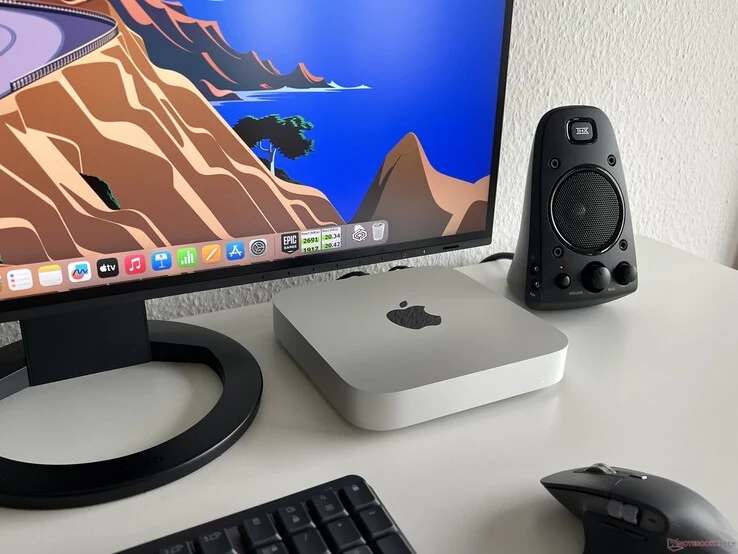
    Apple has revealed that they are launching a new service program globally for the Mac mini, prompted by a “very small percentage” of units that might not turn on. So far, Apple hasn’t provided any reasons for this issue. The affected Macs were made between June 16, 2024, and November 23, 2024. Even if users haven’t experienced the problem, they can still have eligible devices serviced for free by Apple or certified service providers.

    Checking Eligibility

    For users who are not experiencing the issue, it is recommended to visit the designated site to see if their device is implicated by entering the serial number. This way, they can safely back up their data. After that, users can reach out to an authorized Apple Service Provider or schedule an appointment at an Apple Store. Apple has a dedicated page that offers guidance on preparing the Mac for the servicing process. The service program is open to qualifying Mac mini models for three years following the initial retail sale of the device. If there are any damages on the Mac mini that could hinder repairs, these need to be addressed first, which might incur additional costs.

    Service Program Details

    Apple’s new initiative is designed to help customers who have been affected by this issue, ensuring that their devices can be serviced at no extra cost. It’s important for users to be proactive in checking their Mac mini’s eligibility to avoid any inconveniences later. Users are encouraged to act swiftly to take advantage of this service program, especially since it lasts for three years after the first sale.

    Source:
    Link

  • Starlink Internet Download Speeds in the US Rise 94% with New Satellites

    Starlink Internet Download Speeds in the US Rise 94% with New Satellites

    Key Takeaways

    1. SpaceX has nearly doubled Starlink’s download speeds, achieving a median of 104.71 Mbps, meeting FCC broadband criteria.
    2. The company has produced its 10 millionth dish and is currently manufacturing about 15,000 units daily to support a rising subscriber base of six million.
    3. Upcoming Starlink V3 satellites, set to launch in 2026, will provide significant improvements in upload speeds and throughput, reaching 1 Tbps.
    4. The latency has improved, dropping from 76 ms to 45 ms, with expectations to reach under 20 ms with the V3 satellites.
    5. Starlink V3 will ensure that even lower-cost dishes meet broadband speed requirements, marking a milestone for satellite Internet.


    SpaceX has significantly improved the download speeds of its Starlink satellite Internet service, nearly doubling from the lows experienced in the third quarter of 2022 when it struggled to keep up with demand.

    Expansion of Capacity

    To showcase the satellite capacity it has been consistently adding, SpaceX recently celebrated the production of its 10 millionth dish, producing around 15,000 units every day at present.

    Despite a sharp rise in subscribers to six million, Starlink’s speeds have surged since the lows of 2022, reaching a median of 104.71 Mbps for downloads. This marks the first time it has met the FCC’s criteria for broadband Internet.

    Current User Experience

    Although only 17% of American Starlink users fully meet the FCC’s minimum broadband standards of 100 Mbps for downloads and 20 Mbps for uploads, this is largely due to the uplink capability of the current V2 satellites.

    With the upcoming launch of the Starlink V3 satellites—which are as large as a Boeing 737 when their solar panels are extended—the upload speeds are set to meet FCC broadband definitions as well. The V3 satellites are expected to provide 1 Tbps throughput, which is ten times the current Starlink download speeds, along with a substantial uplink boost to 160 Mbps.

    Historical Changes

    This development means that even users with the lower-cost and portable Starlink Mini dish will finally meet America’s broadband Internet speed requirements for both downloads and uploads, marking a historic moment for satellite Internet.

    SpaceX has not only managed to double the Starlink download and upload speeds in less than three years, even with a significant increase in subscribers, but it has also greatly enhanced the network’s latency. The ping time has dropped from a high of 76 ms to 45 ms, thanks to the addition of six new internet connection sites.

    Future Expectations

    The V3 satellite constellation, which SpaceX plans to launch starting in 2026, is expected to lower latency to a comfortable gaming level of under 20 ms. Elon Musk has even suggested that the lowest ping numbers could theoretically reach as low as 5 ms.

    The Starlink V3 satellites, which are set to provide a tenfold increase in download speeds and a 25-fold boost in upload speeds, will be transported to a lower orbit by SpaceX’s Mars-capable Starship 3 rocket, featuring 42 engines, with its first flight anticipated later this year.

    Source:
    Link


  • New ACP-3566-PI SBC: Raspberry Pi Alternative with 32GB Storage

    New ACP-3566-PI SBC: Raspberry Pi Alternative with 32GB Storage

    Key Takeaways

    1. Avalue launched the ACP-3566-PI as a long-term support alternative to the Raspberry Pi for industrial use.
    2. The SBC features a Rockchip RK3566 SoC with four Cortex-A55 cores and 4GB of RAM, along with 32GB of built-in eMMC storage.
    3. It supports microSD cards up to 64GB and has dimensions of 3.35 by 2.17 inches, with HDMI 2.0 and MIPI ports for connectivity.
    4. Networking options include WiFi 802.11 a/b/g/n/ac and a Gigabit Ethernet port, along with USB 3.0 and USB 2.0 ports for input and storage.
    5. Avalue has not disclosed a specific price for the ACP-3566-PI, requiring interested buyers to contact them for details.


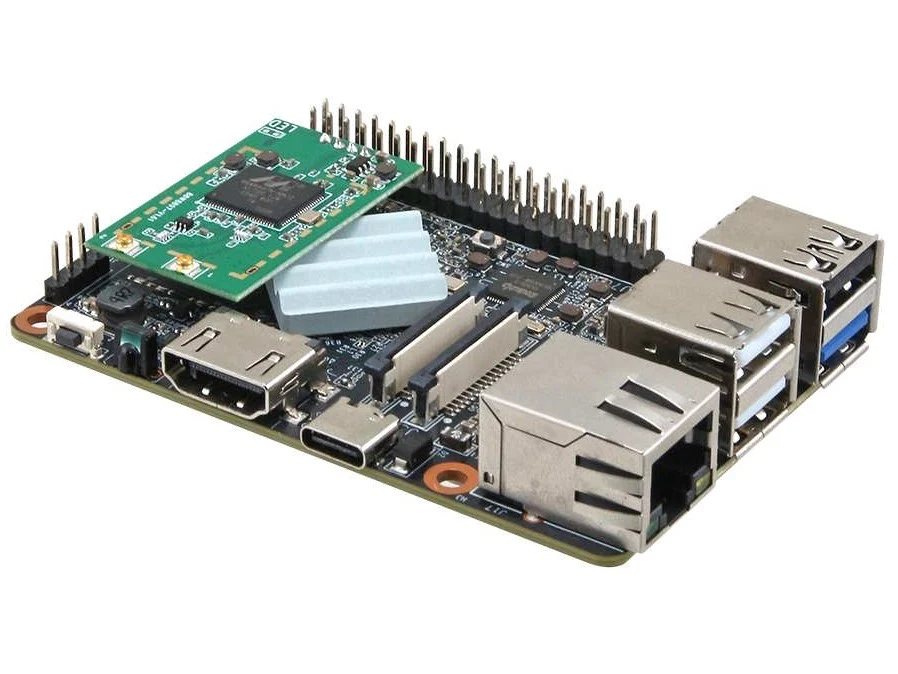
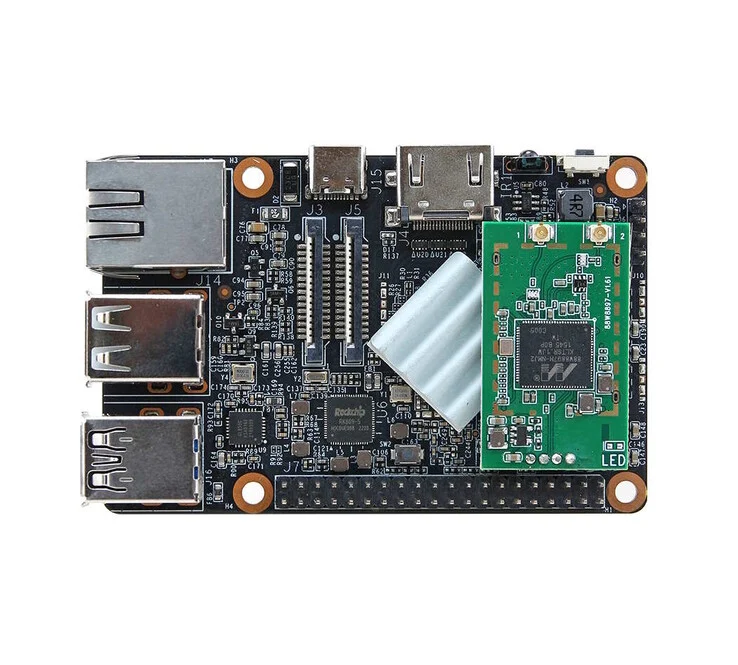
    Avalue has launched the ACP-3566-PI, a fresh single-board computer that’s being marketed as a substitute for the Raspberry Pi. This SBC is designed to provide long-term support, making it ideal for industrial environments where such durability is important, like in factories and production facilities.

    Specs and Performance

    The compact device runs on the Rockchip RK3566 SoC, featuring four Cortex-A55 cores and 4GB of RAM. Unlike the Raspberry Pi 5, which starts at $73 on Amazon, this SBC includes built-in mass storage, thanks to its eMMC module which provides 32GB of space.

    Storage and Connectivity

    Additionally, it supports microSD cards, although the Avalue ACP-3566-PI is limited to cards with a maximum capacity of 64GB. The board itself measures 3.35 by 2.17 inches and features HDMI 2.0 along with MIPI DSI and MIPI CSI ports, the latter of which can connect cameras. Input and external storage devices can be connected through one USB 3.0 or USB 2.0 port, and it is powered via USB as well.

    Networking Options

    For wireless connectivity, users can use WiFi 802.11 a/b/g/n/ac or a Gigabit Ethernet port. There is also a 40-pin header included, which can be utilized for connecting various external sensors and actuators. The company has not disclosed a specific price for this product, which is typical for B2B offerings. Hence, interested individuals need to reach out to Avalue for further details.

    Source:
    Link


  • Egiozr Pro Docking Station: Stylish Design, Multiple Ports & Charging

    Egiozr Pro Docking Station: Stylish Design, Multiple Ports & Charging

    Key Takeaways

    1. Egiozr is seeking funding for the EZGen2 docking solution on Kickstarter, compatible with Windows and macOS, supporting up to three 4K displays at 60 Hz.
    2. The docking station is powered by a 150-watt round plug and features four USB-C ports, with two dedicated to charging at 45 watts each.
    3. It includes multiple video outputs, two USB 3.2 Gen 1 Type A ports, two USB 2.0 ports, an Ethernet port, and memory card slots for microSD and SD cards.
    4. The device has a compact design, measuring 9 x 9 cm and standing 17 cm tall, making it suitable for various setups.
    5. Backers pledging $279 or more will receive a unit by September, but should be aware of risks and additional costs like import duties and shipping fees.


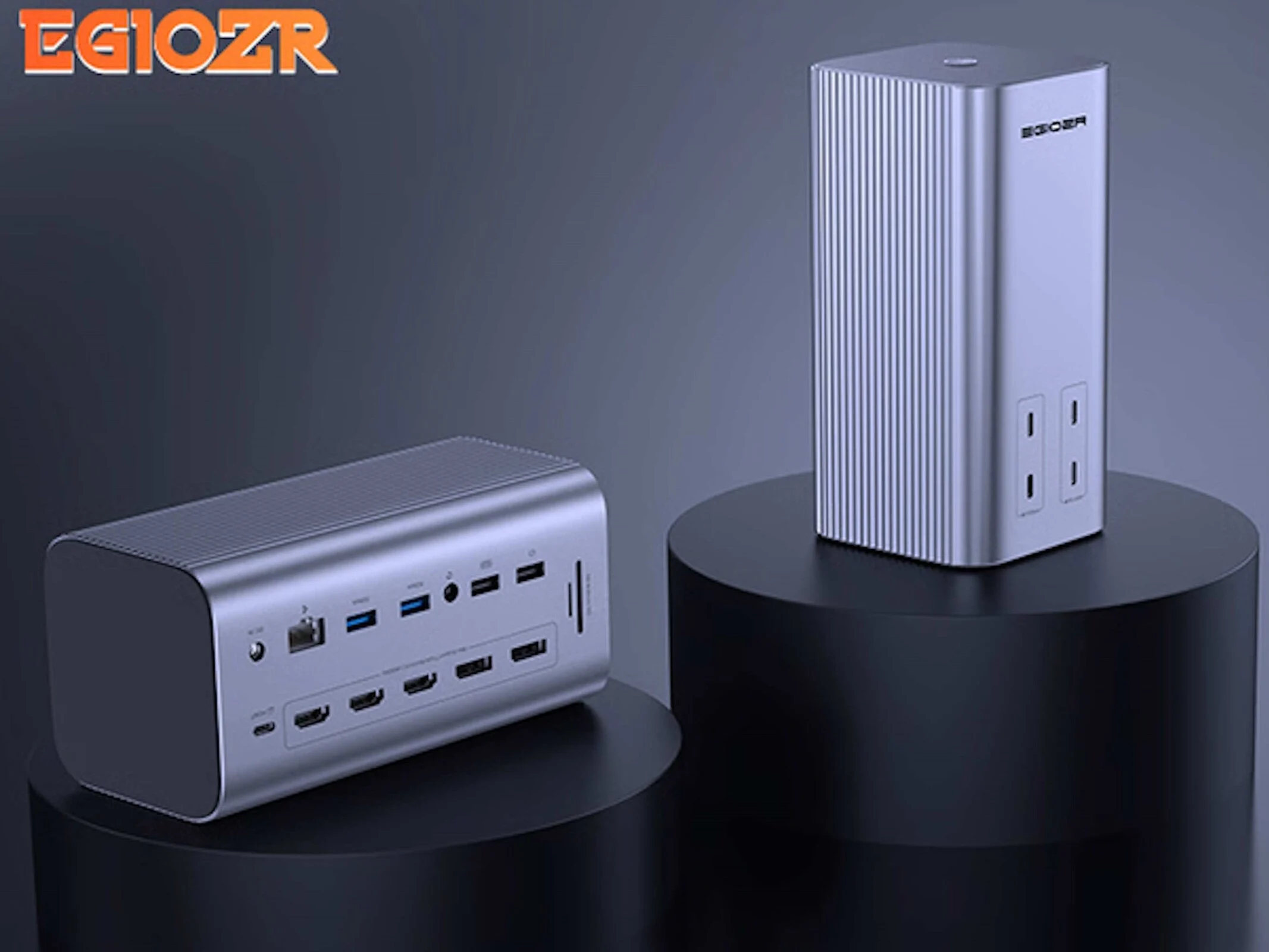
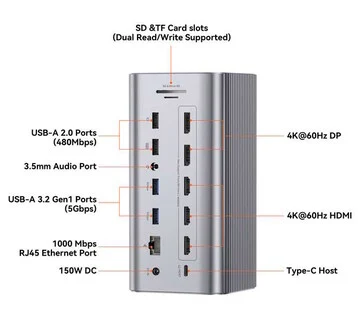
    Egiozr is currently seeking funding on Kickstarter for its latest docking solution, the EZGen2 (Egiozr Pro). This device is equipped with a variety of ports and is capable of functioning with multiple monitors. It works with Windows and macOS devices, allowing them to connect up to three 4K displays at a refresh rate of 60 Hz, although not all devices will support this capability. Users will find three HDMI 2.0 ports and two DisplayPort 1.2 ports available, with a connection to a PC or laptop made through USB-C.

    Power and Connectivity

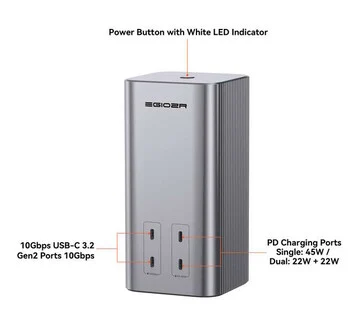
    The docking station is powered by a 150-watt round plug. On the front side, there are four USB-C ports available. Among these, two ports are designated for charging, each capable of providing up to 45 watts; however, if both are used simultaneously for charging, they will share this power, offering 22 watts each. The other two USB-C ports adhere to the USB 3.2 Gen 2 standard, allowing for data transfer speeds of up to 10 Gbit/s each.

    Additional Features

    At the back, the system, which measures 9 x 9 cm and stands 17 cm tall, includes five video outputs and a host port. Additionally, it features two USB 3.2 Gen 1 Type A ports, two USB 2.0 ports, and an Ethernet port. Memory card slots for both microSD and SD cards are positioned above the ports. There is also a 3.5mm audio port integrated into the design.

    Backers who pledge $279 or more are promised to receive a unit by September. As with any crowdfunding campaign, there are typical risks involved. It’s important to note that import duties and shipping fees could also raise the overall cost.

    Source:
    Link


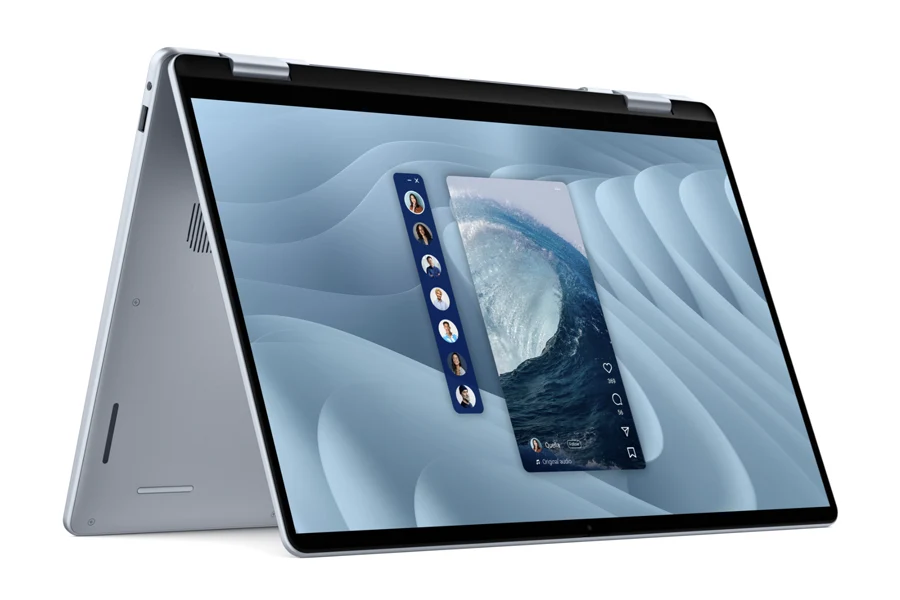
  • Dell 16 Plus 2-in-1: Faster Graphics, Quieter Fan, Less CPU Power

    Dell 16 Plus 2-in-1: Faster Graphics, Quieter Fan, Less CPU Power

    Key Takeaways

    1. The Dell 16 Plus 2-in-1 replaces last year’s Inspiron 16 7640 2-in-1 with notable changes, primarily in the CPU.
    2. The Core Ultra 7 155H in the Inspiron outperforms the Core Ultra 7 258V in multi-threaded tasks by over 1.5 times.
    3. The Dell 16 Plus 2-in-1 features an improved GPU, the Arc 140V, which is 1.3 to 1.5 times faster than the Arc 8 during gaming.
    4. The new model offers better GPU efficiency, resulting in lower temperatures and quieter fan operations.
    5. Other differences include a smaller battery and the removal of the MicroSD card reader in the Dell 16 Plus 2-in-1.


    The Dell 16 Plus 2-in-1 is now easily obtainable for buying, taking the place of last year’s Inspiron 16 7640 2-in-1. Although there are some modifications, the most notable change is the transition from a Core Ultra-H CPU to a Core Ultra-V one, which affects performance overall.

    Performance Comparison

    When it comes to CPU speed, the Core Ultra 7 155H in the previous Inspiron can outperform the Core Ultra 7 258V in the Dell 16 Plus 2-in-1 by over 1.5 times in multi-threaded tasks. This difference can be significant for users who depend on a quicker processor for their work.

    GPU Advancements

    On the GPU side, the situation is reversed as the Arc 140V can achieve speeds 1.3 to 1.5 times faster than the Arc 8 during gaming sessions. Not only does it provide superior speed, but it also runs more efficiently, leading to better performance per watt, lower temperatures, and quieter fan operations. Therefore, those who need a faster GPU might lean towards the Dell 16 Plus 2-in-1 instead of the older Inspiron 16 7640 2-in-1.

    Additional Changes

    Besides the processor, there are various other distinctions between the two models, such as the smaller battery and the absence of a MicroSD card reader on the newer version. We suggest taking a look at our complete review of the Dell 16 Plus 2-in-1 for additional benchmarks and information.

  • Gamers Nexus Exits PayPal Class Action for Viewer Privacy Updates

    Gamers Nexus Exits PayPal Class Action for Viewer Privacy Updates

    Key Takeaways

    1. Capital One issued a subpoena for sensitive viewer information from Gamers Nexus, despite the channel no longer being involved in the lawsuit.
    2. Gamers Nexus successfully contested the subpoena to protect the identity of its audience and sources, sacrificing future claims for better audience protections.
    3. The Capital One case is advancing quickly in court, with some claims allowed to proceed while others were dismissed, raising concerns about data access laws.
    4. Other companies face similar legal challenges regarding browser extensions that may redirect affiliate earnings from creators to themselves.
    5. Gamers Nexus plans to continue independent reporting on lawsuits and will donate profits from merchandise to organizations focused on digital rights and community initiatives.


    According to Gamers Nexus, Capital One has issued a subpoena requesting sensitive viewer information, such as names, addresses, and possibly traceable purchase histories linked to affiliate clicks. This action took place despite the channel not being involved in the Capital One lawsuit anymore. The bank’s request for “the identity of consumers” who clicked affiliate links would have put unrelated individuals and sources in jeopardy, those who interacted with GN through product recommendations, warranty checks, and other story tips. Gamers Nexus managed to contest the subpoena and completely exited all legal activities to stop any future demands for user information, sacrificing the ability to pursue similar claims later to ensure better protections for its audience and sources.

    Speedy Legal Developments

    The Capital One case has moved along quicker than other similar cases, utilizing Virginia’s fast-track “rocket docket” system and leading to a series of initial rulings. The judge allowed the case to advance on some important issues, including the assertion that Capital One might have overstepped its authorization to access users’ computers, while dismissing other matters regarding property and ownership of tracking data. Gamers Nexus criticized the dismissal of claims under California’s data access law, saying the court did not fully appreciate the time and expense involved in establishing affiliate links—especially when creators utilize tools like Genius Link to manage and localize their tracking systems.

    Broader Industry Implications

    Other significant companies are encountering comparable legal issues, with lawsuits alleging that browser extensions—like those found in Honey, Capital One Shopping, and Microsoft Edge—are intercepting purchases at checkout and replacing the original affiliate tag with their own. This disputed practice could shift earnings away from the creators who initially directed the sale. Most of these lawsuits are still at preliminary stages and are waiting for class action certification, but they may affect a wide array of creators and consumers if they progress. Although Ziff Davis, the parent company of RetailMeNot, is also mentioned, its gaming outlets like IGN and Eurogamer are not directly implicated.

    Now that Gamers Nexus is free from legal limitations, the organization intends to keep reporting on the lawsuits independently through its GNCA Tipline series, emphasizing consumer rights, privacy, and transparency. The profits from its Honeypot T-shirts, initially designed to help with legal expenses, will now be donated to organizations that advocate for digital preservation, consumer rights, and community computer reuse initiatives.

    Source:
    Link