Author: GizNews

  • Gothic Vampire Survival RPG | 88% Loved, Steam All-Time Low Price

    Gothic Vampire Survival RPG | 88% Loved, Steam All-Time Low Price

    Key Takeaway

    – V Rising is 55% off on Steam now, $15.74, matching its all-time low, with the deal running until May 21.
    – The game has a strong, enduring player base (over 6 million players) and a solid “Very Positive” rating (87.79% across 133k+ reviews).
    – Features include solo play, co-op, and PvP, plus ongoing updates, a new Opulent DLC, and a 20% discount on all DLC (Complete Edition stacks additional discounts).
    – Performance notes: Steam Deck playable on low settings; native gamepad support added in a recent update; best experience on keyboard/mouse.

    The free weekend for V Rising technically wraps up today, but the deal that came with it doesn’t. Stunlock Studios’ vampire survival RPG is currently sitting at 55% off on Steam — $15.74, matching its all-time low — and that discount holds until May 21, same as the Stardew Valley deal we covered here. If you played the free weekend and liked what you saw, this is your window. If you missed it entirely, the case for buying in is still pretty strong.

    First impressions and player base

    V Rising first hit Steam early access in May 2022, peaking at over 150,000 concurrent players, before its full 1.0 release arrived in May 2024. Since then, it has built a community of over 6 million players worldwide, and currently holds a “Very Positive” rating aggregate with 87.79% approval across more than 133,000 Steam reviews. If you think that’s a game riding its early hype, it’s not. It’s a game that held its audience.

    What you actually do in the game

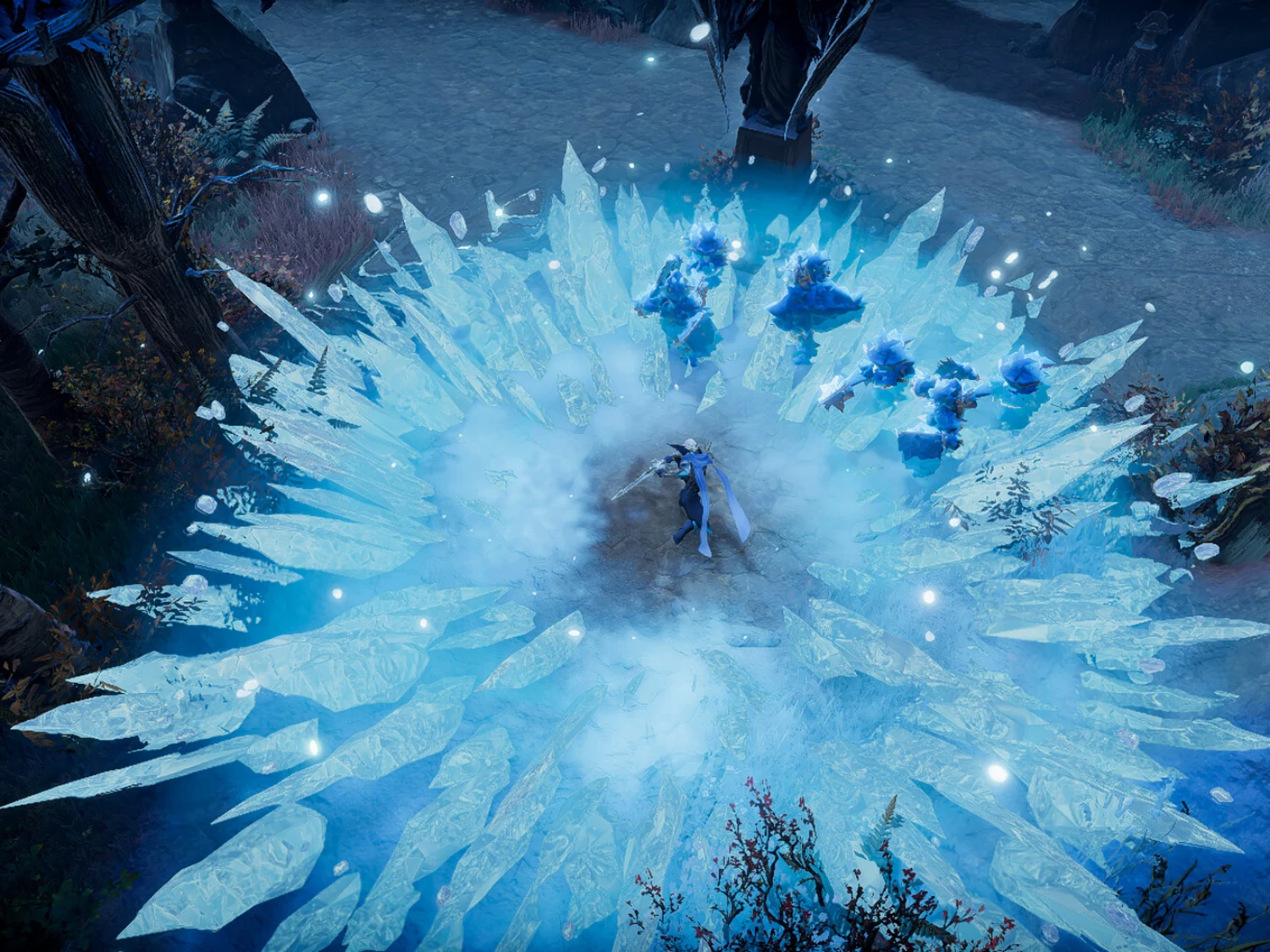
    The game puts you in the role of a weakened vampire rising from the grave, hunting for blood to regain your strength while finding your way around a world that very much wants you dead. You’ll build and customize a gothic castle, gather resources, convert humans into thralls, and push into more and more dangerous territory as you grow in power. You can take on the world solo, team up with friends in co-op, or go full PvP and wage war against other players. The game received native gamepad support in a more recent update, though it’s worth noting that Steam Deck performance sits at the lower end — playable, but best on low settings and designed primarily around keyboard and mouse.

    New content and discounts

    Alongside the free weekend, Stunlock also dropped a new Opulent DLC, with a balance patch also on the way. All DLC is currently 20% off as well, and the Complete Edition bundle stacks an additional discount on top of that. If you’re going all in, the math should work in your favor.

    Pricing and support status

    At $15.74, V Rising is a genuinely substantial game at what is by all records its cheapest point on Steam. Two years post-launch, Stunlock is still actively supporting it. Whether you’re a first-timer or a returning player checking in after a long gap, the developers themselves put it plainly: there’s never been a better time to rise. The discount runs until May 21.




    Sources

  • Legendary Life-Sim RPG on Steam Hits All-Time Low, 98% Positive Reviews

    Legendary Life-Sim RPG on Steam Hits All-Time Low, 98% Positive Reviews

    Key Takeaway

    – Stardew Valley is 50% off on Steam during the Weekend Deal, down to $7.49, matching its all-time low.
    – The game celebrates 10 years and 50 million copies sold, yet remains popular with high engagement (near 50k concurrent Steam players).
    – It offers long-term value with ongoing updates (including version 1.7 in development) and extensive playtime potential.

    Stardew Valley just dropped back to its lowest-ever price, a rare moment that has fans buzzing and wallets nervously clicking. Ten years, fifty million copies, nearly a million Steam reviews at 97% positive—and yet here we are, watching a discount pop up as part of this week’s Steam Weekend Deal. The current sale price sits at 7.49 dollars, and SteamDB notes this matches the game’s all-time low. The deal runs until May 21, offering a tight window for curious newcomers and long-time farmers alike.

    If you somehow haven’t played it, Stardew Valley is an open-ended country-life RPG where you inherit an old farm plot and slowly rebuild both the land and the surrounding community. That description undersells it considerably. What ConcernedApe — a single developer named Eric Barone — built here over four years is one of the most complete and generous games ever released. Since launch, it has received numerous free updates, and a new major content update — version 1.7 — is currently in the works. Whatever you pay for it now, you’re buying into that future content too.

    The game recently crossed its 10-year anniversary and 50 million copies sold, yet it currently has nearly 50,000 concurrent players on Steam. These are numbers that most new releases would be thrilled to see at launch, let alone a decade in. The vibe is calm, and the progression feels honest, with daily routines that stack up into a lifetime of tiny accomplishments and cozy farming bliss.

    At 7.49 dollars, it’s genuinely hard to think of a better value proposition in PC gaming right now. Stardew Valley runs on practically anything, including a Steam Deck, supports up to 8-player co-op online, and will realistically absorb hundreds of hours before you’ve seen everything it has to offer. The retro-inspired pixel art pairs with a surprisingly deep crafting and relationship system, making repeated playthroughs oddly addictive.

    The deal ends May 21, so mark your calendar if you’re tempted by this price and this kind of chill, engrossing farming life sim.

    Sources
  • MiniPlasma zero-day yields SYSTEM access on patched Windows 11

    MiniPlasma zero-day yields SYSTEM access on patched Windows 11

    Key Takeaway

    – A working Windows 11 privilege escalation exploit (MiniPlasma) grants SYSTEM on fully patched systems, including May 2026 Patch Tuesday.
    – Exploit targets the Cloud Filter driver (cldflt.sys) via HsmOsBlockPlaceholderAccess, abusing registry key creation in the .DEFAULT hive and a race condition.
    – This is a re-release/realization of a previously known CVE (CVE-2020-17103) with unclear patch status, and it works on standard user accounts on real hardware (not on the latest Canary build).
    – The disclosure follows a pattern of Chaotic Eclipse releasing multiple LPEs, citing frustration with patch verification and CVE handling by Microsoft.

    Chaotic Eclipse, a researcher known for their controversial disclosures, has released a working Windows privilege escalation exploit that grants SYSTEM access on fully patched Windows 11 machines, including those running the May 2026 Patch Tuesday update. The news has stirred debate about patch verification and disclosure practices, while also raising questions about the resilience of security controls in modern Windows builds. The report notes the exploit is named MiniPlasma and appears with both source code and a compiled executable on GitHub, and it has been validated by independent researchers on standard user accounts to yield a SYSTEM-level command prompt on a fresh Windows 11 Pro installation.

    Different writing style paragraph

    The flaw resides in the Windows Cloud Filter driver, cldflt.sys, specifically inside a routine known as HsmOsBlockPlaceholderAccess. This bug is not new and traces back to earlier disclosures; Google Project Zero researcher James Forshaw reported the same issue to Microsoft in September 2020, later assigned CVE-2020-17103 and reportedly patched in December of that year. Chaotic Eclipse reportedly ran Forshaw’s original PoC unmodified and claims it worked without modification. In their words, it remains unclear whether Microsoft never patched the issue or if a patch was silently rolled back for reasons unknown. The paragraph is careful about ambiguity while highlighting the historical context and ongoing concerns about patch effectiveness.

    Third paragraph heading

    The exploit leverages how the Cloud Filter driver handles registry key creation via an undocumented API, enabling a standard user to create arbitrary registry keys in the .DEFAULT user hive without the usual access checks. It relies on a race condition, so the success rate can vary, yet BleepingComputer’s tests on real hardware suggest it is reliable enough, with one notable exception: it does not work on the latest Windows 11 Insider Preview Canary build. This description underscores the practical variability of zero-day exploits and the challenges of reproducing results across different builds and environments.

    Fourth paragraph heading

    MiniPlasma is another Windows zero-day disclosure from Chaotic Eclipse in the past six weeks. The researcher began in April with BlueHammer, a Windows Defender local privilege escalation vulnerability that Microsoft patched on April 14 Patch Tuesday as CVE-2026-33825, shortly after it was publicly disclosed on April 3. The sequence continued with RedSun, a second Defender LPE that Microsoft reportedly fixed silently without assigning a CVE. UnDefend, a Defender denial-of-service tool that blocks security definition updates, followed, then YellowKey, a BitLocker bypass that unlocks encrypted drives via the WinRE recovery environment, and GreenPlasma, a CTFMON framework privilege escalation for which the researcher withheld part of the exploit code. Now, MiniPlasma.

    Fifth paragraph heading

    All three original exploits, BlueHammer, RedSun, and UnDefend, were confirmed as being exploited in real attacks by Huntress researchers shortly after public disclosure. The researcher explains their release motive as dissatisfaction with how Microsoft handles bug bounty reports and patch verification. While Microsoft has not commented specifically on MiniPlasma, the company previously stated to BleepingComputer that it “supports coordinated vulnerability disclosure” as a widely adopted industry practice. The piece reflects on the tension between disclosure, patching, and vendor response times, and hints at broader industry debates on vulnerability management.

    Sources
  • Aura Displays unveils portable monitor with foldable AMOLED display

    Aura Displays unveils portable monitor with foldable AMOLED display

    Key Takeaway

    – Foldable AMOLED 13.3″ display with pro-grade hinges and lightweight aluminum build, weighing 1.57 lbs and 0.3 inches thick when closed.
    – No built-in kickstand; requires an extra stand for comfortable setup, impacting portability versus rivals with integrated stands.
    – 60 Hz refresh rate and 1536×2048 (FHD+) resolution; 300 nits brightness, 50,000:1 contrast, 117% NTSC color, PD-enabled with single USB-C for power and display.
    – Connectivity: two USB-C ports, one mini HDMI, and one USB 3.0 Type-A; broad compatibility with devices.
    – Price and availability: $1,299 (discounted from $1,499); expected to ship June 2026.

    Aura Displays has rolled out a new portable monitor, the Single Flex Pro (Gen 1), and the standout feature here is the foldable AMOLED panel. It spans 13.3 inches when opened up, yet when it folds, it becomes a travel-friendly screen that can be plopped onto a flat surface with ease.

    Display specs and usability

    There’s a notable drawback though: this portable monitor lacks a built-in kickstand. So, for a comfy setup with the Single Flex Pro (Gen 1), users must tote a separate stand along with the display, which can feel less handy compared to typical portable monitors that include their own stands, like some 16-inch ARZOPA models which hover around budget pricing in official listings.

    Image quality and color fidelity

    Turning to the AMOLED panel, Aura Displays claims a brightness of 300 nits and a contrast ratio of 50000:1, which should yield bright whites and deep blacks. Color performance is said to be solid, with the panel covering 117% of NTSC, suggesting punchy and vibrant visuals, especially for media and light photo work.

    However, the device sticks to a 60Hz refresh rate and a 1536×2048 resolution labeled as FHD+. For enthusiasts, a QHD resolution with at least a 120Hz refresh rate would be more compelling at a similar price point, giving smoother motion and sharper detail.

    Connectivity and build

    On the upside, it supports PD charging, meaning a single USB-C cable can both power the monitor and carry a display signal. In terms of ports, there are two USB-C, one mini HDMI, and one USB 3.0 Type-A, which broadens compatibility with many gadgets and setups.

    Regarding construction, the Single Flex Pro (Gen 1) is described as having “pro-grade” hinges, and the aluminum chassis is pitched as both lightweight and sturdy. When closed, it sits at about 0.3 inches thick and weighs roughly 1.57 pounds, making it fairly portable.

    Pricing and availability

    Prices currently listed place the Single Flex Pro (Gen 1) at $1,299, marked down from a usual $1,499. Availability is slated for June 2026. A video demonstration attached to official materials provides a closer look at the mechanism and how the foldable screen behaves in action.

    Sources
  • Xiaomi 200MP Leica Flagship Launch Date Revealed

    Xiaomi 200MP Leica Flagship Launch Date Revealed

    Key Takeaway

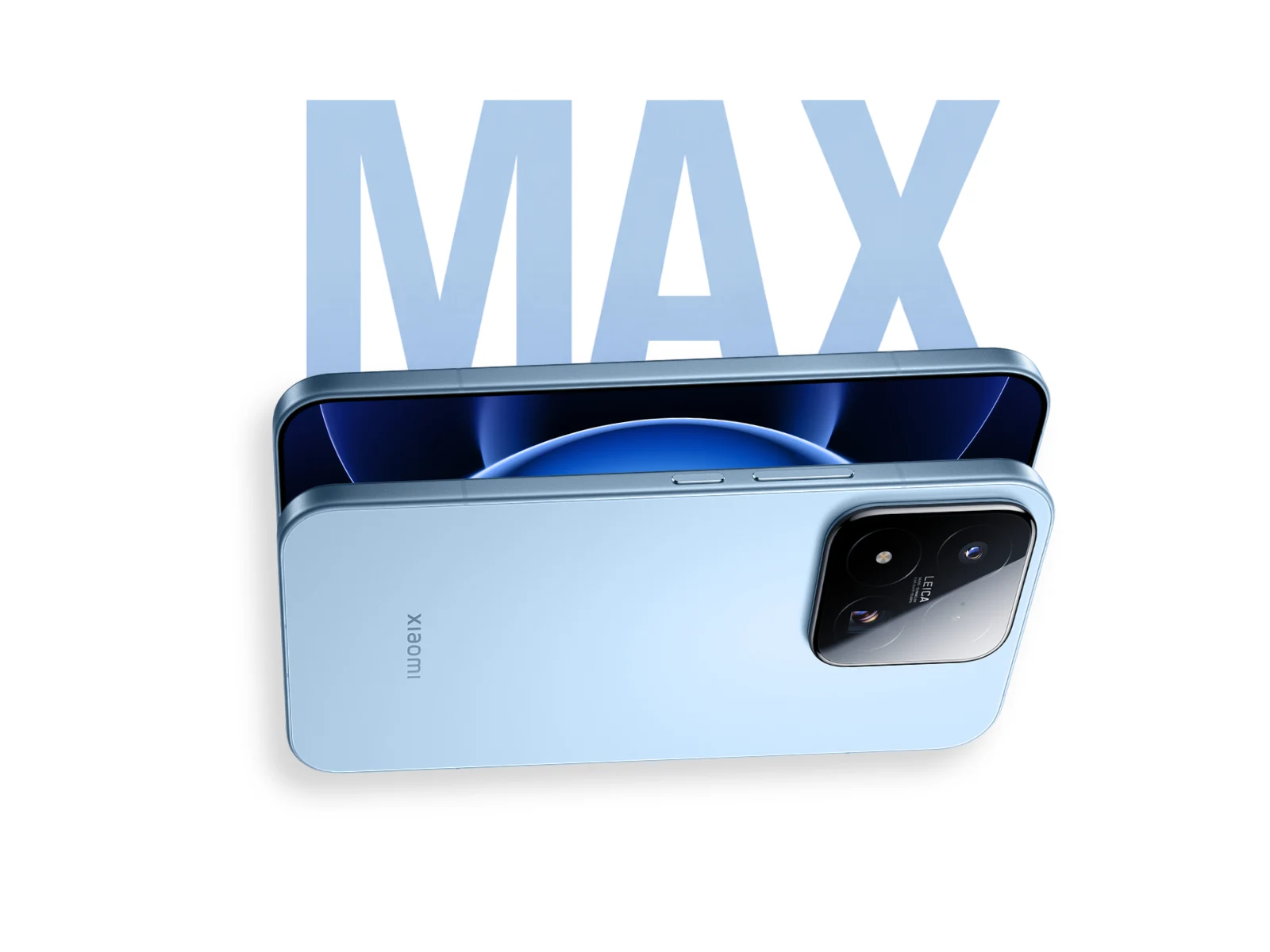
    – Xiaomi 17 Max launches on May 21 (China-only, no global launch confirmation) alongside YU7 GT, Band 10 Pro, and home appliances.
    – Key specs: 6.9-inch display, Snapdragon 8 Elite Gen 5, 200MP primary camera with Leica tuning.
    – Battery highlight: 8,000mAh capacity (larger than the 6,000mAh in the Xiaomi 17 Ultra).
    – Colors confirmed: Pixel Black, White, and Sky Blue.

    Xiaomi recently teased a new model in its flagship lineup, and the rumor mill has been buzzing as fans anticipate more details. The company has already laid out neighborhood specifics about the 17 series, which includes several variants named after different capabilities and features. Now, fresh information points to a particular member of that family coming into the spotlight soon, with a launch window in sight.

    Launch date and market scope

    The upcoming device is slated to debut on May 21, alongside other products like the Xiaomi YU7 GT and the Band 10 Pro, plus a collection of home appliances. This event is pegged to be a Chinese market affair, with no clear word yet on whether it will arrive globally. The timing suggests a focused regional rollout first, before any potential international availability.

    Hardware highlights

    Inside, the phone is expected to push strong performance with a large display measuring 6.9 inches, mirroring the dimensions seen on the 17 Pro Max. Powering the device will be the Snapdragon 8 Elite Gen 5 chipset, aimed at delivering robust speed and efficiency for gaming and multitasking. The camera setup is projected to include a 200MP primary shooter with Leica tuning, a combination likely to appeal to photography enthusiasts.

    Another standout feature rumored for the Xiaomi 17 Max is a massive 8,000mAh battery, which stands out against the 6,000mAh battery found in the top-tier Xiaomi 17 Ultra. Users could expect the battery to support long endurance between charges, a practical perk for heavy users and travelers alike. The colorways listed for the model include Pixel Black, White, and Sky Blue, giving a few personalized choices without being overly flashy.

    The company has not released every detail publicly, leaving some aspects to be confirmed closer to the launch. However, the information shared so far points to a device that emphasizes a large screen and lasting battery life, while keeping high-end camera capabilities in the mix. As with many Xiaomi releases, the exact official specs may still see minor adjustments before the device becomes available.

    Sources
  • Intel Wildcat Lake laptop rivals MacBook Neo with affordable launch price

    Intel Wildcat Lake laptop rivals MacBook Neo with affordable launch price

    Key Takeaway

    – Competitively priced in China (around $590 after subsidies) with a 14″ design and lightweight 1.39 kg chassis.
    – Powered by Intel Core i5-320 Wildcat Lake, 16GB LPDDR5x RAM, 512GB storage, capped at 28W Smart Mode 35W peak, cooling tuned for performance.
    – Display: 14″ LCD 1920×1200, 60Hz, 300 nits; weaker than MacBook Neo’s 2408×1506 and 500 nits Retina panel.
    – Ports: two USB-A 3.2 Gen 1, one USB-C, one HDMI, plus 3.5mm audio; battery 60Wh, Wi-Fi 6E, BT 5.1.
    – Global launch planned as Honor MagicBook X14 2026, marking the first Intel Wildcat Lake laptop availability.

    Honor has launched the 2026 Notebook X14, and it’s the first Intel Wildcat Lake laptop to be commercially available. In China, the launch price is CNY 4,399, about $646, which positions it as a direct rival to the Apple MacBook Neo when it comes to the price. National subsidies further drop the price, making it stand at around $590.

    Under the hood and performance

    Under the hood, this new laptop features the Intel Core 5 320 processor, one of the mid-range options from the Wildcat Lake lineup. It features 6 CPU cores and has the 2-core Xe3 iGPU. Honor claims that the cooling setup allows the laptop to deliver 35W of performance, with the Smart Mode keeping it at 28W while ensuring quiet operating noise.

    Memory and storage

    The processor has support for up to 64GB of RAM, but Honor is offering only one configuration of the laptop. It brings 16GB of LPDDR5x RAM and 512GB of storage (2TB Samsung 990 Pro curr. $429.99 on Amazon). On the front, there’s a 14-inch LCD with a 60Hz refresh rate and 1920×1200 pixels resolution, and it has a peak brightness rating of 300 nits.

    Display and port choices

    These display specs are inferior when compared to the Retina display of the MacBook Neo, which has a higher resolution of 2408×1506 pixels and a peak brightness rating of 500 nits. Honor’s 2026 Notebook X14 has a slightly better port configuration, though. It sports two USB Type-A 3.2 Gen 1, one full-featured USB-C, one HDMI, and one 3.5mm audio port.

    Design and battery

    As for the design, Honor kept the form factor relatively slim, with the chassis measuring as thin as 16.9mm, and the laptop weighs 1.39kg (about 3.06lbs). A 60Wh battery, WiFi 6E, and Bluetooth 5.1 are among the other highlights of the 2026 Notebook X14.

    Launch and global debut

    This Intel Wildcat Lake laptop is also expected to make a global debut, but as the Honor MagicBook X14 2026. Check out the full spec sheet attached below to learn more about the laptop.


    Sources

  • MinisForum AI X1 Pro RAM Upgrade for Better Radeon 890M Performance

    MinisForum AI X1 Pro RAM Upgrade for Better Radeon 890M Performance

    Key Takeaway

    – Dual-channel RAM dramatically boosts performance: adding a second, identical RAM module enables fast dual-channel memory, increasing overall system bandwidth and responsiveness, especially benefiting integrated graphics.

    – Integrated GPU gains are substantial: the AMD Radeon 890M iGPU benefits most from higher memory bandwidth, with smoother gaming, faster frame times, and improved graphics-accelerated app performance.

    – CPU gains are notable but variable: Ryzen AI 9 HX 470 shows a measurable, though workload-dependent, 5–15% performance uplift when a second RAM module is present.

    RAM will remain an important cost factor when purchasing or upgrading modern PCs and mini PCs in 2026. Fast DDR5 modules in particular are still comparatively expensive compared to previous memory standards, which is why many systems are often only supplied with a single RAM module or are initially used in a smaller configuration. However, this can have a noticeable negative impact on overall performance, especially in compact devices with powerful integrated graphics.

    RAM configurations and system performance

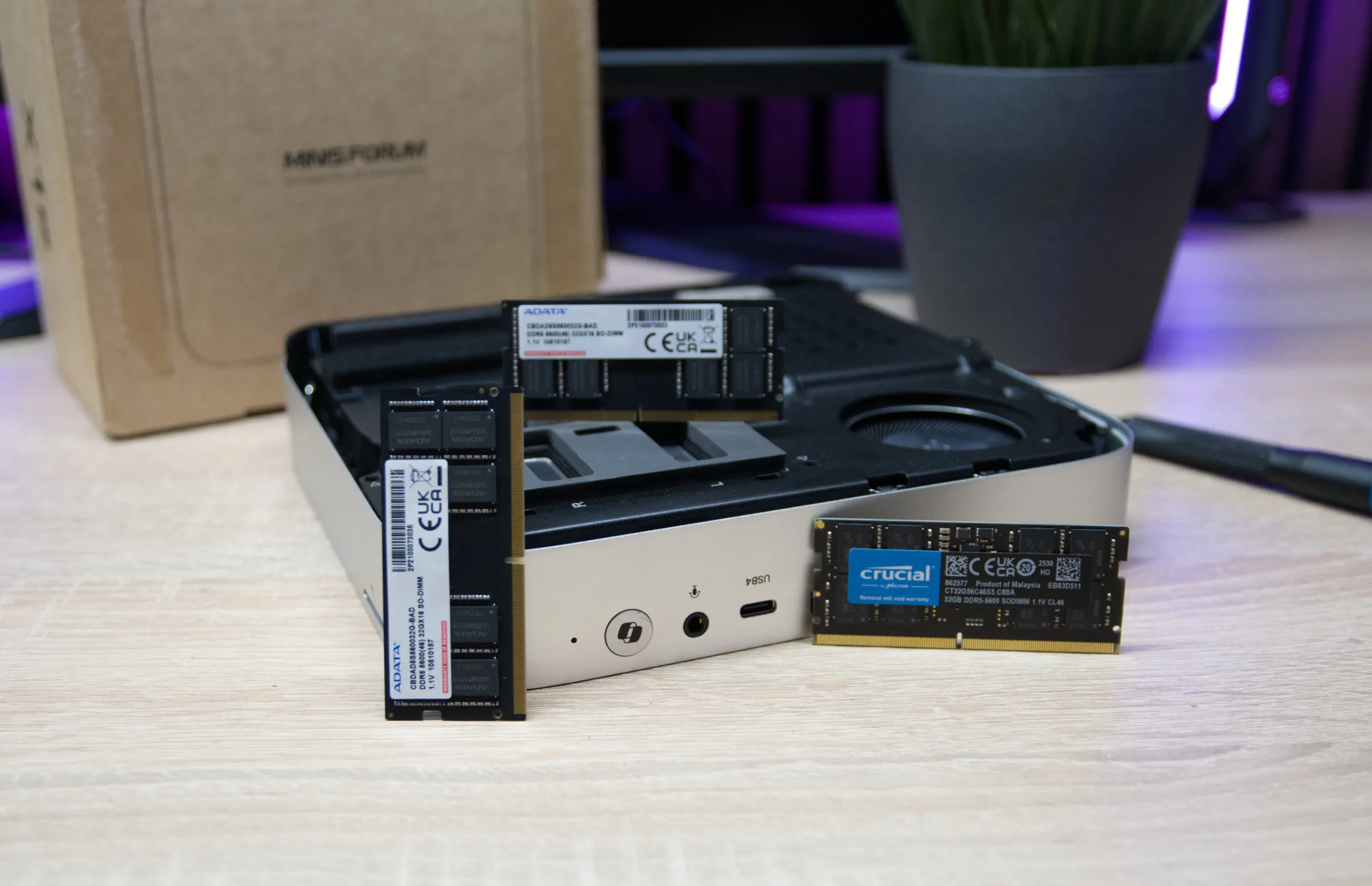
    Modern processors are increasingly relying on high memory bandwidths to efficiently supply the CPU and integrated GPU. If a system only works in single-channel mode, only part of the possible bandwidth is available. The faster dual-channel mode is only activated with a second memory module. This is particularly beneficial for integrated graphics units that do not have their own video memory and access the main memory directly. At the same time, the general system performance can also improve, for example with multitasking, productive applications, or computing-intensive tasks. The importance of the right RAM configuration for actual performance therefore quickly becomes apparent, especially with powerful mini PCs. Using the recently tested Minisforum AI X1 Pro as an example, we show the influence a second RAM module can have on the overall performance of the system.

    Dual-channel gains in practice

    The Minisforum AI X1 Pro gains noticeably in performance by installing a second RAM module. Only with two identical memory modules does the system work in fast dual-channel mode, which significantly increases the available memory bandwidth. The integrated graphics unit in particular benefits significantly from this, while the AMD Ryzen AI 9 HX 470 itself also records a small increase in performance. Modern Ryzen CPUs are heavily dependent on a fast memory connection, as data can be transferred faster between the RAM and processor. In practice, this leads to shorter loading times, smoother multitasking, and an overall higher system response. CPU performance can increase by around 5 to 15 percent, depending on the software, particularly with computing-intensive applications. The AI X1 Pro therefore only reaches its maximum performance with a dual-channel RAM configuration, as can be seen from our comparative values.

    Impact on graphics and gaming

    The integrated AMD Radeon 890M in the Minisforum AI X1 Pro benefits enormously from a second RAM module. Only with two DDR5 memory modules installed does the iGPU have the full memory bandwidth at its disposal. As integrated graphics units do not have their own video memory and instead access the RAM, the higher bandwidth has a direct effect on graphics performance. Games run more smoothly, frame times improve and graphics-accelerated applications also respond noticeably faster. Depending on the title and resolution, performance increases of up to over 100 percent are possible.


    Sources

    • iOS 27: Generate Genmoji from Photos and Typing Habits

      iOS 27: Generate Genmoji from Photos and Typing Habits

      Key Takeaway

      – Apple allegedly developing an intelligent, proactive Genmoji system that auto-suggests custom emojis from your photo library and typing habits in iOS 27/iPadOS 27.
      – Potentially moves Genmoji from a manual feature to a more everyday-use tool by offering context-aware emoji suggestions.
      – Privacy concerns arise over on-device vs. cloud processing and the handling of personal photos and typing history.
      – Unclear whether the new system will run entirely on-device, continuing Apple’s Apple Intelligence emphasis.

      New Bloomberg Leak Hints at Genmoji Upgrades in iOS 27

      rumors from Bloomberg’s Mark Gurman suggest Apple is tinkering with Genmoji in a fresh update, this time pegged to iOS 27 and iPadOS 27. the report describes an “intelligent recommendation” system that could auto generate emoji suggestions from photos in the user’s gallery and the typing patterns they develop over time. the tone here mixes curiosity with caution as we await official confirmation, since these features tread close to personal data use.

      What Genmoji Has Been and Could Become

      Genmoji showed up in iOS 18.2 as part of Apple Intelligence, letting people craft custom emoji from text prompts. later, iOS 26 broadened the slate by letting users blend two emoji styles into a single Genmoji, expanding creative control. if iOS 27 expands this further, it might move beyond a novelty and into a practical daily tool for chats, provided it stays reliable enough to feel non intrusive as conversations flow.

      Proactive Emoji Suggestions on the Horizon

      the upcoming system reportedly tests a keyboard option that would offer auto generated emojis based on what’s in the photo library and the phrases users often type. such a feature could slip into everyday messaging, offering contextually appropriate emoji without manual prompts, provided it learns well and keeps up with diverse chat topics. privacy and on-device processing remain hot topics in this discussion.


      Sources

    • XPPen Pilot Pro Editing Console for Precise Programmable Video Controls

      XPPen Pilot Pro Editing Console for Precise Programmable Video Controls

      Key Takeaway

      – Pilot Pro edits console (ACC02-A) offers extensive customization: 16 programmable buttons, three rotary dials with haptic feedback, an eight-way joystick, and multiple scalable profiles for apps like Adobe Premiere and DaVinci Resolve.
      – Left-handed design with ergonomic layout paired with a mouse/touchpad for increased editing efficiency; compatible via USB-C or Bluetooth with Windows 10+ and macOS 10.12+.
      – Solid hardware and compatibility details: compact form factor (130.25 x 92.5 x 66.9 mm), 251 g weight, and fully customizable inputs that can even adapt to non-editing apps like Microsoft Word.

      XPPen has introduced a new gadget for video editors, the Pilot Pro editing console (ACC02-A). It offers quick access to frequently used tools and shortcuts through a joystick, 16 programmable buttons, and three rotary dials. The device carries a suggested price of $209.99/€199.99/£169.99 and can be bought from XPPen stores around the world in the US, UK, DE, FR, IT, ES, or via Amazon.

      Design and inputs

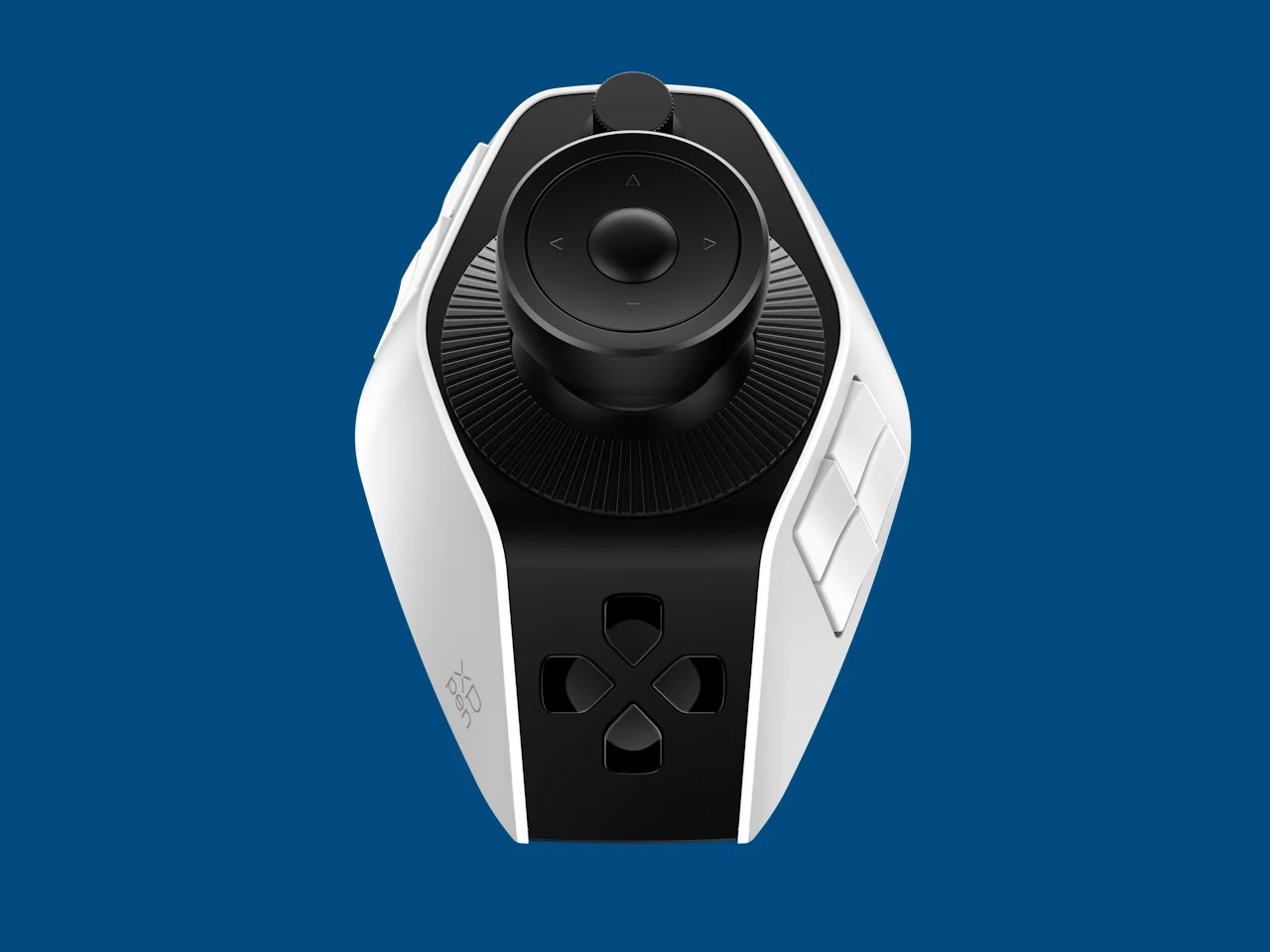
      The Pilot Pro features an eight-way joystick with an OK button and four-way touch buttons atop the unit. A rotary dial sits around the top of the stick, with a larger dial encircling the base. A small dial sits in front of the joystick, and all dials provide haptic feedback that can be disabled. Four buttons lie on the left and right sides of the raised base, and a 4-way directional pad is placed in front. The mixing of controls suggests a layout intended for quick, tactile edits during fast-paced workflows.

      Compatibility and customization

      The Pilot Pro works with computers running Windows 10 or newer and macOS 10.12 or newer, offering both wired USB-C and wireless Bluetooth connections. Every input control is customizable, with individual profiles for popular video editing apps such as Adobe Premiere and Blackmagic DaVinci Resolve. Because the Pilot Pro is designed for left-handed use, editors can gain efficiency by using it simultaneously with a mouse or touchpad to keep essential tools within reach.

      Versatility and dimensions

      Since the controller is fully customizable, it can be adapted to other software like Microsoft Word, though its primary focus remains video editing. The console measures 130.25 x 92.5 mm x 66.9 mm (5.13 x 3.64 x 2.63 in.) and weighs 251 g (8.85 oz.). This size and weight place it in a portable range while still providing a substantial tactile surface for complex workflows.


      Sources

    • Negative Subnautica 2 reviews slam EULA ownership and privacy concerns

      Negative Subnautica 2 reviews slam EULA ownership and privacy concerns

      Key Takeaway

      – Controversial EULA: ownership is licensed to the publisher; restrictive content sharing, potential privacy concerns, and remote game access without consent.
      – TOS restrictions for creators: streaming, recording, and monetization require publisher consent, affecting content creators and mod authors.
      – Regional and enforcement questions: consumer protections in some regions may limit enforcement; broader concerns about always-online or long-term playability.

      Subnautica 2 Early Access Debut and Rising Controversy

      The Subnautica 2 early access debut boasted impressive player counts and sales. Yet, negative Steam reviews increasingly focus on a controversial End-User License Agreement (EULA). Its terms relinquish ownership to the publisher, restrict content sharing, and may infringe on privacy. This paragraph keeps the original pricing and specification details intact, while highlighting the shifting sentiment around the game’s licensing terms.

      Ownership and TOS Strains Community Confidence

      Unless players agree to the terms of service (TOS), they will be blocked from exploring the waterlogged Proteus in the survival game. Enjoying a strong reception, Subnautica 2 Steam reviews currently stand at Very Positive. Nevertheless, after word spread on social media, most unfavorable evaluations highlight a constrictive EULA. The article preserves pricing and spec specifics as stated and reflects the ongoing debate about ownership rights in modern gaming, with Krafton’s license model under scrutiny.

      License Limits and Privacy Concerns

      Ownership rights are a common point of contention in modern gaming. Publisher Krafton only grants buyers a license to play the title. The Unknown Worlds project offers a solo campaign that doesn’t appear to rely on server authentication. Still, movements like Stop Killing Games worry that digital games will become unplayable. This section keeps the original details about licensing and potential server checks, while noting community worries about privacy and control.

      Privacy Implications and Remote Access Fears

      One review that’s attracting attention explains how players may be sacrificing their privacy. Ulrich notes that the EULA prohibits using a VPN to mask IP addresses. Perhaps more concerning, the publisher can remotely access the game without a user’s consent. The handling of personal information like legal names and email addresses is also under scrutiny. The paragraph mirrors the claim layout and the concern over personal data, with a casual nod to potential policy implications.

      Influence of Streamers and Content Restrictions

      Streamers played a role in promoting the lucrative Subnautica 2 early access launch. Even so, recordings and screenshots are subject to restrictions in the TOS. Content creators can’t profit from showcasing the game without Krafton’s consent. That includes mod authors, who will become more popular following the game’s release date. The content restriction notes remain aligned with the original reporting, while describing how creators must navigate licensing terms.

      Regional Enforcement and Consumer Protections

      It’s debatable whether gamers in some regions could even face penalties for infractions. In EU countries with robust consumer protections, companies have struggled to enforce similar conditions. The idea of cross-border enforcement is laid out with emphasis on how policy fits into existing protections, referencing regional differences without altering the core facts presented about the license and potential penalties.

      Community Sentiment and Publisher Scrutiny

      The negative Subnautica 2 Steam reviews may not reflect the majority opinion. Despite passionate opposition, other gamers claim the terms aren’t unique to the survival game. Regardless, Krafton has been under scrutiny since reportedly firing lead developers to avoid bonus payouts. Critics warn that it won’t hesitate to take advantage of its growing community. The closing line preserves the overall narrative of controversy and scrutiny around the publisher’s business choices.


      Sources