Author: GizNews

  • Linux Gains Nvidia Reflex and AMD Anti-Lag on Any GPU

    Linux Gains Nvidia Reflex and AMD Anti-Lag on Any GPU

    Key Takeaway

    – Nvidia Reflex 2 and AMD Anti-Lag 2 are now hardware-agnostic via Korthos Software’s low_latency_layer, allowing use on GPUs from different vendors (including Intel).
    – Benchmarks suggest these Linux implementations can outperform native Windows versions in some cases.
    – Setup requires basic Linux terminal know-how (installing packages and creating a build directory), with instructions on Korthos’ GitHub to guide users.
    – The project is led by Nicolas James, highlighting a notable Fedora of FOSS gaming and potential compatibility with SteamOS/Steam Deck through manual installation.

    Big news for Linux gamers, especially eSports players: Nvidia Reflex 2 and AMD Anti-Lag 2 can now be used in a hardware-agnostic manner, meaning that these proprietary technologies can now be used on GPUs from opposing vendors, including Intel GPUs, thanks to Korthos Software’s low_latency_layer. Even better, some benchmarks reflect these technologies actually working better than the native Windows versions, taking a pain point of Linux gaming and turning it into a genuine strength. Setting it up does require some basic knowledge of how to use a Linux terminal, including installing packages and making a build directory, but the instructions on Korthos’ GitHub page for the project should make that process a simple matter.

    Background and developer

    It’s a truly impressive feat from Korthos Software—or specifically, Nicolas James, the only known developer of low_latency_layer. In a statement made to Phoronix, Nicolas James stated that the project was started earlier this year “because I was frustrated with the state of Anti-Lag 2 on Linux. If you’re not aware, the Mesa AL2 implementation had some issues with stability and was disabled by default. On top of this, I tested the latency improvement of the Mesa implementation and found that it wasn’t doing as much as the proprietary version on Windows. I like my FPS games and my AMD machine but I love Linux, and it seemed like they weren’t compatible.”

    Developer insights

    He continues, “After AL2 was working, I noticed there was nothing stopping a similar implementation of the Nvidia equivalent […] They are just device extensions that any Vulkan layer can intercept. […] My testing was done using a 540 Hz monitor which has Nvidia Reflex Analyzer. It involved me clicking a button and writing down the values I get into a spreadsheet, which can get pretty tedious. I have tested The Finals, Counter-Strike 2, Cyberpunk 2077, Resident Evil Requiem, Marvel Rivals and Overwatch 2.”

    Implications and reach

    All told, it’s a pretty genius solution from Nicolas James, and a truly admirable achievement for FOSS gaming at large. This also means, of course, that Steam Machine and Steam Deck should be able to utilize low_latency_layer if users manually install it, making it possible to use an improved AMD Anti-Lag 2 or Nvidia Reflex on any supported game under SteamOS.

    What to expect next

    • Availability across more hardware and platforms as integration matures.
    • Potential changes in benchmarking results compared to native Windows implementations.
    • User community contributions and longer-term maintenance for compatibility.

    Sources
  • Deal: 007 First Light Discount Ahead of Release

    Deal: 007 First Light Discount Ahead of Release

    Key Takeaway

    – 007 First Light is discounted at 13% on Fanatical, bringing the price to $60.89 with a Steam key.
    – Pre-orders come with a free Deluxe Edition upgrade (outfits, weapon and gadget skins) and 24-hour early access.
    – The deal is time- and stock-limited; prices may change at any time.

    007 First Light was first announced back in June last year, and ever since then, fans have been eagerly waiting to try IO Interactive’s new action-adventure title. The game is scheduled to launch on May 27, and if you’re planning to dive in on day one, then we’ve got some good news.

    Deal Spotlight

    Normally, brand-new games do not receive discounts until at least a few weeks or even months after release. However, that does not seem to be the case with 007 First Light, as if you head over to Fanatical, you’ll find the game listed with a 13% discount.

    Pricing Breakdown

    Thanks to the deal, you can grab it for $60.89 instead of paying the full $69.99 price. The good news is you’ll get a Steam key with your purchase, so you can redeem the game directly to your account and have it ready in your library before launch.

    Pre-Order Perks

    What’s interesting is that those who pre-order the game will get the Deluxe Edition upgrade completely free. This edition includes several extra items, including four outfits, one weapon skin, and four gadget skins. On top of that, the upgrade also gives players early access to the game, thanks to which you’ll be able to start playing 24 hours before everyone else.

    Disclaimer

    Disclaimer: Notebookcheck is not responsible for price changes carried out by retailers. The discounted price or deal mentioned in this item was available at the time of writing and may be subject to time restrictions and/or limited unit availability.

    Sources
    • Strategy Game Based on History – 66% Off on Steam, Loved by 82% of Players

      Strategy Game Based on History – 66% Off on Steam, Loved by 82% of Players

      Key Takeaway

      – Strategic depth with 12 nations, 70 unit types, and 140+ buildings/100 technologies to manage across land and sea.
      – Five campaigns inspired by 17th–18th century European history, plus expansive online multiplayer for up to eight players.
      – Mixed reception: strong Steam positive/overall sentiment but Metacritic shows mixed reviews and noted performance/bug issues.

      Released on September 20, 2016, Cossacks 3 is a remake of Cossacks: European Wars, released in 2001, and developed by the Ukrainian studio GSC Game World. In this strategy game, you’ll dive into five campaigns inspired by historical events that took place in Europe during the 17th and 18th centuries.

      Campaigns and scope

      Indeed, you can liberate Turin, defeat the English rebels at the Battle of Edgehill, or fight Polish troops at Mogilev. You can lead 12 nations and command 70 different units in battles involving several thousand soldiers. But whether you’re on land or at sea, every victory depends on your strategy.

      Resources and building

      In addition, you’ll need resources to win, and your peasants can gather stone, wood, and food. With over 140 historical buildings and 100 technologies at your disposal, you can upgrade your cities and your army. You can also play online with up to eight players on randomly generated maps.

      Reception and performance

      With its gameplay and numerous features, Cossacks 3 is rated “Very Positive” on Steam. Indeed, out of 15,847 reviews, 82% are positive. However, on Metacritic, reviews are mixed, as it has a Metascore of 63 and a user score of 6.7. Some players report optimization issues that prevent them from playing. The multiplayer is unstable, and numerous bugs have been reported.

      Pricing and availability

      If you want to try this game, it’s currently on sale for $6.79 instead of $19.99 on Steam, thanks to a 66% discount until May 28, 2026. Several DLCs are also available if you have a bigger budget. But it should be noted that this discount has appeared several times in recent months, and its lowest price was $5.99 on December 5, 2022, with a 70% discount, according to SteamDB.


      Sources

    • Lenovo 14-inch Laptop Snapdragon X2 with 50% Longer Battery Life

      Lenovo 14-inch Laptop Snapdragon X2 with 50% Longer Battery Life

      Key Takeaway

      – New IdeaPad 5 2-in-1 14Q8Y11 uses Snapdragon X2 Plus X2P-42-100 with longer cited battery life (~33+ hours in a 1080p video test) thanks to a 60 Wh battery.
      – Available in 16 GB or 32 GB LPDDR5X RAM, 512 GB or 1 TB M.2 2242 PCIe 4.0 storage, and Wi-Fi 7; two 14″ display options: OLED (600 nits, 100% DCI-P3) or IPS (400 nits, 45% NTSC).
      – Starts at £1,110 (UK) / €1,159–€1,350 (Eurozone); AUD 2,199 in Australia with a free Linear Pen included.

      Lenovo has rolled out several Snapdragon X2 powered devices this year, and the latest addition takes form as a new IdeaPad 5 2-in-1. The 14Q8Y11 variant updates the earlier 14Q8X9, which was available in September 2024 with X1P-42-100 and X1P-26-100 chipsets, up to 24 GB of LPDDR5X-8448 RAM, and a 57 Wh battery rated for about 21.5 hours in a 1080p local video test at 150 nits. The newer model shifts to the Snapdragon X2 Plus X2P-42-100 and promises a longer endurance thanks to a larger 60 Wh pack, setting expectations higher for battery life.

      Design and performance vary by configuration

      In its current 14Q8Y11 iteration, Lenovo offers the IdeaPad 5 2-in-1 with choices of 16 GB or 32 GB LPDDR5X-9523 RAM and storage options of 512 GB or 1 TB M.2 2242 PCIe 4.0. The display choices remain a pair of 14-inch 1200p 60 Hz touchscreens, with an OLED variant reaching up to 600 nits peak brightness and supporting full 100% DCI-P3 color coverage, while the IPS option provides 400 nits max brightness and a more limited color gamut of about 45% NTSC. These specs underline a split between vivid visuals and more conventional accuracy, catering to different user needs and environments.

      Battery life and connectivity

      The updated model is expected to last beyond 33 hours in a standard test scenario using its 60 Wh battery, a notable improvement over the previous generation. Connectivity remains robust with Wi-Fi 7, delivering faster wireless performance, and the laptop continues to be offered with flexible RAM and storage configurations to suit varying workloads from casual browsing to more demanding multitasking. The inclusion of a free Linear Pen in some regions adds value for note takers and artists, though availability may vary by market.

      Pricing and regional availability

      When the IdeaPad 5 2-in-1 14Q8Y11 hits different markets, the base prices reflect regional pricing strategies. In the UK, the entry point begins around £1,110, while in the Eurozone prices range approximately from €1,159 to €1,350. In Australia, the model is listed at AUD 2,199. Across all regions, configurations start with 16 GB of RAM, a 512 GB SSD, and an IPS display, but buyers can opt for higher RAM and larger storage. The presence of a free stylus in Australia is a regional perk that isn’t guaranteed in every market.

      Lenovo is actively distributing this line across multiple regions including Australia, France, Germany, Ireland, and the UK, with variations in included accessories and exact options depending on the country. Users looking for a premium display experience may favor the OLED variant, while those prioritizing battery longevity and cost efficiency might prefer the IPS option with the longer endurance and still-competitive performance.


    • Lenovo Debuts 16-Inch Laptop with 96 GB LPCAMM2 & AMD CPUs

      Lenovo Debuts 16-Inch Laptop with 96 GB LPCAMM2 & AMD CPUs

      Key Takeaway

      – AMD-based ThinkPad P16s Gen 5 is now available in Australia, generally discounted relative to Intel variants.
      – Base AMD configuration starts with Ryzen AI 5 Pro 440, 1 TB SSD, 16 GB RAM (LPCAMM2), no discrete GPU; higher SKUs add Ryzen AI 7 Pro 450 or Ryzen AI 9 HX Pro 470 and Nvidia RTX Pro GPUs.
      – RAM options go up to 96 GB, with PCIe 4.0/5.0 SSDs and 60 Wh or 90 Wh batteries; display choices include up to an 1800p OLED panel with 500 nits and 30-120 Hz VRR.

      Earlier this week, Lenovo began selling the ThinkPad P16s Gen 5 with Intel Panther Lake processors. Available internationally, these Intel-based models debuted in March alongside AMD-powered counterparts. While Lenovo anticipated releasing the former in May, it expected to hold the latter back until June.

      New AMD models emerge

      Although that remains the case for the most part, Lenovo has quietly started selling AMD-based models in some capacity, replacing the Gen 4 model we reviewed in December 2025 (curr. $2,699 on Amazon). Currently, the company is offering these variants in Australia, and at quite a discount compared to their Intel-backed siblings. The shift shows Lenovo testing the waters with affordable options that might attract budget minded professionals who crave power without paying a premium.

      Price and market positioning

      At the time of writing, AMD-based ThinkPad P16s Gen 5 SKUs start at AUD 2,979 (~$2,129) compared to AUD 3,529 (~$2,522) for Intel models after messing around with Lenovo’s configurator. By default, Lenovo markets pre-configured Intel models at AUD 4,249 (~$3,307), though.

      Technical specs and configurations

      By default, the ThinkPad P16s Gen 5 comes with a Ryzen AI 5 Pro 440, a 1 TB SSD, no discrete GPU and 16 GB of LPCAMM2 RAM, a first for an AMD-powered laptop. Alternatively, the 16-inch laptop can be configured with the Ryzen AI 7 Pro 450 and Ryzen AI 9 HX Pro 470, which opens the option of adding Nvidia’s RTX Pro 500 Blackwell, RTX Pro 1000 Blackwell and RTX Pro 2000 Blackwell laptop GPUs.

      RAM, storage, and display options

      Moreover, Lenovo is selling the ThinkPad P16s Gen 5 with 32 GB, 64 GB and 96 GB of LPCAMM2 RAM running at 8,533 MT/s. PCIe 4.0 and PCIe 5.0 SSDs are also available, as are 60 Wh or 90 Wh batteries. On top of that, the laptop can be purchased with three display options culminating in an 1800p (2.8K) OLED panel featuring 500 nits peak brightness and a 30-120 Hz variable refresh rate. Lenovo has not confirmed pricing for other markets yet.

      Sources
    • GTA 6 Release Date Confirmed by Take-Two CEO with 18-Month Delay

      GTA 6 Release Date Confirmed by Take-Two CEO with 18-Month Delay

      Key Takeaway

      – GTA 6 is still slated for a November release per Strauss Zelnick, despite ongoing delays and fan speculation.
      – Zelnick suggested the project may be around 18 months behind the original timeline, prompting questions about the exact reference point.
      – Take-Two previously shifted the window from 2025 to fall 2026, with ongoing discussions about pre-orders and a potential third trailer.

      Rumors floated that GTA 6 pre-orders might kick off on May 18, but the chatter remains unconfirmed, and a third postponement feels increasingly unlikely. In a recent sit-down, Take-Two Interactive chief Strauss Zelnick touched on the subject, reaffirming a November 19 debut while hinting at a longer release-date delay than once thought.

      Varied insights from the boss

      Speaking with podcast host David Senra, Zelnick addressed speculation about another potential delay for GTA 6. While Rockstar Games has kept mum about progress, the exec indicated a November arrival remains plausible, fueling a mix of reassurance and doubt among fans.

      Behind schedule or closer to the mark?

      Some fans remain uneasy since Zelnick appeared confident before the prior delays. It’s possible the project is more behind schedule than some followers realize, with the Take-Two CEO noting, “I think we’re about 18 months behind the original date.” This remark opens questions about whether the lag refers to November 2026 or the time of the interview itself.

      In February 2022, the publisher confirmed Rockstar’s project was in development, with whispers that concepts formed as early as 2014. The first trailer, released in December 2023, pegged a 2025 release, later narrowed to fall, and ultimately pushed back twice, illustrating a volatile timeline and evolving expectations.

      Industry dynamics and internal commitments

      Scholarly debate about the timeline aside, a more relaxed development approach could explain the shifting calendar. During GTA’s predecessor era, there were reports of long, grueling 100-hour workweeks at Rockstar. Since then, Rockstar pledged to curb such time crunches and reiterated its stance against unhealthy work environments, signaling a cultural shift aimed at sustainability.

      Despite the patience of some fans, impatience grows for tangible news. The window for pre-orders and the chorus of anticipation for a new trailer continues, with many hoping for fresh guidance during Take-Two’s upcoming earnings call on May 21. The industry watches closely as momentum builds and expectations rise.

      Sources
    • Xiaomi 17T and 17T Pro Specs Confirmed by Promo Materials

      Xiaomi 17T and 17T Pro Specs Confirmed by Promo Materials

      Key Takeaway

      – Xiaomi 17T and 17T Pro anunced May 28; Euro prices leaked for multiple storage variants, with preorder freebies (Redmi Headphones Neo for 17T; 17T Pro includes headphones + Xiaomi Smart Band 10) unclear for all regions.
      – 17T specs: Dimensity 8500, 6,500mAh, 6.59″ 120Hz, 5x telephoto with up to 120x digital zoom, Leica Summilux optics, HyperOS with HyperAI.
      – 17T Pro specs: Dimensity 9500, 6.83″ display, 7,000mAh battery, 144Hz AMOLED, 67W USB-C charging; 50W wireless and up to 100W HyperCharge.
      – European price highlights: 17T 12GB+256GB €749; 12GB+512GB €799. 17T Pro 12GB+512GB €999; 12GB+1TB €1,099.

      The rumors around Xiaomi’s upcoming releases have been swirling, and if one leaker is correct, the company will globally unveil the Xiaomi 17T and Xiaomi 17T Pro on May 28. Another insider recently shared Euro prices for the two Leica camera flagships, which are marketed as telephoto masters, as current leaked marketing material suggests. This material also shows the gifts that will ship with the Xiaomi 17T and Xiaomi 17T Pro, likely at least during the preorder phase.

      Pricing and preorder incentives

      Buyers of the base Xiaomi 17T will apparently receive the Redmi Headphones Neo for free with their Xiaomi smartphone. The Xiaomi 17T Pro seemingly also includes the Xiaomi Smart Band 10 fitness tracker in addition to the headphones. However, it has not yet been confirmed whether these preorder deals will apply to all markets and regions, since we do not know which country the leaked promo material comes from.

      Specs and features confirmed by leaks

      The leak of the official images also confirms earlier details about the specs. Accordingly, the Xiaomi 17T will launch with a Dimensity 8500, a 6,500mAh battery and a 6.59-inch 120Hz display, while already offering a 5x telephoto camera with up to 120x digital zoom and Leica Summilux optics. Xiaomi HyperAI is available as the digital assistant in HyperOS.

      Euro prices and storage options

      The leaker has now also provided euro prices for all storage options. Accordingly, the base model with 12GB of RAM and 256GB of storage will cost €749, which matches the earlier leak. The model with 512GB of storage will apparently cost €799.

      Xiaomi 17T Pro specifications, charging, and pricing

      The Xiaomi 17T Pro, meanwhile, uses the faster MediaTek Dimensity 9500. Its display and battery are larger at 6.83 inches and 7,000mAh, respectively, while the AMOLED panel also offers a 144Hz refresh rate. While the base model charges at up to 67 watts via USB-C, the Xiaomi 17T Pro supports 50-watt wireless charging and up to 100-watt HyperCharge via USB-C.

      Pro model pricing and color news

      The leaker also has two prices for the Xiaomi 17T Pro. According to him, the base model with 12GB of RAM and 512GB of storage will cost €999, as expected. With 1TB of storage, the price is apparently €1,099.

      Official renders and color options

      The leaker has now also published the first official renders of a white Xiaomi 17T on X. Until now, only three color options were known: blue, pink and black.


      Sources

    • Budget Android phone that defies the DRAM crisis

      Budget Android phone that defies the DRAM crisis

      Key Takeaway

      – Generous RAM and a large OLED display at an approachable price, with long battery life and five major Android updates.
      – Not the best choice for high-end performance or modern gaming; the MediaTek Dimensity 7300 Max undercuts peak performance and benchmarks.
      – Competing budget options (e.g., Xiaomi Poco X8 Pro) offer better price-to-performance; multiple viable alternatives exist under $300.


      Realme 16 Pro review

      the Realme 16 Pro offers a generous memory configuration with up to 12GB of RAM despite the current DRAM crisis. While other lower-mid-range smartphones, such as the Motorola Moto G67, sometimes only come with 4GB of RAM, the Realme phone is still well equipped with 8GB of RAM in the base model.

      Performance and price

      in our review, however, the Realme 16 Pro did not always convince us, although the affordable Realme phone could offer an interesting overall package for some users. The mid-range smartphone currently starts at around $300 or €250.

      design, display and longevity

      in our in-depth review, the Realme 16 Pro presents itself as an attractive mid-range smartphone that stands out above all with its generous RAM options, large 6.79-inch OLED display, and long battery life. Long-term update support with five major Android upgrades is another strong argument for budget-conscious users who want to keep using their smartphone in everyday life for a longer period of time.

      Cons and alternatives

      even so, the Realme 16 Pro showed some clear weaknesses in our review. It is not the best choice for users who expect high system performance or want to play modern Android games on their smartphone. Those interested in an affordable mid-range phone should instead consider the Xiaomi Poco X8 Pro, which we have already reviewed as well. The MediaTek Dimensity 7300 Max in the Realme 16 Pro does not deliver the promised “buttery-smooth” performance and also falls behind the competition in benchmarks.

      Buying guidance

      anyone looking for an attractive price-to-performance ratio under $300 for their next smartphone will find many viable alternatives to the Realme 16 Pro in our corresponding buyer’s guide.


      Sources

      • Alienware 16X Aurora 2026 Price Surpasses Area-51 Rivalry

        Alienware 16X Aurora 2026 Price Surpasses Area-51 Rivalry

        Key Takeaway

        – The 16X Aurora offers a lighter, more portable design compared to Area-51, appealing to gamers who travel frequently.
        – Upgrades (faster CPU/GPU and OLED) come at a steep price (+$600 vs 2025 config) for only about a 15% gaming performance boost.
        – When configured with the same RTX 5070 Ti, Area-51 is only about $280 more expensive than the 16X Aurora but ships with half the RAM (32 GB vs. 16 GB), and includes more advanced auxiliary features.

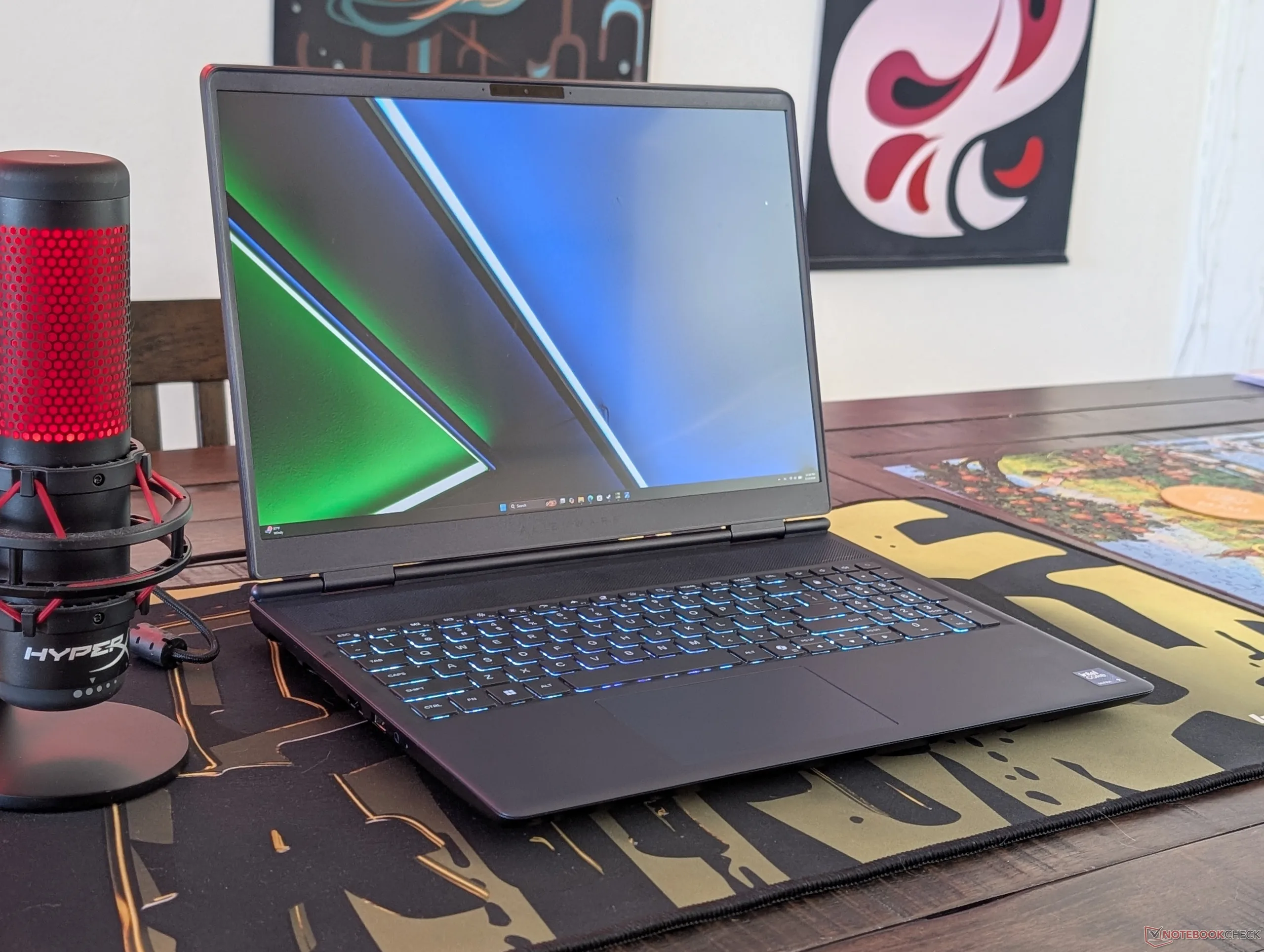
        The Alienware 16X Aurora has been updated this year with new configurations including a faster CPU, faster GPU, and OLED instead of IPS. The upgrades come at a hefty cost, however, as the new model retails for $3000 or $600 more than the 2025 configuration all for a relatively small 15 percent boost in gaming performance. The $3000 mark is notable since the 16X Aurora is supposed to be Alienware’s midrange laptop series in comparison to the higher-end Area-51 series and yet their prices are not so dissimilar anymore.

        Price and performance trade offs

        When configuring the Alienware 16X Aurora and Alienware 16 Area-51 with the same GeForce RTX 5070 Ti GPU through Dell.com, the latter comes out to be just $280 more expensive albeit with half the RAM (32 GB vs. 16 GB). As the top-of-the-line model, the Area-51 offers more advanced auxiliary features and a stronger, more attractive build that may justify some of the cons especially when both will perform nearly identically when gaming.

        Panel options and visual parity

        When looking closer at their configurations, the 16X Aurora and Area-51 also share the exact same IPS and OLED panel options meaning the visual experience will be the same when configured properly.

        Why choose the 16X Aurora

        There are still a few reasons to prefer the “lesser” 16X Aurora over the flagship Area-51. Most notably, the 16X Aurora is much lighter and smaller than the Area-51 since the latter was designed to support much faster GPUs up to the RTX 5090. Gamers who are constantly on the move may find more value from the 16X Aurora from a portability perspective.

        Despite the bigger price tag, the Area-51 impresses with its stronger build and extra features, but the 16X Aurora holds appeal for those prioritizing mobility and a slightly lower total cost of ownership as configurations vary. Either choice aligns with premium gaming goals, yet the differences matter depending on how you plan to use them and where you plan to carry them.

        Conclusion

        In summary, the 16X Aurora offers OLED display options and portability gains that the Area-51 also targets, with the price gap reflecting the overall premium and features. The decision hinges on whether you value lightness and travel ease over raw expansion and luxury features, with both machines delivering competitive gaming performance given similar configurations.

        Sources
      • iPhone 18 Pro & Pro Max Cases Shown; May Not Fit iPhone 17 Pro

        iPhone 18 Pro & Pro Max Cases Shown; May Not Fit iPhone 17 Pro

        Key Takeaway

        – iPhone 18 Pro/Pro Max retain the current large camera island design, suggesting external dimensions stay similar to the iPhone 17 Pro despite internal camera upgrades.
        – Rumors point to a first-ever variable-aperture main camera with a larger sensor (around 1/1.12-inch) for the Pro lineup.
        – Leaked cases may not be fully compatible with the new phones due to a thicker camera bump, even if they look similar to iPhone 17 Pro cases.
        – Launch expected: September 2026 for the iPhone 18 Pro series, with a foldable iPhone Ultra as a separate “one more thing” reveal; iPhone 18/Air refresh reportedly in spring 2027.

        <!doctype html>

        With the official unveiling still months away, the first physical signs of the upcoming iPhone 18 Pro and iPhone 18 Pro Max have surfaced. The chatter in the rumor mill hints at a path Apple is carving that echoes the stylistic choices of the current generation, while promising some nuanced upgrades that fans might care about.

        Design cues linger, but whispers say there could be subtle shifts

        In these early glimpses, the signature camera island—an expansive plate that dominates the top portion of the back—remains a focal point, as if Apple wants that familiar silhouette to stay, even as internals stir. This plateau style, while prominent, may conceal changes like a 48MP main sensor with a variable aperture, yet the external footprint is not expected to drastically diverge from the current design language.

        Camera ambitions surface with variables and sensors

        Rumors point toward Apple debuting a variable aperture main camera on the iPhone 18 Pro series, potentially paired with a larger sensor around 1/1.12 inch. The notion excites enthusiasts who crave flexible shooting in varying light, though it’s still speculative until the hardware lineup is officially shown to the world. The leaked visuals leave room for interpretation, suggesting upgrades without a guaranteed exterior overhaul.

        The chatter also notes a thicker camera bump compared to the iPhone 17 Pro, which could be a consequence of the new 48MP variable aperture lens design. This implies that even if the leaked cases resemble the iPhone 17 Pro cases, they might not perfectly align, and accessory compatibility could be inconsistent, a quirk that would frustrate some buyers but make sense if the internal stack grows.

        Launch timing and product lineup rumors

        Industry chatter puts the iPhone 18 Pro series on a September 2026 window for its debut, a pattern that mirrors Apple’s usual autumn cadence for major unveilings. In parallel, there’s talk of a foldable iPhone Ultra joining the portfolio as a glossy “one more thing” moment, while the more traditional vanilla iPhone 18 and an iPhone Air refresh are tentatively pegged for a spring 2027 introduction, a path that keeps Apple’s product ladder intriguing for a few years.

        Sources