

Tag: Australia pricing

  • Whoop Free Health Wristband Debuts in One Market

    Whoop Free Health Wristband Debuts in One Market

    Key Takeaway

    – Whoop’s hardware is now sold separately in Australia, but use still requires an ongoing subscription, making it overall one of the most expensive options.
    – Subscriptions remain the main cost driver, with annual fees (AU$300) or higher for ECG variants, often making the first-year total comparable to previous bundles but expensive long-term.
    – Competitors (Amazfit Helio Strap, Polar Loop, Google Fitbit Air) offer data access or hardware without mandatory ongoing subscription, presenting a cheaper core option.


    In this piece, the focus is on wearables and how pricing models shift with new hardware options, especially in Australia. The discussion notes that devices like Amazfit Helio Strap and Polar Loop don’t require subscriptions, while Google Fitbit Air is priced at 99 dollars on Amazon and offers access to collected data without monthly fees. Whoop, on the other hand, takes a different route—without a pricey subscription, the wristbands become largely impractical.

    Different pricing approaches in the market

    Historically, subscribers could get hardware for free if they prepaid a subscription for at least a year. This approach is changing as Whoop begins selling wristbands and hardware separately in Australia. The Whoop 5.0 is listed at AU$99 (about $71), but it still needs a subscription to function, which runs AU$300 per year (roughly $215). The idea is that the first year costs remain roughly the same as before, while future years can be cheaper if no new hardware is required.

    ECG option and its costs

    Additionally, the Whoop MG with ECG is priced at AU$149 (about $106), yet it also requires a subscription at AU$450 per year (around $322). Individuals who pay five years in advance can receive a discount, but the total can reach AU$1,580 plus the wristband, which is substantial. This pricing model signals a shift to a more complex value proposition that combines hardware with ongoing service.

    Market impact and justification

    With these price dynamics, Whoop appears to be reacting to rising competition, but the high subscription costs keep it notably more expensive than other options currently on the market. The brand attempts to justify the premium by promising deep health insights, such as sleep, stress, and menstrual cycle tracking, which are centralized features that many competitors also offer but with different pricing structures.

    In Australia, the strategy reflects a broader trend where hardware price is paired with ongoing services, and buyers must weigh the value of ongoing data analytics against upfront costs. The ongoing subscription is the key factor that distinguishes Whoop’s offering from rivals, shaping consumer decisions about whether to invest in the ecosystem as a long-term health platform.

    Sources

  • Lenovo Debuts 16-Inch Laptop with 96 GB LPCAMM2 & AMD CPUs

    Lenovo Debuts 16-Inch Laptop with 96 GB LPCAMM2 & AMD CPUs

    Key Takeaway

    – AMD-based ThinkPad P16s Gen 5 is now available in Australia, generally discounted relative to Intel variants.
    – Base AMD configuration starts with Ryzen AI 5 Pro 440, 1 TB SSD, 16 GB RAM (LPCAMM2), no discrete GPU; higher SKUs add Ryzen AI 7 Pro 450 or Ryzen AI 9 HX Pro 470 and Nvidia RTX Pro GPUs.
    – RAM options go up to 96 GB, with PCIe 4.0/5.0 SSDs and 60 Wh or 90 Wh batteries; display choices include up to an 1800p OLED panel with 500 nits and 30-120 Hz VRR.

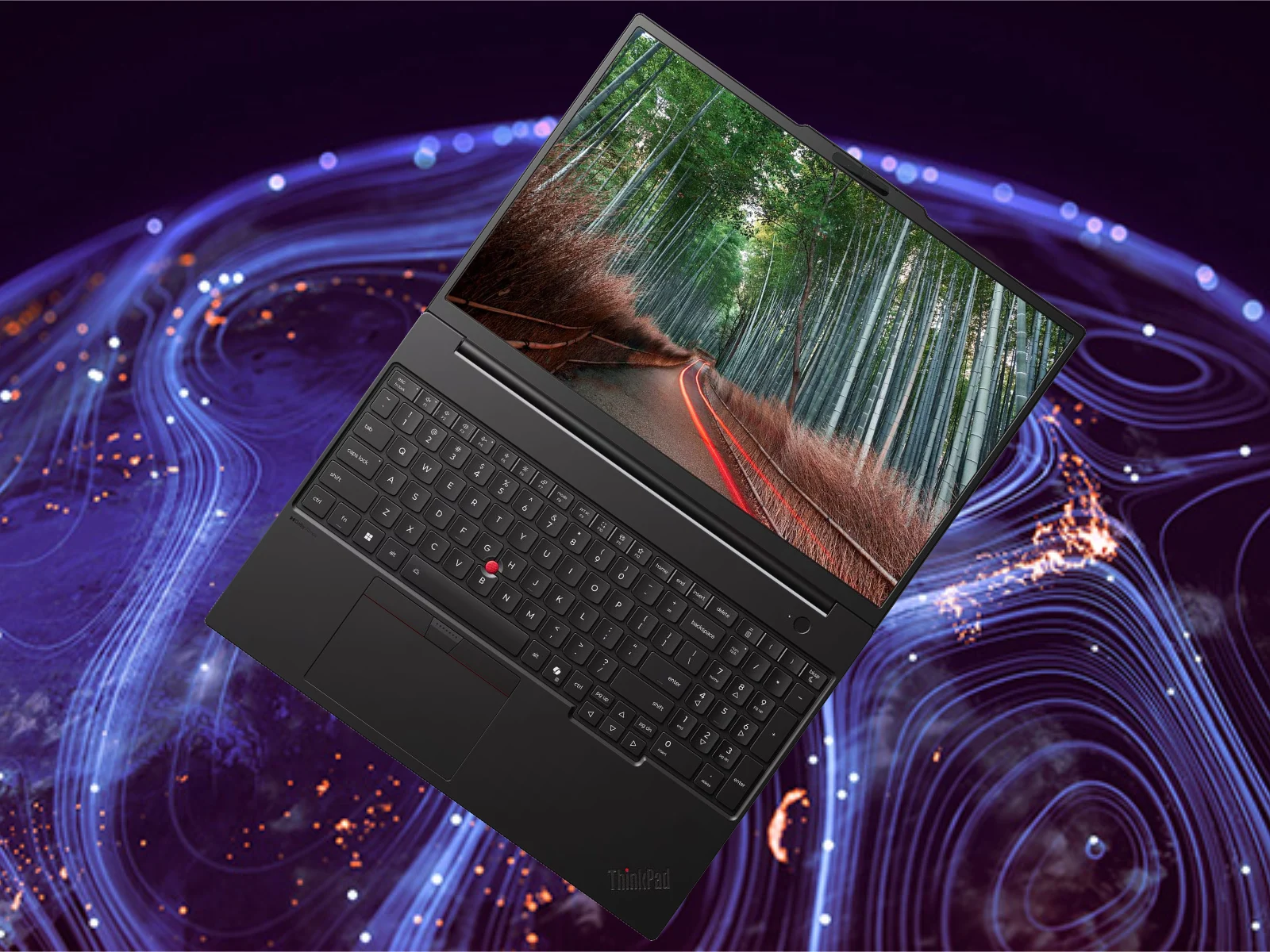
    Earlier this week, Lenovo began selling the ThinkPad P16s Gen 5 with Intel Panther Lake processors. Available internationally, these Intel-based models debuted in March alongside AMD-powered counterparts. While Lenovo anticipated releasing the former in May, it expected to hold the latter back until June.

    New AMD models emerge

    Although that remains the case for the most part, Lenovo has quietly started selling AMD-based models in some capacity, replacing the Gen 4 model we reviewed in December 2025 (curr. $2,699 on Amazon). Currently, the company is offering these variants in Australia, and at quite a discount compared to their Intel-backed siblings. The shift shows Lenovo testing the waters with affordable options that might attract budget minded professionals who crave power without paying a premium.

    Price and market positioning

    At the time of writing, AMD-based ThinkPad P16s Gen 5 SKUs start at AUD 2,979 (~$2,129) compared to AUD 3,529 (~$2,522) for Intel models after messing around with Lenovo’s configurator. By default, Lenovo markets pre-configured Intel models at AUD 4,249 (~$3,307), though.

    Technical specs and configurations

    By default, the ThinkPad P16s Gen 5 comes with a Ryzen AI 5 Pro 440, a 1 TB SSD, no discrete GPU and 16 GB of LPCAMM2 RAM, a first for an AMD-powered laptop. Alternatively, the 16-inch laptop can be configured with the Ryzen AI 7 Pro 450 and Ryzen AI 9 HX Pro 470, which opens the option of adding Nvidia’s RTX Pro 500 Blackwell, RTX Pro 1000 Blackwell and RTX Pro 2000 Blackwell laptop GPUs.

    RAM, storage, and display options

    Moreover, Lenovo is selling the ThinkPad P16s Gen 5 with 32 GB, 64 GB and 96 GB of LPCAMM2 RAM running at 8,533 MT/s. PCIe 4.0 and PCIe 5.0 SSDs are also available, as are 60 Wh or 90 Wh batteries. On top of that, the laptop can be purchased with three display options culminating in an 1800p (2.8K) OLED panel featuring 500 nits peak brightness and a 30-120 Hz variable refresh rate. Lenovo has not confirmed pricing for other markets yet.

    Sources