Tag: Whoop

  • Whoop alternative: Open-source app kills expensive subscriptions

    Whoop alternative: Open-source app kills expensive subscriptions

    Key Takeaway

    – Goose is an open-source app that pulls health data from a Whoop 5.0 tracker entirely offline, bypassing the subscription.
    – It operates locally on iOS using SwiftUI for the interface and Rust for processing Bluetooth data packets.
    – The project is a raw, pre-alpha proof of concept with lag, iOS-only support, and no compatibility with older Whoop models.
    – An alternative is Google’s Fitbit Air, a subscription-light competitor to Whoop.


    Hardware subscription fatigue hits a boiling point

    Consumers are increasingly tired of buying a premium piece of technology, only to find that there own biometric data is locked behind a mandatory monthly paywall. We saw this friction recently when Oura Ring users began looking for subscription-free workarounds to access there data, and now the movement has arrived for screenless fitness trackers.

    Whoop’s business model under fire

    The primary target this time is Whoop. From it’s inception, the company has built its business model on the idea that the wearable is useless without an active subscription. If you stop paying the monthly fee, the device on your wrist essentially becomes a paperweight, leaving customers frustrated with there lack of control.

    An open-source challenger emerges

    However, an independent developer named Bennet is challenging that paradigm with an open-source project called Goose, which aims to see just how much utility can be squeezed out of the tracker without giving Whoop another dime. Announced recently on X, the project is a raw, pre-alpha proof of concept. It is far from a polished consumer application, but it successfully achieves the unthinkable: it pulls and displays health data directly from the wearable entirely offline.

    How the app bypasses the paywall

    I had a look at the GitHub files, and the app eliminates the need for external servers by operating as a local-first application. When the fitness band transmits data, the app uses standard Bluetooth connection protocols on your phone to intercept the raw data packets right out of the air, giving users back there own information without ongoing fees.

    Technical architecture and performance

    To handle this constant stream of data without melting your phone’s battery, the project uses a hybrid architecture. The user interface is built using SwiftUI, giving you a clean dashboard for tracking sleep, strain, and recovery metrics. Meanwhile, the heavy lifting of parsing and decoding those raw Bluetooth packets is handed off to a high-performance backend written in Rust. The two sides communicate locally on the device, ensuring your health data never leaves your phone, which is a big win for privacy.

    Limitations and current state

    Now, while the achievement is impressive, the project is still a developer’s playground rather than a viable alternative for the average user. Because the code is unoptimized, early builds suffer from quite a lot of processing lag. The app is also currently built exclusively for iOS devices, meaning Android users are locked out for the time being. There’s also no support for older hardware, and the app only works with the latest Whoop 5.0 model. If you don’t feel like trying out the app, Google recently launched Fitbit Air, a direct competitor to Whoop that doesn’t rely heavily on subscriptions. There’s also a Google Health premium subscription if you need more information.

    • Goose is an open-source project that bypasses Whoop’s subscription.
    • It uses Bluetooth to intercept data from the wearable directly.
    • The app is currently only available for iOS and Whoop 5.0.
    • Performance issues and processing lag are present in early builds.
    • Google’s Fitbit Air offers a subscription-free alternative.

    Sources
  • Whoop Free Health Wristband Debuts in One Market

    Whoop Free Health Wristband Debuts in One Market

    Key Takeaway

    – Whoop’s hardware is now sold separately in Australia, but use still requires an ongoing subscription, making it overall one of the most expensive options.
    – Subscriptions remain the main cost driver, with annual fees (AU$300) or higher for ECG variants, often making the first-year total comparable to previous bundles but expensive long-term.
    – Competitors (Amazfit Helio Strap, Polar Loop, Google Fitbit Air) offer data access or hardware without mandatory ongoing subscription, presenting a cheaper core option.


    In this piece, the focus is on wearables and how pricing models shift with new hardware options, especially in Australia. The discussion notes that devices like Amazfit Helio Strap and Polar Loop don’t require subscriptions, while Google Fitbit Air is priced at 99 dollars on Amazon and offers access to collected data without monthly fees. Whoop, on the other hand, takes a different route—without a pricey subscription, the wristbands become largely impractical.

    Different pricing approaches in the market

    Historically, subscribers could get hardware for free if they prepaid a subscription for at least a year. This approach is changing as Whoop begins selling wristbands and hardware separately in Australia. The Whoop 5.0 is listed at AU$99 (about $71), but it still needs a subscription to function, which runs AU$300 per year (roughly $215). The idea is that the first year costs remain roughly the same as before, while future years can be cheaper if no new hardware is required.

    ECG option and its costs

    Additionally, the Whoop MG with ECG is priced at AU$149 (about $106), yet it also requires a subscription at AU$450 per year (around $322). Individuals who pay five years in advance can receive a discount, but the total can reach AU$1,580 plus the wristband, which is substantial. This pricing model signals a shift to a more complex value proposition that combines hardware with ongoing service.

    Market impact and justification

    With these price dynamics, Whoop appears to be reacting to rising competition, but the high subscription costs keep it notably more expensive than other options currently on the market. The brand attempts to justify the premium by promising deep health insights, such as sleep, stress, and menstrual cycle tracking, which are centralized features that many competitors also offer but with different pricing structures.

    In Australia, the strategy reflects a broader trend where hardware price is paired with ongoing services, and buyers must weigh the value of ongoing data analytics against upfront costs. The ongoing subscription is the key factor that distinguishes Whoop’s offering from rivals, shaping consumer decisions about whether to invest in the ecosystem as a long-term health platform.


    Sources

  • Whoop Launches New VO2 Max Tracking for Wearable Devices

    Whoop Launches New VO2 Max Tracking for Wearable Devices

    Key Takeaways

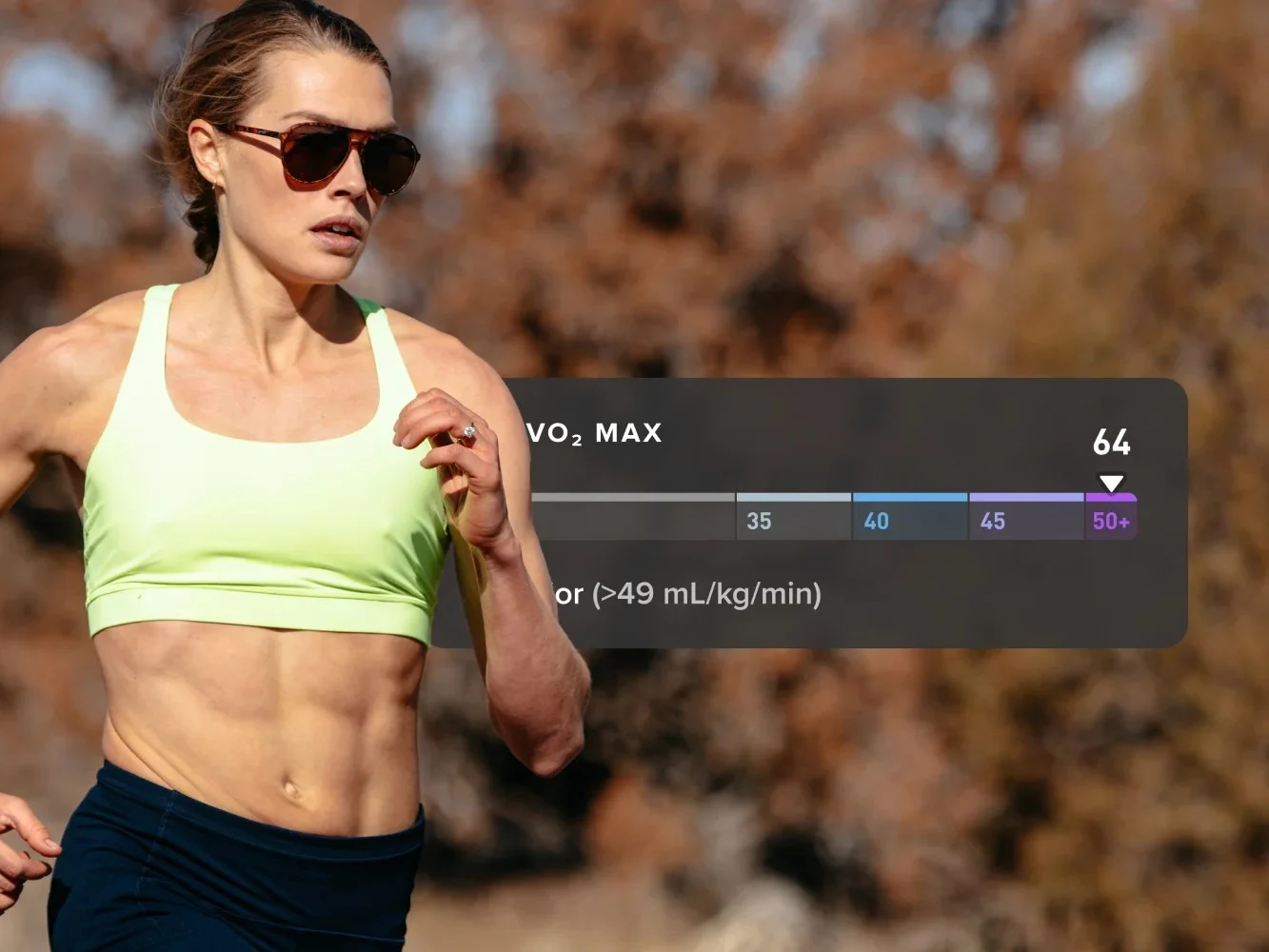
    1. Whoop has launched a VO2 Max tracking feature for its fitness devices, measuring oxygen usage during exercise to reflect heart and lung fitness.
    2. The VO2 Max algorithm uses thousands of data points, including breathing rate and heart rate zones, achieving accuracy within 8% of gold standard tests.
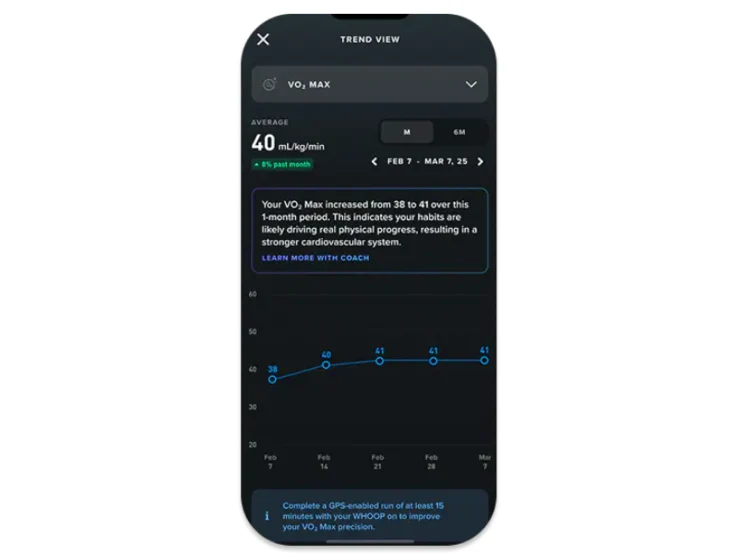
    3. Users can easily track their weekly VO2 Max score and monitor changes over one- and six-month periods through the Whoop app.
    4. To improve VO2 Max, Whoop recommends regular cardio workouts, a healthy diet, adequate sleep, and stress management.
    5. The VO2 Max feature is available for Whoop 4.0 users, priced at $239 on Amazon.


    Whoop has introduced a fresh VO2 Max tracking function for its fitness devices. VO2 Max gauges the highest level of oxygen you utilize during exercise, reflecting your heart and lung fitness. The firm explains it as “the ultimate metric for long-term health and performance”.

    Advanced Algorithm Insights

    The Whoop VO2 Max algorithm reportedly harnesses thousands of data points, including factors like breathing rate, recovery, time spent in heart rate training zones, and GPS information gathered during runs. This blend of health stats and activity data, along with demographic information, enables a weekly update of your VO2 Max. Whoop claims that the mean absolute percentage error of its VO2 Max measurement is below 8% when evaluated against gold standard tests.

    Easy Tracking Features

    You can feature your weekly VO2 Max score on your home screen in the Whoop app by navigating to My Dashboard > Customize. Moreover, users have the ability to monitor how this metric evolves over one-month and six-month intervals. Additionally, if you have a VO2 Max result from a laboratory test, you can manually input this on the Trends screen. It’s important to keep in mind that the VO2 Max estimate is only processed if you’ve had 14 sleeps within the last 21 days. Furthermore, accuracy improves when users log a GPS-tracked run lasting over 15 minutes and input their weight.

    Recommendations for Improvement

    Whoop recommends that users strive for a VO2 Max range of 35 to 40 ml/kg/min, highlighting that it generally decreases with age, which can lower your overall fitness level. To boost your VO2 Max, the company suggests consistent cardio workouts, a healthy diet, sufficient sleep, and management of stress. This new Whoop VO2 Max feature is currently accessible for users of devices like the Whoop 4.0 (priced at $239 on Amazon).

    Source:
    Link


  • Whoop Update Boosts Sleep Staging Accuracy by 7%

    Whoop Update Boosts Sleep Staging Accuracy by 7%

    Key Takeaways

    1. Whoop’s updated Sleep Staging Algorithm enhances sleep stage detection accuracy by 7% and improves sleep/wake detection precision by 3%.
    2. Users may see changes in their sleep statistics, particularly in awake time and restorative sleep, but other metrics like Recovery and HRV remain unaffected.
    3. The update is based on two years of research from Central Queensland University and the University of Arizona, with high accuracy rates in heart rate and HRV measurements.
    4. The new algorithm was implemented on February 24th, and data recorded before that date will not change.
    5. Users of Whoop devices, such as the Whoop 4.0, will receive notifications in the app about the updates.


    Whoop has rolled out an update for its Sleep Staging Algorithm in its health and fitness trackers. The company asserts these modifications enhance the accuracy of sleep tracking, providing “clearer insights” into your rest and recovery.

    Enhanced Sleep Stage Identification

    Whoop states it has improved the way it detects the four sleep stages: wake, light sleep, REM, and deep sleep. The company claims this update has increased accuracy by 7% due to the integration of more data points. Additionally, there’s been a 3% boost in sleep and wake detection precision. This enhancement should result in fewer errors in identifying wake times, which can happen when you shift positions during sleep.

    User Feedback on Sleep Metrics

    According to Whoop, users might notice variations in their sleep statistics, especially regarding their awake time and restorative sleep data. Some users have shared on Reddit that they’re experiencing a noticeable decrease in their total wake times. However, Whoop assures that other metrics like Recovery, Strain, and HRV will not be affected by this update.

    Research Behind the Update

    The new algorithm started to take effect on February 24th, and any sleep data recorded prior to this date will remain unchanged. This release is based on two years of research conducted at Central Queensland University and the University of Arizona. The polysomnography (PSG) data revealed that Whoop’s heart rate measurements boast an accuracy of 99.7%, while HRV measurements are 99% accurate. Moreover, the brand’s devices have been shown to surpass competitors in calculating total sleep time.

    The improved Sleep Staging Algorithm will automatically update for users of devices like the Whoop 4.0 (currently priced at $239 on Amazon). Users can expect a notification in the Whoop app detailing the changes.

    Source:
    Link