Tag: AMOLED

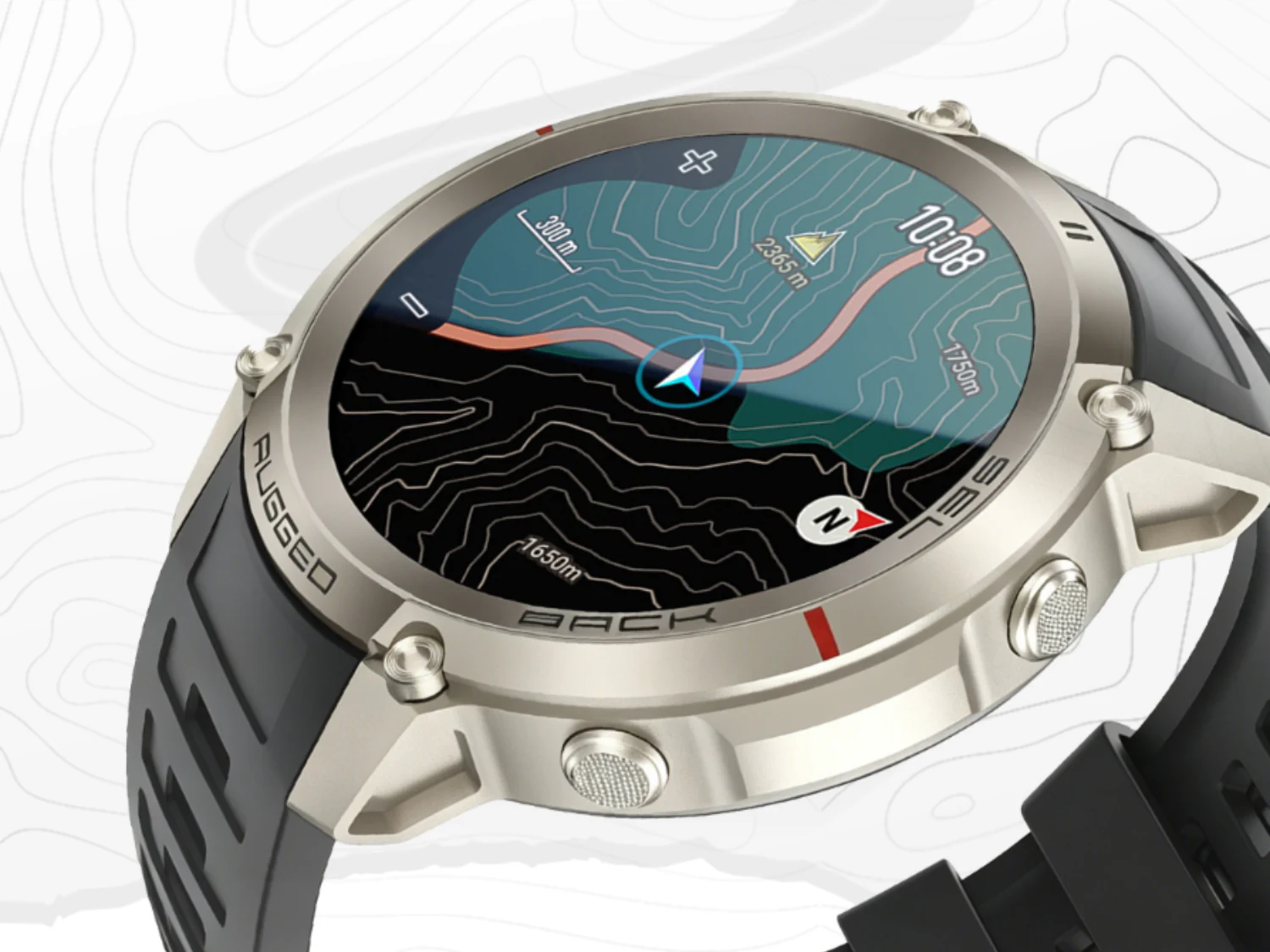
  • New Affordable Smartwatch Launches with Offline Maps & Dual GPS

    New Affordable Smartwatch Launches with Offline Maps & Dual GPS

    Key Takeaway

    – Dual-band GPS and offline map support at a $69.99 price point
    – 1.43-inch AMOLED display with military-grade durability and 5 ATM water resistance
    – Outdoor toolkit includes ABC suite (altimeter, barometer, compass) and 170+ sports modes
    – 600 mAh battery with Bluetooth 5.3 and basic health tracking via VC30F HRS chip
    – Targets budget Garmin alternatives, not Wear OS, with launch promo of free matching strap


    Smartwatch That Packs Dual-Band GPS and Offline Maps Under $100

    Most smartwatches with dual-band GPS and offline map support start north of $200. The Rollme Hero D5 is trying to bring both features to the $69.99 tier, or at least claiming to do it. It’s a bold move to undercut the competition by such a massive margin, but you got to wonder if the quality matches the price or if corners were cut somewhere. People who love hiking on a budget might find this interesting.

    Display and Build Quality

    The Hero D5 is built around a 1.43-inch AMOLED display at 466×466 resolution, protected by Panda Glass, with a zinc alloy and two-color molding plastic case. It’s not titanium, but the combination of 5 ATM water resistance and a military-grade durability claim — the latter a marketing term without listed MIL-STD-810 specs — means it’s designed to handle outdoor conditions. Three physical buttons handle navigation, which is nice for gloved hands.

    GPS and Navigation Smarts

    The GPS system uses dual-band L1+L5 positioning across six satellite systems, which should improve accuracy in urban canyons and dense terrain compared to single-band alternatives. Paired with offline map support, it means navigation doesn’t require a cellular connection, which is acutally a pretty practical advantage for trail and wilderness use. The built-in ABC suite covers altimeter, barometer, and compass, and that rounds out the outdoor toolkit nicely for adventures.

    Health Sensors and Processor

    Health tracking runs on the VC30F HRS chip, covering heart rate, SpO2, sleep quality, and daily activity. The main processor is an ATS3085S, a budget-tier chipset that handles the workload for a smartwatch. The 600 mAh battery is generously sized, charging via wired magnetic connector, and Bluetooth 5.3 handles smartphone connectivity. The battery life should be decent for multi-day trips in theory.

    Sports Modes and Pricing

    With 170+ sports modes and a built-in speaker, the Hero D5 is trying to compete with budget alternatives from brands like Garmin (such as the Venu) rather than Wear OS devices. It launches in Black, Gray, and Gold at $69.99 via the Rollme store, currently with a free matching strap as a launch promotion. At this price point its hard to argue with the value proposition if the features hold up.


    Sources

  • Garmin Leak Reveals Enduro 4 and Connect+ Features

    Key Takeaway

    – Reference to the Enduro 4 smartwatch found in Garmin Connect APK teardown
    – Unclear if Enduro 4 will match Fenix 8 Pro with LTE/satellite or Fenix 8 Solar
    – AMOLED and solar charging may still not be combined
    – Hints of call categorisation and emergency feature tweaks
    – New capabilities may be tied to Garmin Connect+ subscription


    First Paragraph With No Heading

    The Garmin Connect app is the partner app for Garmin smartwatches and other stuff, handeling data syncronization with Garmin’s cloud and letting you do firmware updates—especialy for gadgets that don’t have direct Wi-Fi. An APK teardown of version 5.26 shows clear hints of a upcoming smartwatch plus new capabilities, though you should treat these findings with some caution. The specifics, first reported by Gadgets & Wearables, are not yet been officially confirmed by the company.

    Discovering the Enduro 4

    Probably the most notable discovery here is a reference to the Enduro 4. The Enduro series is essentally a battery-focused version of the Fenix lineup, usualy having solar charging for longer usage time. It remains not clear weather the Enduro 4 will be more like the Fenix 8 Pro, maybe adding LTE and satelite comunication, or if it goes with the already tested Fenix 8 Solar version. This difference matters a lot, because current Fenix 8 Pro models are useing AMOLED displays, and Garmin has not yet combined AMOLED panels with solar charging technology.

    Phone and Emergency Tweaks

    Additional findings in the APK point to expanded phone functionality, including possible call categorisation. There are also indications of small tweaks to emergency features such as automatic incident detection, and also new capabilities that are tied to the Garmin Connect+ subscription service. These changes are still in development and might look different when released. The code also suggests other small performance improvements that will affect how the app syncs data to the cloud, though this is still under wraps from the company.

    • Enduro 4 name found in APK code
    • Possible LTE and satellite features
    • Call categorisation is being worked on
    • Emergency detection features are being updated

    New Subscription Features

    There are also new capabilities tied to the Garmin Connect+ subscription, which might be a premium service for additional analytics. Gadgets & Wearables, Image Source: Inge Schwabe, Notebookcheck. The pricing for the Enduro 4 is not yet known, and the exact specifications remain uncertain until an official announcement happens. The APK teardown is not a confirmation of any final products, and users should wait for official word from Garmin before makeing any decisions.

    Sources
  • Poco X8 Pro Max: Invisible Display & Eye Strain Risk

    Key Takeaway

    – The Poco X8 Pro Max uses temporal dithering (FRC) to simulate its advertised 12-bit color depth, rather than natively rendering all gradations.
    – A small subset of users reports symptoms like eye strain, headaches, and dizziness from temporal dithering, though no scientific consensus exists.
    – The device’s high-frequency PWM dimming (3,840 Hz) is considered eye-friendly, but it does not eliminate the potential effects of temporal color modulation.
    – The dithering effect is detectable in original footage but obscured by compression on platforms like YouTube.
    – Most users will not notice any issue, but those sensitive to display flicker should consider this as a potential factor.


    Display tech and what it means for you

    The Poco X8 Pro Max boasts a state-of-the-art AMOLED display featuring a 120 Hz refresh rate, HDR10+, Dolby Vision, 12-bit color depth, and PWM dimming of up to 3,840 Hz. On paper, this places it among the most advanced smartphone displays in its class. However, a technology unfamiliar to most users is increasingly coming into focus with devices like this: temporal dithering.

    The mechanism of temporal dithering explained

    Temporal dithering is used to simulate additional color shades. Instead of displaying a specific color directly, the display – or the mechanism controlling a pixel – rapidly toggles between two similar color values. The human eye perceives this as an intermediate color. This method allows for the creation of exceptionally fine color gradients and an increase in the advertised color depth without requiring the panel to natively render every single gradation.

    Who might feel the effects

    For most people, this process is completely imperceptible. However, a small group of users reports symptoms such as burning eyes, headaches, dizziness, or unusually rapid fatigue when using certain displays. Temporal changes in brightness and color – potentially including temporal dithering alongside PWM flicker – are discussed as possible causes. While there is no scientific consensus on the matter yet, the number of anecdotal reports is rising.

    How the Poco X8 Pro Max handles this

    This distinction is particularly relevant for the Poco X8 Pro Max. The device employs very high-frequency PWM dimming, which is considered relatively easy on the eyes. Nevertheless, this does not rule out the additional use of temporal color modulation. Manufacturers generally do not disclose details regarding this practice. Our testing reveals whether the advertised 12-bit display is achieved entirely natively or is partially supported by Frame Rate Control (FRC) – a form of temporal dithering: it is highly likely that temporal dithering is being used. The effect is difficult to discern in the YouTube video, which is due to the platform’s compression or post-processing. The original footage shows the alternating flickering of the individual subpixels more clearly.

    Final thoughts for sensitive users

    For most users, this issue is of no consequence. However, those sensitive to certain displays should be aware that not only brightness flickering but also subtle color shifts can play a role. The Poco X8 Pro Max exemplifies how modern display technologies enable impressive image quality on the one hand, but on the other hand raise new questions about visual tolerance.

    Sources
  • Amazfit Balance Ultra Smartwatch: Titanium, 30-Day Battery

    Key Takeaway

    – Balance Ultra features titanium case, sapphire crystal, and 10 ATM water resistance
    – 780 mAh battery offers up to 30 days normal use or 50 hours with continuous GPS
    – 1.5-inch 3,000-nit AMOLED display with AI assistant, phone calls, and 64 GB storage
    – BioTracker 6.0 PPG sensor for 24/7 health monitoring and over 180 workout modes
    – Priced at $599.99, available for pre-order now with shipping by end of June


    Amazfit announces new Balance smartwatches

    Amazfit today unveiled two successors to the Balance 2, the Balance 3 and the Balance Ultra. The new top model in the Balance series sets itself apart from the cheaper Balance 3 with a higher-quality housing and longer battery life. The case of the Balance Ultra, which is waterproof up to a pressure of 10 ATM, is made of titanium and the display is protected from scratches by sapphire crystal.

    Battery and dimensions detailed

    The 780 mAh battery should provide a battery life of up to 30 days with normal use, or up to ten days with an active always-on display. If the GPS module is used continuously, the battery life drops to 50 hours. With a diameter of 52 millimetres, a height of 15.5 millimetres including the sensor bulge and a weight of 57 grams without the wristband, the Balance Ultra is not particularly compact, but the watch offers a wide range of functions.

    Display, sensors and features

    Amazfit installs a 1.5-inch AMOLED display with a brightness of up to 3,000 nits, microphones and speakers for an AI assistant and phone calls, and 64 GB of memory for map data, apps and music. The BioTracker 6.0 PPG sensor monitors pulse, blood oxygen saturation, stress and skin temperature around the clock. The smartwatch supports over 180 workout modes including a dive mode. An NFC chip allows contactless payment via Zepp Pay.

    Pricing and availability

    The Amazfit Balance Ultra is now available for $599.99 in the Amazfit online store and will be shipped by the end of June. Amazfit supplies two wristbands. The smartwatch is compatible with both Android smartphones and the Apple iPhone.

    Sources
  • Aura Displays unveils portable monitor with foldable AMOLED display

    Aura Displays unveils portable monitor with foldable AMOLED display

    Key Takeaway

    – Foldable AMOLED 13.3″ display with pro-grade hinges and lightweight aluminum build, weighing 1.57 lbs and 0.3 inches thick when closed.
    – No built-in kickstand; requires an extra stand for comfortable setup, impacting portability versus rivals with integrated stands.
    – 60 Hz refresh rate and 1536×2048 (FHD+) resolution; 300 nits brightness, 50,000:1 contrast, 117% NTSC color, PD-enabled with single USB-C for power and display.
    – Connectivity: two USB-C ports, one mini HDMI, and one USB 3.0 Type-A; broad compatibility with devices.
    – Price and availability: $1,299 (discounted from $1,499); expected to ship June 2026.

    Aura Displays has rolled out a new portable monitor, the Single Flex Pro (Gen 1), and the standout feature here is the foldable AMOLED panel. It spans 13.3 inches when opened up, yet when it folds, it becomes a travel-friendly screen that can be plopped onto a flat surface with ease.

    Display specs and usability

    There’s a notable drawback though: this portable monitor lacks a built-in kickstand. So, for a comfy setup with the Single Flex Pro (Gen 1), users must tote a separate stand along with the display, which can feel less handy compared to typical portable monitors that include their own stands, like some 16-inch ARZOPA models which hover around budget pricing in official listings.

    Image quality and color fidelity

    Turning to the AMOLED panel, Aura Displays claims a brightness of 300 nits and a contrast ratio of 50000:1, which should yield bright whites and deep blacks. Color performance is said to be solid, with the panel covering 117% of NTSC, suggesting punchy and vibrant visuals, especially for media and light photo work.

    However, the device sticks to a 60Hz refresh rate and a 1536×2048 resolution labeled as FHD+. For enthusiasts, a QHD resolution with at least a 120Hz refresh rate would be more compelling at a similar price point, giving smoother motion and sharper detail.

    Connectivity and build

    On the upside, it supports PD charging, meaning a single USB-C cable can both power the monitor and carry a display signal. In terms of ports, there are two USB-C, one mini HDMI, and one USB 3.0 Type-A, which broadens compatibility with many gadgets and setups.

    Regarding construction, the Single Flex Pro (Gen 1) is described as having “pro-grade” hinges, and the aluminum chassis is pitched as both lightweight and sturdy. When closed, it sits at about 0.3 inches thick and weighs roughly 1.57 pounds, making it fairly portable.

    Pricing and availability

    Prices currently listed place the Single Flex Pro (Gen 1) at $1,299, marked down from a usual $1,499. Availability is slated for June 2026. A video demonstration attached to official materials provides a closer look at the mechanism and how the foldable screen behaves in action.

    Sources
  • Realme Smartphones to Feature Compact LTPS Displays in Leak

    Realme Smartphones to Feature Compact LTPS Displays in Leak

    Key Takeaways

    1. Realme plans to enhance its AMOLED displays for 2024-2025, focusing on brightness and LTPO technology for better efficiency and responsiveness.
    2. Upcoming models may switch to LTPS technology for improved eye protection, including the flagship GT 8 Pro.
    3. The GT 8 Pro is expected to feature the Snapdragon 8 Elite 2 chipset and maintain a large 6.8-inch display with 2K resolution.
    4. The GT 8 model is anticipated to have a slightly lower 1.5K resolution display.
    5. The Realme 16 series will introduce mid-sized designs, with display sizes between 6.5 and 6.6 inches, while the Neo 8 series will launch a flat-screen model at 6.57 inches in 2026.


    Realme is aiming to catch attention with its extremely bright AMOLED displays for the years 2024 and 2025. Although these screens sometimes didn’t perform well during our tests, they featured LTPO technology for better power efficiency and responsiveness. However, this might change if a recent leak is accurate.

    New Technology on the Horizon

    The well-known tipster Digital Chat Station claims that Realme plans to improve its eye-protection features in the upcoming 2025-26 product lineup by switching to LTPS technology, even for the high-end GT 8 Pro model.

    Flagship Specifications

    The anticipated flagship, powered by the Snapdragon 8 Elite 2, could maintain a similar generous size of approximately ~6.8 inches, just like its predecessor, the GT 7 Pro. It is expected to offer a 2K resolution, whereas the GT 8 will settle for a 1.5K resolution instead.

    Mid-Tier Developments

    On the other hand, the upcoming Realme 16 series is likely to feature a “mid-sized” design, with new display sizes ranging from 6.5 to 6.6 inches diagonally.

    Additionally, the Neo 8 series, which targets the mid to low-end market, could introduce its first flat-screen model with a unique size of 6.57 inches in 2026.

    Source:
    Link


  • Honor X70 Features AMOLED Display and 7,000mAh Battery in 2025

    Honor X70 Features AMOLED Display and 7,000mAh Battery in 2025

    Key Takeaways

    1. The X70 is expected to have a 6.8-inch AMOLED display, improving on the LCD screen of the X60.
    2. It will feature a trendy 1.5K resolution, similar to the X60 Pro.
    3. The battery capacity is rumored to be at least 7,000mAh for the basic version.
    4. The launch is anticipated in the last quarter of 2024, with Magic OS 9 pre-installed.
    5. The shift from LCD to AMOLED may indicate Honor’s move away from LCD technology in Android smartphones.


    The X70 is now expected to feature a display of around 6.8 inches diagonally, similar to its previous model. However, Honor is believed to be enhancing this screen to AMOLED technology, while the X60 was equipped with an LCD screen when it was released in late 2024.

    Display and Resolution

    Rumor has it that the new model will sport a trendy 1.5K resolution, closely resembling the 6.78-inch X60 Pro. Renowned leaker Digital Chat Station has indicated that the X70 will likely carry a battery with a minimum capacity of 7,000mAh, even though it’s the most basic version in the upcoming series.

    Release Timeline

    The X70 could potentially be launched alongside its Pro counterpart in the last quarter of 2024, and it may come pre-installed with Magic OS 9 right from the start.

    It will be fascinating to determine if this successor to the MediaTek Dimensity 7025 Ultra-driven X60 can maintain its initial price of 1,199 yuan (approximately $167) despite the anticipated enhancements at its launch.

    Future of LCD Technology

    As for the LCD display, Digital Chat Station views this rumored shift at Honor as more proof of its removal from the Android smartphone scene, though it may still remain a choice for some budget-friendly tablets in the future.

  • Oppo Find X8s: Secrets of Its Record-Breaking Display Unveiled

    Oppo Find X8s: Secrets of Its Record-Breaking Display Unveiled

    Key Takeaways

    1. Tianma is a leading supplier of automotive displays in China, with about 25% of vehicles featuring their screens.
    2. The Oppo Find X8s features a 6.32-inch display with ultra-slim bezels of 1.25 mm achieved through “extreme routing” technology.
    3. The smartphone’s 6th-generation flexible AMOLED screen offers a 1.5K resolution and peak brightness of 1,600 nits, although it lacks LTPO technology.
    4. The manufacturing conditions for the screens are highly controlled, leading to exceptionally high-quality results.
    5. The Find X8s is priced at approximately $570 in China, with cases already available on Amazon, but it has not yet been released globally.


    Tianma is likely most recognized for its automotive displays back in China – there’s a saying that around 1 in 4 vehicles feature a screen from this supplier. Recently, it was announced that the company is also behind one of the innovative features of the new Find X8s, which is quite impressive.

    Screen Size and Technology

    Oppo had no room for error regarding the display size, given that it measures just 6.32 inches diagonally. Tianma showcased their capabilities with a special “extreme routing” method, achieving remarkably slim bezels of only 1.25 millimeters (mm) on each side of this powerful little device.

    Advanced Features

    This technique was utilized in the production of the 6th-generation flexible AMOLED screen, providing a 1.5K resolution and an impressive peak brightness of 1,600 nits (although it doesn’t include LTPO) for the smartphone.

    The screens were said to be made in conditions so meticulously monitored and regulated that even industry expert Digital Chat Station found them to be “almost abnormal.”

    Availability and Pricing

    The Find X8s, along with its groundbreaking display, is currently priced at around ~$570 in China. While it hasn’t been released globally yet, cases for the device are already available on Amazon.

    Source:
    Link

  • FlexTab: Ultra-Thin AMOLED Tablet and External Monitor Combo

    FlexTab: Ultra-Thin AMOLED Tablet and External Monitor Combo

    Key Takeaways

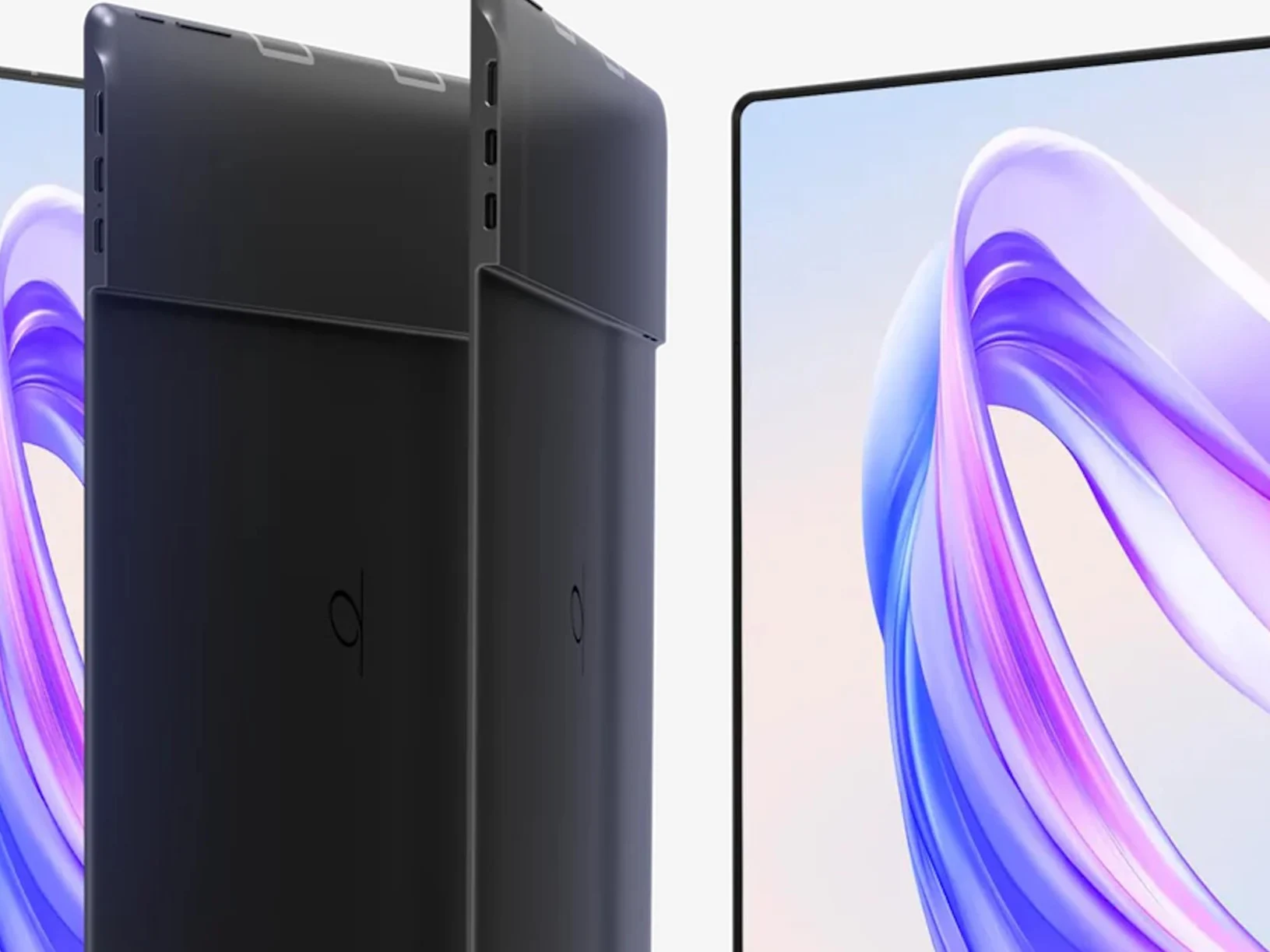
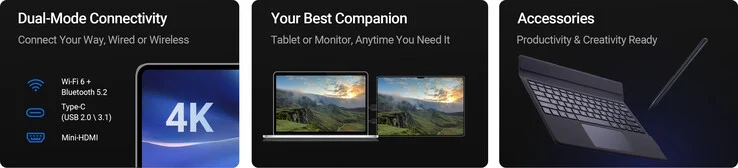
    1. The FlexTab is a versatile device that can function as a portable monitor, tablet, or laptop with an optional keyboard.
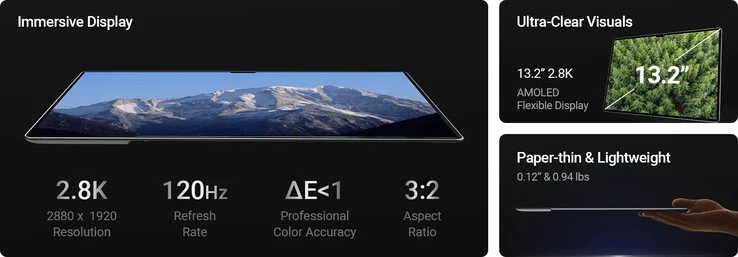
    2. It features a 13.2-inch AMOLED screen with a high resolution of 2880 x 1920 pixels and a refresh rate up to 120Hz.
    3. The device is powered by a Rockchip RK3576 chip and offers options for 8GB or 12GB RAM and 256GB or 1TB of storage.
    4. It includes multiple connectivity options, such as mini HDMI, USB 3.1, and USB 2.0 through Type-C ports.
    5. The FlexTab weighs under a pound, is only 0.12 inches thick, and is available for pre-order starting at $639, with shipping expected in July 2025.


    A new hybrid gadget named the FlexTab is now seeking support on Kickstarter. This innovative device can function as a portable monitor, a tablet, or even transform into a laptop with the optional keyboard. Additionally, it supports a stylus for more versatile use.

    Impressive Specs

    The FlexTab is equipped with a 13.2-inch AMOLED screen, boasting a resolution of 2880 x 1920 pixels and a refresh rate that can reach up to 120Hz. It achieves remarkable color precision, specifically a Delta E of under 1. The device features a 3:2 aspect ratio and can reach a peak brightness of 1,000 nits. Inside, it is powered by a Rockchip RK3576 chip, with options for either 8GB or 12GB RAM and 256GB or 1TB of internal storage. While the manufacturer remains relatively unknown, it seems the FlexTab operates on the Android system.

    Connectivity and Design

    One standout aspect of this AMOLED tablet is its ability to function as an external display, allowing image signals to be sent through mini HDMI or wirelessly. It also includes USB 3.1 and USB 2.0 connections via modern Type-C ports. The FlexTab is impressively slim at just 0.12 inches thick and weighs under a pound. It is powered by a 5,000mAh battery and can be pre-ordered with a pledge starting at $639. Shipping is slated to begin in July 2025, though potential backers should keep in mind the usual risks associated with crowdfunding, as there’s a significant chance that the product may never reach the market.

    Source:
    Link