Tag: Snapdragon 8 Elite Gen 5

  • Vivo X300 Ultra Early Launch Expected Amid Global Release Rumors

    Vivo X300 Ultra Early Launch Expected Amid Global Release Rumors

    Key Takeaways

    1. The Vivo X300 and X300 Pro launched on October 14, one year after their debut in China, with an update expected for the X300 Ultra soon.

    2. Samsung may delay the release of the Galaxy S25 series until the end of February, extending the availability of the current models.

    3. Xiaomi plans to unveil the Xiaomi 17 Ultra within a year, aiming for a release during the festive season in China.

    4. Vivo’s X300 Ultra development is progressing quickly, with a reported March release, just 11 months after the X200 Ultra’s launch.

    5. The Vivo X300 Ultra is expected to feature Qualcomm’s Snapdragon 8 Elite Gen 5 chipset and three premium rear cameras.


    The X300 and X300 Pro made their debut on October 14, exactly one year and one day after Vivo launched them in China. However, new insights from Digital Chat Station suggest a significant update could be forthcoming for the X300 Ultra.

    Samsung’s Delay

    In related news, Samsung might push back the release of its next Galaxy S series until the end of February. Should this happen, the Galaxy S25, Galaxy S25 Plus, and Galaxy S25 Ultra (currently priced at $949 on Amazon) would remain available for purchase about a month after they celebrate their first birthdays.

    Xiaomi’s Quick Turnaround

    On the other hand, Xiaomi seems set to unveil the Xiaomi 15 Ultra replacement in less than a year, with the Xiaomi 17 Ultra expected to debut during the festive season in China. Digital Chat Station has also mentioned that Vivo is eyeing a similar timeline for the X300 Ultra following the X200 Ultra’s launch in April.

    The leaker shared on Weibo that the internal development of the next Ultra device from Vivo is ‘moving along quicker than the last one’. The X300 Ultra is reportedly ‘on track for a March release’, which is a mere 11 months after the X200 Ultra first hit the Chinese market.

    Exciting Specifications on the Horizon

    Additionally, Vivo is predicted to pair Qualcomm’s newest flagship chipset, the Snapdragon 8 Elite Gen 5, with a set of three premium rear cameras. We have provided full details regarding this feature in a separate report.

    Source:
    Link



  • OnePlus 15 Overheating Problems: Company Keeps It Under Wraps

    OnePlus 15 Overheating Problems: Company Keeps It Under Wraps

    Key Takeaways

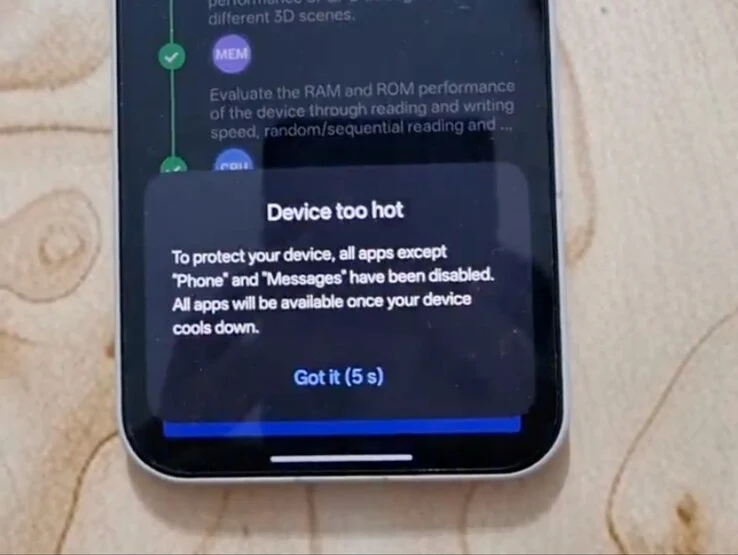
    1. The OnePlus 15 struggles to keep the Snapdragon 8 Elite Gen 5 SoC cool, particularly during high-quality video recording, reaching temperatures of 50 degrees Celsius.
    2. A leaker, Debayan Roy, faced issues with the camera, leading to a five-minute disablement after overheating during testing.
    3. OnePlus requested Roy to delete the post about the overheating camera issue, indicating a possible attempt to control negative publicity.
    4. The OnePlus 15 has a history of overheating problems, unable to complete benchmarks due to excessive heat.
    5. Despite strong battery life and fast charging, the device’s cooling system is inadequate for handling intensive tasks.


    Looks like the OnePlus 15 has some trouble keeping the powerful Snapdragon 8 Elite Gen 5 SoC cool, especially when making high-quality videos. Even worse, it appears that the company may not want this information to get out. This impression comes from an update provided by a tipster who has been hands-on with the OnePlus 15.

    Insights from a Leaker

    Debayan Roy has been providing updates about the OnePlus 15 on X while testing the flagship device. They have covered various aspects like build quality, speakers, haptics, and overall performance. However, when Roy turned their attention to the cameras, they discovered that the phone reached a temperature of 50 degrees Celsius and stopped the recording. After this, the camera was disabled for five minutes. This issue arose after successfully testing the cameras indoors and having a four-to-five-hour gap before moving outside.

    Company Response

    Shortly after this revelation, OnePlus reportedly requested Roy to remove the post. The leaker disclosed on X that OnePlus made them delete the camera-related update. They also noted that since this was a review unit, they won’t be able to share the full review as they had originally intended. So far, OnePlus has not responded, and the leaker hasn’t shared the specifics of their communication with the company.

    Ongoing Overheating Issues

    This isn’t the first time the OnePlus 15 has faced overheating problems. Last week, Roy mentioned that while running benchmarks in 3D Mark Wild Life and AnTuTu, the phone could not finish either test due to overheating. YouTuber Max Tech also reported overheating during the 3D Mark Wild Life Extreme Stress Test, but that came after completing a few other benchmarks without issues.

    The OnePlus 15 was launched in China last month and went global on November 13, but it didn’t launch in the US market. While its impressive battery life and rapid charging capabilities outperform the iPhone 17 Pro Max and other flagship phones, the cooling system appears to be having difficulty managing the SoC during intensive tasks.


    Source:
    Link


  • Poco F8 Ultra Beats Xiaomi 17 Pro Max in Early Benchmarks

    Poco F8 Ultra Beats Xiaomi 17 Pro Max in Early Benchmarks

    Key Takeaways

    1. The Poco F8 Ultra will launch on November 26, replacing the Poco F7 Ultra, which is currently priced at $735.
    2. It features the Snapdragon 8 Elite Gen 5 chipset, offering improved performance with an AnTuTu score of 3,944,934.
    3. Despite its high score, the Poco F8 Ultra’s performance is slightly lower than competitors like RedMagic 11 Pro Plus and OnePlus 15.
    4. The device includes the new VisionBoost D8 chipset, enhancing image quality with sharper visuals through AI Super Resolution.
    5. Independent reviews are recommended for a complete assessment of the Poco F8 Ultra’s capabilities and features.


    Xiaomi is just over a week away from the official launch of the Poco F8 Ultra. This new model is set to replace the Poco F7 Ultra, which was released less than a year ago and is currently priced at $735 on Amazon. The Poco F8 Ultra will be introduced alongside the Poco F8 Pro during a global event scheduled for November 26 at 08:00 UTC.

    New Features and Specifications

    In the meantime, Xiaomi has shared some details about the Poco F8 Ultra and how it will stand out from the previous version. The company has stated that the new device will feature the Snapdragon 8 Elite Gen 5, which is Qualcomm’s most advanced mobile chipset and significantly surpasses the Snapdragon 8 Elite found in the Poco F7 Ultra. Xiaomi claims that the Poco F8 Ultra achieves a score of 3,944,934 on AnTuTu.

    Performance Comparison

    Although this score is impressive, it doesn’t quite match up to the performance of similar powerful devices like the RedMagic 11 Pro Plus, OnePlus 15, and the iQOO 15, all of which are also powered by the Snapdragon 8 Elite Gen 5. Nonetheless, a score close to 4 million would still place the Poco F8 Ultra ahead of the Xiaomi 17, Xiaomi 17 Pro, and Xiaomi 17 Pro Max in the same benchmarking tests.

    Graphics Enhancements

    Apart from that, Xiaomi will also highlight the Poco F8 Ultra’s VisionBoost D8 chipset. This new chipset is an upgrade from the previous VisionBoost D7, and Xiaomi asserts that the D8 enhances the quality of images by producing ‘sharper, more detailed visuals’ with the help of AI Super Resolution algorithms. It would be wise to hold off on forming an opinion about the Poco F8 Ultra and its new graphics chipset until independent reviews are available.


    Source:
    Link


  • Apple A19 Pro Die Shot Reveals Smaller Chip with Subtle Design Changes

    Key Takeaways

    1. Apple has reduced the die area of its A19 Pro from 105 mm² to 98.6 mm² using TSMC’s advanced N3P node.
    2. The A19 Pro features six GPU cores and maintains a similar design structure to its predecessors, the A18 Pro and A17 Pro.
    3. MediaTek increased its die area to meet performance goals, while Qualcomm kept a similar die size.
    4. Future A20/A20 Pro models are expected to use TSMC’s N2 node with a gate-all-around design for higher transistor density.
    5. The advancements in SoC technology reflect ongoing improvements in performance and efficiency in semiconductor design.


    After sharing thorough teardowns of the Snapdragon 8 Elite Gen 5 and Dimensity 9500, semiconductor specialist @KurnalSalts has now revealed a detailed die image of Apple’s newest flagship SoC, the A19 Pro. MediaTek had to increase die area to comply with performance goals. Conversely, Qualcomm managed to maintain a similar die size.

    Apple’s Die Area Reduction

    In contrast, Apple has actually decreased its die area from 105 mm² to 98.6 mm². This achievement is largely due to utilizing TSMC’s advanced N3P node, which enables Apple to fit more transistors within the same space. The A19 Pro variant discussed here is the full version, featuring six GPU cores. Design-wise, not much has shifted, as the A19 Pro essentially retains the same structure as the A18 Pro (TSMC N3E) and A17 Pro (TSMC N3B) that came before it.

    Future Developments in SoC Design

    We might observe some variations in the forthcoming A20/A20 Pro, since it is anticipated to utilize TSMC’s N2 node – a first in using a gate-all-around design. This innovation will allow for even greater transistor density, which should lead to a significant boost in performance.


    Source:
    Link


  • Samsung Galaxy S26: 2nm Chips Boost Performance and Efficiency

    Samsung Galaxy S26: 2nm Chips Boost Performance and Efficiency

    Key Takeaways

    1. Historical performance issues: Exynos processors have underperformed compared to Qualcomm chips, leading to doubts about the new Exynos 2600.
    2. Global model differences: European Galaxy flagship models often lag behind U.S. models, a trend expected to continue with the Galaxy S26 and S26+.
    3. Manufacturing advancements: Samsung’s new 2nm GAA process promises modest gains in performance and efficiency, with a 60% manufacturing yield for the Exynos 2600.
    4. Cost savings potential: Samsung could save $20 to $30 per Galaxy S26 unit using the Exynos 2600 compared to the Snapdragon 8 Elite Gen 5.
    5. Optimization concerns: Exynos chips may struggle in real-world usage due to reliance on standard ARM architecture, unlike Qualcomm and Apple’s custom designs.


    Some fans are doubtful about Samsung’s new chip, and they have good reasons for their doubts. Historically, Exynos processors have not performed as well as Qualcomm chips when it comes to efficiency and overall performance. This has led to European Galaxy flagship models often underperforming compared to those in the United States. Reports suggest that this trend will continue into 2026, particularly with the Galaxy S26 and S26+. The successor to the Galaxy S25 Ultra (available here on Amazon) is expected to feature the Snapdragon 8 Elite Gen 5 worldwide.

    Manufacturing Advances

    Recently, Samsung shared its quarterly financial results along with an early look at its new 2nm GAA manufacturing process. They claim this technology offers a 5% boost in performance, an 8% increase in efficiency, and a 5% decrease in chip size when compared to their second-generation 3nm tech. While these enhancements might appear small at first, they have led to approximately 25% of all Galaxy S26 pre-orders being secured, in addition to a significant contract with Tesla valued at over $16.5 billion for producing AI6 chips. Reports indicate that Samsung has achieved a 60% manufacturing yield for the Exynos 2600, surpassing the minimum needed for mass production.

    Cost Savings and Concerns

    Sources from the industry, as reported by Chosun Biz, suggest that Samsung’s Mobile eXperience division could save about $20 to $30 on each Galaxy S26 unit using the Exynos 2600, compared to those with the Snapdragon 8 Elite Gen 5. However, despite Samsung’s positive outlook regarding the Exynos 2600, driven by leaked performance benchmarks, there are increasing worries that Exynos-powered Galaxy flagships might once more fall short in real-world usage. An insider from the industry pointed out that Samsung has chosen to stick with the standard ARM Lumex architecture, while both Qualcomm and Apple have developed their own custom chip designs that offer better optimization.

    Source:
    Link


  • Asus ROG Phone 10 Series Launch Confirmed by Leaker

    Asus ROG Phone 10 Series Launch Confirmed by Leaker

    Key Takeaways

    1. The Asus ROG Phone 10 is confirmed to be in development, despite initial concerns about the line being discontinued.
    2. The smartphone will be powered by the Snapdragon 8 Elite Gen 5 processor.
    3. The design of the ROG Phone 10 series will remain familiar, with improvements in heat dissipation and AI features.
    4. The device will support a high refresh rate, ray tracing, and offer desktop-level gaming performance.
    5. More information about the ROG Phone 10 is expected to be released as the launch date approaches, but official announcements are still pending.


    This time last year, we were already aware that the Asus ROG Phone 9 was on its way. There was not only a set launch date but also an unboxing video and several official teasers. Interestingly, there’s been very little buzz about the Asus ROG Phone 10, which has led some to wonder if Asus has decided to end this line of gaming smartphones. However, that seems not to be the case.

    Good News from a Leaker

    According to the well-known Chinese leaker, Smart Pikcahu, on Weibo, the ROG Phone 10 is indeed on its way. This information came to light when a follower inquired if Asus was shutting down its smartphone line, to which the leaker responded negatively, stating, “the ROG (phone) 10 is on its way.”

    New Specs and Features

    A quick search on Weibo for the Asus ROG Phone 10 shows an earlier post by the same leaker from late September. This post revealed that the upcoming gaming smartphone series will be powered by the Snapdragon 8 Elite Gen 5. Furthermore, it indicated that the ROG Phone 10 series will maintain a familiar design, enhance heat dissipation, and include AI features.

    The leaker also shared that the ROG Phone series will support a high refresh rate, ray tracing, and offer desktop-level performance. Many games will be optimized to take advantage of the phone’s high refresh rate. The ROG Phone 9 series, which includes the more affordable ROG Phone 9 FE and the premium ROG Phone 9 Pro (available on Amazon for $1,299), boasts a 185Hz refresh rate, indicating that the ROG Phone 10 series may retain this same refresh rate.

    Awaiting More Information

    As the launch of the ROG Phone 10 approaches, it is anticipated that additional details will emerge. Until then, we recommend that readers take this information with a grain of salt, as official announcements are still awaited.

    Source:
    Link


  • OnePlus 15 Overheats and Crashes in Snapdragon 8 Elite Gen 5 Test

    OnePlus 15 Overheats and Crashes in Snapdragon 8 Elite Gen 5 Test

    Key Takeaways

    1. The OnePlus 15 is one of the first global releases of the Snapdragon 8 Elite Gen 5 flagship smartphone.
    2. Initial performance tests showed the OnePlus 15 performing well, but it overheated and crashed during an extended stress test.
    3. The device failed the Wild Life Extreme Stress Test while the iPhone 17 Pro Max completed it successfully without issues.
    4. The OnePlus 15 reached temperatures of 52° C (125° F) during testing, indicating uneven heat distribution compared to the iPhone 17 Pro Max’s 40° C (104° F).
    5. Despite overheating issues, the OnePlus 15 demonstrated good gaming performance without significant temperature spikes later in the tests.


    The OnePlus 15 has made its debut globally and stands as one of the pioneering Snapdragon 8 Elite Gen 5 flagship smartphones to be released outside of China. With this worldwide introduction, more detailed insights into the device have emerged, including a recent video where the phone struggled during a stress evaluation.

    Performance Comparison

    This video, presented by Max Tech, pits the OnePlus 15 against the iPhone 17 Pro Max. The YouTuber mentions that OnePlus’s latest smartphone featuring the Snapdragon 8 Elite Gen 5 serves as a robust flagship device, boasting good speakers, a quality display, and solid build.

    When it comes to performance, the Snapdragon 8 Elite Gen 5 in the OnePlus 15 performed admirably in the initial synthetic tests. However, during an extended stress test, the device overheated and ultimately crashed.

    Stress Test Results

    Specifically, after passing several benchmarks, the OnePlus 15 was unable to complete the Wild Life Extreme Stress Test from 3DMark. In contrast, the iPhone 17 Pro Max managed to finish the test without any problems, while the Snapdragon 8 Elite Gen 5 device had to turn off several features like the hotspot and flashlight to prevent the temperature from increasing further.

    Max Tech utilized a thermal camera to measure the temperature, revealing that the OnePlus 15 reached up to 52° C (125° F). The thermal footage indicated that the phone did not distribute heat evenly across its surface (Black Shark FunCooler 5 Neo curr. $19.75 on Amazon). In comparison, the iPhone 17 Pro Max maintained a lower temperature of around 40° C (104° F) and was able to distribute heat more evenly.

    Gaming Performance

    Luckily, overheating didn’t affect the other aspects of the test. For instance, the OnePlus 15 demonstrated commendable gaming performance later in the video, with temperatures not escalating as high as before. You can explore further details in the video linked below.

    Max Tech

    Source:
    Link


  • Qualcomm CEO Expects Galaxy S26 Ultra with Snapdragon 8 Elite Gen 5

    Qualcomm CEO Expects Galaxy S26 Ultra with Snapdragon 8 Elite Gen 5

    Key Takeaways

    1. Samsung is considering shifting away from exclusive reliance on Qualcomm chipsets for the Galaxy S26 series, potentially using Exynos chipsets for some models.
    2. The Snapdragon 8 Elite Gen 5 may only be featured in the Galaxy S26 Ultra, while the Galaxy S26 and S26 Plus are expected to use the Exynos 2600.
    3. Qualcomm CEO Cristiano Amon noted that Samsung’s use of Qualcomm chipsets has shifted from a 50% share to around 75% in recent years.
    4. Sales volume predictions indicate that the distribution of Exynos and Snapdragon chipsets for the Galaxy S26 series may resemble that of the Galaxy S24 series.
    5. The Galaxy S26, S26 Plus, and S26 Ultra are set to be unveiled together on February 25, 2026, in San Francisco.


    Every year, there’s a lot of uncertainty regarding which chipsets Samsung will use in its upcoming Galaxy S flagship phones. It often appears that Samsung has been planting hints by regularly alternating between equipping all or just a few of its Galaxy S series smartphones with Exynos or Qualcomm chipsets. For example, Samsung was seen testing different models of the Galaxy S25 with the Exynos 2500 before ultimately deciding to use that chipset exclusively in the Galaxy Z Flip7 (currently priced at $1,099 on Amazon).

    Possible Changes Ahead

    Recently, whispers have surfaced suggesting that Samsung might shift away from relying solely on Qualcomm chipsets for the upcoming Galaxy S26 series. As we mentioned earlier this week, it looks like the Snapdragon 8 Elite Gen 5 could only be featured in the Galaxy S26 Ultra. In contrast, the Exynos 2600 is said to be the chipset for the Galaxy S26 and Galaxy S26 Plus. Qualcomm’s latest Q4 Earnings Conference Call supports this, with the company believing that Samsung and Xiaomi, among others, may prefer to use their own chipsets rather than Qualcomm’s.

    Qualcomm’s Insights

    As has been the case in past years, Qualcomm CEO Cristiano Amon provided more details about Samsung’s use of Qualcomm Snapdragon 8 series in the Galaxy S26 series. During the same earnings call, the CEO explained:

    “The second part is our relationship with Samsung. We’ve mentioned for several years now — for a number of reasons. This has been true in the past, and I think, in recent years, what was once a standard relationship at a 50% share has now become about 75% share. We consider that our new baseline. When we perform well, we sometimes exceed 75%. For the Galaxy S25, we achieved 100%. Our expectation for any new Galaxy will always be around 75%. That’s how we view things for the Galaxy S26.”

    Sales Volume Predictions

    Interestingly, ET News has elaborated on this figure, stating that the distribution of Exynos and Snapdragon chipsets for the Galaxy S26 series may return to the levels seen with the Galaxy S24, Galaxy S24 Plus, and Galaxy S24 Ultra. Most of the Galaxy S26 series is expected to run on Qualcomm’s Snapdragon 8 Elite Gen 5, but the Galaxy S26 and Galaxy S26 Plus are set to launch in Europe and South Korea with the Exynos 2600, which ET News estimates will account for about 30% of sales volume, differing from the 25% that Amon anticipates. In any case, Samsung is likely to reveal the Galaxy S26, Galaxy S26 Plus, and Galaxy S26 Ultra all together on February 25, 2026, in San Francisco.

    Source:
    Link


  • Vivo Offers 7 Years of Updates for Affordable iQOO 15 Flagship

    Vivo Offers 7 Years of Updates for Affordable iQOO 15 Flagship

    Key Takeaways

    1. The iQOO 15 features a Qualcomm Snapdragon 8 Elite Gen 5, an AMOLED screen with 6,000 nits brightness, and a 7,000mAh battery, starting at around €600, making it a strong value option.
    2. Vivo has increased software support for the iQOO 15 to five major Android updates and seven years of security patches.
    3. This software support approach puts Vivo closer to competitors like Google, which also offers seven years of updates.
    4. Vivo is improving customer satisfaction by updating older models like the iQOO Neo 7 and Neo 7 Pro to the newer Origin OS 6.
    5. Vivo appears to be focusing more on the European market, as seen with the launch of the Vivo X300 Pro shortly after its Chinese release.


    Vivo’s sub-brand iQOO isn’t sold in the US and several other Western regions, but the iQOO 15 is one of their attractive phones with a great price-performance ratio that can be imported from China. The iQOO 15 has a Qualcomm Snapdragon 8 Elite Gen 5, an AMOLED screen reaching a brightness of 6,000 nits, and a hefty 7,000mAh battery, all starting at around €600. This makes the iQOO 15 one of the cheapest smartphones available with the fastest Snapdragon processor out there.

    Software Support Upgrades

    Previously, Vivo guaranteed three major Android updates and four years of security patches for its flagship devices until the iQOO 11. With the release of the iQOO 12, they improved this commitment to four Android updates and five years of security patches. Now, as Vivo has shared with SmartPrix, the iQOO 15 will receive an impressive five major Android updates along with seven years of security patches. This brings Vivo close to its top competitors, though the Google Pixel 10 (starting at $779 on Amazon) is also set to get seven years of updates and security fixes, including new features.

    Focus on Customer Satisfaction

    Vivo seems to be working on bettering its customer satisfaction. They recently announced that the iQOO Neo 7 and iQOO Neo 7 Pro will get the Origin OS 6 update, even though these models were meant to stay on the older Funtouch OS 15. It’s unclear if this improved software update approach is part of a larger strategy to enter more global markets, but the Vivo X300 Pro’s launch in Europe shortly after its introduction in China indicates that Vivo is focusing more on the European market than it did before.

    Source:
    Link


  • Galaxy S26 Ultra to Feature Exclusive Snapdragon Chips, Leak Says

    Galaxy S26 Ultra to Feature Exclusive Snapdragon Chips, Leak Says

    Key Takeaways

    1. The Galaxy S26 Ultra will feature the exclusive Qualcomm Snapdragon 8 Elite Gen 5 processor, while the standard S26 and S26 Plus will use Samsung’s Exynos 2600 chip.

    2. The return of the Exynos chip for the S26 base models marks a significant win for Samsung’s 2nm chip design and may improve its negotiating position against Qualcomm.

    3. Analysts predict the Ultra model will not use an Exynos chip until at least the Galaxy S27, expected in 2027.

    4. The Galaxy S26 series is anticipated to launch in February 2026, with a potential Unpacked event in late January.

    5. The Snapdragon 8 Elite Gen 5 may lead to a price increase for the S26 Ultra, while the S26 and S26 Plus might offer better performance without a price hike.


    The Galaxy S26 series, which many have been eagerly anticipating, appears to be ready to mark a new phase in the ongoing battle between Exynos and Snapdragon. According to a recent report, despite Samsung’s semiconductor division making strong efforts, the company seems to be maintaining a known structure for its upcoming flagship processors. The Qualcomm Snapdragon 8 Elite Gen 5 chip will be reserved exclusively for the Samsung Galaxy S26 Ultra, its highest-end model.

    Processor Specifications

    As reported by the Korean media outlet Chosun Biz, the Galaxy S26 Ultra is set to be the sole model featuring the Qualcomm Snapdragon 8 Elite Gen 5 processor. In contrast, the standard Galaxy S26 and the Galaxy S26 Plus will be equipped with Samsung’s own Exynos 2600 chip. If this information holds true, it suggests that Samsung is confident enough in the Exynos 2600 to use it in major flagship models, while still recognizing the “Snapdragon” brand as a significant selling point for the Ultra version.

    Chip Design and Production

    Having used Snapdragon chips across all Galaxy S25 models, the return of Exynos for the base and Plus models in the S26 lineup marks a significant win for Samsung’s 2nm GAA (Gate-All-Around) chip design and production process. Experts in the industry believe this could enhance Samsung’s negotiating power against Qualcomm. However, analysts predict that the Ultra model won’t incorporate an Exynos chip until at least the Galaxy S27 launching in 2027.

    Launch Timeline and Pricing Implications

    While the focus remains primarily on processor choices, the same report reinforces previous leaks concerning the launch schedule. It suggests that Samsung aims to launch the Galaxy S26 series in February 2026, aligning with earlier hints of a February 25 date. Nonetheless, Chosun Biz also leaves room for the Unpacked event to occur in late January 2026, without altering the devices’ availability for the following month. Reportedly, Samsung has been working diligently to accelerate this timeline, as initial changes to the product lineup—such as removing the “Edge” and bringing back the “Plus” model—threatened to push the launch back to March.

    For consumers, this decision regarding chip selection could have a significant impact on pricing. The Qualcomm SoC is notably more expensive than the Exynos 2600, and with the rising global costs of components, many in the industry anticipate that the Snapdragon-exclusive Galaxy S26 Ultra will experience a price hike. On the other hand, buyers of the S26 and S26 Plus may see enhanced performance without a corresponding price increase—though this remains speculative for now.

    Source:
    Link