Tag: Meta

  • Meta Invests in Personal Superintelligence and Powering Silicon

    Meta Invests in Personal Superintelligence and Powering Silicon

    Key Takeaways

    1. Meta is shifting focus from metaverse goals to “personal superintelligence” as the next phase in consumer computing.
    2. Zuckerberg emphasizes AI as a personalized extension of human abilities rather than a tool for mass automation.
    3. Meta is significantly increasing its AI budget and has created a new division, Superintelligence Labs, to enhance AI models.
    4. Hardware upgrades, including custom accelerators and a next-gen Meta Training and Inference Accelerator, are being implemented to support AI advancements.
    5. Meta is pivoting from its costly metaverse investments to capitalize on the immediate market potential of AI, aiming to establish a competitive edge in personalized superintelligence.


    Meta is changing its long-term research focus to what CEO Mark Zuckerberg describes as “personal superintelligence.” In a public letter shared before the company’s Q2 2025 earnings call, he highlighted this idea as the next phase in consumer computing, marking a shift away from previous metaverse goals and from the industry’s view of artificial general intelligence primarily as a tool for replacing workers.

    A New Perspective on AI

    Zuckerberg believes that AI ought to function as a personalized extension of human abilities instead of a broad system for mass automation. The letter stresses the importance of individual choice: according to Meta, superintelligence should adjust to personal objectives, everyday situations, and creative desires. This stance implicitly challenges the enterprise-focused approaches taken by firms like OpenAI and Google.

    Building the Infrastructure

    Creating real-time, context-sensitive models on a global scale will need significant infrastructure. As a result, Meta has significantly increased its AI budget by several billion dollars, hired experts from top research institutions, and set up a new division called Superintelligence Labs, led by Alexandr Wang, the former head of Scale AI. This group is tasked with enhancing Llama-class foundation models and investigating new architectures that are designed for low-latency inference.

    Hardware Innovations in Progress

    To back these models, hardware upgrades are also taking place. Inside sources reveal that custom accelerators are now working alongside Nvidia H100 and A100 GPUs in Meta’s data centers. Additionally, a next-gen Meta Training and Inference Accelerator (MTIA) is set to be completed later this year. The focus on proprietary silicon aligns with Google’s TPU strategy and hints at future uses in wearable devices, where energy efficiency is vital.

    Meta’s efforts in the metaverse have already led to losses of over $60 billion in Reality Labs. However, AI is gaining immediate traction in the market, and the company seems ready to adjust its investments. Whether personalized superintelligence will become a key platform for consumers depends on Meta’s capability to grow both its algorithms and custom hardware before competitors establish their own ecosystems.

    Source:
    Link

  • Meta Smartwatch Expected to Launch at September Connect Event

    Meta Smartwatch Expected to Launch at September Connect Event

    Key Takeaways

    1. Meta has been developing a smartwatch for over four years, facing multiple setbacks but may unveil it in September.
    2. The company has partnered with Huaqin, a Chinese ODM, to help bring the smartwatch to market.
    3. The smartwatch is expected to be showcased at the Meta Connect event on September 17th, focusing on AI and wearable technologies.
    4. Key features may include cameras, health tracking, fitness functionalities, and messaging options, but it will not use Wear OS.
    5. Meta is also developing a gesture-controlled wristband using sEMG technology, though its inclusion in the smartwatch is uncertain.


    Meta, the company formerly known as Facebook, has been working on a smartwatch for over four years now. The journey has not been smooth, with the project facing numerous setbacks, including multiple cancellations and restarts. Nonetheless, it appears that this time the smartwatch may actually launch, with a possible unveiling in September if everything goes as planned.

    Development Partners

    Currently, the name of the Meta smartwatch remains a mystery. However, a report from DigiTimes Asia indicates that progress is being made. It mentions that Meta has teamed up with Huaqin, a Chinese original design manufacturer (ODM) that has previously collaborated with brands like Samsung, Xiaomi, and Huawei on smartwatches and smartphones. This partnership is seen as a positive step towards bringing the Meta smartwatch to market.

    Upcoming Event

    Regarding the timeline for the reveal, the report states that it could be shown off during the Meta Connect event in September. This two-day event is set to take place from the 17th and will highlight the newest advances in AI, wearables, metaverse technologies, and much more.

    Features and Tech

    Details about the Meta smartwatch are still quite limited. It is expected to feature a couple of cameras, health tracking and fitness functionalities, along with messaging options. Rumors suggest that it will not operate on Wear OS, but instead will utilize a customized version of Android. Furthermore, Meta is also developing a wristband or bracelet that would let users control a computer through gestures. This device employs surface electromyography (sEMG), which interprets electrical signals from muscle movements to recognize intended actions.

    At this stage, it’s not clear how far along the development of this wristband is, making it difficult to determine if it will be showcased at the Meta Connect event. Additionally, it remains uncertain whether this technology will be included in the Meta smartwatch, though it seems rather improbable.

    Source:
    Link

  • Meta sEMG-RD Bracelet: Control Devices with Muscle Signals

    Meta sEMG-RD Bracelet: Control Devices with Muscle Signals

    Key Takeaways

    1. Meta has developed a wristband called sEMG-RD that translates muscle electrical signals into digital commands for various functions.
    2. The device uses advanced AI to quickly adapt to new users without lengthy training sessions, improving user experience.
    3. It features enhanced gesture recognition, allowing it to measure the strength of gestures for more complex interactions in VR and AR.
    4. The wristband can read handwritten text at a speed of 20.9 words per minute, showcasing its advanced capabilities.
    5. This technology represents a significant breakthrough in alternative control methods, benefiting users with disabilities and reducing reliance on traditional controllers.


    Meta has just released a study in the journal Nature that introduces a new wristband named sEMG-RD. This gadget is designed to pick up electrical signals from muscles located just under the skin and turns them into digital commands. These commands can perform different functions, like moving the cursor, navigating through a computer desktop, or launching applications.

    Advanced AI Features

    Naturally, the tech giant relies on AI to enhance this device. The newest model can smoothly adapt to new users without needing lengthy training sessions, which was a drawback in earlier models. This improvement is thanks to innovative neural network algorithms that can analyze signals quickly and create tailored control models.

    Enhanced Gesture Recognition

    Furthermore, the developers demonstrated that this device has the ability to gauge the strength of gestures, such as how hard an object is squeezed in a virtual space. This feature opens doors to more complex interactions in virtual reality (VR) and augmented reality (AR) environments. Moreover, it can currently read handwritten text at an impressive pace of 20.9 words per minute.

    Meta has been working on similar technologies since 2021. The newest version of the wristband is highlighted as one of the company’s most exciting breakthroughs in alternative control methods, which don’t depend on cameras or traditional controllers. This innovation could also offer significant advantages for users with disabilities.

    Source:
    Link

  • AI Cluster Expansion Nearly the Size of Manhattan: Meta Plans

    AI Cluster Expansion Nearly the Size of Manhattan: Meta Plans

    Key Takeaways

    1. Large-Scale Infrastructure Investment: Meta plans to build multi-gigawatt clusters, starting with the Prometheus site at one gigawatt by 2026 and expanding to five gigawatts with the Hyperion project.

    2. Strategic Focus on AI: This initiative aims to enhance computational power for AI, supported by Meta’s strong advertising revenue, leading to increased capital spending plans for 2025.

    3. Innovative Facility Design: New facilities will utilize tented structures and efficient power systems, including natural gas plants in Ohio, to reduce costs and construction time.

    4. Talent Acquisition Strategy: Meta is actively recruiting top talent, including notable figures from the tech industry, to strengthen its Superintelligence Labs and enhance AI capabilities.

    5. Long-Term AI Computing Investment: Analysts view Meta’s efforts as a significant investment in AI, with potential for high processing power, but emphasize the need for effective execution and patience for profitability.


    Meta is putting a lot of investment into building physical infrastructure, revealing plans for a number of “multi-gigawatt clusters” that are much larger than its current server farms. The first site, named Prometheus, is expected to provide one gigawatt of power capacity by 2026, while another project called Hyperion is planned to grow to five gigawatts over the coming years. Mark Zuckerberg, the CEO, mentioned that more “titan clusters” are already being designed, each taking up space similar to a large part of Manhattan.

    Strategic Investment in AI

    This investment initiative is a response to the industry’s competition for more computational power, despite many companies struggling to make large-scale AI profitable. Meta can support this expansion thanks to its main advertising business, which made nearly $165 billion last year. The company has also increased its planned capital spending for 2025 to between $64 billion and $72 billion. In April, they unified their machine-learning teams under a new name, Superintelligence Labs, focusing on turning this hardware investment into new revenue opportunities from products like the Meta AI assistant and tools for image-to-video ads, along with smart-glasses software.

    Innovative Facility Design

    Rather than the typical buildings with diesel backup systems, the new facilities will use “tented” structures, pre-made power and cooling units, along with on-site substations. This approach reduces redundancy, cutting costs and speeding up the construction timeline. Additionally, Meta is setting up two 200-megawatt natural gas plants in Ohio to help meet energy needs.

    Attracting Top Talent

    Talent acquisition is another key part of the strategy. Recently, Zuckerberg has personally recruited renowned engineers and researchers, such as former Scale AI CEO Alexandr Wang and ex-GitHub head Nat Friedman, after investing $14.3 billion in Scale. Within Superintelligence Labs, teams are discussing whether to abandon Behemoth-Meta’s most powerful open-source model for a closed alternative that might set the company apart from its competitors.

    Analysts see this endeavor as a long-term investment in gaining a lead in AI computing. A single gigawatt-class cluster could surpass three billion tera-FLOPS, providing Meta with more processing power per researcher than any other lab. However, achieving this advantage will depend on perfect execution in power delivery, supply chains, and model development—and it will require patience, as profits may not come until after the hardware is fully operational.

    Source:
    Link


  • Mark Zuckerberg Plans New AI Bot Initiative for 2024

    Mark Zuckerberg Plans New AI Bot Initiative for 2024

    Key Takeaways

    1. Meta has introduced 28 new AI bots on WhatsApp, Facebook Messenger, and Instagram, leading to user complaints about their interactions.
    2. The bots can autonomously start conversations and make suggestions, such as movie recommendations.
    3. A follow-up messaging policy restricts bots from contacting users unless the user initiated the conversation and asked at least five questions in 14 days.
    4. Meta aims to enhance user engagement through these bots, potentially increasing ad visibility and revenue.
    5. It is unclear if Meta plans to monetize the AI chatbots or integrate them into its virtual reality platform, “Horizon Worlds.”


    Just when we thought the era of bothersome AI bots was behind us, Meta has introduced 28 AI bots across its WhatsApp, Facebook Messenger, and Instagram platforms over the past year. These bots began independently posting images and starting conversations with actual users, leading to a surge of complaints from users who found it impossible to block them. Meta attributed this issue to a glitch.

    New Developments in AI Bots

    As reported by Business Insider, Mark Zuckerberg is revisiting the use of AI bots. Internal documents from Alignerr, a company that focuses on AI training, indicate that Meta Platforms is developing new AI bots. These chatbots are designed to interact with users autonomously on services like Messenger, WhatsApp, and Instagram in the near future. They will be capable of starting their own conversations, such as suggesting movies and offering relevant recommendations.

    Follow-Up Messaging Policy

    Meta has confirmed to TechCrunch that there is a follow-up messaging protocol for AI bots, which only takes place under specific circumstances. The bot can only reach out to the user again if the user previously started a conversation. Additionally, the user must have asked the AI at least five questions within a span of 14 days. Only then can the bot engage in further follow-up communication.

    Meta reassures that no repeated messages will be sent. If the user does not reply to the initial inquiry, no further attempts will be made. This approach aims to ensure that interactions with AI are not overwhelming. The testing also indicates that the bots can remember chat content for a limited duration, allowing retrieval of information from earlier conversations within that timeframe.

    Engaging Users and Business Implications

    A spokesperson for Meta explained that this feature aims to assist users in discovering more engaging topics and promoting deeper interactions with AI. Users who remain on the platform longer tend to see more ads, which in turn boosts the company’s business model.

    Nevertheless, it remains uncertain whether Meta intends to monetize its AI chatbots. The company has not clarified whether sponsored content or paid responses will be part of its strategy. Furthermore, it is unclear if these chatbots will find a place in Meta’s virtual reality environment, “Horizon Worlds”, in the future.

    Source:
    Link

  • Oakley Launches Smart Glasses with 3K Camera and AI Assistant

    Oakley Launches Smart Glasses with 3K Camera and AI Assistant

    Key Takeaways

    1. Meta is launching new smart glasses in collaboration with Oakley, featuring five unique designs and technical upgrades from the previous Ray-Ban model.
    2. The glasses are available as sunglasses or prescription lenses, with built-in microphones and speakers for AI interaction and audio playback.
    3. The front-facing camera can record videos in 3K resolution and responds to real-world questions and text translation.
    4. The glasses have an IPX4 certification for water resistance and boast a battery life of up to eight hours, extendable to 48 hours with a charging case.
    5. The Oakley Meta HSTN model will be released on July 11, priced at $499, with additional models expected later this summer starting at $399.


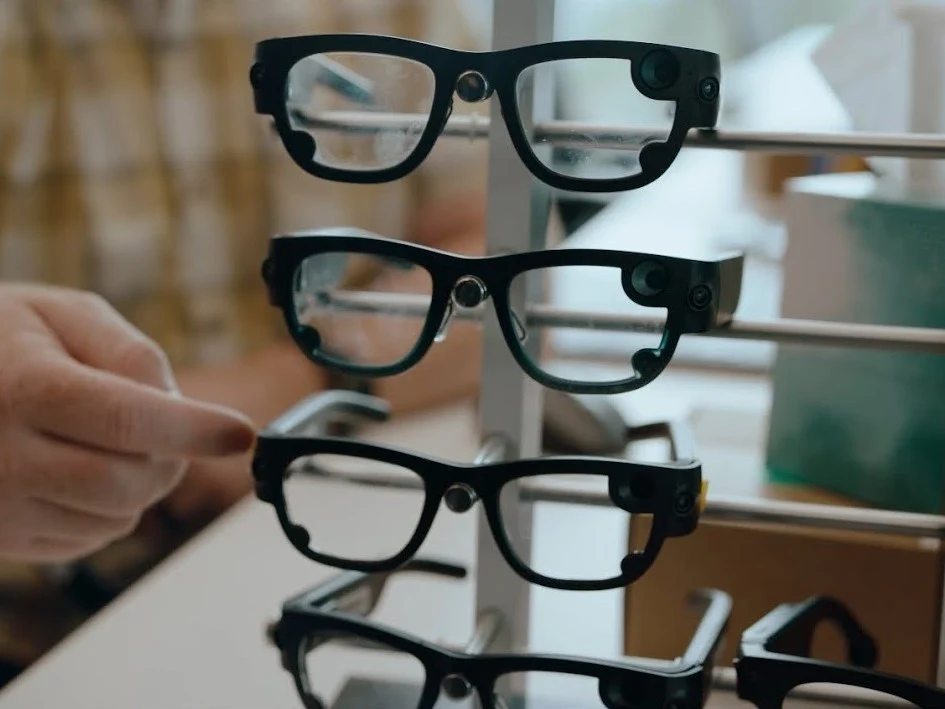
    Following a fruitful partnership with Ray-Ban, Meta is broadening its lineup of smart glasses by introducing a new model created in collaboration with Oakley. This new smart glasses come in five unique designs and boast several technical enhancements compared to the previous Ray-Ban version.

    Versatile Options

    The glasses can be purchased as either sunglasses or prescription lenses, with Oakley charging an extra fee for the latter. They are equipped with built-in microphones and speakers. When paired with a smartphone via Bluetooth, users can interact with an AI voice assistant or listen to music and podcasts through the speakers located at the temples. Additionally, the front-facing camera enables the glasses to respond to questions about real-world objects or to translate printed text.

    Enhanced Features

    One notable upgrade is the camera’s ability to record videos in 3K resolution instead of just 1,080p. These glasses also hold an IPX4 certification, which means they should resist rain, but they are not entirely waterproof. Meta has managed to double the battery life, offering up to eight hours of use; when utilized with the provided charging case, users can expect a total runtime of up to 48 hours.

    Pricing and Release Date

    The initial model, named the Oakley Meta HSTN, is slated for release on July 11, priced at $499. Additional models are anticipated to launch later this summer, starting at a price of $399.

    Source:
    Link


  • Meta Unveils Details on Aria Gen 2 Glasses for AI and AR Developers

    Meta Unveils Details on Aria Gen 2 Glasses for AI and AR Developers

    Key Takeaways

    1. Enhanced Camera Features: The Aria Gen 2 includes a primary HDR camera with a dynamic range of 120 dB, an ambient light sensor, a UV sensor, and a global shutter to prevent blurring.

    2. Advanced Vision and Tracking: Equipped with four additional computer vision cameras for a 300-degree field of view, eye-tracking capabilities, and stereo-image capture.

    3. Smart Features: Features a heart-rate-detecting pad, built-in microphone for better voice capture, and integrated speakers for clearer AI feedback.

    4. Synchronization Technology: Utilizes sub-gigahertz radio technology for precise synchronization between multiple glasses, achieving timing accuracy within one millisecond.

    5. Market Release: The Aria Gen 2 is set to be released in late 2025, while audio-only Meta smartglasses are currently available on Amazon.


    Meta has shared fresh information about its Aria Gen 2, a pair of wearable glasses aimed at AI and AR researchers. This second version enhances the initial model with longer battery life, always-active sensors, integrated speakers, and the ability to fold.

    Enhanced Camera Features

    The Aria Gen 2 is equipped with several cameras. The primary camera boasts HDR features, offering a dynamic range of 120 dB, which is excellent for capturing high-contrast images. Additionally, there’s a new ambient light sensor paired with a UV sensor to help adjust the exposure automatically, depending on whether the user is in an indoor artificial light setting or outdoors in natural light. Furthermore, a global shutter prevents the issue of pixel read-out blurring.

    Advanced Vision and Tracking

    These glasses come with four extra computer vision cameras that provide an approximately 300-degree field of view, enabling the creation of 3D depth maps around the wearer. An 80-degree overlap between the vision cameras allows for stereo-image capture. Plus, there are eye-tracking cameras that determine precisely where the user is looking.

    Smart Features

    The nose area is utilized with a heart-rate-detecting pad in the Aria. There’s also a microphone built into this pad, which enhances voice capture in noisy settings, and speakers have been added to facilitate hearing AI feedback more clearly.

    To ensure multiple Aria Gen 2 glasses work in sync, they use sub-gigahertz radio technology to share timing information, achieving accuracy within one millisecond. These glasses also feature global positioning, a barometer, a magnetometer, and sensors providing six degrees of freedom to monitor their position in space.

    The programmable glasses are set to hit the market in late 2025. Meanwhile, readers can check out a pair of audio-only Meta smartglasses available for purchase on Amazon.

    Source:
    Link

  • Meta Launches Aria Gen 2 Smart Glasses with Heart Rate Tracking

    Meta Launches Aria Gen 2 Smart Glasses with Heart Rate Tracking

    Key Takeaways

    1. Meta’s Aria Gen 2 smart glasses are displayless and available only to research partners, not for public sale.
    2. The glasses feature enhanced sensors including RGB camera, eye tracking, and spatial microphones for better context recognition.
    3. A new PPG sensor monitors heart rate, and real-time processing allows for precise indoor and outdoor location tracking.
    4. Improved battery life by 40% allows for six to eight hours of continuous use while weighing approximately 75g.
    5. The glasses aim to assist individuals with blindness or visual impairments through collaboration with Envision’s Ally AI assistant.


    Meta has revealed the Aria Gen 2 smart glasses, which are displayless. These glasses come from the company’s AR and AI research initiative known as Project Aria, which began in 2020. However, this new version will only be accessible to research partners and won’t be available for the general public to purchase.

    Enhanced Features

    Meta states that the Aria Gen 2 glasses have improved capabilities to grasp human perspective and can recognize the surrounding context of the wearer. For instance, features like eye tracking and hand tracking help to precisely identify what the user is doing. When compared to the Aria Gen 1, there’s a notable upgrade in the sensor suite, which now includes an RGB camera, a 6DOF SLAM camera, eye-tracking cameras, spatial microphones, IMUs, a barometer, a magnetometer, and GNSS.

    New Sensors and Battery Life

    A new PPG sensor is included to monitor the user’s heart rate, while a contact microphone allows the glasses to detect if the wearer is talking or if it’s someone else nearby. The Aria Gen 2 can also process signals directly on the device in real-time and pinpoint your location both indoors and outdoors. Furthermore, it features built-in open-ear force-cancelling speakers for audio enjoyment. The battery has been improved by 40%, providing six to eight hours of use continuously. Still, the weight remains around 75g, maintaining the same foldable arms design as before.

    Future Applications

    The Aria Gen 2 glasses aim to enhance accessibility for people with blindness or visual impairments. Envision, a company in the field, is collaborating to integrate its Ally AI assistant with these smart glasses. A promotional video shows this technology being utilized in a grocery store, where a shopper is assisted in locating red onions. It remains uncertain when this technology will be broadly available. For those interested in purchasing smart glasses for casual use, the Ray-Ban Meta Glasses (Regular Black Wayfarer, currently priced at $299 on Amazon) could be a good option.

    Source:
    Link

  • Meta’s AI Achieves 80% Accuracy in Mind Reading Technology

    Meta’s AI Achieves 80% Accuracy in Mind Reading Technology

    Key Takeaways

    1. Meta’s AI can reconstruct sentences from brain activity with 80% accuracy, aiding those who have lost speech.
    2. The research uses non-invasive methods (MEG and EEG) to capture brain activity without surgery.
    3. Limitations include the need for a magnetically shielded environment and the requirement for participants to remain still.
    4. The AI helps understand how the brain translates thoughts into language, revealing a ‘dynamic neural code.’
    5. Meta is investing in further research with a $2.2 million donation and partnerships with various European institutions.


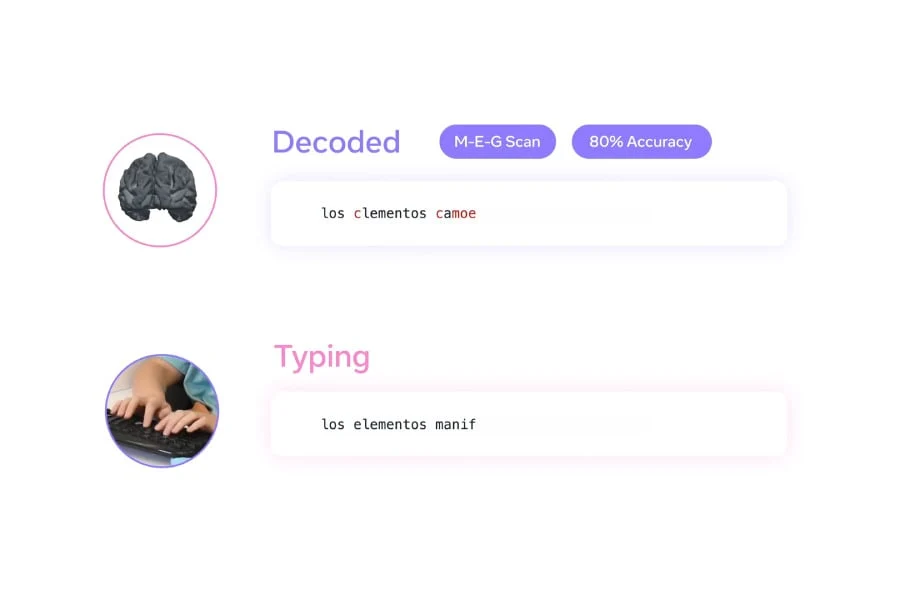
    Meta’s AI research team is making strides in understanding human thoughts. In partnership with the Basque Center on Cognition, Brain, and Language, the company has created an AI model that can reconstruct sentences from brain activity with accuracy reaching 80%. This research uses a non-invasive method for recording brain activity and, as stated by the company, could lead to technology that assists those who have lost the ability to speak.

    The Technology Behind It

    Differing from current brain-computer interfaces that typically need invasive procedures, Meta employs magnetoencephalography (MEG) and electroencephalography (EEG). These methods capture brain activity without any surgery involved. The AI model was trained on recordings from 35 participants while they typed sentences. When faced with new sentences, Meta asserts that it can predict up to 80% of the typed characters using MEG data—this is at least double the effectiveness of EEG-based decoding.

    Limitations and Challenges

    However, there are certain limitations to this approach. MEG necessitates a magnetically shielded environment, and participants have to remain completely still for precise readings. Furthermore, this technology has only been evaluated on healthy individuals, leaving its performance for those with brain injuries uncertain.

    Understanding Word Formation

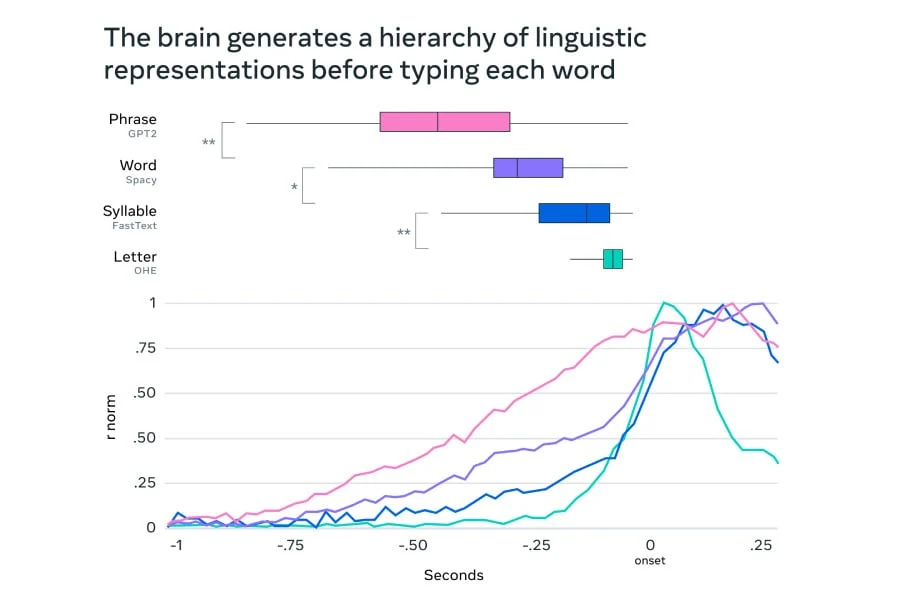
    In addition to decoding thoughts into text, Meta’s AI is assisting researchers in comprehending how the brain converts ideas into language. The AI model scrutinizes MEG recordings, observing brain activity in milliseconds. It uncovers how the brain changes abstract thoughts into words, syllables, and even the movements of fingers while typing.

    A significant discovery is that the brain utilizes a ‘dynamic neural code,’ which connects various stages of language creation while keeping previous information readily accessible. This might shed light on how individuals effortlessly construct sentences while communicating.

    Meta’s research reinforces the idea that AI could eventually facilitate non-invasive brain-computer interfaces for those unable to communicate verbally. Nevertheless, the technology is not yet ready for practical application. There is a need for improved decoding accuracy, and the hardware requirements of MEG limit its usability outside of laboratory environments.

    Meta is committed to fostering this research by forming partnerships. The company has pledged a donation of $2.2 million to the Rothschild Foundation Hospital to aid ongoing research. It is also collaborating with institutions such as NeuroSpin, Inria, and CNRS in Europe.

    Source:
    Link


  • Arm Enters Chip Making with Meta as a Confirmed Customer

    Arm Enters Chip Making with Meta as a Confirmed Customer

    Key Takeaways

    1. MediaTek and Nvidia are entering the “AI PC” sector, increasing competition for Intel, AMD, and Apple.
    2. Arm is planning to launch a new chip aimed at data centers and servers, supported by the acquisition of Ampere.
    3. Arm has secured Meta as a significant client for its upcoming chip, indicating potential use in consumer devices.
    4. There could be conflicts of interest as many companies rely on Arm’s intellectual property while competing in the market.
    5. Production may involve TSMC and potentially Intel, with a likelihood of using older TSMC nodes for the initial chip version.


    With MediaTek and Nvidia set to enter the “AI PC” sector later this year, Intel, AMD, and Apple are about to face new competition. However, a fifth player is also looking to join the competition: Arm. CEO Rene Haas may reveal the new chip “as early as this summer.”

    Arm’s Ambitions

    This upcoming Arm chip is intended for use in data centers and server markets. The efforts of Arm will be supported by Ampere, a company that Softbank (Arm’s parent) is planning to acquire soon. Ampere has struggled to gain significant market share against Intel and AMD in the server sector, but things could shift once Arm steps in.

    A New Major Client

    Moreover, Arm has secured a significant client for the aforementioned chip: Meta. This chip could also be utilized in Sir Jony Ive’s secretive device. This indicates that Arm might be developing a low-power chip aimed at consumer gadgets as well. However, this scenario could lead to serious conflicts of interest, given that many companies, such as Qualcomm, Apple, and recently Intel, rely on Arm’s intellectual property.

    The report indicates that production might be outsourced to TSMC, although there’s a strong possibility that Intel will play a role as well since Arm mentioned it would utilize Intel’s 18A node for a mobile chip. If this chip actually debuts this year, it’s likely that the design has already been finalized. It’s probable that the first version will be produced on an older TSMC node like N3 or N4.

    Source:
    Link