Tag: AI chatbots

  • Anthropic Simplifies Importing Third-Party AI Chatbot Data to Claude

    Anthropic Simplifies Importing Third-Party AI Chatbot Data to Claude

    Key Takeaways

    1. Claude’s free tier now includes the memory import feature, previously exclusive to paying users.
    2. The memory import feature allows users to transfer conversation history between chatbots, enhancing personalization.
    3. The release of this feature appears timed to capitalize on competition with OpenAI and Google’s offerings.
    4. Anthropic aims to attract users from other platforms by providing valuable features for free.
    5. The company focuses on enterprise needs, prioritizing text-based reasoning and software development over multimedia capabilities.


    AI chatbot fans who have been thinking about moving to Claude will find it simpler now, thanks to a new feature added to Claude’s free tier that was once only for paying users.

    Memory Import Feature

    A key advantage of contemporary AI chatbots is their capability to adapt to user needs and preferences by analyzing past conversations. This information can be retrieved using a specific prompt, and the results can then be transferred to another chatbot. This function, known as memory import, has been introduced into Claude’s settings by Anthropic.

    Strategic Move

    The timing of this release seems intentional, especially after Anthropic’s recent clash with the US DOW, and the company’s well-known rivalry with OpenAI, which has sparked a wave of competitive promotions. By offering the memory import feature for free, it’s clear that Anthropic aims to attract more users from OpenAI, Google, and Meta.

    Focusing on Enterprise Needs

    In contrast to Google and OpenAI, Anthropic chose not to include image and video generation capabilities, instead concentrating on meeting the needs of enterprise clients by excelling in areas like software development and text-based reasoning. So far, this approach has been beneficial for the company.

    Source:
    Link



  • AI-Powered Ransomware: Chatbots Negotiate with Victims

    AI-Powered Ransomware: Chatbots Negotiate with Victims

    Key Takeaways

    1. The Global Group is using chatbots to communicate directly with victims for the first time, automating ransom requests based on encrypted file analysis.

    2. Automation allows for continuous negotiations with multiple victims simultaneously, requiring human intervention only in complex situations.

    3. The chatbot adjusts its messaging based on the victim’s profile to apply psychological pressure, aiming to hasten ransom payments.

    4. The Global Group operates a ransomware-as-a-service model, providing infrastructure and tools while partners carry out attacks, affecting at least 17 companies worldwide.

    5. The use of AI by cybercriminals is changing the threat landscape, requiring IT security experts to develop AI-driven solutions to counter automated communication.


    For the first time ever, the Global Group has started using chatbots to talk directly to its victims. As per Axios, this AI system examines encrypted sample files, checks for successful encryption, and automatically sends out ransom requests.

    Automation in Communication

    Human intervention is only required when a situation becomes more complicated or escalates. This automated messaging enables continuous negotiations with several affected parties at once, providing a significant level of scalability.

    Tailored Psychological Pressure

    As reported by Cybersecuritynews, the chatbot customizes the language, tone, and frequency of its messages based on the victim’s profile to increase psychological pressure. When combined with traditional extortion methods, this automated system aims to disturb targets and push them to pay quickly.

    The Global Group’s platform has been operational since June 2025. Picus Security suggests that the organization has created a ransomware-as-a-service model, offering the necessary infrastructure, encryption tools, and chatbots while its partners are responsible for infecting target systems. A mobile dashboard is available for operatives to oversee and manage ongoing attacks. Axios highlights that at least 17 companies in the US, UK, Australia, and Brazil have been affected.

    The Shift in AI Usage

    The use of AI by cybercriminals marks a significant change: artificial intelligence is not just a defensive tool anymore. IT security experts now face the task of quickly recognizing automated communication patterns and responding with their own AI-driven solutions. This situation underscores how dynamic and technologically intricate today’s threat landscape has become.

    Source:
    Link


  • Mark Zuckerberg Plans New AI Bot Initiative for 2024

    Mark Zuckerberg Plans New AI Bot Initiative for 2024

    Key Takeaways

    1. Meta has introduced 28 new AI bots on WhatsApp, Facebook Messenger, and Instagram, leading to user complaints about their interactions.
    2. The bots can autonomously start conversations and make suggestions, such as movie recommendations.
    3. A follow-up messaging policy restricts bots from contacting users unless the user initiated the conversation and asked at least five questions in 14 days.
    4. Meta aims to enhance user engagement through these bots, potentially increasing ad visibility and revenue.
    5. It is unclear if Meta plans to monetize the AI chatbots or integrate them into its virtual reality platform, “Horizon Worlds.”


    Just when we thought the era of bothersome AI bots was behind us, Meta has introduced 28 AI bots across its WhatsApp, Facebook Messenger, and Instagram platforms over the past year. These bots began independently posting images and starting conversations with actual users, leading to a surge of complaints from users who found it impossible to block them. Meta attributed this issue to a glitch.

    New Developments in AI Bots

    As reported by Business Insider, Mark Zuckerberg is revisiting the use of AI bots. Internal documents from Alignerr, a company that focuses on AI training, indicate that Meta Platforms is developing new AI bots. These chatbots are designed to interact with users autonomously on services like Messenger, WhatsApp, and Instagram in the near future. They will be capable of starting their own conversations, such as suggesting movies and offering relevant recommendations.

    Follow-Up Messaging Policy

    Meta has confirmed to TechCrunch that there is a follow-up messaging protocol for AI bots, which only takes place under specific circumstances. The bot can only reach out to the user again if the user previously started a conversation. Additionally, the user must have asked the AI at least five questions within a span of 14 days. Only then can the bot engage in further follow-up communication.

    Meta reassures that no repeated messages will be sent. If the user does not reply to the initial inquiry, no further attempts will be made. This approach aims to ensure that interactions with AI are not overwhelming. The testing also indicates that the bots can remember chat content for a limited duration, allowing retrieval of information from earlier conversations within that timeframe.

    Engaging Users and Business Implications

    A spokesperson for Meta explained that this feature aims to assist users in discovering more engaging topics and promoting deeper interactions with AI. Users who remain on the platform longer tend to see more ads, which in turn boosts the company’s business model.

    Nevertheless, it remains uncertain whether Meta intends to monetize its AI chatbots. The company has not clarified whether sponsored content or paid responses will be part of its strategy. Furthermore, it is unclear if these chatbots will find a place in Meta’s virtual reality environment, “Horizon Worlds”, in the future.

    Source:
    Link

  • OpenAI Enables ChatGPT Searches Without an Account

    OpenAI Enables ChatGPT Searches Without an Account

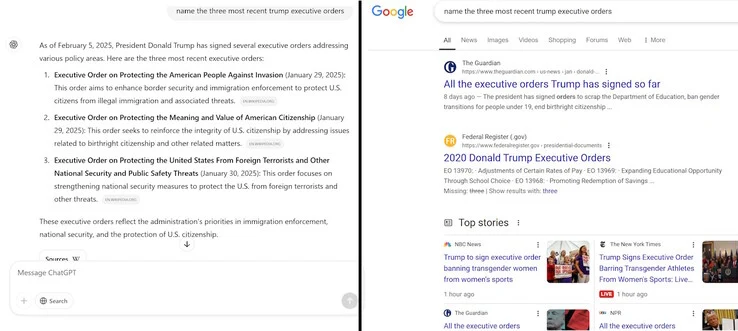
    OpenAI has now made ChatGPT, its large language model chatbot, freely available to everyone without needing to log in. Users can simply bookmark ChatGPT and utilize it to get thoughtful answers to their questions, rather than sifting through a lengthy list of results typically provided by search engines like Google.

    The Evolution of AI Chatbots

    AI chatbots, including those developed by OpenAI, are capable of sifting through vast amounts of information and presenting summaries much like a human would. Some of the most notable chatbots in the market today are OpenAI’s ChatGPT, xAI Grok, Anthropic Claude, Meta AI, Deepseek V3, and Google Gemini. If you’re curious about what ChatGPT can offer, there’s a book available on Amazon detailing its various functionalities.

    The Convenience of No Account Requirement

    A downside of many chatbot services is that they often necessitate users to set up an account and log in. This requirement can make it more cumbersome to use AI for searching, and it also risks exposing personal account details or phone numbers to external parties. By eliminating the need for accounts, OpenAI positions itself as the leading AI search option for users who are privacy-conscious or simply prefer not to go through the hassle of signing up.

    Features Available and Premium Options

    The account-free version of ChatGPT allows users to generate text for essays or emails, engage in simple conversations to get answers or chat, translate languages, solve math problems, and conduct general research for facts. However, to access more advanced features like image generation, coding assistance, and file input, users will need to subscribe to a paid account.

    Source:
    Link