Tag: Intel

  • Intel CPU Prices to Rise 10% Due to Memory Cost Surge

    Intel CPU Prices to Rise 10% Due to Memory Cost Surge

    Key Takeaways

    1. Intel is set to raise prices on PC CPUs by about 10% starting later this month, affecting various mainstream processors.
    2. The price increase is attributed to rising expenses in the semiconductor supply chain, particularly due to high demand for AI infrastructure.
    3. Intel holds about 70% of the PC CPU market share, meaning their price changes will significantly impact OEM profit margins.
    4. Memory prices have surged, with increases up to 180% quarter-over-quarter, impacting overall laptop manufacturing costs.
    5. Higher component costs may lead to tighter profit margins for PC manufacturers and potentially higher prices for end-users, especially in the notebook market.


    Intel has been quite busy lately with announcements of new Core Ultra processors for both laptops and desktops. In addition to these new releases, the company is said to be planning a price increase for its existing PC CPU range. As reported by the Korean news source ETNews, Intel has notified its major clients that it will raise prices on PC CPUs by about 10% starting later this month. This change will affect a broad spectrum of its mainstream processors, not just one specific area. The price hike will take place at the OEM level, meaning that PC makers will incur higher costs for CPUs, but there has not been any confirmation regarding changes to retail or MSRP prices yet.

    Reasons Behind the Increase

    The price increase is reportedly linked to the rising expenses in the semiconductor supply chain. Memory prices have seen a significant surge in the past few months, driven by higher demand associated with AI infrastructure and the expansion of data centers. This situation has led to imbalances in supply across various sectors of the industry. More resources are being allocated to AI-related components instead of consumer PC parts.

    Market Dynamics

    Pricing for CPUs is crucial for the total manufacturing costs of PCs. According to industry sources mentioned in the report, Intel holds approximately 70% of the PC CPU market share, meaning any change in prices will have a direct and noticeable effect on OEM profit margins. Companies like AMD and Qualcomm are also growing their presence in this market, but Intel remains the leading provider.

    Impact on Manufacturers

    Moreover, the financial strain isn’t just confined to processors. Memory prices are climbing at an extraordinary rate, with market data showing increases of up to 180% quarter-over-quarter. Other research indicates that combined CPU and memory costs could represent as much as 58% of a laptop’s total materials cost, especially for mainstream laptops priced around $900, as per TrendForce.

    Consequently, PC manufacturers might encounter tighter profit margins as input costs rise. The report also suggests that ongoing inflation in component prices may result in higher prices for end-users, particularly in the notebook market, depending on how much of the cost increase is passed down.

    Source:
    Link


  • Intel Arc B70 Pro and B65 Pro Workstation GPUs Leaked Before Launch

    Intel Arc B70 Pro and B65 Pro Workstation GPUs Leaked Before Launch

    Key Takeaways

    1. Intel’s Arc B70 Pro and B65 Pro GPUs will launch on March 25, 2025, primarily targeting workstation users rather than gamers.
    2. Both models will feature 32 GB of ECC GDDR6 memory on a 256-bit bus, offering a significant upgrade in memory capacity.
    3. The B70 Pro will have 32 Xe2 cores and a total graphics power (TGP) range of 160 to 290 watts, while the B65 Pro will have 20 Xe2 cores with a peak TGP of 200 watts.
    4. The B70 Pro is positioned as the flagship model, providing 60% more cores than the B60, while the B65 Pro offers a good midrange option with ample memory.
    5. Pricing and availability details for the new GPUs are still unclear, and gamers may need to wait longer for the Battlemage B770, as Intel focuses on its Pro offerings.


    Intel’s Battlemage BGM-G31 GPUs have been mentioned in leaks before, but the specific release date was not clear until now. As reported by VideoCardz, Intel is set to launch the Arc B70 Pro and B65 Pro on March 25, 2025. Although there were earlier statements suggesting Intel would focus on gaming graphics cards, it turns out these GPUs are mainly designed for workstation use.

    Specifications Unveiled

    Intel has shared official specs for the Arc B70 Pro and B65 Pro in their press materials. Notably, these GPUs will also feature third-party shroud designs, adding some variety to their appearance.

    These Intel Arc Pro cards will be the first public introduction of the “Big Battlemage” silicon. However, they are targeted specifically at creators and AI developers who value stability and reliability more than sheer speed.

    Memory and Performance

    Both models, B70 Pro and B65 Pro, are equipped with 32 GB of ECC GDDR6 memory on a 256-bit bus, which is a significant upgrade from the B60’s 24 GB setup. The ECC memory is crucial, as even a single bit error could ruin a lengthy render process or disrupt an AI training session.

    The leak also reaffirms previous specs for the B70 Pro and B65 Pro: the B70 Pro will have 32 Xe2 cores and a total graphics power (TGP) range between 160 and 290 watts. Intel’s typical board power (TBP) for the reference B70 Pro is around 230 watts.

    Midrange Option

    In contrast, the B65 Pro will launch with the same memory setup but will have only 20 Xe2 cores, making it a more powerful version (in terms of memory and bandwidth) of the B60 Pro, with a peak TGP of 200 watts.

    Intel’s B70 Pro stands out as the flagship of the Arc Pro series, boasting 60% more cores than the B60 while maintaining a reasonable power consumption. The B65 Pro, however, provides users with more memory capacity while reducing the number of cores, making it an appealing midrange choice for professionals who want to avoid overspending on their projects.

    Both cards will include Intel’s standard Pro features, such as DisplayPort 2.1a output, and are anticipated to be fully compatible with the latest workstation drivers from the company.

    What to Expect

    As the launch of the B70 Pro and B65 Pro approaches next week, details on pricing and availability are still not clear. Gamers eager to get their hands on the Battlemage B770 will have to hold on a bit longer, as Intel seems to be prioritizing its new Pro offerings at this time.

    For those seeking a consumer-grade graphics card that’s already available, the Intel Arc B580 remains a strong option, available at its suggested retail price through various AIB partners.

    Source:
    Link


  • Jim Keller’s Royal Core: Intel’s Unified Cores for Future CPUs

    Jim Keller’s Royal Core: Intel’s Unified Cores for Future CPUs

    Key Takeaways

    1. Intel has shut down Jim Keller’s Royal Core initiative and abandoned associated CPU architectures like Beast Lake and Beast Lake Next.
    2. Evidence suggests Intel is developing “Unified Cores,” which can function as both P-cores and E-cores depending on task requirements.
    3. Unified Cores align with the concept of Rentable Units, allowing for performance-driven processing and efficient multi-core handling.
    4. Intel may be simplifying core designs by foregoing Hyperthreading in upcoming architectures like Arrow Lake and Nova Lake.
    5. Future Intel architectures, potentially including Razer Lake in 2028, may incorporate technologies from the Royal Core project, including Unified Cores.


    We learned back in 2024 that Intel had shut down Jim Keller’s Royal Core initiative and decided against releasing any CPU architecture that would incorporate all the technologies from Royal Core. Because of this, it appears Intel has also abandoned the Beast Lake and Beast Lake Next CPU architectures that were associated with Royal Core. However, there is new evidence suggesting that Intel might be working on “Unified Cores,” which is a significant technology from the Royal Core project.

    Job Posting Hints at Development

    Recently, a user named Olrak29_ on X shared a screenshot of a job ad on LinkedIn that explicitly referenced Intel’s “Unified Core team.” This indicates that Intel is indeed making strides in developing the Unified Core, touted as one of the major advancements from the Royal Core project.

    What is a Unified Core?

    A Unified Core is designed, as the name implies, to function as both a powerful P-core and a smaller E-core depending on the requirements of the task. The idea is that instead of having distinct core designs within a CPU, the Unified Core can shift to a performance-driven P-core for maximizing single-thread capabilities and transform into an E-core when necessary. This aligns directly with the concept of a Rentable Unit, which was also a key aspect of the Royal Core initiative.

    Intel’s Strategy Moving Forward

    Previous leaks have suggested that Intel chose to forego Hyperthreading in both the Arrow Lake and Nova Lake CPU architectures to simplify the core design and pave the way for Rentable Units. As per Moore’s Law Is Dead, Beast Lake was intended to feature 4x threads per Rentable Unit. This implies that a single Unified Core P-core could generate four smaller cores to handle multi-core tasks. This aligns with information shared by RedGamingTech about the Unified Core design from the Royal Core project.

    So, where do we stand now?

    Given that Intel is actively pursuing the development of a Unified Core, it’s also reasonable to think that other technologies from the Royal Core project, such as Rentable Units and 4-way Hyperthreading, are under development in some capacity. Therefore, Intel may introduce some of these technologies in forthcoming CPU architectures. Nova Lake is expected to maintain the existing P, E, and LP E-core design seen in current architectures like Panther Lake.

    In conclusion, it seems that Intel is preparing to roll out Royal Core technologies in architectures that follow Nova Lake. For example, Intel’s Razer Lake could potentially showcase Unified Cores in 2028.

    Source:
    Link


  • PC Upgrades Decline: January 2026 CPU Sales Down 51% on Amazon US

    PC Upgrades Decline: January 2026 CPU Sales Down 51% on Amazon US

    Key Takeaways

    1. AMD dominates the CPU market in January 2026, with 88.32% of sales and $7.2 million in revenue, while Intel lags behind at 11.68% and $929,583.
    2. There was a significant 51% drop in CPU sales from January 2025 to January 2026, indicating gamers are not upgrading their systems.
    3. The Average Selling Price (ASP) of CPUs rose by 34.4%, increasing from $227 in January 2025 to $305 in January 2026.
    4. Rising costs of RAM, SSDs, and GPUs have contributed to the decline in CPU sales, making upgrades less affordable for consumers.
    5. Future CPU sales could improve with Intel’s upcoming Nova Lake CPUs, depending on market conditions and potential price reductions for other components.


    TechEpiphany has shared the CPU sales figures from Amazon US for January 2026. The report indicates that AMD continues to lead the market in both the number of CPUs sold and the revenue generated. Intel holds a far-off second place, which aligns with expectations since the Arrow Lake CPUs did not meet consumer hopes, and the upcoming Nova Lake CPUs are not available yet.

    Sales Data Insights

    In terms of sales, AMD moved 23,050 Ryzen CPUs, which makes up 88.32% of all CPUs sold on Amazon in January 2026. In contrast, Intel managed to sell only 3,050 units, capturing a mere 11.68% of the market. Revenue reflected these numbers, with AMD raking in $7,196,106.50 (88.57%) while Intel earned only $929,583.00 (11.43%). The best-selling CPUs included the AMD Zen 5 Ryzen 9000, followed by the Zen 4 Ryzen 7000, and the older Zen 3 Ryzen 5000 models.

    Comparisons to Previous Years

    While the total of 26,100 CPUs sold in January 2026 might seem impressive at first glance, a comparison with January 2025 reveals a troubling trend: many gamers are not upgrading their systems.

    According to TechEpiphany, 3DCenter has compiled a detailed table tracking CPU sales data on Amazon from December 2024 through January 2026. There was a shocking 51% drop in CPU sales from January 2025 to January 2026. During this same period, the Average Selling Price (ASP) surged by 34.4%, climbing from $227 in January 2025 to $305 in January 2026.

    Rising Component Costs

    Furthermore, prices for consumer DDR5 and DDR4 RAM have skyrocketed in recent months, and there’s no sign of this trend reversing. SSDs and GPUs have also seen significant price increases. For example, the 1 TB Kingston NV3 was priced at just $53 in May 2025 on Amazon, according to camelcamelcamel, but it is now listed at $170. Similarly, the RTX 5060 Ti 16 GB has also experienced a sharp uptick in price.

    In essence, the 51% drop in CPU sales in January 2026 on Amazon can be directly attributed to the rising costs of RAM, SSDs, and GPUs. After all, what good is a powerful new CPU if you can’t afford other essential parts at fair prices?

    Future Outlook

    It’s uncertain how much longer this challenging market will persist. Intel is expected to launch its next-gen Nova Lake CPUs, reportedly with extreme power limits, by the end of 2026. If this happens, CPU sales might rebound, especially if prices for memory, storage, and GPUs also decrease.

    TechEpiphany on X, 3DCenter on X, camelcamel, Teaser image source: Intel, AMD, PabitraKaity on Pixabay, edited.

    Source:
    Link


  • Intel Core Ultra 5 250K Plus Gaming CPU Scores Low on Geekbench 6

    Intel Core Ultra 5 250K Plus Gaming CPU Scores Low on Geekbench 6

    Key Takeaways

    1. Intel is launching the Core Ultra 200K Plus gaming CPUs, including the Core Ultra 5 250K Plus and Core Ultra 7 270K Plus, but not the Core Ultra 9 290K Plus.

    2. The Core Ultra 5 250K Plus features 18 cores (12 efficiency and 6 performance), with 4 additional E-cores compared to the previous 245K model.

    3. Performance improvements include a 100 MHz boost for P-cores and E-cores, while the E-core base clock decreases by 100 MHz; it may support DDR5-7200.

    4. In Geekbench 6 tests, the Core Ultra 5 250K Plus scored 3,113 points in single-core performance, a slight improvement over the 245K, but only 15,251 points in multi-core performance, lower than expected.

    5. The Core Ultra 5 250K Plus has specifications of 6 MB L2 cache, 30 MB L3 cache, a base clock of 4.2 GHz, and a boost clock of 5.3 GHz, using the LGA 1851 socket.


    Intel is set to launch its Core Ultra 200K Plus gaming CPUs very soon. The lineup has been confirmed to include the Core Ultra 5 250K Plus and the Core Ultra 7 270K Plus. As mentioned previously, the Core Ultra 9 290K Plus will not be released.

    New Benchmarking Insights

    Previously, we had only seen leaked performance tests for the Core Ultra 7 270K Plus and the Core Ultra 9 290K Plus. Recently, it seems the more budget-friendly 250K Plus has made an appearance on Geekbench 6. According to the listing, the Core Ultra 5 250K Plus features a configuration of 18 cores, which includes 12 efficiency cores and 6 performance cores. This new chip adds 4 E-cores compared to its older sibling, the 245K.

    Performance Expectations

    There are likely to be improved clock speeds as well; the P-cores and E-cores will see an increase of 100 MHz (boost), while the E-core base clock will decrease by 100 MHz. It’s also been suggested that the CPU might support DDR5-7200. This testing was conducted on an Asus Prime Z890-P motherboard, with the CPU coupled with 32 GB of DDR5 RAM (Crucial Pro kit currently priced at $366.26 on Amazon).

    In single-core performance, the Intel Core Ultra 250K Plus achieved a notable score of 3,113 points. To put this in perspective, the previous 245K usually scores around 3,000 points in the same benchmark, which shows a slight improvement. However, in multi-core performance, the situation isn’t as promising—the 250K only managed to reach approximately 15,251 points, significantly lower than the expected 18,000 points from its predecessor.

    Changes Still Possible

    Being an initial benchmark, these scores can definitely change over time. Given that the 250K Plus has more physical cores and higher boost clocks for the P-cores, it’s puzzling why it is falling behind its predecessor.

    Additional specifications for the Core Ultra 5 250K Plus indicated by the benchmark include 6 MB of L2 cache, 30 MB of L3 cache, a base clock of 4.2 GHz, and a maximum boost clock of 5.3 GHz. Expectedly, the CPU will still use the LGA 1851 socket.

    Source:
    Link


  • Intel Cancels Core Ultra 9 290K Plus Arrow Lake Refresh CPU Launch

    Intel Cancels Core Ultra 9 290K Plus Arrow Lake Refresh CPU Launch

    Key Takeaways

    1. Intel’s Core Ultra 9 290K Plus CPU may not be released, despite previous leaks and benchmarks.
    2. This isn’t a cancellation, as the product was never officially announced, but Intel has decided to pull back on its launch plans.
    3. Product placement issues with the upcoming Core Ultra 200K Plus series led to the decision, due to overlapping features.
    4. The Core Ultra 9 290K Plus was expected to offer a 10% performance increase with a thermal velocity boost, appealing to high-end CPU enthusiasts.
    5. Gamers can look forward to the upcoming Nova Lake gaming CPUs, set to launch later this year.


    According to a new report from VideoCardz, Intel’s highly anticipated Core Ultra 200S Plus flagship CPU, the Core Ultra 9 290K Plus, might not be released after all. This is surprising because there have been many leaks and benchmarks leading up to this point.

    Not Quite a Cancellation

    It’s important to note that this isn’t really a cancellation, as the product was never officially announced. Intel had genuinely thought about launching it, shown by the fact that they had sent units to partners. However, they have now decided to pull back on that plan.

    Reasons Behind the Decision

    VideoCardz suggests that there are product placement issues with the upcoming Core Ultra 200K Plus series. The Core Ultra 7 270K Plus is expected to feature a 24-core configuration, similar to the existing 285K and the speculated 290K Plus. Because of this, Intel concluded there was too much overlap among their products.

    While it’s true that the Core Ultra 9 290K Plus was said to have a thermal velocity boost of 100 MHz higher, which could provide a 10% performance increase as seen in leaked benchmark tests, many enthusiasts would appreciate a high-end CPU. A 10% performance gain is significant.

    Looking Ahead for Gamers

    Still, with the Nova Lake gaming CPUs reportedly set to launch later this year, fans of Intel still have plenty of exciting products to anticipate.

    Source:
    Link


  • Core G3: Intel Panther Lake Chip for Handheld Consoles Delayed

    Core G3: Intel Panther Lake Chip for Handheld Consoles Delayed

    Key Takeaways

    1. The Core G3 chip, aimed at handheld devices, has been delayed from Q1 2026 to Q2 2026.
    2. The Core G3 is rumored to feature a 14-core CPU with 2 P-cores and 12 E-cores, plus graphics from an Arc B360 SKU with 10 Xe3 cores.
    3. A more powerful version, the Core G3 Extreme, is expected to use an Arc B380 variant with 12 Xe3 cores.
    4. The Core G3 Extreme is anticipated to compete with AMD’s Ryzen Z2 Extreme due to its power efficiency and GPU performance.
    5. Panther Lake allows for more flexible memory configurations, enabling OEMs to create budget-friendly handhelds.


    While Intel has showcased a variety of Panther Lake products at CES 2026, there are still some that haven’t been revealed yet. One of these is the handheld-oriented Core G3 chip, which was first hinted at last month. Originally expected to launch in Q1 2026, the Core G3 is now reportedly pushed to Q2. This delay isn’t surprising since Panther Lake products, in general, won’t be available for a while.

    Information Leaked

    This news comes from the well-known leaker, Golden Pig Upgrade, on Weibo (via Videocardz). To remind you, the Core G3 was rumored to feature a 14-core CPU, including 2 P-cores and 12 E-cores. For its graphics, it was expected to use an Arc B360 SKU with 10 Xe3 cores. There was also talk of a more powerful version called the Core G3 Extreme, which would utilize an Arc B380 variant with 12 Xe3 cores.

    Performance Expectations

    From our in-depth analysis of Panther Lake, the Core G3 Extreme should be capable of competing with AMD’s Ryzen Z2 Extreme, thanks to its enhanced power efficiency and GPU capabilities. Although it may have fewer P-cores, which could lead to lower raw performance, the large number of E-cores is likely to significantly enhance battery life. Unlike the Lunar Lake, Panther Lake does not impose memory-on-package restrictions, enabling OEMs to produce handhelds with minimal memory to keep prices down.

    Source:
    Link


  • Modder Unlocks ThinkPad T430 from Intel’s Hidden Backdoor

    Modder Unlocks ThinkPad T430 from Intel’s Hidden Backdoor

    Key Takeaways

    1. Privacy concerns are rising as big tech companies collect and sell user data through both software and hardware products.
    2. The Intel Management Engine (ME) operates as a closed-source system within Intel processors, raising security and backdoor concerns.
    3. The NSA’s removal of the ME from its computers questions Intel’s security claims regarding the ME.
    4. Modding processes, like disabling the ME, require specialized knowledge, hardware, and compatibility checks, making them challenging for average users.
    5. Users often place trust in manufacturers without clear information about the security of their devices, complicating their understanding of privacy and surveillance risks.


    Privacy is becoming more and more important as big tech companies keep releasing products that promise to make users more productive while also collecting and selling their data. Many consumers are starting to understand how their data is used in software, but they often ignore similar practices with hardware. Intel, like other companies, has likely included backdoors in its products, driven by reasons that range from providing helpful remote support to catering to the sometimes questionable requests of government entities. A notable example found in nearly all Intel processors today is the Intel Management Engine.

    Understanding the Intel Management Engine

    The Intel Management Engine (ME) is a small, closed-source operating system that has been included in Intel processors since it was launched in 2008. Intel claims that the ME’s closed-source nature offers “security through abstraction,” despite the fact that it can access the CPU, RAM, and network components of the system. However, even with Intel’s claims about its security, the ME has been used as a way to escalate privileges and exploit systems. Notably, the NSA has removed the ME from all of its computers, which raises questions about Intel’s security claims and supports the notion that the ME could function as a backdoor or even spyware.

    The Modding Challenge

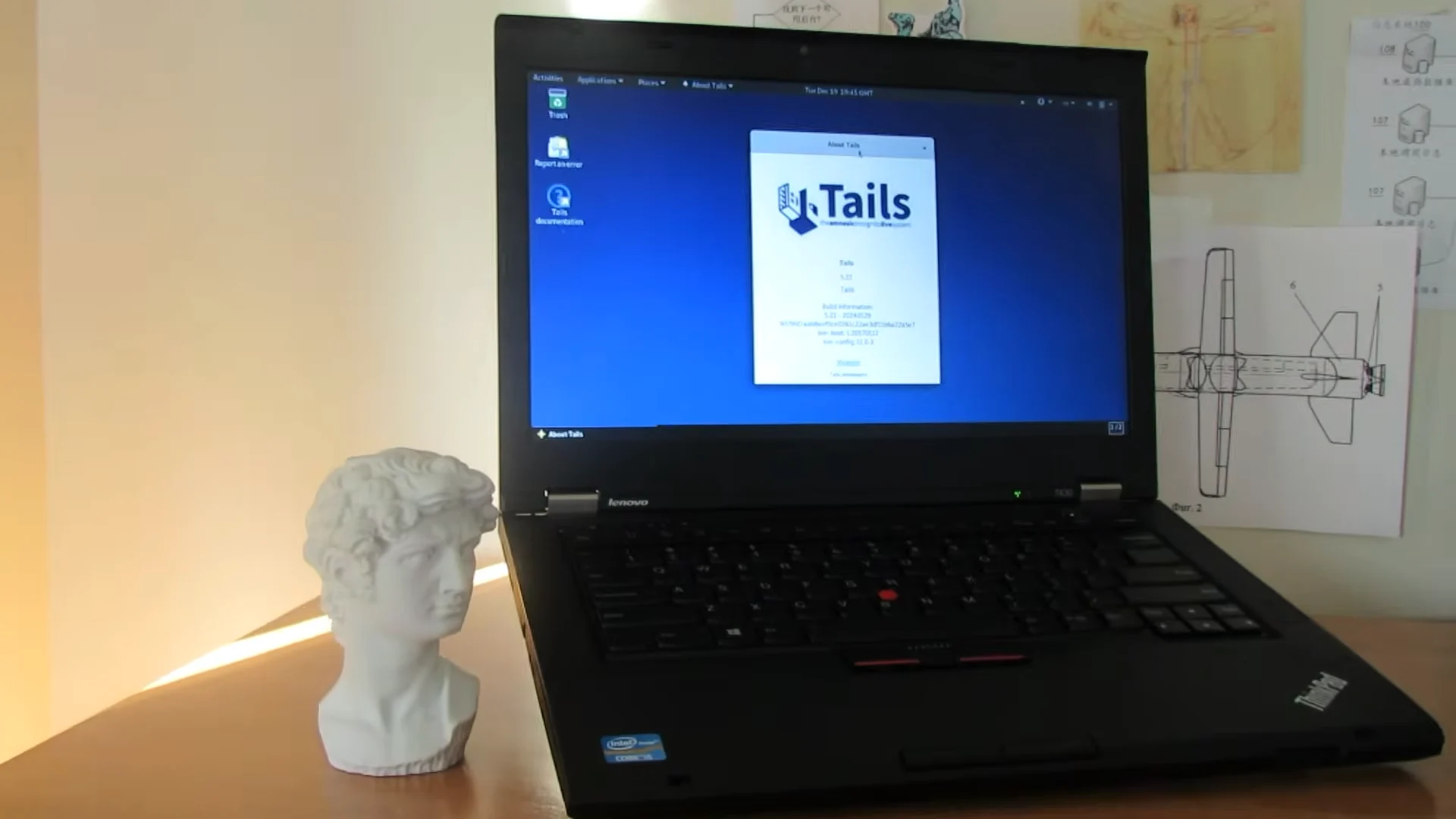
    No matter what the ME actually is, YouTuber and modder Livny decided to disable it from his system through a modding process that isn’t for everyone. This project requires not only suitable hardware but also the need to find out if the few open-source BIOS options for Intel processors are compatible. In this instance, the ThinkPad T430 was chosen because it is listed as a modifiable and future-proof device supported by the security community. To complete the mod, Livny used a Raspberry Pi, a SOIC clip, and a fully disassembled T430 with the BIOS chip accessible. He then flashed a pre-built version of coreboot onto the ThinkPad and utilized a tool named me_cleaner to disable the ME outside of the boot verification process.

    Weighing the Risks and Rewards

    For many people, undertaking this project seems like a lot of effort for what might appear to be a small gain. Yet, the intricate nature of this task highlights how much trust users put in something that is presumed to prioritize their best interests. Having a secure personal computer is certainly valuable, but without clear information from the manufacturer, users can never be entirely sure if their computer is truly secure or just a tool for surveillance.

  • Intel Raptor Lake, Titan Lake, and Hammer Lake Leak IPC Gains

    Intel Raptor Lake, Titan Lake, and Hammer Lake Leak IPC Gains

    Key Takeaways

    1. Major CPU Updates in 2026: AMD and Intel are preparing to launch their next-generation CPU architectures, Zen 6 and Nova Lake, in late 2026.

    2. Future CPU Designs Revealed: Leaks indicate new designs beyond Zen 6 and Nova Lake, including Intel’s Razer Lake, Titan Lake, and Hammer Lake, as well as AMD’s Zen 8 and Zen 9.

    3. Razer Lake Expectations: Intel’s Razer Lake CPUs, expected in 2027, will build on Nova Lake’s core setup but with new P-core and E-core designs that may significantly improve performance.

    4. Unified Core Strategy: Intel is shifting towards a “Unified Core” approach with Hammer Lake, moving away from separate P and E-core designs to streamline architecture, influenced by AMD’s core organization.

    5. Titan Lake for Laptops: Intel’s Titan Lake architecture will focus on laptops, refining the core framework of Razer Lake and introducing a new XE3P Refresh iGPU for enhanced graphics performance.


    2026 is predicted to be a significant year for desktop CPU updates. Both AMD and Intel are said to be preparing their next-generation Zen 6 and Nova Lake desktop CPUs for a late 2026 launch. However, leaks are hinting at even more future Intel and AMD CPU designs beyond just Zen 6 and Nova Lake.

    New CPU Architectures

    A recent leak from Moore’s Law Is Dead has revealed the Zen 8 and Zen 9 core designs, while RedGamingTech has shared an extensive report about Intel’s upcoming Razer Lake, Titan Lake, and Hammer Lake desktop and mobile CPU architectures. They also mention intriguing information about Intel’s Serpent Lake, which is reportedly being developed in collaboration with Nvidia. We have explored the Intel Serpent Lake architecture in a separate piece.

    Razer Lake Expectations

    Previously, it was mentioned that Intel’s Razer Lake desktop CPUs will succeed the Nova Lake-S chips in 2027. The Razer Lake processors are expected to maintain the same core setup as their Nova Lake counterparts, featuring a maximum of 16 P-cores, 32 E-cores, and possibly 4x LP E-cores. Nonetheless, the P and E-core designs will be new, incorporating the Griffin Cove P-cores and Golden Eagle E-cores.

    RGT claims that the Griffin Cove P-cores might offer a “healthy double-digit IPC increase” compared to the Nova Lake versions. Interestingly, Intel is reportedly putting more emphasis on the Golden Eagle E-cores, which are expected to deliver even greater IPC gains than the Griffin Cove P-cores.

    Unified Core Approach

    So, why is Intel concentrating more on E-cores in the Razer Lake design? According to RGT, this is due to the “Unified Core” strategy that might be introduced with Intel’s Hammer Lake in mid-2029 or beyond.

    RGT posits that Intel is shifting away from separate P and E-core designs with Hammer Lake. This new “Unified Core” approach would resemble the way AMD currently organizes its large and small cores, such as Zen 5 and Zen 5c. The Hammer Lake architecture is reportedly being developed by teams focused on E-cores, which connects Intel’s focus on Golden Eagle E-cores in Razer Lake to the future Unified Core architecture.

    Unfortunately, RGT does not provide any hardware specifications or performance metrics for the Hammer Lake CPUs. Previous insights from Moore’s Law Is Dead suggest that Hammer Lake could be the first product of Intel and Nvidia’s collaboration and could feature a significant Nvidia iGPU.

    Titan Lake Insights

    Set to launch as a laptop-exclusive architecture, Intel Titan Lake is rumored to retain the same core framework as Razer Lake. Thus, Titan Lake mobile CPUs are expected to utilize Griffin Cove P-cores and Golden Eagle E-cores as well. However, this architecture is said to be more refined compared to Razer Lake, featuring “tweaks across the overall platform”.

    RGT draws an analogy between Titan Lake processors and the 11th-gen Intel Tiger Lake CPUs, stating that the latter were simply evolutions of the previous 10th-gen chips without major changes.

    That being said, Intel Titan Lake CPUs are expected to introduce a new XE3P Refresh iGPU with over 12 Xe cores in high-end configurations, potentially offering impressive graphics performance.

    In conclusion, Intel’s future CPU architectures, as detailed by RGT, seem quite ambitious. If Team Blue can successfully launch Nova Lake in late 2026, they may finally start to close the gap with AMD in the consumer desktop arena.

    Source:
    Link


  • Intel Teases Arc B770 and 300W GPU Performance Excitement

    Intel Teases Arc B770 and 300W GPU Performance Excitement

    Key Takeaways

    1. Intel and partners will launch Panther Lake mobile chipsets at CES 2026, with Core Ultra 300 chipsets expected in laptops and gaming handhelds.
    2. The current desktop GPUs from Intel are the Arc B570 and Arc B580, while a more powerful BMG-G31-based card may be in development.
    3. Intel Gaming X has hinted at the upcoming Arc B770 and confirmed that Nova Lake is still a possibility.
    4. Recent shipping documents suggest Intel might release a new GPU with around 300 W power, likely the Arc B770.
    5. Performance expectations for Panther Lake, Nova Lake, and Arc B770 are noted to be “seriously exciting,” but caution is advised regarding these claims.


    It’s widely known that Intel and its partners are set to launch the Panther Lake mobile chipsets next month at CES 2026, taking place in Las Vegas. Recent leaks have suggested that laptops and gaming handhelds featuring the Core Ultra 300 chipsets are likely to be announced. Meanwhile, Intel’s Gaming X account has sparked rumors that both Nova Lake and the much-talked-about Arc B770 are also on their way.

    Current GPU Offerings

    To provide more context, the Arc B570 and Arc B580 (currently priced at $299 on Amazon) are the sole Battlemage architecture desktop GPUs available for consumers from Intel. There’s plenty of indication that Intel has either developed or is still working on a BMG-G31-based card, which would serve as a more powerful option. The Intel Gaming X account has also suggested that the Arc B770 is indeed still in the pipeline.

    New Developments on the Horizon

    In a now-removed response, Intel Gaming has confirmed that Nova Lake is also still a possibility. Not just that, but the same account suggests that the performance of Panther Lake, Nova Lake, and the Arc B770 is “looking seriously exciting.” However, it might be wise not to take this too seriously just yet.

    Recent shipping documents imply that Intel may soon roll out a card with around 300 W power. Labeled ‘N38341-001’ in the image below, this code resembles recent part numbers for Intel desktop GPUs. Given the notably high wattage mentioned, the Arc B770 seems like a likely candidate at this point.

    Source:
    Link