Tag: Intel

  • Intel and Tata Electronics Strike $14 Billion Deal in India

    Intel and Tata Electronics Strike $14 Billion Deal in India

    Key Takeaways

    1. Intel has partnered with Tata Group to produce semiconductors in Gujarat and Assam, India, with a deal valued at $14 billion.
    2. The technology involved is not expected to be state-of-the-art, and the production facility will take several years to establish.
    3. Intel’s CEO, Lip-Bu Tan, sees this partnership as a significant opportunity for growth in India’s fast-expanding computing market, driven by rising demand for PCs and AI technologies.
    4. The collaboration will also focus on developing tailored AI PC solutions for local markets, boosting India’s semiconductor sector.
    5. This partnership is expected to encourage other firms to invest in India’s semiconductor manufacturing, marking a pivotal moment for the Indian tech industry.


    Intel has secured another huge deal, this time aiming to break into a highly coveted market. They have partnered with Tata Group from India to produce semiconductors in the states of Gujarat and Assam. Although specific technology details are not disclosed, it is expected not to be state-of-the-art. Furthermore, the Memorandum of Understanding (MoU) is still in the early phases, and the actual production facility may take several years to be established. According to Reuters, the agreement is valued at $14 billion.

    Ambitions for Growth

    Intel’s CEO, Lip-Bu Tan, made a statement highlighting the company’s progress in computing technology over the years. He emphasized their goal to expand their influence, increase growth, and provide higher value to their clients. Tan sees this partnership with Tata as a significant chance to quickly grow in one of the fastest-expanding computing markets, driven by increasing demand for PCs and the swift uptake of AI technologies in India.

    A New Era for Indian Semiconductor Manufacturing

    Alongside semiconductor production, Intel and Tata will also work on tailored AI PC solutions aimed at local markets. This collaboration comes as a much-needed boost for India’s semiconductor sector, which has seen a lack of support from major players like TSMC and Samsung in the past. It is anticipated to serve as a benchmark and encourage other firms to consider similar ventures.

    Reuters reports on this development, marking it as a pivotal moment for the Indian tech industry.

    Source:
    Link


  • Intel Panther Lake ES CPU: 10-Core, 16GB LPDDR5X, 25W PL1

    Intel Panther Lake ES CPU: 10-Core, 16GB LPDDR5X, 25W PL1

    Key Takeaways

    1. The Panther Lake ES processor features 10 active cores with a 2p + 4E + 4 LP-E layout, indicating it is a prototype for internal use.
    2. The processor operates at clock speeds of 3.0 GHz for P-cores and 2.6 GHz for E-cores, with a boost up to 3.2 GHz.
    3. It includes 11 MB of L2 cache and 12 MB of L3 cache, along with a Xe3 integrated GPU with four execution units.
    4. Benchmarking showed performance below retail standards, with power targets of 25 W PL1, 65 W PL2, and a high limit of 160 W PL4.
    5. Intel plans to reveal more details about Panther Lake at CES 2026.


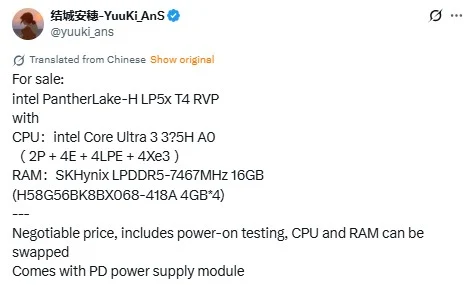
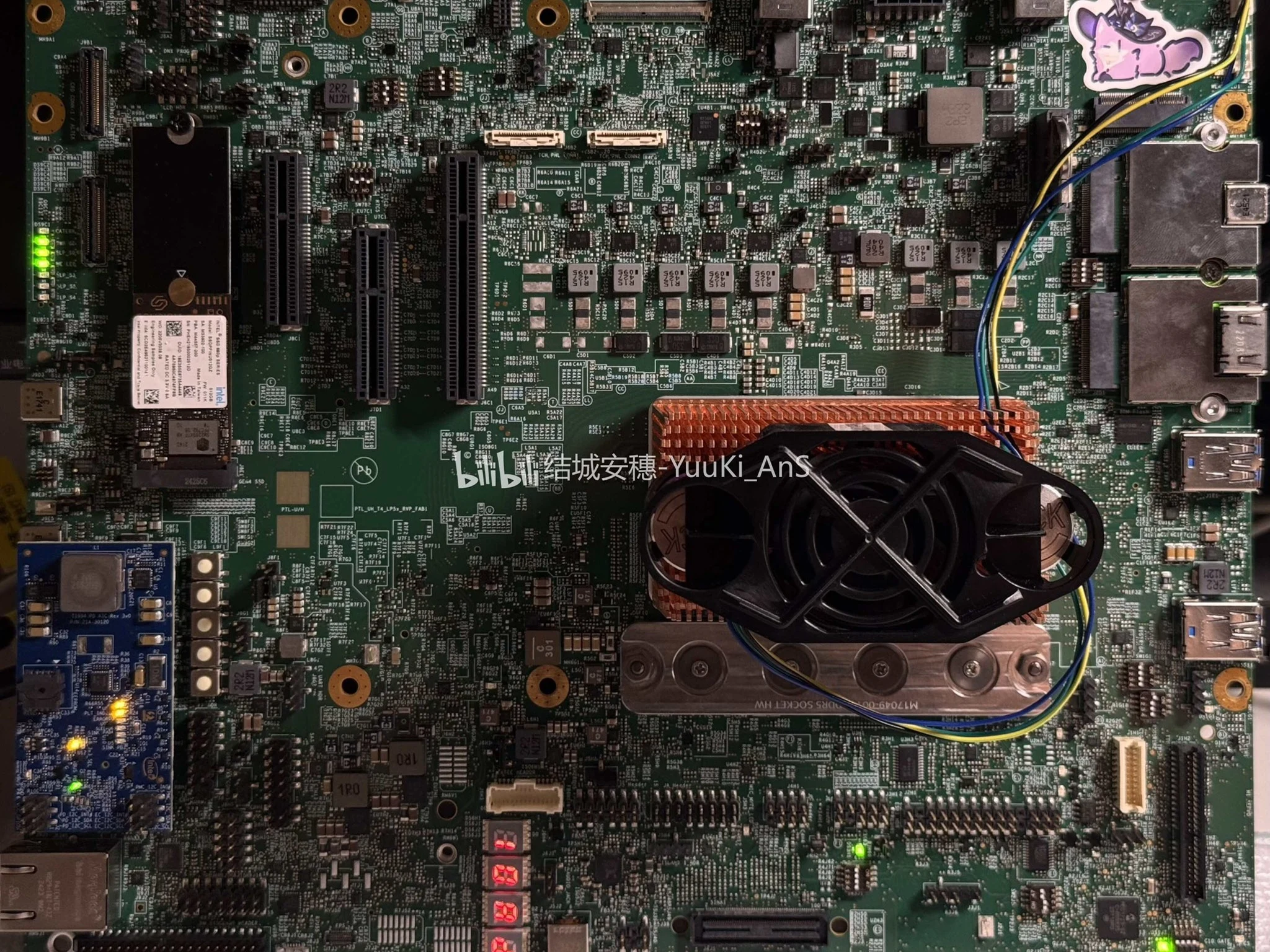
    Leaker Yuuki_AnS shared images of a Panther Lake ES processor on X. This sample features 10 active cores and utilizes the PTL 16C/4Xe3 tile arrangement. The CPU employs a 2p + 4E + 4 LP-E layout, which hasn’t been seen in prior leaks, suggesting that these images are from a prototype made for internal use.

    Package Information

    The processor package is marked “000C06C0” and fits into Intel’s BGA-2540 socket.

    Performance Specifications

    As per Yuuki_AnS, the clock speeds for the engineering sample are 3.0 GHz for all P-cores, 2.6 GHz for all four E-cores, with a boost reaching as high as 3.2 GHz. The Panther Lake chip includes 11 MB of L2 cache and 12 MB of L3 cache. Its Xe3 integrated GPU has four execution units and interfaces through a 2.5 GT/s PCIe link.

    Benchmarking Details

    The processor was tested using Intel’s Reference Validation Platform (RVP). This system consists of 16 GB of LPDDR5X RAM, an Alder Lake-based ADL-P frame, and four SK hynix H58G56BK8BX068-418A modules with a speed rating of 7467 MHz.

    The engineering sample was also assessed in both single-threaded and multi-threaded settings via CPU-Z. Unfortunately, the performance did not meet the standards expected of retail products. Power measurements indicate a 25 W PL1 target, 65 W PL2, and a significantly high 160 W PL4 limit, with the chip being capped at a 100°C TjMax.

    Source:
    Link


  • Intel’s 18A Recovery: 7% Monthly Yield Gains Boost Panther Lake

    Intel’s 18A Recovery: 7% Monthly Yield Gains Boost Panther Lake

    Key Takeaways

    1. Intel is improving its mass production yields for the Panther Lake laptop platform, now aligning with the industry’s standard of a 7% monthly increase.
    2. Leadership changes, particularly with CEO Lip-Bu Tan, are positively impacting Intel’s outlook for launching Panther Lake before the end of 2025.
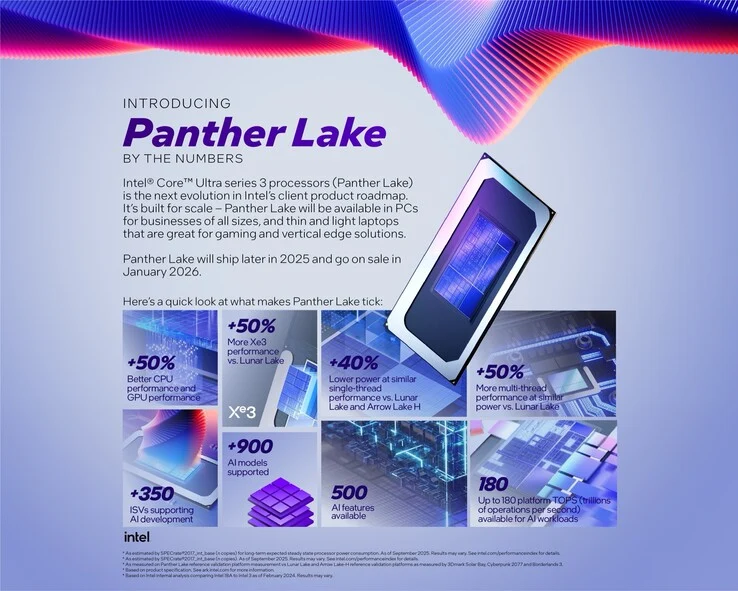
    3. Panther Lake’s CPUs will feature new Cougar Cove P-cores and Darkmont E-cores, promising a 50% performance increase in combined CPU and GPU compared to Lunar Lake.
    4. The platform may include up to 16 CPU cores and 12 Xe3 Arc iGPU cores, with initial models like the Arc B390 and B370 showcasing competitive clock speeds.
    5. The 14A process node, which succeeds the 18A node, is performing better due to customer feedback and an improved process development kit (PDK).


    Intel is getting closer to mass-producing its next-gen laptop platform, Panther Lake. An executive from the company shared in an interview at the RBC Capital Markets Global TMT that they are now seeing a monthly increase in yields at a rate that aligns with the industry’s standard, which is about 7 percent. This marks an improvement compared to the inconsistent progress they faced earlier in the year.

    A New Leadership Impact

    VP John Pitzer mentioned that a significant change happened when Lip-Bu Tan became Intel’s CEO back in March. Pitzer seems optimistic that Intel is in a good position to launch Panther Lake before the year 2025 wraps up. He also indicated that more details about Panther Lake will be disclosed at CES in January.

    Specifications and Performance

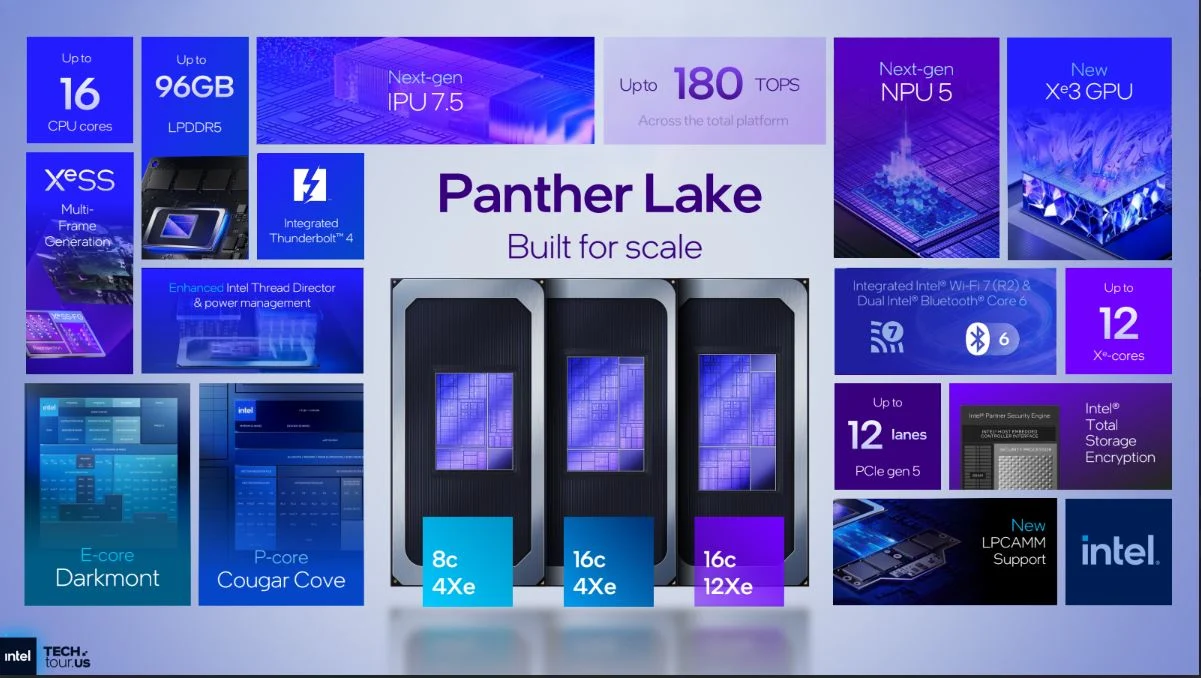
    Previously, we mentioned that Panther Lake’s laptop CPUs will introduce the new Cougar Cove P-cores alongside Darkmont E-cores. Both types are utilizing 18A’s RibbonFET transistors and the second-gen backside power delivery, known as PowerVia. Intel claims that Panther Lake will deliver a 50 percent increase in combined CPU and GPU performance compared to Lunar Lake.

    Rumors suggest that Panther Lake could feature up to 16 CPU cores and 12 Xe3 Arc iGPU cores. Initial leaks have hinted at models like the Arc B390, which boasts 12 iGPU cores running at 2.5 GHz, and the B370, with 10 cores clocked at 2.4 GHz. Moreover, Intel is bringing back modular LPDDR5X memory, allowing for up to 96 GB at an impressive speed of 9600 MT/s for the highest-tier SKU.

    Updates on 14A Node

    Pitzer also shared some information regarding the 14A process node. The successor to the 18A node is achieving better performance at similar stages, despite undergoing major modifications, all thanks to earlier customer feedback and a more developed PDK.

    Source:
    Link


  • TSMC Investigates Intel Employee for Alleged 2nm Process Secrets

    TSMC Investigates Intel Employee for Alleged 2nm Process Secrets

    Key Takeaways

    1. Intel is recovering its position in the semiconductor market with the launch of the Intel 18A process node and the “five nodes in four years” plan under ex-CEO Pat Gelsinger.

    2. A new $5 billion investment from Nvidia will boost Intel’s research and development for future process nodes and attract industry talent, including former TSMC executive Wei-Jen Lo.

    3. TSMC is investigating Wei-Jen Lo for potentially taking confidential information when he left the company, which could lead to legal action.

    4. Wei-Jen Lo was instrumental in TSMC’s development of the 10 nm process node, making the situation significant for both TSMC and Intel.

    5. The Taiwanese government is monitoring the case closely due to TSMC’s importance to the Taiwanese economy, with possible implications under the National Security Act and the Trade Secret Act.


    After facing a tough few years, where it lost its lead in consumer CPUs to AMD and its semiconductor manufacturing edge to TSMC, Intel seems to be on the upswing again. Under the guidance of ex-CEO Pat Gelsinger, Intel launched a bold plan called “five nodes in four years” to reclaim its position as the top player in semiconductor manufacturing. The latest outcome of this strategy is the Intel 18A, one of the most sophisticated process nodes globally, set to be used in the new Intel Panther Lake mobile CPUs.

    Intel’s Ambitious Plans

    Yet, Intel isn’t slowing down. With a new $5 billion investment from Nvidia, Intel is increasing its efforts to create advanced future process nodes through research and development, as well as by bringing in industry talent. One key hiring was Wei-Jen Lo, a retired veteran from TSMC. This move seems to have upset TSMC, which is reportedly considering legal action against Wei-Jen Lo for allegedly stealing confidential company information.

    TSMC’s Investigation

    According to a recent report, TSMC is gathering evidence against Wei-Jen Lo. The former Senior Vice President of R&D at TSMC supposedly requested employees to prepare technical briefings on the TSMC 2 nm A14 and A16 nodes, as reported by Taiwanese outlet United Daily News. It is claimed that he took these “confidential” technical documents with him when he departed from TSMC. However, TSMC has not yet filed a formal complaint against him.

    Wei-Jen Lo played a crucial role in helping TSMC develop the 10 nm process node back in 2016, a period when Intel was the top chipmaker in the world. Thus, the news that TSMC is considering legal action against a well-respected former executive is significant and could have implications for Intel in the future.

    Government Involvement

    As TSMC is a vital part of the Taiwanese economy, the Taiwanese government is naturally paying close attention to this situation. United Daily News has reported that the Taiwan Prosecutor’s Office is looking into the case under the National Security Act and the Trade Secret Act.

    We will find out soon whether TSMC pursues action against Wei-Jen Lo or if the situation diffuses. In the meantime, all eyes are on the Intel Panther Lake chips. Built on the cutting-edge Intel 18A process node, these processors have much to demonstrate for Intel. Laptops featuring PTL chips are expected to hit the market early next year.

    Source:
    Link


  • Intel Panther Lake iGPU Specs and Model Numbers Leaked

    Intel Panther Lake iGPU Specs and Model Numbers Leaked

    Key Takeaways

    1. Intel’s Panther Lake iGPUs include the Arc B390 and Arc B370, with the former in Core Ultra 9 and 7 models, and the latter in Core Ultra 5 variants.
    2. New iGPUs, Arc B380 and Arc B360, will also be introduced, potentially in models outside the Panther Lake series.
    3. An upcoming Arrow Lake desktop refresh will launch under the Plus branding, likely using the same Arc Xe-LPG iGPU.
    4. There is currently no information on Intel’s high-end HX-branded laptop processors.
    5. The Panther Lake series may not introduce new chips, possibly reusing Arrow Lake laptop processors from the previous year.


    Earlier Geekbench listings provided us a sneak peek at two of Intel’s Panther Lake integrated graphics processing units (iGPUs): the Arc B390 and Arc B370. The Arc B390 is expected to be featured in the Core Ultra 9 and Core Ultra 7 models, while the Arc B370 will likely be utilized in the Core Ultra 5 variants. Recently, leaker @OneRaichu disclosed additional details about the entire lineup, which includes:

    New Additions to the Lineup

    The 10 EU Arc B380 and Arc B360 are also set to appear in other models, suggesting they might be used outside the Panther Lake series. An additional Geekbench listing has verified that the Arrow Lake desktop refresh will be launching soon, bearing the Plus branding; however, it is probable that it will continue using the same Arc Xe-LPG iGPU.

    Intel’s High-End CPUs Remain Uncertain

    As of now, there hasn’t been any information regarding Intel’s high-end HX-branded laptop processors. The Panther Lake series, intended to succeed Lunar Lake, is not expected to introduce any new chips, which implies they might be repurposed Arrow Lake laptop processors from the previous year. The Arc B380 and Arc B360 appear to be strong contenders for their integrated graphics solutions.

    According to @OneRaichu on X.

    Source:
    Link


  • Lenovo Yoga Pro 7 14: Intel Boosts Screen & SD Card Reader Features

    Lenovo Yoga Pro 7 14: Intel Boosts Screen & SD Card Reader Features

    Key Takeaways

    1. Lenovo’s Aura Editions laptops include the Yoga Pro 7i Gen 10, featuring a strong partnership with Intel.
    2. The Yoga Pro 7i Gen 10 is powered by the Intel Core Ultra 9 285H, offering solid CPU and integrated GPU performance, but lacks a significant advantage over AMD models.
    3. The laptop has an impressive 3K OLED touchscreen with a 120 Hz refresh rate, providing excellent visual quality compared to the AMD version.
    4. The high-performance Intel processor has a power cap of 115 Watts, leading to challenges in maintaining power and increased fan noise under high loads.
    5. The AMD version of the Yoga Pro 7i Gen 10 offers better battery life and overall value, despite the Intel model’s superior display features.


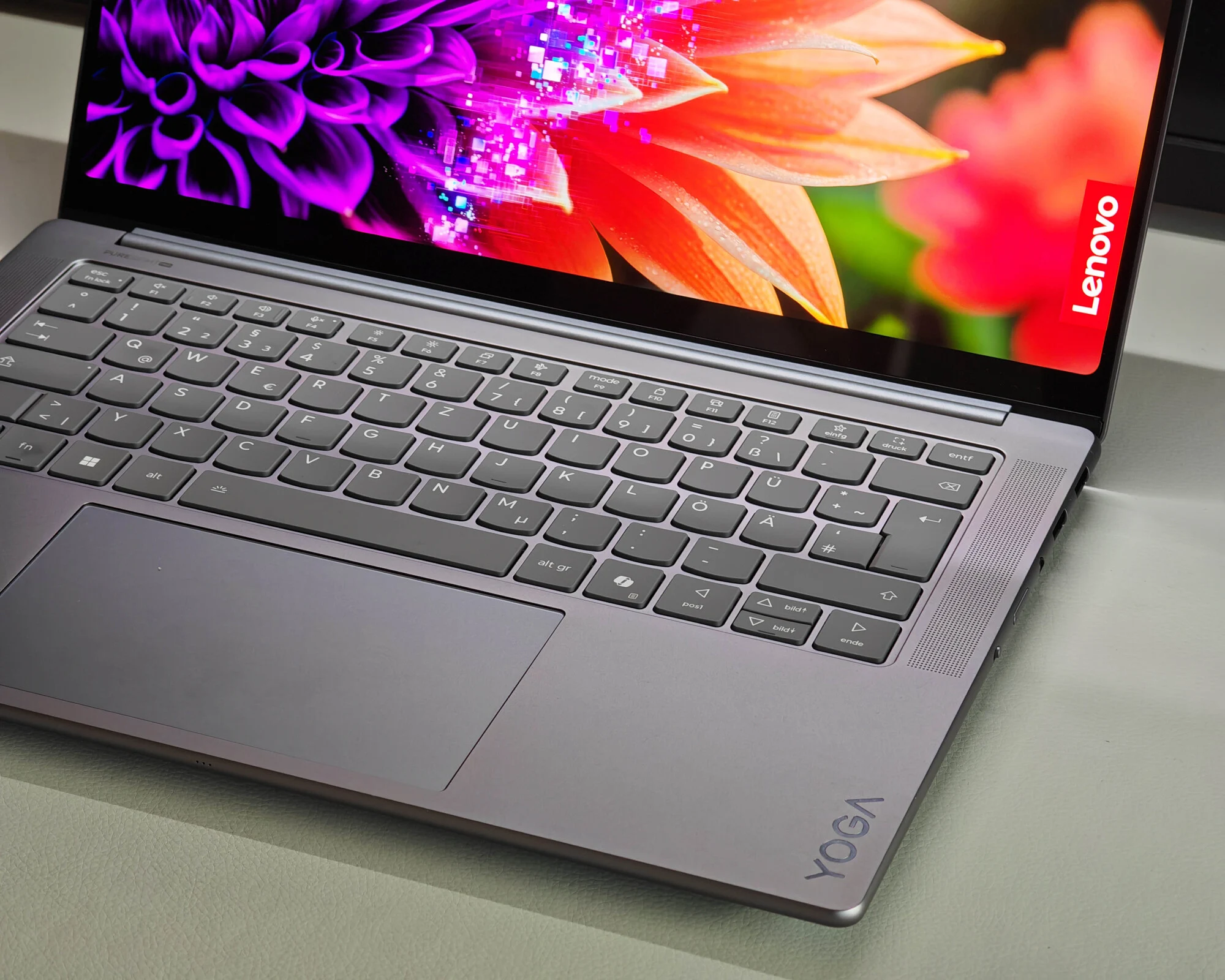
    Lenovo has introduced some laptops under the Aura Editions brand, highlighting a strong partnership with Intel. One of these models is the 14-inch multimedia laptop, the Yoga Pro 7i Gen 10, which we recently evaluated. This laptop is clearly powered by an Intel processor, and our test model was fitted with the Core Ultra 9 285H. It delivers solid performance metrics for both the CPU and the integrated GPU, but there isn’t a significant edge over its AMD counterpart. Nonetheless, the Intel processor demands a considerable amount of power, with a short-term power cap set at 115 Watts, posing a challenge for such a compact device. Consequently, the Yoga struggles to maintain this power level for extended periods. When utilizing the highest Performance power profile, the fans become noticeably loud very quickly.

    Display Features

    The Intel variant is also equipped with an OLED touchscreen boasting a 3K resolution and a refresh rate of 120 Hz. The visual quality is outstanding and slightly outshines the 2.8K screen found on the AMD version, offering better frequency, brightness, and reduced PWM flickering. However, the combination of the high-resolution 3K display and the Intel processor negatively impacts battery life, with the AMD model performing better in this area, especially at higher brightness settings.

    Comparison of Models

    It’s puzzling why Lenovo only includes a card reader with the Intel models, which seems like a strategic choice against the AMD variants, unrelated to the CPU selection. This raises the question of which version is superior. While they share many characteristics, taking the price into account, the AMD model emerges as the more advantageous option overall. For further details, check out our comprehensive review of the new Yoga Pro 7i G10 Aura Edition.


  • Intel Panther Leak: Complete CPU List, Boost Clocks, and Max TDP

    Intel Panther Leak: Complete CPU List, Boost Clocks, and Max TDP

    Key Takeaways

    1. Intel’s upcoming laptop processors, Panther Lake, have unclear specifications, including SKU names and core counts.
    2. A new Geekbench listing confirms the integrated GPUs will be named Arc B390.
    3. New CPU lineups include the Core Ultra 3×6 series, but the previously speculated U lineup is not mentioned.
    4. Confusion arises from the new naming conventions and a lack of clarity on specifications.
    5. A complete reveal of Panther Lake is expected at CES 2026, leaving users awaiting further details.


    At the latest presentation for Panther Lake, Intel shared some architectural insights about its upcoming laptop processors. However, important details like the SKU names, the number of CPU and GPU cores, and the clock speeds remain unclear. Although many leaks have provided fragments of this information, they have been inconsistent, especially concerning certain Core Ultra X-branded SKUs. A new listing on Geekbench has confirmed that even the integrated GPUs will have a fresh Arc B390 name. Recently, leaker Jaykihn has disclosed the base and boost clock speeds for each Panther Lake CPU.

    New CPU Lineups

    The list shared introduces several CPUs that have not been seen before, including the Core Ultra 3×6 series. However, it does not mention the previously speculated U lineup and instead only highlights H and non-H models. We now see two SKUs featuring a 2+0+2 configuration included in the Core Ultra 5 series. This further complicates matters with a naming convention that is quite unclear. Although Jaykihn has an impressive history of accurate Intel leaks, we won’t truly know how correct this information is until CES 2026, where Intel intends to unveil Panther Lake fully.

    Awaiting Clarity

    While Intel has begun to peel back the layers on Panther Lake, the lack of clear specifications leads to a lot of guessing. The details that are out there have created more confusion than clarity, especially with the new naming conventions. The anticipation is high, but the wait for a complete reveal adds to the mystery surrounding these processors. Therefore, until CES 2026, users and fans alike will have to remain patient for a comprehensive understanding of what Panther Lake will bring.

    Source:
    Link


  • Intel Core Ultra X7 358H Slower than 255H, iGPU Impresses

    Intel Core Ultra X7 358H Slower than 255H, iGPU Impresses

    Key Takeaways

    1. Intel has not yet revealed detailed specifications or performance for their Panther Lake CPUs, introduced in mid-October.
    2. The Core Ultra X7 358H performs around 20,000 points in Cinebench R23, but is 8.3% slower than the Core Ultra 7 255H under the same power conditions.
    3. The older Arrow Lake chip scores an average of 17,812 points, suggesting Panther Lake may be slightly more powerful or less so pending further evaluations.
    4. The Core Ultra X7 358H features four performance cores and twelve efficiency cores, with no significant improvements in CPU performance noted.
    5. Intel’s Panther Lake laptops are expected to launch at CES in January 2026, with more performance insights anticipated by then.


    Intel has previously introduced Panther Lake in mid-October, however, they haven’t provided specifics on the CPUs or their performance yet. Following a positive early Geekbench leak for the integrated graphics, the recent benchmark results from Laptop Review reveal how the Core Ultra X7 358H is performing.

    Performance Metrics

    The high-speed chipset achieves approximately 20,000 points in Cinebench R23 while consuming 65 watts of power. Laptop Review indicates that this makes the chip 8.3% slower than the Intel Core Ultra 7 255H under the same power conditions. Interestingly, our benchmark records show that the older Arrow Lake chip has an average score of only 17,812 points. More comprehensive evaluations will determine if Panther Lake is slightly more powerful or less so.

    Benchmark Insights

    Current benchmarks reveal that the Core Ultra X7 358H, which has four performance cores and twelve efficiency cores, does not exhibit significant advancements in CPU performance. The highlight of Intel’s upcoming laptop processors is the Xe3 iGPU featuring twelve compute units, achieving a score of 6,830 in 3DMark Time Spy. This represents a remarkable 72% improvement over the iGPU in the Core Ultra 7 255H.

    Future Launches

    The initial laptops powered by Intel’s Panther Lake are expected to debut at CES in January 2026, and by then, we anticipate more insights regarding the performance and efficiency of Intel’s next-generation laptop processors.

    Source:
    Link


  • Intel Enhances Laptop Battery Life with 1 Hz Displays and SmartPower HDR

    Intel Enhances Laptop Battery Life with 1 Hz Displays and SmartPower HDR

    Key Takeaways

    1. Intel and BOE are collaborating to develop new display technologies to reduce power usage and extend laptop battery life.
    2. Innovative frame rate adjustments will allow laptop screens to drop to 1 Hz when displaying static images or text.
    3. Multi-Frequency Display (MFD) technology will enable dynamic frame rate adjustments based on content, reducing power consumption.
    4. Gaming laptops can benefit from MFD by capping the display rate to 60 Hz when not in active use.
    5. SmartPower HDR technology will decrease power consumption for HDR content at lower brightness, but is currently only compatible with OLED screens.


    Intel is set to team up with the Chinese display maker BOE to create new display technologies aimed at slashing power usage and extending the battery life of laptops. While these energy-efficient strategies aren’t completely original, two of them are already in use in devices like the Apple iPhone 17.

    Innovative Frame Rate Adjustments

    One of the key goals for Intel and BOE is to cut the frame rate of laptop screens down to a mere 1 Hz when showing static images or text. This initiative was first announced over a year ago, and now the release date is approaching, with the initial laptops equipped with OLED and IPS displays expected to be available as soon as 2026.

    Dynamic Display Technology

    Typically, laptop screens run at a constant frame rate, often at 60 Hz or 120 Hz. However, Intel has developed a technology called Multi-Frequency Display (MFD) that adjusts the frame rate based on the content being shown. For instance, if a film is playing at 24 frames per second, the display can lower its rate to 24 Hz, which helps prevent image tearing and cuts down on power usage. This tech could also mean that a gaming laptop’s screen could automatically cap at 60 Hz when not actively playing games.

    SmartPower HDR Technology

    Additionally, Intel has introduced a new technology named SmartPower HDR that aims to greatly decrease power consumption, particularly when watching HDR content at lower brightness levels. This is achieved by smartly modifying the display’s power supply voltage. However, it’s worth noting that this feature is currently only compatible with OLED screens.

    Source:
    Link


  • Intel Panther Lake Leak Unveils New iGPU Naming Scheme

    Intel Panther Lake Leak Unveils New iGPU Naming Scheme

    Key Takeaways

    1. Intel’s new Panther Lake processors have unknown names, with leaks suggesting Core Ultra X9 388H and Core Ultra X7 358H models.
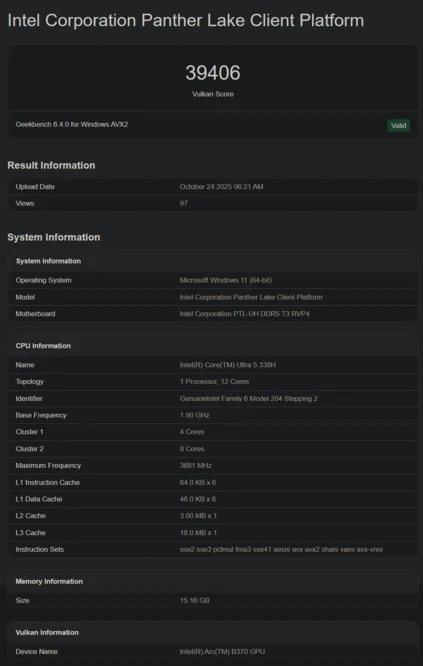
    2. The Core Ultra 5 338H has been identified on Geekbench, featuring a new integrated GPU called Arc B370.
    3. The Arc B370 GPU scored 39,406 on Geekbench’s Vulkan benchmark, showing a 45% performance increase over the previous Arc 130V.
    4. Intel claims a 50% performance improvement for integrated GPUs in the Panther Lake series.
    5. The Core Ultra 5 338H is noted to have 12 CPU cores arranged in a two-cluster configuration, with suggestions of a mix of P-cores, E-cores, and LPE-cores.


    Even though Intel has shared a lot about its new Panther Lake processors, the actual names of these chips are still unknown. So far, leaks have pointed to at least two models: Core Ultra X9 388H and Core Ultra X7 358H. Now, we are getting our first look at a non-X version.

    Core Ultra 5 338H Appears

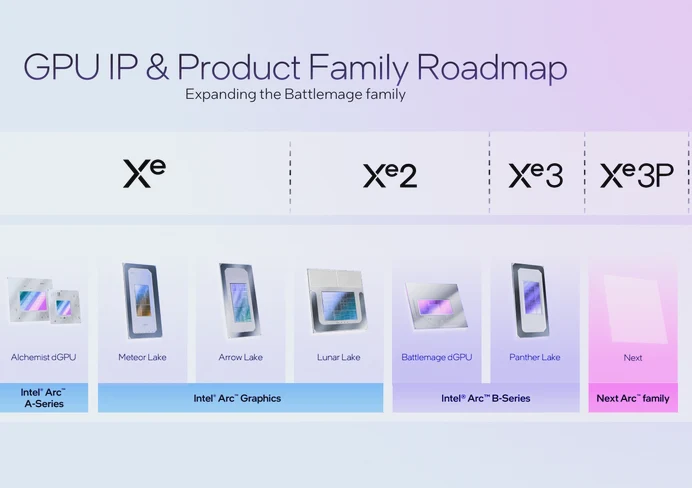
    The Core Ultra 5 338H has been spotted on Geekbench with a brand-new integrated GPU: Arc B370. The name might be misleading since the “B” suggests it is built on the Xe2 Battlemage design rather than the Xe3 Alchemist. It’s also possible that Geekbench has mistakenly identified the GPU in what looks to be an early version of a laptop.

    Performance Insights

    Regardless, the Arc B370 achieved a score of 39,406 in Geekbench’s Vulkan benchmark. For comparison, the previous Arc 130V managed a score of 27,209 in the same test, indicating that the new chip is around 45% faster. This is quite close to Intel’s claimed 50% performance improvement for iGPUs in Panther Lake.

    Additional Specifications

    Finally, the listing reveals that the Core Ultra 5 338H features a total of 12 CPU cores. Geekbench categorizes it as a two-cluster configuration in an 8+4 arrangement. Nonetheless, an earlier leak suggested it would combine 4 P-cores, 4 E-cores, and 4 LPE-cores, which seems more likely.