Tag: google

  • Google Launches Tensor G5: First 3nm Smartphone Chip

    Google Launches Tensor G5: First 3nm Smartphone Chip

    Key Takeaways

    1. The Tensor G5 SoC is the first chip made with TSMC’s 3 nm technology, enhancing power efficiency.
    2. It features an eight-core CPU with a claimed performance increase of up to 34% over the Tensor G4.
    3. The Tensor Processing Unit (TPU) is reportedly 60% faster than its predecessor.
    4. It includes the Google Titan M2 security chip for improved security measures.
    5. The Tensor G5 supports C2PA Content Credentials and can run the Gemini Nano AI model locally for various on-device features.


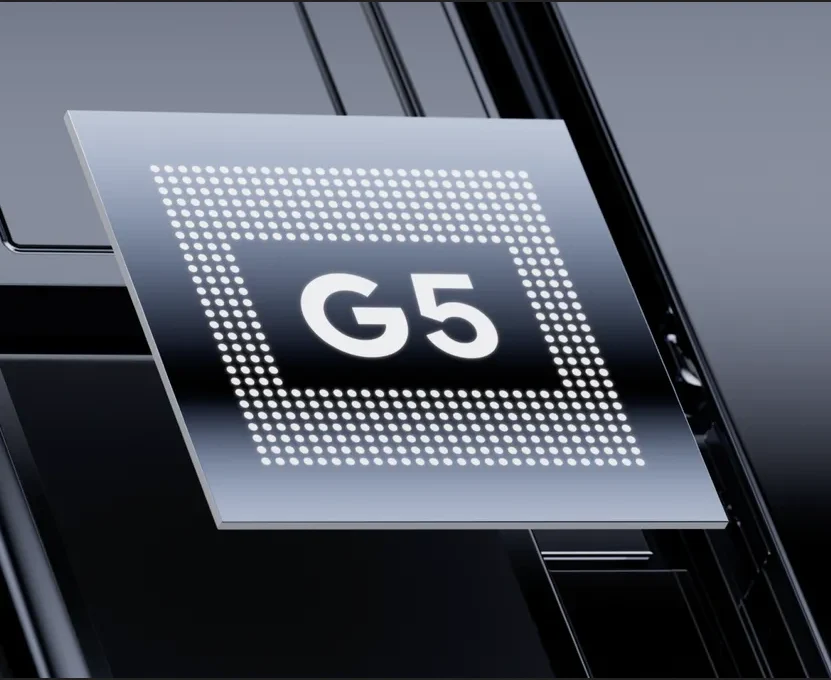
    Google recently introduced its new Tensor G5 SoC for the Pixel 10 series. The chip has been widely discussed online, and from what we can tell, it doesn’t bring significant changes. Nevertheless, it is the first chip produced using TSMC’s advanced 3 nm technology, which should improve power efficiency.

    Specifications and Performance

    Google hasn’t officially released the specifications yet, but a previous Geekbench leak indicated that the chip might feature an eight-core CPU. It includes one Cortex-X4 core running at 3.78 GHz, five Cortex-A725 cores at 3.05 GHz, and two Cortex-A520 efficiency cores clocked at 2.25 GHz. Google claims that this setup could provide up to a 34% performance increase compared to the Tensor G4. In addition, its Tensor Processing Unit (TPU) is said to be as much as 60% faster than its predecessor.

    GPU and Security Features

    While details about the GPU in the Tensor G5 remain undisclosed, many believe it to be the PowerVR DXT-48-1536 from Imagination Technologies. It appears that hardware-level raytracing is not enabled. Other than that, info about the internal components is sparse, except for the inclusion of the Google Titan M2 security chip for enhanced protection.

    New Features

    Importantly, the Tensor G5 marks the first Google phone to support C2PA Content Credentials, which aims to combat the massive amount of AI-generated content. Furthermore, it can operate the company’s Gemini Nano AI model locally, enabling features like Magic Cue, Voice Translate, and Call Notes to function on-device, likely without needing an internet connection.

    Source:
    Link


  • Pixel Buds 2a Launches with Pro Features at Lower Price

    Pixel Buds 2a Launches with Pro Features at Lower Price

    Key Takeaways

    1. Design and Comfort: The Pixel Buds 2a feature a design similar to the Pixel Buds Pro 2 with improved fit due to twist-to-adjust stabilizers and a redesigned charging case.

    2. Enhanced Features: They include active noise cancellation, a version of Silent Seal, and support for transparency mode and spatial audio, but lack some advanced features found in the Pro model.

    3. Connectivity and Performance: The earbuds offer hands-free access to Gemini Live, real-time translation, Bluetooth Multipoint, and enhanced sound quality with Bluetooth Super Wideband, but require a Pixel 8 or newer for full functionality.

    4. Battery Life: The Pixel Buds 2a provide up to 7 hours of battery life with ANC on and 20 hours with the charging case; without ANC, this extends to 10 hours and 27 hours, respectively.

    5. Pricing and Availability: Priced at $129 in the US and available in Iris and Hazel colors, the Pixel Buds 2a can be pre-ordered now, with shipping expected in October.


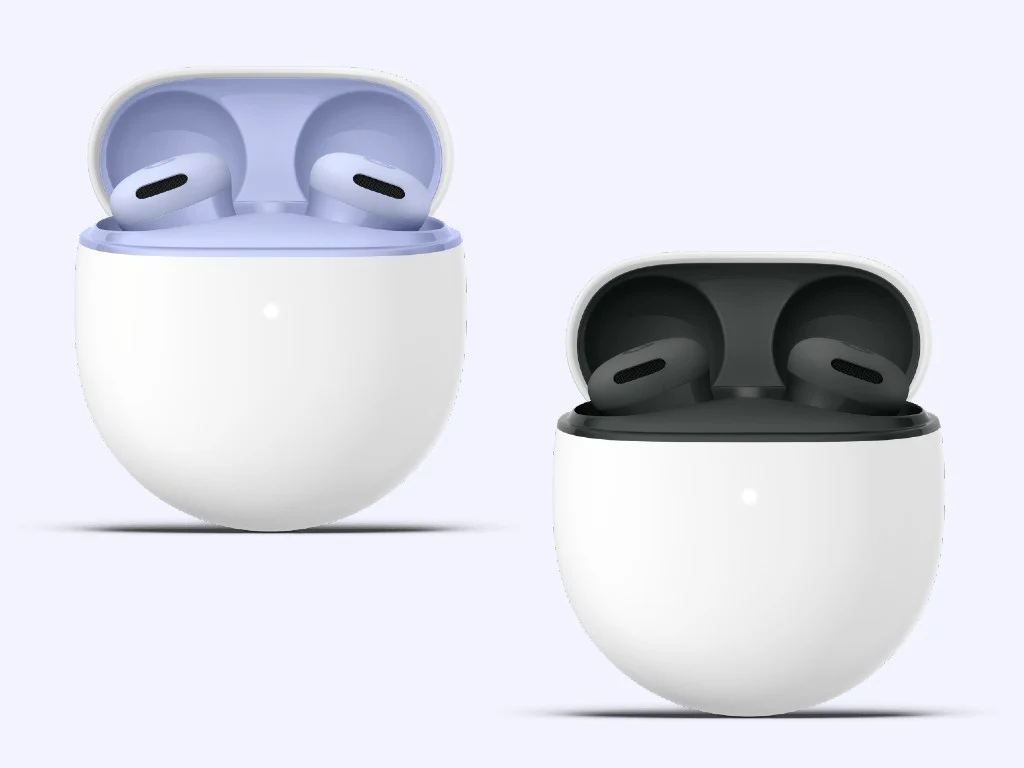
    Google has unveiled the Pixel Buds 2a, taking over from the Pixel Buds A-series that came out in 2021. This new model comes with several enhancements, many of which are inspired by the more premium Pixel Buds Pro 2, though the price has seen a rise.

    Design and Comfort

    The design of the Pixel Buds 2a mimics that of the Pixel Buds Pro 2 (currently listed on Amazon for $199). These earbuds feature twist-to-adjust stabilizers, allowing for a better fit and increased comfort, along with mesh covers to block wind noise. The charging case has also undergone a slight redesign to match the updated look of the earbuds.

    Features and Technology

    The IP54-rated Pixel Buds 2a introduce active noise cancellation, a step up from the previous A-series. They include a version of Silent Seal, which is 1.5, compared to the 2.0 version found in the Buds Pro 2. Additionally, these earbuds are equipped with the Tensor A1 chip, enhancing sound processing and noise cancellation capabilities.

    The Pixel Buds 2a also support a transparency mode and spatial audio. However, they do not include features like conversation detection, head tracking, low-latency gaming mode, or Adaptive Audio, which are present in the Pro model. Each earbud has two microphones, but they aren’t beamforming types and lack a voice accelerometer.

    Connectivity and Performance

    As anticipated, the Pixel Buds 2a provide hands-free access to Gemini Live, facilitate real-time translation, and support Bluetooth Multipoint. Google claims that the earbuds utilize Bluetooth Super Wideband, which broadens the sound bandwidth to deliver clearer and more natural voice quality. Note that this feature requires a Pixel 8 or any newer Pixel smartphone.

    The battery life of the Pixel Buds 2a clocks in at 7 hours with ANC enabled and 10 hours without. With the charging case, total battery life extends to 20 hours with ANC and 27 hours without. The case has an IPX4 rating, does not support wireless charging, but features a speaker for locating it using Find Hub. Other notable features include Fast Pair support, in-ear detection, touch controls (but no volume control), and compatibility across Android, iOS, and Windows.

    Pricing and Availability

    The Pixel Buds 2a come in Iris and Hazel colors, and they are available for pre-order at a price of $129 in the US, £129 in the UK, and €149 in Europe. They are expected to ship in October, and the box includes four pairs of eartips.

    Source:
    Link


  • Google Pixel 10 Pro Fold Launch: Tensor G5 and Bigger Battery

    Google Pixel 10 Pro Fold Launch: Tensor G5 and Bigger Battery

    Key Takeaways

    1. Display Features: The Pixel 10 Pro Fold has an 8-inch inner OLED screen with a resolution of 2076 x 2152 pixels, 120 Hz adaptive refresh rate, and 1,800 nits brightness, made with ultra-thin glass for durability.

    2. Battery and Storage: It includes a 5,015 mAh battery lasting around 30 hours, supports 30W wired and 15W wireless charging, with storage options ranging from 256 GB to 1 TB.

    3. Camera Capabilities: The device features a triple camera setup with a 48 MP wide-angle lens, 10.2 MP wide-angle lens, and a 10.8 MP telephoto lens with AI enhancements, allowing for 20x SuperRes zoom.

    4. Connectivity and Durability: It offers Wi-Fi 7, Bluetooth 5.4, 5G support, USB 3.2 port, IP68 water and dust resistance, and a fingerprint sensor, though the IP68 rating may decrease over time.

    5. Pricing and Availability: The Pixel 10 Pro Fold is priced starting at $1,799 and can be pre-ordered in two colors, with availability set for October 2025.


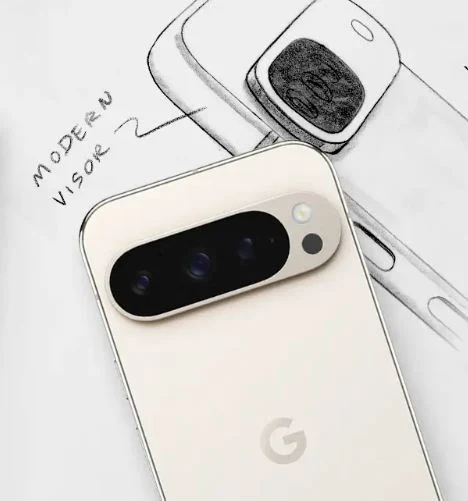
    Google has just released its latest foldable device, the Pixel 10 Pro Fold. Though many details were shared ahead of time, there are still some interesting features that stand out. Sadly, all these innovations come with a significant price. This device is driven by the Google Tensor G5 SoC, which is the first one made using a TSMC process.

    Display Features

    To kick things off, the Pixel 10 Pro Fold boasts an 8-inch inner OLED screen that offers a resolution of 2076 x 2152 pixels, an adaptive refresh rate of 120 Hz, and can reach up to 1,800 nits of HDR brightness. It supports 24-bit color depth. Google claims that the display is made with ultra-thin glass and has two layers of impact resistance, promising durability for up to ten years. The outer display has a 6.4-inch OLED screen (1080 x 2364) with similar specifications.

    Battery and Storage

    As for battery life, Google states that the Pixel 10 Pro Fold’s 5,015 mAh battery can last around 30 hours on a full charge. It supports wired charging at 30 watts and 15 watts for wireless charging (Qi 2). The device features Pixelsnap, a Google tech similar to MagSafe, enabling it to connect to a charger even when unfolded. Memory options start at 256 GB and go up to 1 TB, with all variants offering 256 GB of storage.

    Camera Capabilities

    The camera setup includes a 48 MP wide-angle lens (f/1.7, 1/2″ sensor), a 10.2 MP wide-angle lens, and a 10.8 MP telephoto lens with a 5x optical zoom. All three utilize AI for 20x SuperRes zoom capabilities. For selfies, it uses the same 10 MP front camera for both the inner and outer displays. Video can be recorded in 4K at 60 FPS and slow-motion at 240 FPS. While these features are somewhat limited compared to competitors, Google tries to compensate with a range of AI enhancements.

    Connectivity and Durability

    The Pixel 10 Pro Fold also comes with Wi-Fi 7, Bluetooth 5.4, support for sub-6 GHz and mmWave 5G, and a USB 3.2 port. It includes a fingerprint sensor for secure access, and it has an IP68 rating for water and dust resistance. However, Google warns that this rating may diminish over time due to regular usage, and any liquid damage will void the warranty.

    Currently, the Pixel 10 Pro Fold can be pre-ordered in two colors (Moonstone and Jade) from Google’s website, starting at a price of $1,799 for the base model. Unfortunately, it won’t be available until October 2025, unlike the Pixel 10 series, which is set to launch next week on August 28.

    Source:
    Link


  • Google to Construct Small Modular Nuclear Reactor in Tennessee

    Google to Construct Small Modular Nuclear Reactor in Tennessee

    Key Takeaways

    1. Google has partnered with Kairos Power and TVA to source energy from a small modular nuclear reactor for its data centers in Tennessee and Alabama.

    2. The Hermes 2 Plant in Oak Ridge will provide a steady capacity of 50 megawatts (MW), essential for the stable operation of data centers.

    3. The project aims to revitalize Oak Ridge as a hub for nuclear innovation, with collaboration from local universities to develop the workforce.

    4. The agreement has the potential to add up to 500 MW of new nuclear capacity by 2035, with Hermes 2 expected to start operations in 2030.

    5. Google is committed to clean energy, having signed multiple contracts for renewable sources and reducing emissions by 12% in 2024, aiming for net-zero operations.


    Google has made a deal with Kairos Power and the Tennessee Valley Authority (TVA) to get energy from a small modular nuclear reactor. This energy will be used to power Google’s data centers in Tennessee and Alabama.

    Agreement Details

    This agreement paves the way for the construction of Kairos Power’s Hermes 2 Plant in Oak Ridge, which will have a steady capacity of 50 megawatts (MW). This constant supply is crucial for data centers, as they rely on a stable and dependable electric connection.

    Local Impact

    The Hermes 2 Demonstration Plant aims to re-establish Oak Ridge as a center for nuclear innovation. This will involve new programs developed in collaboration with the University of Tennessee and local universities to help develop the local workforce.

    Future Plans

    Hermes 2 will be the first project under this agreement, which has the potential to add up to 500 MW of new nuclear capacity, expected to be operational by 2035. According to Kairos Power, the generated energy will be supplied to the TVA grid, which is where Google sources the electricity for its facilities.

    “To speed up the availability of clean energy for Google, Kairos Power plans to boost Hermes 2’s output from 28 MW to 50 MW, all from a single reactor, set to start operations in 2030,” said a representative from Kairos Power.

    Commitment to Clean Energy

    Google, a subsidiary of Alphabet, has recently signed multiple PPAs, emphasizing renewable energy sources and low-carbon technologies, such as nuclear, wind, and solar.

    In 2024, the tech giant managed to cut emissions related to energy generation by 12% compared to 2023 and secured contracts for 8 gigawatts (GW) of clean energy. The aim is to reach a net-zero operation.

    Source:
    Link


  • Tensor G5 Fails to Impress in Google Pixel 10 Pro XL Benchmarks

    Tensor G5 Fails to Impress in Google Pixel 10 Pro XL Benchmarks

    Key Takeaways

    1. The Google Pixel 10 series will launch worldwide on August 20.
    2. The Pixel 10 Pro XL has shown disappointing benchmark scores compared to its predecessor, the Pixel 9 Pro XL.
    3. The Pixel 10 Pro XL achieved a CPU score of 313,500 and a GPU score of 394,695, both lower than the Pixel 9 Pro XL.
    4. The unusual benchmark results may be due to the Pixel 10 Pro XL being a demo unit.
    5. Initial impressions based on these benchmarks may not be final, as CPU performance could be competitive with Snapdragon 8 Gen 2 and 8 Gen 3.


    The Google Pixel 10 series is set to launch worldwide on August 20. As has become common with Google’s products, these phones have been seen in real life, and a new, somewhat dubious leak has shown the lackluster performance of the Tensor G5 in the Pixel 10 Pro XL.

    Benchmark Results

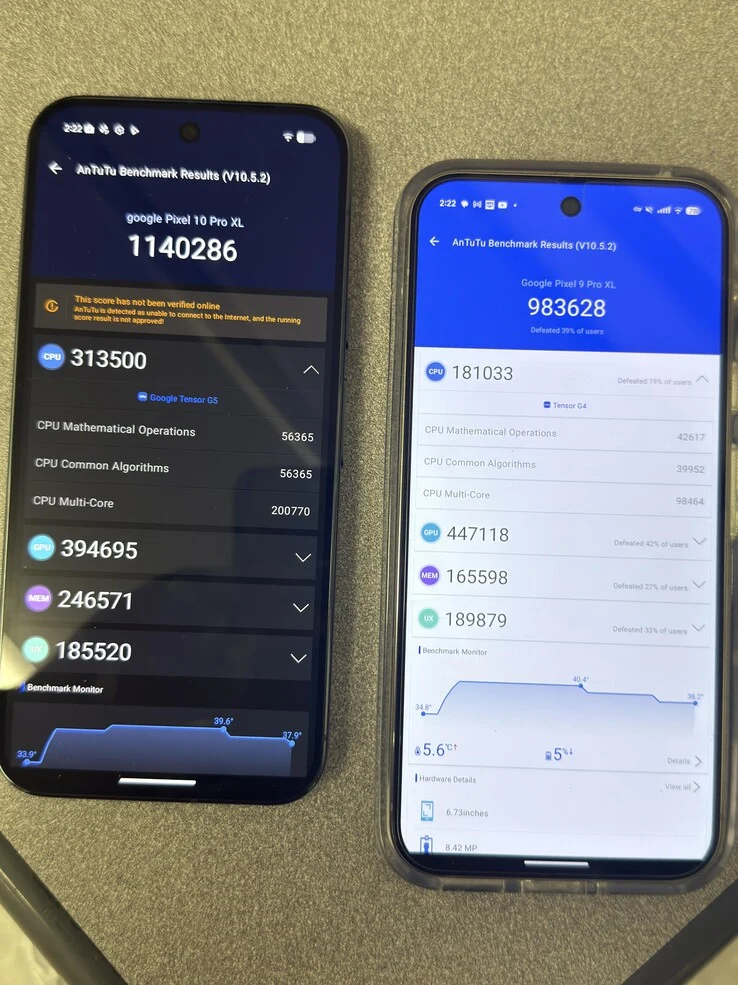
    According to a post on Reddit, the Pixel 10 Pro XL was evaluated on the well-known benchmarking site AnTuTu, where it was compared to last year’s Pixel 9 Pro XL. The new flagship device fails to impress, achieving only a CPU score of 313,500. Interestingly, the Pixel 9 Pro XL scores 181,033—much lower than what it has previously achieved in the same test. The Pixel’s strange performance continues on the graphical side, with the Pixel 10 Pro XL scoring a mere 394,695, which is less than the Pixel 9 Pro XL’s score of 447,118.

    Unclear Issues

    What’s puzzling about the benchmark scores is that both the Pixel 10 Pro XL and the 9 Pro XL have results that don’t align with past performances. The Pixel 9 Pro XL normally achieves over 370,000 on AnTuTu 10’s CPU test, but this time it barely reaches half of that. Compared to the usual results for the Pixel 9 Pro XL (buy on Amazon), the Pixel 10 Pro XL shows poorer performance on both CPU and GPU tests. This could possibly be due to it being a demo unit, as suggested by the user who posted the information.

    Conclusion

    Regardless, it’s best not to form a final opinion on Google’s upcoming flagship based solely on this test. It may still disappoint to some extent; however, an earlier Geekbench listing hinted that its CPU performance might fall somewhere between the Snapdragon 8 Gen 2 and Snapdragon 8 Gen 3.

    Source:
    Link


  • Perplexity Bids $34.5 Billion for Chrome as AI Firms Eye Browsers

    Perplexity Bids $34.5 Billion for Chrome as AI Firms Eye Browsers

    Key Takeaways

    1. Perplexity has made a $34.5 billion all-cash unsolicited bid to acquire Google’s Chrome browser, surpassing its own market valuation of $14 billion.
    2. Google faces a monopoly case concerning its search services and advertising, which may force it to consider selling Chrome.
    3. Perplexity plans to maintain the open-source Chromium browser and invest $3 billion over two years while keeping the default search engine unchanged.
    4. Legal pressures could create opportunities for acquisitions as Google may need to divest parts of its business to comply with antitrust laws.
    5. Chrome holds about 68% of the global browser market share, making it highly valuable for AI companies seeking search data for training models.


    Perplexity, an AI startup, has made a surprising all-cash unsolicited bid to take over Chrome, the web browser that belongs to Google, which is part of Alphabet. This isn’t the first time a company has shown interest in buying Chrome, as both OpenAI and Yahoo have previously hinted at wanting to acquire the popular browser.

    Monopoly Concerns

    Google is currently dealing with a monopoly case related to its search services and advertising. This situation could lead to significant adjustments in search agreements and how data is shared. Such legal pressures may force Google, a subsidiary of Alphabet, to consider selling Chrome. However, up to now, Google has not indicated any plans to sell the browser.

    Unexpected Offer

    The proposal is surprising for a few reasons, but the most notable is that the offer exceeds Perplexity’s market valuation, which is around $14 billion. Perplexity has put forth a bid of $34.5 billion in cash and claims that various funds are ready to help finance the purchase; however, they did not disclose the names of these funds, as noted in a term sheet reported by Reuters.

    This term sheet also mentions that Perplexity intends to maintain Chromium, the open-source browser, invest $3 billion over the next two years, and keep the default search engine unchanged.

    Legal Pressure and Market Share

    During the ongoing legal issues, Google may be compelled to divest part of its business to adhere to antitrust laws, which could create opportunities for acquisitions. A ruling from federal judge Amit Mehta is anticipated between August and September. Nevertheless, Google has announced its plans to appeal this decision.

    According to Global Browser Market Share 2025, Chrome holds approximately 68% of the browsing market. This represents a treasure trove of search data that can help decipher search queries and user behaviors, making it extremely valuable for training large language models and AI. This is likely the reason many AI companies are eager to acquire Chrome, as it would reduce their dependence on Google for this crucial data.

    Source:
    Link


  • “Privacy Risks of Smartwatches and Wearables: Data Gaps Explained”

    “Privacy Risks of Smartwatches and Wearables: Data Gaps Explained”

    Key Takeaways

    1. Modern wearables collect sensitive personal information, raising significant privacy concerns.
    2. A study assessed 17 wearable brands based on 24 privacy criteria, revealing many have confusing policies and insufficient protection against data leaks.
    3. The “Privacy Risk Score” ranges from 33 (lowest risk) to 60 (highest risk), indicating varying levels of data protection among brands.
    4. Leading brands like Google and Apple score well for clear policies and strong security, while brands like Huawei and Xiaomi show major privacy shortcomings.
    5. Consumers should prioritize data protection when choosing wearables and regularly check how their data is managed.


    Modern wearables gather various types of personal information, like sleep habits, heart rate, physical activity, and menstrual cycle data. While this information can enhance health tracking, it also brings up significant privacy issues.

    Privacy Assessment of Wearable Brands

    A research published in npj Digital Medicine assessed 17 popular wearable brands including Apple, Google, Fitbit, Huawei, and Xiaomi, evaluating them against 24 specific criteria. These criteria include how transparent the privacy policies are, how much control users have, and how companies respond to security breaches. The findings indicate that many brands have confusing privacy policies and often lack clear details on data sharing practices. Additionally, the methods to protect against data leaks are generally insufficient, and users have few chances to manage or delete their data.

    Risk Scores for Data Protection

    The evaluation assigned a “Privacy Risk Score” to the 17 wearable brands, with scores ranging from 33 (indicating the lowest risk) to 60 (indicating the highest risk).

    Leading the pack in terms of data protection are Google (33), Apple (35), Oura (38), Polar (38), Withings (39), and Garmin (41). These brands are noted for their clear policies, transparent controls over data, and solid security measures. Users of these brands can feel confident about the safeguarding of their personal information.

    In the middle tier, brands like Fitbit (43), Ultrahuman (44), Samsung (47), Fossil (48), Coros (50), Whoop (50), Wahoo (52), and Suunto (53) are seen to have medium risks regarding data protection. While these companies have some measures in place, they often fall short on transparency and user control. It is advisable for users to carefully scrutinize the specific data protection policies of these brands.

    Concerns for Bottom-Ranked Brands

    On the lower end, Huawei (58), Wyze (60), and Xiaomi (60) show considerable shortcomings in data protection. Despite being significant players in the market, these brands lack clarity about data collection, provide limited user control options, and have inadequate protection systems. The study highlights a high data protection risk associated with these companies, urging users to be especially cautious and thoroughly assess their own data protection choices.

    The research emphasizes that when selecting a wearable device, data protection should be as crucial as features and pricing. Consumers are encouraged to routinely verify how their data is handled and what rights they possess, as this is essential for making informed choices about how to safeguard their privacy.

    Source:
    Link


  • Latest Pixel Watch 4 Leaks: Key Features and Release Details

    Latest Pixel Watch 4 Leaks: Key Features and Release Details

    Key Takeaways

    1. The Pixel Watch 4 will come in 45 mm and 41 mm sizes with an improved Actua 360 display and a peak brightness of 3,000 nits.
    2. It will feature a Quick Charge Dock that charges 25% faster and offers over 40 exercise modes, ECG, SpO2 monitoring, and more health tracking options.
    3. The smartwatch will integrate Gemini for quick AI assistant responses and text suggestions mimicking the user’s voice.
    4. Color options include three for the 44 mm version and four for the 41 mm version, with the exclusive Limoncello hue for the 41 mm model.
    5. Google is set to reveal the Pixel series on August 20, but the products may not be available for purchase until October.


    Google’s next Pixel 10 series, along with the Pixel Buds and Pixel Watch, have been the topic of numerous leaks and speculations. Recently, promotional advertisements for the Pixel 10 Pro Fold and the Pixel 10 Pro surfaced. As these leaks keep coming, we now have additional information about the Pixel Watch 4 and the improvements it will introduce compared to the existing Google smartwatch.

    Details on Specifications

    The same source who earlier leaked the promo ads has now provided the specifics for the Pixel Watch 4. According to Evan Blass’s posts on X, this smartwatch will be available in both a 45 mm and a 41 mm size featuring what Google refers to as an Actua 360 display. The Pixel Watch 3 (available on Amazon) also came in those two sizes but had a regular Actua display. The differences between the Actua and the Actua 360 displays are still not clear. The Pixel Watch 4 will boast a peak brightness of 3,000 nits, an upgrade from the 2,000 nits of the Pixel Watch 3. The 41 mm version is expected to last 30 hours on an always-on display, while the 44 mm variant could last up to 40 hours.

    Charging and Features

    The Quick Charge Dock, which had images leaked last month (July), can charge the Pixel Watch 4 25% quicker than the previous model. In addtion, this smartwatch will offer over 40 exercise modes, ECG, SpO2 monitoring, breathing rate tracking, pulse detection, and HRV (Heart rate variability) tracking.

    The Pixel Watch 4 will integrate Gemini allowing users to just lift their wrist for quick responses from an AI assistant, and the text suggestions from the conversational AI will mimic the user’s voice. What this precisely means is still unclear. Moreover, the LTE version of the Pixel Watch 4 will offer two years of data through Google Fi Wireless.

    Color Options and Release Date

    Finally, the leaks indicate the color choices, with the 44 mm version expected to have three options while the 41 mm version will have four, similar to the Pixel Watch 3. The Limoncello hue appears to be exclusive to the 41 mm model.

    Google plans to reveal its new Pixel series on August 20, but a recent report has indicated that the Pixel 10 Pro Fold, Pixel Watch 4, and Pixel Buds 2a might only be available for sale starting in October.

    Source:
    Link


  • Create Illustrated Children’s Storybooks with Google Gemini

    Create Illustrated Children’s Storybooks with Google Gemini

    Key Takeaways

    1. Google Gemini can create fully illustrated children’s storybooks from simple prompts, designed for quick reading.
    2. Users can personalize storybooks by uploading their own photos and drawings, and the tool supports over 45 languages and various art styles.
    3. AI-generated content may contain errors and inconsistencies, such as differing character art, spelling mistakes, and unusual narratives.
    4. The quality of the storybooks depends on the prompts given, so users should be cautious and treat the feature as a fun tool.
    5. The storybook generator is available on both desktop and mobile devices through the Gemini app.


    Parenting might be evolving thanks to AI technologies like Google Gemini.

    Google’s AI tool, Gemini, now has the capability to produce fully illustrated children’s storybooks from simple prompts. These storybooks feature a total of 10 pages, designed for quick and easy reading, and can be read aloud by an AI-generated voice that turns pages automatically.

    Customization Options

    Google has revealed that users have the option to upload their own photos, drawings, or files to personalize the storybooks even more. Furthermore, Gemini can create books in over 45 languages and utilize various art styles, such as pixel art.

    Caution with AI Content

    Even though the storybook generator is generally adept at creating content, users should be aware that the material is still generated by AI. Consequently, the books may include errors and inconsistencies that are common in AI outputs. This could involve differing character art across pages, spelling mistakes, or strangely structured sentences, along with strange themes or narratives.

    The quality of the resulting storybooks largely hinges on the prompt provided. For example, a prompt asking for a storybook featuring trains discussing the risks of smoking produced a tale where a personified train was advised to “only puff out his wonderful, clean steam,” instead of the black smoke he believed would make him appear older and faster. Thus, it’s wise for users to treat this feature as more of a fun tool and be very careful before sharing these tales with children.

    Source:
    Link


  • Reddit Aims to Be Your New Favorite Search Engine

    Reddit Aims to Be Your New Favorite Search Engine

    Key Takeaways

    1. Reddit aims to become a primary search destination by leveraging its collection of genuine human discussions, responding to user trends of searching for real opinions online.

    2. CEO Steve Huffman emphasizes enhancing the main product, positioning Reddit as a search engine, and expanding internationally as key focus areas for the company’s growth.

    3. A significant number of users prefer human responses over AI-generated content, highlighting the importance of real conversations on the platform.

    4. Reddit is experimenting with “Reddit Answers,” an AI-driven feature that summarizes threads, which has quickly gained popularity among users.

    5. Reddit’s core search product attracts over 70 million weekly users, and the company’s stock has risen significantly due to strong revenue growth, indicating positive investor sentiment.


    If you’re anything like me, you might have started to include “Reddit” in your Google searches. This is a popular technique for discovering genuine opinions and experiences from real individuals. The company seems to have noticed this trend, and it now aims to encourage users to visit its platform directly for answers. They’re making a concerted effort to become a key search destination by using their extensive collection of human discussions.

    Leadership’s Vision

    The leadership at Reddit is vocal about this new strategy. CEO Steve Huffman mentioned, “We’re putting our focus on areas that will yield results for our urgent needs: enhancing the main product, positioning Reddit as a prime search engine, and growing internationally,” in his recent letter to shareholders.

    Meeting User Needs

    This initiative is a direct reaction to how users already engage with the platform. Millions of people visit Reddit daily, seeking advice and information that isn’t available elsewhere. What sets Reddit’s search apart is the human touch; in a digital world full of AI-generated material, the platform provides real conversations and personal stories.

    A recent poll indicated that around 80% of users in the US, UK, Australia, and Canada feel that certain questions can only be answered by humans, not AI summaries. Huffman pointed this out by saying, “In a time when algorithms and automation are taking over, the demand for human voices is more important than ever.” While emphasizing the importance of human interaction, Reddit is not completely turning away from AI. They are experimenting with a feature called “Reddit Answers,” which is an AI-driven tool that gathers summaries from threads. This feature has already increased from one million to six million weekly users in just one quarter. The goal is to merge traditional search with these AI-generated answers to form a unified, robust search experience.

    Growth Potential

    The core search product of the platform already draws in more than 70 million weekly users, revealing the promise of this initiative. Investors are also quite pleased, with Reddit’s stock climbing over 20 percent to $194 per share after the company’s second-quarter earnings exceeded expectations, reaching $500 million in revenue.

    Reddit is stepping into a competitive arena where it will face off against Google, OpenAI, and Meta, all of which are crafting their own search solutions. The relationship with Google is particularly intricate; Google pays Reddit $60 million each year to use its content for AI training, even as Reddit positions itself as a direct rival. Huffman has characterized this relationship as “symbiotic,” but he seems determined to boost Reddit’s autonomy and competitive edge.

    If you’re eager to dive straight into genuine human experiences instead of wading through SEO-optimized content, Reddit’s new search focus could be a refreshing change. The company is prioritizing the search bar within the app, making it simpler to access the platform’s extensive knowledge network.

    Source:
    Link