Tag: Galaxy S25 Ultra

  • iPhone 17 Pro Max vs Galaxy S25 Ultra Drop Test Comparison

    iPhone 17 Pro Max vs Galaxy S25 Ultra Drop Test Comparison

    Key Takeaways

    1. The iPhone 17 Pro Max uses aluminum and glass materials, making it potentially less sturdy than the Galaxy S25 Ultra, which has a titanium frame.
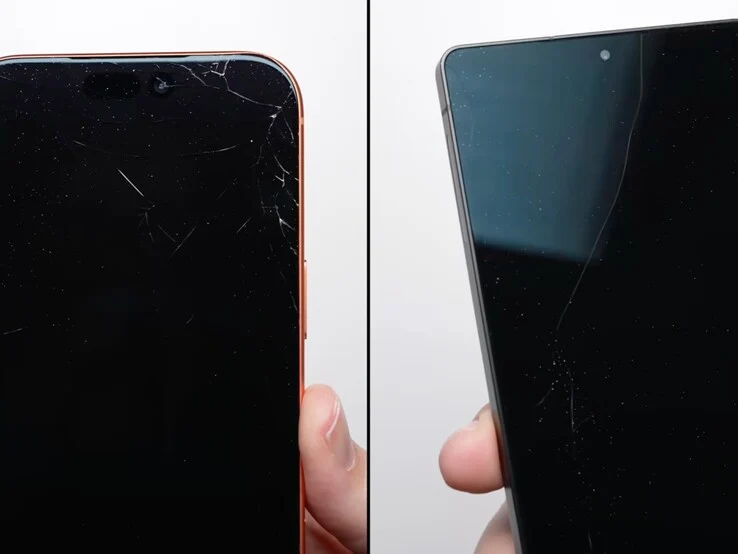
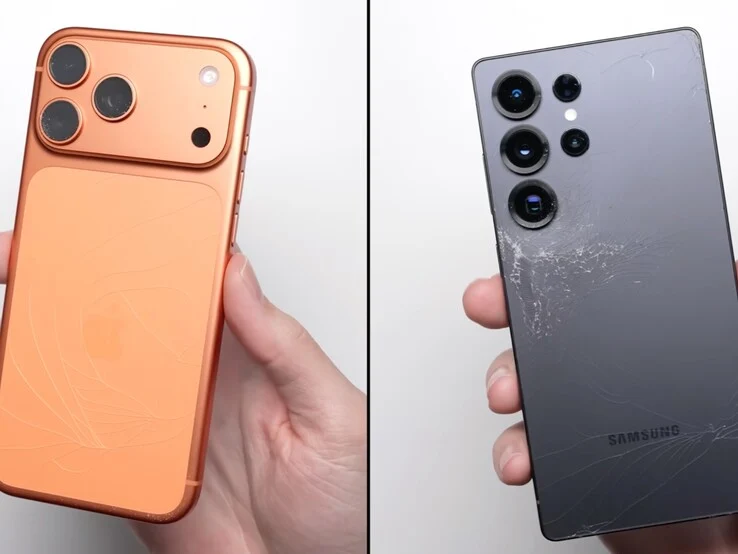
    2. A drop test showed that both devices cracked during 1-meter drops, but the Galaxy S25 Ultra experienced worse damage due to more glass coverage.
    3. In corner drop tests from 1 meter, the iPhone 17 Pro Max sustained a noticeable dent, while the Galaxy S25 Ultra only showed light scuffing.
    4. Both devices experienced screen cracks from face drops, but Apple’s enhanced ceramic shield proved tougher than previous models.
    5. The iPhone Air demonstrated good bending resistance, but both the iPhone Air and iPhone 17 shattered when dropped face-down from six feet.


    Ever since the iPhone 17 series was unveiled on September 9, many people are wondering about the toughness of these devices, especially the slimmer iPhone Air. Apple has opted for aluminum and glass materials for the iPhone 17 Pro Max instead of titanium, which might make it less sturdy compared to not only the iPhone 16 Pro Max but also its main rival, the Galaxy S25 Ultra (available on Amazon). A recent drop test has provided insights into how these two smartphones compare in terms of durability.

    Comparing Durability

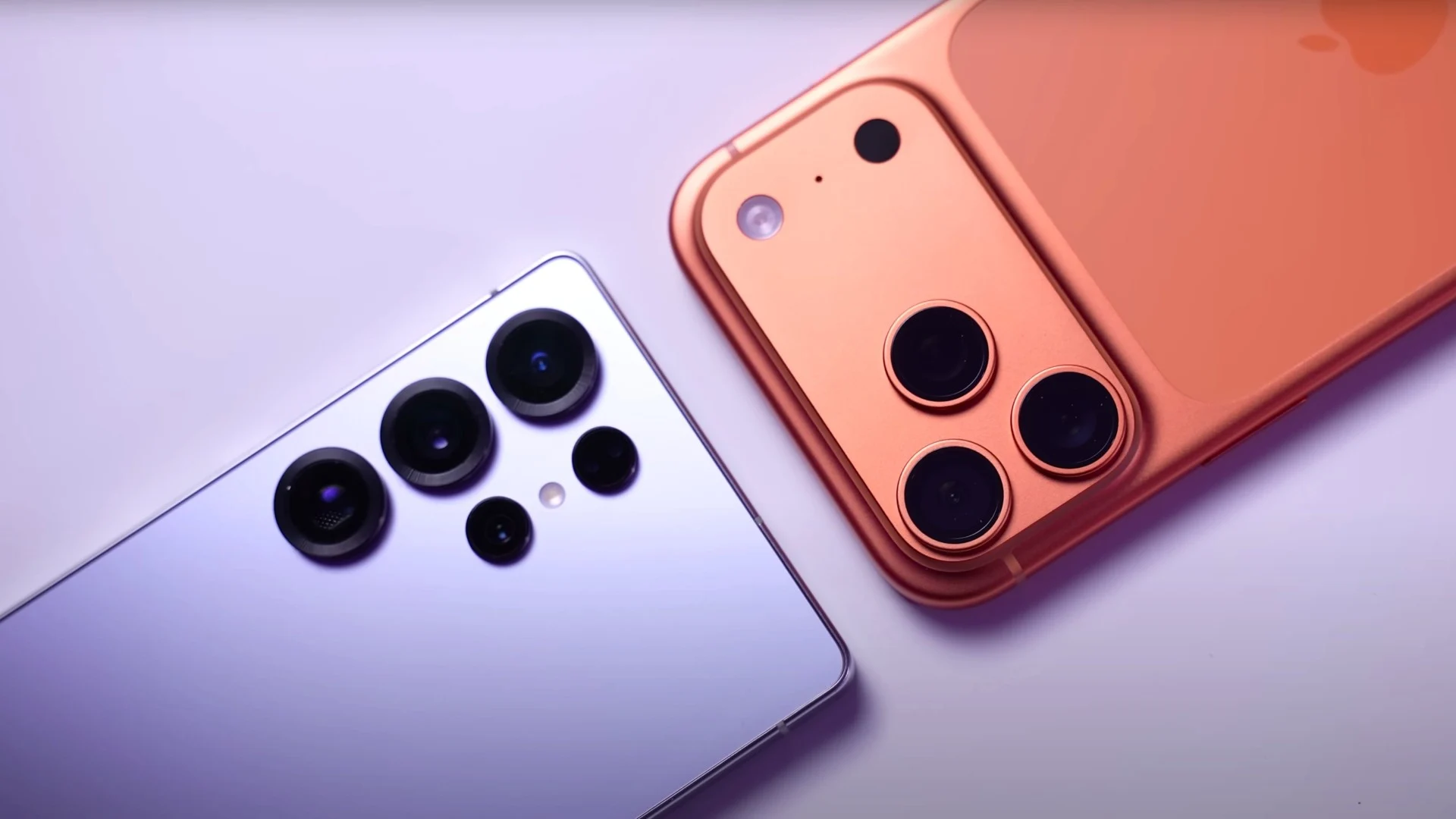
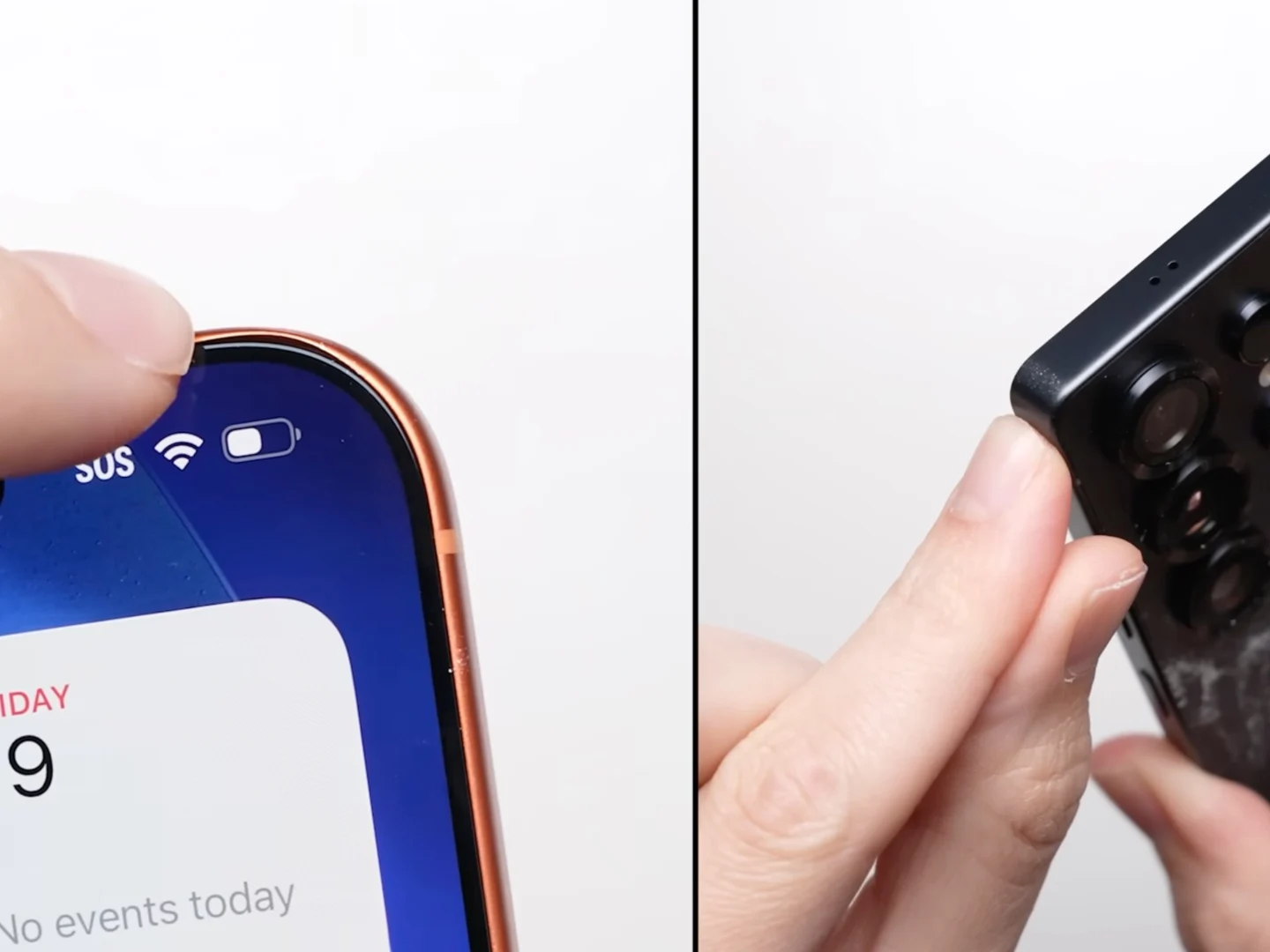
    A video posted by PhoneBuff on YouTube (linked below) showcased a drop test between the iPhone 17 Pro Max and the Galaxy S25 Ultra. They utilized a machine to drop both phones from heights of 1 meter and 1.5 meters onto their back, front, and corners. The iPhone 17 Pro Max features an aluminum unibody frame, while the Galaxy S25 Ultra is built with a titanium frame. The iPhone’s back is partially made of glass and shielded by a ceramic layer, whereas the back of the Galaxy S25 Ultra is fully covered with Gorilla Glass Victus 2.

    Results of the Tests

    During the 1-meter back drop test, both devices experienced cracking in their back glass, but the damage was notably worse on the Galaxy S25 Ultra. This is likely due to the fact that the iPhone 17 Pro Max has less glass overall. The Samsung phone also displayed cracks around its camera area, though both devices continued to function correctly.

    The next trial involved a 1-meter corner drop, where the advantages of titanium over aluminum became apparent. The iPhone 17 Pro Max sustained not just scuffs but also a noticeable dent, while the Galaxy S25 Ultra only showed light scuffing. In the subsequent test, which involved dropping both phones from 1 meter onto their face, both screens cracked, but PhoneBuff remarked that the damage wasn’t as severe as with older models. Apple’s enhanced ceramic shield has shown to be tougher, yet it still fails to withstand drops from 1 meter.

    Further Observations

    The tests continued with the same drops from a height of 1.5 meters, resulting in even more damage to both devices. The back glass of the Galaxy S25 Ultra was mostly shattered, with all camera lenses cracked. Conversely, the iPhone 17 Pro Max displayed only a slight increase in damage when dropped on its back. The front drop results were similar, but the corner drop led to worse damage for the iPhone, causing some focusing problems for its main camera. PhoneBuff mentioned that the camera issue seemed to fix itself eventually.

    Many channels have conducted teardowns and durability evaluations of the iPhone 17 series. Surprisingly, the iPhone Air has demonstrated strong bending resistance. However, a recent drop test by Allstate Protection revealed that both the iPhone Air and the iPhone 17 Pro shattered when dropped face-down from a height of six feet.

    Source:
    Link


  • iPhone 17 Pro Max Camera Beats Samsung Galaxy S25 Ultra in Reviews

    iPhone 17 Pro Max Camera Beats Samsung Galaxy S25 Ultra in Reviews

    Key Takeaways

    1. The iPhone 17 Pro and Pro Max feature a 48MP 4x telephoto lens, enhancing camera performance significantly compared to the regular iPhone 17.
    2. Early comparisons between the iPhone 17 Pro and Samsung Galaxy S25 Ultra highlight the iPhone’s superior low-light and nighttime photography capabilities.
    3. The new 18MP Center Stage front camera on the iPhone 17 series offers better versatility and performance, especially for nighttime selfies and video stabilization.
    4. Both iPhones and Galaxy S25 Ultra struggle with macro photography, but the Galaxy performs slightly better in this area, while dedicated telemacro options exist in other brands.
    5. The iPhone 17 Pro outperforms the Galaxy S25 Ultra in DxOMark rankings, but Samsung offers unique features like 8K video and advanced AI capabilities.


    One of the key reasons to choose an iPhone 17 Pro or iPhone 17 Pro Max instead of the regular iPhone 17 is the enhanced camera, which now features a 48MP 4x telephoto lens. It’s not surprising that many early evaluations are concentrating on the camera’s performance, especially since we’ve already witnessed drop tests and initial teardown clips this past weekend after the phone’s official launch.

    YouTube Comparisons

    In their first videos regarding the new Pro iPhone, two prominent YouTubers have drawn comparisons to the Samsung Galaxy S25 Ultra, which is also rather expected. This phone is the most commonly available Android flagship, even though some people argue that it struggles to compete with premium smartphone cameras from Chinese brands, like the Vivo X200 Ultra.

    Camera Innovations

    For both MrWhosetheboss and SuperSaf, the new 18MP Center Stage front-facing camera on the iPhone 17 series is a notable advancement. It not only surpasses Samsung’s equivalent in terms of dynamism but also offers more versatility with its flexible formats. The iPhone 17 excels in taking selfies at night, and its video stabilization shows improvement too. However, SuperSaf does favor selfies taken with a flash in very dark settings on the Galaxy S25 Ultra.

    Nighttime Performance

    When directly compared, the new iPhone outshines its predecessor, particularly in low-light conditions. For instance, there’s a reduction in jitter artifacts in dim videos. Numerous examples shared by these two YouTubers demonstrate that the iPhone 17 Pro Max is superior in illuminating challenging scenes. Even in telephoto comparisons, where Samsung typically excels during the day, Apple takes the lead as lighting conditions worsen. For example, text captured at 20x zoom appears clearer on the iPhones, even with Samsung’s optical advantages.

    Macro Photography

    Neither device handles macro shots flawlessly. While both Apple and Samsung can take macro pictures using their ultrawide cameras, both YouTubers agree that the Galaxy S25 Ultra does slightly better. For those looking to capture macro images with a telephoto lens, options like Vivo, Xiaomi, or Oppo flagships are preferable, as they can shoot telemacro from mere inches away. With the iPhone 17 Pro Max’s 4x telephoto, you need to be about 3 feet from the subject to achieve a clear image, while the Galaxy S25 Ultra performs in between and takes this category.

    Zoom Capabilities

    Regarding zoom, both smartphones showcase their strengths when the optical telephoto focal length is perfectly aligned. Samsung generally excels at 3x and 5x zoom, while the iPhone 17 Pro Max tends to render superior pictures at 4x and 8x. As previously mentioned, the advantage often shifts in Apple’s favor at night; however, Ice Universe has noted artifacts appearing on the Galaxy S25’s telephoto camera during daylight. In the X post linked above, images taken at approximately 9x-10x zoom reveal odd artifacts on the Galaxy S25 Ultra, attributed to Samsung’s zoom algorithms. This issue becomes even more noticeable when closely examining 30x zoom shots from both devices. Those who are willing to take the risk seem to discover more natural details on the iPhone 17 Pro, while the Galaxy S25 Ultra presents overly sharpened and distorted images.

    Overall Rankings

    The iPhone 17 Pro also significantly outperforms the Galaxy S25 Ultra in DxOMark’s assessment of top smartphone cameras. Nonetheless, both devices have their strengths and weaknesses beyond just camera capabilities. For instance, Samsung is the only brand offering 8K video, and its Galaxy AI features often operate more effectively than Apple’s Intelligence counterpart. A Pro mode is also only present on Android flagships, at least with standard software. Conversely, only Apple permits users to customize the photo style using Photographic Styles, which is somewhat achievable on Vivo and Xiaomi devices.

    Source:
    Link


  • Oppo Find X9 Ultra vs Vivo X300 Ultra: Samsung and Xiaomi Rivalry

    Oppo Find X9 Ultra vs Vivo X300 Ultra: Samsung and Xiaomi Rivalry

    Key Takeaways

    1. Many Ultra-branded flagship smartphones from brands like Samsung, Oppo, Vivo, and Xiaomi were launched this year, but not all are available worldwide.
    2. The Xiaomi 15 Ultra and Galaxy S25 Ultra are currently the only Ultra-branded models accessible through official channels in many regions.
    3. Changes in 2024 may see either Oppo or Vivo launching their next Ultra-branded flagship globally, according to insider information.
    4. Upcoming launches later this year are expected to include the Oppo Find X9, Find X9 Pro, Vivo X300, and X300 Pro, but global availability is uncertain.
    5. The Oppo Find X9 Ultra may be planned for release in Q1 2026, following the Find X8 Ultra, but more details are expected to emerge later this year.


    Plenty of Ultra-branded flagship smartphones have been launched this year, but they haven’t all been released worldwide. To clarify, brands like Samsung, Oppo, Vivo, and Xiaomi have their latest Ultra-branded devices. Yet, the Xiaomi 15 Ultra and Galaxy S25 Ultra (currently priced at $1,169 on Amazon) are the only ones accessible through official channels in many regions.

    Potential Changes in 2024

    According to two insiders, the current situation with some Chinese manufacturers might shift next year. In a post on X, leaker Kartikey Singh mentioned that either Oppo or Vivo is set to release their next Ultra-branded flagship on a global scale. It’s important to point out that while these companies are anticipated to unveil their upcoming flagship smartphone series later this year, these launches will probably include only the Oppo Find X9 and Find X9 Pro, along with the Vivo X300 and X300 Pro.

    Uncertain Future for Global Launches

    As shown in the tweet below, Singh couldn’t verify if Oppo or Vivo would release their next Ultra-branded flagship outside of their native markets. Instead, another leaker, @chunvn8888, suggested that it would most likely be Oppo, with a release planned for Q1 2026. This likely refers to the Find X9 Ultra, which indicates that Oppo aims to launch its flagship smartphone less than a year after the Find X8 Ultra debuted in April 2025. Sadly, more information may not be available until the end of the year at the soonest.

    Source:
    Link


  • Tecno to Launch World’s Slimmest 5G Smartphone in India Soon

    Tecno to Launch World’s Slimmest 5G Smartphone in India Soon

    Key Takeaways

    1. Tecno will launch the Pova Slim 5G, a smartphone with a trendy design, in India soon.
    2. The Pova Slim 5G is expected to be just 5.75 mm thick and feature a 5,200mAh battery.
    3. It may support 45W charging and include two 50MP rear cameras.
    4. The device is anticipated to have a 6.78-inch AMOLED display with a 144Hz refresh rate and 1.5K resolution.
    5. The Pova Slim could become the thinnest 5G smartphone in India, launching on September 4, 2025.


    Tecno has announced that it will soon turn a previously unachievable dream “into reality” by releasing a smartphone with a trendy design.

    Launching in India

    The upcoming device, known as the Pova Slim 5G, appears to be a re-branded version of the Spark Slim that was presented at MWC 2025.

    If this is true, the phone will be just 5.75 millimeters thick, while housing a 5,200mAh battery, which actually exceeds the capacity of the much bulkier flagship Galaxy S25 Ultra.

    Impressive Features

    The Pova Slim may also feature 45W charging, similar to the high-end Samsung model. It is expected to have only two rear cameras, both potentially boasting a 50MP resolution, and a unique design inspired by the Google Pixel bar-style hump, despite its slim profile.

    Its AMOLED display could measure an impressive 6.78 inches, offering a high-end 144Hz refresh rate and a 1.5K resolution. Additionally, the screen will likely be curved, showcasing its edges next to the ultra-slim frame.

    A New Contender

    Nonetheless, the Pova Slim might actually become the thinnest 5G smartphone in India—at least until the iPhone 17 Air is released.

    The Slim is also on track to outpace the new iPhones in terms of launch, as it is set to be revealed on September 4, 2025.

    Source:
    Link


  • Trump Mobile T1 Phone Design Similar to Galaxy S25 Ultra

    Trump Mobile T1 Phone Design Similar to Galaxy S25 Ultra

    Key Takeaways

    1. Trump Mobile revealed a new image of the T1 phone, which appears to be poorly edited and resembles a Samsung Galaxy S25 Ultra.
    2. The company’s website still shows the older version of the T1, lacking updates about the new design.
    3. Trump Mobile changed its manufacturing claims from “Proudly Made in America” to “brought to life right here in the USA” due to skepticism about its production capabilities.
    4. The T1 specifications include a 6.25-inch AMOLED display, a 50-megapixel main camera, 12 GB of RAM, and a 5,000 mAh battery, among other features.
    5. There are inconsistencies regarding the T1’s release date, with the website removing earlier launch details.


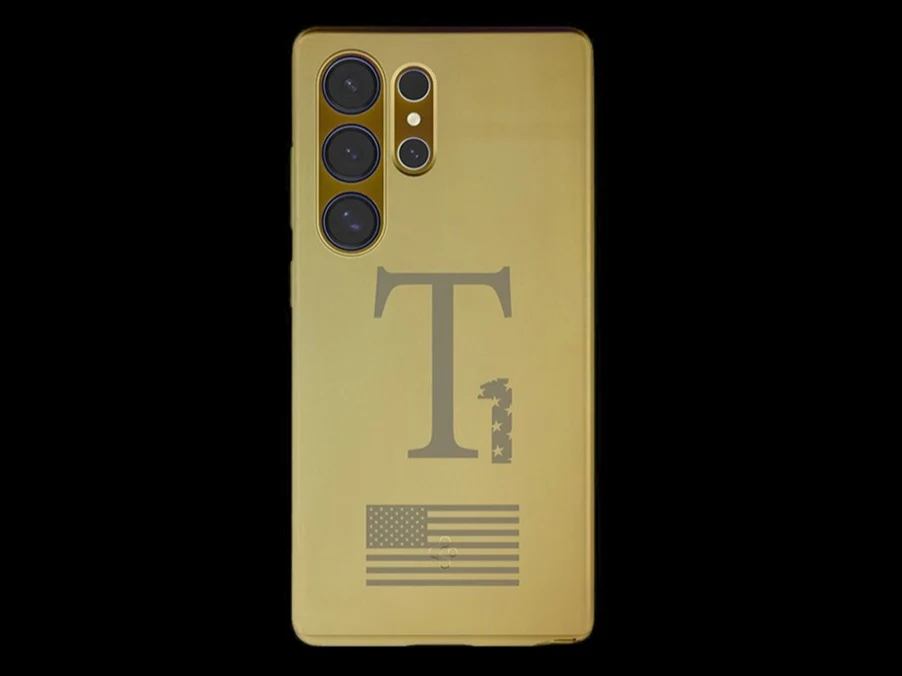
    Trump Mobile, the carrier using the president’s name, has unveiled a fresh image of the T1 phone, but the picture seems more like a hasty Photoshop creation than a polished final product. On Tuesday, the company shared the image on X with a caption stating, “the wait is almost over!” The new image indicates a change from the previously mentioned three-camera system to a four or possibly five-camera arrangement. Additionally, the device appears slightly broader than the model showcased back in June.

    Outdated Information on Website

    Despite the buzz on social media, Trump Mobile’s website still displays the older version and hasn’t been updated to reflect the new image. The most striking aspect is how closely the T1 resembles Samsung’s Galaxy S25 Ultra, which features a similar camera layout. The likeness is so remarkable that the T1 appears akin to a Galaxy S25 Ultra case from Spigen, and when you zoom in on the image, you can barely see the Spigen logo printed near the bottom.

    Shifting Claims About Manufacturing

    The company has encountered skepticism since it first announced the T1 would be “Proudly Made in America,” a feat no smartphone manufacturer has accomplished entirely. Trump has openly urged Apple to shift iPhone production to the U.S., but the truth is that global supply chains in Asia largely control electronics manufacturing. Following doubts about its claims, Trump Mobile discreetly altered the wording on its website to say the device will be “brought to life right here in the USA” with assistance from “American hands.”

    Specifications of the T1

    The phone is described as having a 6.25-inch AMOLED display with a 120 Hz refresh rate, a 50-megapixel main camera accompanied by a 2-megapixel macro and a 2-megapixel depth sensor, along with a 16-megapixel front camera. It is rumored to feature 12 GB of RAM, 256 GB of expandable storage, a 5,000 mAh battery that supports 20 W charging, and runs on Android 15 software. Trump Mobile also highlights the presence of a headphone jack, a fingerprint scanner, and face unlock capabilities.

    Initially, the company indicated that the T1 would launch this month, although its website also suggested a September release. Those specifics have since been taken down. Previous promotional images have even depicted what looks like an iPhone 16 Pro encased in gold with the Trump name embossed on it, raising further questions about the true appearance of the final T1 when it eventually arrives.

    Source:
    Link


  • Samsung Galaxy S25 Ultra Beats Xiaomi 15 Ultra in Sales Report

    Samsung Galaxy S25 Ultra Beats Xiaomi 15 Ultra in Sales Report

    Key Takeaways

    1. The Galaxy S25 Ultra launched in early 2025, competing with high-end Android smartphones like Vivo X200 Ultra, Oppo Find X8 Ultra, and Xiaomi 15 Ultra.

    2. Xiaomi 15 Ultra was the top seller among competitors, with 586,000 units sold, while Samsung shipped 8.39 million Galaxy S25 Ultra units.

    3. Sales figures from Ice Universe are unverified and may only reflect the Chinese market.

    4. The S25 Ultra features a 1440p Dynamic AMOLED 2X display and a customized Snapdragon 8 Elite processor with unique S Pen capabilities.

    5. Despite its strengths, the S25 Ultra faced challenges in camera performance tests, being outperformed by competitors like the Huawei Pura 80 Ultra.


    The Galaxy S25 Ultra made its entrance in early 2025, quickly followed by a series of high-end Android smartphones with similar specifications and names.

    Competitors in the Market

    These include the Vivo X200 Ultra, Oppo Find X8 Ultra, and Xiaomi 15 Ultra. Notably, the Xiaomi 15 Ultra was reported to be the top seller among the three, achieving 586,000 units sold by the end of June 2025, while Vivo and Oppo sold 219,000 and 210,000 units, respectively.

    In stark contrast, Samsung managed to ship a remarkable 8.39 million units of its flagship device in the same timeframe. The Galaxy S24 Ultra didn’t fare as well, with just 7.65 million units sold by June 2024.

    Unverified Numbers

    However, these statistics come from a report shared on X by the well-known leaker Ice Universe, and it’s unclear whether these figures reflect global sales or are limited to the Chinese market.

    The S25 Ultra has some advantages over its Ultra counterparts, including an anti-glare 1440p Dynamic AMOLED 2X display, powered by a customized version of the Snapdragon 8 Elite processor, which is overclocked to 4.47GHz. It also boasts unique S Pen capabilities.

    Camera Performance Challenges

    Despite these strengths, the S25 Ultra has struggled in various camera tests conducted by DxOMark, where it has been outperformed by models like the Huawei Pura 80 Ultra, which is not included in the sales data, likely due to its non-Android operating system, even with Samsung’s impressive 200MP main camera and advanced AI features.

    Source:
    Link


  • Samsung Galaxy S25 Ultra Users Report Moon Photography Problems

    Samsung Galaxy S25 Ultra Users Report Moon Photography Problems

    Key Takeaways

    1. Users of the Samsung Galaxy S25 Ultra are reporting issues with moon photography after updating to the One UI 8 beta, where the moon appears in a pink hue.
    2. The camera app preview displays the moon’s correct color, but saved images show incorrect shades, indicating a white balance problem in final processing.
    3. Normally, cameras adjust white balance to remove color tints, but a failure in this adjustment can lead to inaccurate moon images.
    4. There is hope for a fix before the official release of One UI 8, expected in September, as the issue occurred during beta testing.
    5. Samsung has previously faced criticism for its moon photography, particularly for relying too much on AI enhancements that distort the appearance of the moon.


    Over the past few days, there has been a growing number of reports on Samsung’s community forum and on X regarding issues with the Samsung Galaxy S25 Ultra (starting at $1,106 on Amazon). Users who have updated to the latest beta of One UI 8, which runs on Android 16, are experiencing significant problems specifically with moon photography. As seen in the images shared in the X post below, the moon appears in a pink hue.

    Camera App Preview

    Strangely, the camera app preview shows the moon’s color correctly. However, once a picture is clicked and saved, the moon turns out in an incorrect shade. This suggests a problem with the white balance settings during the final image processing stage. Normally, cameras adjust white balance to eliminate green or pink tints, but if this adjustment fails, the images may appear green or pink.

    Possible Fixes Ahead

    Given that the issue surfaced during the One UI 8 beta testing phase, there’s hope that Samsung can resolve this glitch before the official version of One UI 8 is launched to users. This update is anticipated to be available for the Samsung Galaxy S25 series in September. This isn’t the first instance of Samsung’s smartphones facing challenges with moon photography. In 2023, the company faced backlash for overly relying on artificial intelligence to “enhance” moon images, resulting in photos that often bore little resemblance to the actual moon being photographed.

    Source:
    Link


  • Samsung Galaxy S27 Ultra to Get Major Camera Upgrade from S20 Ultra

    Samsung Galaxy S27 Ultra to Get Major Camera Upgrade from S20 Ultra

    Key Takeaways

    1. Samsung’s camera technology has remained largely unchanged for the last three years.
    2. The Galaxy S27 Ultra may feature a new 200 MP CMOS sensor, moving away from the current 200 MP ISOCELL HP2.
    3. The new sensor is expected to be a larger 1/1.1-inch model from Sony, providing a significant upgrade.
    4. Competing brands like Xiaomi and Vivo may introduce this technology before Samsung, with their own devices expected to use the sensor.
    5. Initial rumors suggested the new sensor might appear in the Galaxy S26 Ultra, but this expectation has been revised.


    It’s difficult to dispute the notion that Samsung’s camera technology has become somewhat stale. The firm has largely relied on the same sensors in its flagship devices for the last three years, and while this trend may persist with the Galaxy S26 series next year, it appears that notable changes could be on the horizon for the future.

    Potential Upgrades Ahead

    According to reports from Chinese sources, Samsung might introduce a new and remarkable main camera in its 2027 flagship, the Galaxy S27 Ultra. Allegedly, this upcoming flagship will move away from the 200 MP ISOCELL HP2 found in the Galaxy S23 Ultra, opting instead for a new, larger 200 MP CMOS sensor. If this information is accurate, it would represent the most significant main camera improvement since the transition from the 1/2.55-inch 12 MP camera in the Galaxy S10+ to the 1/1.33-inch 108 MP camera in the Galaxy S20 Ultra.

    Sony’s Influence on Innovation

    This new sensor is reportedly Sony’s 1/1.1-inch 200 MP model, which is significantly bigger than the 1/1.3-inch HP2 present in the Galaxy S25 Ultra. As previously mentioned, Sony’s upcoming 200 MP sensor is anticipated to be used in next-generation devices, with smartphones like the Xiaomi 16 Ultra and Vivo X300 Ultra possibly pioneering this technology a whole year before the Galaxy S27 Ultra hits the market.

    Misleading Expectations

    It’s worth mentioning that the initial source seemed to suggest that this sensor might debut in next year’s Galaxy S26 Ultra. However, it now seems that this was a bit too hopeful of an assertion.

    Source:
    Link

  • Snapdragon 8 Elite 2 Set to Launch as Fastest Mobile Chipset

    Snapdragon 8 Elite 2 Set to Launch as Fastest Mobile Chipset

    Key Takeaways

    1. Qualcomm is set to release the Snapdragon 8 Elite 2 processor, expected to improve performance significantly over the original version.
    2. The 8 Elite 2 may achieve AnTuTu Benchmark scores of around 3.8 million, compared to 3 million for the first generation.
    3. Each core in the new processor is rumored to be clocked at 4.8GHz, an increase from 4.32GHz in the original, leading to an expected performance increase of about 11%.
    4. There may be a “pro” variant of the 8 Elite 2, similar to the Snapdragon 8 Elite Leading Edition found in the Samsung Galaxy S25 Ultra.
    5. The Snapdragon 8 Elite 2 for Galaxy could be the most powerful mobile chipset available unless the MediaTek Dimensity 9500 surpasses it by late 2025.


    Qualcomm is expected to follow up its innovative Snapdragon 8 Elite processor with a new second-generation version that may offer even greater performance.

    Performance Expectations

    The upcoming “8 Elite 2” is rumored to achieve impressive AnTuTu Benchmark scores reaching around 3.8 million, compared to roughly 3 million for its earlier version, thanks to the inclusion of dual prime custom Oryon cores.

    Each core is now said to be clocked at a record-breaking 4.8GHz, a jump from the maximum of 4.32GHz seen in the original 8 Elite. This change signals a performance increase of about 11%, if the predictions hold true.

    Possible Variations

    However, there’s a chance this leak could refer to a “pro” variant of the Elite 2, echoing the recently launched Snapdragon 8 Elite Leading Edition, or the 8 Elite for Galaxy SoC, which can be found in the Samsung Galaxy S25 Ultra that’s been around since early 2025.

    The highest clock speed for this model sits at 4.47GHz, which would diminish the performance boost of the rumored 8 Elite 2 to approximately 7%.

    Competitive Landscape

    Regardless, the “Snapdragon 8 Elite 2 for Galaxy” could potentially be the most powerful chipset available for mobile devices upon its release—unless, of course, the MediaTek Dimensity 9500 manages to surpass it by late 2025.

    A source named Fixed Focus Digital shared this information via Weibo.

    Source:
    Link

  • Galaxy S25 Edge Teardown: 2.4mm Thinner than S25 Ultra

    Galaxy S25 Edge Teardown: 2.4mm Thinner than S25 Ultra

    Key Takeaways

    1. The Galaxy S25 Edge and S25 Ultra have similar price tags but differ significantly in features and design.
    2. The S25 Edge uses a lighter version of the 200 MP ISOCELL HP2 camera and has a thinner body at 5.8 mm.
    3. The battery capacity in the S25 Edge is reduced from 5,000 mAh to 3,900 mAh, which may disappoint some users.
    4. The Galaxy S25 Edge features a plastic cage for easy battery replacement and improved cooling for the Snapdragon 8 Elite chipset.
    5. Samsung’s design changes, including a titanium-reinforced frame, highlight their commitment to innovation while ensuring performance and functionality.


    The comparison between the Galaxy S25 Edge and the Galaxy S25 Ultra may not seem very fair at first, as they do not share all the same features. Nevertheless, since their official price tags are quite similar—especially when compared to the Galaxy S25+—it makes sense to contrast the two. Notably, the S25 Edge also has the same impressive 200 MP camera found in Samsung’s flagship model.

    Differences in Design

    However, the comparison isn’t completely equal, as revealed by YouTuber JerryRigEverything in his teardown. The Galaxy S25 Edge uses a somewhat lighter version of the ISOCELL HP2 sensor. This is just one of the many adjustments made to make the S25 Edge’s body only 5.8 mm thick. The teardown shows that Samsung has also made the speakers, battery, cooling system, mainboard, and USB-C port smaller. In fact, the chassis, now reinforced with titanium, acts as the frame for the USB port, the speakers have been made thinner, and the water resistance feature is angled inside the casing.

    Internal Changes

    The double-sided motherboard of the Galaxy S25 Ultra is what allows for the most significant reduction in size, as it has been noticeably thinned out. Users of the Galaxy S25 Edge might not be thrilled to learn that the battery capacity has been reduced from 5,000 mAh to 3,900 mAh. This is particularly disappointing given that competitors in China have long had silicone-carbon batteries that offer higher capacities, even in very slim foldable devices.

    On the bright side, the South Korean company has retained the easily serviceable plastic cage for battery replacement, which is a plus according to the teardown specialist. Furthermore, there are some positive differences in the way the chipset is cooled, according to Zack Nelson. The Snapdragon 8 Elite is now positioned directly on the vapor chamber, surrounded by plenty of cooling paste, while the Ultra model had an additional metal piece that lacked this cooling paste. Overall, the expert views these changes favorably, and the sturdy performance in the bend test is likely due to the titanium-reinforced frame.

    Conclusion

    According to JerryRigEverything on YouTube, these improvements in design and technology reflect Samsung’s commitment to innovation while still maintaining essential functionality.

    Source:
    Link