Tag: JerryRigEverything

  • OnePlus 15 Durability Test: Scratches vs. Broken Glass Explained

    OnePlus 15 Durability Test: Scratches vs. Broken Glass Explained

    Key Takeaways

    1. The OnePlus 15’s Sand Storm color option uses fiberglass-reinforced plastic, while the Infinite Black and Ultra Violet options are made of glass.
    2. The plastic back of the Sand Storm variant scratches easily, while the glass versions are less prone to scratches but more likely to break upon impact.
    3. OnePlus does not clearly communicate the differences in materials on its official website, leading to potential consumer confusion.
    4. The aluminum frame features a micro-arc anodizing process for increased scratch resistance, though scratches can still occur.
    5. The OnePlus 15 has a dust and waterproof rating of IP69 and features a dual-cell battery with a capacity of 7,300 mAh.


    Anyone looking into the OnePlus 15 should think about its daily durability, a topic frequently covered by the YouTube channel JerryRigEverything. Similar to the Xiaomi 17 Pro durability evaluation, the OnePlus 15 shows that at least one of its color options uses materials that might be unexpected for a high-end smartphone. The back of the Sand Storm color version is crafted from plastic, while the other two options, Infinite Black and Ultra Violet, are constructed from glass.

    Material Comparison

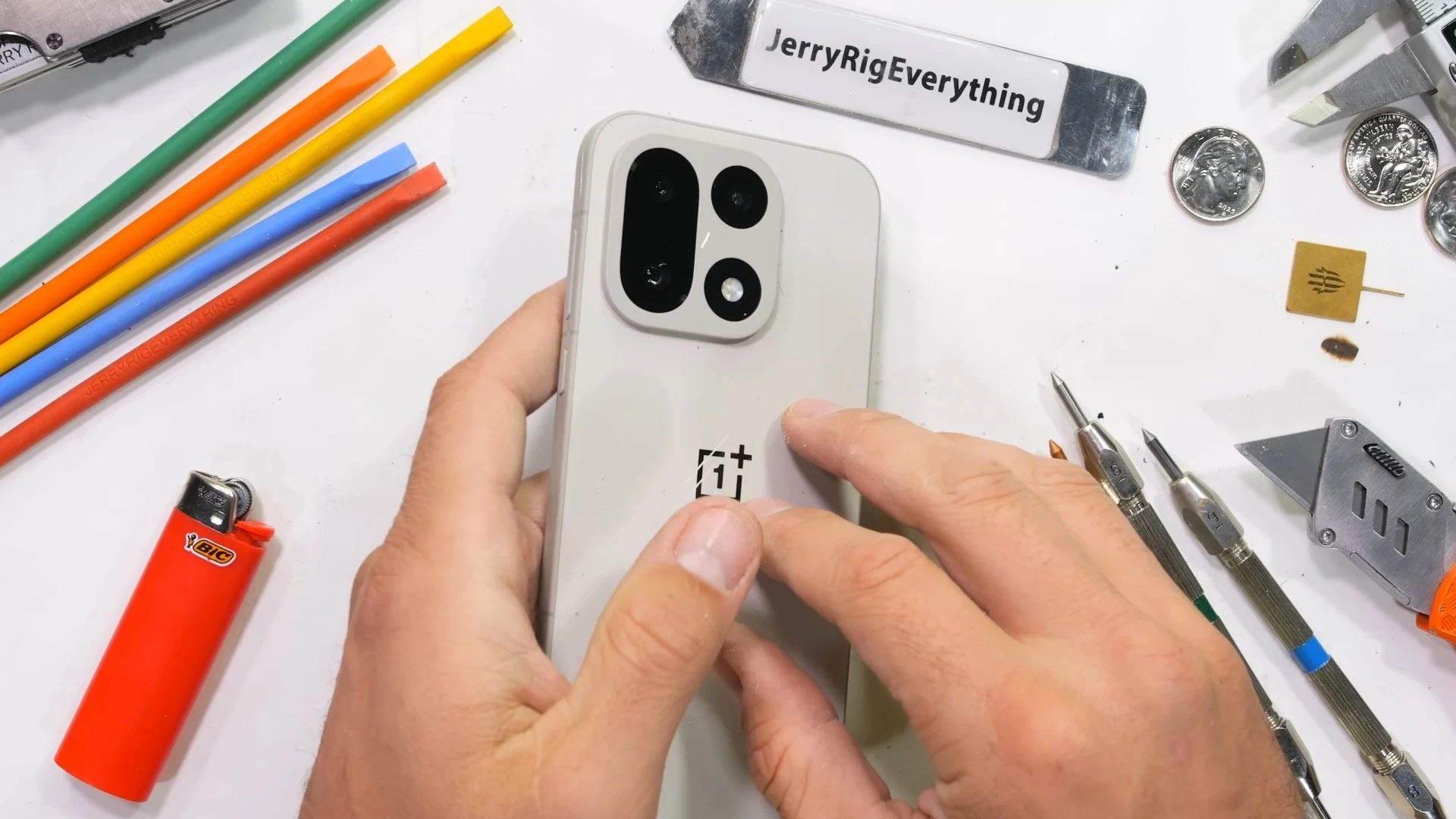
    Both plastics and glass come with their own pros and cons in practical use. Zack Nelson’s durability test and teardown video highlights that the fiberglass-reinforced plastic of the Sand Storm color scratches easily; even coins could leave visible marks over time, which is less likely with the glass variants. Conversely, the beige color option should withstand drops better, since glass is known to break more easily.

    Lack of Transparency

    We feel it’s worth noting that OnePlus does not clearly communicate these material differences on its official website. Aside from the fact that the Sand Storm model is 4 grams lighter, there is no clear mention of this in the specifications. The aluminum frame’s micro-arc anodizing process, claimed to be stronger than titanium, is heavily promoted. The durability tester did find it more resistant to scratches from a Stanley knife, though scratches are still possible.

    Bend Testing Results

    Regarding bend tests, the outcomes are quite predictable. Even the plastic version resists bending, and the glass models are likely to hold up just as well. The teardown part of the video also reveals the vapor chamber cooling system, which is large and relatively easy to tear. The OnePlus 15, rated dust and waterproof up to IP69, also has a dual-cell battery, which explains its capability to be sold in Europe with a capacity of 7,300 mAh.

    Source:
    Link


  • Xiaomi 17 Pro Durability Test: Glass vs. iPhone 17 Pro Scratch Resistance

    Xiaomi 17 Pro Durability Test: Glass vs. iPhone 17 Pro Scratch Resistance

    Key Takeaways

    1. The Xiaomi 17 Pro features a unique secondary display in the camera bump and resembles the iPhone 17 Pro.
    2. The front screen is protected by Dragon Glass 3.0, showing scratches at level 7 on the Mohs hardness scale.
    3. The back panel is made of plastic, which is uncommon for a flagship phone, while the frame is aluminum.
    4. Plastic backs can be less prone to breaking, but this choice may surprise buyers used to glass backs.
    5. The Xiaomi 17 Pro passed durability tests, including a successful bend test and a disassembly review.


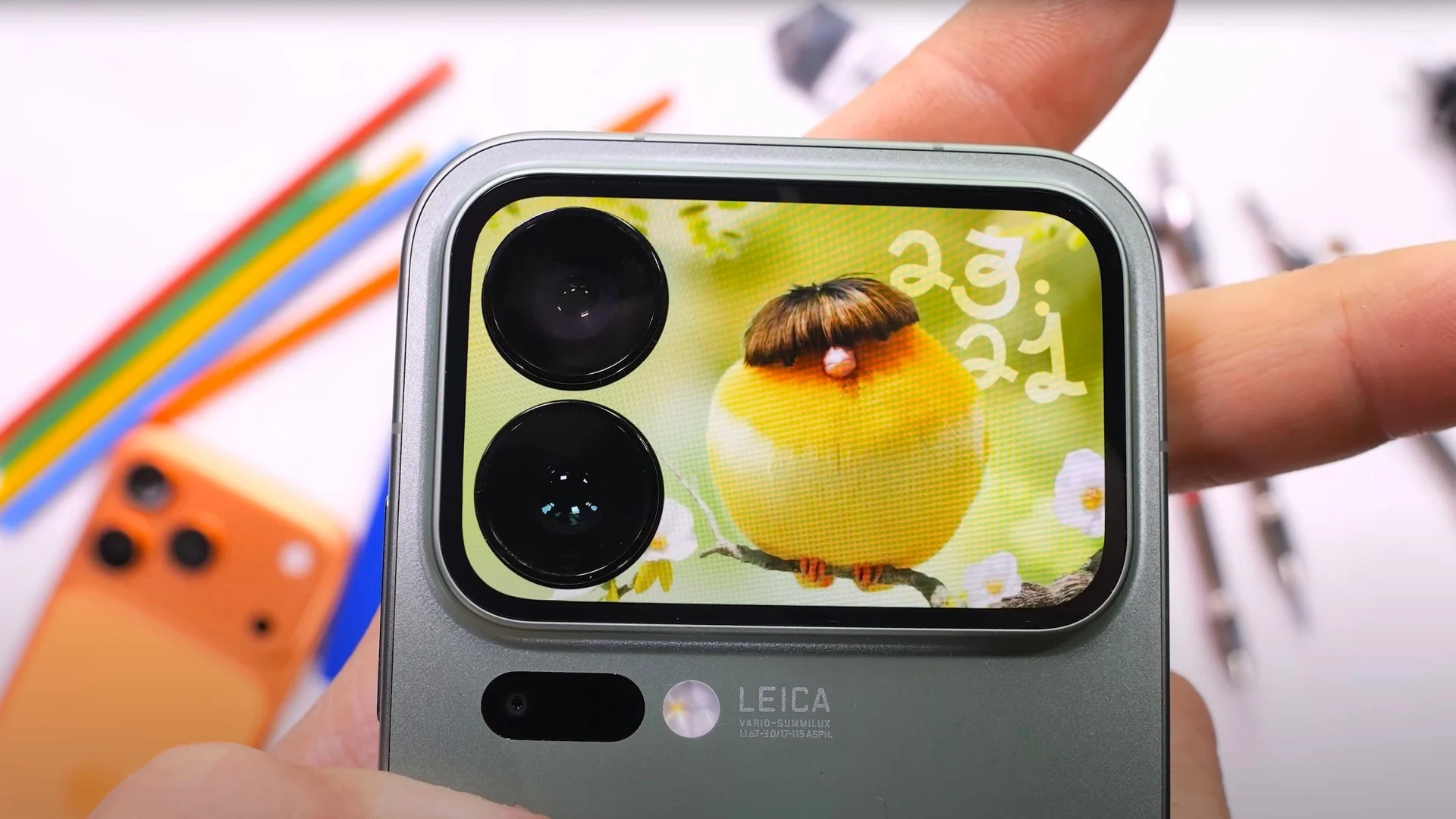
    China’s top smartphone models don’t usually show up on the JerryRigEverything YouTube channel, which focuses mainly on phones sold in the U.S. However, there are some exceptions, like the new Xiaomi 17 Pro. At first sight, this 6.3-inch flagship resembles the iPhone 17 Pro, but it has a unique secondary display located in the camera bump on the back.

    Scratch Resistance

    The AMOLED screen is shielded by Dragon Glass 3.0 on the front, and it doesn’t scratch at the usual Mohs hardness level of 6, only starting to show marks at level 7. This means that Xiaomi’s alternative to Gorilla Glass is nearly as scratch-resistant as Apple’s latest Ceramic Shield 2, which did slightly better in this durability assessment. Sadly, Xiaomi only applies this new glass on the front, and the back panel starts to show the common scratches at level 6 on the Mohs hardness scale.

    Build Quality

    In a surprising twist for a flagship phone, the back is made of plastic rather than glass. The frame is crafted from anodized aluminum. While plastic does have its perks, like being less prone to breaking than glass, this choice may catch many potential buyers off guard, particularly since lots of lower-end smartphones often come with plastic backs. On a brighter note, the bend test went smoothly, so the Xiaomi 17 Pro successfully passes JerryRigEverything’s durability tests. Following this, there’s a quick disassembly in the second part of the video, which you can find embedded below.

    JerryRigEverything YouTube

    Source:
    Link


  • iPhone 17 Durability Test: JerryRigEverything’s Review of Budget Model

    iPhone 17 Durability Test: JerryRigEverything’s Review of Budget Model

    Key Takeaways

    1. The entry-level iPhone 17 passed durability tests with excellent results, making it a strong option in the lineup.
    2. The front screen features a ceramic shield that protects it up to level seven on the Mohs hardness scale, showing good resistance to scratches.
    3. The back lacks the ceramic shield and showed varying scratch resistance, with level five and below causing minimal damage, while level six left lasting marks.
    4. The iPhone 17 successfully passed the bend test, demonstrating slight flexing but no cracks, indicating a robust design.
    5. Pre-order statistics suggest the iPhone 17 is expected to outsell the successful iPhone 16.


    Following the testing of the iPhone Air and the iPhone 17 Pro (Max), the entry-level iPhone 17 has also undergone the durability assessment by JerryRigEverything (linked below). This model is the most affordable in the series and is anticipated to outsell the already successful iPhone 16, based on pre-order statistics. Luckily, it has passed the durability evaluation with excellent results.

    Testing Methodology

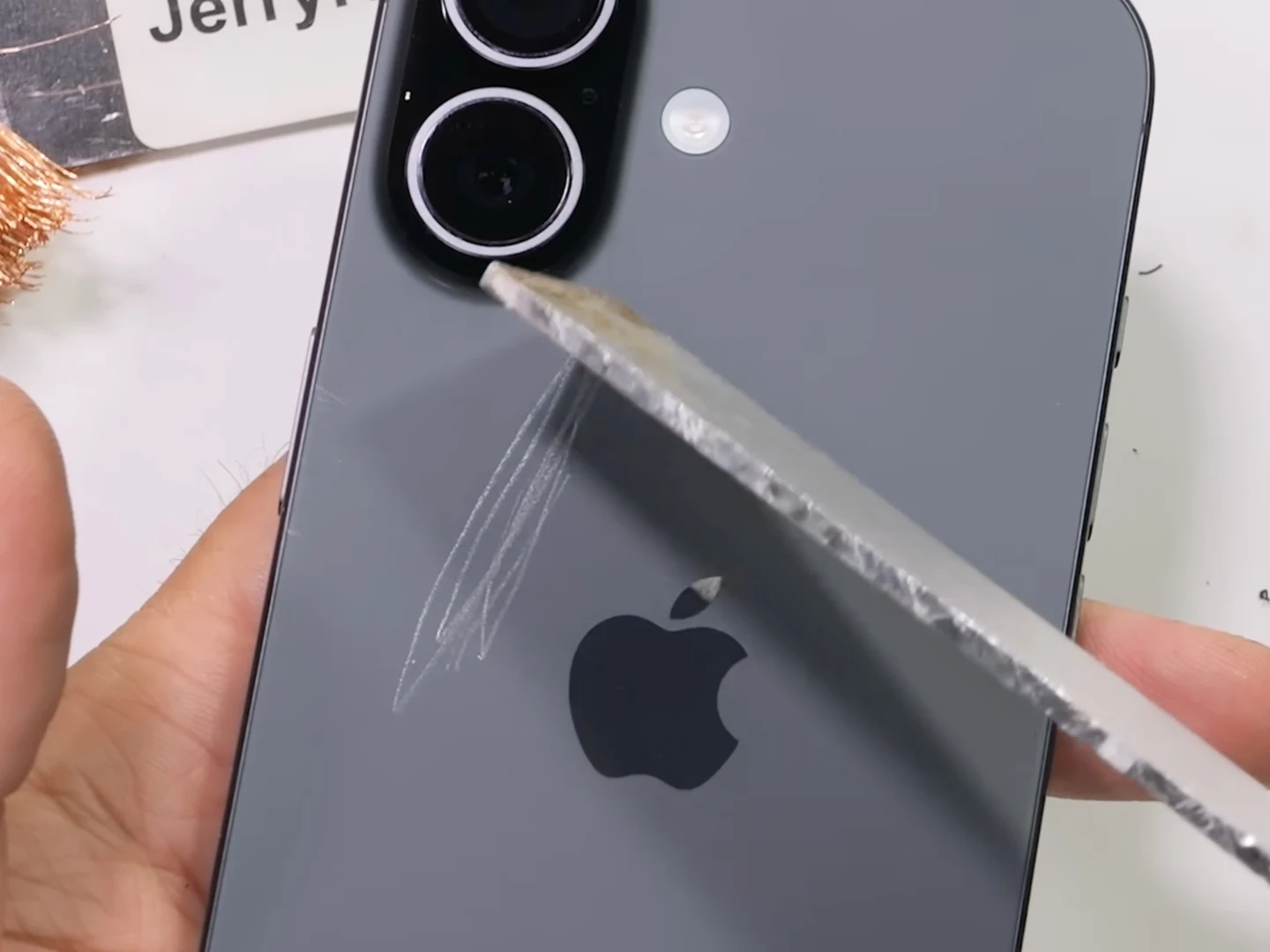
    In addition to standard scratch testing tools, JerryRigEverything employed everyday items to simulate typical wear and tear. Starting with the front of the iPhone 17, the ceramic shield performed admirably, protecting the screen up to level seven on the Mohs hardness scale. There was some minor smudging at level seven, but no scratches or cracks were evident. The back of the phone presents a more intriguing scenario, as it lacks the ceramic shield that enhances scratch resistance seen in the iPhone Air and Pro versions.

    Scratch Resistance Findings

    Interestingly, while a stainless-steel utility knife (rated at level five hardness) left only light scratches on the back, an aluminum piece with a hardness of level three managed to leave permanent marks. Although this was a deliberate scratching test, there have been multiple accounts of display units in stores getting scratched. Apple, however, refutes these claims, asserting that what some see as scratches are merely “material transfer.” In terms of the iPhone 17, a titanium rod (level six) also left lasting impressions. Conversely, a copper and nickel coin, a brass key, copper wire, a 90% silver coin, and a 90% gold coin did not create any permanent damage.

    Bend Test Results

    In the bend test, applying full pressure resulted in no cracks on either the front or back. The device exhibited only slight flexing, demonstrating that the combination of an aluminum frame and glass is sufficiently robust to endure bending from regular usage. This outcome was consistent across the entire lineup, including the iPhone Air, which, despite its slim profile, can handle considerable force.

    Source:
    Link


  • iPhone 17 Pro Max Durability Test: Scratchgate Blame on Apple

    iPhone 17 Pro Max Durability Test: Scratchgate Blame on Apple

    Key Takeaways

    1. JerryRigEverything’s latest durability test criticized Apple’s design choices for the iPhone 17 Pro and Pro Max, particularly regarding scratch issues.
    2. The anodisation process creates a protective oxide layer on the aluminum body, but it is ineffective on sharp edges, leading to vulnerability to scratches.
    3. Apple did not round the edges of the camera area for aesthetic reasons, which compromises scratch resistance compared to the rest of the device.
    4. Common items like keys and coins can easily damage the protective layer on the camera edges, unlike the rest of the phone which might only require wiping to remove scratches.
    5. The new Ceramic Shield 2 display glass shows visible scratches at Mohs level 8, indicating an improvement in durability compared to older iPhone models.


    The latest durability assessment on JerryRigEverything’s YouTube channel has been somewhat atypical. The host, Zack Nelson, known as JerryRigEverything, used a crane scale to test the iPhone Air and didn’t hold back in his critique of Apple regarding the iPhone 17 Pro and Pro Max, which were examined in Orange and Blue, respectively. Zack pointed out that the many claims about scratched iPhones are valid and stem from issues that could have been avoided, implying that Apple is solely responsible for the situation dubbed “Scratchgate.”

    Explanation of the Issue

    JerryRigEverything provided a reasonable theory for this problem: During the anodisation process, the aluminium unibody of the phone gets a hard oxide layer, which is meant to shield the metal underneath from damage due to the environment. Even though this layer is rated at 9 on the Mohs hardness scale, it cannot be applied to sharp edges. Following the required DIN standard, Apple should have slightly rounded the edges of the camera area to enhance scratch resistance, akin to the rest of the device. However, it seems the company chose not to do this for aesthetic reasons.

    Consequences of Design Choices

    This choice has significant effects on the look of the large camera module. JRE effectively illustrated this using a microscope, showing that common items like keys and coins can easily scrape away the thin protective layer on the edges. While scratch residues from other objects can be wiped off the rest of the iPhone, the edges of the camera plateau are different; the delicate oxide layer actually comes off if the phone is not safeguarded by a case from the start.

    The durability test provides some confirmation of the many reports about scratched iPhone 17 demo units. Still, it’s worth noting that some scratches on the display glass or flat aluminium surfaces might be removable with a simple wipe, which has been seen in earlier iPhone models. The remaining parts of the durability test did not highlight any other serious issues: The new Ceramic Shield 2 display glass began to show visible scratches at Mohs level 8 (similar to the iPhone Air), indicating a clear improvement compared to older iPhone versions.

    Source:
    Link


  • iPhone Air Bends in JerryRigEverything Test but Avoids Bendgate 2.0

    iPhone Air Bends in JerryRigEverything Test but Avoids Bendgate 2.0

    Key Takeaways

    1. The iPhone Air is Apple’s slimmest phone at just 5.6mm thick, raising durability concerns due to past bending issues with earlier models.
    2. The new Ceramic Shield 2 glass shows impressive scratch resistance, with minimal marks at level 7 on the Mohs hardness scale.
    3. The iPhone Air struggles with screen reflections, performing worse than older Samsung models despite claims of improved anti-reflection coating.
    4. Its grade 5 titanium frame is significantly more rigid and elastic than aluminum, making it less prone to bending during stress tests.
    5. The iPhone Air withstood up to 216 pounds of pressure before damage occurred, indicating it can handle everyday accidents without severe issues.


    At just 5.6mm thick, the iPhone Air has become Apple’s slimmest phone to date, sparking curiosity among smartphone fans about its durability, especially in light of the notorious bending issues with the iPhone 6 Plus. Zack Nelson, who is more commonly known as JerryRigEverything, has put this device to the test in his signature durability challenge. The findings reveal that the iPhone Air is indeed quite robust.

    Durability Tests

    Zack kicked off his highly anticipated video on the iPhone Air’s durability with a scratch test, showcasing the impressive strength of Apple’s new Ceramic Shield 2. Typically, smartphone glass begins to show scratches at a level 6 on the Mohs hardness scale, but Zack’s tools hardly marked the surface even at level 7. “Apple ruined my line,” he humorously remarked, pointing out that Corning’s new Ceramic Shield 2 represents a significant leap forward compared to last year’s iPhone 16 series and even surpasses the Galaxy S25 Ultra’s Gorilla Armor 2, which had visible scratches at level 6 in a previous test.

    Screen Reflection Issues

    However, the iPhone Air didn’t perform as well when it came to reducing screen reflections. Despite Apple’s claims that their newer phones come with an “Apple-designed coating for better anti-reflection,” it was less effective at minimizing glare under bright lighting compared to Samsung’s older Galaxy S24 Ultra.

    Bend Test Results

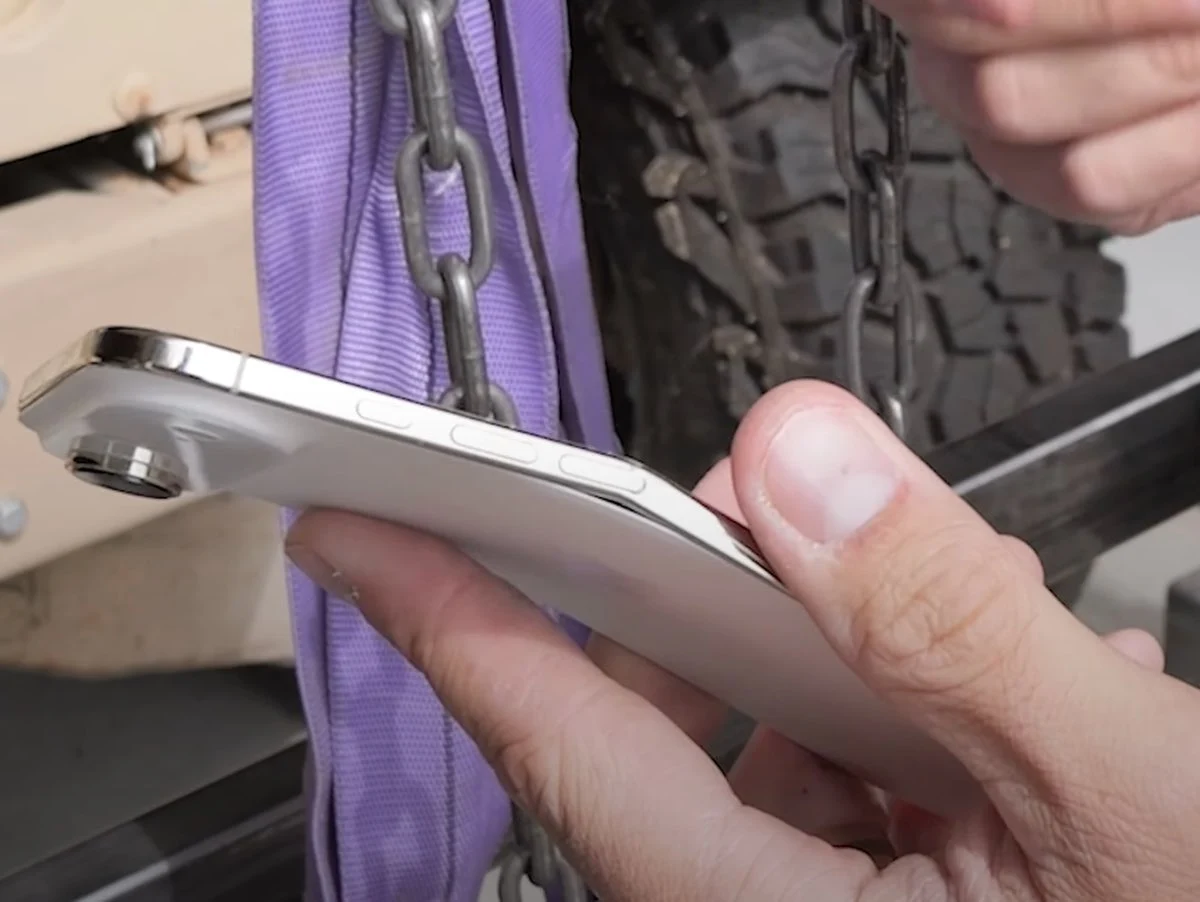
    In contrast to the iPhone 17 and 17 Pro, the Air features a grade 5 titanium frame, which Apple asserts is much less prone to bending. This titanium is twice as rigid as aluminum and 60% more elastic. This elasticity proved essential when Zack conducted the notorious bend test. Initially, he pressed down from the back with both thumbs, and the phone hardly moved. When he bent it from the front, there was some noticeable bend, but it returned to its original shape “just like it was out of the box a few minutes ago.”

    Feeling adventurous, Zack upped the ante. Using a crane scale in his garage, he applied pressure directly to the center of the iPhone Air until it finally buckled. The device withstood an impressive amount of pressure, reaching up to 216 pounds (about 98 kg) before the front glass cracked and the titanium frame bent beyond repair. Interestingly, the back glass remained intact, and the phone was still operational after the tests. This should alleviate any worries regarding “Bendgate 2.0.” At the very least, everyday accidents—such as sitting on your phone—are unlikely to result in severe damage to the iPhone Air. As Zack quipped, “your pants pockets would rip off before the Air would.”


  • Vlogger Burns Samsung Galaxy Z Fold7 to Prove a Point

    Vlogger Burns Samsung Galaxy Z Fold7 to Prove a Point

    Key Takeaways

    1. The Galaxy Z Fold7 is priced at $1,899 and was featured in a YouTube video where it was taken apart and burned to test materials.
    2. The primary goal of the video was to verify the presence of titanium in the device using a $20,000 XRF spectrometer.
    3. The internal backplate exhibited oxidation patterns when exposed to flame, while the mesh produced sparks.
    4. The Z Fold7 has limited cooling solutions, with concerns about an air gap between the mid-frame and processor covering.
    5. The video raised questions about the repairability of the Z Fold7 and speculated on future Samsung devices, like the tri-fold.


    The Galaxy Z Fold7 is priced at $1,899 on Amazon as of September 2, 2025. However, that didn’t stop Zach Nelson from kicking off his newest YouTube video with the innovative foldable Samsung flagship taken apart and set ablaze.

    Exploring the Interior

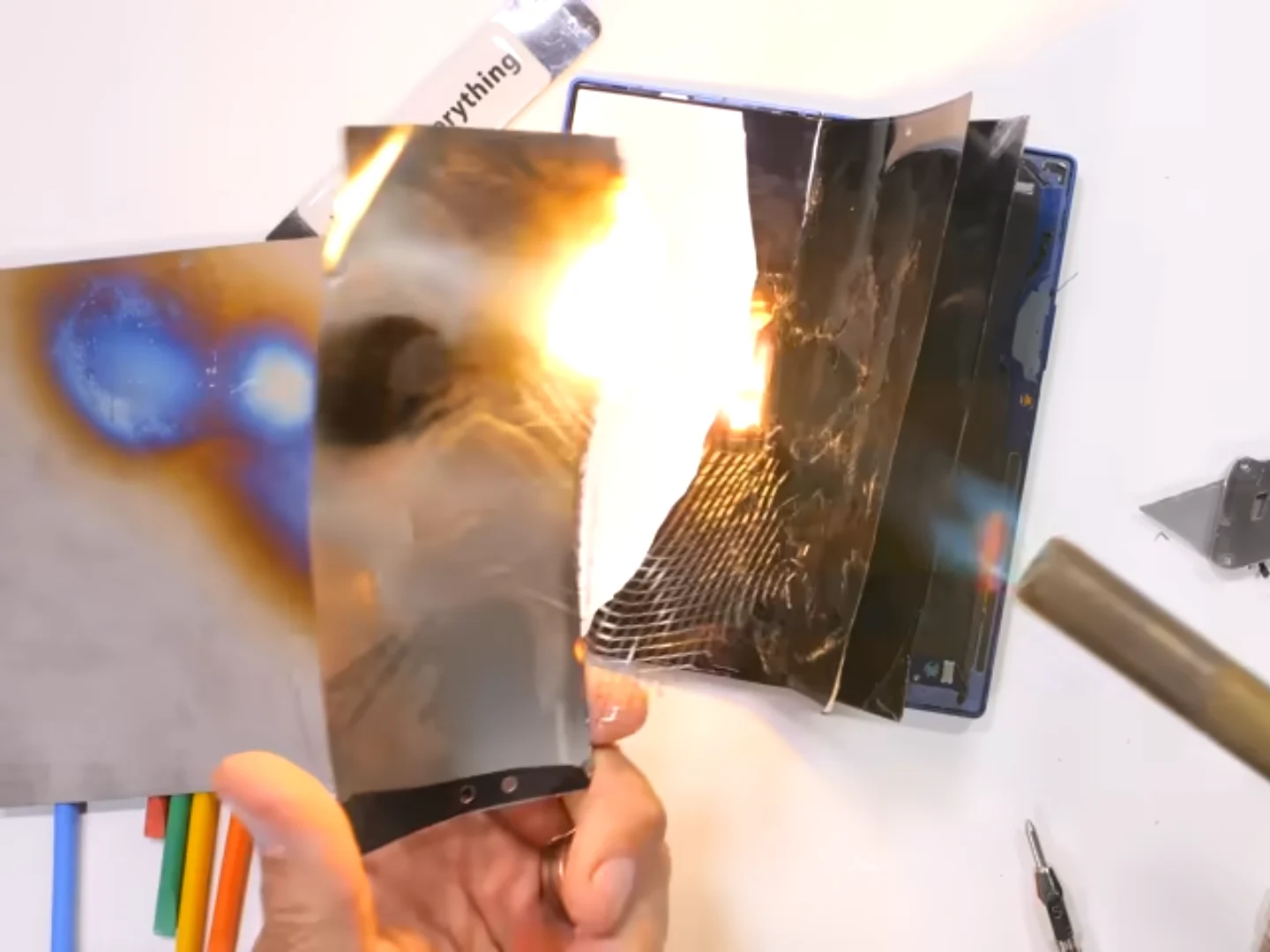
    To be fair to the host of JerryRigEverything, his primary aim involved using a ~$20,000 XRF spectrometer to verify that the Z Fold7 indeed features titanium inside. Samsung claims this material is used in an internal backplate to enhance structural strength, along with a mesh that adds flexibility.

    During his investigation, Nelson discovered that the backplate showed a distinct, almost rainbow-like pattern from oxidation when exposed to a flame, while the mesh burst into a small cloud of white sparks.

    Critiques on Cooling

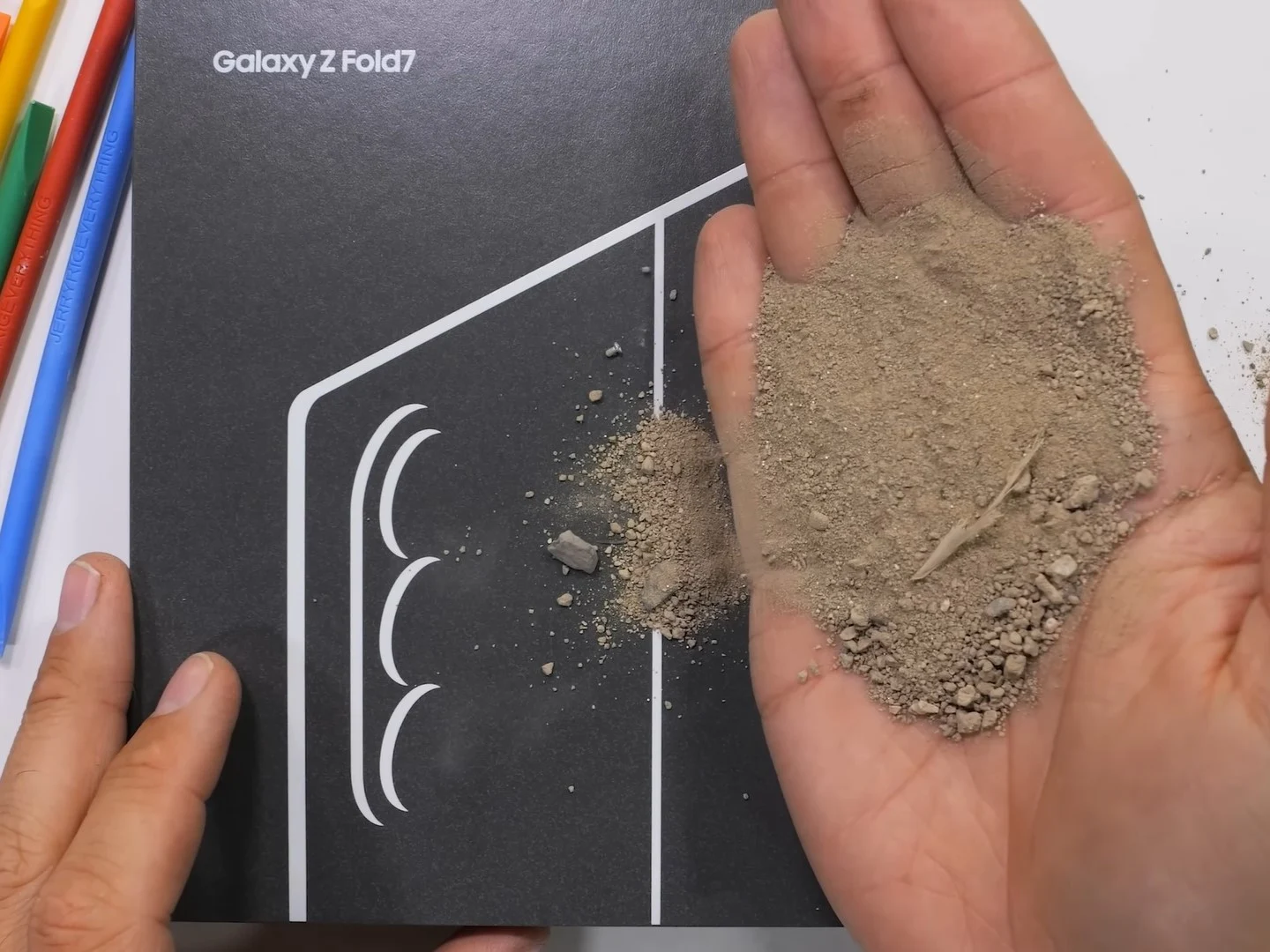
    In his review, Nelson pointed out some shortcomings within the Z Fold7, especially the limited cooling solutions. Although the new flagship had sufficient thermal paste to create a little smiley face, he still expressed concerns about an air gap found between the anodized aluminum mid-frame and the graphite covering the processor.

    Additionally, the vlogger demonstrated the ability to remove the main 8-inch Dynamic LTPO AMOLED 2X display in one piece while it was still powered on; however, attempting to separate some layers might result in failure.

    Future of Repairability

    It will be fascinating to see if the first Samsung tri-fold will offer similar possibilities for repair in its anticipated launch.

    Source:
    Link


  • Google Pixel 10 Pro XL Durability Test: Pixelsnap Magnet Insights

    Google Pixel 10 Pro XL Durability Test: Pixelsnap Magnet Insights

    Key Takeaways

    1. The Pixel 10 Pro XL passed a scratch test with impressive results, showing durability in heat and bend tests.
    2. Consumers will benefit from seven years of software updates and reliable hardware longevity.
    3. The new Pixelsnap feature allows for magnetic wireless charging without needing a protective case.
    4. The Pixel 10 series is the first flagship Android phones that fully support Qi2 compatibility.
    5. Upcoming teardown videos will reveal more internal modifications, including battery details.


    Everything is proceeding smoothly without any unpleasant surprises. The Pixel 10 Pro XL has shown impressive results in a widely recognized scratch test conducted by YouTuber JerryRigEverything. It comes with aluminum buttons set in an aluminum body that can be taken apart using the right tools. The AMOLED screen handled a short, direct heat impact on the Gorilla Glass Victus 2 without showing any signs of damage, and during the bend test, there were no strange sounds or signs of weakness in the hardware.

    A Mixed Bag of Excitement

    Is it dull? Maybe. Yet, this is a significant benefit for consumers and users of the latest Google flagship. They not only receive seven years of software updates, but the hardware is also expected to endure for a similar duration. One of the most thrilling aspects of Zack Nelson’s durability examination this time around is the beginning and conclusion of the video, which suggest substantial internal modifications. A feature likely to attract many supporters is the Magsafe-like Pixelsnap setup of the new Pixel 10 series, allowing for magnetic wireless charging without needing a protective case, marking a first in the Android market.

    Setting New Standards

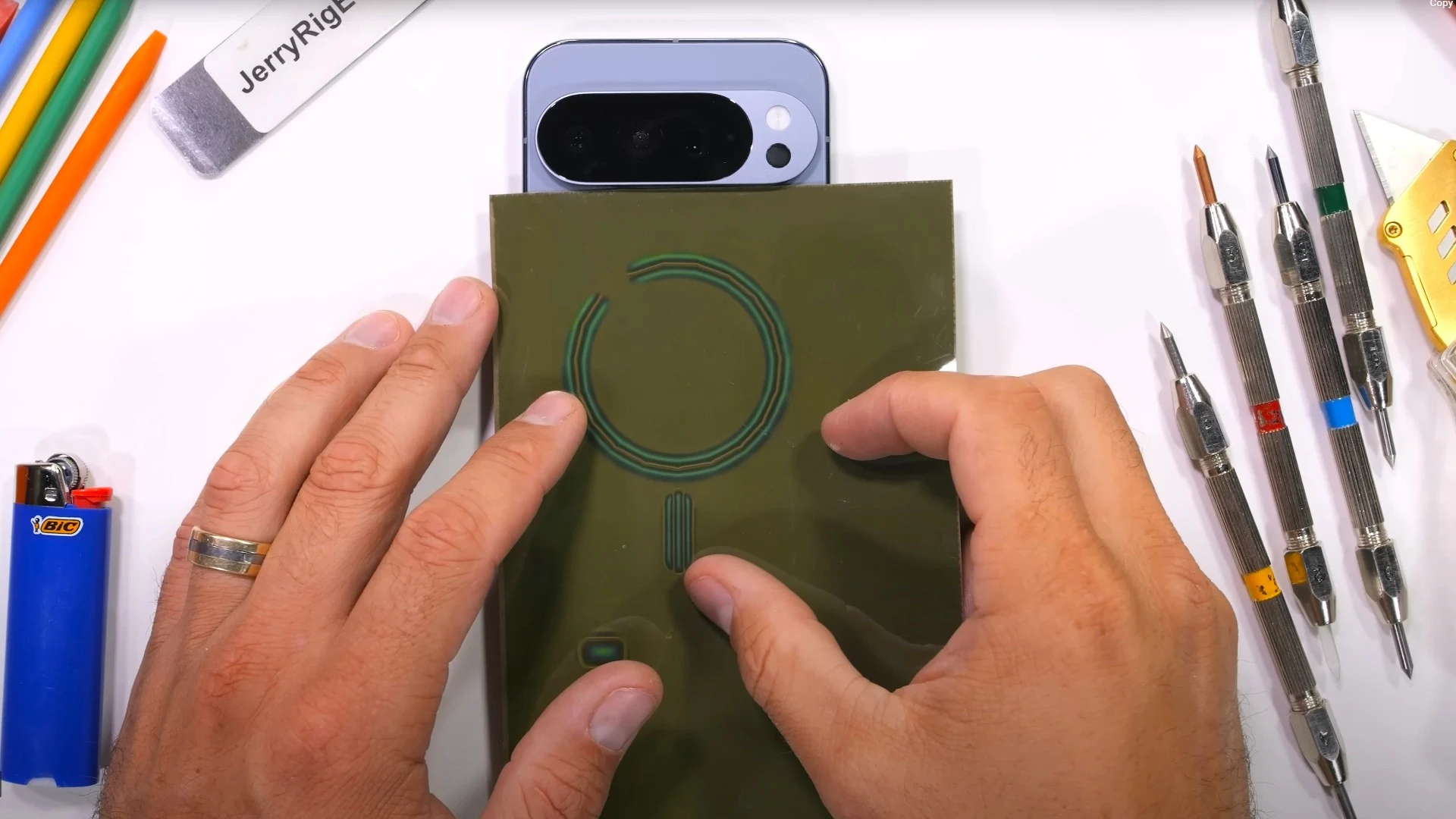
    To be honest, they aren’t the pioneers, as the HMD Skyline models should not be dismissed here. Nonetheless, the new Google smartphones are the first flagship devices from a prominent Android brand that can compete with Apple’s iPhones and are completely Qi2-compatible. The extra magnetic ring on the rear is visible without having to take off the case; magnetic field viewing film can be purchased from Amazon for this purpose, for instance. The reviewer also alludes to more internal modifications that will be revealed in the upcoming teardown video, including details about the battery.

    Source:
    Link


  • Samsung Galaxy Z Flip 7 Passes JerryRigEverything Durability Test

    Samsung Galaxy Z Flip 7 Passes JerryRigEverything Durability Test

    Key Takeaways

    1. The Samsung Galaxy Z Flip 7 successfully passed JerryRigEverything’s torture tests, showing durability despite some flexing and scratches.
    2. The outer display features Gorilla Glass Victus 2, scoring a scratch level of 6, while the inner display is more susceptible to scratches starting at level 2.
    3. In burn tests, the outer display endured flames for over 20 seconds with minor damage, while the inner screen showed permanent burn marks after 15 seconds.
    4. The Z Flip 7 has an IP48 rating for dust resistance and continued to function after being exposed to dirt, although it made creaking sounds.
    5. During the bend test, the device bent without breaking, indicating improvements in Samsung’s hinge design compared to previous models.


    Shortly after the Samsung Galaxy Z Fold 7 grabbed attention for its strong hinge and passing JerryRigEverything’s ‘bend test’, the newly introduced Z Flip 7 appears to be following in the footsteps of its older counterpart. In the latest video from the YouTuber, the Z Flip 7 also successfully endured his notorious torture test. While it did show some flexing, scratches, burns, and a bit of dirt, the device managed to stay intact under duress.

    Scratch Resistance

    The outer display, shielded by Gorilla Glass Victus 2, scored a scratch level of 6 on the Mohs scale, with deeper scratches appearing at level 7, which is on par with other high-end phones. On the other hand, the inner display, which still uses a soft polymer surface, began to show permanent damage starting at level 2. This means a simple fingernail can leave marks. Just like the Z Fold 7 (currently priced at $1,999 on Amazon), Samsung provides one free replacement for the Z Flip 7’s inner screen protector during the first year, with any additional replacements costing $20 each.

    Burn Test Results

    In burn tests, the outer display withstood flames for over 20 seconds with only minor damage. However, the inner screen lasted 15 seconds before it turned off, showing two lasting green burn marks afterward. Zack noted that this happened due to heat building up on the outer edges of the butane flame.

    Dust Resistance

    Rated at IP48 for dust resistance, the device was subjected to a full dirt shower on the hinge. Despite making audible creaks, the Flip 7 continued to operate without any signs of mechanical failure, which is a positive outcome.

    In the bend test, Zack flexed the phone backward quite strongly. Although the chassis visibly bent and formed a slight kink near the antenna, it did not break or fail in any way. A second bend did result in a few clicks, but overall, the device stayed intact. Samsung’s hinge design, which allows the two glass halves to compress at the joint, appears to have improved significantly from previous models.

    Source:
    Link

  • JerryRigEverything Calls Out Samsung Mobile US, Switches from Galaxy

    JerryRigEverything Calls Out Samsung Mobile US, Switches from Galaxy

    Key Takeaways

    1. Zack Nelson, known as “JerryRigEverything,” plans to leave Samsung after a negative interaction with a customer service representative.
    2. He criticized Samsung’s customer service in the US, describing it as “dehumanizing” and inadequate.
    3. Many users on forums like r/Samsung share similar complaints about poor customer service experiences with Samsung.
    4. A specific complaint highlighted the difficulty of canceling an order for a Galaxy Z Flip 7, showcasing ongoing issues with support.
    5. Despite some viewing Zack’s comments as dramatic, there is a consensus that Samsung’s customer service has a long-standing reputation for being inadequate.


    Serial smartphone tester Zack Nelson, who’s well-known on YouTube as “JerryRigEverything”, has a lively presence on X where he shares bold opinions and critiques. Recently, Zack has criticized Samsung, describing his conversation with a Samsung Mobile US representative as “dehumanizing”.

    A Big Change Ahead

    Zack mentioned that after this interaction, he plans to leave behind his Samsung phone of ten years. One user tried to calm him down, saying that a single bad experience with an employee doesn’t reflect the quality of the product. However, Zack responded that he’s “not into that kinda thing” and feels “it’s time to try a new brand”. Although we don’t have specifics about what happened during the chat that led to this strong response, it highlights ongoing issues with Samsung’s customer service in the US, something that has been brought up by others too.

    Customer Service Concerns

    The reputation of Samsung US’s customer service seems quite poor, according to feedback on forums like r/Samsung. Many posts, both recent and older, express dissatisfaction with Samsung’s support in the US. One user called it “truly the worst,” and another described it as “a nightmare to deal with.” A complaint from a couple of weeks ago described the frustrating experience of trying to cancel an order for a Galaxy Z Flip 7, which the user couldn’t do despite their attempts.

    Ongoing Issues?

    So, while some may view JerryRigEverything’s comments on X as overly dramatic, it appears that Samsung’s customer service in the US has a long-standing reputation for being inadequate.

    It seems like the situation between Zack and Samsung is not done yet. We’ll keep you updated with any new information as it comes in.

    Source:
    Link

  • Nothing Phone (3) Teardown: Durability and Repairability Revealed

    Nothing Phone (3) Teardown: Durability and Repairability Revealed

    Key Takeaways

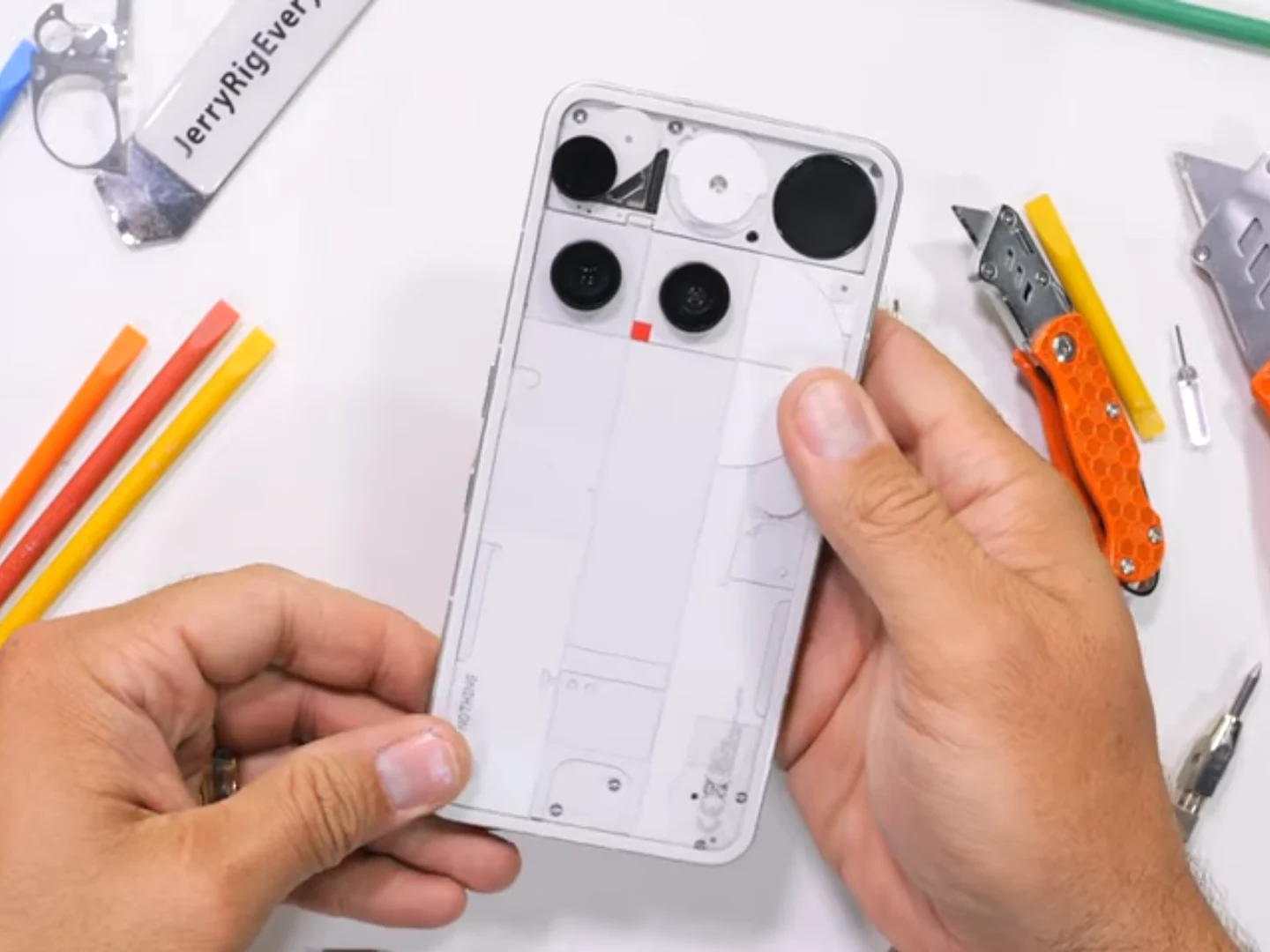
    1. The Nothing Phone (3) features a unique rear design inspired by artistic interpretations of smartphone internals, making it visually distinct but harder to take apart.
    2. The Glyph Matrix, consisting of 489 LEDs, is integrated beneath the transparent glass back and may require replacement if damaged, showcasing innovative design but added complexity.
    3. The Phone (3) offers similar durability to high-end Android devices, with scratch, burn, and bend resistance, despite its unconventional aesthetics.
    4. The Essential Key, while a standout feature, is prone to scratching and may lose its shine over time, and the elevated camera rings are at risk of damage.
    5. The Phone (3) is made with eco-friendly materials, including 80% recycled steel and 100% recycled aluminum, but its Snapdragon 8s Gen 4 SoC and battery size may not meet future industry standards.


    The Nothing Phone (3) has been unveiled with a design that can be kindly termed as deconstructed, especially noticeable around its camera bump and the new Glyph Matrix. Popular YouTuber Zach Nelson from the JerryRigEverything channel has compared its look to a Picasso artwork, showing a bit more appreciation for it.

    Unique Rear Design

    The rear of the Phone (3) features intricate details that are said to be inspired by “an artist’s view of the inside of a smartphone.” Ironically, this artistic flair makes it harder to take off compared to a typical Android phone.

    Glyph Matrix and Components

    The Glyph Matrix is an additional part that could require replacement if damaged. Fortunately, it’s positioned beneath the transparent glass back panel of the smartphone, making it somewhat safer from harm compared to the Phone (3)’s cameras.

    This interface includes 489 separate LEDs and is operated via a small capacitive button on the back. Interestingly, Nothing had to find a wireless charging coil that folds in on one side to make this feature work.

    Future of Smartphone Components

    Rumors suggest that this kind of component might appear again when the iPhone 17 Pro is ready for disassembly.

    The Phone (3)’s appearance on JerryRigEverything indicates that it has scratch, burn, and bend resistance similar to other high-end Android smartphones, despite its unique design.

    Essential Key and Camera Concerns

    The Essential Key is highlighted as another unique aspect of the Phone (3), despite being similar to OnePlus’ Plus Key. This button has a shiny finish that, as Nelson pointed out, scratches easily and may lose its sheen over time with regular usage.

    Additionally, the camera rings on the Phone (3) are quite elevated and could be at risk of damage, especially if a user were to use Mohs hardness picks on its 6.67-inch AMOLED screen.

    Sustainability Efforts

    Nothing claims to have utilized 80% recycled steel, 100% recycled aluminum, and 100% renewable energy in the Phone (3)’s production, making it more eco-friendly in that regard.

    However, this may not counterbalance the device’s other well-known drawbacks, primarily its sub-premium Snapdragon 8s Gen 4 SoC and a relatively small battery (stay tuned for our complete review to get the full insight).

    The battery spec (which reaches up to 5,500mAh in India) may start to look less impressive as we move into what 2025 has to offer in the smartphone industry.

    Despite everything, the Nothing Phone (3) is available for $799 on Amazon, which is notably less than many “normal” Android flagship phones priced above $1,000.

    Source:
    Link