
Key Takeaways
1. The iPhone Air is Apple’s slimmest phone at just 5.6mm thick, raising durability concerns due to past bending issues with earlier models.
2. The new Ceramic Shield 2 glass shows impressive scratch resistance, with minimal marks at level 7 on the Mohs hardness scale.
3. The iPhone Air struggles with screen reflections, performing worse than older Samsung models despite claims of improved anti-reflection coating.
4. Its grade 5 titanium frame is significantly more rigid and elastic than aluminum, making it less prone to bending during stress tests.
5. The iPhone Air withstood up to 216 pounds of pressure before damage occurred, indicating it can handle everyday accidents without severe issues.
At just 5.6mm thick, the iPhone Air has become Apple’s slimmest phone to date, sparking curiosity among smartphone fans about its durability, especially in light of the notorious bending issues with the iPhone 6 Plus. Zack Nelson, who is more commonly known as JerryRigEverything, has put this device to the test in his signature durability challenge. The findings reveal that the iPhone Air is indeed quite robust.
Durability Tests
Zack kicked off his highly anticipated video on the iPhone Air’s durability with a scratch test, showcasing the impressive strength of Apple’s new Ceramic Shield 2. Typically, smartphone glass begins to show scratches at a level 6 on the Mohs hardness scale, but Zack’s tools hardly marked the surface even at level 7. “Apple ruined my line,” he humorously remarked, pointing out that Corning’s new Ceramic Shield 2 represents a significant leap forward compared to last year’s iPhone 16 series and even surpasses the Galaxy S25 Ultra’s Gorilla Armor 2, which had visible scratches at level 6 in a previous test.
Screen Reflection Issues
However, the iPhone Air didn’t perform as well when it came to reducing screen reflections. Despite Apple’s claims that their newer phones come with an “Apple-designed coating for better anti-reflection,” it was less effective at minimizing glare under bright lighting compared to Samsung’s older Galaxy S24 Ultra.
Bend Test Results
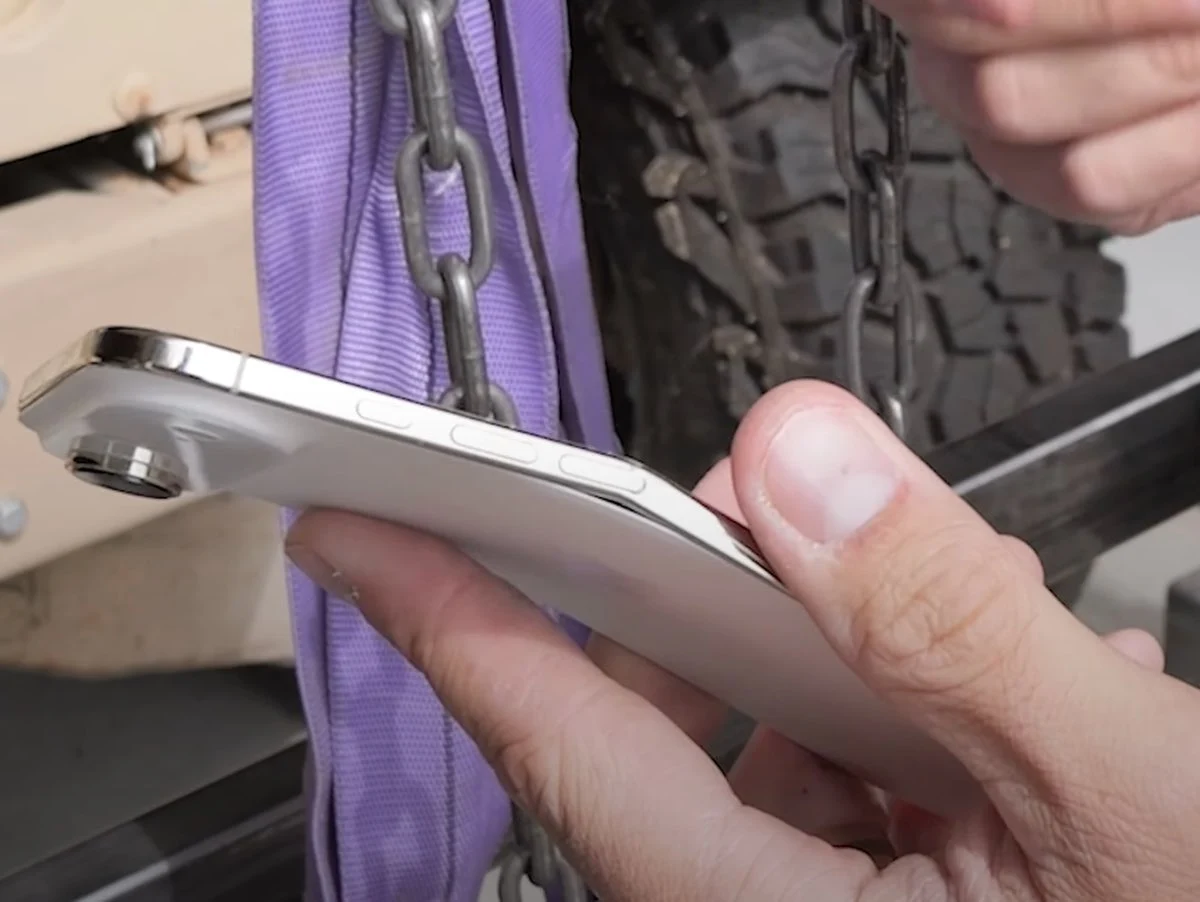
In contrast to the iPhone 17 and 17 Pro, the Air features a grade 5 titanium frame, which Apple asserts is much less prone to bending. This titanium is twice as rigid as aluminum and 60% more elastic. This elasticity proved essential when Zack conducted the notorious bend test. Initially, he pressed down from the back with both thumbs, and the phone hardly moved. When he bent it from the front, there was some noticeable bend, but it returned to its original shape “just like it was out of the box a few minutes ago.”
Feeling adventurous, Zack upped the ante. Using a crane scale in his garage, he applied pressure directly to the center of the iPhone Air until it finally buckled. The device withstood an impressive amount of pressure, reaching up to 216 pounds (about 98 kg) before the front glass cracked and the titanium frame bent beyond repair. Interestingly, the back glass remained intact, and the phone was still operational after the tests. This should alleviate any worries regarding “Bendgate 2.0.” At the very least, everyday accidents—such as sitting on your phone—are unlikely to result in severe damage to the iPhone Air. As Zack quipped, “your pants pockets would rip off before the Air would.”
Leave a Reply