Tag: Apple

  • iPhone 17 Pro Test Unit Spotted, Apple Leaker Confirms Authenticity

    iPhone 17 Pro Test Unit Spotted, Apple Leaker Confirms Authenticity

    Key Takeaways

    1. A prototype of the iPhone 17 Pro has surfaced, verified as “completely legitimate” by Apple insider Mark Gurman.
    2. The leak originated from an X user named @Skyfops, who captured images of the device being tested in San Francisco.
    3. The viral post has over 1.3 million views and features images of a thicker device with a taped-over Apple logo.
    4. Speculation includes a revamped camera setup and an anti-reflective display coating, though some users are skeptical.
    5. Apple has not officially commented on the prototype, but more leaks are expected as the launch date approaches.


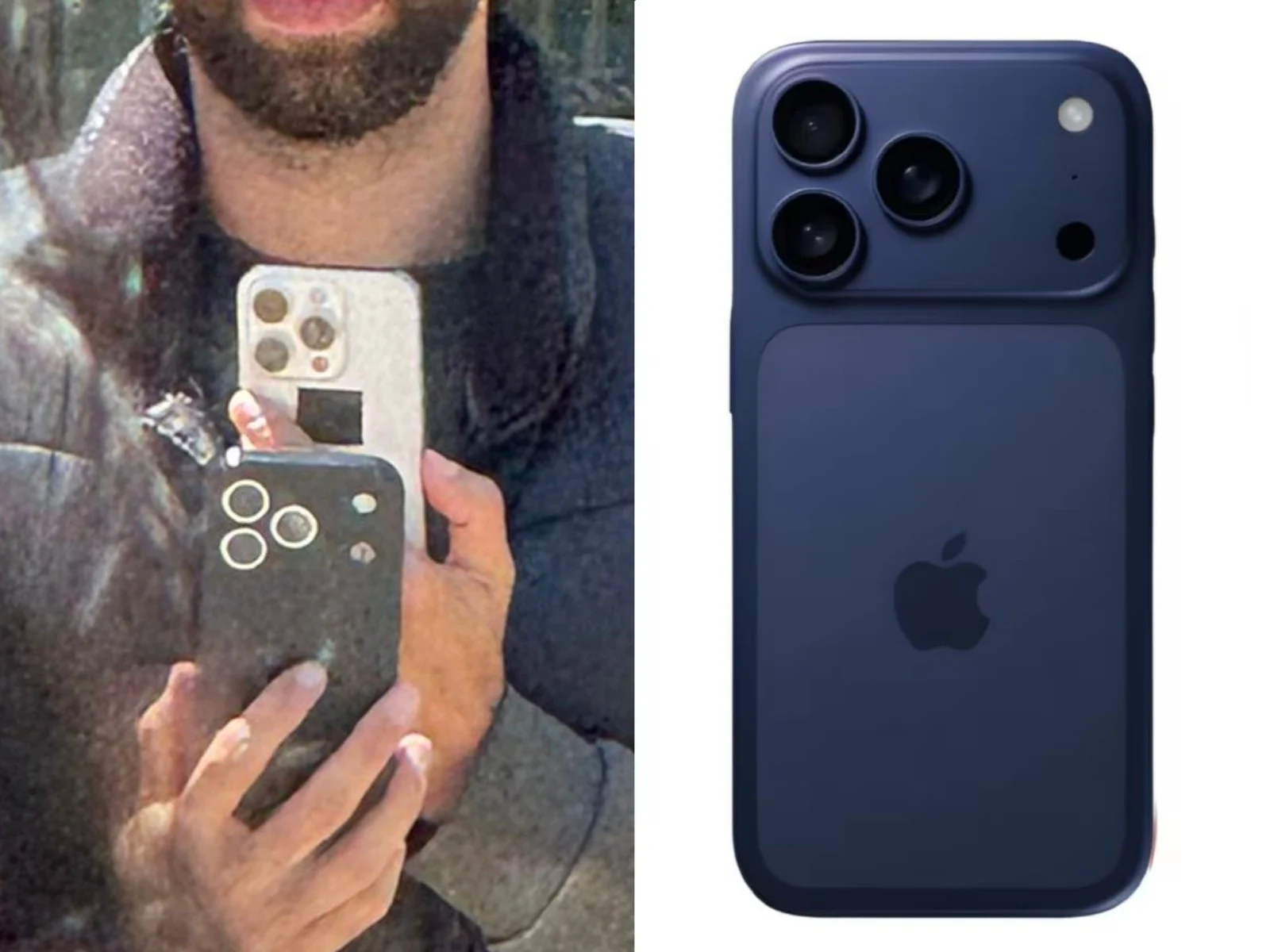
    An interesting prototype of the iPhone 17 Pro has reportedly emerged in public, catching the attention of well-known Apple insider Mark Gurman, who has called the device “completely legitimate.” This leak wasn’t from a traditional source like an insider or a tear down; instead, it originated from an X user named @Skyfops. They managed to capture images of the unannounced iPhone while it was being tested in San Francisco’s Union Square.

    The Viral Post

    The post has now been viewed over 1.3 million times. It shows a person seemingly using a development version of the iPhone 17 Pro. One of the images even depicts another person, likely from Apple’s security team, attempting to shield the phone from being seen. This has strengthened the theory that this could indeed be a genuine test unit of the iPhone 17 Pro.

    Unique Features

    In the images, the device is seen sporting a distinctive case, an Apple logo that has been taped over, and a body that appears to be noticeably thicker than that of the iPhone 16 Pro. A Reddit user, u/lumpex999, later shared the same pictures on r/iphone, where they quickly went viral, earning thousands of upvotes and igniting a wave of funny speculation about the tester’s disguise and the design of the phone.

    Earlier rumors hinted that the next Pro iPhone could have a revamped camera setup and an anti-reflective coating on the display. While some users remain doubtful, pointing out the similarities to previous models, others argue that its appearance near Apple’s headquarters lends credibility to the idea that this is indeed the real thing.

    Looking Ahead

    Of course, Apple has not made any official comments regarding this sighting. However, as we approach the launch of the iPhone 17, we can expect more leaks and likely confirmations about what features the new iPhone will include or exclude.

    Source:
    Link



  • Apple and Nvidia Eye Intel’s 14A Node as Potential Clients

    Apple and Nvidia Eye Intel’s 14A Node as Potential Clients

    Key Takeaways

    1. Samsung Foundry struggles with stable yields for SF2, leading companies to prefer TSMC for advanced chip production.
    2. Apple and Nvidia are considering Intel’s 14A node for future products, with mass production expected in 2028.
    3. TSMC continues to meet Apple’s current chip needs, with upcoming products transitioning between N3P and N2 nodes.
    4. Nvidia plans to use a custom TSMC 3 nm variant for its next-gen AI chips, while Intel’s 14A may be reserved for specific lower-end GPUs.
    5. TSMC and Intel are the main contenders for 1.4 nm production, as Samsung may withdraw from this competition, and Rapidus could emerge as a 2 nm alternative.


    With Samsung Foundry facing challenges in achieving stable yields for SF2, TSMC remains the primary choice for many companies needing advanced chips. However, rising wafer costs may push some firms to consider other options for their chip production. Major players like Apple and Nvidia are now eyeing a lesser-known contender in the semiconductor foundry scene: Intel.

    Potential Shift to Intel

    According to a recent research note from industry analysts, as reported by Reuters, Nvidia and Apple may shift to Intel’s 14A node for upcoming products. Intel’s timeline indicates that 14A is not expected to begin risk production until 2027, with mass production slated for 2028, assuming there are no additional delays. These speculations are not entirely fresh, as previous reports suggested Apple might utilize Intel’s 18A for certain chips.

    Apple and TSMC

    Currently, TSMC is fulfilling Apple’s immediate chip requirements, with the A19 and M5 series being produced on TSMC’s N3P node. In 2026, the A20 and M6 will move to N2, likely staying there for about a year alongside the A21/M7. However, it seems that only the Apple M8 could transition to 14A, while the A22 is expected to remain with TSMC.

    Nvidia’s Future Plans

    As for Nvidia, its upcoming Rubin architecture is projected to use a tailored TSMC 3 nm variant (probably 3N) for its AI chips and RTX 60 series desktop GPUs, anticipated to launch around 2027 if Nvidia’s plans hold. The successor to Rubin, the Feynman architecture, set for 2028, could potentially utilize Intel’s 14A. Yet, Nvidia isn’t entirely abandoning TSMC, as 14A will only be designated for certain ‘low-end’ GPUs.

    TSMC’s next-gen N2 successor, A14, is not expected to debut until 2028, making it premature to predict which original equipment manufacturers (OEMs) will adopt it. Samsung might withdraw from the 1.4 nm competition due to its renewed efforts to make SF2 more appealing to OEMs. This leaves TSMC and Intel as the two foundries capable of 1.4 nm production, although the Japanese company Rapidus may also present itself as a possible 2 nm alternative by that time.

    Source:
    Link

  • Apple Set to Introduce Age Restrictions for App Store

    Apple Set to Introduce Age Restrictions for App Store

    Key Takeaways

    1. Online age checks are gaining attention and will impact platforms like Reddit and X (formerly Twitter).
    2. These measures aim to protect younger users from dangerous content and may be integrated into a new App Store interface.
    3. Age verification could occur when downloading social media or health-related apps to prevent access to violent content.
    4. New regulations may lead to age-specific versions of apps to comply with these age checks.
    5. Information about these initiatives comes from a reliable leak account, suggesting plans may be tailored for the Chinese market.


    Online age checks are getting a lot of attention today, as they are set to impact many parts of the internet, including platforms like Reddit and X (previously known as Twitter).

    Intended Protection

    These measures are meant to safeguard younger users from potentially dangerous content and are reportedly on their way to being included in a new App Store interface.

    The age verification might be triggered when a user attempts to download a new social media application or apps related to health.

    Preventing Access to Violent Content

    Furthermore, this initiative could aim to block minors from viewing “violent” content, which could apply to certain games available online.

    Over time, we might see various age-specific versions of the same app as a result of these new regulations.

    Leaked Information

    These claims have surfaced from a leak account that is usually reliable and, interestingly, often shares information on Weibo—hinting that Apple’s new plans could be tailored specifically for the Chinese market.

    This comes at a time when Apple has had to ease some of its rules, particularly those about payment methods for apps and what apps can perform functions like internet browsing on iPads and iPhones.

    Source:
    Link

  • UK May Drop Apple Backdoor Demand Amid Silicon Valley Resistance

    UK May Drop Apple Backdoor Demand Amid Silicon Valley Resistance

    Key Takeaways

    1. The UK government is reconsidering its demand for backdoor access to Apple’s iCloud after pressure from the US and Silicon Valley.
    2. Apple’s refusal to create a backdoor led to the withdrawal of Advanced Data Protection services in the UK, affecting user privacy.
    3. The UK’s request aimed for global access to iCloud accounts, raising concerns about privacy and encryption.
    4. The demand has faced backlash from both Silicon Valley and the US government, with potential legal implications.
    5. Reports suggest the UK may withdraw its request, with officials indicating a need to find an alternative approach.


    The British Government is possibly reconsidering its controversial demand for backdoor access to Apple’s iCloud, following persistent pressure from both the US Government and the united front of Silicon Valley’s Big Tech.

    Secret Demands

    Earlier this year in January, the UK Home Office made a secret request for backdoor access to iCloud’s encrypted information, which would compromise the privacy of Apple’s users.

    Apple’s reaction was clear; they emphasized that they “have never built a backdoor or master key” for any of their “products or services,” and subsequently pulled their Advanced Data Protection services from the UK. This action resulted in UK users losing the benefit of end-to-end encryption for services like iCloud backups, iCloud Drive, Photos, Wallet Passes, and others.

    Global Implications

    What made the situation even more egregious was the UK government’s demand for access to iCloud accounts on a global scale, not limited to just those in the UK.

    Despite Apple’s ongoing legal battles against the order in confidential court proceedings, support for the company has emerged from Silicon Valley. Will Cathcart, the head of WhatsApp, expressed to the BBC that the demand “could set a dangerous precedent” that might jeopardize encryption services globally.

    Rising Backlash

    In addition to this, the request has been met with significant backlash and international condemnation, particularly from the US government. Vice President JD Vance has openly opposed the request from the UK, suggesting it might breach a Cloud Act treaty established between both nations.

    Recent reports from the Financial Times indicate that the UK is now contemplating withdrawing its demand. One official mentioned to the publication, “The Home Office is basically going to have to back down,” while another source added, “They are working on a way around it now.”

    Source:
    Link

  • Apple Sues Jon Prosser Over iOS 26 Leak Details Revealed

    Apple Sues Jon Prosser Over iOS 26 Leak Details Revealed

    Key Takeaways

    1. Jon Prosser’s video claimed to show the design of iOS 26, revealing elements of Apple’s “Liquid Glass” design, though it may not be entirely accurate.
    2. Apple is suing Prosser and Michael Ramacciotti for unauthorized use of trade secrets and breach of the Computer Fraud and Abuse Act.
    3. Ramacciotti allegedly obtained information from Ethan Lipnik, an Apple employee, using GPS tracking during a visit to his home.
    4. The leaked iPhone was unlocked with a password obtained earlier, and sensitive information could be at risk, leading to Lipnik’s job loss.
    5. Apple seeks a court injunction to prevent further leaks, along with compensatory and punitive damages, legal fees, and interest.


    Jon Prosser made a video in April that claimed to show the design of iOS 26. It turns out that some of the details he shared were partly right—the user interface of iOS 26 might not match exactly with the leaked design in every aspect, yet the video still gave a valid sneak peek of Apple’s “Liquid Glass” design. Now, Apple is taking legal action against Prosser and his supposed partner, Michael Ramacciotti.

    Legal Grounds for the Lawsuit

    In its lawsuit, Apple points to two main issues: the unauthorized use of trade secrets and a breach of the Computer Fraud and Abuse Act. The company’s focus is more on how the information was acquired rather than its release. Ramacciotti is accused of taking the information from his friend, Ethan Lipnik, who works at Apple, and then selling it to Prosser. It is claimed that while visiting Lipnik’s home, Ramacciotti used GPS tracking to know when Lipnik was away from the house.

    Details of the Incident

    The developer’s iPhone was reportedly unlocked with an earlier version of iOS 26 by using a password that had been previously obtained. During a video call, Prosser was shown the operating system, where several new features and apps were said to be displayed. Lipnik has already lost his job for not keeping the iPhone secure as per the company’s rules. The phone supposedly held much more sensitive information, and Apple is concerned that Jon Prosser might also reveal this information.

    Apple’s Demands

    Due to these concerns, Apple plans to ask the court for an injunction to stop any further leaks of their trade secrets. Additionally, Apple is seeking compensatory and punitive damages, though the exact amount is not specified, along with interest, legal fees, and court expenses. Prosser has released a brief statement asserting that he was unaware of how the information was acquired.

    Source:
    Link

  • iPhone 15, 16, and 16e Models Face US Sales Ban

    iPhone 15, 16, and 16e Models Face US Sales Ban

    Key Takeaways

    1. Apple is facing challenges with its AI goals, rising tariffs, and potential removal of certain iPhone models from the US market.
    2. A preliminary ruling from the US International Trade Commission (ITC) indicates that BOE misappropriated OLED technology from Samsung, impacting OLED panel imports.
    3. iPhone models using BOE’s OLED displays, like the iPhone 15, 16, and 16e, may be unavailable for purchase in the US.
    4. The upcoming iPhone 17 and iPhone 17 Air are expected to use LTPO displays, not BOE panels, amid improvements in BOE’s technology.
    5. Older iPhone models may still be sold in the US, and Apple may redirect shipments of BOE-sourced OLED models to other countries despite challenges.


    Apple has been facing a lot of challenges recently. The tech giant from Cupertino is struggling with its AI goals that haven’t shown much strength, rising tariffs, and now it appears that some of its iPhone models may be pulled from the US market.

    Preliminary Ruling Impact

    A recent preliminary decision from the US International Trade Commission (ITC), highlighted by MacRumors, revealed that BOE, a display supplier, along with its subsidiaries, broke US regulations by misappropriating OLED technology from Samsung Display. This ruling suggests that imports of OLED panels using this technology should be stopped, and it also calls for halting the sale of existing devices that utilize these panels.

    Affected iPhone Models

    Consequently, iPhone models that use BOE’s OLED displays, such as the iPhone 15, iPhone 16, and iPhone 16e series, will likely be unavailable for purchase in the US. On the brighter side for Apple, the upcoming iPhone 17 and iPhone 17 Air are expected to feature LTPO displays that allow ProMotion, and are not likely to include BOE panels. There are talks that BOE is actively working to improve its LTPO technology. Nevertheless, as the company hasn’t convinced Apple of its panels’ performance, it’s doubtful that LTPO displays from BOE will reach smartphones sold outside China.

    Future Sales and ITC Decision

    Nevertheless, it’s highly probable that some older iPhone models will remain on the market even after the release of the iPhone 17 series. Apple is likely to redirect shipments of iPhones with BOE-sourced OLED panels to other countries, a task that will be quite challenging. According to MacRumors, the ITC’s final ruling is anticipated to come in November of this year, although history suggests that preliminary findings from the ITC typically don’t change much.

    Source:
    link

  • iPhone 17 Air: Ultra-Thin Design with Durable Titanium Frame

    iPhone 17 Air: Ultra-Thin Design with Durable Titanium Frame

    Key Takeaways

    1. The iPhone 17 Air is expected to feature a titanium body, setting it apart from other models.
    2. Apple’s iPhone 17 Pro will likely use aluminum, differentiating it from the Air model.
    3. The use of titanium in the Air could complicate marketing for the more expensive Pro model.
    4. Titanium is a stronger material, which may address durability concerns from previous models.
    5. The iPhone 17 Air is rumored to be thinner and larger than the iPhone 6 Plus.


    iPhone fans everywhere are certainly excited about what Apple might bring with the anticipated iPhone 17 Air. A new report from the well-known analyst Jeff Pu suggests that the iPhone 17 Air will feature a titanium body, which is both surprising and not that surprising at the same time.

    Differentiation Between Models

    Apple has a history of setting its ‘Pro’ and non-‘Pro’ iPhones apart in numerous ways. Even though the upcoming ‘Pro’ iPhones are likely to have much better camera systems, the iPhone 17 Pro is expected to use an aluminum casing, just like the standard iPhone 17.

    Pricing and Material Choices

    If the iPhone 17 Air really does come with a titanium frame, it would create an awkward situation for Apple when trying to market the more expensive iPhone 17 Pro, especially since the Pro is rumored to have less premium materials. This is especially tricky because Apple heavily promoted titanium as a key feature for the iPhone 15 Pro when it launched.

    Considering that titanium is indeed a tougher material than aluminum, it makes sense that Apple would go for it. The iPhone 17 Air is said to be both thinner and bigger than the iPhone 6 Plus, which was involved in the well-known bendgate issue. This choice of a stronger material likely helps Apple address concerns about durability.

    Source:
    link

  • Apple iPhone 17 SoC Upgrade Revealed in Latest Analyst Report

    Apple iPhone 17 SoC Upgrade Revealed in Latest Analyst Report

    Key Takeaways

    1. The iPhone 17 is expected to feature the new A19 SoC instead of the older A18 SoC.
    2. Buyers of the entry-level iPhone will likely be satisfied with the performance of the previous A-series chips.
    3. The iPhone 17 Air will also be equipped with the A19 SoC.
    4. The A19 Pro SoC will be exclusive to the iPhone 17 Pro and Pro Max models.
    5. The iPhone 17 family is set to launch in less than two months.


    iPhone launch season is just around the corner, and as usual, seasoned tipsters are churning out interesting tidbits almost every other day. We already have quite a decent idea as to what to expect from this year’s lineup of flagships from Apple, with a fresh suggestion revealing the SoC details for the iPhone 17.

    New SoC Insights

    Those who have been paying attention will probably remember that the basic model of the iPhone 17 series, the standard iPhone 17, was earlier thought to have the older A18 SoC – a strategy that Apple first used back in 2022. However, analyst Jeff Pu now states that the iPhone 17 is anticipated to come equipped with the new A19 SoC.

    Performance Expectations

    Truthfully, many buyers of the entry-level iPhone will likely feel more than satisfied with the performance of the previous-gen A-series SoC. But, it’s worth noting that last year’s standard iPhone 16 did come with the latest A18 chip, and it now seems that the iPhone 17 will follow suit.

    What to Expect with the Air and Pro Models

    In addition, the iPhone 17 Air will also come with the A19 SoC, while the A19 Pro SoC will be exclusive to the iPhone 17 Pro and Pro Max models. Of course, it’s important to approach these rumors with caution. Since the iPhone 17 family is less than two months away from its launch, we won’t have long to wait to see what Apple has been working on.

    Source:
    link

  • Apple iPhone 17 Pro Expected to Feature Unique New Color Option

    Apple iPhone 17 Pro Expected to Feature Unique New Color Option

    Key Takeaways

    1. The iPhone 17 Pro is expected to feature a new color lineup, including black, gray, silver, dark blue, and orange.
    2. The blue and orange colors are new additions, with orange being a first for iPhone models.
    3. The gold color option is being replaced by a copper/orange finish.
    4. Sonny Dickson, a reliable tipster, has shared this information, adding credibility to the news.
    5. The tech community closely follows Dickson’s insights due to his accurate past predictions.


    Known tipster Sonny Dickson has recently shared some intriguing news about the upcoming iPhone 17 Pro flagship lineup from Apple. This time, a new and distinctive color is likely to be featured on Apple’s top-tier iPhone.

    Color Covers Revealed

    In a tweet, Sonny disclosed lens covers that are supposedly intended for this year’s Apple iPhone 17 Pro. If these are indeed accurate, the color-matched lens covers provide a sneak peek at the available color choices for the new flagship smartphone. Therefore, the iPhone 17 Pro series is anticipated to come in five colorways: black, gray, silver, dark blue, and orange.

    New Color Options

    Naturally, the first three colors are quite similar to those found in the existing iPhone 16 Pro. However, blue and orange are fresh additions, even though Apple has previously used bluish hues in earlier iPhone Pro models. The orange option is especially noteworthy, as there has never been an orange or copper variant of an iPhone until now.

    With the gold color option no longer available, a copper/orange finish seems to be a fitting substitute. While color preferences are very subjective, it’s reasonable to trust that Apple will choose a nice shade, as they have generally done in the past. Sonny Dickson is known for his reliability, as pointed out by MacRumors, which lends credibility to this information.

    Trustworthy Sources

    Sonny Dickson’s insights are followed closely by many in the tech community. His past predictions have often proven to be accurate, making this latest update about the iPhone 17 Pro line something to keep an eye on. As we await further details, the excitement builds for what Apple has in store with its next flagship device.

    Source:
    Link


  • Apple Analyst Casts Doubt on 2026 MacBook Pro OLED Redesign

    Apple Analyst Casts Doubt on 2026 MacBook Pro OLED Redesign

    Key Takeaways

    1. Apple is aiming for an early 2026 launch for the M5 MacBook Pro models, but the exact timing is still uncertain.
    2. The release of M5 MacBook Pro models will not affect the launch schedule of new MacBook Air models.
    3. The upcoming 14-inch and 16-inch MacBook Pro will keep the same design as the current M4 versions.
    4. Future MacBook Pro models (codenamed J714 and J716) are expected to feature M6 chipsets, OLED screens, and design changes.
    5. Delaying the M5 models makes it unlikely for M6 successors to be released in the same year, despite past instances of multiple launches.


    Mark Gurman has provided new insights into the upcoming MacBook Pro launches from Apple. To summarize, since Apple began using its own silicon in 2020, every generation except for the M2 has been released annually between October and November. In contrast, the 13-inch model was introduced in June 2022, while the 14-inch and 16-inch versions debuted in January 2023.

    Potential Timeline for M5 MacBooks

    In a recent article on Bloomberg, Gurman hints that Apple might repeat this pattern for its M5 generation of Pro MacBooks. Although he hasn’t given exact details, he thinks Apple is “now internally aiming for a launch early next year,” while noting that “the timing is still uncertain” at this moment.

    Impact on MacBook Air Releases

    Gurman also claims that the postponed arrival of the M5 MacBook Pro versions won’t influence the timing of the new MacBook Air models. Instead, he mentions that Apple has planned a particularly hectic launch timetable for the first half of 2026, with more information available in a separate report.

    Design and Features of Upcoming Models

    For now, the upcoming 14-inch and 16-inch MacBook Pro are projected to maintain the same design as their current M4, M4 Pro, and M4 Max versions, which are currently priced at $2,847 on Amazon. On the other hand, the successors to these models, known by their codenames J714 and J716, are expected to feature M6 generation chipsets, OLED screens, and the first design changes since 2020.

    MacRumors believes that delaying the M5 generation models until early 2026 makes it unlikely for the M6 successors to be released in the same year. However, Apple did manage to release its M2 and M3 generation models within the same year, which led to a nine-month availability for the M2-powered MacBook Pro 14 and 16. Therefore, while we can’t dismiss the possibility of two generations of MacBook Pro 14 and 16 launches, recent trends suggest that Apple may not pursue multiple releases for MacBook Pro in the near future.

    Source:
    Link