Category: Video / Photo

  • Osmo Pocket 4P: Dynamic Range Upgrade for DJI Vlogging Camera

    Osmo Pocket 4P: Dynamic Range Upgrade for DJI Vlogging Camera

    Key Takeaway

    – Osmo Pocket 4 replaces Osmo Pocket 3 (about $499) and is available in most markets outside the US, with upgrades over the previous model.
    – DJI is teasing the Osmo Pocket 4P (likely 4 Pro) with a Cannes appearance ahead of a full debut.
    – Dynamic range: Pocket 4 has 14 stops on its main lens, while the 4P is claimed to offer up to 17 stops, signaling cinema-quality potential.
    – Full specs and details remain unconfirmed, with teaser imagery and limited details circulating ahead of a broader announcement.

    Hardly any time has passed since DJI replaced the Osmo Pocket 3 (curr. $499 on Amazon) with the Osmo Pocket 4. Available in all but the US, the Osmo Pocket 4 contains various upgrades over its predecessor. Please see our launch article for more details about what is still DJI’s latest vlogging camera release, at least for now anyway. The swap signals a continued push toward compact, portable cinema capabilities that still fit in a pocket, even as enthusiasts probe its full potential.

    Osmo Pocket 4: A quick take

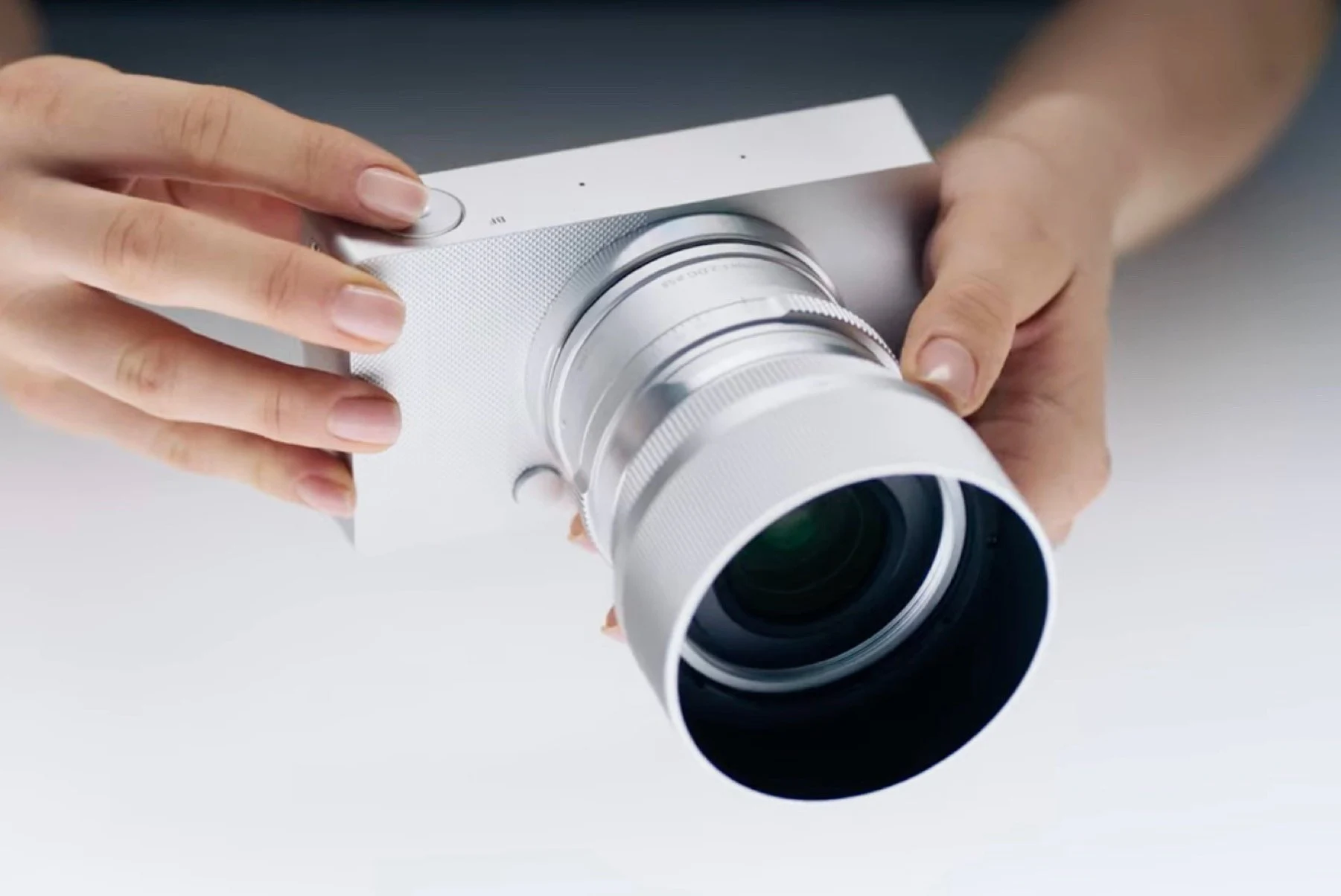
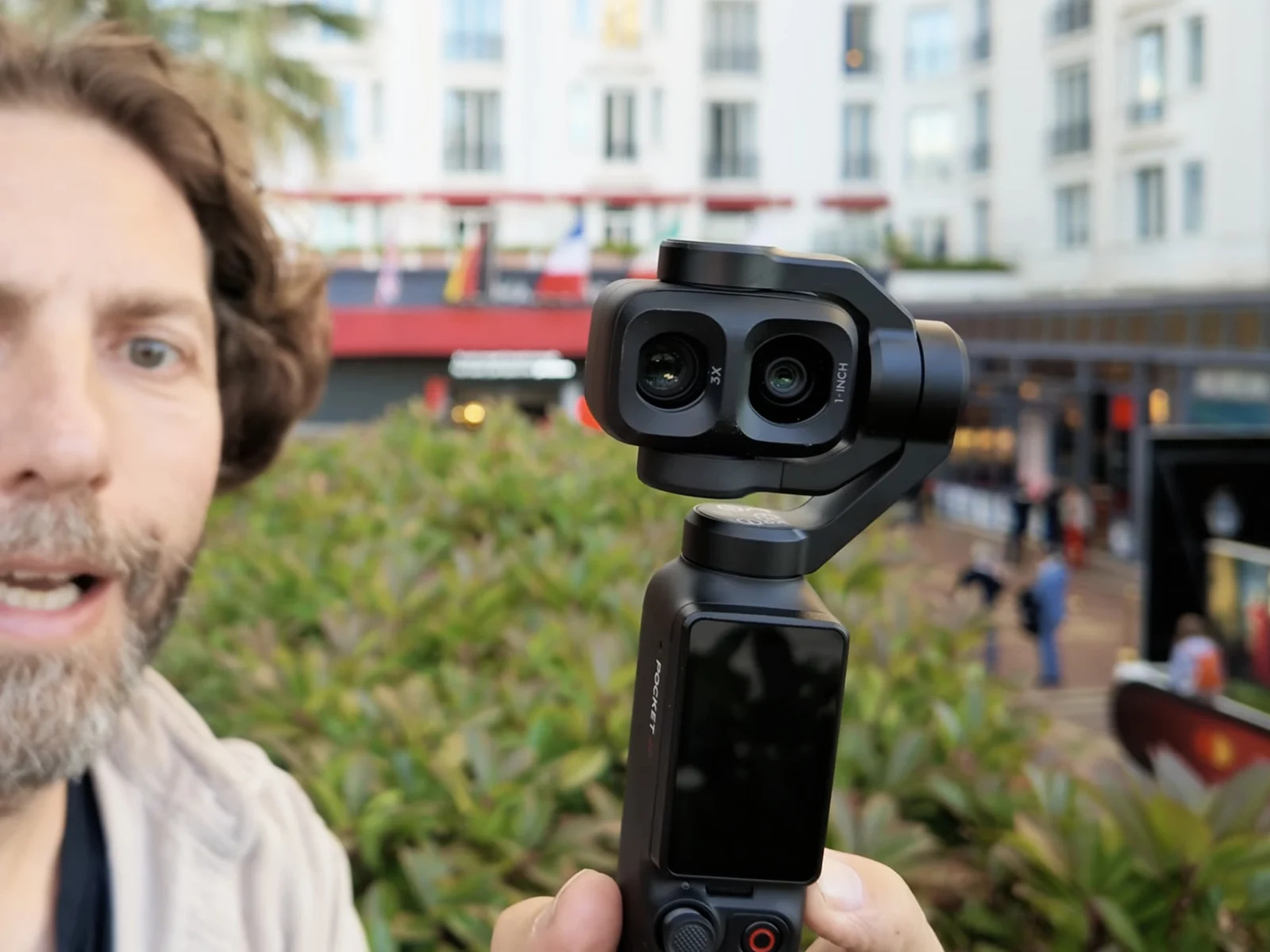
    DJI hasn’t kept the tease to themselves for long; the company is already in the throes of presenting the Osmo Pocket 4P, which many had speculated would be named the Osmo Pocket 4 Pro. For instance, DJI has now brought the Osmo Pocket 4P to the Cannes Film Festival ahead of its full debut, turning heads with a red carpet moment and the promise of a more capable model.

    Pro tease and festival appearance

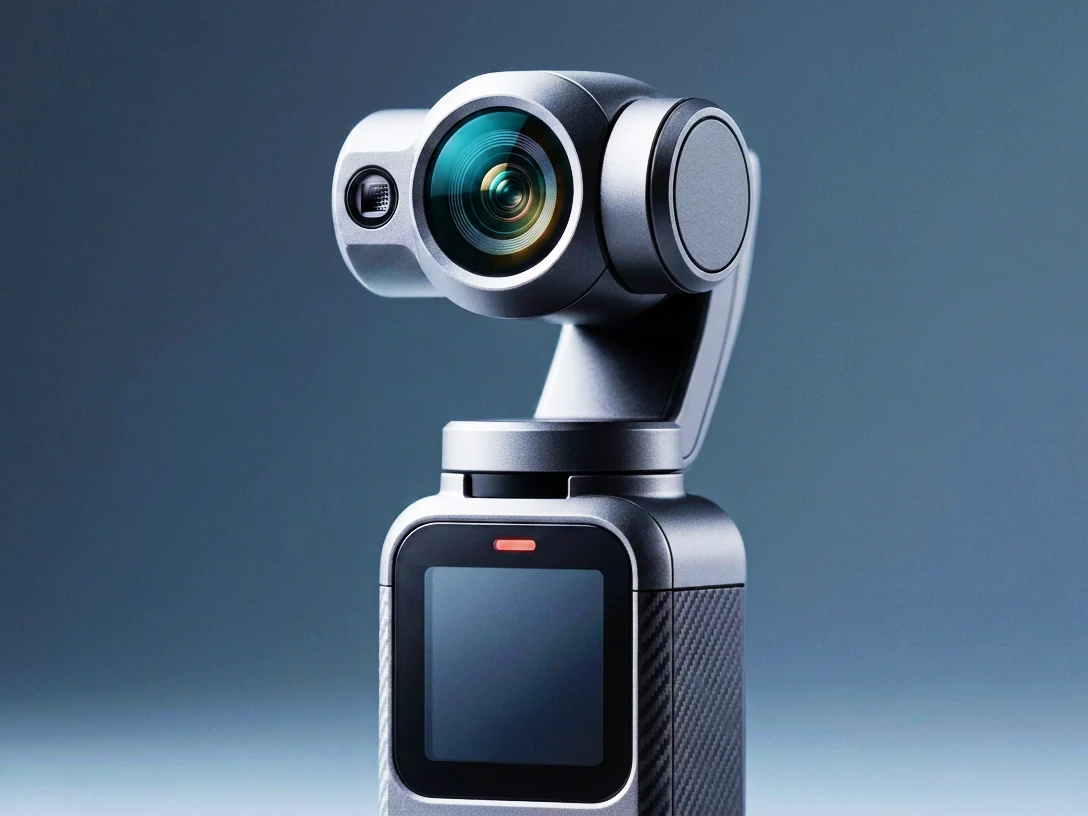
    Initially, it seemed that the company would make a broader announcement on May 14, having teased the camera’s red carpet appearance on May 11. At the time of publication, the company has not been forthcoming with any additional details. Nonetheless, it appears to have shared imagery with some outlets, which we have embedded above. Additionally, Adam Juniper of Digital Camera World has confirmed a crucial hardware upgrade that will help distinguish the Osmo Pocket 4P from its sibling.

    Announcement timing and imagery

    Discussed in the video below, Juniper has confirmed that the new vlogging camera supports 17 stops of dynamic range across its 1-inch style primary lens. Although not acknowledged in the 71-second clip, the Osmo Pocket 4 musters 14 stops of dynamic range, which was already a major upgrade over the Osmo Pocket 3. While the full extent of camera hardware improvements remains unknown for now, Juniper has hinted that these extra steps of dynamic range help the Osmo Pocket 4P achieve cinematic video quality, achievable by some small camera rigs.

    Dynamic range and hardware hints

    Even with the hints and previews, the full range of improvements remains speculative until DJI releases comprehensive specs. For now, prospective buyers and vloggers should watch the official channels for confirmed details on the pocket-sized successor, as the trend toward higher dynamic range and smarter processing continues to shape the mini camera category.


    Sources

  • Insta360 Luna Ultra Price Revealed by CEO: US/EU Buyers

    Insta360 Luna Ultra Price Revealed by CEO: US/EU Buyers

    Key Takeaway

    – Price points confirmed: dual-camera body 5,299 RMB (~$780) and bundle 6,499 RMB (~$960).
    – Domestic MSRP will be lower; lower-cost routes include importing Luna Ultra from China or buying Luna Pro single-cam.
    – International pricing appears steep: US around $950-$1,000; EU rumors up to €1,050 (dual-cam) with single-cam around €850.
    – Indicates a two-tier strategy: competitive in China against DJI, but premium pricing abroad with no official justification given.

    Following the recent flurry of leaks surrounding the upcoming Insta360 Luna series, the company’s CEO, Liu Jingkang, has weighed in on the matter. In a statement that clarifies the eye-watering price tags circulating online, there is finally a mix of relief for domestic buyers and a reality check for the global market. CEO Liu Jingkang confirmed that while the leaked figures of 5,299 RMB (~$780) for the dual-camera body and 6,499 RMB (~$960) for the bundle are accurate, there is a major catch. For those worried that Insta360 was ready to abandon the “affordable” gimbal segment, Jingkang clarified that the 5,299 RMB starting price point represents the US retail price converted back into local currency. Still, to get the lower price, you’d likely have to import the Luna Ultra from China, or just get the single-cam Luna Pro.

    Domestic pricing and market positioning

    “Even if I had the guts, I wouldn’t dare sell it at this price domestically,” Jingkang noted, suggesting that the official Chinese MSRP will be significantly lower than the international conversion. This positioning suggests Insta360 is aiming to remain competitive against DJI in its home market, where the Osmo Pocket 4 (and the older Pocket 3) are the dominant force. That said, the domestic stance appears designed to placate local buyers while signaling that the Luna line is not simply a budget accessory, but a strategic move in a price-conscious landscape.

    International implications and EU pricing hints

    That said, for international buyers, the CEO’s statement effectively confirms previous fears that the Insta360 Luna Ultra is going to be a very expensive piece of kit. By confirming the ~$960 bundle price (likely to be rounded down/up to $950 or $1,000) for the US market, Insta360 is officially moving the Luna Ultra out of the “vlogging accessory” category and into the territory of entry-level mirrorless cameras like the Sony ZV-E10 II or even the Canon EOS R50. According to previous rumors about EU pricing, bundle prices (emulating the Osmo Pocket Creator Combo) for the single-cam Insta360 Luna Pro and dual-cam Luna Ultra could be as high as €850 and €1,050.

    Conclusion and what remains unclear

    Insta360’s CEO hasn’t provided further details or justification for this steep international pricing. Unlike the single-lens DJI Osmo Pocket 4, the Luna Ultra is expected to feature: Liu Jingkang

    Sources
  • AI Camera Blunder Turns Xperia 1 VIII Into a Meme, Sony Roasted

    AI Camera Blunder Turns Xperia 1 VIII Into a Meme, Sony Roasted

    Key Takeaway

    – Sony clarifies AI Camera Assistant is a four-option creative suggestion engine, not an automatic photo editor; users can choose an option or use their own settings.
    – The marketing post triggered strong backlash on X with drastic before/after edits, spawning memes and questions about authenticity.
    – Reactions from tech figures, including Nothing’s Carl Pei, amplified the controversy and fueled discussions on engagement farming vs. genuine feature demos.
    – The incident could impact Xperia 1 VIII’s public perception and Sony’s AI-marketing strategy, highlighting trust and clarity concerns.

    Following the post about AI Camera Assistant we’d like to explain the feature in more detail; it doesn’t edit photos after shooting, it suggests 4 settings in different creative directions based on the scene and subject. You can choose any option or use your own settings, which keeps the photographer in charge rather than handing over all control to an algorithm. The wording used in the release emphasizes guidance over automation and frames the feature as a creative assistant rather than a replacement for human decisions.

    Official clarification

    Sony has issued an official statement after the amusing backlash to its Xperia 1 VIII AI Camera Assistant marketing push, attempting to clarify how the feature actually functions. The company explains that the system does not edit photos after you shoot them; instead it suggests 4 settings in different creative directions based on the scene and subject. You can choose any option or use your own settings, which keeps the photographer in charge rather than handing over all control to an algorithm. The wording used in the release emphasizes guidance over automation and frames the feature as a creative assistant rather than a replacement for human decisions.

    Controversy and initial reactions

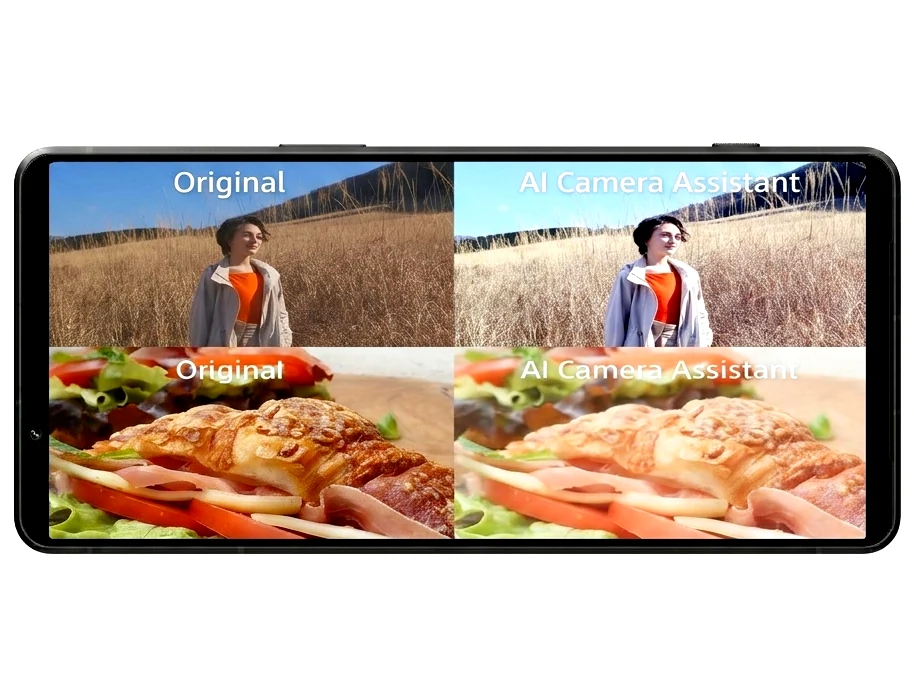
    Controversy started when Sony’s official X account posted a sequence of before and after shots intended to demonstrate Xperia 1 VIII’s AI capabilities. In a strange turn, the original images showed balanced exposure and natural shadows while the AI enhanced versions looked markedly overexposed, with blown highlights and faded colors. The visuals sparked instant reaction across the tech community on X, where skepticism and humor collided, and commentators questioned whether the results reflected a misstep in presentation or a larger issue with how the feature was marketed.

    Influence of Carl Pei

    Among the responses, Nothing founder Carl Pei stepped into the discussion by sharing the samples with a straightforward query about whether this was engagement farming or a genuine showcase. The post did not attack the devices themselves but raised doubts about how the project was framed and whether the timing of the release amplified attention without delivering a clear demonstrable benefit. His quick comment added another layer to the conversation, and some followers echoed the sentiment with mixed tones of irony and curiosity.

    Memes and public discourse

    Rather than simply criticizing, many X users converted the event into a meme machine, creating a trend where people upload their own before and after images and purposefully edit the after shots to resemble the aftermath of a nuclear flash or a cartoonish burst of light. The meme culture surrounding smartphones is nothing new, yet this particular thread amplified the discourse around the Xperia 1 VIII in ways Sony probably did not intend. The tonal shift toward humor and surreal exaggeration dominated many feeds for days.

    Clarification of AI role

    Separately from the memes, Sony followed up to clarify that the AI is not an auto editor but a suggestion engine meant to offer four distinct directions for creative looks. By pioneering multiple options rather than a single default, the company argues that users gain more control over the final image rather than being pushed toward one perceived correct outcome. The language used frames the tool as a creative partner that can spark experimentation, rather than a shortcut that fixes each shot to a fixed style or grade.

    Conclusion and takeaway

    Whether this is a technical glitch in the marketing department’s image selection process or a calculated strategy to drive engagement, the Xperia 1 VIII has become the week’s most talked about device, though perhaps not for the reasons Sony initially intended. The episode raises questions about how marketing teams present AI features, how audiences interpret those promises, and how a few visible missteps can overshadow a product’s intended strengths. In the end, Sony remains at the center of a noisy debate that shows no easy resolution.

    Sources
  • Gimbal Camera-Phone 200MP Sensor AI Tracking vs iPhone 18 Pro

    Gimbal Camera-Phone 200MP Sensor AI Tracking vs iPhone 18 Pro

    Key Takeaway

    – Honor’s Robot Phone introduces a built-in 3-axis motorized gimbal, signaling a move toward true mobile filmmaking hardware.
    – Release window is Q3 2026 (July–September), following hands-on Cannes previews after earlier MWC prototype phase.
    – The device targets the dedicated camera market, aiming to compete with DJI Osmo Pocket/Osmo Pocket 4/4P with cinema-grade motion control and color science.
    – Rival efforts from Vivo and Oppo are underway, with direct gimbal camera competitors expected in late 2026.

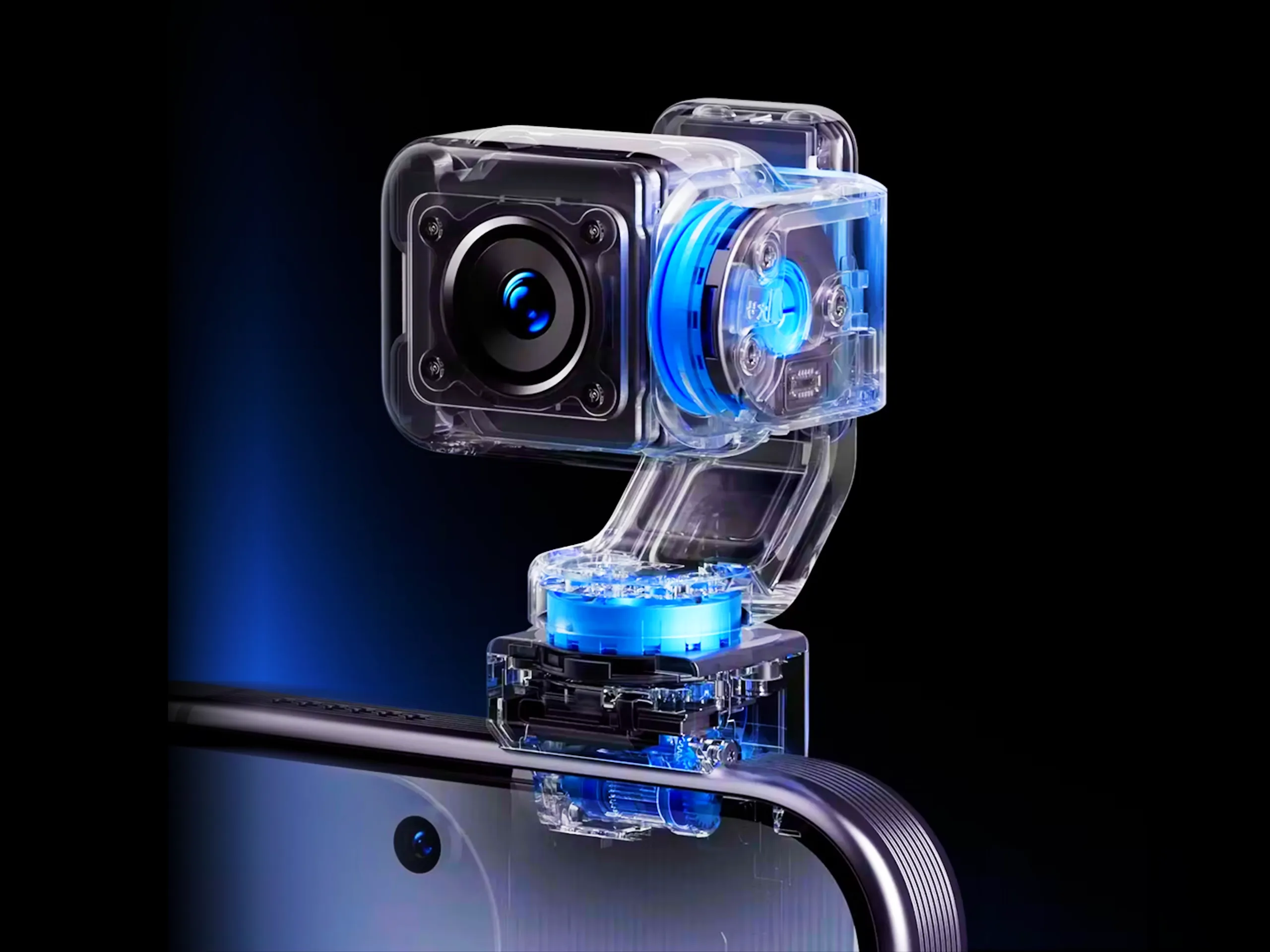
    The concept of “mobile filmmaking” is about to get a literal mechanical upgrade as Honor has confirmed a Q3 2026 release window for its innovative Robot Phone, following a hands-on preview at the Cannes Film Festival. The device features a built-in 3-axis motorized gimbal that promises steadier shots even when moving through crowded streets or dim interiors, and risks some overkill for casual users.

    Innovation timeline

    After turning heads at MWC earlier this year, the Honor Robot Phone has officially moved beyond the prototype phase as Honor has promised a July-September release window for its ambitious gimbal camera-phone, which might land right in the middle of the year’s biggest hardware storm. Industry watchers ponder whether the bold approach can keep up with mainstream phones while still delivering the promised stabilization and cinematic appeal.

    Cannes interaction

    The details emerged from the 79th Cannes Film Festival, where Honor served as the official imaging partner for the “China Night” event. Unlike previous appearances at CES and MWC where the device was strictly “hands-off,” select attendees in Cannes were finally able to interact with the hardware, testing the motion system, the feel of the form factor, and the potential for real world use.

    Launch window and market competition

    The timing of the Q3 launch announcement, expected between July and September 2026, places Honor in a direct battle with the smartphone industry’s heavyweights, and the window has mentors watching. The company hints at a disruption, but pricing and practical real world results remain to be seen, with pricing details not disclosed at this time. The Robot Phone is positioned as a flagship blend of mobility and creative tooling.

    Camera market ambitions

    That said, the Robot Phone won’t just compete with other phones. Honor is taking a clear shot at the dedicated camera market. Specifically, the Chinese giant seeks to enter the niche currently held by the DJI Osmo Pocket cameras like the new Osmo Pocket 4 and Osmo Pocket 4P, aiming to combine pocket camera convenience with a phone’s connectivity and app ecosystem.

    Durability and control

    Whether the mechanical complexity of a rotating camera can survive the rigors of daily smartphone use remains the primary question. However, with “robot-grade” motion control and cinema-tier color science, it seems that Honor is done playing by the rules of iterative phone camera upgrades while chasing a true mobility-first cinematic experience.

    Rivalry grows

    In related news, Vivo and Oppo are working on direct gimbal camera competitors to the Osmo Pocket series, expected to launch in late 2026, signaling a broader trend toward stabilised mobile rigs. The race grows more intense as each brand tries to balance compactness, power, and software to deliver professional grade results in everyday shooting.

    Future expectations

    Industry watchers await more concrete details on actual pricing, battery life, and how the system performs in real world conditions. The concept hints at a future where films can be shot with less heavy gear, but the tradeoffs and durability questions remain. For now the focus rests on whether a portable device can sustain a rotating lens under daily use.

    Sources
  • Sigma BF Teardown: Tiny Full-Frame Camera for Minimalists

    Sigma BF Teardown: Tiny Full-Frame Camera for Minimalists

    Key Takeaway

    – Sigma BF distinguishes itself with a minimalist aluminum unibody, a large touchscreen, touch-sensitive controls, and a small OLED settings display, setting it apart from rivals like the Panasonic S9.
    – The internals are densely packed and the rear display is glued (removable with heat), with a rubber-bottom cover hiding ten screws for access.
    – Servicing is time-consuming: disassembly involves removing multiple boards, ribbon cables, and screws before reaching the mainboard and the full-frame sensor.
    – Spare parts are not sold directly to end users, hindering DIY repairs and requiring Sigma-provided parts for any maintenance.

    The Sigma BF ($2,199) differs from competitors such as the Panasonic Lumix S9 primarily due to its minimalist aluminum unibody housing. With a large touchscreen, touch-sensitive buttons and a small OLED secondary display that shows settings, the Sigma BF’s operation and design are unlike any other camera on the market. The chassis feels cool to the touch, precise in its tolerances, and it communicates a sense of rugged simplicity that photographers either love or hate based on their preferences.

    Overview

    Kolari, which specializes in infrared conversions, reveals what the camera’s inner workings look like in a teardown. While the chassis is milled from a block of aluminum, there is a rubber cover on the bottom, under which a total of ten screws can be found. Once all these screws are loosened and a cable disconnected, the rear display can be removed.

    Disassembly Notes

    This is glued into the body in a similar way to a smartphone, but if the adhesive is heated with a hot air dryer, the screen can be removed without any major problems. To disassemble the camera further, numerous small boards, ribbon cables and screws have to be removed before the mainboard and ultimately the full-frame sensor can be taken out of the housing.

    This is not particularly complicated, but it is time-consuming. However, in order to repair the camera by yourself, Sigma would have to offer spare parts, which are not currently sold directly to end users. The multi-layered construction of the interior shows that Sigma has used every millimeter in the housing effectively.


    Sources

  • Sigma BF Teardown: Inside the tiny full-frame camera

    Sigma BF Teardown: Inside the tiny full-frame camera

    Key Takeaway

    – Sigma BF costs about $2,199 on Amazon and stands out with a minimalist aluminum unibody, a large touchscreen, touch-sensitive buttons, and a small OLED secondary display.
    – Kolari’s teardown shows an aluminum chassis, a rubber bottom cover with ten screws, and a rear display glued into the body that can be removed with heat.
    – Disassembly is time-consuming, requiring removal of many small boards, ribbon cables, and screws before reaching the mainboard and full-frame sensor.
    – DIY repairs are limited by Sigma not offering end-user spare parts, despite the dense, space-efficient interior design.

    The Sigma BF ($2,199) differs from competitors like the Panasonic Lumix S9 mainly due to its minimalist aluminum unibody housing. With a large touchscreen, touch-sensitive buttons and a small OLED secondary display that shows settings, the Sigma BF’s operation and design is unlike any other camera on the market.

    Unconventional Build

    Kolari, which specializes in infrared conversions, shows what the camera’s inner workings look like in the teardown video embedded below. While the chassis is milled from a block of aluminum, there is a rubber cover on the bottom, under which a total of ten screws can be found. Once all these screws have been loosened and a cable disconnected, the rear display can be removed.

    Internal View

    This is glued into the body in a similar way to a smartphone, but if the adhesive is heated with a hot air dryer, the screen can be removed without any major problems. To disassemble the camera further, numerous small boards, ribbon cables and screws has to be removed before the mainboard and ultimately the full-frame sensor can be taken out of the housing.

    Disassembly Nuances

    This is not particularly complicated, but it is time-consuming. Yet, in order to repair the camera by yourself, Sigma would have to offer spare parts, which are not currently sold directly to end users. The multi-layered construction of the interior shows that Sigma has used every millimeter in the housing effectively.


    Sources

  • Xperia 1 VIII AI Photos Outrage: Nothing CEO Accuses Sony

    Xperia 1 VIII AI Photos Outrage: Nothing CEO Accuses Sony

    Key Takeaway

    – Sony’s AI Camera Assistant on the Xperia 1 VIII sparked backlash as many users say the AI “after” images are overexposed, less vibrant, and have poorer dynamic range than the “before” pics.
    – Sony describes the feature as using subject, scene, and weather to suggest expressive options and adjustments to color, exposure, bokeh, and lens to inspire creativity (concept akin to filter-style styles).
    – The controversy includes theories that samples were mislabeled or used for engagement farming, with visible public debate and high-profile reposts fueling attention.
    – The feature is optional and can be turned off; it’s unclear if Sony will issue a follow-up or update to address the concerns.

    If you think you’re having had a bad day, you might feel a little bit better after finding out what Sony is currently going through.

    Sony’s AI Camera Assistant under fire

    The smartphone tech community on X is roasting the Japanese company over its new AI Camera Assistant feature launched with the new Xperia 1 VIII flagship. You can check out the photo samples below, but in case it wasn’t clear, Sony is comparing photos taken with and without its new AI Camera Assistant’s image processing.

    Online mood swing

    Why the awkward social media backlash? Well, let’s just say that most smartphone camera enthusiasts believe the “before” photos look like what the “after” photos should’ve looked like. According to most users, the consensus is that the AI-enhanced samples show visible overexposure, low vibrance, and low dynamic range, while the original images look more balanced.

    Read the quoted post

    The quote over Sony’s viral X post reads: “The new AI Camera Assistant with Xperia Intelligence brings stories to life. Using subject, scene and weather, it suggests expressive options with adjustments of colour, exposure, bokeh, and lens for breathtaking photos.”

    Mislabeled samples or confusion?

    The internet has a few theories as to “what went wrong”. One of them is that Sony simply mislabeled the samples, switching the places of the “before” and “after” photos. However, that’d make sense only if the same samples (labeled identically) weren’t present on Sony’s official website.

    Alternate explanations

    Nothing CEO Carl Pei reposted the photos, asking if this is “engagement farming,” while many phone enthusiasts began sharing their own “before and after” samples (purposefully edited to look overexposed), “thanking” Sony’s new AI Camera Assistant for “making photos pop.”

    Public perception grows into chatter

    Either way, many of those commenting believe this is free marketing for the new Xperia 1 VIII, thanks to the level of attention the X post is getting.

    At the time of writing this, Sony hasn’t responded to any comments, and the post hasn’t been taken down. It’s worth noting that the AI Camera Assistant is an optional feature within the Xperia 1 VIII’s camera interface and can be turned off.

    What Sony says it aims to do

    In fact, a little bit of digging shows that, according to Sony, the AI Camera Assistant’s idea is to help “your creativity surge” with “effective settings” that “inspire your inner photographer.” This strongly suggests Sony wants to give users stylistic filter-like options similar to Apple’s Photographic Styles, so perhaps we’re talking about a major misunderstanding.

    What might come next

    It remains to be seen if Sony will try to clear things up with a follow-up social media post or a camera update.


    Sources
  • Vivo Pocket 200MP Gimbal vs DJI Osmo Pocket 4: 2026 Launch

    Vivo Pocket 200MP Gimbal vs DJI Osmo Pocket 4: 2026 Launch

    Key Takeaway

    – Vivo reportedly entering the handheld gimbal camera market, positioning to challenge DJI as the Osmo Pocket 4P tease surfaces at Cannes.
    – Prototype features a 1/1.1-inch Sony LYT-901 200MP sensor, potentially enabling higher-res stills and lossless zoom beyond the Osmo Pocket 4.
    – Vivo Pocket aimed for a late-2026 release with early access for content creators soon; expected premium build similar to Feiyu Pocket 4.
    – Competitors: Oppo Fuyao expected late-2026; Insta360 Luna Pro (single-cam) and Luna Ultra (dual-cam with Leica) also in the pipeline.

    A fresh leak from a reputable tipster suggests that smartphone-maker Vivo is preparing to enter the handheld gimbal camera market, long dominated by DJI’s Osmo Pocket series. The timing is key as it comes out just as DJI previewed the dual-cam Osmo Pocket 4P at the Cannes Film Festival.

    Gimbal market heats up

    Previously leaked in February 2026, Vivo’s current prototype features a large 1/1.1-inch Sony LYT-901 sensor with a 200MP resolution. This would be a significant departure from the current gimbal camera standards of 1-inch sensors with lower megapixel counts.

    Sensor leadership signals a shift

    By utilizing the LYT-901 (the same flagship sensor found in some of Vivo’s high-end phones) the “Vivo Pocket” might offer superior lossless zoom capabilities and high-res still photos that exceed the current 37MP output of the Osmo Pocket 4.

    End of 2026 as a target

    Vivo is aiming for a release at the end of 2026, while the leaked info indicates that the device is going to be handed to content creators for a test run as soon as next week. Powered by a powerful image processor, the Vivi Pocket is targeting DJI level of hardware quality, suggesting a premium build rather than a budget-friendly design (think: Feiyu Pocket 4).

    Rivals enter the fray

    That said, Vivo isn’t the only phone manufacturer eyeing the gimbal camera market. Reports have also surfaced regarding the alleged Oppo Fuyao, a gimbal camera expected to launch (you guessed it) in late 2026.

    Other co launches

    Meanwhile, we are anticipating the launch of the single-cam Insta360 Luna Pro and dual-cam Insta360 Luna Ultra. The latter was recently previewed at NAB, while leaked marketing images and retail packaging have confirmed a modular design and a dual-camera system co-engineered with Leica.


    Sources

  • Insta360 Go Ultra Hello Kitty Limited Edition

    Insta360 Go Ultra Hello Kitty Limited Edition

    Key Takeaway

    – Limited-edition Hello Kitty collaboration with Sanrio, featuring a Cherry Blossom Pink design with Hello Kitty branding.
    – Gift-box bundle includes the Go Ultra camera, pink accessories (Mini 2-in-1 Tripod 2.0, magnetic clip, magnet pendant, quick-release safety cord, USB-C cable) and a pink Hello Kitty handbag.
    – Special app perks: exclusive Hello Kitty animation on connection and Hello Kitty-themed watermarks for photos.
    – Available now in China (¥3,598) and Hong Kong (HK$4,199); limited stock with uncertain restock; outside-Asia availability unconfirmed; standard Go Ultra priced at $379.99.

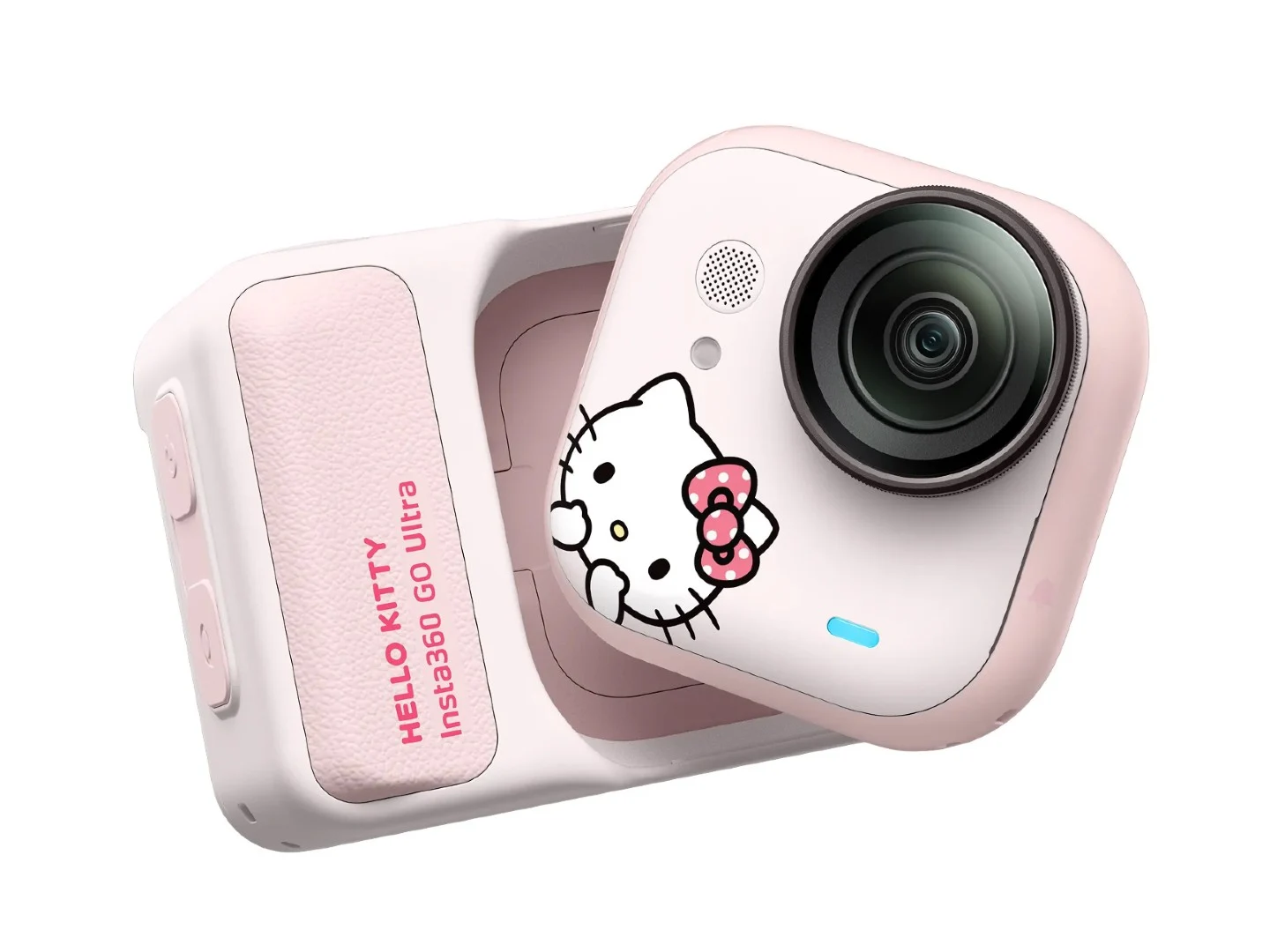
    Insta360 has announced a new version of its Go Ultra action camera. This new version is a special edition of the camera based on the pop culture character, Hello Kitty, and is officially known as the Insta360 Go Ultra Hello Kitty Edition.

    Edition overview

    Made in collaboration with Sanrio—the Japanese company that owns the Hello Kitty brand—the Insta360 Go Ultra Hello Kitty Edition sports a design aimed at women. It ships in a special gift box with a Hello Kitty-themed camera and accessories.

    Design and color

    The Go Ultra camera originally launched in Black and White, but this Hello Kitty edition comes in Cherry Blossom Pink (two shades of pink, really) and shows the character at the bottom left of the front. The Action Pod is pink too and decorated with the popular cat and her pink bow.

    What’s included

    The special edition also comes with a matching Mini 2-in-1 Tripod 2.0, magnetic easy clip, magnet pendant, quick-release safety cord, and a USB-C cable. Also a pink Hello Kitty handbag for storing the camera and its accessories.

    Software features

    Insta360 hasn’t stopped at hardware for the special edition. Buyers of the Insta360 Go Ultra Hello Kitty Edition will get a special animation when they connect their camera to the companion app. There are also exclusive Hello Kitty-themed watermarks that you can use for photos.

    Availability and price

    The Insta360 Go Ultra Hello Kitty Edition is available to buy now in China for ¥3,598 (~$530/€454). It is also available in Hong Kong for HK$4,199. Insta360 says the product is a limited edition, so there’s a chance it won’t be restocked once it’s no longer available. There’s no info on this special edition being available outside Asia, but the standard version is currently available for $379.99.

  • TESS Maps Nearly 6,000 Exoplanets Across the Universe

    TESS Maps Nearly 6,000 Exoplanets Across the Universe

    Key Takeaway

    – TESS detects exoplanets by monitoring brightness changes of stars over roughly month-long sky observations.
    – A set of 96 observations (2018–2025) has yielded nearly 6,000 exoplanets, with about 700 confirmed (blue) and over 5,000 candidates (orange).
    – The mission has found a wide range of planets, from Mercury-sized to larger than Jupiter, including some in the habitable zone.
    – This work advances the search for life beyond Earth, though further studies are needed to confirm and understand these worlds.

    If life exists on Earth, no one know if it exists elsewhere in the universe. To answer this question, several missions have been launched over the years, like NASA’s TESS satellite, which recently released an image showing nearly 6,000 exoplanets.

    Mission scope

    This satellite has powerful instruments, and to detect these new worlds, it observes large regions of space for about a month, letting astronomers detect changes in the brightness of various stars.

    Observation cadence

    As a result, astronomers combined 96 observations made by this satellite between April 2018 and September 2025, allowing them to discover nearly 6,000 new worlds. Thus, in this image, the blue dots represent approximately 700 confirmed exoplanets. Each of these worlds is unique, and some even orbit two stars. As for the orange dots, they represent more than 5,000 potential exoplanets. In addition, the Milky Way is also visible at the center of this image.

    Attribution and numbers

    Therefore, the work of TESS is very important, as Rebekah Hounsell, a TESS associate project scientist at the University of Maryland Baltimore County, notes.

    Expert perspective

    Over the last eight years, TESS has become a fire hose of exoplanet science. It has helped us find planets of all different sizes, from Mercury-like ones to those larger than Jupiter. Some of them are in the habitable zone, where liquid water might be possible on the surface, an important factor in our search for life beyond Earth.

    Impact and outlook

    Thus, the discovery of these new worlds could shed light on an important mystery. However, further studies will be needed to find answers.

    NASA Science

    Image source: NASA Hubble Space Telescope, Unsplash, NASA/MIT/TESS and Veselin Kostov (University of Maryland College Park)


    Sources