Category: Video / Photo

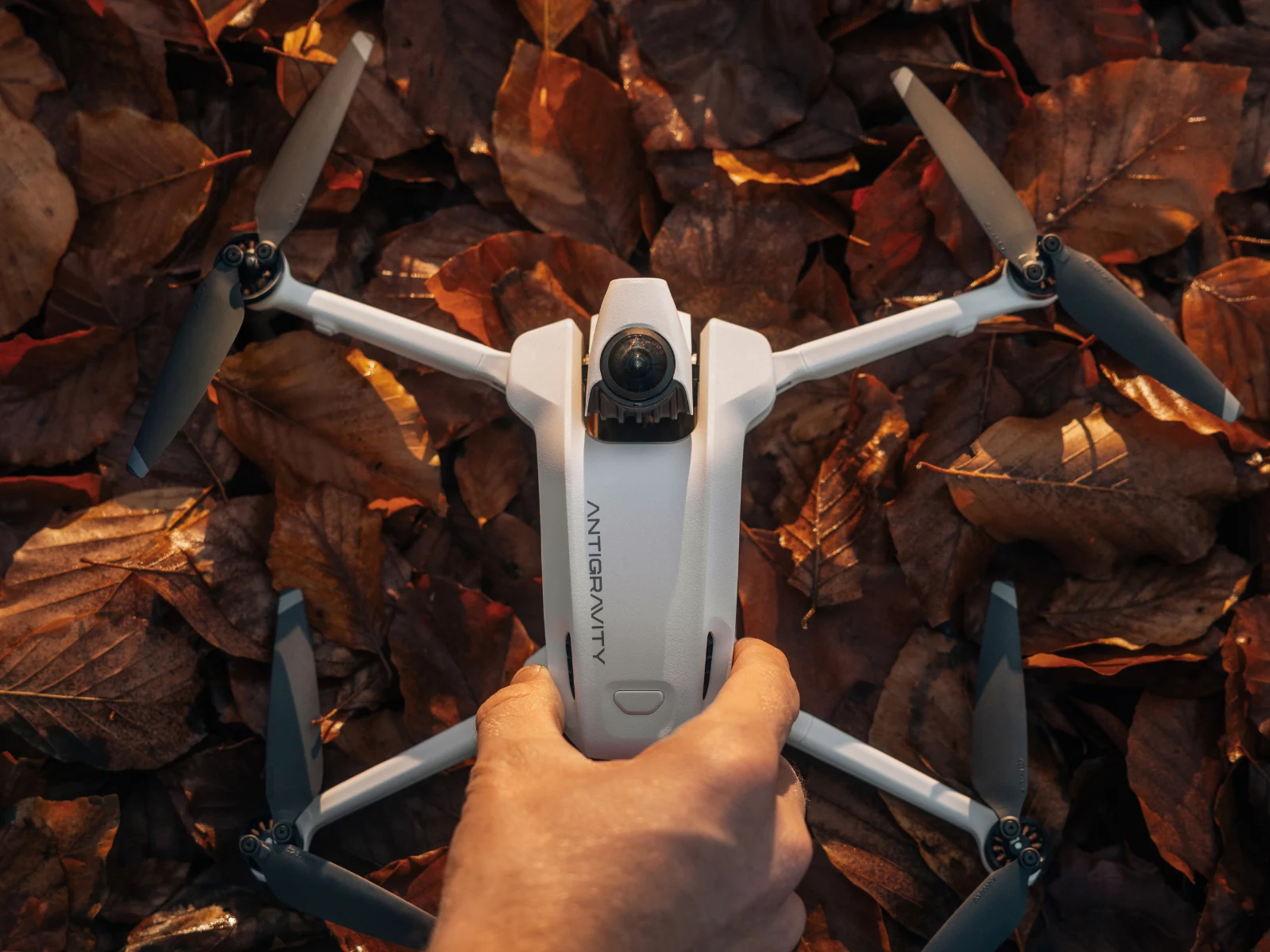
  • Insta360 to Launch First 360° Drone Before Rumored DJI Avata 360

    Insta360 to Launch First 360° Drone Before Rumored DJI Avata 360

    Key Takeaways

    1. Insta360 is launching the Antigravity A1 drone on December 4 at 14:00 UTC.
    2. The Antigravity A1 was previously expected to be released in January 2026.
    3. DJI is developing a competing drone called the Avata 360, expected to launch before the end of the year.
    4. The Avata 360 may feature the same camera technology as the Osmo 360, priced at $357.
    5. The rumored price for the Antigravity A1 is approximately $999.


    The new 360° drone market is becoming increasingly competitive, with Insta360 now announcing the launch date for the much-anticipated Antigravity A1. To summarize, the last update regarding the Antigravity A1 was in August when Insta360 revealed various details about this drone. Back then, they mentioned that the Antigravity A1 wouldn’t be out until January 2026.

    DJI’s Competitive Move

    In the meantime, it’s clear that DJI is developing a rival product. Recent reports suggest that DJI aims to unveil the Avata 360 before the year wraps up, partly to sidestep a forthcoming sales ban in the US. Just for context, the Avata 360 is projected to use the same camera technology as the latest Osmo 360, which is currently priced at $357 on Amazon. Interestingly, Insta360 has now confirmed that the Antigravity A1 is set to launch next week.

    Launch Details

    According to the teaser shared, the Antigravity A1 will officially be released on December 4 at 14:00 UTC. It’s still unclear if this will also be the day for customers to start buying the drone. However, it appears that the Antigravity A1 will hit the market before the DJI Avata 360 in any form. Presently, Insta360 is rumored to have set the price of the Antigravity A1 at approximately $999.

    Source:
    Link


  • NASA’s Escapade Mission Captures First Photo with Good News

    NASA’s Escapade Mission Captures First Photo with Good News

    Key Takeaways

    1. Mars continues to be a focus for scientists exploring the possibility of life beyond Earth.
    2. The ESCAPADE probes were launched on November 13, with an initial image captured shortly after.
    3. The first image taken shows a solar panel in deep space, confirming the probes are operational.
    4. The probes aim to fill knowledge gaps about how solar wind affects Mars and its atmosphere.
    5. The mission will take several years, with key milestones set for 2026 and 2028 before full operations begin.


    Mars is a planet that intrigues a lot of scientists, especially when it comes to the possibility of life beyond Earth. Numerous spacecraft are dispatched to explore it, including the ESCAPADE probes, which were launched on November 13 by the New Glenn rocket from Blue Origin. Even though their voyage will take several more years, an initial photograph has been captured, marking a promising start for this mission.

    Capturing the First Image

    On November 21, one of the two probes utilized the cameras from the Visible and Infrared Observation System (VISIONS) to capture a “selfie.” This remarkable image features two pictures taken just eight days post-launch, revealing a solar panel against a backdrop of deep space, which appears completely black.

    Operational Confirmation

    Moreover, this image confirms that the devices are functional and ready to carry out their tasks. It’s worth noting that while the MAVEN and Mars Express missions have enhanced our understanding of Mars, these two new probes are expected to address certain knowledge gaps. They will investigate how solar wind impacts the planet’s environment and work to gain deeper insights into its atmosphere.

    Future Steps Ahead

    Nonetheless, researchers will have to wait a few additional years before they can analyze the first findings, as the two probes need to reach Lagrange Point 2, which is roughly a million miles away from Earth. In November 2026, they will then use Earth’s gravitational pull to navigate towards Mars. Ultimately, by the end of 2027, they will need to fine-tune their orbit and kick off their mission by mid-2028.

    NASA Science

    Source:
    Link


  • Stunning Hubble Image of Star-Forming Complex Named Image of the Week

    Stunning Hubble Image of Star-Forming Complex Named Image of the Week

    Key Takeaways

    1. N159 is an H II region located about 160,000 light-years away in the constellation Dorado, consisting of ionized hydrogen gas from young, massive stars.
    2. Young stars emit strong ultraviolet rays that ionize hydrogen atoms, leading to the release of light in the H-alpha spectrum, which gives N159 its reddish appearance.
    3. N159 is one of the largest star-forming clouds in the Large Magellanic Cloud, spanning over 150 light-years.
    4. Hubble’s images of N159 highlight the hot gases involved in star formation, showcasing bright red clouds and sparkling stars in different areas of the region.
    5. N159 is described as a “turbulent cauldron of star birth,” illustrating the intense activities of star formation occurring within it.


    N159 is a well-known H II region situated approximately 160,000 light-years away in the constellation Dorado. An H II region consists of hydrogen gas that has been ionized due to the intense heat emitted by young, massive stars.

    These young stars produce strong ultraviolet rays that cause hydrogen atoms to lose their electrons — a process referred to as ionization. As the electrons and protons in the hydrogen atoms recombine, they eventually release light, especially in the H-alpha spectrum. H-alpha light emits a red hue, which gives star-forming areas like N159 their distinct reddish look.

    A Massive Star-Forming Cloud

    N159 ranks among the largest star-forming clouds within the Large Magellanic Cloud, which is a smaller galaxy that orbits our Milky Way. The image here represents only a small fraction of N159, which spans over 150 light-years—almost 10 million times the distance from the Earth to the Sun.

    In 2016, Hubble shared an image showcasing the entire N159 star-forming cloud. However, that particular image didn’t emphasize the hot gases responsible for star formation. In the current image, this crucial aspect is clearly shown. The bright red clouds dominate the left and center sections, while the right side reveals sparkling stars due to the scarcity of gas there.

    A Turbulent Cauldron of Star Birth

    N159 has been referred to as a “turbulent cauldron of star birth.” The capability of Hubble to produce such images allows us to grasp the intense activities of star formation taking place in N159 much better.

    Source:
    Link


  • Black Friday: Save up to 41% on Ruko U11MINI 4K and F11PRO Drones

    Black Friday: Save up to 41% on Ruko U11MINI 4K and F11PRO Drones

    Key Takeaways

    1. Lightweight & Portable Design: The Roku U11MINI 4K is under 249 grams, making it easy to carry and not requiring FAA registration in the US.

    2. Impressive Camera Capabilities: The U11MINI 4K captures 8K photos and 4K video at 30fps, while the F11PRO 2 offers 6K photos and 4K video, both featuring advanced stabilization.

    3. Extended Flight Time: The U11MINI 4K includes three batteries for a total of 96 minutes of flight time, while the F11PRO 2 offers up to 35 minutes of flight.

    4. User-Friendly Features: Both drones come with AI takeoff and landing systems, enhancing ease of use for beginners.

    5. Attractive Black Friday Pricing: The U11MINI 4K is priced at $303 (41% off), and the F11PRO 2 is available for $319, making them affordable options for aerial photography enthusiasts.


    Black Friday is known for its exciting tech sales, and this year, two drones from Roku really catch the eye for those wanting to dive into aerial photography with dependable, feature-rich devices. The F11PRO 2 and U11MINI 4K take different paths but are both offered at attractive Black Friday 2025 prices. These models boast features and specifications typically found in much pricier options within the same category.

    Lightweight & User-Friendly

    The Roku U11MINI 4K is all about being portable, tipping the scales at less than 249 grams and small enough to fit snugly in a jacket pocket. This featherweight drone doesn’t require FAA registration in the US, making it a breeze for beginners who wish to fly without facing extra red tape. Even with its compact form, the U11MINI 4K comes with a capable camera system that captures stunning 8K photos and 4K video at 30fps. It features a 48MP 1/2-inch CMOS sensor stabilized by a 3-axis gimbal and electronic image stabilization, which helps keep images clear even in breezy conditions.

    Extended Flight Time

    For those looking to fly longer, the three batteries included with the U11MINI 4K offer a total flight duration of 96 minutes. These batteries support PD3.0 fast charging, and the complete flight kit includes three charging cables along with an extra set of propellers. New flyers will find the built-in AI takeoff and landing system useful, as it employs GPS, barometric altitude hold, optical flow, and TOF positioning to ensure a smooth and predictable flying experience. Additionally, images can be sent over a distance of up to 20,000 ft, and Roku provides dedicated customer support 24/7. The U11MINI 4K has a significant 41% discount and is available for $303 on Amazon.

    Robust Imaging Features

    Conversely, the F11PRO 2 is slightly larger and aims to provide a strong imaging and flying experience. Its camera system takes detailed 6K photos and records 4K video at 30fps, backed by a 3-axis gimbal that minimizes vibrations for better stability. The camera comes equipped with a Sony lens, known for its excellent sharpness and color accuracy, satisfying users who appreciate high-quality aerial images and videos.

    In addition, the F11PRO 2 can stay in the air for up to 35 minutes, providing pilots more chances to capture stunning landscapes or shoot longer videos. Various features enhance a stable flying experience, as the drone is optimized for low-altitude flight, while optical flow technology boosts positioning precision. Plus, it has a 10,000-ft transmission range with digital transmission for clearer signals. Convenient features like Cruise Control and Night Mode make it easier for users seeking simplified controls or improved low-light performance. Finally, this drone showcases a sleek and elegant design and is currently priced at $319 on Amazon.

    Both Roku drones present a fantastic balance of performance and usability. With the ongoing Black Friday markdowns, they represent an affordable way for newcomers and enthusiasts to explore aerial photography.

    Source:
    Link


  • Kodak Snapic A1 Full-Frame Compact Camera Unveiled with Features

    Kodak Snapic A1 Full-Frame Compact Camera Unveiled with Features

    Key Takeaways

    1. Kodak’s Snapic A1 is a compact camera that uses 35mm film, featuring a retro design with a prominent Kodak logo.
    2. The camera is budget-friendly, equipped with a 25 mm lens and a straightforward zone focus system, lacking autofocus.
    3. It includes a small LCD screen that displays battery level, shots left, and settings, along with features for multiple exposures and continuous shooting.
    4. The Snapic A1 has a built-in flash but does not support external or wireless flashes due to the absence of a hot shoe.
    5. The camera is manufactured by Reto in Hong Kong, and is expected to be slightly more expensive than the Ektar H35 due to its additional features and 35mm format capability.


    Kodak has introduced the Snapic A1 in a teaser video recently shared on Instagram. This new compact camera distinguishes itself by using 35mm film rather than a digital sensor. Featuring a dark gray plastic casing adorned with a prominent Kodak logo, this camera includes a xenon flash and a small optical viewfinder, showcasing its appealing retro style.

    Affordable Design

    The Snapic A1 is expected to be a budget-friendly compact camera, coming equipped with a 25 mm lens that consists of only three elements, without autofocus capabilities. Instead, it utilizes a straightforward zone focus system, allowing users to switch focus between portrait and landscape distances. Given its short focal length and presumably small aperture, the depth of field should be adequate for ensuring multiple subjects are in focus.

    User-Friendly Features

    On the back, a small LCD screen shows the battery level, the number of shots left on the current film roll, and the chosen settings. The camera allows for multiple exposures and seems to have a continuous shooting mode. Although a built-in flash is included, it does not come with a hot shoe, which means that external or wireless flashes cannot be connected.

    Manufacturer Information

    It’s important to note that the Kodak Snapic A1 is produced by Reto, a company based in Hong Kong, and not by Eastman Kodak itself. This new model is anticipated to be slightly pricier than the Ektar H35, owing to its extra features and the fact that it captures images in 35mm format compared to the half format of the Ektar H35.

    Source:
    Link


  • 64MP Compact Camera with USB-C and Sony Cyber-shot Vibes

    64MP Compact Camera with USB-C and Sony Cyber-shot Vibes

    Key Takeaways

    1. NBD’s new compact camera features a sliding front panel design that activates the camera and protects the lens during transport.
    2. The P100 has a 64-megapixel sensor and can record 4K video at 30 frames per second, but lacks optical zoom, offering only digital zoom.
    3. It includes 18 filters and specialized modes for sports, portraits, and night photography, plus a selfie camera.
    4. The camera can be charged via USB-C and used as a webcam; photos and videos are saved on a microSD card.
    5. The NBD P100 is currently on Kickstarter, with early-bird prices starting at $90, and expected shipping in January, but may face delays or quality issues.


    NBD has launched a new compact camera that features a unique design element reminiscent of older Sony Cyber-shot digital cameras. The front panel of the camera slides down to turn it on and uncovers the lens, which provides protection during transport and eliminates the need for a standard power button.

    Modern Features with Limitations

    While the camera includes some modern features, it does not quite match up to older Sony Cyber-shot models in certain areas. For example, unlike Sony’s models that often boasted a 5x optical zoom, the NBD P100 only offers digital zoom. However, it compensates with a 64-megapixel sensor capable of recording 4K video at 30 frames per second, and it has a fast f/1.8 aperture lens.

    Versatile Photo Options

    The quality of photos can be modified with 18 different filters, and the camera provides modes for sports, portraits, and night photography. Additionally, there is a selfie camera next to the small display on the back. The built-in battery can be charged easily with a USB-C cable, and the P100 can also function as a webcam through this connection. Photos and videos are saved onto a microSD card.

    The NBD P100 is currently seeking funding on Kickstarter, with early-bird prices starting at about $90, not including shipping, import duties, and taxes. The first units are expected to ship in January. As is common with Kickstarter projects, there is a possibility that the product may be delivered later than anticipated or with quality issues.

    Source:
    Link


  • Europa Clipper Takes Stunning Photo of Uranus from 3.2 Billion Km

    Europa Clipper Takes Stunning Photo of Uranus from 3.2 Billion Km

    Key Takeaways

    1. Uranus, the seventh planet from the Sun, has fascinated astronomers since its discovery in 1781.
    2. The Europa Clipper probe, launched by NASA in 2024, aims to explore Europa, a moon of Jupiter, but also captured an image of Uranus during its journey.
    3. The image of Uranus was taken from over 3.2 billion kilometers away using a star tracker camera, showing the planet against a backdrop of distant stars.
    4. The captured image represents only 0.1% of the sky, highlighting the vast number of stars and planets in the universe.
    5. This exploration raises questions about the potential for discovering habitable worlds beyond our own in the future.


    Seventh planet from the Sun and also the third largest in the solar system, Uranus has intrigued astronomers since the year 1781. Its pale blue hue often results in stunning photos that can make anyone dream. Recently, the Europa Clipper probe took an image of Uranus from over 3.2 billion kilometers away, and the outcome is quite remarkable.

    Europa Clipper and Its Mission

    Just to remind you, Europa Clipper is a probe that NASA launched in 2024. Its main goal is to investigate Europa, one of Jupiter’s moons. Weighing in at six tons, this device comes packed with various instruments that will help scientists examine the moon’s composition and geology. The intention is to find out if life could exist on this celestial body. However, during its journey, which is set to last until 2030, the probe managed to snap a striking picture.

    Capturing the Image of Uranus

    With the help of a star tracker camera, the Europa Clipper was able to take a picture of Uranus from a distance of more than 3.2 billion kilometers. In this image, numerous white dots appear against a grey and black backdrop. According to various notes, Uranus is positioned on the left side, while the other dots are stars that are much further away in the universe.

    The Vastness of the Universe

    Additionally, it’s important to note the surprising fact that this image captures just 0.1% of the sky surrounding the probe. This gives us a glimpse into the astronomical number of stars and planets that populate our universe. Consequently, it leads us to ponder the possibility of discovering potentially habitable worlds in the years and centuries that lie ahead.

    NASA Science

    Source:
    Link


  • Gleefun’s New 6K Drone: A Great DJI Alternative with Accessories

    Gleefun’s New 6K Drone: A Great DJI Alternative with Accessories

    Key Takeaways

    1. The Gleefun G11 Pro drone is priced at $400 with free shipping for mainland USA buyers, but higher costs for international buyers.
    2. It includes two batteries, providing a total flight time of up to 70 minutes.
    3. The drone captures images in 6K and records video at a maximum of 4K resolution and 30 frames per second.
    4. It features a 1/3.2-inch sensor mounted on a 3-axis gimbal for stable and clear footage, with a 75° field of view.
    5. The drone weighs 357 grams, exceeding the 250-gram limit for recreational flying in many areas.


    The Gleefun G11 Pro is a recently launched drone that you can buy straight from the maker for $400. Good news for buyers in the mainland USA: shipping is free! However, international buyers will face much higher shipping costs. A key feature of this drone is that it comes with two batteries, giving you a total flight time of up to 70 minutes.

    Camera Capabilities

    When it comes to its photographic abilities, the Gleefun G11 Pro captures images in 6K, but for video, it records at a maximum of 4K resolution and 30 frames per second. Its camera, which features a 1/3.2-inch sensor, is mounted not directly onto the drone but rather on a 3-axis gimbal. This setup allows for a 75° field of view. Moreover, the drone’s movements are said to not interfere with the camera quality, ensuring that the footage is both stable and clear. Live video streaming can be done over distances of up to 1.85 miles, or 3 kilometers.

    Accessories and Limitations

    Included with the drone is a remote control that’s designed to be ergonomic and easy to use, along with a carrying bag and several replacement parts. However, there’s a notable downside: the drone’s takeoff weight is 357 grams, which is above the 250-gram limit enforced for recreational drone flying in many areas.

    Gleesfun’s new product is sure to attract attention!

    Source:
    Link


  • Dwarf Mini: The Smaller Miniature Camera for Astrophotography

    Dwarf Mini: The Smaller Miniature Camera for Astrophotography

    Key Takeaways

    1. Compact and Portable Design: The DWARF Mini is the smallest fully automatic smart telescope, designed for easy transport and suitable for beginners in astrophotography.

    2. Dual-Camera System: It features a dual-camera system with a 24mm telephoto lens and a wide-angle lens, providing versatile options for capturing detailed images of celestial objects.

    3. Improved AI Technology: The telescope utilizes advanced AI tracking to automatically recognize and keep objects in focus, enhancing the user experience during observation.

    4. Live Stacking Feature: Similar to its predecessor, it includes a “live stacking” feature that overlays multiple short-exposure images in real-time to reduce noise and enhance detail visibility.

    5. Smartphone Control: The device is fully controllable via an upgraded smartphone app that connects through Wi-Fi, making it user-friendly for novices.


    Dwarflab is enhancing its smart optics series with the new DWARF Mini, a device that is more portable compared to its earlier model, the DWARF 3. The company asserts that the Mini holds the title of the smallest fully automatic smart telescope available today. Like its forerunners, the DWARF Mini is designed for novices in astrophotography and nature enthusiasts seeking lightweight gear for their adventures.

    Compact Design and Features

    The DWARF Mini is constructed using a dual-camera system that merges two distinct focal lengths into one compact design. This device is equipped with a 24mm telephoto lens featuring a periscope-inspired structure for capturing intricate details, alongside a wide-angle lens intended for celestial viewing. Although it’s small, the telephoto lens is said to provide effective magnification; however, early assessments suggest that its ability to gather light is not as strong as that of larger telescopes.

    AI Technology and User Control

    This new telescope employs improved AI tracking technology to automatically recognize objects in the sky, including stars, planets, or even birds, ensuring they remain in focus. Similar to the DWARF 3, the “live stacking” feature overlays multiple short-exposure images in real-time, which helps reduce image noise and enhances the visibility of details in obscured objects. Control of the device is entirely managed through an upgraded smartphone app that connects to the telescope via Wi-Fi. You can find our review of the Dwarf 3 here.

    Unique Selling Point

    The most distinctive feature of the DWARF Mini is its portability, as it can easily fit into a jacket pocket and weighs merely 840 grams. This makes it an even better option for beginners in astrophotography compared to the DWARF 3 and other similar telescopes. Naturally, the compactness does require some compromises that professional lenses may not face. Nevertheless, it should still allow for capturing high-quality images of celestial bodies at night. In essence, based on its specifications, it serves more as a complement to the DWARF 3 rather than replacing it.

    Source:
    Link


  • NASA Finds Clearest Signs of Life on Mars Ever Discovered

    NASA Finds Clearest Signs of Life on Mars Ever Discovered

    Key Takeaways

    1. Unusual rocks found on Mars, about 3.5 billion years old, may show signs of past life.
    2. The rocks have unique patterns resembling leopard spots, possibly linked to ancient microbial activity.
    3. There is a debate on whether the patterns are biological or the result of natural geological processes.
    4. Mars once had a thicker atmosphere and liquid water, suggesting a warmer, wetter environment in the past.
    5. Future investigations and studies on Earth are needed to determine the true origins of these rock patterns.


    Unusual rocks have been found on Mars that might show signs of life from the past. These rocks, which are around 3.5 billion years old, were located by NASA’s Perseverance Rover in a dried riverbed within Jezero Crater.

    Unique Patterns Observed

    The rocks feature strange patterns that look like leopard spots. Scientists think these spots could have formed through chemical reactions linked to ancient microbial activity on Mars. NASA has claimed that these might be the most obvious signs of life ever discovered. Yet, there’s another theory that suggests these patterns could be due to natural geological activities. This would have needed higher temperatures, and the rocks don’t look like they were extremely heated. Professor Sanjeev Gupta, a planetary scientist at Imperial College London, says:

    “We haven’t seen anything like this before, and that’s the important part. We have discovered characteristics in the rocks that, if they were found on Earth, could be attributed to biology – to microbial activity. So, we’re not claiming we’ve found life, but we’re suggesting that this gives us something to investigate further.”

    Mars’ Past Environment

    Today, Mars looks like a chilly desert, but evidence shows it once had a much thicker atmosphere and abundant liquid water on its surface billions of years ago. Oceans and rivers made the planet warmer and wetter than it is today. Dr. Nicola Fox, deputy director of NASA’s Science Mission Directorate, commented on this finding during a press conference:

    “It’s like coming across a fossil. It might be a remaining meal, or perhaps that meal has been excreted, and that’s what we’re observing here.”

    Future Investigations Needed

    Whether these rocks truly hint at a biosignature or if they have non-biological origins—something researchers think is less probable—will be determined in the future. Scientists will need to study the rocks on Earth to get clear answers.

    Source:
    Link