
Key Takeaways
1. The DJI Osmo Action 6 has improved nighttime footage with the new Supernight mode, but low-light videos in regular mode are similar to the Action 4.
2. Enhanced stabilization features provide smoother footage during activities like jogging, noticeable compared to the Action 4.
3. The new square sensor offers more creative flexibility for content creators, allowing for easy export in both 16:9 and 9:16 formats.
4. The variable aperture provides greater control for creative users, allowing adjustments for different shooting conditions, while casual users may not notice the changes.
5. Overall advancements in the Action 6 are primarily targeted at content creators, with less impact on casual users who prefer automatic settings.
We recently had the chance to put the DJI Osmo Action 6 through its paces. We took it out biking, laced up our running shoes, and even attempted a few spontaneous rolls (completely unplanned, for sure).
Comparing the Action 6 and Action 4
In our evaluation, we put the Action 6 side-by-side with its forerunner, the Action 4. Many of the scenes we captured seemed quite similar, with only slight differences in the image quality.
What’s truly new is the Supernight mode, which significantly enhances nighttime footage—though it can give a somewhat artificial appearance. In regular mode, the low-light videos from both the Action 6 and Action 4 are nearly indistinguishable.
Enhanced Stabilization Features
Stabilization has also seen further improvements, which is probably the upgrade most casual users will notice immediately. While jogging, the Action 6 provided much smoother footage, in contrast to the Action 4, which had a bit more shake. However, when compared to the recent Action 5, the differences are expected to be quite small.
So, have action cameras hit a ceiling in terms of development? And what about DJI’s talked-about enhancements, like the bigger sensor and variable aperture? The first question could lead to a long discussion in itself, but the latter two features primarily serve one specific audience this year: content creators.
Sensor Size and Creative Flexibility
For vacation videos captured in a 16:9 aspect ratio, the actual sensor area doesn’t grow, as the sensor increases in height but not in width. The new sensor is square, meaning it is equal in height and width. Because of this, 16:9 footage shows little to no enhancement, even in low-light situations—at most, a tiny improvement.
However, creators now have significantly more flexibility when sharing videos across various platforms. A square sensor permits footage to be exported in both 16:9 landscape and 9:16 vertical formats from the same original capture.
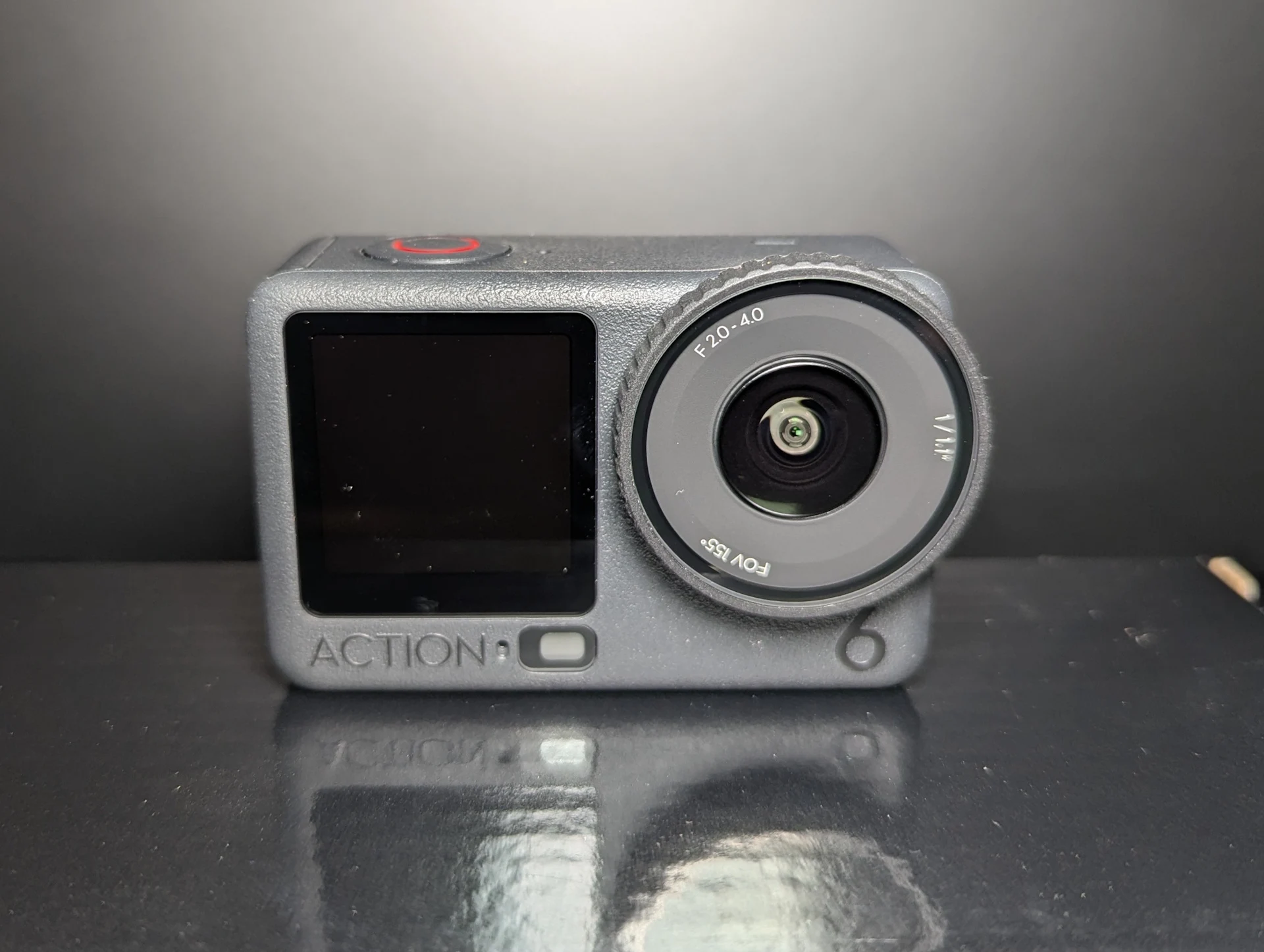
The same applies to the aperture: Casual users will continue to depend on automatic settings. Content creators, on the other hand, enjoy greater creative control—something truly innovative for an action camera. Planning to shoot a selfie at arm’s length? Set it to f/4.0. Need extra light for nighttime shots? Opt for f/2.0. Want the best sharpness and image quality? Use f/2.8.
This is why we view this year’s advancements as very targeted: they mainly cater to creative users looking for more artistic options and flexibility. It does mean that you’ll need to spend more time adjusting manual settings, though. Casual shooters who prefer fully automatic modes will hardly notice many of the promoted changes.