Category: Video / Photo

  • Kenko Tokina Launches Adorable Sanrio Toy Cameras Collection

    Kenko Tokina Launches Adorable Sanrio Toy Cameras Collection

    Key Takeaways

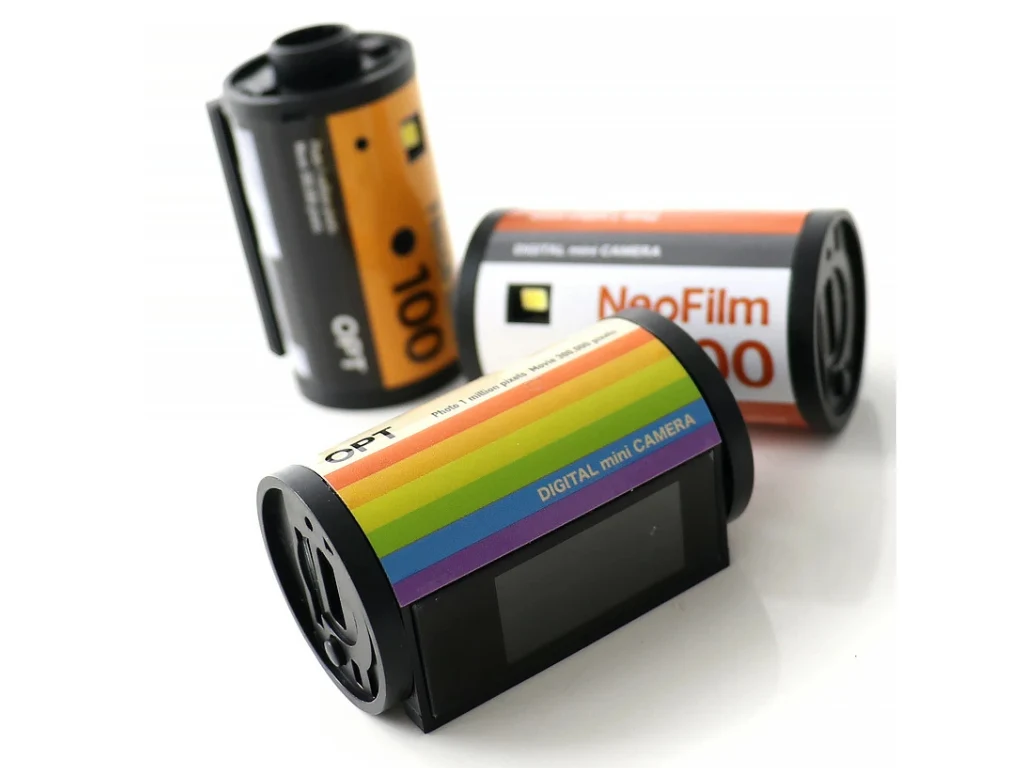
    1. Kenko Tokina launched seven new Pieni II toy digital cameras featuring Sanrio characters in Japan.
    2. The cameras have a 1.31 MP CMOS sensor with an ISO sensitivity of 100 and a fixed f/2.8 lens.
    3. They can capture JPG images at 1,280 x 1,024 pixels and record AVI videos at 720 x 480 pixels.
    4. The Pieni II is rechargeable, lightweight (18 grams), and includes a built-in magnet for storage.
    5. The retail price is 7,920 yen (about $50), available for purchase online with international shipping options.


    Kenko Tokina has introduced seven fresh designs of its Pieni II toy digital camera, showcasing adorable Sanrio characters in Japan.

    Camera Specifications

    The Pieni II models come equipped with a 1/10-inch, 1.31 MP CMOS sensor that has an ISO sensitivity of 100. This sensor pairs with a 3.2 mm f/2.8 lens, which features a consistent shutter speed of 1/100th second. The lens has a fixed focus range from 0.3 meters to infinity (approximately 0.98 feet to infinity).

    Photo and Video Output

    This camera can produce JPG images at a resolution of 1,280 x 1,024 pixels and record AVI MJPEG videos with MP3 audio at 720 x 480 pixels, maintaining 30 frames per second. It stores files on a microSD card, which can range from 128 MB to 2 GB. Users can utilize the optical viewfinder to capture their shots, but they will need to transfer the images to a computer to view them.

    Additional Features

    The camera is rechargeable and includes a mini USB cable and a neck strap. A handy built-in magnet on the back allows for easy storage on a refrigerator.

    Weighing in at just 18 grams (0.63 oz.), this toy camera has dimensions of 51 × 36 × 18 mm (2.0 × 1.4 × 0.7 inches).

    The Kenko Tokina Pieni II digital cameras, adorned with Sanrio branding, have a manufacturer’s suggested retail price of 7,920 yen (around $50). They can be purchased from the company’s online store in Japan, which offers international shipping.

    Source:
    Link


  • Tecno Unveils Two Innovative Zoom Concepts to Eliminate Lens Switching

    Tecno Unveils Two Innovative Zoom Concepts to Eliminate Lens Switching

    Key Takeaways

    1. Tecno introduced two innovative camera systems: Freeform Continuum Telephoto for continuous zoom and Dual Mirror Reflect Telephoto for compact design.
    2. The Freeform Continuum Telephoto offers smooth optical zoom from 1x to 9x without lens switches, enhancing image consistency.
    3. The Dual Mirror Reflect Telephoto is half the size of standard telephoto lenses, using two mirrors for compactness, but sacrifices one stop of light.
    4. Tecno’s imaging system, Tecno Image Matrix (TIM), integrates hardware and software to enhance detail, color, and AI understanding in photography.
    5. The aim of Tecno’s innovations is to create images that are both technically accurate and emotionally resonant.


    Tecno just had its 5th Future Lens event, where it introduced two innovative camera systems: Freeform Continuum Telephoto and Dual Mirror Reflect Telephoto. These systems are designed to address typical zoom issues found in many smartphones today. Often, when you zoom in, there’s a noticeable jump as the camera shifts between different lenses, and colors can change when switching. Tecno’s goal is to rethink the zoom hardware to solve these problems.

    Continuous Zoom Innovation

    The Freeform Continuum Telephoto provides a continuous optical zoom ranging from 1x to 9x. It acts as the primary camera at 1x and transitions smoothly through the zoom range without the usual lens switch that causes jumps. This innovation eliminates the need for a separate telephoto lens, potentially resulting in more consistent outcomes when capturing images. The system is still in development and is expected to be integrated into smartphones in about a year, with production to be managed by Samsung and Largan once the design is finalized.

    Compact Telephoto Solution

    On the other hand, the Dual Mirror Reflect Telephoto emphasizes size reduction by using two mirrors in a compact configuration, making the module roughly half the size of a standard telephoto lens. Its design resembles the mirror lenses that have been used in dedicated cameras for many years. This system creates the familiar ring-shaped bokeh effect but sacrifices one stop of light. According to Tecno, this version can be ready for smartphones next year, pending approval from the testing teams.

    Advanced Imaging System

    Additionally, Tecno presented its imaging system known as the Tecno Image Matrix (TIM). This comprehensive camera pipeline integrates hardware, software, and processing into a unified system. It manages how the smartphone interprets detail, adjusts colors, and employs AI to grasp what you wish to capture. Xiaohan Huang, who heads the company’s Image R&D Center, mentioned that the aim is to go beyond mere light capturing. “We’re shifting from just capturing light to a smarter understanding of scenes. Our systems now evaluate composition intent, subject traits, and even emotional tones to create images that are technically accurate and resonate emotionally,” he shared.

    Source:
    Link


  • Sony’s New Full Frame Mirrorless Camera Limits Affordable Lenses

    Sony’s New Full Frame Mirrorless Camera Limits Affordable Lenses

    Key Takeaways

    1. The Sony A7 V has received positive feedback for its photography and videography capabilities, being called “a genuine hybrid priced for mortals.”
    2. Reviewers praise the camera’s speed, autofocus, and video quality, although there are concerns for E-Mount users relying on third-party lenses.
    3. Issues arise with third-party autofocus lenses, causing the camera to malfunction during tests, particularly with brands like Viltrox and Sirui.
    4. Speculation exists that compatibility problems may be due to pre-release firmware, but no updates are currently available for the A7 V.
    5. Sony does not guarantee third-party lens compatibility, leaving users uncertain about potential intentional incompatibilities.


    The Sony A7 V was just released, and feedback has been largely favorable. Many reviewers are highlighting the strengths of this full-frame camera in both photography and videography. DPReview referred to it as “a genuine hybrid priced for mortals,” owing to its remarkable versatility. Nonetheless, a review from Kai W on YouTube has pointed out potential issues for E-Mount users who depend on third-party lenses, which tend to be significantly less expensive than those made by Sony.

    Early Praise and Subsequent Issues

    Kai begins his review expressing admiration for the camera’s speed, autofocus capabilities, and video quality. However, around the 16:15 mark, when he tests the A7 V with a third-party lens, difficulties emerge. During his evaluation of E-mount lenses from various Chinese brands, including well-known names like Viltrox and Sirui, Kai encountered several issues that resulted in the camera being unable to take pictures. It’s important to mention that this issue seems mainly to affect autofocus lenses, which is logical since most non-AF lenses do not have significant electrical connections.

    Firmware Speculations

    There is some speculation that the problems with third-party lenses might stem from pre-release firmware. However, the A7 V is already being sold in Europe, and currently, there are no firmware updates available for this new hybrid model. Sony’s website also mentions that “a software update may be required for some lenses,” suggesting that the lens manufacturers might bear some responsibility for the compatibility issues, though this disclaimer only relates to the A7 V’s new 60 fps continuous shooting feature. One might argue that it should have been relatively easy for Sony to create a system to identify compatible lenses, in order to inform users and allow them the choice to switch to a slower shooting mode.

    Sony’s Response

    When questioned regarding the lens compatibility issue, Sony remarked that “we do not guarantee third-party lens compatibility,” which neither confirms nor denies any intentional incompatibility.

    Source:
    Link


  • Watch Asteroid 433 Eros Pass Close to Earth Live

    Watch Asteroid 433 Eros Pass Close to Earth Live

    Key Takeaways

    1. 433 Eros is an important asteroid discovered in 1898, measuring 16.89 km in diameter.
    2. NASA’s NEAR Shoemaker mission made history in 2001 by orbiting and landing on 433 Eros, capturing over 160,000 images.
    3. Ongoing research on 433 Eros helps scientists understand other asteroids, such as 3I/ATLAS.
    4. Tonight, 433 Eros will pass about 60 million kilometers from Earth, and viewers can watch it live.
    5. The Virtual Telescope Project 2.0 will stream the event, allowing people to observe it online or with telescopes/binoculars.


    Many happenings in space let scientists and astronomers watch them in various ways. But tonight, an asteroid that has been known for over a century and has played a big role in our understanding of the universe will pass near Earth, and you’ll have the chance to see it live.

    The Significance of 433 Eros

    433 Eros might not ring a bell for you, but it holds great significance for researchers. It was found in 1898 by Auguste Charlois and Carl Gustav Witt, measuring 16.89 km in diameter. This space object has been under observation for years. In 2001, NASA’s NEAR Shoemaker mission made history by sending a probe to orbit and land on this asteroid for the first time. Over 160,000 images were captured during this mission, showing a surface covered in craters.

    Continuing Research and Tonight’s Event

    Since that time, many investigations have been carried out on this peanut-shaped celestial body, which also acts as a benchmark for new discoveries that help us understand various asteroids like 3I/ATLAS. Tonight, it will fly by about 60 million kilometers from Earth, which is quite close in the grand scheme of the universe, and you can view this event live.

    A live stream will start at 20:00 UTC, where you can see a small white dot moving near the Andromeda galaxy, which is 2.5 million light-years away from our planet. If you prefer to see it with your own eyes, you can grab an amateur telescope or binoculars and point them towards the nearby galaxy Messier 31. Just remember, you will need a clear sky and minimal light pollution for the best view.

    Watching Through the Virtual Telescope Project 2.0

    The Virtual Telescope Project 2.0 will provide an opportunity for everyone to witness this fascinating event.

    Source:
    Link


  • NASA’s OSIRIS-APEX Probe Takes Stunning Earth and Moon Photos

    NASA’s OSIRIS-APEX Probe Takes Stunning Earth and Moon Photos

    Key Takeaways

    1. The OSIRIS-APEX probe is on a mission to study the asteroid Apophis, which will come close to Earth in 2029.
    2. The probe will map Apophis for 18 months to analyze its composition after getting within 5 meters of the asteroid.
    3. OSIRIS-APEX used Earth’s gravity to gain speed during a recent flyby, capturing images from 228,000 km away.
    4. The probe took stunning photos of Earth and the Moon from distances of 228,000 km and 595,000 km, respectively.
    5. The successful imaging indicates that the probe’s instruments are working well, supporting future space exploration missions.


    NASA has carried out a range of missions to investigate numerous formations within our cosmos. From black holes and galaxies to exoplanets, several spacecraft are currently journeying through space for research purposes. Recently, the OSIRIS-APEX probe has captured stunning images of Earth while making its way to the asteroid Apophis.

    Mission to Apophis

    It’s important to understand that this probe is en route to this celestial body for closer examination. This asteroid is expected to come within about 32,000 km of Earth on April 13, 2029, marking a significant event. Moreover, once the probe gets near Apophis, it will spend 18 months mapping the asteroid to analyze its composition.

    Close Encounter

    One of the most astonishing aspects of this mission will be the probe’s approach, getting to within about 5 meters of the asteroid. After completing this maneuver, it will activate its engines to stir up dust and gather samples. Recently, OSIRIS-APEX conducted a flyby of Earth, utilizing our planet’s gravitational force to boost its speed. During this pass, it captured images of Earth from 228,000 km away using the MapCam camera, which showcased intriguing details.

    Stunning Images

    As it moved further away, the StowCam camera was able to photograph both the Moon and Earth at a distance of 595,000 km. These breathtaking images not only illustrate the vastness of our solar system but also signify good news for NASA. This indicates that the instruments on this probe are functioning well, paving the way for future explorations.

    Source:
    Link


  • DJI Osmo Pocket 4 Leak: 20% Battery Upgrade for Vlogging Camera

    DJI Osmo Pocket 4 Leak: 20% Battery Upgrade for Vlogging Camera

    Key Takeaways

    1. DJI is preparing to launch new products, including the Osmo Pocket 4, before the year ends.
    2. The Osmo Pocket 4 will be a follow-up to the Osmo Pocket 3, which was released over two years ago.
    3. The Osmo Pocket 4 will maintain WiFi 5 support and bring back Bluetooth Low Energy, though an upgrade to BLE 5.2 is uncertain.
    4. The new camera is expected to have a battery capacity of 1,545 mAh, representing an 18% increase from its predecessor.
    5. A battery capacity boost exceeding 1,600 mAh is likely for the Osmo Pocket 4.


    DJI is said to be getting ready to launch some new products before the year wraps up. Recently, the Avata 360 was mentioned by the Federal Communications Commission (FCC). Now, the focus is shifting to the Osmo Pocket 4, which isn’t shown in as much detail as DJI’s first 360° drone.

    New Vlogging Camera Details

    The initial image indicates that DJI’s upcoming vlogging camera will be a direct follow-up to the Osmo Pocket 3, which came out over two years ago (currently priced at $502 on Amazon). Even with the gap between releases, the FCC has pointed out several features that the Osmo Pocket 4 will carry over. For example, DJI won’t be updating the Osmo Pocket line beyond having a modem that supports WiFi 5.

    Connectivity Features

    Bluetooth Low Energy support is back again. However, it’s unclear if the Osmo Pocket 4 will move beyond the BLE 5.2 standard that was available in its predecessor. Regardless of this, the FCC suggests that the Osmo Pocket 4 will come with a notable battery enhancement. Up to now, the FCC has disclosed a battery capacity rated at 1,545 mAh.

    Battery Upgrade Expectations

    This upgrade would mean an 18% increase from the 1,300 mAh battery found in the Osmo Pocket 3, while keeping the same voltage of 7.7 V. Therefore, it’s reasonable to anticipate that DJI will promote the Osmo Pocket 4 with an average battery capacity that exceeds 1,600 mAh. In simpler terms, a battery capacity boost of over 20% appears likely at this point.

    FCC via The New Camera

    Source:
    Link


  • Photographer Sees Rare Giant Red Halo Over Italian Alps

    Photographer Sees Rare Giant Red Halo Over Italian Alps

    Key Takeaways

    1. A stunning red halo was photographed over the Italian Alps by Valter Binotto on November 17, 2025.
    2. The red halo is a natural phenomenon known as a transient luminous event (ELVE).
    3. ELVEs occur due to strong lightning strikes creating an electromagnetic pulse in the ionosphere.
    4. The specific halo in Binotto’s photo resulted from an intense negative lightning strike.
    5. Binotto captured this moment using a Sony A7S camera from 300 km away, and he previously photographed a similar event in 2023.


    The sky is full of surprises and wonder. Each year, events like comets and asteroids give us spectacular views. Recently, a photographer took a stunning picture of a red halo appearing over the Italian Alps.

    A Rare Capture
    This remarkable image was snapped by Valter Binotto on the night of November 17, 2025. The most striking feature of this photo is the enormous red halo. Before jumping to conclusions about its origin, it’s key to understand that this is a completely natural event. It is known as a transient luminous event, or ELVE.

    Understanding the Phenomenon
    NOAA explains that this event occurs due to strong lightning strikes that produce an electromagnetic pulse in the ionosphere. Valter Binotto mentioned that the red halo in his photo was a result of a very intense negative lightning strike, which happened as the electromagnetic pulse interacted with that layer of the atmosphere.

    A Moment Captured
    Using his Sony A7S camera equipped with a 20 mm f/1.8 lens, Binotto was situated 300 km away from the thunderstorm when he captured this fleeting moment, lasting only a millisecond. This isn’t the first time he has caught such a phenomenon; he photographed a similar red halo under comparable conditions in 2023.

    Source:
    Link


  • BepiColombo Mission to Arrive at Mercury After 8 Years

    BepiColombo Mission to Arrive at Mercury After 8 Years

    Key Takeaways

    1. The BepiColombo mission consists of three main components: ESA’s Mercury Planetary Orbiter (MPO), JAXA’s Mercury Magnetospheric Orbiter (MMO or Mio), and the Mercury Transfer Module (MTM) for propulsion.

    2. Since its launch in October 2018, BepiColombo has performed multiple flybys around Mercury, Venus, and Earth, collecting valuable data and images of these planets.

    3. The MTM’s monitoring cameras (M-CAMs) captured high-resolution images of Mercury’s surface features, including craters, volcanoes, and plains.

    4. The main scientific measurements will begin in November 2026, with enhanced instruments on both MPO and Mio for detailed analysis of Mercury’s environment and materials.

    5. The mission aims to provide a comprehensive understanding of Mercury’s composition, including the detection of water, through high-resolution imaging and surface measurements.


    The ESA/JAXA BepiColombo mission, which took off in October 2018, consists of three main components: the ESA’s Mercury Planetary Orbiter (MPO), JAXA’s Mercury Magnetospheric Orbiter (MMO or Mio), and the Mercury Transfer Module (MTM). The MTM acts as the main engine, pushing the entire mission towards Mercury. The actual science phase of BepiColombo will commence once it reaches and enters Mercury’s orbit, allowing the MPO and Mio to separate.

    Flybys and Data Collection

    Since its launch, BepiColombo has successfully performed multiple flybys, including six around Mercury, two around Venus, and one around Earth. During its Mercury flybys, it collected valuable data on the planet’s magnetic environment. The MTM’s monitoring cameras (M-CAMs) took hundreds of pictures, each with a resolution of 1024×1024 pixels, capturing stunning images of Earth, Venus, and Mercury. The photos of Mercury reveal its surface features, including craters, volcanoes, and vast plains.

    Future Measurements

    The significant measurements and imaging work will kick off in November 2026. The magnetometers and particle detectors on both Mio and MPO are set to be more sensitive than before. Mio will utilize its sodium imager and dust detector to analyze materials present near Mercury.

    Meanwhile, MPO will focus on obtaining high-resolution images of Mercury’s surface across X-rays, visible light, and near-infrared light. It will also employ the BepiColombo Laser Altimeter (BELA) to accurately measure the height and shape of Mercury’s surface. In the end, this mission aims to provide a comprehensive understanding of Mercury’s composition, including the presence of water.

    Source:
    Link


  • Samsung Galaxy S27 Ultra Leak Reveals Disappointing Camera News

    Samsung Galaxy S27 Ultra Leak Reveals Disappointing Camera News

    Key Takeaways

    1. Sony has launched a new 200 MP sensor called the LYT-901.
    2. Samsung has decided not to use the LYT-901 sensor in its upcoming flagship phones, specifically the Galaxy S27 Ultra.
    3. The Galaxy S27 Ultra will likely continue using a 1/1.3-inch ISOCELL HP2 sensor instead of the new LYT-901.
    4. This decision raises concerns about Samsung’s camera technology progression in its Galaxy S-series flagships.
    5. The Samsung Galaxy S25 Edge is available for purchase on Amazon for those looking to upgrade.


    Sony has introduced a new 200 MP sensor named the LYT-901 today. This sensor is set to be included in many high-end devices soon, but it seems that Samsung has decided not to include it.

    Samsung’s Decision on the New Sensor

    Well-known leaker Ice Universe has stated that Samsung does not plan to use this new sensor in its upcoming flagship phones. Earlier reports suggested that the Galaxy S27 Ultra, which could launch in 2027, might feature this sensor as its primary camera. In theory, Sony’s new LYT-901 sensor, measuring 1/1.12 inches, would provide a significant enhancement over the 1/1.3-inch ISOCELL HP2 sensor present in Samsung’s latest premium models. However, it now appears that the Galaxy S27 Ultra will stick with a similar 1/1.3-inch sensor, like the ones in previous models.

    The Impact of This Choice

    Although a 1/1.3-inch sensor is not exactly tiny or ineffective, this potential choice reinforces concerns regarding Samsung’s hardware decisions. The Galaxy S-series flagships are often viewed as having plateaued when it comes to camera technology.

    Purchase Options

    If you’re interested in upgrading your phone, you can buy the Samsung Galaxy S25 Edge on Amazon.

    Ice Universe’s insights highlight the ongoing conversation about Samsung’s camera hardware choices.

    Source:
    Link


  • Sony LYT-901 200MP Camera Sensor Debuts for Premium Smartphones

    Sony LYT-901 200MP Camera Sensor Debuts for Premium Smartphones

    Key Takeaways

    1. Sony has launched the LYT-901, its first 200MP phone camera sensor, aimed at flagship smartphones.
    2. The sensor features a 1/1.12-inch imaging surface, utilizing 0.7μm pixels and offering enhanced resolution and low-light performance.
    3. It supports standard pixel-binned output modes for high-quality 50MP and 12.5MP images, improving usability in various conditions.
    4. The LYT-901 employs advanced Hybrid Frame-HDR technology for superior dynamic range and minimizes motion artifacts.
    5. It enables up to 4x lossless zoom and is the only sensor capable of 4K video capture at 30fps with activated zoom, targeting content creators.


    Sony has just unveiled the LYT-901, marking its first-ever 200MP phone camera sensor. This highly anticipated component is aimed at the upcoming flagship camera phones, and was known as the IMX09E during its development phase. This new sensor is Sony’s answer to the various 200MP imaging technologies that have been emerging in the mobile market for several years now.

    Sensor Specifications

    The LYT-901 features a sizable 1/1.12-inch imaging surface. While it may not reach the size of the 1-inch sensors currently available, it comes very close while boosting the resolution four times. It utilizes native 0.7μm pixels, a standard size found in other 200MP sensors already on the market. As is typical, the hardware combines neighboring pixels to produce images with a significantly larger effective μm output.

    Output Modes and Performance

    Sony’s LYT-901 sensor provides standard pixel-binned output modes. It can transform dense pixel data into high-quality 50MP (2×2) or 12.5MP (4×4) images. These modes are designed to enhance low-light performance and deliver clean, usable high-zoom crops, making it versatile for various shooting conditions.

    To handle the immense data load of 200 million pixels, Sony incorporates AI into the sensor’s internal circuitry. This intelligent processing system allows the phone’s processor (SoC) to manage the high-resolution output more effectively. This could potentially address the slow shutter speed issues seen in other 200MP sensors, like those from Samsung.

    Dynamic Range and Zoom Capabilities

    For dynamic range, the Sony LYT-901 employs an advanced Hybrid Frame-HDR (HF-HDR) design alongside Dual Conversion Gain HDR. This combination guarantees a high dynamic range that surpasses 100dB, or about 17 photographic stops, by quickly sampling an additional frame. This method helps to avoid the “clipping” effect in bright highlights and significantly minimizes motion artifacts, or “ghosting,” in rapidly moving scenes.

    The LYT-901 also prioritizes zoom versatility. It supports up to 4x lossless (near-optical) zoom using the “sensor-in-zoom” (ISZ) technique. This feature allows a phone with this sensor to crop and transmit data, creating a simulated telephoto view without needing a separate optical lens. Importantly, the LYT-901 is currently the only sensor that allows 4K video capture at 30fps with 4x hardware zoom activated, making it an attractive choice for content creators.

    Reports indicate that the OPPO Find X9 Ultra and the Vivo X300 Ultra are set to be the first flagship phones to incorporate the newly launched Sony LYT-901 camera sensor next year.

    Source:
    Link