Category: Phones

Stay updated with the latest phone news, reviews, and trends. Discover cutting-edge smartphones, features, and innovations in our Phones category at GizNewsDaily

  • Samsung Galaxy F36 5G Launches: Leather Design, AI Camera, Updates

    Samsung Galaxy F36 5G Launches: Leather Design, AI Camera, Updates

    Key Takeaways

    1. Samsung has launched the Galaxy F36 5G smartphone as a budget-friendly replacement for the Galaxy F34, featuring a new leather-like design.
    2. The device includes a 50 MP primary camera, an 8 MP ultrawide camera, and a 2 MP macro camera, maintaining the same camera specs as its predecessor.
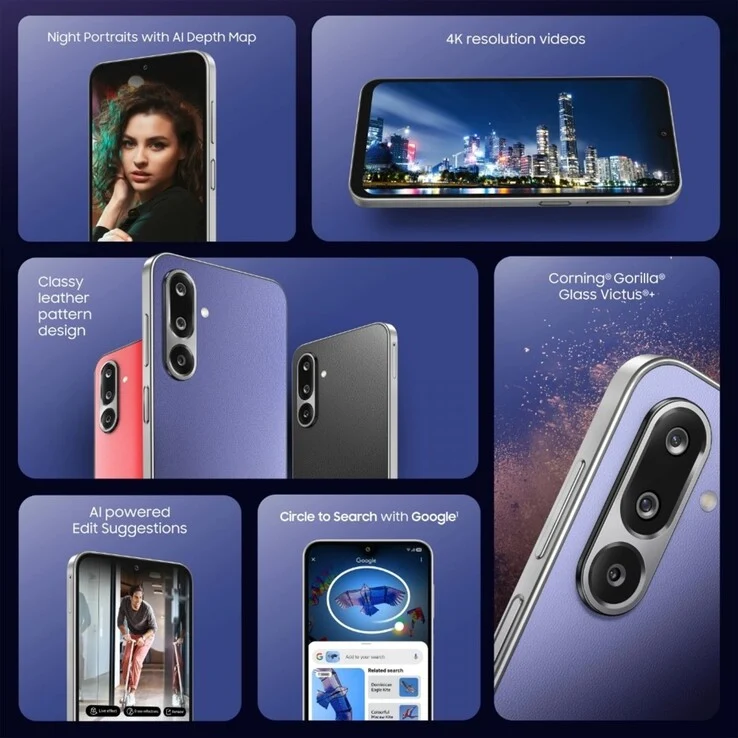
    3. It features a 6.7-inch Super AMOLED display with FHD+ resolution and a 120 Hz refresh rate, protected by Corning Gorilla Glass Victus.
    4. The Galaxy F36 5G is powered by the Exynos 1380 chipset, with options for 6 or 8 GB of RAM and 128 GB of expandable storage, along with a 5,000 mAh battery supporting 25 W wired charging.
    5. It runs on Android 15 with OneUI 7, offers 6 major OS upgrades and 6 years of security updates, and is priced starting at INR 17,499 ($203).


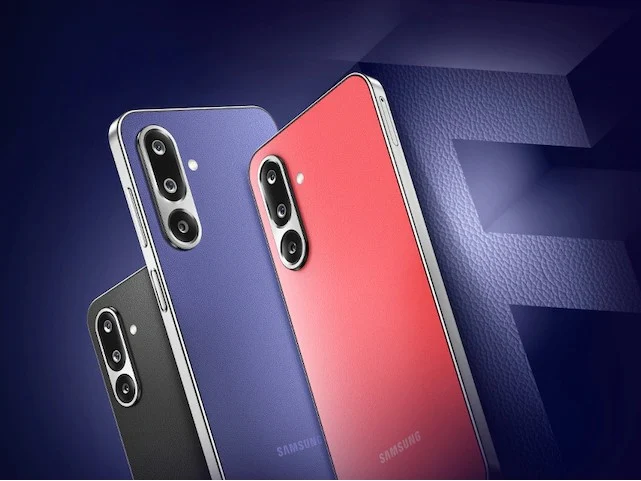
    Samsung has launched its new Galaxy F36 5G smartphone, which is part of the budget-oriented F series. This model is the direct replacement for last year’s Galaxy F34. In this version, Samsung has added a fresh leather-like design on the back of the Galaxy F36 5G. When it comes to the cameras, the device keeps the same specifications as its predecessor, including a 50 MP primary camera with Optical Image Stabilization (OIS), an 8 MP ultrawide camera, and a 2 MP macro camera.

    Device Specifications

    The Galaxy F36 5G has dimensions of 164.4 x 77.9 x 7.7 mm (6.47 x 3.06 x 0.3 inches) and weighs roughly 197 grams (0.43 lbs). For its processing power, Samsung has opted for its own processor, specifically the Exynos 1380 chipset, along with options for 6 or 8 GB of RAM. The phone offers 128 GB of internal storage, which can be expanded using a microSD card.

    Display and Battery

    When it comes to the display, the Galaxy F36 5G features a 6.7-inch Super AMOLED panel with an FHD+ resolution and a 120 Hz refresh rate. It also has Corning Gorilla Glass Victus for protection against scratches. Additionally, Samsung has included a 5,000 mAh battery in this budget-friendly 5G smartphone, which supports only 25 W wired charging (the Anker Nano 65 W charger is currently available for $25.99 on Amazon).

    Software and Features

    On the software side, the Galaxy F36 5G runs on Android 15 with OneUI 7 right out of the box. Samsung has committed to providing an impressive 6 major OS upgrades (Android 17, 18, 19, 20, 21, and 22) along with 6 years of security updates, lasting until 2031. Other notable features include numerous AI capabilities, a side-mounted fingerprint sensor, IP67 water resistance, dual-band WiFi AC, Bluetooth 5.3, and GPS functionality.

    The Samsung Galaxy F36 5G is available in coral red, luxe violet, and onyx black faux leather finishes. The pricing starts at INR 17,499 ($203) for the base model with 6 GB of RAM and 128 GB of storage, while the 8 GB RAM and 128 GB variant is sold for INR 18,999 ($220). The device will be available for purchase through Samsung’s official store and other authorized retailers beginning on 29 July.

    Source:
    Link


  • Oppo K13 Turbo Pro: Thinnest Smartphone with Active Cooling Launch

    Oppo K13 Turbo Pro: Thinnest Smartphone with Active Cooling Launch

    Key Takeaways

    1. Oppo is introducing the K13 Turbo series with a unique real spinning fan for temperature control.
    2. The K13 Turbo Pro has a standard thickness of 8.3mm and weighs 208g, lighter than the Galaxy S25 Ultra.
    3. The active cooling technology aims to overcome the common issue of device thickness seen in competitors.
    4. The Pro model is expected to have a battery that “will exceed expectations.”
    5. Competing devices, like the actively-cooled RedMagic Astra tablet, are currently available for purchase.


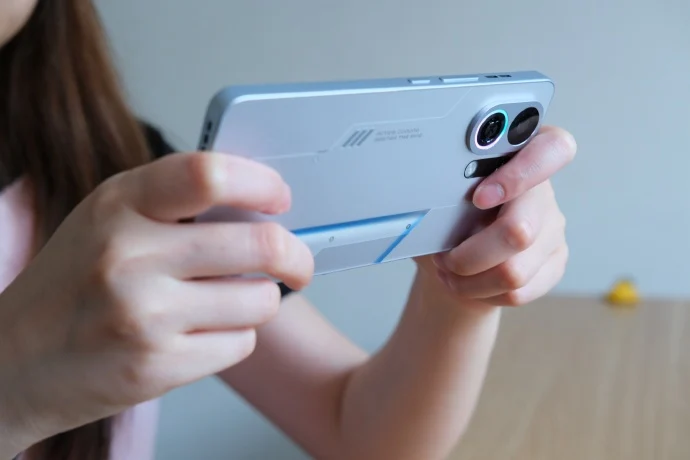
    Oppo is gearing up to shake things up in the mobile phone world, which some say has become a bit dull. They are set to introduce the K13 Turbo series, the first to include a real spinning fan as part of its temperature control system.

    Innovations in Cooling Technology

    The K13 Turbo Pro is expected to overcome a common issue associated with this kind of technology, which has been in use since RedMagic first revealed it in the 6S Pro back in 2021. Usually, active cooling leads to a thicker device; for instance, the new RedMagic 10S Pro measures 8.9 millimeters (mm) thick, while the Samsung Galaxy S25 Ultra is 8.2mm.

    Impressive Specifications

    However, leaker Fixed Focus Digital has claimed that the Turbo Pro has a surprisingly standard thickness of 8.3mm. It also appears to weigh just 208 grams (g), lighter than the Galaxy S25 Ultra, which weighs in at 218g.

    These notable benefits—including features that Oppo hasn’t highlighted prior to the K13 Turbo series launching on July 21, 2025—are said to be complemented by a battery in the Pro model that “will exceed expectations.”

    Availability of Competing Devices

    Additionally, the RedMagic Astra, which is an actively-cooled tablet, can be purchased now on Amazon.

    Fixed Focus Digital shared this info on Weibo, fueling excitement for the upcoming launch.

    Source:
    Link

  • Samsung Galaxy Z Fold 8: Crease-Free Display Ahead of iPhone Fold

    Samsung Galaxy Z Fold 8: Crease-Free Display Ahead of iPhone Fold

    Key Takeaways

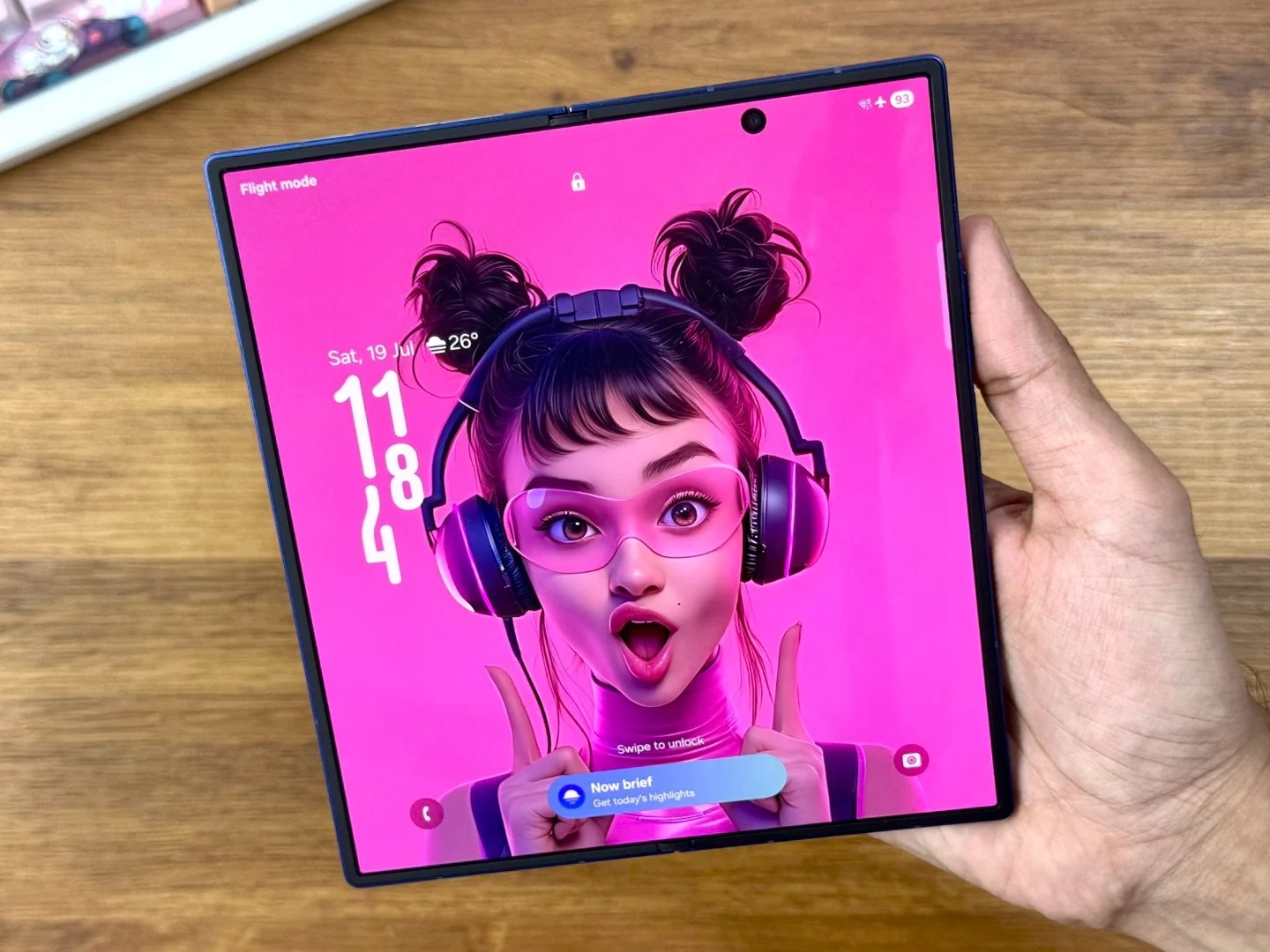
    1. Ming-Chi Kuo, a respected analyst, predicts that Apple and Samsung will use crease-free display technology for their foldable devices in 2026.
    2. Early reports indicate that the Galaxy Z Fold7 has significantly reduced the visibility of its screen crease compared to previous models.
    3. Apple’s demand for a fully crease-free display is motivating Samsung to enhance its foldable technology.
    4. Both companies may use ASP laser-drilled metal plates beneath the AMOLED screens to eliminate creases.
    5. Fans can look forward to foldable devices with improved displays from Apple and Samsung in 2026.


    Such early leaks should always be taken with a grain of salt, but this one is from a well-known analyst who is respected by many Apple fans. It remains to be seen if Ming-Chi Kuo’s forecast will actually happen. From his examination of Apple’s supply chain, he believes that both Apple and Samsung will choose a display that doesn’t have any creases for their foldable devices next year.

    Galaxy Z Fold7 Improvements

    The Galaxy Z Fold7 appears to have made notable advancements in this area, based on what early users have reported. They mention that the crease in the middle of the flexible AMOLED screen is much less visible compared to the last version. This is also encouraging news for Samsung enthusiasts, as Apple’s strict demands for a fully crease-free display in the anticipated iPhone Fold, which is set to debut in September 2026, is pushing Samsung to keep up.

    Innovative Display Solutions

    Ming-Chi Kuo suggests that both Apple and Samsung will implement a display technology that features ASP laser-drilled metal plates placed beneath the AMOLED screen. This setup is expected to come from a single manufacturer and will help eliminate the unsightly crease at the fold. Fans of both companies can get excited about foldable devices with crease-free displays hitting the market in 2026.

    Ming-Chi Kuo’s insights are always worth noting, and this prediction aligns with the current trends in smartphone technology.

    Source:
    Link

  • Nothing Phone (3) Teardown: Durability and Repairability Revealed

    Nothing Phone (3) Teardown: Durability and Repairability Revealed

    Key Takeaways

    1. The Nothing Phone (3) features a unique rear design inspired by artistic interpretations of smartphone internals, making it visually distinct but harder to take apart.
    2. The Glyph Matrix, consisting of 489 LEDs, is integrated beneath the transparent glass back and may require replacement if damaged, showcasing innovative design but added complexity.
    3. The Phone (3) offers similar durability to high-end Android devices, with scratch, burn, and bend resistance, despite its unconventional aesthetics.
    4. The Essential Key, while a standout feature, is prone to scratching and may lose its shine over time, and the elevated camera rings are at risk of damage.
    5. The Phone (3) is made with eco-friendly materials, including 80% recycled steel and 100% recycled aluminum, but its Snapdragon 8s Gen 4 SoC and battery size may not meet future industry standards.


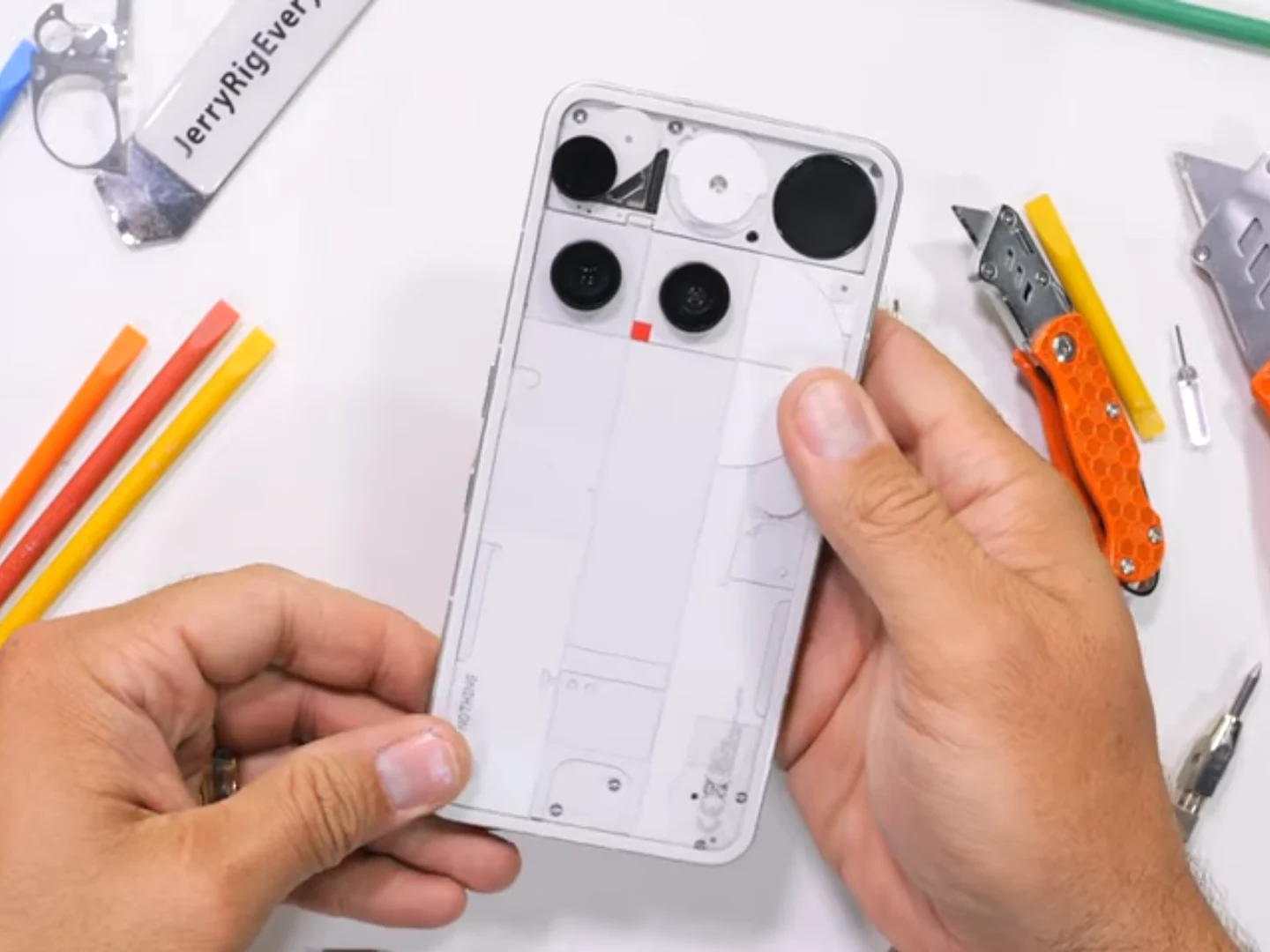
    The Nothing Phone (3) has been unveiled with a design that can be kindly termed as deconstructed, especially noticeable around its camera bump and the new Glyph Matrix. Popular YouTuber Zach Nelson from the JerryRigEverything channel has compared its look to a Picasso artwork, showing a bit more appreciation for it.

    Unique Rear Design

    The rear of the Phone (3) features intricate details that are said to be inspired by “an artist’s view of the inside of a smartphone.” Ironically, this artistic flair makes it harder to take off compared to a typical Android phone.

    Glyph Matrix and Components

    The Glyph Matrix is an additional part that could require replacement if damaged. Fortunately, it’s positioned beneath the transparent glass back panel of the smartphone, making it somewhat safer from harm compared to the Phone (3)’s cameras.

    This interface includes 489 separate LEDs and is operated via a small capacitive button on the back. Interestingly, Nothing had to find a wireless charging coil that folds in on one side to make this feature work.

    Future of Smartphone Components

    Rumors suggest that this kind of component might appear again when the iPhone 17 Pro is ready for disassembly.

    The Phone (3)’s appearance on JerryRigEverything indicates that it has scratch, burn, and bend resistance similar to other high-end Android smartphones, despite its unique design.

    Essential Key and Camera Concerns

    The Essential Key is highlighted as another unique aspect of the Phone (3), despite being similar to OnePlus’ Plus Key. This button has a shiny finish that, as Nelson pointed out, scratches easily and may lose its sheen over time with regular usage.

    Additionally, the camera rings on the Phone (3) are quite elevated and could be at risk of damage, especially if a user were to use Mohs hardness picks on its 6.67-inch AMOLED screen.

    Sustainability Efforts

    Nothing claims to have utilized 80% recycled steel, 100% recycled aluminum, and 100% renewable energy in the Phone (3)’s production, making it more eco-friendly in that regard.

    However, this may not counterbalance the device’s other well-known drawbacks, primarily its sub-premium Snapdragon 8s Gen 4 SoC and a relatively small battery (stay tuned for our complete review to get the full insight).

    The battery spec (which reaches up to 5,500mAh in India) may start to look less impressive as we move into what 2025 has to offer in the smartphone industry.

    Despite everything, the Nothing Phone (3) is available for $799 on Amazon, which is notably less than many “normal” Android flagship phones priced above $1,000.

    Source:
    Link

  • Motorola Edge 60 Fusion Launching in Mocha Mousse Color Option

    Motorola Edge 60 Fusion Launching in Mocha Mousse Color Option

    Key Takeaways

    1. The Motorola Edge 60 Fusion initially launched in three colors and recently added a new exclusive color, Mykonos Blue, for India.
    2. A new color option, Mocha Mousse, is expected to be introduced soon, as it is Pantone’s color of the year for 2025.
    3. Mocha Mousse has previously appeared on other Motorola devices like the Razr 50 Ultra and Edge 50 Neo.
    4. There is no confirmed release date or regional availability for the Mocha Mousse color yet.
    5. The current price of the Motorola Edge 60 Fusion is €299.99, with potential announcements for new colors coinciding with the Razr 60 launch on August 5.


    When Motorola launched the Edge 60 Fusion in May, it came in three different colors — Pantone Slipstream, Pantone Amazonite, and Pantone Zephyr. Recently, a new color option, Mykonos Blue, was introduced exclusively for India. Soon, buyers might have a chance to choose a fifth color option for their phones.

    Exciting New Color

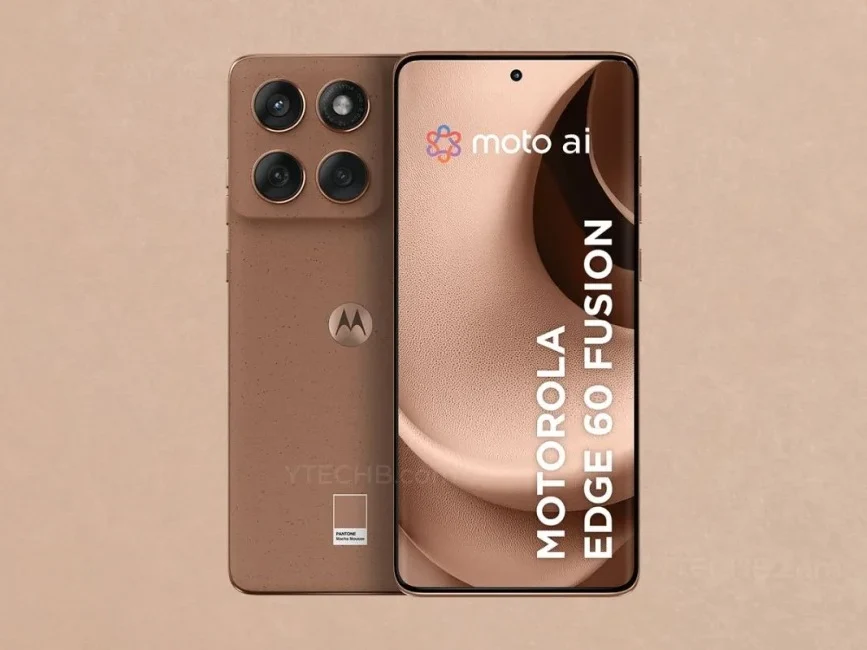
    A recent leak has indicated that the Motorola Edge 60 Fusion will soon be available in Mocha Mousse, which is Pantone’s color of the year for 2025. This news was initially shared by Ytechb, along with a render that displays the new hue.

    Previous Releases

    The Edge 60 Fusion isn’t the first Motorola device to flaunt this color. Back in December, Motorola updated the Razr 50 Ultra and Edge 50 Neo with Mocha Mousse. Other than the fresh color, there shouldn’t be any major changes compared to the other color options.

    As of now, there hasn’t been any announcement regarding when Motorola will introduce this new color or the regions where it will be available. The Mykonos Blue version is only purchasable in India, suggesting that the Mocha Mousse color might be limited to different regions where Mykonos Blue isn’t offered.

    Price Details

    The Motorola Edge 60 Fusion is currently listed on Amazon.de for €299.99, and it’s not the only Motorola phone getting a color update. Reports have surfaced that Motorola is set to unveil a Razr 60 adorned with Swarovski crystals on August 5. There’s a chance the announcement for the new Edge 60 Fusion could coincide with this date.

    Source:
    Link

  • Galaxy Z Fold7 and Z Flip7 Screen Repair Costs Are Too High

    Galaxy Z Fold7 and Z Flip7 Screen Repair Costs Are Too High

    Key Takeaways

    1. High Repair Costs: Repairing the Galaxy Z Fold7’s internal screen can cost around $890, comparable to buying a new midrange smartphone.

    2. Expensive Cover Screen: The smaller cover screen on the Fold7 costs approximately $611, adding to the overall repair expenses.

    3. Z Flip7 Costs: The Galaxy Z Flip7’s internal screen is priced at $400, while its cover screen costs $240, making repairs costly even for this “budget-friendly” option.

    4. Samsung Care+ Benefits: Investing in Samsung Care+ can save money on repairs, offering unlimited same-day repairs for a monthly fee and a low deductible.

    5. Fragility Concerns: Despite claims of improved durability, foldable phones remain delicate, and repair costs can exceed the phone’s resale value after a damage incident.


    If you’re considering the Galaxy Z Fold7 or Z Flip7, brace yourself for a harsh reality about owning a foldable phone: repairing a broken screen could be nearly as pricey as purchasing a brand-new midrange smartphone.

    Screen Durability vs. Repair Costs

    Samsung’s latest foldables appear tougher than previous models, but repair costs remain exorbitantly high. SamMobile has reported that the internal screen for the Galaxy Z Fold7 will cost €761, which is roughly $890. This price is solely for the part, excluding any labor or service charges. To put this into perspective, that sum could buy you a brand-new Galaxy S24 Plus or even a pre-owned flagship like the Galaxy S24 Ultra.

    Cover Screen Price Shock

    But there’s more to it. The smaller cover screen on the Fold7 will set you back €525 (approximately $611), which is surprisingly steep for a display that isn’t even the primary screen. The Galaxy Z Flip7, which is seen as the more “budget-friendly” option of the two, is still a bit costly. The internal foldable screen is priced at €342 ($400), and the cover screen, which is Samsung’s 4.1-inch FlexWindow, will cost you €207 ($240).

    None of these amounts factor in labor costs, so if you’re using a third-party repair service or if your warranty has expired, the total cost could rise even further. Samsung’s standard warranty doesn’t cover accidental damages, meaning if you drop your phone or crack the display, you’re mostly on your own unless you chose Samsung Care+.

    The Case for Samsung Care+

    Given these prices, opting for Samsung Care+ might actually be a smart choice. For the Galaxy Z Fold7, the Care+ plan is $13 per month or $259 annually. For the Z Flip7, the cost is $10 monthly or $169 yearly. Both plans allow for unlimited same-day repairs for screen or back glass damage, with a $29 deductible for each visit. This sounds far more reasonable than paying $890 for a new inner screen, especially when you’re already investing upwards of $1,800 on the device.

    Interestingly, repair costs can vary by region. In India, for example, Samsung’s official support page lists the inner screen of the Galaxy Z Fold7 at ₹46,870 (around $543), while the outer screen is priced at ₹6,740 (about $78). The Z Flip7’s inner screen is marked at ₹19,350 ($224), and the cover screen at ₹5,810 ($67). This shows a significant contrast compared to European pricing, even after considering currency and local cost variations.

    Fragility of Foldables

    In conclusion, the harsh reality is that foldable phones are quite delicate. Despite Samsung’s claims of improved durability, a single drop can lead to a hefty financial burden. If you don’t have coverage and your screen gets damaged, you might face a repair bill that approaches or even exceeds the resale value of the phone itself.

    Source:
    Link

  • Xiaomi Poco X8 Pro Chipset Unveiled Amid Shift from Snapdragon

    Xiaomi Poco X8 Pro Chipset Unveiled Amid Shift from Snapdragon

    Key Takeaways

    1. The Poco X8 Pro is expected to launch globally next year as a rebranded version of the Redmi Turbo 5.
    2. Both the Poco X8 Pro and Redmi Turbo 5 will utilize MediaTek’s Dimensity 8500 Ultra chipset.
    3. The Dimensity 8500 chipset is anticipated to be officially announced later this year.
    4. Xiaomi may be shifting away from Qualcomm chips, despite their strong history with the company.
    5. Xiaomi has renewed its collaboration with Qualcomm for flagship models, ensuring continued use of Qualcomm chipsets.


    Word about the Poco X8 Pro emerged earlier this week. This mid-range smartphone is likely set for a global launch next year as a rebranded version of the upcoming Redmi Turbo 5. A recent leak suggests that both devices will use MediaTek technology.

    Chipset Details

    According to leaker Yogesh Brar on X, the Redmi Turbo 5 will come equipped with MediaTek’s Dimensity 8500 Ultra chipset. This chipset is anticipated to be officially unveiled as the Dimensity 8500 later this year, following the release of the Dimensity 8300 and Dimensity 8400 that were launched before it.

    Shift in Strategy

    While it’s no shock to see a Dimensity 8500 in the Redmi Turbo 5—especially since the Redmi Turbo 4 has the Dimensity 8400—the info hints at a possible “big shift” away from Qualcomm chips by Xiaomi. It’s not clear how far this change might go, given Xiaomi’s strong ties with Qualcomm and the fact that they already incorporate MediaTek chipsets in a fair number of their devices. Nevertheless, Xiaomi and Qualcomm have recently renewed their collaboration, ensuring that Xiaomi’s flagship models will continue to feature Qualcomm chipsets.

    Source:
    Link

  • Samsung Galaxy Z Trifold: New Name for Galaxy G Fold Revealed

    Samsung Galaxy Z Trifold: New Name for Galaxy G Fold Revealed

    Key Takeaways

    1. Samsung’s first smartphone with three folding sections may be called “Galaxy Z Trifold,” supported by a secured patent.
    2. The name “Galaxy Z Fold Ultra” is a potential alternative, building on an existing product line.
    3. The official name and launch details of the device remain uncertain until Samsung makes an announcement.
    4. Tecno has introduced a concept device, the Tecno Phantom Ultimate G Fold, which could become a competitor in the market.
    5. The Galaxy Z Trifold may have high production costs, making it less accessible to most consumers, similar to the original Galaxy Z Fold.


    Numerous rumors have pointed to the Galaxy G Fold name for Samsung’s first-ever smartphone with three folding sections. This makes sense, since it would fold into a G shape, as supported by further leaks. However, a recent find by Galaxyclub.nl indicates that it may be released under a different name altogether.

    New Name Possibilities

    Samsung has secured a patent for the name “Galaxy Z Trifold” in South Korea (with the codename SM-F968N). This fits well within Samsung’s Z-series of foldable devices. The company previously opted for a rather dull ‘Fold’ designation for a folding gadget, so ‘trifold’ seems like a logical next step. Yet, there’s a strong possibility that Samsung is just keeping this name in reserve to prevent future patent issues.

    Uncertain Launch Details

    Until Samsung officially reveals the device, we won’t know what the supposed tri-fold will actually be called. Some insiders have hinted at the name ‘Galaxy Z Fold Ultra’ as a possible alternative. This would be more suitable as it builds on an existing product line and differentiates itself with the ‘Ultra’ label.

    Competition on the Horizon

    Moreover, Tecno has already jumped ahead with its Tecno Phantom Ultimate G Fold. While this is currently just a concept, it has a chance of becoming a standard product later on, although Samsung is likely to be the first to offer something that consumers can actually purchase.

    That being said, the Samsung Galaxy G Fold or Galaxy Z Trifold might not be easily accessible when it launches. The extremely high production costs and exorbitant MSRP will make it unattainable for most buyers. This isn’t necessarily a negative aspect, though, since like the original Galaxy Z Fold, it serves more as a proof of concept than a smartphone meant for the masses.

    Source:
    Link


  • Tecno Unveils Ultra-Slim Tri-Fold Phone with 9.94-Inch Display

    Tecno Unveils Ultra-Slim Tri-Fold Phone with 9.94-Inch Display

    Key Takeaways

    1. Tecno’s Phantom Ultimate G Fold Concept features a dual inward-folding design with a 9.94-inch flexible screen that folds twice, measuring 11.49mm when closed.

    2. The innovative folding mechanism uses two hinges, allowing the device to close without gaps and includes a self-locking feature for security.

    3. The device offers a nearly crease-free, tablet-like experience when opened and includes an outer screen for smartphone functionality without unfolding.

    4. It’s built with ultra-high-strength steel in the hinge and a Titan Fiber rear cover, making it lightweight and sturdy, with a slim 3.49mm thickness when fully extended.

    5. The prototype showcases a powerful chipset, triple camera layout, and a battery over 5000mAh, with plans for a presentation at MWC 2026.


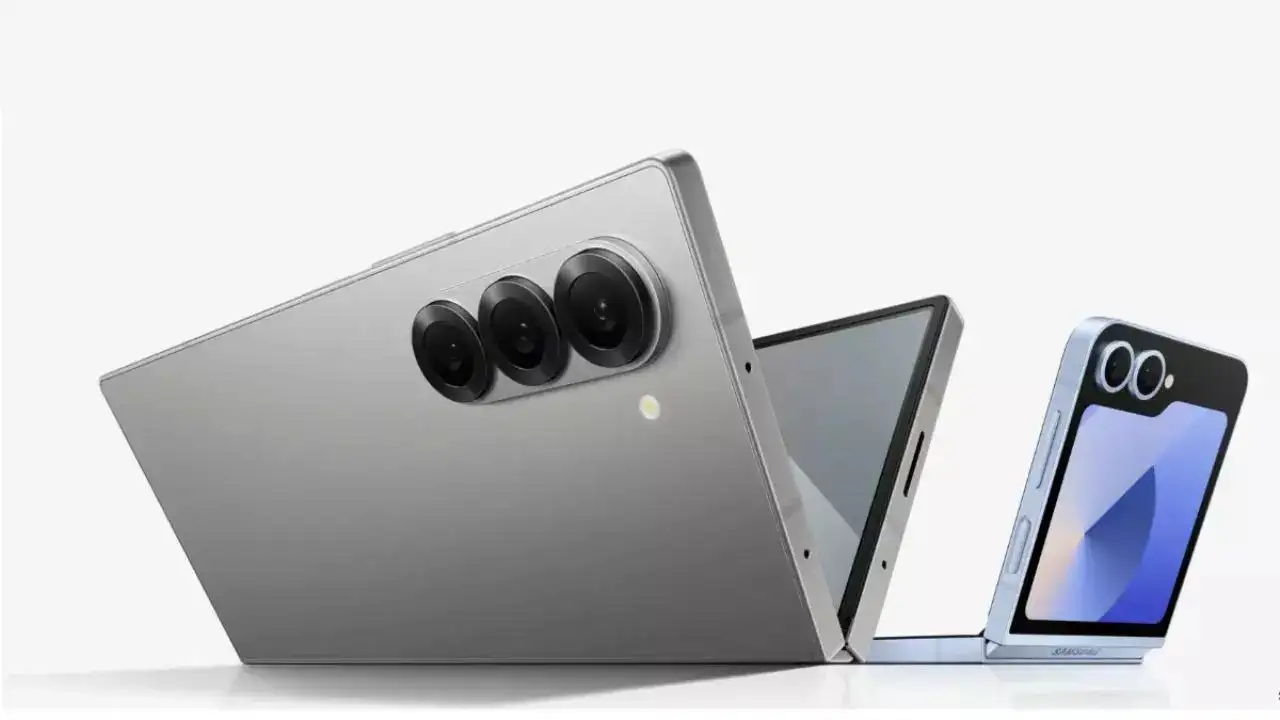
    As excitement builds around tri-fold smartphones, Tecno is gearing up to challenge the top players in this market with its latest prototype, known as the Phantom Ultimate G Fold Concept. This device, previously mentioned in a leak, boasts a dual inward-folding design that securely hides the entire display when closed. It features a 9.94-inch flexible screen that folds twice, resulting in a folded thickness of 11.49mm. While this is noticeably thicker than the Samsung Galaxy Z Fold 7, which is currently priced at $1,999 on Amazon and measures 8.9mm, it is slightly thinner than the Huawei Mate XT Ultimate at 12.8mm. However, it’s important to note that the Z Fold 7 is not a tri-fold device.

    Innovative Folding Mechanism

    The folding mechanism consists of two hinges: a small waterdrop-style hinge for the first fold and a larger primary hinge that wraps the rest of the display on top. This design allows the device to close completely without any visible gaps. A self-locking feature ensures that the phone remains securely shut.

    Impressive Display and Functionality

    When opened, the expansive display delivers a nearly crease-free experience, resembling a tablet. Tecno claims this design supports innovative usages, such as multi-angle hovering and mini workstation configurations. Additionally, an outer screen enables the device to operate like a regular smartphone without needing to unfold it.

    Durability and Performance

    The phone incorporates 2000MPa ultra-high-strength steel in its hinge and a 0.3mm Titan Fiber (likely a titanium-based material) rear cover, effectively reducing weight while ensuring sturdiness. When fully extended, the device measures a slim 3.49mm in thickness.

    The concept model showcases a powerful chipset, a triple camera layout, and a battery exceeding 5000mAh, although specific details are yet to be revealed. Tecno plans to present the device again at MWC 2026.

    Previously, during MWC 2025, Tecno unveiled a triple-fold prototype called the Phantom Ultimate 2 Tri-Fold. You can find more information about that here.


  • Huawei Mate XT 2 Leaks: New Tri-Fold Smartphone with 5G and Cameras

    Huawei Mate XT 2 Leaks: New Tri-Fold Smartphone with 5G and Cameras

    Key Takeaways

    1. Huawei’s tri-fold smartphone, Mate XT 2, is set to launch soon, following Samsung’s Galaxy Z Fold7 release.
    2. The Mate XT 2 has received TENAA certification in China, indicating it is on track for release.
    3. The device will feature a 5G chipset and run on HarmonyOS, utilizing the Kirin 9020 processor.
    4. It is expected to include satellite connectivity and a new 50 MP primary camera with a variable aperture.
    5. The Mate XT 2 will likely retain a periscope camera, though its availability outside of China is still uncertain.


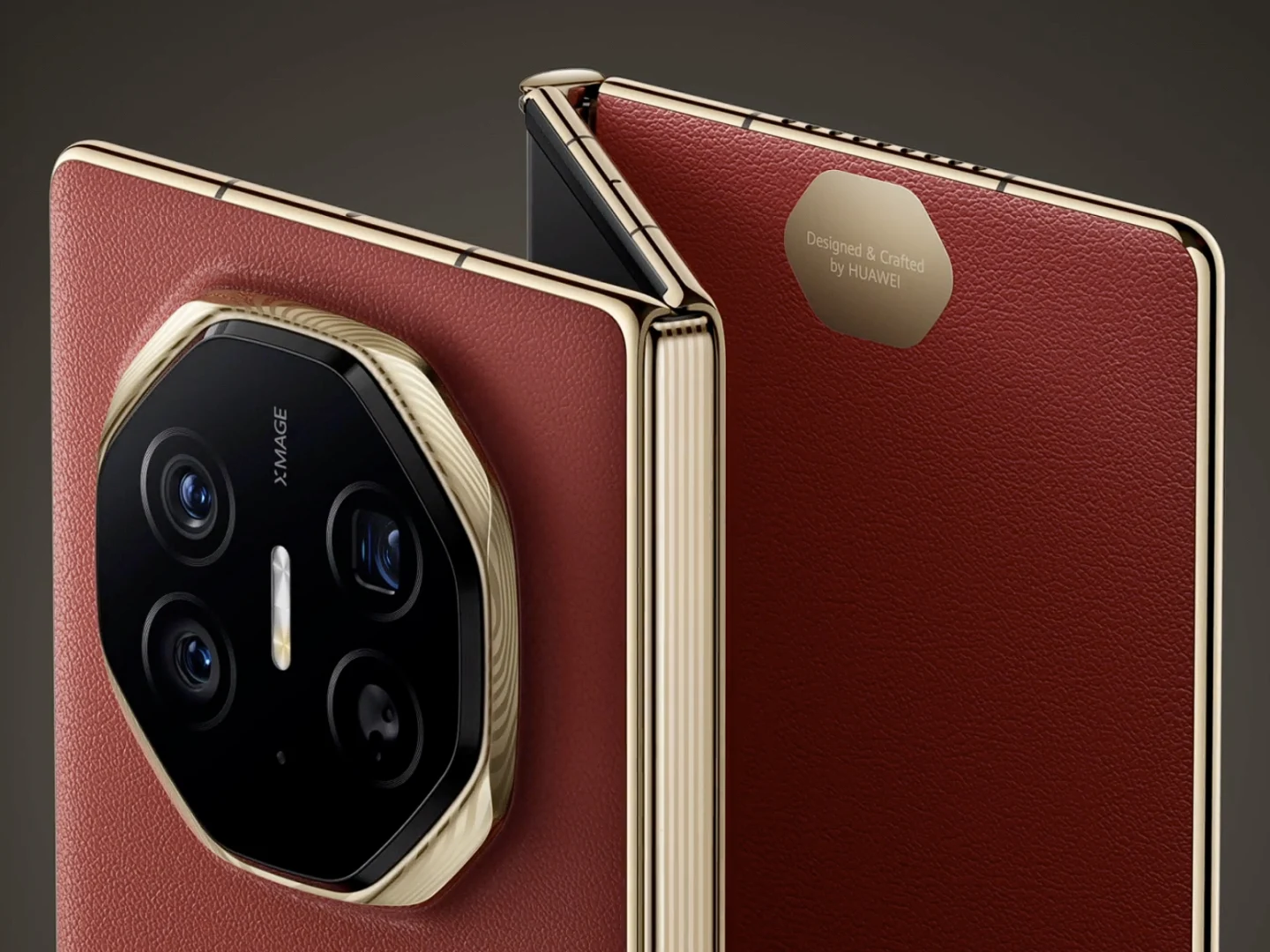
    Digital Chat Station has provided fresh insights into Huawei’s upcoming tri-fold smartphone, coinciding with Samsung’s imminent launch of the Galaxy Z Fold7 (currently priced at $1,999 on Amazon). With Samsung’s first-generation competitor about to hit the market, Huawei appears to be gearing up to introduce a successor to the Mate XT before the year concludes.

    TENAA Certification Insights

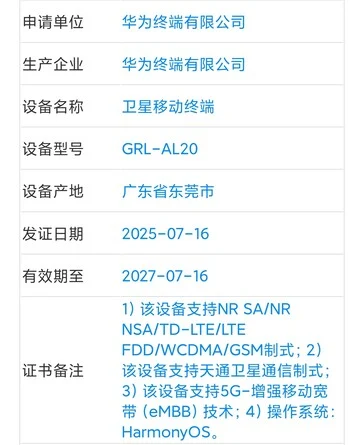
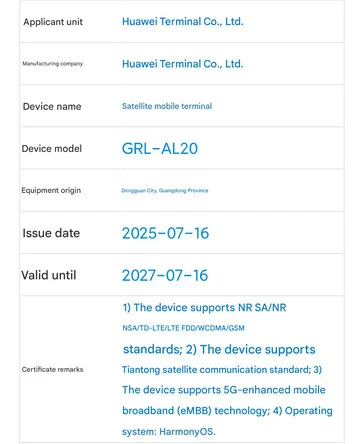
    Building upon details released a few weeks back, the leaker has now noted that the Mate XT 2 has successfully passed through TENAA certification in China, paving the way for its upcoming release. The image below indicates that Huawei is seeking regulatory approval for the model GRL-AL20, while the current Mate XT carries the model number GRL-AL10.

    Specifications Overview

    From the provided image, we can infer that the GRL-AL20 is equipped with a 5G chipset and operates on HarmonyOS, similar to various recent Huawei models available in China. As per Digital Chat Station, the Mate XT 2 will utilize the Kirin 9020 processor, which is also featured in the Mate 70, Pura X, and Pura 80 Ultra, among other devices.

    In addition, the leaker anticipates that Huawei will incorporate satellite connectivity alongside a new 50 MP primary camera with a variable aperture. The forthcoming Mate XT is also expected to retain a periscope camera, though it may come with its own set of enhancements. Unfortunately, it still remains unclear if Huawei plans to release its second-generation Mate XT beyond China at this point.

    Source:
    Link