Key Takeaways
1. Huawei’s tri-fold smartphone, Mate XT 2, is set to launch soon, following Samsung’s Galaxy Z Fold7 release.
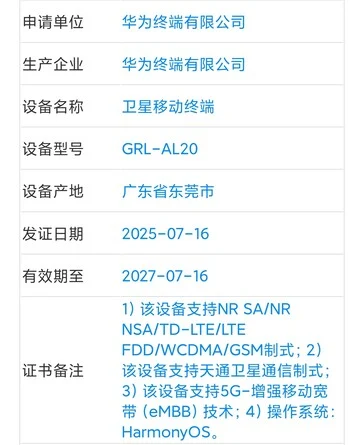
2. The Mate XT 2 has received TENAA certification in China, indicating it is on track for release.
3. The device will feature a 5G chipset and run on HarmonyOS, utilizing the Kirin 9020 processor.
4. It is expected to include satellite connectivity and a new 50 MP primary camera with a variable aperture.
5. The Mate XT 2 will likely retain a periscope camera, though its availability outside of China is still uncertain.
Digital Chat Station has provided fresh insights into Huawei’s upcoming tri-fold smartphone, coinciding with Samsung’s imminent launch of the Galaxy Z Fold7 (currently priced at $1,999 on Amazon). With Samsung’s first-generation competitor about to hit the market, Huawei appears to be gearing up to introduce a successor to the Mate XT before the year concludes.
TENAA Certification Insights
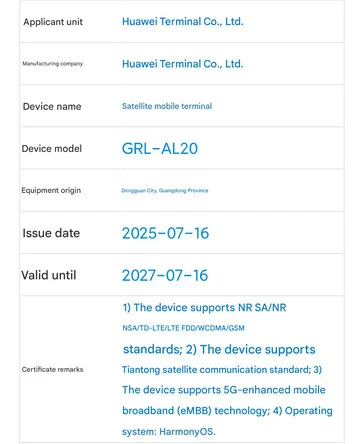
Building upon details released a few weeks back, the leaker has now noted that the Mate XT 2 has successfully passed through TENAA certification in China, paving the way for its upcoming release. The image below indicates that Huawei is seeking regulatory approval for the model GRL-AL20, while the current Mate XT carries the model number GRL-AL10.
Specifications Overview
From the provided image, we can infer that the GRL-AL20 is equipped with a 5G chipset and operates on HarmonyOS, similar to various recent Huawei models available in China. As per Digital Chat Station, the Mate XT 2 will utilize the Kirin 9020 processor, which is also featured in the Mate 70, Pura X, and Pura 80 Ultra, among other devices.
In addition, the leaker anticipates that Huawei will incorporate satellite connectivity alongside a new 50 MP primary camera with a variable aperture. The forthcoming Mate XT is also expected to retain a periscope camera, though it may come with its own set of enhancements. Unfortunately, it still remains unclear if Huawei plans to release its second-generation Mate XT beyond China at this point.
Source:
Link