Category: Phones

Stay updated with the latest phone news, reviews, and trends. Discover cutting-edge smartphones, features, and innovations in our Phones category at GizNewsDaily

  • Redmi Turbo 5 Pro: Sub-Flagship SoC, Big Battery, Flat Screen

    Redmi Turbo 5 Pro: Sub-Flagship SoC, Big Battery, Flat Screen

    Key Takeaways

    1. Xiaomi is set to launch new models in the Redmi Turbo series, with the Turbo 5 Pro’s specifications revealed by a reliable leaker.
    2. The Turbo 5 Pro is expected to feature a Dimensity 9-series SoC, though it’s unclear if it will be the 9500e, 9400, or 9400+.
    3. The device will have a large 9,000 mAh battery and support 100 W fast charging, an improvement over its predecessor.
    4. It will include a flat 1.5K LTPS display, ultrasonic fingerprint sensor, complete water resistance, and advanced dual-speaker audio.
    5. The Redmi Turbo 5 Pro is likely to launch in 2025, following a recent appearance on the 3C certification platform, and may be released globally as the Poco F8.


    Xiaomi is set to introduce new models in its Redmi Turbo series shortly. According to a reliable leaker on Weibo, Digital Chat Station, the specifications for the Turbo 5 Pro have been revealed. The insider indicates that this device will include a Dimensity 9-series SoC.

    Possible SoC Variants

    It remains uncertain whether the SoC will be the 9500e or the previous generation 9400 or 9400+. To reminisce, the Redmi Turbo 4 Pro, which was later renamed as the Poco F7, featured the Snapdragon 8s Gen 4, a more affordable variant of the Snapdragon 8 Elite.

    Impressive Battery and Charging

    In addition, Digital Chat Station mentions that the Redmi Turbo 5 Pro will come with a significant battery, boasting a 9,000 mAh capacity, which is a remarkable enhancement from its predecessor. The leaker also notes that it will support 100 W fast charging, marking another improvement (160 W Anker Prime charger curr. $109.99 on Amazon).

    The report goes on to say that the new Redmi phone will have a flat 1.5K LTPS display and include an ultrasonic fingerprint sensor. It’s also said to feature complete water resistance, along with an advanced dual-speaker audio configuration.

    Launch Timeline and Expectations

    Regarding further information, the Redmi Turbo 5 recently appeared on the 3C certification platform, which indicates that a launch is imminent. However, the Pro version isn’t expected to be released until 2025, as the usual schedule suggests a Q2 2026 debut. Following its introduction in China, it’s anticipated to be available globally as the Poco F8.

    Source:
    Link



  • OnePlus Ace 6 Pro Max Leaked Details and Specifications

    OnePlus Ace 6 Pro Max Leaked Details and Specifications

    Key Takeaways

    1. The OnePlus Ace 6 Pro Max will feature the Qualcomm Snapdragon 8 Gen 5 processor, focused on high performance.
    2. It will offer options for 12GB or 16GB of LPDDR5X RAM and storage choices of 256GB, 512GB, or 1TB of UFS 4.1.
    3. The phone is rumored to be available in three colors: Flash Black, Electric Purple, and Shadow Green, with a possible 165Hz display.
    4. Compared to the OnePlus Ace 6, the Ace 6 Pro Max is expected to have a larger battery exceeding 8,000mAh.
    5. The anticipated launch price for the Ace 6 Pro Max is around CNY 3,000 ($420), with a different name for international release.


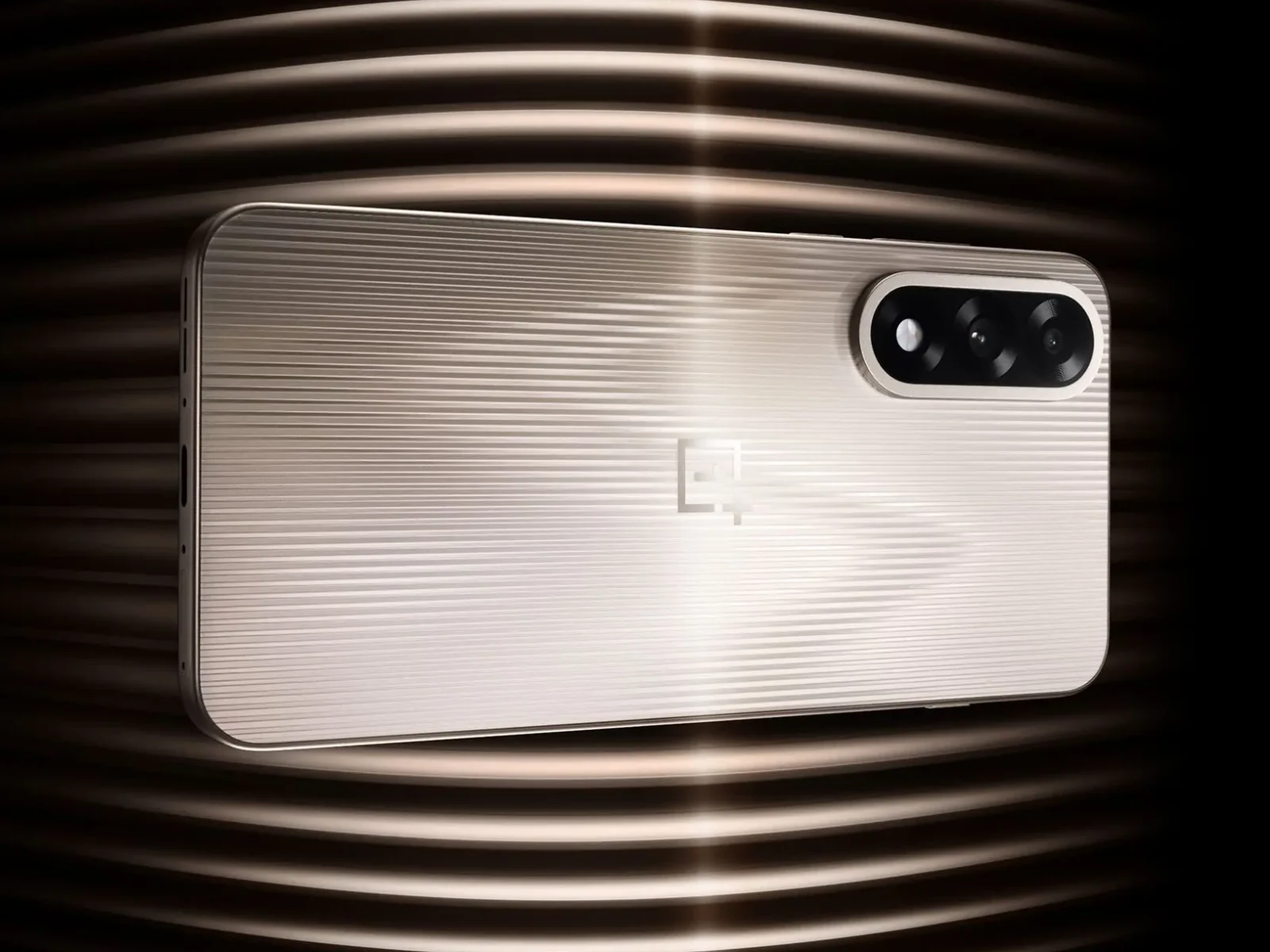
    Previously, a leak uncovered the retail packaging of a yet-to-be-announced OnePlus smartphone called the Ace 6 Pro Max. Now, a well-known tipster, Smart Pikachu, has shared more insights about this forthcoming device.

    Performance Specifications

    The tipster disclosed that the Ace 6 Pro Max will be equipped with the Qualcomm Snapdragon 8 Gen 5 processor. This new chipset is focused on performance and sits just below the flagship 8 Elite Gen 5. Additionally, it’s said that the phone will include options for 12GB or 16GB of LPDDR5X RAM, alongside storage choices of 256GB, 512GB, or even a massive 1TB of UFS 4.1.

    Color Choices and Display Features

    Furthermore, the OnePlus Ace 6 Pro Max is rumored to be available in three vibrant colors: Flash Black, Electric Purple, and Shadow Green. A follow-up from the tipster also hinted at a possible 165Hz display, which could enhance user experience. Interestingly, the camera might not be a major focus, as this model is designed mainly for performance.

    Comparison with Previous Models

    For comparison, the OnePlus Ace 6, which debuted in October, also took a performance-first approach with the Snapdragon 8 Elite. In terms of its camera capabilities, it includes a 50MP main sensor and an 8MP ultrawide lens, along with a 7,800mAh battery. It’s anticipated that the Ace 6 Pro Max will feature an even larger battery that exceeds 8,000mAh.

    The Ace 6 was launched in China at a starting price of CNY 2,599, which is about $364. Therefore, it’s likely that the Ace 6 Pro Max will debut at around CNY 3,000, considering the flagship OnePlus 15 starts at CNY 3,999.

    The arrival of this new smartphone seems to be imminent, as per the tipster’s insights. It’s important to note that internationally, the phone may be released under a different name.

    Source:
    Link


  • Vivo X300 Ultra: Three Major Camera Upgrades Over X200 Ultra

    Vivo X300 Ultra: Three Major Camera Upgrades Over X200 Ultra

    Key Takeaways

    1. Vivo X300 Ultra is expected to launch several months from now, following the recent global release of the X300 and X300 Pro.
    2. The X300 and X300 Pro are positioned to compete with Oppo’s Find X9 series and Samsung’s Galaxy S25 models.
    3. The upcoming X300 Ultra is anticipated to feature significant camera upgrades, including a possible 200 MP primary sensor.
    4. Enhanced camera capabilities are expected for all rear cameras, including telephoto and ultra-wide-angle lenses.
    5. The X300 Ultra may include a Qualcomm Snapdragon 8 Elite Gen 5 chipset and a 6.8-inch 2K display.


    Vivo is probably still several months away from the official launch of the X300 Ultra. To give some background, the company has only recently begun to sell the X300 and X300 Pro worldwide, aiming to compete with Oppo’s latest models, the Find X9 and Find X9 Pro, which also utilize the Dimensity 9500 chipset. Interestingly, while the X300 and Find X9 are positioned against the Galaxy S25 as new compact flagship options, the X300 Pro and Find X9 Pro are currently in competition with the Galaxy S25 Plus and Galaxy S25 Ultra, priced at $1,099 on Amazon.

    Upcoming Camera Innovations

    As per Digital Chat Station, Vivo aims to revolutionize smartphone camera technology once again with the upcoming X300 Ultra. For context, the X200 Ultra has been praised for having some of the finest smartphone cameras available, which we deemed groundbreaking when we reviewed the device last summer. The X200 Ultra comes equipped with a 50 MP primary camera, a 50 MP ultra-wide-angle lens, a 50 MP front-facing camera, and a 200 MP periscope telephoto lens. Digital Chat Station anticipates that the X300 Ultra will enhance these camera features even further.

    Enhanced Features Expected

    On one side, there are rumors suggesting that the camera might include a new 200 MP primary sensor paired with a 35 mm lens. Conversely, the other rear cameras are expected to receive some sort of upgrades as well. This indicates that the Vivo X300 Ultra is set to feature better primary, telephoto, and ultra-wide-angle cameras compared to this year’s model. Moreover, these enhancements are likely to come alongside a Qualcomm Snapdragon 8 Elite Gen 5 chipset, all while boasting a roughly 6.8-inch display with a 2K resolution. The exact release date is still not known at this time, however.

    Source:
    Link


  • Motorola Moto G57: New Mid-Range Smartphone with 4nm Snapdragon Chip

    Motorola Moto G57: New Mid-Range Smartphone with 4nm Snapdragon Chip

    Key Takeaways

    1. The Moto G57 is a more affordable option compared to the Moto G57 Power, with some similarities to the Moto G56.
    2. It features a 5,200 mAh battery, 30 W wired charging, and a 6.72-inch IPS display with 1080p resolution, 1,050 nits brightness, and 120 Hz refresh rate.
    3. The camera setup includes a 50 MP main camera and an 8 MP ultra-wide camera, but the front camera has been downgraded to 8 MP from 32 MP in the Moto G56.
    4. The Moto G57 runs on the Snapdragon 6s Gen 4 chipset, which may offer better performance than the Dimensity 7060 in the Moto G56.
    5. The device is available for purchase in the Middle East and will launch in the Eurozone at a price of €249.


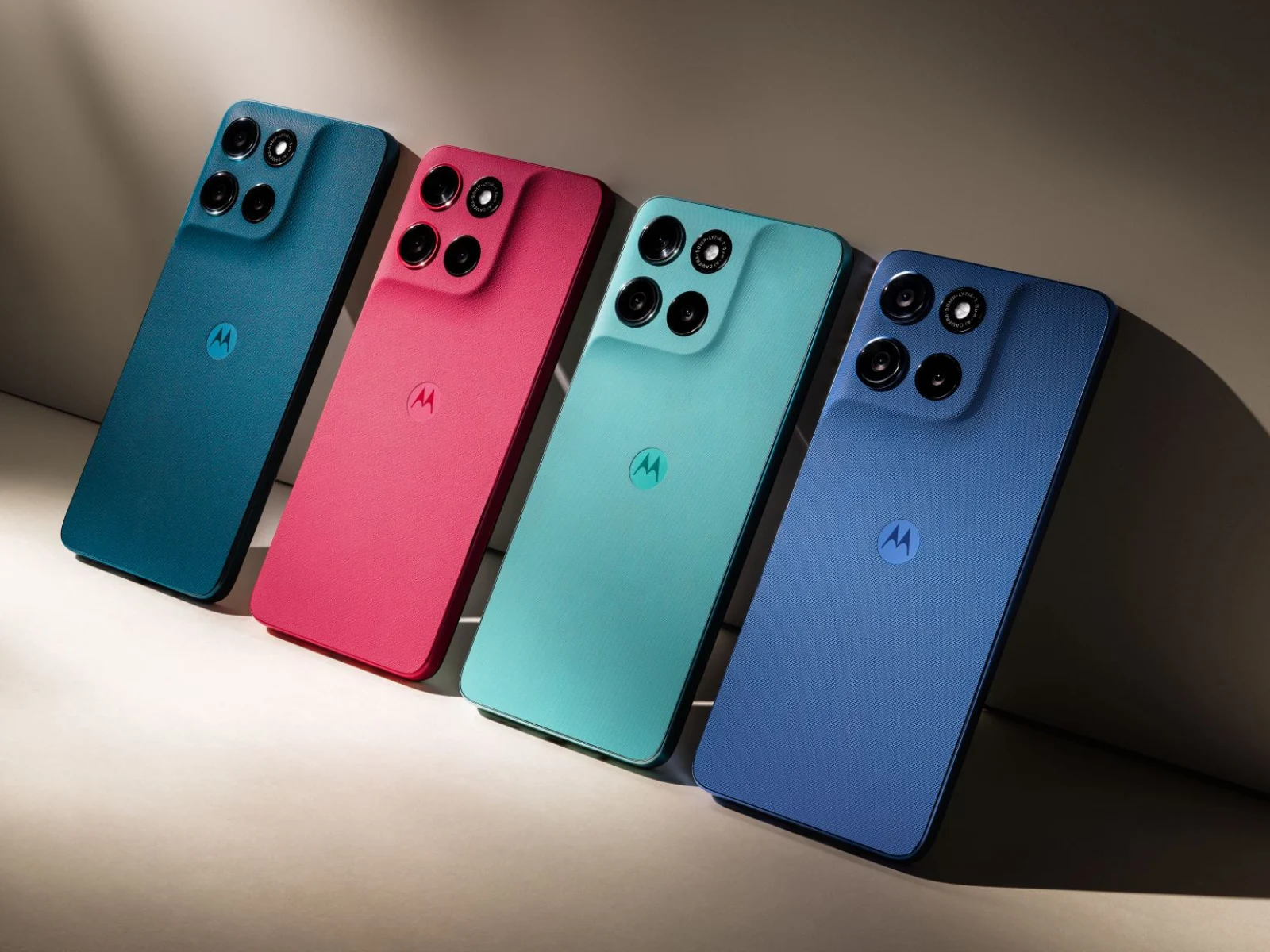
    The Moto G57 has been introduced as the more affordable option among two new smartphones from Motorola today. The other device, the Moto G57 Power, has its own details shared separately. While the Moto G57 Power has notable differences from the Moto G56, not all of these changes apply to the Moto G57.

    Battery and Display Features

    The Moto G57 maintains the same 5,200 mAh battery and 30 W wired charging capability as the previous model. This battery is said to last up to 47 hours on a single charge and retain over 80% of its health after 1,000 cycles. Additionally, the phone showcases a 6.72-inch IPS screen that has a resolution of 1080p, peak brightness of 1,050 nits, and a refresh rate of 120 Hz. In essence, it seems that Motorola has kept the display from the Moto G56 (currently priced at $229 on Amazon).

    Camera Specifications

    Motorola continues to equip the Moto G57 with a 50 MP main camera (Sony LYT-600) and an 8 MP ultra-wide camera. However, in a surprising move, the Moto G57 has been reduced to an 8 MP front camera, a downgrade from the 32 MP camera found in the Moto G56. On a different note, Motorola now pre-installs Android 16 over Android 15, but they haven’t specified how many major updates the Moto G57 will get.

    Performance and Availability

    Furthermore, the Moto G57 is powered by the Snapdragon 6s Gen 4, a 4 nm chipset that Qualcomm revealed earlier this month. Theoretically, the Snapdragon 6s Gen 4 offers more power than the Dimensity 7060 in the Moto G56, though it’s not clear just how much better it is. The Moto G57 is already up for purchase in the Middle East and is expected to hit the Eurozone at a price of €249, aligning it with the launch price of the Moto G56.

    Source:
    Link


  • Xiaomi Redmi Turbo 5: 9,000mAh Battery Phone Gets 3C Certification

    Xiaomi Redmi Turbo 5: 9,000mAh Battery Phone Gets 3C Certification

    Key Takeaways

    1. The Xiaomi Redmi Turbo 4 was launched in January 2025, targeting the mid-range smartphone market.
    2. The new Redmi Turbo phone, linked to the model “2511FRT34C,” has obtained 3C certification and will support 100W fast charging.
    3. Speculations suggest the Redmi Turbo 5 may feature a 9,000mAh battery and a MediaTek Dimensity chipset.
    4. The design is expected to include a metal frame and a simple camera module.
    5. While no release date is confirmed, the certification indicates the Redmi Turbo 5’s launch is approaching, potentially as the Poco X8 Pro internationally.


    The Xiaomi Redmi Turbo 4 was introduced in January 2025 in China. For those who might not know, the Redmi Turbo series is aimed at providing strong performance within the mid-range smartphone market. It sits below the Redmi K series, which recently saw the arrival of the Redmi K90 and K90 Pro Max. Now, there is news of a new Redmi Turbo phone that has been certified in China.

    Certification Details

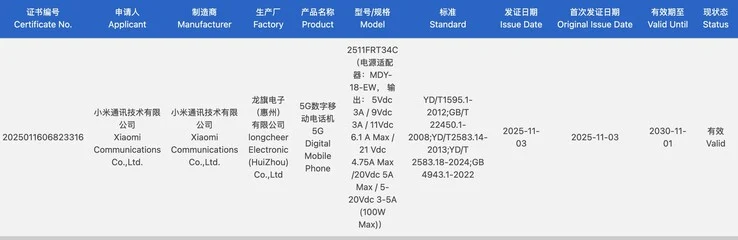
    A device identified by the model number “2511FRT34C” has obtained 3C certification in China. Previous reports indicate that this model is linked to the Redmi Turbo 5. The 3C certification hints that the new smartphone will support 100W fast charging. Nevertheless, other details about its specifications are still unclear.

    Battery and Features

    Recent speculation suggests that the Redmi Turbo 5 could come equipped with a 9,000mAh battery. In contrast, the Turbo 4 had a 6,550mAh battery and supported 90W fast charging. It is anticipated that this new device might be powered by a MediaTek Dimensity chipset. Additionally, it is rumored to feature a metal frame and a straightforward camera module design.

    Launch Expectations

    Currently, there is no solid release date announced for the Redmi Turbo 5. However, the 3C certification implies that the phone is nearing its launch. It is possible that the smartphone will be released internationally under a different name, likely as the Poco X8 Pro. Meanwhile, OnePlus is also gearing up to unveil the Ace 6 Pro Max, which is expected to be a performance-driven smartphone featuring an 8,000mAh battery.

    Source:
    Link


  • Xiaomi 17 Ultra Camera Specs Leaked Ahead of December Launch

    Xiaomi 17 Ultra Camera Specs Leaked Ahead of December Launch

    Key Takeaways

    1. The Xiaomi 17 Ultra is expected to launch in December 2025, with model numbers indicating versions for China, global, and India.
    2. It will feature a unique primary camera with a 1-inch type sensor, likely the OmniVision OVX10500U, setting it apart from competitors.
    3. The primary camera will have an f/1.6 aperture and a 23 mm equivalent focal length, similar to the Xiaomi 15 Ultra.
    4. An ultra-wide-angle camera of 14 mm is anticipated, possibly utilizing the 50 MP ISOCELL JN5 sensor from Samsung.
    5. The device may include telephoto optics with variable optical zoom capabilities, utilizing Samsung’s ISOCELL sensors for 50 MP and 200 MP outputs.


    The Xiaomi 17 Ultra is still a bit over a month away from its official launch. Recent leaks suggest that Xiaomi is working on its next flagship model, identified by the model numbers 2512BPNDAC, 2512BPNDAG, and 2512BPNDAI, which likely correspond to the Chinese, global, and Indian versions, respectively. From the way Xiaomi has named its past devices, the model number ‘2512BPNDA’ hints that the Xiaomi 17 Ultra might be released in December 2025.

    Camera Features Unveiled

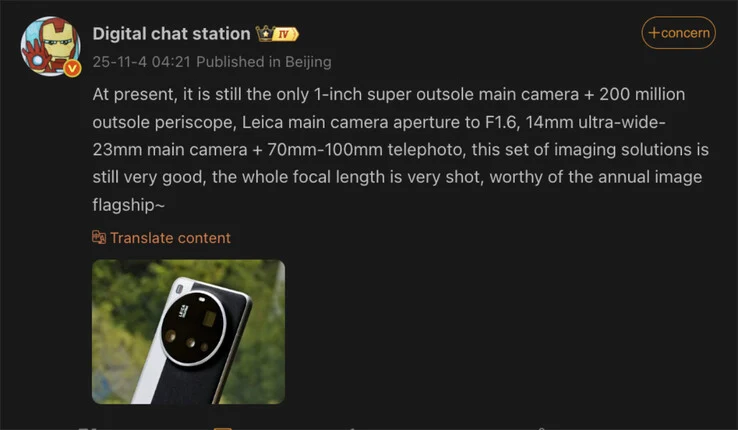
    In the meantime, Digital Chat Station has shared more insights about the camera features of this upcoming device. According to a post on Weibo, the Xiaomi 17 Ultra will be the only flagship phone to have a primary camera with a 1-inch type sensor, probably the OmniVision OVX10500U. In comparison, the Galaxy S26 Ultra is likely to stick with the 1/1.3-inch primary camera from the Galaxy S25 Ultra, which is currently priced at $1,025 on Amazon.

    Additional Camera Specs

    Xiaomi is expected to pair this new sensor with an f/1.6 aperture and a 23 mm equivalent focal length, similar to the primary camera found in the Xiaomi 15 Ultra. Furthermore, Digital Chat Station anticipates that Xiaomi will include a 14 mm ultra-wide-angle camera, which was earlier rumored to be the 50 MP ISOCELL JN5 from Samsung. Additionally, the leaker mentions the presence of 70-100 mm telephoto optics. Although the phrasing suggests a variable optical zoom feature, a recent leak from HyperOS indicates that these focal lengths will be achieved using Samsung’s ISOCELL JN5 (S5KJN5) and ISOCELL HPE (S5KHPE) sensors, which will output at 50 MP and 200 MP, respectively.

    Source:
    Link


  • Nomad Stand One Max: 25W Fast Charging for Android After Qi2 Upgrade

    Nomad Stand One Max: 25W Fast Charging for Android After Qi2 Upgrade

    Key Takeaways

    1. The Nomad Stand One features a Qi2 charging coil and supports wireless charging up to 25 watts for compatible smartphones.
    2. It includes a secondary Qi charging pad for devices like AirPods Pro, with a maximum charging power of 5 watts.
    3. The Stand One Max variant offers an additional charging puck for fast charging Apple Watch models, including older versions.
    4. Constructed from aluminum and glass, the Stand One is designed for ease of use and portability, weighing 20 ounces.
    5. The Nomad Stand One is priced at $119, while the Stand One Max is $159, with potential additional shipping costs.


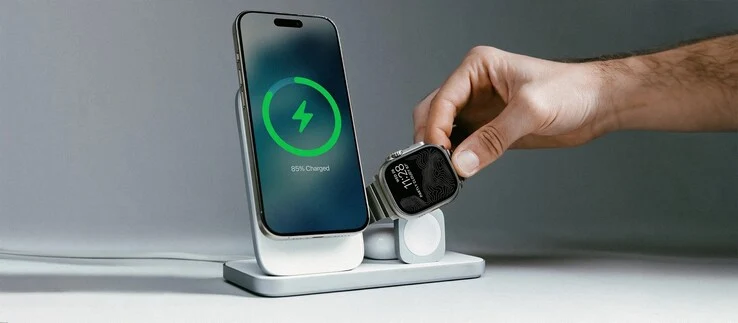
    The latest version of the Nomad Stand One has been released and features a design that many will recognize, now equipped with a Qi2 charging coil. It can securely hold a smartphone with magnets and allows for wireless charging at a power of up to 25 watts. This device is compatible with the new Apple iPhone 17, alongside other iPhones and Android devices that adhere to the Qi2 standard, also supporting the same 25 watts charging speed.

    Additional Features

    Within the Nomad Stand One package, there is a secondary Qi charging pad that operates at a maximum of 5 watts, which is ideal for charging wireless earbuds like the Apple AirPods Pro. For those looking for something bigger, the Nomad Stand One Max includes a charging puck designed for the Apple Watch, providing fast charging for the latest models while still being able to charge older versions of the watch too.

    Design and Build Quality

    The build quality of the Nomad Stand One is impressive, primarily constructed from aluminum and glass materials. However, it’s important to note that a 40-watt USB-C power adapter is needed to use the charger, but this adapter is not included with the purchase. The charging pad features a TPU coating that helps to prevent scratches on smartphones. Weighing 20 ounces, the Stand One is designed so that you can easily lift a smartphone off of it with one hand, without needing to hold the base down, while the Stand One Max is slightly heavier at 31 ounces.

    The Nomad Stand One is currently sold on the manufacturer’s official online store for $119 and is available in either silver or black. The Stand One Max, which comes with an extra charging puck for the Apple Watch, is priced at $159. Be aware that there may be additional shipping costs.

    Source:
    Link


  • Power a City with Qi Charging Losses: An Energy Insight

    Power a City with Qi Charging Losses: An Energy Insight

    Key Takeaways

    1. Wireless charging is less efficient than wired charging, wasting around 35% more energy.
    2. Wired charging efficiency is about 90-95%, while wireless charging ranges from 60-80% efficiency.
    3. A smartphone charged wirelessly consumes approximately 1.7 kWh more annually than one charged with a wired connection.
    4. Globally, the additional energy demand from wireless charging could reach about 1.7 TWh per year, enough to power around 680,000 homes.
    5. The energy wasted from wireless charging could potentially power a city like Leipzig or charge approximately 773,000 electric cars annually.


    Every so often, I consider getting a wireless charging pad for my phone. I know I’m a bit behind the times, but there’s one question that keeps stopping me (plus, a bit of laziness to actually look into it): how much energy does wireless charging really waste?

    Digging into the Numbers

    So, I finally took the plunge and did some quick calculations. I began by checking the efficiency of both wired and wireless charging. The information comes from a report by the International Energy Agency called “Energy Use for Wireless Charghing.”

    As per this report, charging a battery wirelessly consumes around 35 percent more energy. Other sources, like hichaintech.com, indicate that wired charging loses about 5–10 percent of energy as heat, resulting in an efficiency of around 90–95 percent. With systems like Qi and MagSafe, there are also coil losses that depend on distance, alignment, and power level, leading to overall efficiencies ranging from 60 to 80 percent, or a loss of 20–40 percent.

    A Look at a Typical Smartphone

    Let’s break this down using a single smartphone for context. Assuming a 15 Wh battery (approximately 4,000 mAh) that gets fully charged once daily, the numbers present as follows:

    Wired charging (90% efficiency)
    – 15 Wh / 0.9 = 16.7 Wh
    – Annual consumption: 16.7 Wh × 365 = 6,095 Wh = 6.1 kWh
    – Annual cost: 6.1 kWh × €0.30 = €1.83

    Wireless charging (≈70% efficiency)
    – 15 Wh / 0.7 = 21.4 Wh
    – Annual consumption: 21.4 Wh × 365 = 7,811 Wh = 7.8 kWh
    – Annual cost: 7.8 kWh × €0.30 = €2.34

    For an individual, the cost difference is minimal. However, from an ecological standpoint, things start to get intriguing — there are billions of smartphones in use all around the world.

    The Bigger Picture

    As of recent estimates, there are about 7.3 to 7.4 billion smartphones in use globally. Back in 2021, around 1 billion of these (approximately 13.5%) supported wireless charging, according to Strategy Analytics. Today, that percentage is likely higher — perhaps between 15 to 25 percent. Not every one of those phones is charged wirelessly, but let’s assume 1 billion devices are, each using 1.7 kWh more each year (as calculated earlier).

    1 billion devices × 1.7 kWh = 1.7 TWh per year (1 TWh = 1 billion kWh = 1,000,000,000 kWh)

    This means the additional energy demand globally due to wireless phone charging could amount to around 1.7 TWh every year. With an average household consuming roughly 2,500 kWh annually, that’s sufficient to power about 680,000 homes for a year.

    Alternatively, the energy wasted through Qi and similar wireless charging could power an entire German city like Leipzig or Hannover for a year — or charge around 773,000 electric cars (assuming each one uses 2,200 kWh per year). Generating this amount of energy would need over 200 wind turbines (each rated at 3 MW with an average utilization of 30%).


  • RedMagic 11 Pro Teardown: Inside the First Water-Cooled Smartphone

    RedMagic 11 Pro Teardown: Inside the First Water-Cooled Smartphone

    Key Takeaways

    1. Innovative Cooling Technology: The RedMagic 11 Pro features the world’s first water-cooling technology in a smartphone, utilizing liquid cooling, a high-speed fan (24,000 RPM), and a large vapor chamber to maintain optimal performance.

    2. Striking Design: The phone has a unique design with visible dual-colored liquid through the back panel, creating an eye-catching visual effect, enhanced by an active cooling fan that can extinguish a flame.

    3. Cooling System Components: The AquaCore Cooling System includes a piezoelectric ceramic micropump, active fan, and flexible tubes filled with liquid, all integrated into a compact unit for efficient heat management.

    4. Durability Features: The RedMagic 11 Pro has a screen rated at level six on the Mohs hardness scale and an IPX8 rating for dust and water resistance, although the fan vent design may allow some dust ingress.

    5. Performance Considerations: The cooling duct design raises questions about the efficiency of heat dissipation, particularly regarding the limited contact points between the cooling loop and the metal duct surrounding the Snapdragon 8 Elite Gen 5 processor.


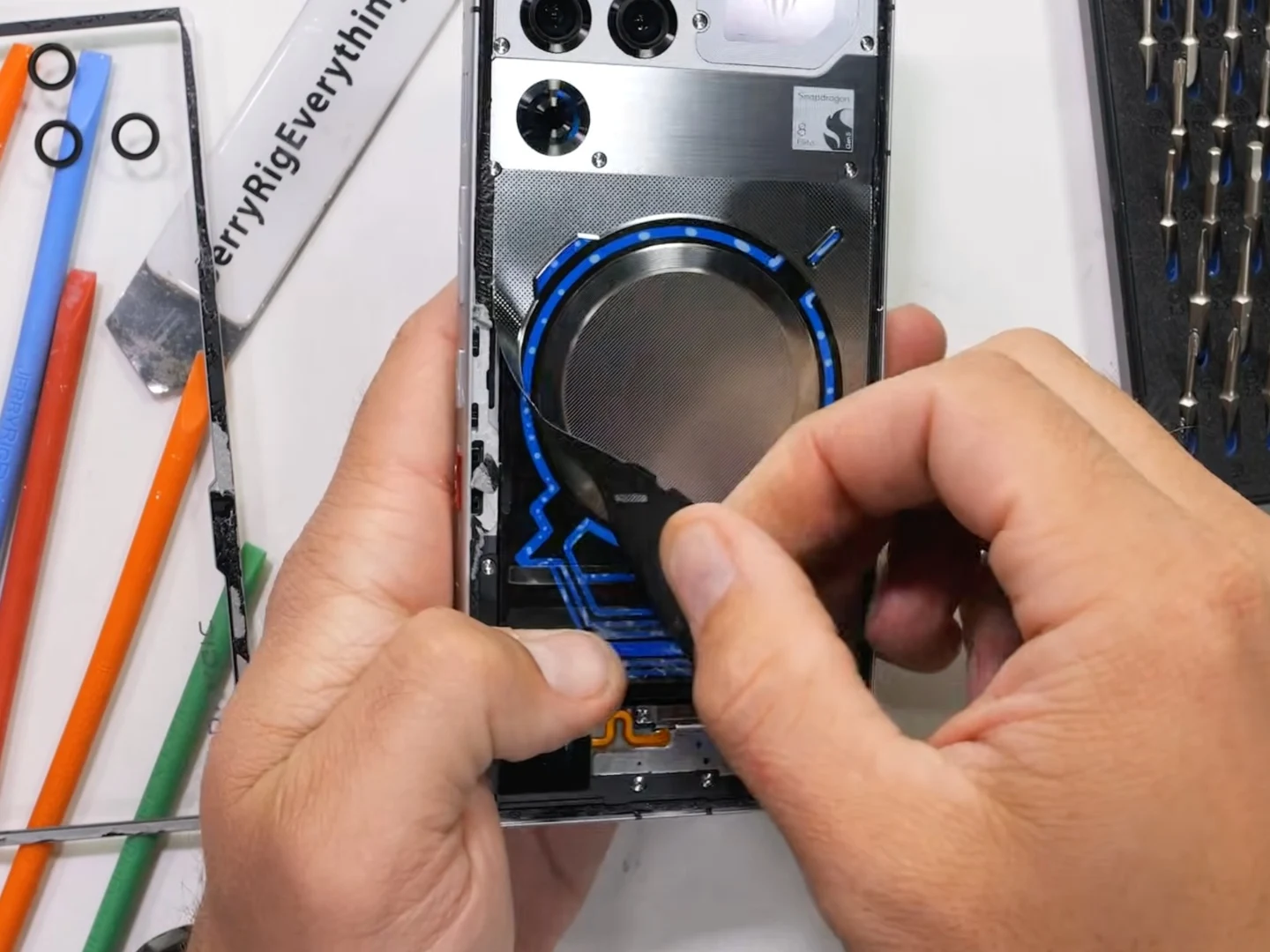
    Nubia has just introduced the RedMagic 11 Pro to worldwide markets, marking it as the first smartphone in the world to come with water-cooling technology. This innovative cooling system utilizes liquid cooling alongside a compact fan that can spin at a remarkable 24,000 RPM, and a large vapor chamber to keep the Snapdragon 8 Elite Gen 5 processor cool even during intense usage. If you’re curious about how Nubia managed to fit all these features into a phone that’s only 8.9 mm thick, JerryRigEverything has all the details.

    Eye-Catching Design and Functionality

    The RedMagic 11 Pro made its way to Zack’s workspace, where the dual-colored liquid inside the phone is clearly visible through the back panel. The YouTuber suggests that a type of oil might have been mixed with the coolant to create this flowing visual effect. The active cooling fan expels air through a side vent and is powerful enough to extinguish a lighter’s flame. Upon disassembling the back glass, the cooling technology is revealed, showcasing an impressive setup. This includes the AquaCore Cooling System, a piezoelectric ceramic micropump, the active fan, and the wireless charging coil, all part of a single unit that can be peeled away to expose the flexible tubes filled with liquid.

    Cooling Efficiency and Performance

    The cooling duct surrounds the Snapdragon 8 Elite Gen 5 and the 3D vapor chamber. Interestingly, only the ends of the cooling loop make contact with the metal duct, which is designed to draw heat away from the chip. It raises the question of how the performance might change if more of the cooling loop were in contact with the ducting.

    Durability and Protection

    Regarding the usual aspects of the RedMagic 11 Pro, the screen shows scratches at a level six on the Mohs hardness scale, with more pronounced grooves appearing at level seven. The sides of the device are made from aluminum and can be easily scratched with a box cutter, which is common for phones with a similar build. Additionally, the 11 Pro boasts an IPX8 rating for dust and water resistance, despite having a vent for the fan that connects to the internal components. While dust may still enter, mesh panels are placed over the openings to help reduce this issue.


    Source:
    Link


  • Motorola Moto G (2026): Affordable 5G Phone at $199.99 with Upgrades

    Motorola Moto G (2026): Affordable 5G Phone at $199.99 with Upgrades

    Key Takeaways

    1. Motorola has launched two new smartphones in the Moto G series: the Moto G Play and the updated Moto G (2026).
    2. The Moto G (2026) features a 6.7-inch, 720p, 120 Hz IPS display and retains the MediaTek Dimensity 6300 chipset.
    3. The new model includes a larger 5,200 mAh battery, an increase of 200 mAh from the 2025 version.
    4. Camera upgrades include a 32 MP front-facing camera, while the rear camera setup remains a 50 MP main camera and a 2 MP macro sensor.
    5. The Moto G (2026) will be available for preorder on December 11 for $199.99 and promises two major OS updates starting from Android 16.


    Motorola has introduced two new smartphones in its Moto G series today. Firstly, they have unveiled the new Moto G Play, which we have detailed in a separate article. Secondly, they have updated the Moto G lineup with the 2026 version, replacing the Moto G (2025) in less than a year since it first launched (curr. $174.99 on Amazon).

    Similar Features

    As expected, not much has changed in just ten months for the Moto G. The 6.7-inch, 720p, and 120 Hz IPS display from the previous model continues to be featured. The MediaTek Dimensity 6300 chipset, built on a 6 nm architecture, remains as well, consisting of two ARM Cortex-A76 performance cores and six Cortex-A55 efficiency cores, plus a Mali-G57 MP2 GPU. However, this time, it comes with a larger 5,200 mAh battery, which is a 200 mAh increase from the 2025 model.

    Camera and Charging

    On the charging front, it still includes 30 W wired charging, but there’s no support for wireless charging. The camera system also sees a familiar setup with a 50 MP main camera and a 2 MP macro sensor on the back. Notably, the front-facing camera has been upgraded from 16 MP to a 32 MP sensor, maintaining an f/2.4 aperture. Additionally, Motorola promises two major OS updates starting from Android 16, instead of Android 15 that was offered with the Moto G (2025).

    The Moto G (2026) will be available for preorder directly from Motorola on December 11 for $199.99 in the US. It will also be accessible through network carriers on that same date. However, major retailers like Amazon and Best Buy will not have it in stock until January 15. For further details, check out Motorola’s website.

    Source:
    Link