Category: Phones

Stay updated with the latest phone news, reviews, and trends. Discover cutting-edge smartphones, features, and innovations in our Phones category at GizNewsDaily

  • Qualcomm Announces Snapdragon 8 Gen 5 Launch Date Confirmed

    Qualcomm Announces Snapdragon 8 Gen 5 Launch Date Confirmed

    Key Takeaways

    1. The Snapdragon 8 Gen 5 launch has been delayed and is now set for November 26, 2025.
    2. It will initially launch in China before expanding to other regions, with devices like the OnePlus Ace 6T expected to use it.
    3. The Snapdragon 8 Gen 5 features a 2+6 CPU core configuration, with performance cores clocked at 3.8 GHz and efficiency cores at 3.36 GHz.
    4. It is equipped with the Adreno 840 GPU, which may operate at a lower frequency than the Elite version.
    5. The Snapdragon 8 Gen 5 is the first non-flagship chipset to use Qualcomm’s Orion cores, differing from previous models that used standard Arm Cortex IP.


    Initially planned to release at the same time as the Snapdragon 8 Elite Gen 5, the Snapdragon 8 Gen 5 has had its launch delayed by several weeks. It earlier appeared on Geekbench, showing performance that is on par with its Elite version for multi-core tasks, though it falls behind in single-core performance. It now has a confirmed date for its official release.

    Launch Date Announcement

    Qualcomm is set to unveil the Snapdragon 8 Gen 5 on November 26, 2025. Similar to the Snapdragon 8 Elite Gen 5, it will first launch in China before becoming available in other regions. One of the first devices expected to incorporate this chip is the OnePlus Ace 6T. Other upcoming models include the Vivo S50 and Vivo X Fold 6.

    Specifications Overview

    In terms of specifications, the Snapdragon 8 Gen 5 will closely resemble its Elite variant, featuring a 2+6 CPU core configuration. The performance cores (P cores) will be clocked at 3.8 GHz, while the efficiency cores (E cores) will run at 3.36 GHz. For graphics, it will be equipped with the same Adreno 840 GPU as the Snapdragon 8 Elite Gen 5, though it may operate at a lower frequency.

    New Core Architecture

    The Snapdragon 8 Gen 5 is notable as the first non-flagship chipset to utilize Qualcomm’s proprietary Orion cores. It is yet to be determined if these are the same cores found in the 8 Elite Gen 5. Previous models, like the Snapdragon 8s Gen 4, utilized standard Arm Cortex IP instead.


     

  • Poco F8 Ultra Specs Leak Ahead of Xiaomi’s Global Launch Event

    Poco F8 Ultra Specs Leak Ahead of Xiaomi’s Global Launch Event

    Key Takeaways

    1. Xiaomi will globally launch the Poco F7 Pro and Poco F7 Ultra before the end of the year.
    2. The upcoming Poco F8 Pro and Poco F8 Ultra will use advanced Qualcomm Snapdragon 8 Elite chipsets.
    3. The Poco F8 Ultra is expected to be more drop-resistant than the Poco F8 Pro.
    4. The Poco F8 Ultra will have a 6,500 mAh battery, supporting fast charging, but won’t feature the larger 7,560 mAh battery of the Redmi K90 Pro Max.
    5. The Poco F8 Ultra will launch on November 26 and include 50 MP cameras for primary, ultra-wide, and telephoto with 5x optical zoom.


    Earlier this week, Xiaomi caught fans off guard by announcing that it will be rolling out the Poco F7 Pro and Poco F7 Ultra (currently $732 on Amazon) globally before the year wraps up. Shortly after, the company shared more insights about the upcoming Poco F8 Pro and Poco F8 Ultra, highlighting their use of top-tier Qualcomm technology. Recent leaks hinted that Xiaomi has chosen to equip the two models with the Snapdragon 8 Elite and Snapdragon 8 Elite Gen 5 chipsets, respectively.

    Details Awaiting Launch Day

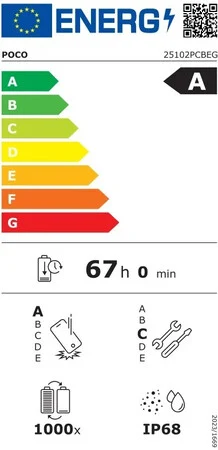
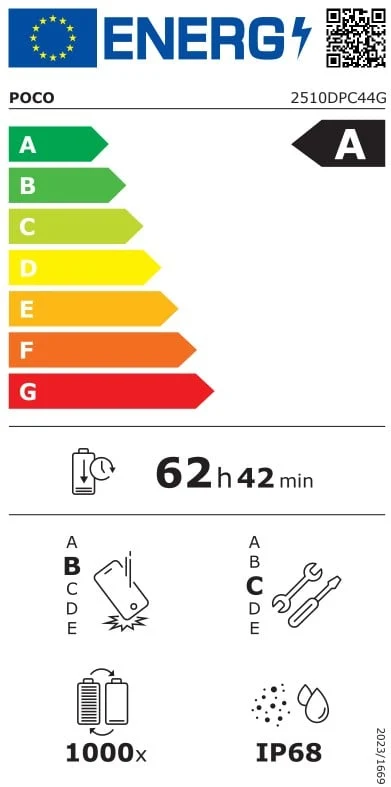
    It’s expected that Xiaomi will keep some information about these smartphones under wraps until the official launch. Meanwhile, leaker Sudhanshu Ambhore has provided details about the Poco F8 Ultra, having also shared insights about the Poco F8 Pro earlier today. According to the data shared, the Poco F8 Ultra is anticipated to be more durable against drops compared to the Poco F8 Pro, at least based on tests from the EU.

    Battery Life Insights

    In addition, the Poco F8 Ultra is projected to last nearly 4.5 hours longer between charges than its Pro counterpart. However, this gap in battery life might not be as significant in everyday use. While the Poco F8 Ultra is built on the foundation of the Redmi K90 Pro Max, it will not feature the latter’s 7,560 mAh battery.

    Ambhore mentions that the Poco F8 Ultra will come with a 6,500 mAh battery, supporting 50 W for wireless charging and 100 W for wired charging. Interestingly, despite having a smaller battery, the Poco F8 Ultra is said to weigh a bit more than the Redmi K90 Pro Max. On the flip side, the Poco F8 Ultra is expected to launch on November 26, sporting all the camera capabilities of the Redmi K90 Pro Max, which includes 50 MP for the primary, ultra-wide, and telephoto lenses, with the latter offering a 5x optical zoom.

    Source:
    Link


  • Apple’s N1 Chip Boosts iPhone 17’s Network Performance vs. Android

    Apple’s N1 Chip Boosts iPhone 17’s Network Performance vs. Android

    Key Takeaways

    1. The iPhone 17 features Apple’s new N1 networking chip, supporting Wi-Fi 7 and Bluetooth 6, resulting in a nearly 40% performance increase over the iPhone 16.
    2. In global median download speeds, Google’s Pixel 10 led at 335.35 Mbps, followed closely by the iPhone 17 at 329.56 Mbps, with the iPhone outperforming the Pixel in less favorable conditions.
    3. In North America, the iPhone 17 achieved a top speed of 416.14 Mbps, surpassing the Pixel 10 Pro and Samsung Galaxy S25.
    4. The iPhone 17 demonstrated the best 10th-percentile download speed at 56.08 Mbps, indicating reliable performance in challenging Wi-Fi 7 environments.
    5. North America had the highest Wi-Fi 7 user distribution at 20.62%, significantly leading other regions like Northeast Asia and Europe.


    A fresh analysis from Ookla, a company known for network diagnostics and the Speedtest app, looked into the network performance of Apple’s iPhone 17 in comparison to the latest Android flagship devices. The tests focused on Apple’s new N1 networking chip against rival chips from Qualcomm, Broadcom, and MediaTek.

    N1 Networking Chip Features

    The N1 chip marks Apple’s initial venture into custom networking technology, featured in the iPhone 17 series, and it supports Wi-Fi 7 and Bluetooth 6. According to the final results derived from crowdsourced data from Speedtest, the iPhone 17 saw almost a 40% increase in performance when stacked against the iPhone 16, which relied on a Broadcom chip.

    Download Speeds Compared

    Google’s Pixel 10 achieved the top median download speed worldwide at 335.35 Mbps, slightly ahead of the iPhone 17’s 329.56 Mbps. In the least favorable conditions, the iPhone 17 outperformed with a speed of 56.08 Mbps, whereas the Pixel 10 reached a maximum of 53.25 Mbps.

    In the North American region, the iPhone 17 showcased speeds reaching up to 416.14 Mbps, while the Pixel 10 Pro came in at 411.21 Mbps, and the Samsung Galaxy S25 settled at 323.69 Mbps.

    Consistency and Performance

    Apple’s latest model also boasted the best 10th-percentile download speed at 56.08 Mbps, proving to be a reliable option even under less-than-ideal Wi-Fi 7 circumstances.

    The report highlighted that the N1 chip’s limitation of a 160 MHz channel width, as opposed to the 320 MHz capacity of Wi-Fi 7, hasn’t yet hindered actual performance in practical terms. The iPhone 17 exhibited the highest 90th percentile speeds across all devices in North America, hitting up to 976.39 Mbps, while the Pixel 10 reached 932.19 Mbps and Samsung’s Galaxy S25 recorded 815.19 Mbps.

    Wi-Fi 7 User Distribution

    In terms of Wi-Fi 7 users, North America led the way with 20.62% of the study’s participants, followed by Northeast Asia at 5.38%, Europe at 4.95%, Southeast Asia at 2.95%, and the Gulf region at 1.73%.

    Ookla’s analysis provides valuable insights into the performance of the iPhone 17 and its networking capabilities against leading competitors in the market.

    Source:
    Link


  • Xiaomi Poco F8 Pro Global Launch Confirmed with Snapdragon 8 Elite

    Xiaomi Poco F8 Pro Global Launch Confirmed with Snapdragon 8 Elite

    Key Takeaways

    1. Xiaomi is set to launch the Poco F8 Ultra and Poco F8 Pro smartphones by the end of the month, with the F8 Pro likely priced lower than the Ultra version.

    2. The Poco F8 Pro will feature the last-gen Qualcomm Snapdragon 8 Elite chip and is expected to be a rebranded version of the Redmi K90 for international markets.

    3. Both phones will have a 6.59-inch, 120 Hz LTPS AMOLED display and a camera setup including a 50 MP main camera, 50 MP telephoto lens, 20 MP selfie camera, and an 8 MP ultra-wide camera.

    4. The Poco F8 Pro’s battery capacity will be reduced to 6,210 mAh from the previous 7,100 mAh, supporting 100 W wired charging.

    5. The Poco F8 Pro is certified with an IP68 rating for regions outside of China and will launch globally on November 26, with battery life concerns noted due to a limited charge cycle lifespan.


    Earlier today, Xiaomi revealed more information about its upcoming Poco F8 Ultra sub-flagship smartphone. As previously mentioned, the Poco F8 Pro will also launch at the same time, likely priced lower than its Ultra counterpart, similar to how the Poco F7 Ultra and Poco F7 Pro were released (curr. $595 on Amazon).

    Specifications Unveiled

    With both phones expected to hit the market by the end of the month, Xiaomi has confirmed that the Poco F8 Pro will be equipped with last-gen Qualcomm flagship chip. The Snapdragon 8 Elite has been chosen, supporting rumors that Xiaomi is rebranding the Redmi K90 for international buyers. Furthermore, Sudhanshu Ambhore has highlighted the similarities between the two models in a detailed leak.

    Display and Camera Features

    For example, the Poco F8 Pro will feature the same 6.59-inch, 120 Hz LTPS AMOLED display from the Redmi K90, along with its 50 MP main camera, 50 MP telephoto lens, 20 MP selfie camera, and an 8 MP ultra-wide camera. Nevertheless, Ambhore emphasizes previous claims that Xiaomi will downgrade the battery from 7,100 mAh to a 6,210 mAh capacity, which will support 100 W wired charging.

    Battery Life Concerns

    Sadly, the EU Energy rating suggests that the Poco F8 Pro’s battery can only endure 1,000 charge cycles before its capacity falls below 80%. Also, it appears Xiaomi has only certified the Poco F8 Pro with an IP68 rating for regions outside of China, despite asserting it has an IP69 rating domestically. While the exact pricing is yet to be confirmed, Xiaomi has announced its plans to launch the Poco F8 Pro globally on November 26.

    Source:
    Link


  • HMD Terra M Feature Phone Launches: Waterproof and Glove Support

    HMD Terra M Feature Phone Launches: Waterproof and Glove Support

    Key Takeaways

    1. The HMD Terra M is a rugged feature phone designed for business users, featuring Mobile Device Management (MDM) support for easy software management.
    2. It has a durable design with IP68 and IP69K certification for water resistance and a responsive 2.8-inch touchscreen that works with gloves.
    3. The phone includes programmable buttons for push-to-talk and emergency calls, along with a 4G modem, dual SIM slot, and eSIM support.
    4. It boasts a 2,510mAh battery with a ten-day standby time, and offers five years of security updates, powered by a Qualcomm Dragonwing QCM2290 chipset.
    5. The HMD Terra M is set to launch in the first quarter of 2026, but pricing information has not yet been disclosed.


    HMD Global is set to launch the Terra M, a feature phone primarily aimed at business users. This device comes with Mobile Device Management (MDM) support, allowing businesses to manage software across various devices easily. Apart from that, the phone boasts several other noteworthy features for its category.

    Durability and Design

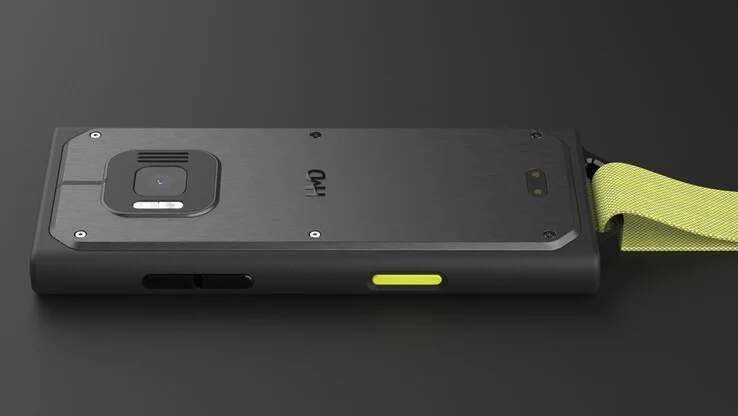
    One standout aspect is its remarkably tough chassis, which meets IP68 and IP69K certification, ensuring it is water-resistant. The 2.8-inch touchscreen is crafted to respond effectively, even when the user has gloves on. Additionally, the phone features programmable buttons, which can be utilized for push-to-talk applications, turning the HMD Terra M into a two-way radio, as well as for initiating emergency calls. The device is equipped with a 4G modem, dual SIM slot, and eSIM, enabling quick changes in mobile carriers and plans when on the go.

    Battery and Accessories

    HMD Global claims that the 2,510mAh battery can last for ten days on standby. The company also mentions a Qualcomm Dragonwing QCM2290 chipset along with five years of security updates. Alongside a belt clip, HMD Global presents an intriguing charging dock for the Terra M. This dock charges the phone through metal contacts located on the back and can connect up to ten docks, allowing for the simultaneous charging of ten HMD Terra M devices with just one power cable.

    Release Information

    The HMD Terra M is expected to be available in the first quarter of 2026, though the company has yet to reveal any pricing information. For further details about this rugged feature phone, you can visit the official product page.


    Source:
    Link


  • Poco F8 Ultra Beats Xiaomi 17 Pro Max in Early Benchmarks

    Poco F8 Ultra Beats Xiaomi 17 Pro Max in Early Benchmarks

    Key Takeaways

    1. The Poco F8 Ultra will launch on November 26, replacing the Poco F7 Ultra, which is currently priced at $735.
    2. It features the Snapdragon 8 Elite Gen 5 chipset, offering improved performance with an AnTuTu score of 3,944,934.
    3. Despite its high score, the Poco F8 Ultra’s performance is slightly lower than competitors like RedMagic 11 Pro Plus and OnePlus 15.
    4. The device includes the new VisionBoost D8 chipset, enhancing image quality with sharper visuals through AI Super Resolution.
    5. Independent reviews are recommended for a complete assessment of the Poco F8 Ultra’s capabilities and features.


    Xiaomi is just over a week away from the official launch of the Poco F8 Ultra. This new model is set to replace the Poco F7 Ultra, which was released less than a year ago and is currently priced at $735 on Amazon. The Poco F8 Ultra will be introduced alongside the Poco F8 Pro during a global event scheduled for November 26 at 08:00 UTC.

    New Features and Specifications

    In the meantime, Xiaomi has shared some details about the Poco F8 Ultra and how it will stand out from the previous version. The company has stated that the new device will feature the Snapdragon 8 Elite Gen 5, which is Qualcomm’s most advanced mobile chipset and significantly surpasses the Snapdragon 8 Elite found in the Poco F7 Ultra. Xiaomi claims that the Poco F8 Ultra achieves a score of 3,944,934 on AnTuTu.

    Performance Comparison

    Although this score is impressive, it doesn’t quite match up to the performance of similar powerful devices like the RedMagic 11 Pro Plus, OnePlus 15, and the iQOO 15, all of which are also powered by the Snapdragon 8 Elite Gen 5. Nonetheless, a score close to 4 million would still place the Poco F8 Ultra ahead of the Xiaomi 17, Xiaomi 17 Pro, and Xiaomi 17 Pro Max in the same benchmarking tests.

    Graphics Enhancements

    Apart from that, Xiaomi will also highlight the Poco F8 Ultra’s VisionBoost D8 chipset. This new chipset is an upgrade from the previous VisionBoost D7, and Xiaomi asserts that the D8 enhances the quality of images by producing ‘sharper, more detailed visuals’ with the help of AI Super Resolution algorithms. It would be wise to hold off on forming an opinion about the Poco F8 Ultra and its new graphics chipset until independent reviews are available.


    Source:
    Link


  • OnePlus Ace 6T: 100W Charging and Big Battery with Snapdragon 8 Gen 5

    OnePlus Ace 6T: 100W Charging and Big Battery with Snapdragon 8 Gen 5

    Key Takeaways

    1. OnePlus is set to release the Ace 6T smartphone featuring the Snapdragon 8 Gen 5 chip, positioned as a sub-flagship model.
    2. The Ace 6T will have a battery capacity greater than 8,000mAh, exceeding the OnePlus 15’s 7,300mAh.
    3. It will support 100W fast charging, slightly less than the OnePlus 15’s 120W charging capability.
    4. The Ace 6T will feature a display with a refresh rate of 165Hz, similar to the OnePlus 15.
    5. The global branding of the Ace 6T is uncertain, with speculation it could launch as the OnePlus 15R.


    OnePlus is getting ready to release one of the first smartphones featuring the Snapdragon 8 Gen 5 chip, known as the Ace 6T. This device is set to be a sub-flagship model, placing it slightly below the OnePlus 15 and just above the previous generation OnePlus 13 in terms of performance.

    Teasing the Launch

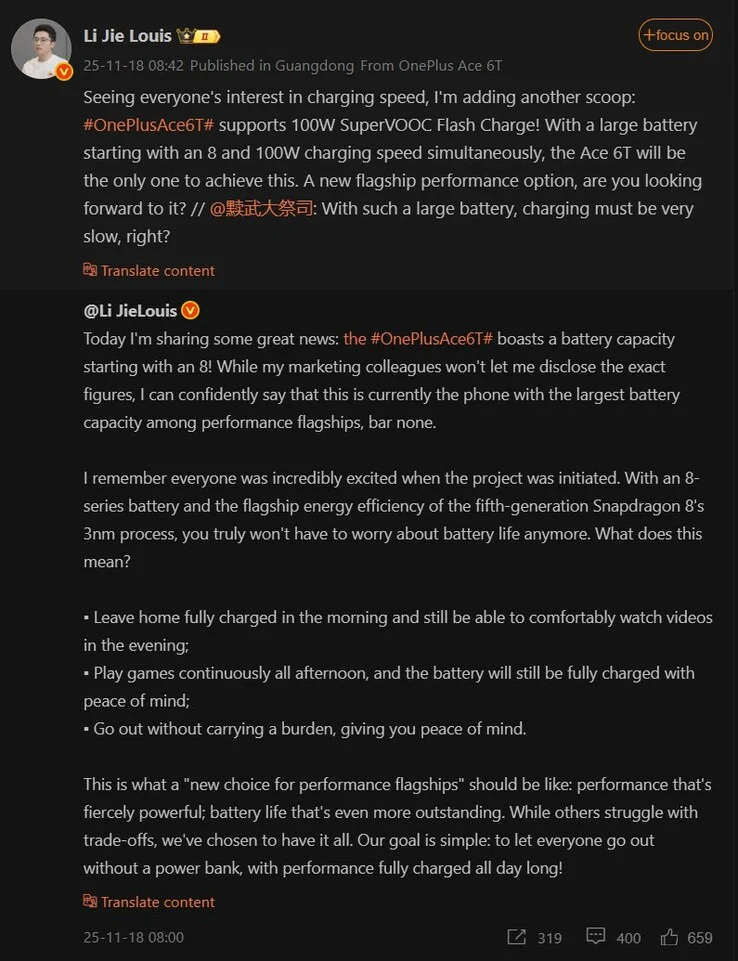
    While OnePlus has not yet announced a specific launch date for the Ace 6T, they have begun teasing the new device. Li Jie Louis, who is the president of the company, has shared that this upcoming phone will come equipped with a substantial battery, boasting a capacity greater than 8,000mAh, a detail that aligns with earlier reports.

    Battery and Charging Specifications

    To put it into perspective, the OnePlus 15 is already equipped with a 7,300mAh battery, which surpasses many of the recently released flagship phones featuring the Snapdragon 8 Elite Gen 5. Additionally, Jie Louis has confirmed that the Ace 6T will support 100W fast charging. This is slightly less than the 120W charging capability of the OnePlus 15, which comes with a 150W SuperVOOC charger that is currently priced at $34.98 on Amazon.

    Display Features and Global Release

    In terms of display, the company’s president hinted that the Ace 6T will have a refresh rate of 165Hz, which is on par with the OnePlus 15. As for its global launch, it’s still uncertain how the OnePlus Ace 6T will be branded internationally, but there are speculations that it may debut as the OnePlus 15R. Previous reports have also suggested that the 15R could actually be a rebranded version of the non-T Ace 6, which has already been released in China.


    Source:
    Link


  • Apple A19 Pro Die Shot Reveals Smaller Chip with Subtle Design Changes

    Key Takeaways

    1. Apple has reduced the die area of its A19 Pro from 105 mm² to 98.6 mm² using TSMC’s advanced N3P node.
    2. The A19 Pro features six GPU cores and maintains a similar design structure to its predecessors, the A18 Pro and A17 Pro.
    3. MediaTek increased its die area to meet performance goals, while Qualcomm kept a similar die size.
    4. Future A20/A20 Pro models are expected to use TSMC’s N2 node with a gate-all-around design for higher transistor density.
    5. The advancements in SoC technology reflect ongoing improvements in performance and efficiency in semiconductor design.


    After sharing thorough teardowns of the Snapdragon 8 Elite Gen 5 and Dimensity 9500, semiconductor specialist @KurnalSalts has now revealed a detailed die image of Apple’s newest flagship SoC, the A19 Pro. MediaTek had to increase die area to comply with performance goals. Conversely, Qualcomm managed to maintain a similar die size.

    Apple’s Die Area Reduction

    In contrast, Apple has actually decreased its die area from 105 mm² to 98.6 mm². This achievement is largely due to utilizing TSMC’s advanced N3P node, which enables Apple to fit more transistors within the same space. The A19 Pro variant discussed here is the full version, featuring six GPU cores. Design-wise, not much has shifted, as the A19 Pro essentially retains the same structure as the A18 Pro (TSMC N3E) and A17 Pro (TSMC N3B) that came before it.

    Future Developments in SoC Design

    We might observe some variations in the forthcoming A20/A20 Pro, since it is anticipated to utilize TSMC’s N2 node – a first in using a gate-all-around design. This innovation will allow for even greater transistor density, which should lead to a significant boost in performance.


    Source:
    Link


  • Redmi Note 15 Pro Plus Leak: Surprising Downgrade Revealed

    Redmi Note 15 Pro Plus Leak: Surprising Downgrade Revealed

    Key Takeaways

    1. The Redmi Note 15 series is expected to launch in India in September, with sales starting on January 9, 2026.
    2. The global version of the Redmi Note 15 Pro Plus will feature 8 GB of RAM, unlike the 12 GB in the Chinese model.
    3. The Snapdragon 7s Gen 4 processor will provide only a slight performance boost compared to its predecessor.
    4. Geekbench scores indicate modest performance improvements of 6% in single-core and 3% in multi-core tests.
    5. The global variant may have a smaller 6,500 mAh battery and lack the 50 MP telephoto lens found in the Chinese version.


    Early signs of the Redmi Note 15 Pro Plus’ global launch have appeared online. Just a few days ago, tipster Abhishek Yadav mentioned that the Redmi Note 15 series is set to debut in India in September. However, the ‘first sales’ are reportedly not going to start until January 9, 2026. It’s still a mystery when Xiaomi plans to roll out the Redmi Note 15 series to other regions like Europe, Africa, or the Middle East.

    Performance Insights

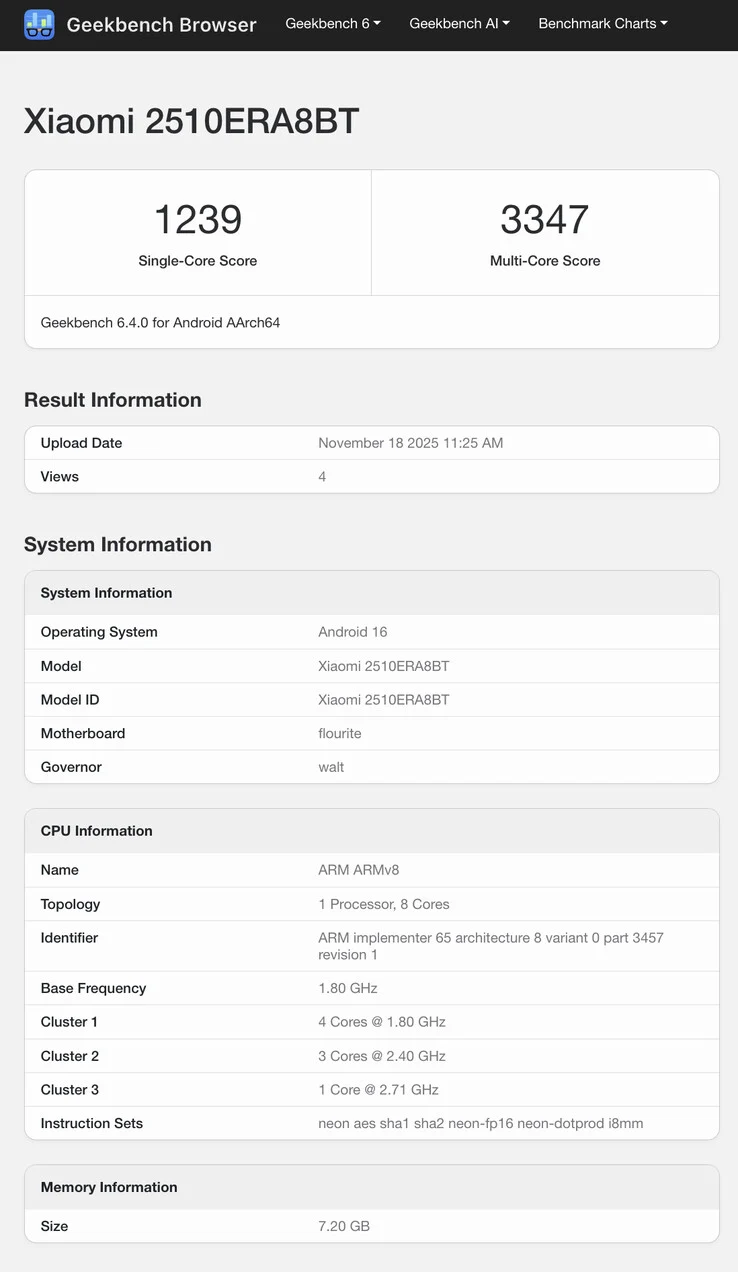
    In the meantime, an early Geekbench listing has provided some information about Xiaomi’s strategy for the Redmi Note 15 Pro Plus on a global scale. Interestingly, the global version of the Redmi Note 15 Pro Plus will come with 8 GB of RAM, similar to its predecessor (currently priced at $352 on Amazon), instead of the 12 GB offered in China. Furthermore, the Snapdragon 7s Gen 4 is expected to deliver only a slight performance improvement over the previous model.

    Benchmark Results

    With scores of 1,239 and 3,347, the Redmi Note 15 Pro Plus achieves just 6% and 3% performance enhancements in the Geekbench 6 single-core and multi-core tests, respectively. Earlier leaks suggest that the global variant of the Redmi Note 15 Pro Plus will not include the 50 MP telephoto lens found in the Chinese model nor its impressive 7,000 mAh battery. Instead, Xiaomi is likely to outfit the international version with a smaller 6,500 mAh battery and similar camera features as its predecessor. We will have to wait and see if this is also true for the Indian launch.

    Geekbench via Abhishek Yadav

    Source:
    Link


  • Samsung Galaxy S26: 2nm Chips Boost Performance and Efficiency

    Samsung Galaxy S26: 2nm Chips Boost Performance and Efficiency

    Key Takeaways

    1. Historical performance issues: Exynos processors have underperformed compared to Qualcomm chips, leading to doubts about the new Exynos 2600.
    2. Global model differences: European Galaxy flagship models often lag behind U.S. models, a trend expected to continue with the Galaxy S26 and S26+.
    3. Manufacturing advancements: Samsung’s new 2nm GAA process promises modest gains in performance and efficiency, with a 60% manufacturing yield for the Exynos 2600.
    4. Cost savings potential: Samsung could save $20 to $30 per Galaxy S26 unit using the Exynos 2600 compared to the Snapdragon 8 Elite Gen 5.
    5. Optimization concerns: Exynos chips may struggle in real-world usage due to reliance on standard ARM architecture, unlike Qualcomm and Apple’s custom designs.


    Some fans are doubtful about Samsung’s new chip, and they have good reasons for their doubts. Historically, Exynos processors have not performed as well as Qualcomm chips when it comes to efficiency and overall performance. This has led to European Galaxy flagship models often underperforming compared to those in the United States. Reports suggest that this trend will continue into 2026, particularly with the Galaxy S26 and S26+. The successor to the Galaxy S25 Ultra (available here on Amazon) is expected to feature the Snapdragon 8 Elite Gen 5 worldwide.

    Manufacturing Advances

    Recently, Samsung shared its quarterly financial results along with an early look at its new 2nm GAA manufacturing process. They claim this technology offers a 5% boost in performance, an 8% increase in efficiency, and a 5% decrease in chip size when compared to their second-generation 3nm tech. While these enhancements might appear small at first, they have led to approximately 25% of all Galaxy S26 pre-orders being secured, in addition to a significant contract with Tesla valued at over $16.5 billion for producing AI6 chips. Reports indicate that Samsung has achieved a 60% manufacturing yield for the Exynos 2600, surpassing the minimum needed for mass production.

    Cost Savings and Concerns

    Sources from the industry, as reported by Chosun Biz, suggest that Samsung’s Mobile eXperience division could save about $20 to $30 on each Galaxy S26 unit using the Exynos 2600, compared to those with the Snapdragon 8 Elite Gen 5. However, despite Samsung’s positive outlook regarding the Exynos 2600, driven by leaked performance benchmarks, there are increasing worries that Exynos-powered Galaxy flagships might once more fall short in real-world usage. An insider from the industry pointed out that Samsung has chosen to stick with the standard ARM Lumex architecture, while both Qualcomm and Apple have developed their own custom chip designs that offer better optimization.

    Source:
    Link