Category: Gaming

  • CEO criticizes Apple’s junk fees as Fortnite remains off iOS in Japan

    CEO criticizes Apple’s junk fees as Fortnite remains off iOS in Japan

    Key Takeaways

    1. Fortnite will not return to iOS in Japan due to Apple’s response to the Mobile Software Competition Act.
    2. Epic Games’ CEO, Tim Sweeney, criticized Apple for obstructing competition and disrespecting Japanese regulations.
    3. Despite legal victories allowing Fortnite’s return in some regions, Japan’s situation remains unchanged.
    4. Developers face high fees and mandatory reporting requirements when using competing app stores on iOS.
    5. Apple claims its policies are necessary for user safety and privacy, despite criticism from Epic Games.


    Epic Games has shared some disappointing updates regarding the iOS version of Fortnite in Japan. The well-known battle royale game will not be making a comeback on iOS devices or the App Store in Japan. This decision comes after Japan introduced a new regulation called the Mobile Software Competition Act, which mandates that Apple must permit third-party app stores on iPhones to enhance competition.

    Epic’s Criticism of Apple

    Epic’s CEO, Tim Sweeney, took to X to criticize Apple, stating that the company has engaged in “another travesty of obstruction and lawbreaking in gross disrespect to the government and people of Japan.” The relationship between Apple and Epic Games has been strained for several years, primarily due to Epic’s rejection of Apple’s 30% cut from in-app purchases. This dispute led to Apple removing Fortnite from the App Store back in 2020.

    Previous Comebacks

    Despite this ongoing conflict, Fortnite did make a return on iOS in the EU through third-party stores and the official App Store in the US after winning some legal battles. There was optimism that Fortnite would also return to iOS in Japan, but Apple’s response to the new regulations changed that outlook.

    Apple has technically opened iOS to competing app stores on iPhones, but not for iPads. Sweeney emphasized that they are imposing a “competition-crushing 21% junk fee on third-party in-app payments, and 15% for web purchases.”

    Legal Issues and Developer Concerns

    This situation has already been deemed illegal in a contempt of court case that Apple lost, which was affirmed by the 9th Circuit Court. From Epic’s viewpoint, the circumstances are worsening, as Apple is now taking a 5% cut from all apps sold through competing stores. Additionally, developers are required to use a “mandatory reporting API” that tracks every transaction and sends the data back to Apple.

    Moreover, users face warning messages when attempting to access alternative stores, which appears to be a tactic to create fear regarding privacy and security. Sweeney has pledged to escalate the issue to Japan’s Fair Trade Commission, asserting that “Obviously, real competition won’t happen, and consumers won’t benefit, when Apple abuses its position between users and competitors to obstruct honest dealing between them.”

    Apple’s Defense

    In contrast, Apple defends these actions as necessary to ensure user privacy and child safety, claiming that the fees are essential to cover the expenses associated with payment processing technology.

    Source:
    Link
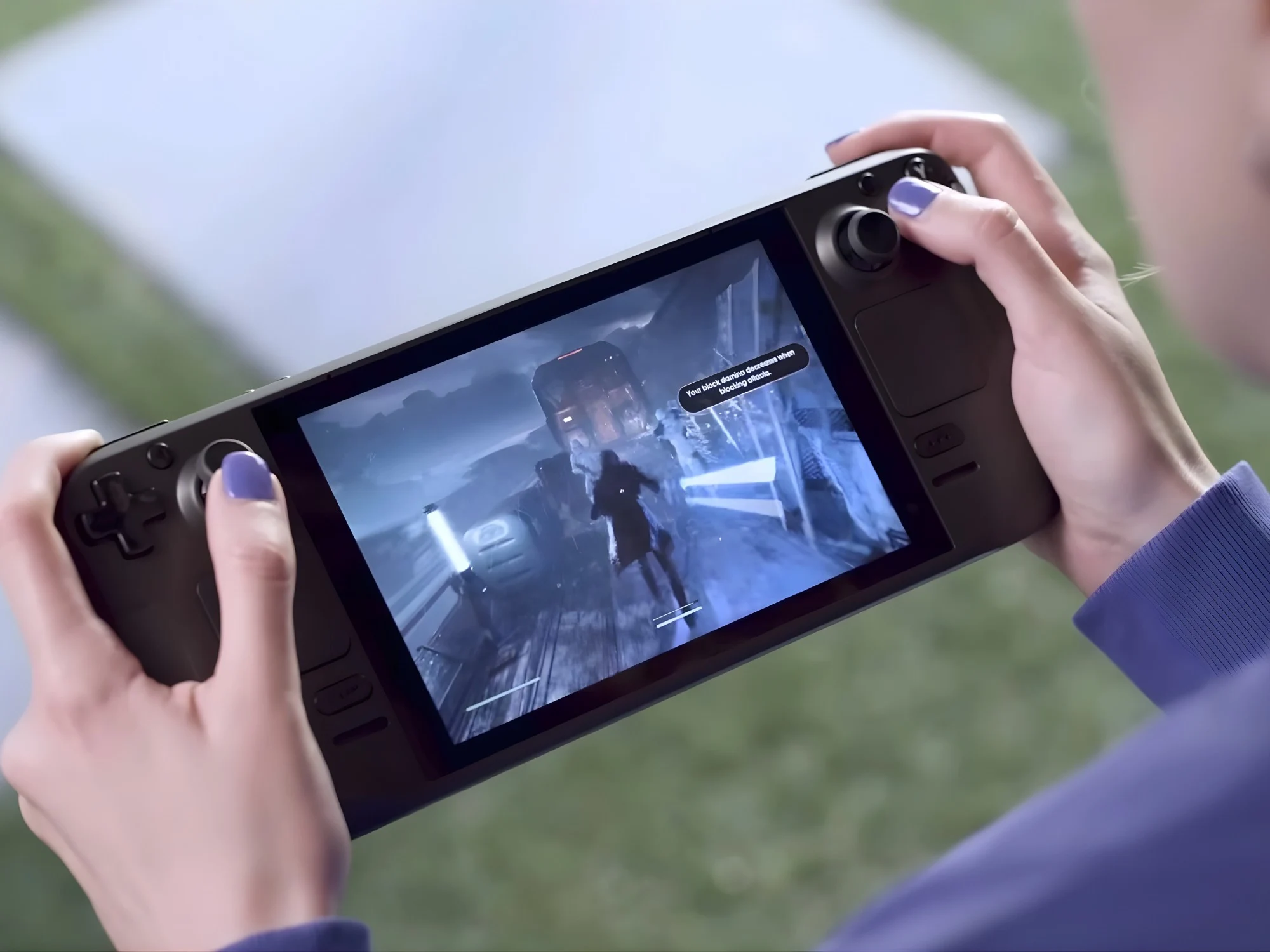


  • Valve Replaces Steam Deck LCD with OLED, Impacting Budget Handhelds

    Valve Replaces Steam Deck LCD with OLED, Impacting Budget Handhelds

    Key Takeaways

    1. Valve has discontinued the Steam Deck LCD 256GB model, stating it will no longer be produced once sold out.
    2. Currently, only the 512GB and 1TB OLED versions of the Steam Deck are available, starting at $549, compared to the original LCD price of $399.
    3. Despite the discontinuation of the LCD model, other portable gaming PCs like the Asus ROG Xbox Ally and Lenovo Legion Go S offer alternatives.
    4. The OLED models feature a praised 7.4-inch display with high contrast, a 90Hz refresh rate, and HDR capabilities, although performance remains similar to the LCD version.
    5. The discontinuation may be influenced by memory shortages and rising DRAM costs, with potential impacts on future product launches.


    Despite the emergence of new options such as the ROG Xbox Ally, a lot of gamers still view the Steam Deck LCD as a better value. Sadly, for those who haven’t purchased the budget gaming device, they might be in trouble. In the U.S. at least, Valve’s online store shows that only the enhanced OLED version is available.

    Ominous Signs for Buyers

    When potential buyers visit the site, they’ll notice a concerning note beneath the cheaper model. Valve states that “We are no longer producing the Steam Deck LCD 256GB model. Once sold out, it will no longer be available.” To make matters worse, a sold-out tag is already displayed next to the LCD model.

    Limited Options Available

    Currently, customers can only select from the 512GB and 1TB versions of the Steam Deck OLED. The price difference is quite noticeable, with the base model now starting at $549. In contrast, the often-discounted LCD gaming device originally had a price of $399.

    Even with the discontinuation of Valve’s budget-friendly option, there remains a good variety in the portable gaming PC market. Alongside the Asus ROG Xbox Ally, the Lenovo Legion Go S falls within a similar price bracket. For those who don’t mind a little work, SteamOS can be installed on Windows 11 devices. However, fans have always enjoyed distinct Steam Deck features like its dual trackpads.

    Praise for the OLED Screen

    A number of current owners are praising the slightly larger 7.4-inch OLED display on the remaining Valve models. This screen not only has high contrast but also boasts a 90Hz refresh rate and HDR capabilities. However, players shouldn’t expect a huge increase in performance since the processor remains similar.

    Regarding why Valve chose to stop the Steam Deck LCD now, one popular theory is gaining traction. A shortage of memory and increasing DRAM costs are creating difficulties for manufacturers. There have already been whispers that the company might postpone the launch of the new Steam Machine as a result.

    Valve might have concluded that after almost four years, it was time to retire the device. Nevertheless, the second-hand market is likely to keep the budget gaming handheld alive for a while longer.

    Source:
    Link


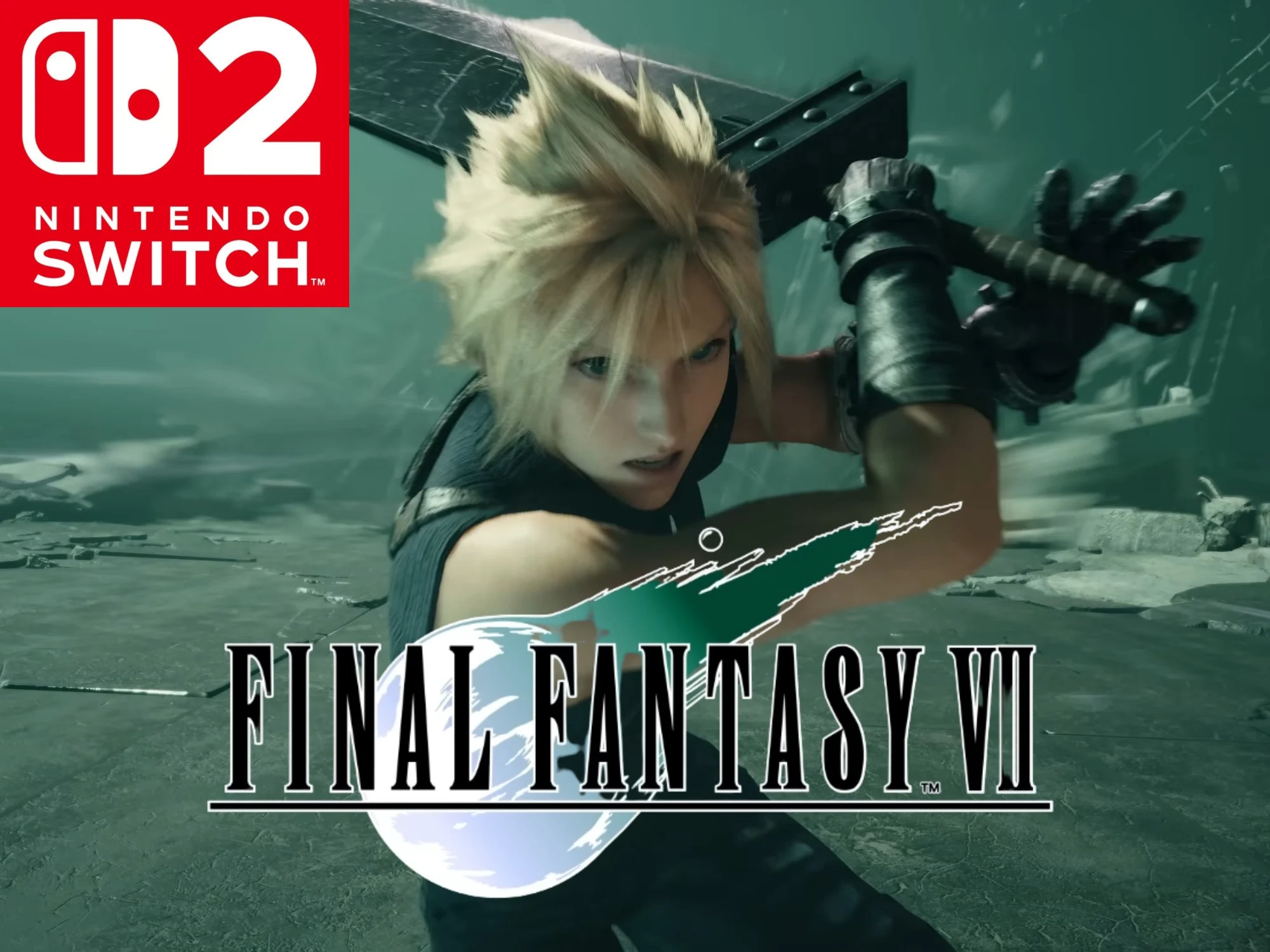
  • Final Fantasy 7 Remake Switch 2 Demo Beats Xbox Series S, PS4

    Final Fantasy 7 Remake Switch 2 Demo Beats Xbox Series S, PS4

    Key Takeaways

    1. The Switch 2 shows strong third-party support, with Final Fantasy 7 Remake performing well compared to Xbox Series S and PS4 versions.
    2. Frame rates on the Switch 2 remain stable around 30 fps, with fewer issues than previous versions, though handheld mode has more frame drops.
    3. The visuals are competitive with PS4 and even PS5/Series X, benefiting from DLSS technology for clearer images, despite some texture issues.
    4. The Switch 2 version often appears clearer than Xbox Series S, showcasing the advantages of its upscaling technology over others.
    5. A dedicated team for each platform during development has contributed to the game’s performance, but challenges may arise with upcoming titles like Final Fantasy 7 Rebirth.


    With the demo of Final Fantasy 7 Remake, the Switch 2 has made notable progress in gaining third-party support. An analysis from Digital Foundry reveals that the Nintendo version holds its own against the Xbox Series S and PS4 editions. Even gamers on PS5 and Series X may find that they need to make only slight sacrifices.

    Performance Insights

    Some may be doubtful about whether the specifications of the Switch 2 can handle such a demanding game from Square Enix. Thankfully, frame rates stayed close to 30 fps, showing fewer stutters compared to previous footage. While handheld mode does experience more frame drops, testers noted that the performance is still on par with the PS4 experience.

    Image Quality Comparison

    When it comes to image quality, this new port not only competes with the PS4 but also challenges the PS5 and Series X. Unique to this version, Nintendo’s console utilizes DLSS. Though it may be a lighter version of the upscaling technology, it produces surprisingly sharp visuals.

    In portable mode, the resolution upgrades from 720p to 1080p, but there’s some indication of Dynamic Resolution Scaling (DRS). Because of this, some textures can look softer at times. A significant downside of the Final Fantasy 7 Remake demo on Switch 2 is an overabundance of dithering, leading to shadows that are less defined compared to those seen on other consoles.

    Visual Quality in Action

    The static images provided by Digital Foundry show mostly clear textures on the handheld. However, during intense combat scenes, objects tend to display more jagged edges. Nevertheless, especially when docked, the increased pixel count at 1080p helps conceal these issues.

    Interestingly, the Switch 2 often appears cleaner than what the Xbox Series S produces. Microsoft’s less powerful console runs the game at 1440p in graphics mode, yet the handheld’s 1080p resolution comes out on top. The analysis attributes this success again to DLSS, which surpasses the TAA that Unreal Engine 4 relies on.

    Development and Future Challenges

    Naoki Hamaguchi, the director of the remake series, assigned dedicated teams for each platform. This decision seems to be beneficial, but Final Fantasy 7 Rebirth may present a greater challenge. Before players embark on the open-world adventure in that Switch 2 title, Remake Intergrade is set to launch on January 22nd.

    Digital Foundry YouTube.

    Source:
    Link


  • 8BitDo Unveils New Pro Controller at CES 2026

    8BitDo Unveils New Pro Controller at CES 2026

    Key Takeaways

    1. 8BitDo will showcase a new controller at CES 2026 on January 5, 2026, at 8 AM PST.
    2. The new controller will feature a purple color and has similarities to the 8BitDo Ultimate 2 Wireless.
    3. Design elements include an LED ring around the thumbstick and a uniquely thick, patterned joystick cap.
    4. The controller will have a textured grip on both the front and back, differing from previous models.
    5. More details about the controller will be revealed soon, as the launch date approaches.


    Just like its competitor, GameSir, 8BitDo has made a announcement that it’ll be present at CES 2026. Not only will they display their current lineup, but they will also introduce a brand new controller.

    Unveiling the New Controller

    As per a post on their social media, the new controller is set to be revealed during the tech event on January 5, 2026, at 8 AM PST. The post includes a teaser image of the controller. From the image, we can see that it will come in purple, similar to the 8BitDo Ultimate 2 Wireless, which is currently priced at $47.99 on Amazon.

    Features and Design

    The teaser also shows an LED ring encircling the thumbstick, along with a uniquely thick and patterned joystick cap. Another notable feature is the textured grip on both the front and back of the controller, a departure from most 8BitDo models that typically have texture only on the underside.

    It’s tough to tell exactly which model this controller is, but it appears to be a completely new design rather than a special edition of an existing one.

    Anticipation Builds

    Fortunately, we only have a few weeks to wait until the controller is launched, so we should soon get all the details we need!

    8BitDo on X

    Source:
    Link


  • Hideo Kojima’s AI Game Plans: Future of Gaming in 5-10 Years

    Hideo Kojima’s AI Game Plans: Future of Gaming in 5-10 Years

    Key Takeaways

    1. Hideo Kojima is exploring ambitious game concepts, including gameplay in weightlessness and an AI-focused project.
    2. The weightless game concept lacks detailed mechanics but aims to offer unique floating gameplay experiences.
    3. The AI-centered project is designed to educate AI, helping it learn and adapt for future applications in various fields.
    4. Kojima views AI as a beneficial tool that can enhance game development by streamlining processes and allowing more creative focus.
    5. He draws parallels between AI and the initial skepticism surrounding smartphones, advocating for the positive use of technology to improve happiness.


    The mastermind behind Metal Gear Solid and Death Stranding, Hideo Kojima, is well-known for his innovative thinking and visionary ideas in gaming. Staying true to his reputation, he has unveiled some incredibly ambitious concepts for the future of games, including one that involves gameplay in weightlessness and another focused on teaching AI.

    Kojima’s Vision for the Future

    This intriguing information was shared during Kojima’s interview with Nikkei Xtrend. During his chat with the Japanese news outlet, he reflected on the various projects he hopes to explore following his work on the Xbox-exclusive horror game OD and the PlayStation-exclusive action-espionage game Physint.

    Kojima admitted that these ideas might seem extravagant at first glance. In the conversation, he expressed, “This might be a bit far-fetched, but I think I want to create a game that’s played in weightlessness and a game that brings joy to an AI.”

    Exploring New Gameplay Mechanics

    While Kojima didn’t elaborate on the technical aspects of the weightless game, many are left curious about what kind of floating mechanics he might be envisioning. He did, however, provide more insight into the AI-centered project, stating:

    Essentially, it would be a game designed to educate an AI. Presently, AI lacks a lot of knowledge, and I believe it needs to learn more. The game would serve as a teaching tool for AI to study. In five to ten years, I expect AI to enter various fields.

    Insights on AI and Technological Evolution

    At this point, it’s evident that Kojima holds nuanced views on AI, having discussed it multiple times this year. He perceives it as a beneficial tool that can streamline development processes, such as adapting to players’ unique playstyles or managing repetitive tasks, thus allowing humans to focus on the more creative elements of game development.

    Kojima also addressed the resistance against AI, drawing parallels between it and the initial skepticism surrounding smartphones when they first gained popularity. He remarked:

    When smartphones were introduced, a lot of people criticized them. Yet now, there are countless individuals who can’t imagine life without their smartphones. AI is similar. It’s crucial to utilize technology in a manner that enhances our happiness while keeping in mind the right path it should follow.

    With projects like OD being developed and Physint still in the early conceptual phase, Kojima continues to think big, reminding us why he remains one of the most significant figures in the video gaming world.

    Source:
    Link


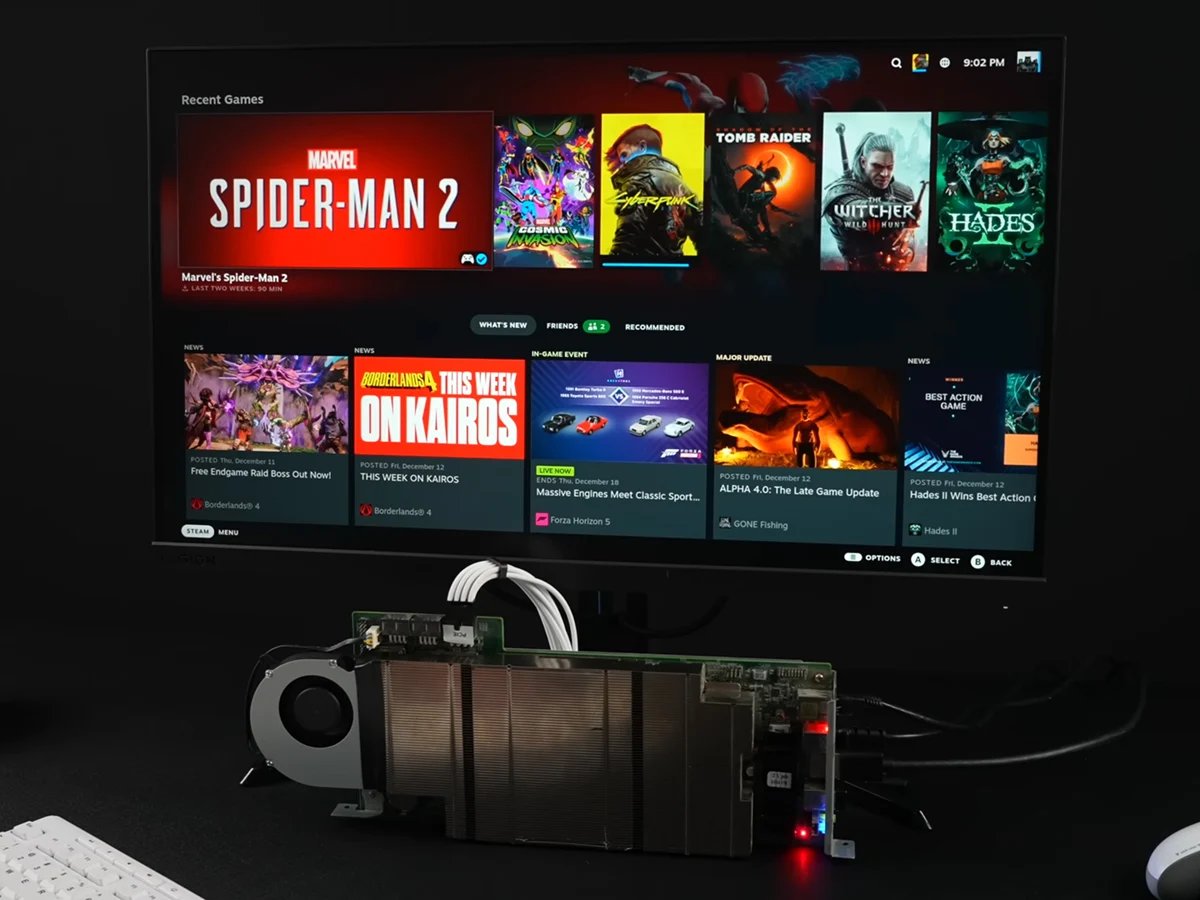
  • Affordable Steam Machine with Modified PS5 APU Board by Bazzite

    Affordable Steam Machine with Modified PS5 APU Board by Bazzite

    Key Takeaways

    1. The ASRock BC-250 motherboard is a budget-friendly alternative to Steam Machines, particularly if purchased at a low price.
    2. This motherboard is part of ASRock’s “cryptomining rig” line and features a simplified version of the PS5 APU.
    3. YouTuber ETA Prime chose Bazzite over SteamOS for its flexibility, enabling significant performance tweaks to the system.
    4. Modifications included allocating 8 GB of unified GDDR6 RAM to the GPU and overclocking it, resulting in a 30% performance boost.
    5. The BC-250 can run games well for a $100 motherboard, though prices have risen to over $150 or even $200, still making it a viable option for 1080p gaming.


    YouTuber ETA Prime has recently gotten an ASRock BC-250 motherboard and demonstrated how it can serve as an inexpensive alternative to Steam Machines, provided the motherboard is purchased at an affordable price. This isn’t the first time this board has been discussed; initial reports about it date back to March 2022.

    Background on the BC-250

    As we mentioned before, ASRock marketed these boards as part of their “cryptomining rig.” These motherboards come with a simplified version of the PS5 APU, offering fewer CPU cores and a reduced GPU. Nevertheless, as shown by YouTuber Budget-Builds Official, it still offers a fair amount of gaming capability. ETA Prime has now revealed what this board can achieve with Bazzite installed.

    Choosing Bazzite Over SteamOS

    ETA Prime opted for Bazzite instead of the official SteamOS due to the former’s more lenient stance on hardware permissions. This flexibility allowed the YouTuber to implement necessary adjustments to transform it into a “$100 Steam Machine” alternative.

    One of the key modifications made was the VRAM allocation, with ETA assigning 8 GB from the 16 GB of unified GDDR6 RAM to the GPU. Additionally, the YouTuber has undervolted and overclocked the GPU from 1,500 MHz to 2,000 MHz. This alteration reportedly results in a 30% increase in performance.

    Impressive Gaming Performance

    The gaming capabilities are surprisingly good for a $100 motherboard. ETA tested five games, and the BC-250 managed to run them quite well.

    While these are commendable results for a $100 board, which can be combined with a $10 system fan and a 350 W PSU, the current pricing has changed since the release of these videos. On eBay, the price has risen to over $150, and on AliExpress, it can exceed $200. Even at the $200 mark, this setup could still be a reasonable choice if aiming for 1080p resolution and if the tweaks don’t pose a major issue.

    Source:
    Link


  • PlayStation Portal Streams PS5 Games in Sony Honda Afeela EV

    PlayStation Portal Streams PS5 Games in Sony Honda Afeela EV

    Key Takeaways

    1. Sony and Honda are partnering to integrate mobile gaming options in the Afeela 1 electric vehicle, featuring PS Remote Play.
    2. The vehicle will use a larger display and the car’s speaker system for gaming, reducing the need for earbuds.
    3. A stable 15 Mbps internet connection is crucial for gaming, with the EV expected to support 5G cellular capabilities.
    4. The integration may require a PS4 or PS5 console at home, in contrast to the standalone PlayStation Portal device.
    5. The Afeela 1 is set to launch in California in mid-2026, with a premium price of $102,900.


    After the latest update to the PlayStation Portal, the handheld gaming device has seen a rise in its popularity. Now, Sony and Honda are teaming up to provide mobile gaming options for passengers in their forthcoming Afeela 1 electric vehicle. However, a significant new feature that would allow access to more PS4 and PS5 games might not be included.

    Exciting Features Announced

    Sony Honda Mobility has revealed that their innovative vehicle will incorporate PS Remote Play. The PlayStation Portal enhances the car’s infotainment system with a display mounted on the seat. By utilizing the EV’s speaker system, users may find that they don’t need earbuds for clear sound.

    According to the press release, a stable 15 Mbps internet connection is essential to minimize buffering issues. Gamers can choose to use Wi-Fi when it’s available, but the Afeela 1 EV is expected to come with 5G cellular capabilities.

    Debating the Advantages

    It’s up for discussion whether the pre-installed PlayStation Portal will be more beneficial than carrying the handheld device. Sony has not provided exact details, but the display seen in the photo seems to be larger than the 8-inch LCD screen of the device itself. Additionally, players will be able to use a DualSense controller in a more comfortable position while sitting.

    The main downside of this integration is that it might require a PS4 or PS5 console at home to function. In contrast, the standalone device can now play bought PS5 games on its own. Moreover, cloud streaming through PlayStation Plus Premium allows access to a wider range of games. Sony Honda Mobility hasn’t indicated whether the Afeela 1 EV will be capable of these features post-launch.

    Challenges in the Market

    Previous efforts to integrate high-end gaming in electric vehicles have not been successful, with Tesla being a notable example due to its unsuccessful Steam app. Meanwhile, as console sales decline, Microsoft, in partnership with LG, aims to roll out Xbox Game Pass in various vehicles.

    For PlayStation enthusiasts excited about the Afeela 1, the car is expected to launch in California around the middle of 2026. The premium version will be priced at $102,900, with a more affordable trim expected to come out the following year.

    Source:
    Link


  • MSI Unveils 1440p QD-OLED Monitor with 240Hz and USB-C

    MSI Unveils 1440p QD-OLED Monitor with 240Hz and USB-C

    Key Takeaways

    1. MSI has launched the MAG 272QP QD-OLED X24 gaming monitor in North America, priced competitively at $499.99.
    2. The monitor features a maximum brightness of 400 nits in HDR and 200 nits in SDR, covering 99% of the DCI-P3 color spectrum.
    3. It offers a native resolution of 2560 x 1440, a 240 Hz refresh rate, and a rapid response time of 0.03 ms (GtG).
    4. Enhanced connectivity includes dual HDMI 2.1 ports, a DisplayPort input, and a USB-C port with DisplayPort Alt Mode and 15 W Power Delivery.
    5. The monitor comes with a fully adjustable stand, a three-year OLED warranty, and features to help reduce the risk of burn-in.


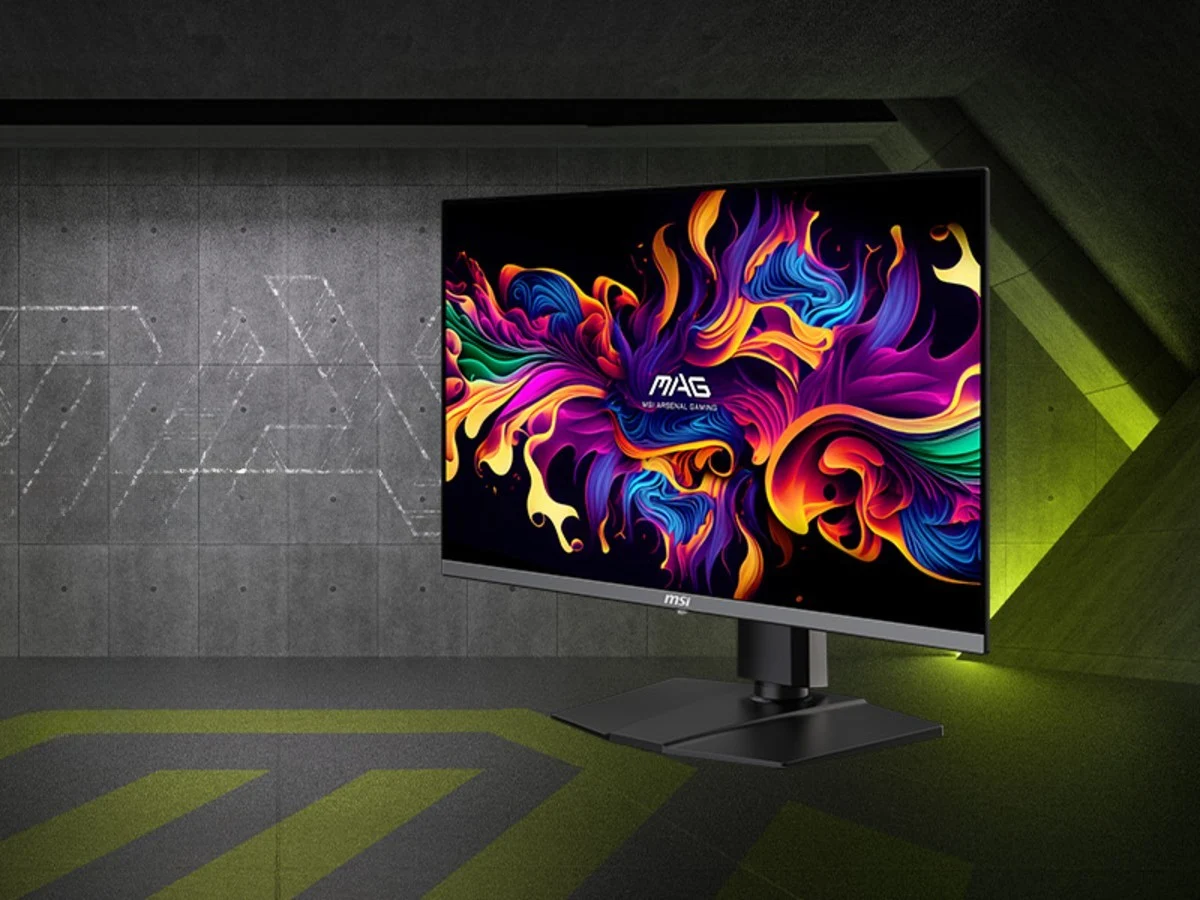
    MSI has introduced a new Gen 3 QD-OLED gaming monitor in North America. The MAG 272QP QD-OLED X24 shares many specifications with the previously launched MAG 274QP QD-OLED X24 from two weeks ago, but it comes with improved connectivity options. Notably, MSI has set a competitive price for both monitors at $499.99, which could attract gamers on a budget looking to explore OLED technology.

    Price Adjustments for Performance

    To maintain a lower price point, MSI has made some compromises. The MAG 272QP QD-OLED X24 reaches a maximum brightness of 400 nits in HDR and 200 nits in SDR. While this should suffice for average setups, other OLED monitors on the market can achieve higher brightness levels for a more dynamic HDR experience. Nevertheless, this monitor still provides the typical OLED advantages, showcasing vibrant colors and excellent contrast. It covers 99% of the DCI-P3 color spectrum and holds the DisplayHDR True Black 400 certification.

    Display Capabilities

    Similar to the MAG 274QP QD-OLED X24, the new model boasts a native resolution of 2560 x 1440, combined with a 240 Hz refresh rate. MSI also notes a swift response time of 0.03 ms (GtG) and ClearMR 13000 certification aimed at reducing motion blur and enhancing clarity for fast-paced gaming sessions. Additionally, there’s a specific mode designed for gamers using the PS5 and Xbox Series X|S.

    Enhanced Connectivity Features

    Where the MAG 272QP QD-OLED X24 really differentiates itself is in its connectivity options. Alongside dual HDMI 2.1 ports and a DisplayPort input, MSI has included an additional USB-C port with DisplayPort Alt Mode and 15 W Power Delivery, simplifying the connection process for a work laptop or other USB-C devices. Additional features consist of a fully adjustable stand, a three-year OLED warranty, and upgraded care features to help minimize the risk of burn-in.

    In the United States, the MSI MAG 272QP QD-OLED X24 is priced at $499.99 and can be found on Amazon, Newegg, and the MSI online store. In Canada, it is listed at CAD $799.99, although it is currently available for CAD $549.99 on Newegg and CAD $499.99 on Amazon.

    Source:
    Link


  • Indie Games Generated 25% of Steam’s Revenue in 2025

    Indie Games Generated 25% of Steam’s Revenue in 2025

    Key Takeaways

    1. Indie games contributed 25% of Steam’s total revenue in 2025, amounting to approximately $4.5 billion.
    2. Steam’s overall revenue increased to $17.7 billion in 2025, a 15% rise from the previous year.
    3. Around 20,000 games were released on Steam in 2025, but only about 300 made over $1 million.
    4. The top five indie games of 2025 generated over $500 million in total revenue, with Schedule I leading at $151 million.
    5. Other notable indie titles, such as Rematch and Dispatch, also performed well and contributed significantly to overall revenue.


    Indie games have always been a significant part of Steam, but in 2025, they took it to another level. For those unfamiliar, indie games are typically developed by small teams or even individuals. These developers usually operate without the support of major publishers or hefty budgets. Over time, many indie titles have achieved remarkable success, and 2025 further demonstrated the strength of this sector.

    Revenue Insights

    A report from Alinea Analytics reveals that indie games made up 25% of Steam’s overall revenue in 2025. This year, Steam’s revenue reached approximately $17.7 billion, a 15% increase from the $15.4 billion earned in 2024. Out of that total, indie games contributed about $4.5 billion.

    Market Competition

    The report also emphasizes how competitive Steam has become. In 2025, around 20,000 games were released on the platform. However, only about 300 of these titles earned over $1 million. This indicates a significant imbalance in the market.

    What’s truly remarkable is the financial success of the top indie games this year. The five leading new indie titles of 2025 generated more than $500 million in total revenue. Schedule I topped the list with $151 million, closely followed by R.E.P.O. with $147 million. PEAK made $87 million, while Hollow Knight: Silksong brought in $75 million. Escape from Duckov rounded out the top five with $53 million. Collectively, these five games represented around 3% of Steam’s yearly revenue.

    Other Noteworthy Titles

    In addition, many other indie games showed strong performance. Games like Rematch, Dispatch, RV There Yet?, and Megabonk also contributed significantly to the overall revenue.

    Alinea Analytics’ findings highlight the ongoing success and growth of indie games on Steam, reinforcing their crucial role in the gaming industry.

    Source:
    Link


  • Sega Dreamcast Browser Support Ends with Google’s New Update

    Sega Dreamcast Browser Support Ends with Google’s New Update

    Key Takeaways

    1. Google has officially discontinued support for the Sega Dreamcast web browser, PlanetWeb 3.0, marking the end of its 25-year run.
    2. PlanetWeb 3.0 was the only way for Dreamcast users to access the internet since its introduction in 2001, following Sega’s own discontinuation of official online services.
    3. Retro gaming communities had been keeping PlanetWeb 3.0 alive through private servers, but Google’s update rendered it useless.
    4. The discontinuation of PlanetWeb 3.0 highlights the challenges faced by outdated browsers and hardware due to modern web standards.
    5. FrogFind, a new search engine for older hardware, offers a way for retro gamers to explore the internet on the Dreamcast, preserving the nostalgia of the console.


    The Sega Dreamcast web browser, PlanetWeb 3.0, has officially met its end as Google has stopped supporting this outdated software that had been around for more than 25 years. This news has led many gamers who cherish retro gaming to bid farewell to another element of the Dreamcast’s online history.

    A Brief History of PlanetWeb 3.0

    PlanetWeb 3.0 was introduced in 2001, serving as the sole option for Dreamcast users to access the internet on Sega’s final home console, which debuted in 1998. Long ago, Sega itself discontinued the official online services for the Dreamcast.

    The Efforts to Keep It Alive

    Despite the challenges, passionate retro gaming communities managed to keep PlanetWeb 3.0 functioning through private servers and inventive solutions. Sadly, a recent update from Google has made PlanetWeb 3.0 useless, effectively cutting off internet access for Sega Dreamcast users.

    This information was shared by Dreamcast Live, a fan-operated site focused on the Sega Dreamcast. In a post on X, they mentioned, “Sad news, guys. Google has stopped support for Dreamcast web browsers.”

    The Wider Impact of Google’s Update

    The discontinuation of support for PlanetWeb 3.0 is not simply a unique case. Google’s latest changes have impacted several outdated browsers and old hardware that cannot keep up with modern web standards, including complex CSS, encryption needs, and heavy JavaScript.

    The Sega Dreamcast is now 27 years old, serving as a reminder of how quickly technology ages. Nevertheless, it’s quite remarkable that PlanetWeb 3.0 was able to last as long as it did, given the limitations of the hardware it relied on.

    A New Hope for Retro Gamers

    For those who want to fire up their Dreamcast and explore the internet, FrogFind offers a glimmer of hope. Developed by retro enthusiast and YouTuber Action Retro, FrogFind is a search engine that caters to older hardware and dial-up-era services by sourcing results from DuckDuckGo and converting them into text-based HTML.

    Many might wonder why anyone would want to surf the web on a console that’s 27 years old in 2025. The answer lies in the nostalgia and charm of revisiting simpler times when the internet was free from the clutter of ads and videos. Even though Google has pulled web support for the Sega Dreamcast, retro fans always manage to find alternatives like FrogFind to keep the essence of classic consoles alive.

    Source:
    Link