Tag: Death Stranding

  • Hideo Kojima’s AI Game Plans: Future of Gaming in 5-10 Years

    Hideo Kojima’s AI Game Plans: Future of Gaming in 5-10 Years

    Key Takeaways

    1. Hideo Kojima is exploring ambitious game concepts, including gameplay in weightlessness and an AI-focused project.
    2. The weightless game concept lacks detailed mechanics but aims to offer unique floating gameplay experiences.
    3. The AI-centered project is designed to educate AI, helping it learn and adapt for future applications in various fields.
    4. Kojima views AI as a beneficial tool that can enhance game development by streamlining processes and allowing more creative focus.
    5. He draws parallels between AI and the initial skepticism surrounding smartphones, advocating for the positive use of technology to improve happiness.


    The mastermind behind Metal Gear Solid and Death Stranding, Hideo Kojima, is well-known for his innovative thinking and visionary ideas in gaming. Staying true to his reputation, he has unveiled some incredibly ambitious concepts for the future of games, including one that involves gameplay in weightlessness and another focused on teaching AI.

    Kojima’s Vision for the Future

    This intriguing information was shared during Kojima’s interview with Nikkei Xtrend. During his chat with the Japanese news outlet, he reflected on the various projects he hopes to explore following his work on the Xbox-exclusive horror game OD and the PlayStation-exclusive action-espionage game Physint.

    Kojima admitted that these ideas might seem extravagant at first glance. In the conversation, he expressed, “This might be a bit far-fetched, but I think I want to create a game that’s played in weightlessness and a game that brings joy to an AI.”

    Exploring New Gameplay Mechanics

    While Kojima didn’t elaborate on the technical aspects of the weightless game, many are left curious about what kind of floating mechanics he might be envisioning. He did, however, provide more insight into the AI-centered project, stating:

    Essentially, it would be a game designed to educate an AI. Presently, AI lacks a lot of knowledge, and I believe it needs to learn more. The game would serve as a teaching tool for AI to study. In five to ten years, I expect AI to enter various fields.

    Insights on AI and Technological Evolution

    At this point, it’s evident that Kojima holds nuanced views on AI, having discussed it multiple times this year. He perceives it as a beneficial tool that can streamline development processes, such as adapting to players’ unique playstyles or managing repetitive tasks, thus allowing humans to focus on the more creative elements of game development.

    Kojima also addressed the resistance against AI, drawing parallels between it and the initial skepticism surrounding smartphones when they first gained popularity. He remarked:

    When smartphones were introduced, a lot of people criticized them. Yet now, there are countless individuals who can’t imagine life without their smartphones. AI is similar. It’s crucial to utilize technology in a manner that enhances our happiness while keeping in mind the right path it should follow.

    With projects like OD being developed and Physint still in the early conceptual phase, Kojima continues to think big, reminding us why he remains one of the most significant figures in the video gaming world.

    Source:
    Link


  • Kojima Productions’ Physint: Gritty Poster and Cast Reveal

    Kojima Productions’ Physint: Gritty Poster and Cast Reveal

    Key Takeaways

    1. Hideo Kojima announced his new PlayStation exclusive action-espionage game, Physint, during the “Beyond the Strand” livestream celebrating Kojima Productions’ tenth anniversary.

    2. Kojima revealed that Physint is still in early development, with him currently handling character design and casting while focusing on completing the Xbox horror project, OD.

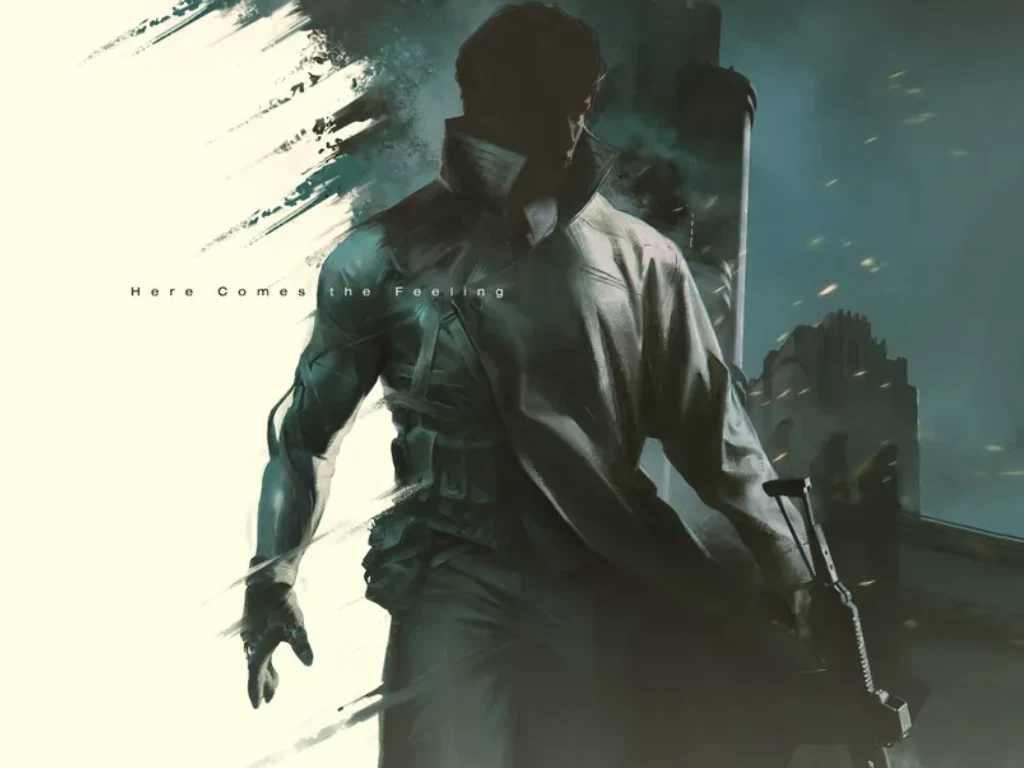
    3. The first poster for Physint features a dark, gritty main character inspired by Solid Snake, with the tagline “Here Comes the Feeling,” though its meaning remains unclear.

    4. The cast includes Charlee Fraser, Don Lee, and Minami Hamabe, with their roles yet to be disclosed due to delays from the 2023 SAG-AFTRA strikes.

    5. Kojima aims for groundbreaking visual quality in Physint, claiming it will surpass the visuals of the Decima Engine used in Death Stranding 2, with a potential release date after 2030.


    On September 23, 2025, during a livestream titled “Beyond the Strand,” Hideo Kojima celebrated the tenth anniversary of Kojima Productions in Tokyo by revealing some initial insights about his next PlayStation exclusive action-espionage game called Physint.

    Exciting Updates on New Projects

    The livestream also showcased a fresh trailer for Kojima’s upcoming Xbox horror project, OD, along with news about expanding the Death Stranding universe. This expansion includes an anime series named Death Stranding Mosquito and a live-action film adaptation.

    In January 2024, during a PlayStation State of Play event, Sony’s Hermen Hulst first hinted at Physint. Kojima appeared and described the game as “a culmination” of his career and a step forward in tactical espionage gameplay.

    Kojima’s Vision for Physint

    In a candid moment with viewers, Kojima mentioned that Physint is still in its early stages of development. He is currently working alone on character design and casting while the team focuses on finishing OD. He remarked, “It’s just the start,” indicating that more is to come.

    The first poster for Physint gives a dark and gritty look at the main character. The shadowy figure, a male, is seen carrying an SMG and wearing a stylish trenchcoat, with gloomy buildings visible in the background.

    Tagline and Casting News

    The poster includes a tagline that reads, “Here Comes the Feeling,” yet Kojima hasn’t provided any details about its meaning. The casting for the lead role is still secretive, partially due to delays caused by the 2023 SAG-AFTRA strikes. However, Kojima has assured fans that an announcement will come soon, mentioning that the character design is loosely inspired by Solid Snake.

    During the reveal, Kojima also introduced the first three cast members, who sent in pre-recorded video messages during “Beyond the Strand.” The cast includes Charlee Fraser, an Australian model and actress known for her role as Mary Jabassa in George Miller’s Furiosa: A Mad Max Saga. South Korean actor Don Lee, recognized for his performance in Train to Busan and as Gilgamesh in Marvel’s Eternals, is also part of the cast. Lastly, Japanese actress Minami Hamabe, who appeared as Noriko Oishi in Godzilla Minus One, completes the trio.

    Ambitious Visual Goals

    Though the specifics of their roles are still unknown, Kojima gave audiences a peek at the game’s photorealistic ambitions by revealing a lifelike character model of Minami Hamabe. He stated that the technology used in Physint will exceed the visual quality of the Decima Engine, which powered Death Stranding 2: On the Beach.

    Kojima is currently focused on the release of OD, and there is no set date for Physint. He previously mentioned that the project might take another five to six years to complete, suggesting that the game could launch after 2030, likely for the PlayStation 6.

    Source:
    Link


  • Hideo Kojima Calls His Endless Creativity a Blessing and a Curse

    Hideo Kojima Calls His Endless Creativity a Blessing and a Curse

    Key Takeaways

    1. Hideo Kojima views his continuous flow of creative ideas as a “disease,” allowing him to imagine freely, even during everyday interactions.
    2. After leaving Konami Productions in 2015, Kojima founded Kojima Productions and developed his new game, Death Stranding, marking a significant career transition.
    3. Kojima’s work has often foresaw future trends, as seen in Metal Gear Solid 2’s themes about the internet and AI, which became relevant years later.
    4. The release of Death Stranding in 2019 resonated with global experiences of isolation during the COVID-19 pandemic, showcasing Kojima’s ability to connect through gaming.
    5. Kojima is actively working on Death Stranding 3 and collaborating with A24 on a live-action film and anime spin-off, indicating his ongoing creative endeavors.


    In a recent conversation with Man of Many, renowned video game designer Hideo Kojima shared insights into his creative journey, comparing it to an unending affliction. Now at 62 years old, the mastermind behind beloved series like Metal Gear and Death Stranding explained how ideas continuously invade his thoughts, no matter where he is.

    The Creative Affliction

    Kojima described his imaginative condition as a type of disease, saying:

    “It’s almost like a disease. I’m imagining things all the time. Even when I’m talking to my family. In my head, I’m in a totally different world.”

    He expressed gratitude for his profession, remarking, “A lot of people don’t understand that, but I’m glad I have this job, because I’m free to imagine whenever I want.”

    A New Beginning

    It’s been ten years since Kojima left Konami Productions and his Metal Gear series on September 1, marking a fresh start in his career. He founded Kojima Productions and began developing his recent intellectual property, Death Stranding.

    His career has always blended boundless creativity with complex narratives, featuring groundbreaking mechanics. The Metal Gear series first launched in 1987, just a year after Kojima joined Konami. He remained with the franchise until 2015, culminating in the release of Metal Gear Solid: The Phantom Pain, a game that transformed stealth gameplay in the expansive settings of Afghanistan and Angola-Zaire.

    Visionary Concepts

    One of his most notable works, Metal Gear Solid 2: Sons of Liberty from 2001, ominously predicted the rise of the internet and the associated risks of AI, themes that were ahead of their time and foreshadowed the eventual internet boom and the emergence of Artificial Intelligence in public and commercial sectors.

    Even post-Kojima, the Metal Gear series continues to thrive, as demonstrated by the upcoming 2025 remake of Metal Gear Solid Delta: Snake Eater, which received rave reviews despite Kojima’s absence from the project. Interestingly, the developers at Konami sought his input on the remaster.

    Embracing Change

    Kojima’s creative spirit led him into his new phase after leaving Konami, with the release of Death Stranding in 2019. This game centered on mending a broken world, reflecting the feelings of isolation experienced during the pandemic shortly after its launch.

    Reflecting on that period, Kojima said, “I created a game about connections, and then COVID-19 came in and everyone was isolated. We all experienced it at once, and we’ve overcome it. So, I think we’re a little stronger.”

    The pandemic almost led him to give up, as he described, “It had gotten to a point where I almost gave up. But I came back, and I feel like I reconnected with myself through this project.”

    Future Endeavors

    Looking forward, Kojima’s creative juices are still flowing, as he has already started to conceptualize Death Stranding 3, with hopes of passing the torch to someone else. Additionally, A24 is in the process of producing a live-action Death Stranding film under the direction of Michael Sarnoski, expected to release in 2027, along with an anime spin-off set in the same universe currently in development.

    Source:
    Link


  • Kojima Won’t Play Metal Gear Solid Delta, Emphasizes Innovation

    Kojima Won’t Play Metal Gear Solid Delta, Emphasizes Innovation

    Key Takeaways

    1. Hideo Kojima expresses skepticism about current AAA gaming trends, noting a lack of innovation and repetitive themes in recent games.
    2. The gaming industry faces challenges like a talent drain to AI and a focus on safe investments, leading to predictable game production.
    3. Kojima prefers indie games that show originality over high-budget AAA titles, believing they are where true creativity happens.
    4. He critiques game developers for lacking realism in military games, highlighting his own research and training in the subject.
    5. Kojima emphasizes the importance of taking risks in game development to create memorable experiences, rather than just aiming for profitable hits.


    The famous creator of Metal Gear Solid and Death Stranding, Hideo Kojima, has shared his mixed feelings and insights about the present state of the AAA gaming world, which many believe is currently lacking in innovation.

    Skepticism About Trends

    In a recent chat with SSENSE, Kojima showed doubt when asked about today’s video game trends, saying, “Even the visuals and the game systems are pretty much the same.” He reflected on the recent Summer Games Fest 2025, which he thought was filled with repetitive themes of battling identical enemy types. While such games attract large audiences, he acknowledged, “a lot of people enjoy this, I understand,” hinting that the industry should break away from its comfort zone and focus on innovation instead of just chasing profits to create lasting masterpieces.

    Industry Challenges

    Kojima’s critique comes at a time when the gaming world is facing a talent drain to superior AI tools and publishers increasingly opting for safer investments for better returns. As a result, most AAA studios are playing it safe by continuously producing the same, predictable potential hits, prioritizing revenue over creativity, a trend he finds “kind of sad.”

    Personal Gaming Preferences

    Interestingly, Kojima’s feelings about the gaming industry also reflect his own gaming choices. In the interview, he mentioned that he seldom plays high-budget AAA games. Instead, he is more interested in creative indie games that showcase greater originality. He told SSENSE, “Indie games are where things are happening.”

    A Visit to a Game Studio

    While recounting a visit to a certain game studio for independent consultation on a stealth project, Kojima criticized their lack of depth. He remarked, “People who are making military games, they don’t know how to dismantle a gun or shoot a gun.” When probed about his knowledge of military equipment and tactics, Kojima elaborated with surprising detail, showing his dedication and research, “Yes, because I’ve been doing this training as well, and I learned so many ways to kill people as well.”

    Thoughts on Metal Gear Solid Delta

    When questioned about his interest in Konami’s upcoming remake of his iconic game, Metal Gear Solid Delta: Snake Eater, the former Konami director dismissed it with a laugh, saying, “No, I won’t.”

    Departure from Konami

    To clarify the situation, the different perspectives between Kojima and Konami that led to financial and creative disagreements resulted in Kojima’s exit. His last Metal Gear project, Metal Gear Solid V: The Phantom Pain, launched in September 2015, followed closely by his departure from Konami on December 16 of that same year.

    Establishing a New Studio

    Kojima then founded Kojima Productions, quickly attracting the interest of Sony. This support allowed him to pursue his ambitious and divisive project, resulting in the release of Death Stranding, followed by its sequel, Death Stranding 2: On the Beach, which came out on June 26, 2025. Despite being a PlayStation 5 exclusive, the game has reportedly sold 1.4 million copies as of June 2025, boasting an impressive Metacritic score of 89/100.

    Creative Freedom and Vision

    While Kojima’s independent projects have allowed him to unleash his creativity, he initially feared that the game was “too likable.” This concern led to changes during development to ensure a more divisive experience. He believes that controversial games tend to last longer in the gaming world, stating, “I’m not trying to make something that’s going to sell millions and millions… I want to make something that’s going to be remembered in 20 years.”

    Ambitions Beyond Earth

    Currently, Kojima’s aspirations go beyond Earth. During the Sydney Film Festival in June 2025, he revealed his lifelong dream of making a game set in space, but emphasized the need for preparation: “I want to train properly, learn how to do the docking, go to the International Space Station, and stay there for a few months.”

    A Call for Risk-Taking

    Kojima’s ambitions reach far beyond the current goals of the gaming industry, which seems to be caught in a cycle of repetition. He believes that if developers truly want to create great games, they should embrace taking significant risks to reshape the gaming landscape.

    Source:
    Link

  • Valve Updates Guidelines to Control Predatory Advertising Practices

    Valve Updates Guidelines to Control Predatory Advertising Practices

    Key Takeaways

    1. Valve has introduced new guidelines to regulate how developers use the “Early Access” label.
    2. Developers are prohibited from hiding game content behind advertisements or rewarding users for watching ads.
    3. Valve encourages developers to use microtransactions and create additional content post-launch instead of ad-based monetization.
    4. Developers can still promote products within their games, despite regulations on ads.
    5. Valve’s guidelines aim to prevent money-hungry practices common in mobile gaming from spreading to PC games.


    After taking action against developers who improperly use the “Early Access” label, Valve has introduced important new guidelines to keep money-hungry free-to-play creators under control. According to GamingOnLinux, the company’s website now outlines clear rules regarding how developers should market their games.

    Key Guidelines on Advertising

    A major point is that developers are not allowed to hide game content behind ads. Furthermore, users shouldn’t be rewarded for watching advertisements to earn in-game items. These practices are common in many mobile games and have become a regular part of the industry.

    New Monetization Strategies

    Instead, Valve suggests that developers should focus on using microtransactions and creating additional content after launch, which is another issue that the gaming industry continues to deal with. Although this isn’t a major issue on PC, it’s reassuring to see Valve addressing it early on. However, developers who prefer to use these tactics can always turn to other platforms or choose to self-host their games.

    Advertising in Games Still Allowed

    Sadly, developers still have the option to promote products within their games. For example, Death Stranding incorporated Monster Energy branding subtly, while EA took a more blatant approach with full-screen ads in UFC 4. Thankfully, this type of advertisement hasn’t become popular, but if it ever does, Steam seems to be okay with it.

    Source:
    Link