Category: Gaming

  • Fable Reboot May Launch on PS5 as Xbox Games Go Cross-Platform

    Fable Reboot May Launch on PS5 as Xbox Games Go Cross-Platform

    Key Takeaways

    1. The Fable reboot is expected to launch on PS5 alongside Xbox and PC, potentially on the same day.
    2. Microsoft announced the Fable reboot in 2020, with a release window initially set for 2025, but delays have pushed development into 2026.
    3. The extended development time may allow for additional polish and a successful cross-platform release.
    4. Trends show that more Xbox titles are becoming available on other platforms, signaling a shift away from exclusivity.
    5. Xbox executives believe that the idea of gaming exclusivity is becoming outdated, reflecting a broader industry change.


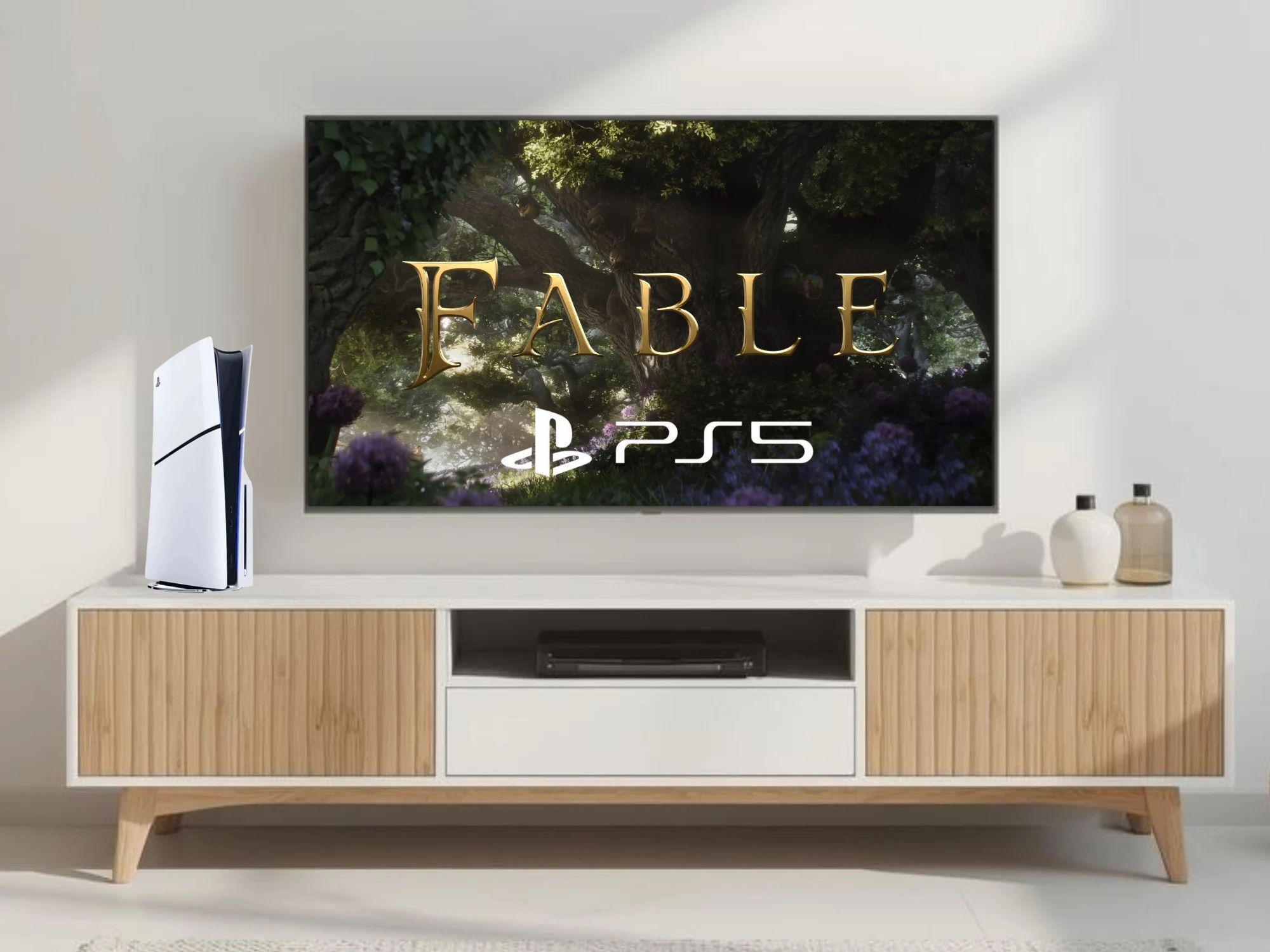
    While it isn’t shocking, Video Games Chronicle has shared that the Fable reboot is headed to the PS5. There’s also a chance that this RPG could launch on both consoles on the same day. Insider NateTheHate2 suggests that a previous delay has allowed Playground Games the opportunity to prepare for a cross-platform release.

    Announcement and Timeline

    Microsoft first revealed that it was working on Fable back in 2020, later setting a release window for 2025. However, in February 2025, fans learned that the game still required additional development time. Many gamers are looking forward to the Xbox Developer Direct on January 22nd, which is expected to reveal a release date, ideally set for 2026.

    Development Insights

    After the delay, NateTheHate2 shared a theory about the extended development time for Playground Games. The leaker speculated on the ResetEra forums that “it’s to allow some extra time for polish & to make the PS5 version a Day 1 release alongside Xbox/PC because the PS5 version was always slotted for 2026.”

    In light of the VGC news and the fact that Fable will be the main highlight of the upcoming Xbox event, he reiterated his earlier statements. The unfazed NateTheHate2 mentioned on Reddit, “The only unknown is whether the game will be day & date on PS5 with the Xbox release.”

    Cross-Platform Trends

    The often accurate source hasn’t confirmed when it will be launching on PlayStation. Nonetheless, many Xbox exclusive titles are being made available on other platforms sooner. For instance, Halo: Combat Evolved, another beloved Xbox series, will be accessible on the PS5 right away. Gears of War: Reloaded had already launched as a cross-platform release in August 2025.

    It’s important to note that both these games are remakes or remasters of earlier titles. The new Fable is better classified as a reboot, introducing major changes to Albion and new gameplay elements. Other titles, such as Forza Horizon 6, which will also be featured in the next presentation, won’t be available on day one for the PS5.

    Future of Exclusivity

    Some analysts believe that, given Microsoft’s focus on multi-platform availability, exclusivity may soon become a thing of the past. Xbox President Sarah Bond has called this notion “antiquated,” while CEO Phil Spencer echoes similar sentiments. Gamers will tune in to the Developer Direct eagerly awaiting the announcement of the Fable launch date for both Xbox and PS5.

    Source:
    Link



  • Forza Horizon 5 Sells 5 Million on PS5, Earns Over $300 Million

    Forza Horizon 5 Sells 5 Million on PS5, Earns Over $300 Million

    Key Takeaways

    1. Forza Horizon 5 launched on PS5 in April 2025, achieving impressive sales of over 5 million copies.
    2. The game was the best-selling new PS5 title of 2025, indicating strong demand from PlayStation gamers.
    3. The PS5 version generated approximately $300 million in revenue since its release.
    4. The game’s success highlights its continued popularity despite being four years old.
    5. A sequel is in development for 2026, with plans for it to be released on PS5, though no release date is set.


    Forza Horizon 5 hit the scene back in November 2021 for Xbox and Windows, quickly rising to become one of the most beloved games in the series. Fast forward to April 2025, and the game made its way onto PlayStation 5, where recent sales figures indicate that the PS5 version has done remarkably well.

    Impressive Sales Milestone

    As per Rhys Elliott, who leads Market Analysis at Alinea Analytics, Forza Horizon 5 has sold over 5 million copies on PS5. This is quite an impressive milestone, especially since the game was already a few years old by the time it launched on Sony’s console.

    Strong Demand from Players

    This level of success didn’t just happen by chance. In July of last year, Alinea Analytics had noted that Forza Horizon 5 was the best-selling new PS5 title of 2025. That early success hinted at a strong interest among PlayStation gamers, and these latest figures confirm that the positive trend has continued.

    Revenue Generation

    Elliott also mentioned that the PS5 version has helped the game rake in about $300 million in revenue. That’s a big number for a port of a game that’s already four years old, demonstrating how well the title has resonated with a new audience. There’s also a sequel in the works, set to launch in 2026 for Windows and Xbox Series X|S, and plans for it to come to PS5 as well. However, there’s still no set release date or window at this time.

    Source:
    Link


  • Win an RTX 5070 Gaming PC Worth Over $2,000 from Ironside Computers

    Win an RTX 5070 Gaming PC Worth Over $2,000 from Ironside Computers

    Key Takeaways

    1. Ironside Computers and Zacho Builds are hosting a global giveaway for a Terminal 1 gaming PC valued at $2,400.
    2. The giveaway is open to participants worldwide, with shipping costs covered by Ironside Computers.
    3. Entry tasks include browsing Ironside’s PCs, joining their Discord, and following them on social media to increase chances of winning.
    4. The giveaway is open until February 1 at 7:59 AM UTC, with winners notified via email within three days after it ends.
    5. The Terminal 1 gaming PC features an Nvidia RTX 5070 GPU, Ryzen 7 7800X3D processor, 64GB DDR5 RAM, and a 1TB SSD.


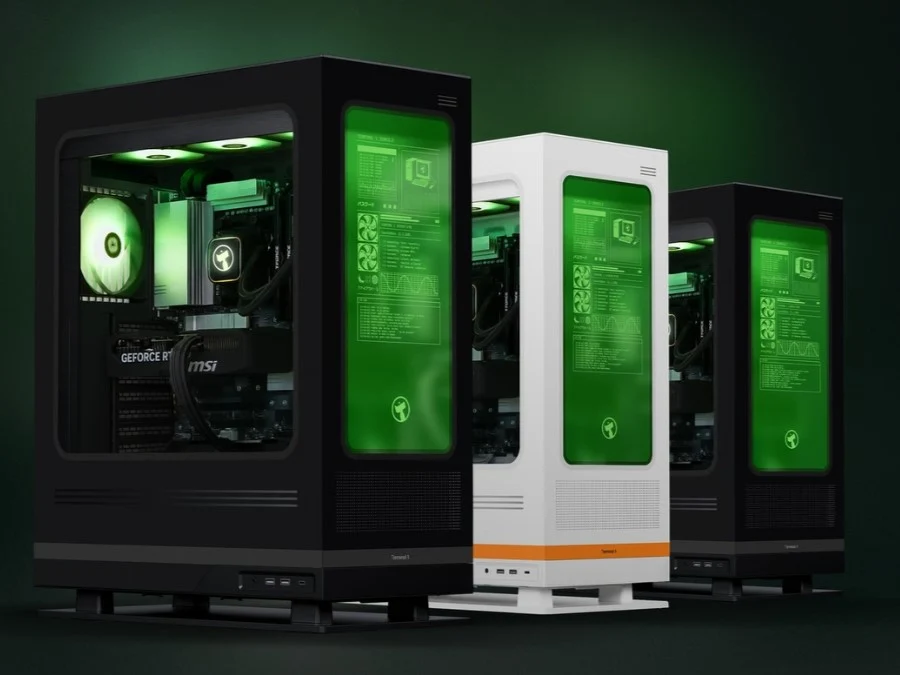
    If you were thinking about purchasing a prebuilt gaming PC, it might be wise to hold off, as you could potentially get one without any cost. This is due to a collaboration between Ironside Computers and Zacho Builds to introduce an exciting giveaway, featuring the Terminal 1 gaming PC, which is valued at an impressive $2,400.

    Global Participation

    The giveaway is being hosted on Gleam, and the fantastic news is that it is available to participants worldwide, allowing anyone to join regardless of their location. Additionally, Ironside Computers will take care of the shipping fees, meaning the winner won’t have to spend any money to receive their new gaming rig.

    How to Enter

    To join in on the fun, you’ll need to finish a few easy tasks. These tasks include browsing Ironside’s PCs and cases, joining their Discord community, following them on X, and similar activities. Completing just one task will give you an entry, but doing more will open up more chances to win.

    Important Dates

    The giveaway is currently open for entries and will close on February 1 at 7:59 AM UTC. Once the giveaway concludes, the winner will be contacted via email within three days and will have another three days to respond. If they miss the deadline, a new winner will be chosen. The winner will also have the option to select between a black or white case for their build.

    In terms of specifications, this PC is equipped with Nvidia’s RTX 5070 GPU, which boasts 12GB of GDDR7 VRAM. Ironside has combined it with the Ryzen 7 7800X3D processor, which is one of the top gaming CPUs currently available, recognized for its outstanding performance in CPU-intensive games.

    Impressive Specs

    The rest of the setup is equally remarkable. It comes with 64GB of ARGB DDR5 RAM, providing ample capacity for gaming, streaming, and multitasking. For storage, it features a 1TB SSD, which should be sufficient for most users. To ensure the CPU remains cool, the system also includes a 360mm AIO liquid cooler, which is designed to keep temperatures down, even during long gaming or work sessions.

    Gleam

    Source:
    Link


  • Baldur’s Gate 3 Switch 2 Port Delayed Amid Larian and WotC Drama

    Baldur’s Gate 3 Switch 2 Port Delayed Amid Larian and WotC Drama

    Key Takeaways

    1. Larian Studios is not planning any downloadable content (DLC) or a sequel for Baldur’s Gate 3 after its success.
    2. The company has ended its partnership with Wizards of the Coast, affecting the chances of a Baldur’s Gate 3 port to the Switch 2.
    3. Larian’s CEO, Swen Vincke, expressed disappointment about not being able to create a Switch 2 version during a Reddit Q&A.
    4. Developers at Larian have shifted their focus to new projects, especially the Divinity series, instead of creating more content for Baldur’s Gate 3.
    5. Corporate tensions exist between Larian and Wizards of the Coast, with recent layoffs at Hasbro contributing to the strained relationship.


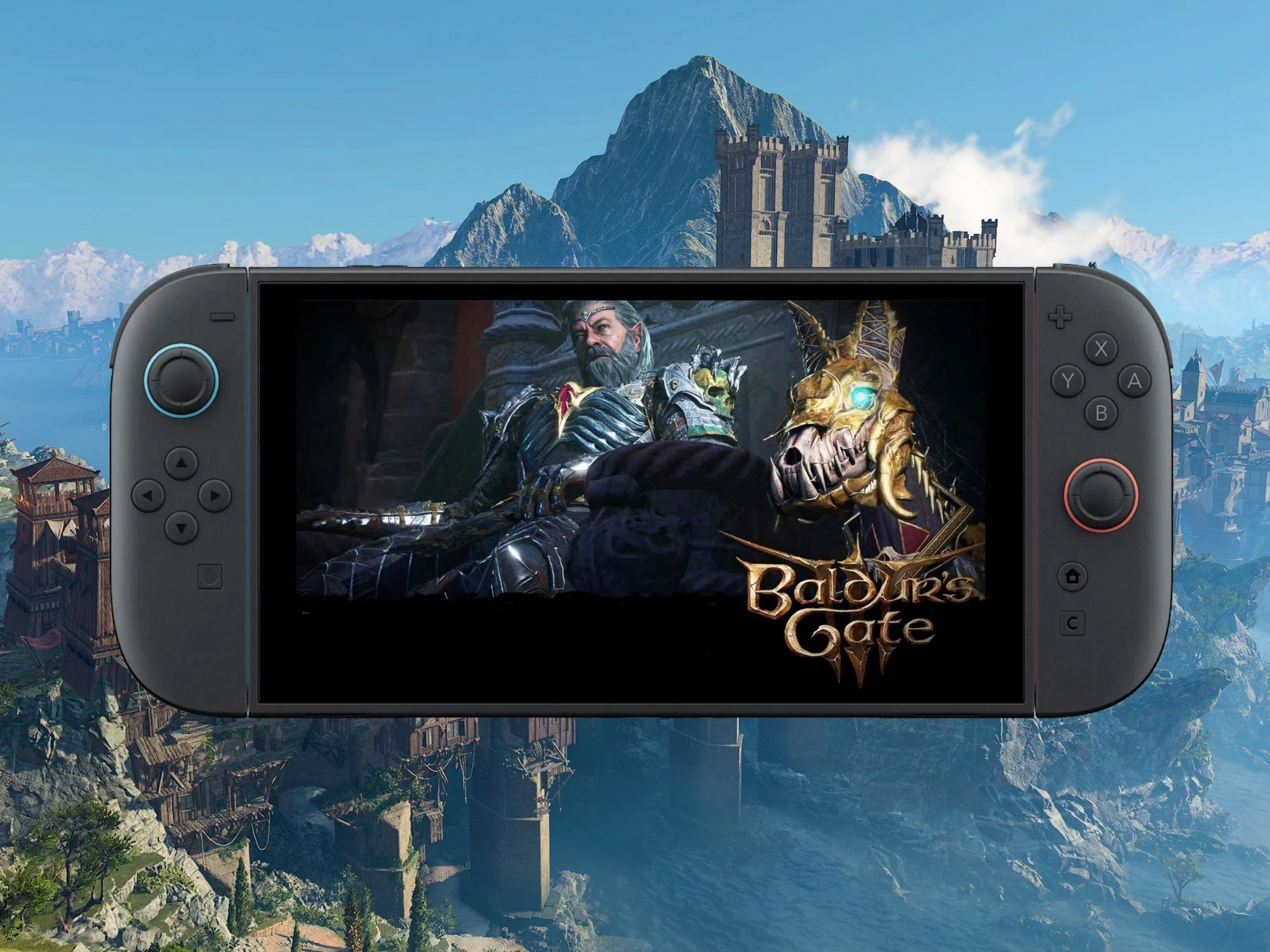
    Despite the huge success of Baldur’s Gate 3, Larian Studios isn’t planning any downloadable content (DLC) or a follow-up game. The company has ended its partnership with Wizards of the Coast, who own the Dungeons & Dragons brand. This also makes it less likely for Baldur’s Gate 3 to be ported to the Switch 2, as confirmed by Larian’s CEO, Swen Vincke. However, a recent leak suggests that the split wasn’t as friendly as Vincke had indicated.

    Reddit Q&A Insights

    During a Reddit Q&A, Vincke discussed generative AI and shared some disappointing news for Nintendo enthusiasts. He mentioned that while they would have loved to create a game for the Switch 2, it wasn’t a decision they could make. His comments left fans feeling a bit let down.

    After the Q&A, a leaker known as NateTheHate2 explained why a Switch 2 version of Baldur’s Gate 3 is unlikely to happen. He claimed that the relationship between Larian and Hasbro/Wizards of the Coast is not in a good state. He went on to say, “I’ve heard numerous reasons, but they all point back to the fact that Larian and Hasbro/WotC are not on good terms right now.”

    Focus on New Projects

    Vincke had previously mentioned that the developers have lost their enthusiasm for creating additional content for Baldur’s Gate 3 or any new D&D-related games. Instead, they are focusing their efforts on new projects, particularly on the Divinity series. It seems that they would have preferred to bring Baldur’s Gate 3 to the Nintendo console before shifting their focus.

    Many fans believe there’s more behind the scenes, especially with the potential for increased profits. Some have noted a DMCA takedown by Wizards of the Coast of a Stardew Valley mod featuring characters from Baldur’s Gate 3, a move that Vincke had previously endorsed.

    Corporate Changes and Tensions

    In 2023, Hasbro, the parent company of Wizards of the Coast, laid off many employees, some of whom played significant roles in building the partnership with Larian Studios. Even though there may be some underlying issues, both companies have stated that there’s no animosity between them.

    NateTheHate2 suggests that both parties prefer to keep any disagreements private. Nonetheless, even if the specifications for the Switch 2 could support Baldur’s Gate 3, the chances for a port now appear quite bleak.

    Source:
    Link


  • Core G3: Intel’s Gaming Handheld Chip with Xe2 GPU Leaked

    Core G3: Intel’s Gaming Handheld Chip with Xe2 GPU Leaked

    Key Takeaways

    1. Intel’s Core G3 series is designed specifically for gaming handhelds, featuring a unique architecture based on Panther Lake.
    2. The most powerful Core G3 processor includes two performance cores, eight efficiency cores, and four low-power cores, totaling 14 CPU cores.
    3. The integrated GPU for the G3 series is the Intel Arc B380, which has 12 Xe2 cores and is a lower-clocked version of the Arc B390.
    4. A second chip in the G3 series may include the Intel Arc B360 iGPU, potentially featuring 10 Xe2 cores, although details are limited.
    5. Intel’s entry into the handheld gaming market raises competition against AMD, with the effectiveness of the Core G3 series being critical for challenging AMD’s current dominance.


    Following AMD’s introduction of various Ryzen Z2 series processors aimed at gaming handhelds, Intel is likely to respond, potentially providing enhanced performance and extended battery life for devices like the MSI Claw 8 AI+.

    Intel Core G3 Series Overview

    Recent updates from VideoCardz reveal that the Intel Core G3 series is tailored for gaming handhelds. These processors utilize the same architecture seen in Intel’s Panther Lake, but they aren’t just rebranded Core Ultra 300 chips. The most powerful Intel Core G3 processor is said to have only two performance cores, along with eight efficiency cores and four low-power cores. Panther Lake does not currently have a chip boasting a total of 14 CPU cores. Additionally, the integrated GPU (iGPU) is new; the Intel Arc B380 is noted to be a lower-clocked variant of the Arc B390, featuring 12 Xe2 cores.

    Expected Features and Release

    Anticipation surrounds the Intel Core G3 series, which is believed to also include a second chip that comes with an Intel Arc B360 iGPU. Information regarding this iGPU is scarce, but if it shares similarities with the Arc B370, it would have 10 Xe2 cores. The launch date for the Intel Core G3 series remains uncertain. So far, no new handheld devices powered by Intel processors were unveiled at CES. With Intel now entering the fray against AMD in the handheld sector, it’s unclear if Panther Lake and the Core G3 series will be sufficient to challenge AMD’s stronghold in this area.

    The Future of Gaming Handhelds

    As Intel steps into the handheld gaming market, the competition is heating up. The effectiveness of the Core G3 series and Panther Lake’s offerings will be crucial in determining if they can rival AMD’s existing dominance. The excitement around Intel’s potential innovations could reshape the landscape of gaming handhelds, but only time will tell if they can keep pace with AMD’s advancements.

    Source:
    Link


  • Asus ROG Strix OLED XG34WCDMTG Global Launch with GeForce Now

    Asus ROG Strix OLED XG34WCDMTG Global Launch with GeForce Now

    Key Takeaways

    1. Asus will launch the ROG Swift OLED PG34WCDN using Samsung Display’s Gen 5 QD-OLED technology.
    2. The ROG Strix OLED XG34WCDMTG monitor has a peak brightness of 1,000 nits, 1440p resolution, and a 240 Hz refresh rate.
    3. The monitor will feature Android 14 and include various ports, although initial release delays occurred.
    4. Full panel brightness is expected to reach 250 nits, similar to previous models with Gen 2 QD-OLED panels.
    5. Additional features include an anti-reflective coating, eight selectable color temperatures, gamma adjustments, and picture-by-picture (PBP) functionality.


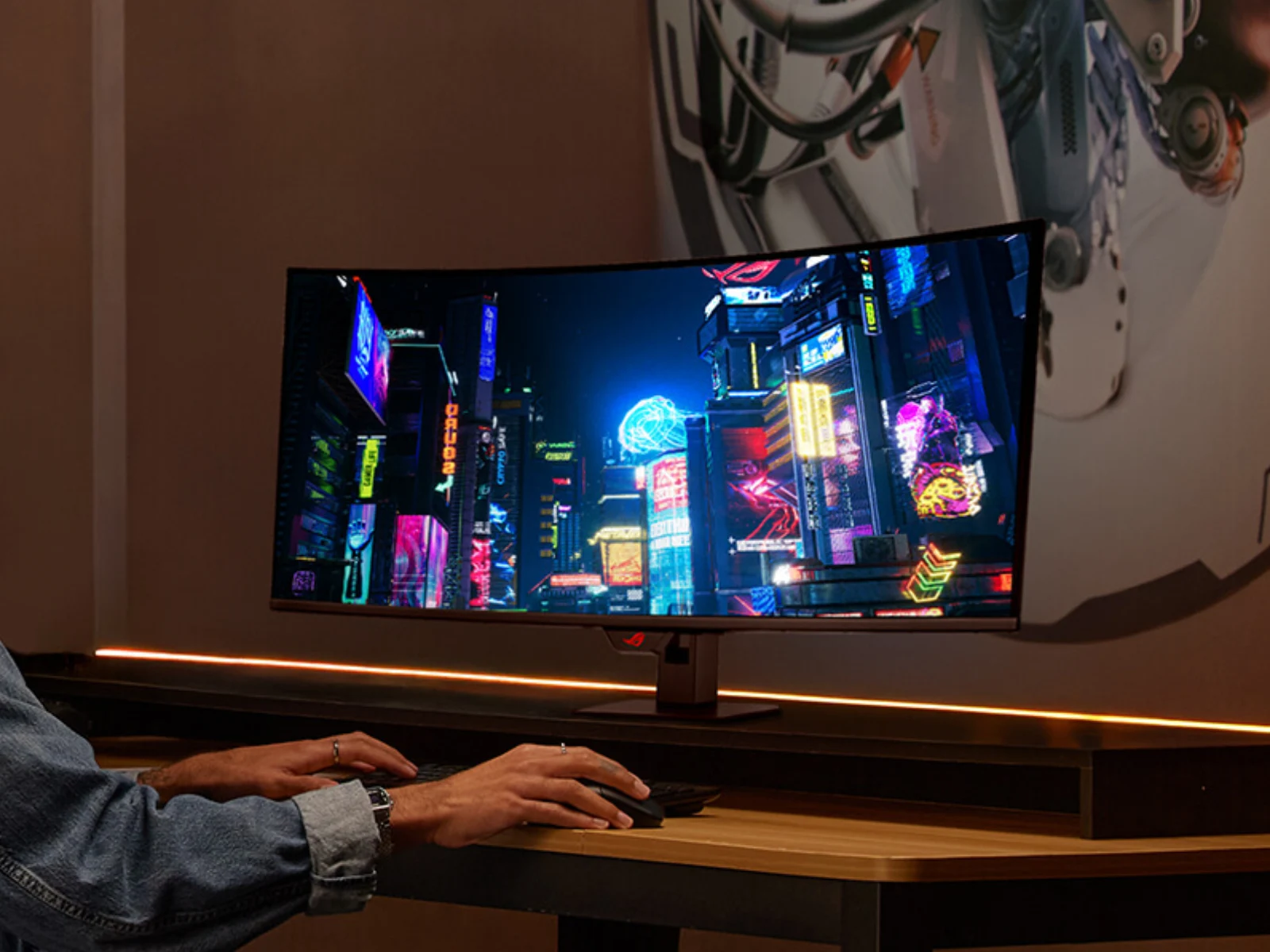
    Earlier this week, Asus announced that it would be among the first to utilize Samsung Display’s Gen 5 QD-OLED technology with the launch of the ROG Swift OLED PG34WCDN. Alongside this, the company has finally revealed the full specifications of a similar 34-inch gaming monitor that was first presented nearly a year ago.

    Monitor Details

    Initially showcased in May at Computex 2025, the ROG Strix OLED XG34WCDMTG was expected to be released by October for a price of $1,049, which would include Nvidia GeForce Now pre-installed. Although that didn’t happen, Asus has provided additional details on specifications like peak brightness of 1,000 nits, a 1440p resolution, and a refresh rate of 240 Hz. For instance, Asus plans to incorporate Android 14 even after almost a year has passed, along with the following ports:

    Brightness and Features

    Furthermore, the ROG Strix OLED XG34WCDMTG is expected to achieve a full panel brightness of 250 nits, similar to previous 34-inch gaming monitors equipped with Gen 2 QD-OLED panels, such as the Alienware AW3425DW (currently priced at $799 on Amazon). The upcoming monitor will feature an anti-reflective coating on its 1800R curvature, rather than the glossy finish some gamers prefer. Additionally, Asus has added various software capabilities, including eight selectable color temperatures, gamma adjustments, and picture-by-picture (PBP) functionality. For more information, please visit the company’s global website.

    Asus’

    Source:
    Link


  • Graded Nintendo 3DS Consoles Reach $1,500 Amid Safety Concerns

    Graded Nintendo 3DS Consoles Reach $1,500 Amid Safety Concerns

    Key Takeaways

    1. Rising prices for second-hand Nintendo 3DS consoles are alarming fans, with some sealed models priced between $1,200 and $1,500.
    2. Grading and sealing unopened Nintendo 3DS consoles has raised safety concerns, particularly about potential battery issues like swelling or explosions.
    3. The trend of grading collectibles, including video games, has become popular, but applying it to consoles with batteries is controversial.
    4. This trend complicates access for retro gamers who want to use the consoles, as prices are inflated and functional devices become harder to find.
    5. The gaming community is reacting negatively, with critics highlighting the absurdity of sealing consoles and risking their primary function for value.


    If the rising prices of second-hand Nintendo 3DS consoles on eBay weren’t alarming enough, scalpers and collectors have upped the ante by grading and sealing unopened Nintendo 3DS handhelds. Fans of Nintendo’s cherished, discontinued gaming device are quite upset about this trend.

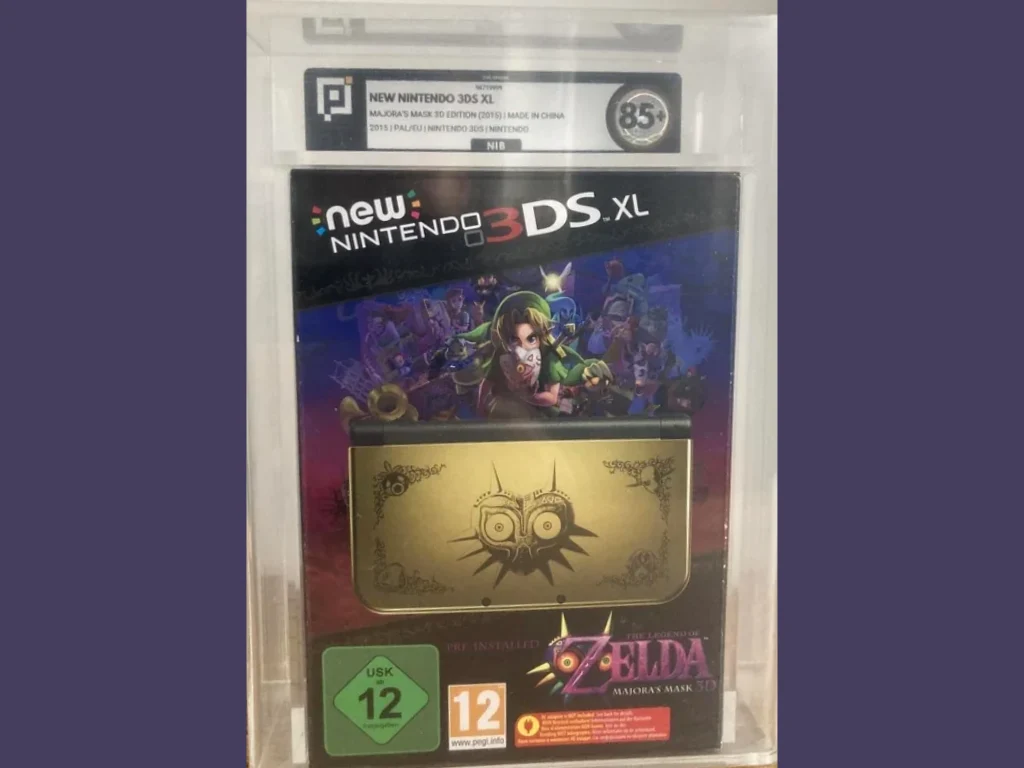
    Recently, a post on Reddit’s r/consoles highlighted two graded and sealed New Nintendo 3DS XL Majora’s Mask Editions that the user bought for a hefty price.

    Though the Redditor didn’t specify the exact amount, a Nintendo 3DS XL Legend of Zelda Majora’s Mask VGA Graded Silver 85 NM+ can be priced between $1,200 and $1,500 (via eBay). This post has sparked a lot of backlash from gamers and YouTubers, including Shane Luis, who described the situation as “beyond incredibly dumb.”

    Concerns About Battery Safety

    The main issue with sealing unopened handhelds is that it could cause the lithium-ion batteries inside to swell, which might result in leakage or even explosions.

    Collecting and grading video games, comic books, and Pokémon cards has become a booming trend in recent years, with pristine cards and rare cartridges fetching thousands of dollars. Organizations like WATA and VGA are responsible for grading these items based on their condition and authenticity, after which they are sealed in acrylic cases.

    The Impact on Gamers

    However, applying this practice to portable consoles that contain batteries has definitely raised eyebrows within the gaming community. The Reddit post displayed two PAL-region Nintendo 3DS XL Majora’s Mask systems, completely boxed, that are now secured in an acrylic case post-grading.

    Some 3DS models can be found for as low as $230 or as high as $1,000 on platforms like eBay, including special collector’s editions. This ridiculous trend has made it more challenging for retro gamers and potential buyers who wish to use the consoles for their intended purpose: playing Nintendo 3DS games.

    Shane Luis from the Rerez YouTube channel commented on the matter, sharing his thoughts on Bluesky. He stated:

    I really dislike when people get fooled into doing foolish things like this. NEVER EVER let a video game grading company seal new consoles with batteries. You’re basically trapping a battery inside a sealed plastic coffin that could either swell, leak, or explode.

    Sarcasm in the Debate

    In the midst of this controversy, one commentator sarcastically remarked:

    The best way to increase an object’s value is to completely negate its primary function by encasing it in plastic. That’s why I’m preserving my firstborn son in plastic, to keep him minty fresh and show the world how valuable he is. What could express more love than that?

    Source:
    Link


  • Steam Machine Price Leak Disappoints Gamers Amid Release Date Uncertainty

    Steam Machine Price Leak Disappoints Gamers Amid Release Date Uncertainty

    Key Takeaways

    1. The Steam Machine’s price may be higher than popular consoles, potentially reaching around $950 for the 512GB version and $1,069 for the 2TB version according to a Czech retailer leak.
    2. A social media update suggests lower pricing projections, estimating $814 for the 512GB model and $916 for the 2TB variant if a 17% profit margin is applied.
    3. The price leak originated from source code on a Czech website, and potential buyers should wait for Valve’s official announcement before making assumptions.
    4. Concerns about rising memory prices may delay the Steam Machine’s release to Q1 2026, as competitive pricing relies on adequate supply of DDR5 RAM.
    5. Insiders speculate about a barebones version of the Steam Machine, allowing users to customize RAM and storage, but Valve likely prefers to offer a fully assembled version.


    After the Steam Machine was revealed in November, people quickly started guessing its price. A Valve engineer hinted that it might be priced similarly to a gaming PC with matching specs. Considering the rising costs of storage and memory, this could mean a suggested retail price (MSRP) significantly higher than popular consoles. According to a Czech retailer, the Steam Machine’s price could be even steeper than expected.

    Pricing Details

    It’s important for potential buyers not to take this recent leak too seriously until Valve officially announces anything. Nonetheless, Smarty.cz has posted the price for the 512GB version at 19,826 CZK, approximately $950. In contrast, the 2TB version would set buyers back 22,305 CZK, or around $1,069 when converted to USD.

    Alternative Projections

    In a new social media update, Clawsomegamer suggests lower figures. If the retailer aims for a 17% profit margin, the 512GB model might be priced at $814, while the 2TB variant could go for $916.

    The price leak for the Steam Machine originated from the source code on the Czech website, rather than being outright displayed. In various countries, Valve primarily sells hardware like the Steam Deck through its official store. However, in certain regions, third-party retailers do offer new devices.

    Speculations and Concerns

    There is a chance that Valve has finalized its pricing, and Smarty.cz accidentally made it public. Alternatively, Valve may have changed its plans and will provide an update in the future. Regardless, many gamers are pondering whether the compact PC will justify such a hefty price tag.

    As memory prices continue to soar, sources such as Insider Gaming have raised concerns about the Steam Machine’s release date being delayed to Q1 2026. The reasoning behind this is that without enough supply of DDR5 RAM, Valve wouldn’t be able to offer competitive pricing. Laptop manufacturers, who use similar components, have already raised their prices.

    Other insiders, including Moore’s Law Is Dead, have suggested a barebones version of the system. Users could look for affordable RAM and storage to install themselves. Nonetheless, Valve would probably prefer to provide a fully assembled version as well.

    Hopefully, the Czech pricing isn’t what most gamers will have to pay for the Steam Machine. Not only would it be more expensive than the PS5, but the PS5 Pro is also a better deal in comparison. Valve’s listed specs promise a faster processor and the potential for enhanced upscaling and ray tracing. Even so, it might be wise to wait for the AI-driven memory crisis to resolve.

    Source:
    Link


  • Gigabyte MO27Q28GR Launches: 280Hz OLED Panel & Glossy Finish

    Gigabyte MO27Q28GR Launches: 280Hz OLED Panel & Glossy Finish

    Key Takeaways

    1. Introduction of MO27Q28GR: Gigabyte launched the MO27Q28GR OLED gaming monitor at CES 2026, featuring LG’s 4th Gen WOLED tech and a 280Hz Primary RGB Tandem panel.

    2. Glossy Finish: The MO27Q28GR has a RealBlack Glossy coating, differing from the matte finish of its predecessor, aimed at enhancing black levels in bright environments.

    3. Specifications: The 27-inch monitor offers a resolution of 2560 x 1440, a refresh rate of 280Hz, and achieves brightness levels up to 1500 nits in HDR.

    4. Additional Models: Gigabyte introduced three other OLED models, including the MO34WQC36 ultrawide with a 360Hz QD-OLED panel and the MO32U24 with a 4K 240Hz QD-OLED panel.

    5. Connectivity Features: The MO27Q28GR includes Nvidia G-Sync support, an integrated KVM switch, a USB hub, and a USB-C port with 45W power delivery, enhancing its functionality for gamers.


    As part of its CES 2026 showcase, Gigabyte has introduced the MO27Q28GR OLED gaming monitor. This device uses LG Display’s 4th Gen WOLED tech and incorporates the same 280Hz Primary RGB Tandem panel that’s featured in the MO27Q28G (currently priced at $599 on Newegg), which launched last August. The main distinction is the finish; the MO27Q28GR opts for a RealBlack Glossy coating instead of a matte one.

    Additional OLED Monitor Models

    Alongside the MO27Q28GR, Gigabyte also revealed three other OLED monitors. These include the MO34WQC36 ultrawide model that utilizes Samsung’s new 360 Hz V-stripe QD-OLED panel and the MO32U24, which boasts a 4K 240Hz QD-OLED panel. Thus, the MO27Q28GR now stands alongside the Asus ROG Strix XG27AQWMG as one of the only 280Hz Tandem OLED gaming monitors featuring a glossy finish.

    Specifications and Features

    The Gigabyte MO27Q28GR is a 27-inch monitor that offers a resolution of 2560 x 1440 and a refresh rate of 280Hz. Similar to other Tandem OLED panels, it provides a significant brightness increase, achieving up to 1500 nits in HDR at a 1.5% APL and around 335 nits at 100% APL. The panel carries the DisplayHDR True Black 500 certification and covers 95% of the DCI-P3 color space. In essence, it’s quite like the MO27Q28G, with the sole difference being the screen’s coating.

    Glossy Finish Benefits

    Much like the Asus ROG Strix XG27AQWMG, the MO27Q28GR features a glossy finish, which is claimed to enhance black levels in well-lit environments. Matte OLED panels are better at managing reflections, but they often suffer from washed-out blacks and less vivid colors under bright lighting conditions. Additional features include Nvidia G-Sync support, an integrated KVM switch, a USB hub, and a USB-C port that supports up to 45 W power delivery. In contrast, the Asus model includes a USB-A hub but lacks USB-C and KVM functionality.

    Gigabyte has yet to disclose pricing or availability specifics for the MO27Q28GR, but it may be set to retail near the Asus ROG Strix XG27AQWMG, which has a confirmed launch price of $599.

    Source:
    Link


  • NVIDIA G-Sync Pulsar: 1000Hz Motion Clarity for 360Hz Monitors

    NVIDIA G-Sync Pulsar: 1000Hz Motion Clarity for 360Hz Monitors

    Key Takeaways

    1. NVIDIA’s G-Sync Pulsar combines variable refresh rate (VRR) syncing with advanced backlight strobing for improved motion clarity, inspired by CRT technology.
    2. The technology reduces motion blur by using a rolling scan method, significantly lowering ghosting and smearing issues on high-refresh-rate LCDs.
    3. G-Sync Pulsar claims to enhance effective motion clarity beyond 1000 Hz, providing a smoother gaming experience for titles like Counter-Strike 2.
    4. Four new monitors featuring G-Sync Pulsar will launch, all with 27-inch IPS LCD panels, 1440p resolution, 360 Hz refresh rate, and priced starting at $599.
    5. G-Sync Pulsar is not compatible with OLED displays, making it a potential solution for FPS gamers seeking better motion handling in LCD technology.


    NVIDIA has recently revealed its G-Sync Pulsar, a fresh display technology that merges VRR (variable refresh rate) syncing with an advanced backlight strobing approach. Interestingly, G-Sync Pulsar draws inspiration from older CRT displays to achieve motion clarity comparable to “1000 Hz”. However, to take advantage of this, you will need a screen that supports G-Sync Pulsar and has a refresh rate of 360 Hz.

    A Look Back at G-Sync

    NVIDIA introduced its VRR solution under the G-Sync name in 2013, showcasing it as a helpful method to reduce screen tearing and stuttering by aligning the GPU’s frame rate with the monitor’s refresh rate.

    Advancements in Technology

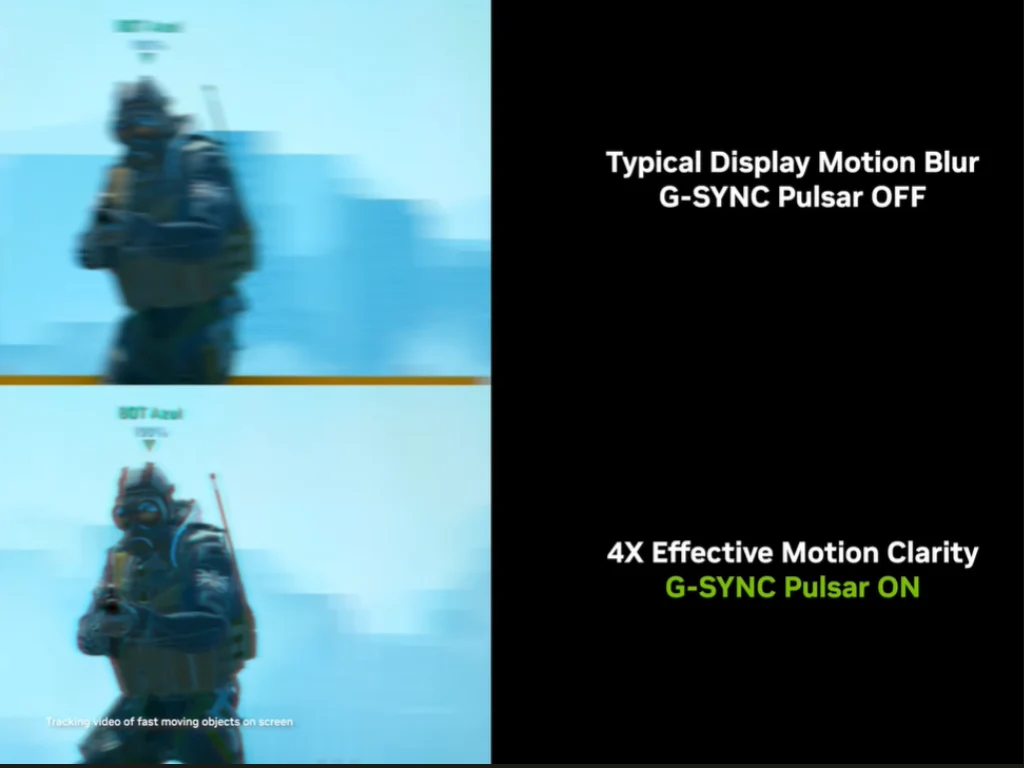
    Yet, the latest G-Sync Pulsar technology takes things further by reducing motion blur even more effectively, which is quite fascinating. G-Sync Pulsar employs a rolling scan method where the backlight pulses in horizontal segments from top to bottom. It activates four times per frame, taking up almost 25% of the frame’s time.

    What this achieves is allowing pixels to stabilize completely before being illuminated on the screen, which significantly lessens ghosting and smearing often seen with high-refresh-rate LCDs. G-Sync Pulsar cleverly mirrors how CRT monitors operated in the past. CRTs utilized a scanning electron beam, leading to smooth motion without the glare issues faced in modern backlighting methods.

    Performance and Skepticism

    According to NVIDIA, G-Sync Pulsar “enhances effective motion clarity beyond 1000Hz” on the first ASUS ROG Swift PG26 Series G-Sync gaming monitor. While some people are doubtful of NVIDIA’s new method, G-Sync Pulsar hopes to deliver a smooth experience akin to a hypothetical current-generation 1,000 Hz display, making games such as Counter-Strike 2 and Anno 117: Pax Romana appear clearer and more responsive.

    In conclusion, NVIDIA’s backlight strobing technique is not exactly a novel idea but rather a progression. It has been around for a considerable time, alleviating eye-tracking blur by inserting black frames between images momentarily. This approach helped lessen pixel transitions. Nonetheless, previous versions of this method often resulted in a noticeable dimming of the screen and didn’t work well with G-Sync or FreeSync.

    Competition in the Market

    Asus has attempted to introduce ELMB Sync to rival Zowie’s proprietary DYAC technology, but has seen limited success, especially since DYAC remains a preferred choice for many CS2 gamers.

    NVIDIA’s version of Pulsar supposedly operates seamlessly at variable frame rates starting from 90 FPS and aims to provide even better clarity than Zowie’s 2nd-generation DYAC, while also offering more flexibility compared to DYAC’s fixed refresh rate requirements.

    New Monitor Launches

    Four new monitors featuring G-Sync Pulsar are set to launch: Acer Predator XB273U F5, AOC Agon Pro, Asus ROG Strix Pulsar, and MSI MPG 272QRF X36. All these models come with 27-inch IPS LCD panels, a resolution of 1440p, a refresh rate of 360 Hz, and HDR support, with prices beginning at $599.

    Sadly, G-Sync Pulsar isn’t compatible with OLED displays since it depends on the backlighting that LCDs provide. OLED screens can’t mimic scanline pulsing because of their display technology, and while a 540Hz OLED screen will be somewhat close, G-Sync Pulsar could be the ultimate solution for some FPS gamers for the near future, due to its superior handling of motion blur.

    Early reviews from CES have been very positive, with attendees noting that they felt their eyes were no longer struggling to keep pace with fast-moving visuals.

    Source:
    Link