Tag: Baldur’s Gate 3

  • Tim Cain: How Fallout’s Setbacks Became Its Secret to Success

    Tim Cain: How Fallout’s Setbacks Became Its Secret to Success

    Key Takeaways

    1. Early challenges in game development led to creative solutions that enhanced Fallout’s gameplay.
    2. Fallout’s initial concept was based on GURPS, but the dark atmosphere prompted a shift away from that partnership.
    3. The creation of the ‘SPECIAL’ system (Strength, Perception, Endurance, Charisma, Intelligence, Agility, Luck) was a direct result of this setback, proving more suitable for a computer game.
    4. The project evolved into Fallout after the sequel to Wasteland was rejected, which ultimately benefited the game’s development and popularity.
    5. The team’s underestimation allowed them creative freedom, leading to a successful outcome despite initial doubts about the game’s potential.


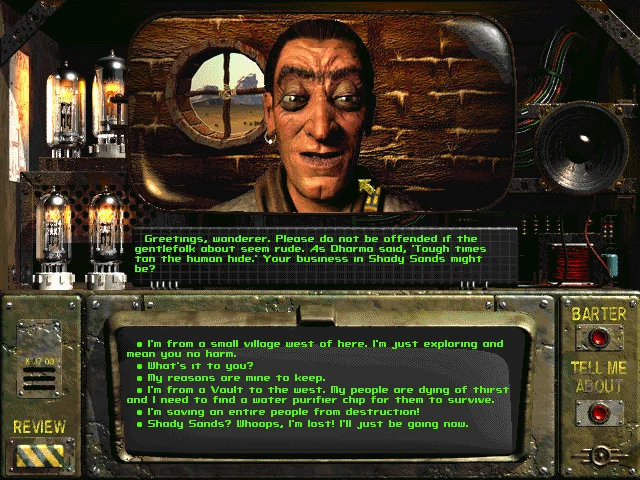
    In a recent chat with Game Informer, Tim Cain, Leonard Boyarsky, and Brian Fargo reflected on the early days of Fallout, revealing how the challenges they encountered helped mold the game into its final form and led to its success. Cain mentioned, “The sprite engine I wrote had limitations we had to creatively address, and those solutions ended up making the game really awesome.” He added that, at that time, these obstacles felt like “Oh no, another problem,” but they ultimately transformed into something positive, changing his perspective for many years.

    Inspirations and Setbacks

    Just like Baldur’s Gate 3, which draws from the Fifth Edition of D&D rules (though with some tweaks for better gameplay), Fallout was initially intended to be created using Steve Jackson Games’ GURPS (Generic Universal Roleplaying System), another well-known tabletop ruleset. However, after the team presented the game to Jackson, he was discouraged by Fallout’s dark atmosphere and withdrew from the partnership.

    The Birth of the SPECIAL System

    Leonard Boyarsky, the Art Director and designer, shared how this disappointment led to the development of the ‘SPECIAL’ system, which stands for the key stats: Strength, Perception, Endurance, Charisma, Intelligence, Agility, and Luck. Boyarsky pointed out that this system “was far better suited for a computer game than trying to create a faithful GURPS rendition.”

    A Different Direction

    Interestingly, Fallout could have been a sequel to Wasteland, as Brian Fargo, designer and co-founder of Interplay, recalled, “EA said, ‘No, not gonna happen.” But that didn’t mark the end of the Interplay project. “We held onto hope for some time, but ironically, that shift turned out to be fantastic because we ended up with Fallout,” which, more than twenty-five years later, has proven to be beneficial, especially with the rise in popularity of the TV show.

    Cairn noted, “So many negatives turned out to be positives,” even though at the time, the project was labeled as a B-Tier product, which was considered an insult back then. However, this label didn’t faze the Fallout team; being underestimated “turned out to be a great thing because we were largely ignored for years,” giving them the chance for total creative freedom without being tied to a large project.

    Looking Back on the Journey

    Despite some doubts about the project’s potential, the team kept a professional attitude and pushed forward. Boyarsky recounted, “In a week, everyone’s going to be blown away by how great Fallout is before we ship. Tim emailed me back saying, ‘In a week, we’re gonna be wondering if people want fries with their meal.” Looking back, the developers, fans, and critics alike are pleased with Fallout’s journey and its current status.

    Source:
    Link


  • HBO Teams Up with Craig Mazin for Baldur’s Gate TV Series

    HBO Teams Up with Craig Mazin for Baldur’s Gate TV Series

    Key Takeaways

    1. Fans are protective of beloved franchises, often expressing strong opinions about changes to characters, settings, and plots, as seen with Star Trek and Star Wars.

    2. Baldur’s Gate 3 has garnered significant fan investment in its lore and creators, especially the actors and writers involved in the game.

    3. HBO and Hasbro are collaborating to create a drama series that continues the story of Baldur’s Gate 3, with Craig Mazin as the showrunner.

    4. Fans urge that the original voice actors from the game should reprise their roles in the series to maintain authenticity and connection.

    5. Concerns exist regarding HBO’s writing approach and the challenge of adapting a Dungeons and Dragons narrative into a linear story, especially considering past adaptation disappointments.


    Gamers and fans of franchises are often very protective about the intellectual properties they cherish and support. This isn’t something new; fans tend to express their views loudly about changes that occur within these properties, such as their characters, settings, and plots. Two prominent examples include Star Trek and Star Wars, which were once leading franchises but are currently considered to be in a poor state by some fans.

    Excitement Surrounding Baldur’s Gate 3

    Following Larian’s groundbreaking game, Baldur’s Gate 3, fans have not only become invested in the existing lore but also in the creators behind it. The Larian team, particularly the actors and writers, have earned a special place in the hearts of fans around the globe for their dedicated work, which many describe as a true labour of love. With the announcement of HBO and Hasbro collaborating to produce a TV series that continues the story after Baldur’s Gate 3, a significant number of fans have started sharing their thoughts.

    Details on the Upcoming Series

    A report from Deadline has disclosed that these two entertainment powerhouses will join forces to create a drama series based on the franchise, with Craig Mazin taking the roles of creator, writer, executive producer, and showrunner for the adaptation. Additionally, among the notable names involved is Chris Perkins, who will serve as a consultant. Perkins was previously the Head of Story at Wizards of the Coast.

    Mazin, known for his work on HBO’s adaptation of The Last of Us, will not be directly adapting the plot of Baldur’s Gate 3; instead, he will be crafting a continuation of the story following the game’s conclusion, illustrating the aftermath of the events and their impact on the world and its characters. Since he is currently not tied to any other projects, the cast and crew have the freedom to explore their creative ideas.

    Fan Reactions and Concerns

    Nonetheless, fans have strong advice for HBO and Wizards of the Coast: it would be unwise to exclude the talented voice actors who brought the game’s characters to life. Just hearing Jennifer English, Devora Wilde, or Neil Newbon in a simple teaser trailer reprising their beloved roles would likely elicit cheers from fans across the world.

    While many fans are excited about the news of the show, others have raised their concerns. Most worries center around how HBO will approach the writing, as fans have felt let down in the past by adaptations of video games, like the recent decline in popularity of The Last of Us. Another major concern involves adapting a Dungeons and Dragons narrative, which is typically shaped by players’ choices, into a more linear storyline. Though there will be common choices, the show may not meet everyone’s expectations. Currently, the most significant worry is the apparent lack of involvement from Larian.

    Source:
    Link


  • Game Developer Critiques Baldur’s Gate 3 $60 Early Access Price

    Game Developer Critiques Baldur’s Gate 3 $60 Early Access Price

    Key Takeaways

    1. No Rest for the Wicked is in Early Access since April 2024, with no specific full launch date announced yet.
    2. The game’s price will increase from $40 to $60 upon its official release as a premium title.
    3. Early Access players pay less to compensate for the risks of bugs and incomplete content, as explained by CEO Thomas Mahler.
    4. Mahler disagrees with the strategy of launching games like Baldur’s Gate 3 at full price during Early Access, advocating for discounts for early supporters.
    5. Currently, No Rest for the Wicked is available at a 40% discount on Steam, bringing the price down to $23.99.


    No Rest for the Wicked has been available in Early Access since April 2024, and gamers are eager to find out when the game will officially launch at its full 1.0 version. Although Moon Studios has yet to announce a specific release date, their CEO, Thomas Mahler, recently explained the reasoning behind maintaining a lower Early Access price compared to the final retail price.

    Pricing Details and Future Expectations

    Mahler stated that the price of No Rest for the Wicked will rise from $40 to $60 once it exits Early Access, as it is considered a “premium title.” This price increase has been confirmed earlier, and it is clearly shown on the game’s Steam page.

    The CEO explained that No Rest for the Wicked was launched at $40 for a straightforward reason: players who support a game in its early stages should pay less. Those who engage with the game before its completion take on a risk, facing bugs, missing elements, and balance issues while also giving feedback that aids in the game’s development. Therefore, he thinks that these early adopters deserve some form of compensation.

    Different Perspectives on Early Access

    Mahler also pointed out that Baldur’s Gate 3 entered Early Access at its full $60 price, a strategy he personally disagrees with. While various studios have different methods, he believes that early supporters should receive “some extra love” rather than paying the full price right away.

    “The reason for launching the game at $40 was quite simple: Early Access players deserve a discount. BG3 came out at full price during Early Access, and I never liked that method. If you back a game early, you ought to get some extra love,” he stated.

    Interestingly, Larian Studios had previously justified their approach. When Baldur’s Gate 3 was set at $60 during Early Access, publishing director Michael Douse mentioned that the price reflected the size of the development team and the high production quality already incorporated in the game. He also noted that the volume of content available warranted the higher price, even for Early Access.

    Moon Studios’ Approach

    In contrast, Moon Studios is clearly taking a different approach with No Rest for the Wicked. Although the price will increase upon launch, the game will stay at $40 for the time being. For players who haven’t had a chance to try it yet, the game is currently offered at a 40% discount on Steam, reducing the price to $23.99.

    Source:
    Link


  • Larian Studios Responds to Fan Backlash on AI Use in Divinity

    Larian Studios Responds to Fan Backlash on AI Use in Divinity

    Key Takeaways

    1. Larian Studios has decided to stop using generative AI in the concept art phase for Divinity after receiving backlash from gamers.
    2. CEO Swen Vincke emphasized that the studio’s talented team of artists will create all final artwork, with no AI-generated content included.
    3. While discontinuing AI use in concept art, Larian is still exploring how AI can improve other development processes for faster iterations and enhanced gameplay.
    4. The studio ensures that any use of generative AI for in-game assets will only be based on data they own and after obtaining consent from creators.
    5. Writing director Adam Smith confirmed that no generative AI has been used for text creation in Divinity, with prior tests scoring poorly.


    After significant pushback, Larian Studios, the team behind Baldur’s Gate 3 and the upcoming game Divinity, has changed its position on the use of generative AI in Divinity. However, the studio continues to believe that AI could assist in improving different parts of the development process to create a top-notch experience.

    Controversy Unfolds

    The issue began when Larian announced Divinity at The Game Awards 2025 after a mysterious teaser. To mark this event, Swen Vincke, the CEO of Larian, had a chat with Bloomberg, stating that the studio was experimenting with generative AI for tasks like concept art, presentations, and placeholder text. He emphasized that no AI-generated content would appear in the final product.

    Online Reactions

    Gamers expressed strong discontent with Vincke’s remarks, leading to a heated response from him. He stated:

    “Holy fk, guys, we’re not trying to replace concept artists with AI. We have a talented team of 72 artists, including 23 concept artists, and we’re looking to hire more. Their art is original, and I’m truly proud of their work.”

    To address the growing backlash, Vincke engaged in a Reddit AMA where he confronted gamers’ concerns directly. In his initial remarks, he clarified:

    “First off, there won’t be any GenAI art in Divinity. There’s been a lot of chatter about our use of AI tools for concept art exploration. We’ve already said that AI is not producing the actual concept art, but we see how this caused some confusion.”

    Clarifying Future Use of AI

    To eliminate any uncertainties, the studio has decided to stop using GenAI tools in the concept art phase. This way, there will be no debate over the artwork’s source.

    While Vincke confirmed the studio’s decision to discontinue GenAI in concept art, he highlighted that Larian is not abandoning AI altogether. He explained:

    “Even so, we are constantly looking for ways to improve how quickly we can experiment. More iterations can lead to a better overall gameplay experience. We believe GenAI can assist with this, so we’re testing it in various departments. Our hope is that it will help us refine concepts faster, resulting in a more streamlined development cycle, less waste, and ultimately a better game.”

    The important takeaway is that Larian will not create ‘creative assets’ for the game without being completely certain about the origins of the training data and obtaining consent from the creators. If a GenAI model is used for in-game assets, it will be based on data that we own.

    Director’s Insights

    In the same AMA thread, writing director Adam Smith elaborated on Larian’s attempts to use GenAI for text creation. He assured that Larian “hasn’t used any text generation for our dialogues, journal entries, or other writing in Divinity.” He mentioned that a small test was conducted, which resulted in a score of “3/10” at best.

    Source:
    Link


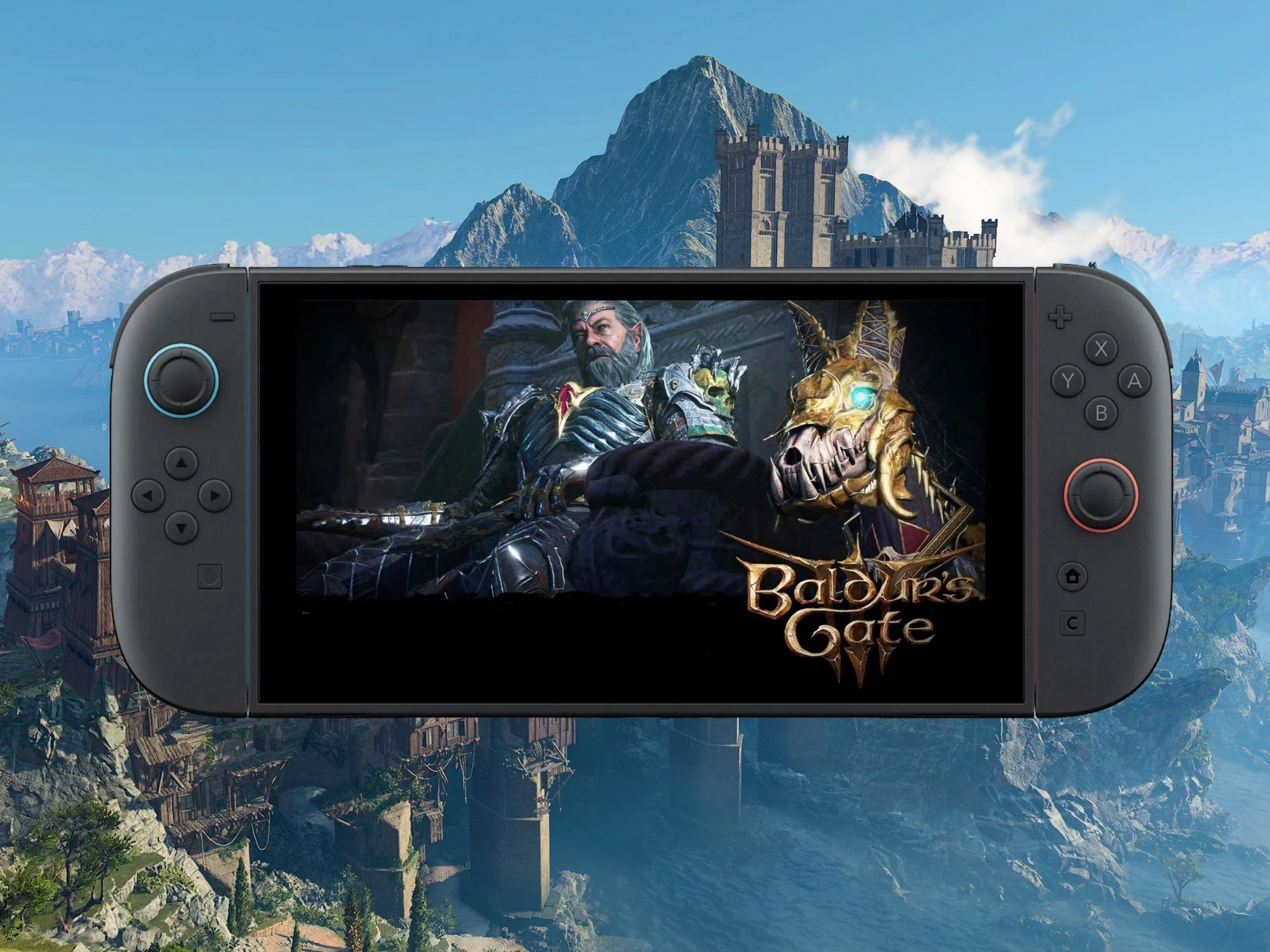
  • Baldur’s Gate 3 Switch 2 Port Delayed Amid Larian and WotC Drama

    Baldur’s Gate 3 Switch 2 Port Delayed Amid Larian and WotC Drama

    Key Takeaways

    1. Larian Studios is not planning any downloadable content (DLC) or a sequel for Baldur’s Gate 3 after its success.
    2. The company has ended its partnership with Wizards of the Coast, affecting the chances of a Baldur’s Gate 3 port to the Switch 2.
    3. Larian’s CEO, Swen Vincke, expressed disappointment about not being able to create a Switch 2 version during a Reddit Q&A.
    4. Developers at Larian have shifted their focus to new projects, especially the Divinity series, instead of creating more content for Baldur’s Gate 3.
    5. Corporate tensions exist between Larian and Wizards of the Coast, with recent layoffs at Hasbro contributing to the strained relationship.


    Despite the huge success of Baldur’s Gate 3, Larian Studios isn’t planning any downloadable content (DLC) or a follow-up game. The company has ended its partnership with Wizards of the Coast, who own the Dungeons & Dragons brand. This also makes it less likely for Baldur’s Gate 3 to be ported to the Switch 2, as confirmed by Larian’s CEO, Swen Vincke. However, a recent leak suggests that the split wasn’t as friendly as Vincke had indicated.

    Reddit Q&A Insights

    During a Reddit Q&A, Vincke discussed generative AI and shared some disappointing news for Nintendo enthusiasts. He mentioned that while they would have loved to create a game for the Switch 2, it wasn’t a decision they could make. His comments left fans feeling a bit let down.

    After the Q&A, a leaker known as NateTheHate2 explained why a Switch 2 version of Baldur’s Gate 3 is unlikely to happen. He claimed that the relationship between Larian and Hasbro/Wizards of the Coast is not in a good state. He went on to say, “I’ve heard numerous reasons, but they all point back to the fact that Larian and Hasbro/WotC are not on good terms right now.”

    Focus on New Projects

    Vincke had previously mentioned that the developers have lost their enthusiasm for creating additional content for Baldur’s Gate 3 or any new D&D-related games. Instead, they are focusing their efforts on new projects, particularly on the Divinity series. It seems that they would have preferred to bring Baldur’s Gate 3 to the Nintendo console before shifting their focus.

    Many fans believe there’s more behind the scenes, especially with the potential for increased profits. Some have noted a DMCA takedown by Wizards of the Coast of a Stardew Valley mod featuring characters from Baldur’s Gate 3, a move that Vincke had previously endorsed.

    Corporate Changes and Tensions

    In 2023, Hasbro, the parent company of Wizards of the Coast, laid off many employees, some of whom played significant roles in building the partnership with Larian Studios. Even though there may be some underlying issues, both companies have stated that there’s no animosity between them.

    NateTheHate2 suggests that both parties prefer to keep any disagreements private. Nonetheless, even if the specifications for the Switch 2 could support Baldur’s Gate 3, the chances for a port now appear quite bleak.

    Source:
    Link


  • Larian Studios CEO: RAM Shortage Impacts New Divinity Game Development

    Larian Studios CEO: RAM Shortage Impacts New Divinity Game Development

    Key Takeaways

    1. RAM prices are rising rapidly, impacting both gamers and game developers.
    2. Larian Studios faces unprecedented challenges in development due to the RAM shortage.
    3. Rising RAM costs disrupt development planning and resource management for game studios.
    4. Extensive performance optimization is now required earlier in the development process.
    5. The RAM shortage is driven by high demand from AI data centers, complicating the market for consumers and developers.


    RAM prices have been increasing rapidly in recent months, and there are no obvious signs that this trend will reverse in the near future. Gamers are already feeling the pinch when attempting to enhance their PCs, but the issue runs deeper, affecting game developers as well.

    Challenges for Game Developers

    Larian Studios, the creators of Baldur’s Gate 3, are currently developing a new game in the Divinity series. In a recent chat with TheGamer, CEO Swen Vincke shared how the persistent RAM shortage is causing significant hurdles in their development process. He noted that this situation is unprecedented for the studio. Typically, teams can anticipate hardware trends and adapt their plans accordingly. However, this time, those strategies are ineffective.

    Vincke remarked, “Interestingly, another [issue Larian is facing] is really the price of RAM and the price of SSDs and fk, man. It’s like, literally, we’ve never had it like this.”

    Impact on Development Planning

    Vincke elaborated that the increasing costs of memory have thrown off their forecasts and complicated resource management. As RAM has become scarce and pricey, the development team must now prioritize heavy optimization much earlier than they had initially intended.

    “It kind of ruins all of your projections that you had about it because normally, you know the curves, and you can protect the hardware. It’s gonna be an interesting one.” He added, “It means that most likely, we already need to do a lot of optimization work in early access that we didn’t necessarily want to do at that point in time. So it’s challenging, but it’s video games.”

    Early Access Complications

    Similar to Baldur’s Gate 3, the new Divinity game is set to debut in early access, which presents its own set of challenges. Early access requires developers to maintain a live version of the game while it is still being built. However, the need for extensive performance optimization on top of that significantly complicates the process. Vincke acknowledged that this additional workload was not part of their original plans but has become essential due to current hardware constraints.

    The RAM shortage is primarily fueled by the soaring demand from AI data centers. Major companies are purchasing vast quantities of memory, which leaves scant supply for consumer and creative sectors. This has driven DDR5 prices to extreme heights. For example, Asgard recently introduced a 256GB DDR5 RAM kit in China that costs more than Nvidia’s flagship RTX 5090 GPU.

    A Sapphire PR manager recently suggested that consumers should avoid panic buying, indicating that DDR5 prices might improve in about six months. However, given the unstable market and ongoing demand from AI businesses, it may take longer than expected for prices to stabilize.

    Source:
    Link


  • Larian CEO Swen Vincke Defends Generative AI in Divinity Game

    Larian CEO Swen Vincke Defends Generative AI in Divinity Game

    Key Takeaways

    1. Larian Studios is facing controversy over CEO Swen Vincke’s support for using generative AI in game development, which has drawn criticism from former employees.
    2. Vincke claims that AI tools are being used for tasks like idea generation and concept art, but assures that no AI-generated content will be included in the final game.
    3. Former employees have publicly disagreed with Vincke, expressing concerns about the company’s direction and the impact of AI on creative work.
    4. In response to criticism, Vincke emphasized that the studio relies on a dedicated team of artists and that they are not replacing human creativity with AI.
    5. The conversation around AI in gaming continues to spark debate, with some viewing it as a threat to originality and innovation in the industry.


    Just a few days after the mysterious announcement of Divinity at the Game Awards 2025, Larian Studios, known for developing Baldur’s Gate 3, has found itself at the center of a major controversy. The studio’s CEO, Swen Vincke, voiced his confidence in the company’s use of generative AI, which quickly attracted criticism from an unexpected source: former employees. They argued that the company’s current stance contradicts their past experiences.

    AI Tools in Use

    In an interview with Bloomberg, Vincke shared that Larian has been trying out AI tools for various tasks like generating ideas, creating PowerPoint presentations, writing placeholder texts, and producing concept art. He acknowledged that there had been some internal dissent but mentioned, “At this point, I believe everyone in the company is more or less okay with the way we’re using it.” He did emphasize, however, that no AI-generated content will be included in the final version of Divinity, as all tasks from art to writing will be managed by human employees.

    Mixed Reactions Online

    Vincke’s statements did not sit well with many online, as fans and developers raised concerns over the integration of AI in creative processes. Anne Methot, a former QA tester who spent four years at Larian, expressed her lack of surprise regarding the news and accused Vincke of “lying about people being okay with it.” Another former artist from Larian, Selena Tobin, who contributed to Baldur’s Gate 3, added her thoughts:

    “I loved working at Larian Studios until AI. Reassess and change your direction, like, yesterday. Show some respect to your employees. They are world-class and don’t need AI help to generate brilliant ideas.”

    Vincke’s Response to Criticism

    Feeling the backlash online, Vincke took to X to defend his studio’s practices, stating:

    “Holy fk guys, we’re not ‘pushing hard’ for or replacing concept artists with AI. We have a team of 72 artists, including 23 concept artists, and we’re hiring more. The art they produce is original, and I’m very proud of their work.”

    To address the rising tensions in an industry already facing challenges due to AI-related layoffs, Vincke organized an AMA after the holidays, where representatives from different departments answered questions regarding the development of Divinity. He remarked, “Our processes are always evolving, and if they are not effective or don’t reflect who we are, we will adapt.”

    In light of Clair Obscur: Expedition 33’s producer confirming AI usage, any statements from Larian, the studio behind the 2023 TGA GOTY winner, Baldur’s Gate 3, were bound to spark debate among players and industry experts. Some view AI-generated content as ‘bland’ or ‘soulless,’ while others point out the potential hazards of stagnation in an industry where AI can only remix existing content, inhibiting both innovation and major advancements in future titles.

    Source:
    Link


  • Outer Worlds 2 Director Advocates for Meaningful RPG Choices

    Outer Worlds 2 Director Advocates for Meaningful RPG Choices

    Key Takeaways

    1. RPGs have traditionally coddled players by ensuring every choice leads to success, which diminishes the meaning of choices.
    2. For choices to be meaningful, they must have the potential for both good and bad outcomes based on player actions.
    3. Players should engage thoughtfully with RPGs instead of relying solely on objective markers that bypass character interactions.
    4. Obsidian’s design in The Outer Worlds 2 allows players to explore different strategies and access all content from the start.
    5. The success of games like Baldur’s Gate 3 indicates a shift back towards meaningful player choice in RPGs.


    Following the recent release of The Outer Worlds 2, game director Brandon Adler took some time to consider and discuss his views on RPG design philosophy. He expressed that the genre has been “coddling” players for years, giving them a sure chance of winning no matter their choices or character builds. Adler hopes to see this approach change, and it appears to be shifting with the success of games like Baldur’s Gate 3.

    Adler’s Perspective on RPG Design

    In a conversation with GamesRadar+, Adler shared his beliefs:

    Overall, it seems like a lot of games, especially RPGs, operate under the idea that, ‘Hey, you can’t make bad choices, so every character build is okay, and we guarantee that whatever you do, everything will turn out alright.’

    The issue with this, in my view, is that for choices to be meaningful, they must have the potential to be either good or bad, based on the player’s actions.

    The Importance of Player Choice

    Adler also noted that he has seen many content creators and streamers experimenting with “bad character builds” in The Outer Worlds 2. He believes these builds and decisions are “perfectly valid ways to play.” However, he criticized the tendency of gamers to depend heavily on objective markers, which allow players to bypass thoughtfully designed NPC interactions and conversations.

    He went on to mention:

    In a genuine RPG, you really need to consider what’s happening while you’re playing through it. You should be ready to engage with the game. I’m noticing more of this now, especially with releases like Baldur’s Gate 3.

    I think it’s beginning to shift back in that direction. That’s wonderful because I believe players are going to enjoy rediscovering how RPGs can provide real player choice that they might have been missing for a while.

    Obsidian’s Game Design Choices

    Staying true to this philosophy, Obsidian chose not to restrict quests in The Outer Worlds 2, enabling players to try out different strategies and maintain access to all content right from the start.

    In another interview, Adler discussed the RPG experience in The Outer Worlds 2 and remarked, “Everyone is going to have a unique experience, and they might not encounter everything, and that’s perfectly fine.”

    Source:
    Link


  • Baldur’s Gate 3 Director on Elon Musk’s AI Game: Leadership Issues

    Baldur’s Gate 3 Director on Elon Musk’s AI Game: Leadership Issues

    Key Takeaways

    1. Elon Musk’s company xAI plans to launch an entirely AI-generated video game by 2026.
    2. Industry expert Michael Douse expresses skepticism, believing the gaming industry needs leadership and vision more than new technology.
    3. Douse highlights that while AI can assist in game development, it cannot replace human creativity and the unique ability to craft engaging experiences.
    4. Current gaming approaches often rely on algorithms and data, which may keep players interested but lack meaningful depth.
    5. Douse asserts that AI can help streamline development, but true innovation requires a human touch and cannot solve the industry’s fundamental issues.


    Elon Musk is embarking on a new venture, as he has recently revealed that his company, xAI, is set to launch a completely AI-generated video game by 2026. The goal is to demonstrate that artificial intelligence can independently create a full game, however, not everyone is thrilled about this idea.

    Industry Skepticism

    Michael Douse, the publishing director at Larian Studios, which developed Baldur’s Gate 3, took to social media to express his perspective on Musk’s announcement. Douse feels that the gaming industry does not require more technology. He acknowledges that while AI can be useful as a tool, it won’t address the significant issues related to leadership and vision within the industry.

    “AI has its place as a tool, but we have all the tools in the world and they aren’t compensating for the incredible lack of cogent direction. AI isn’t going to solve the big problem of the industry, which is leadership & vision.”

    The Need for Human Creativity

    Douse went on to mention that many games are currently created using algorithms, data, and various techniques to keep players engaged. While this approach may be effective for maintaining interest, it fails to create meaningful gaming experiences. He emphasized that the key lies in having individuals who can craft immersive worlds that players are eager to discover. Although AI can aid in this process, it cannot substitute for human creativity.

    “Genuinely what this industry needs is not more mathematically produced, psychologically trained gameplay loops, rather more expressions of worlds that folks are engaged with, or want to engage with.”

    The Role of AI in Development

    AI certainly has the potential to help developers streamline their work, but as Douse points out, “There is no craft without the human touch.” It lacks the ability to replace the enthusiasm, vision, and leadership necessary for true innovation, and it will not address the underlying issues that are hindering the industry’s progress.

    Michael Douse via X

    Source:
    Link


  • Baldur’s Gate 3: 15 Million Sold, Only 23% Finished the Game

    Baldur’s Gate 3: 15 Million Sold, Only 23% Finished the Game

    Key Takeaways

    1. Baldur’s Gate 3 has sold over 15 million copies since its release in August 2023, but only 23.4% of players have completed the game.
    2. The game’s vast content leads to many players not reaching Act 3, with 76% of users still exploring earlier parts of the game.
    3. Baldur’s Gate 3 has a slightly better completion rate than other popular titles like The Witcher 3 and Skyrim, especially regarding early achievements.
    4. Larian Studios has released major updates and hotfixes, including improvements for performance issues in Act 3.
    5. Larian is rumored to be developing two new titles, possibly including a sequel to Divinity: Original Sin, with a release expected between 2028 and 2029.


    It’s been over two years since Baldur’s Gate 3 made a splash in August 2023. By November 2024, the game has reached sales of more than 15 million copies worldwide. Even though it remains one of Steam’s best-selling titles, less than a quarter of PC gamers have actually completed the game.

    Completion Rates and Player Engagement

    According to Steam achievement statistics for Baldur’s Gate 3, a mere 23.4% of players have earned the completion trophy named “All’s Well That Ends Well.” This figure doesn’t even include players who replay the game, as the trophy is only awarded once per playthrough.

    A significant portion of Baldur’s Gate 3 users, about 76%, seem to be wandering around the Forgotten Realms. It’s not unusual for many players, since countless gamers haven’t even reached Act 3 due to the game’s vastness and the plethora of side content available.

    Comparing with Other Popular Titles

    This situation isn’t unique to Baldur’s Gate 3. The Witcher 3: Wild Hunt, which debuted in 2015, has a completion rate of around 27%, with only 65% of players advancing beyond White Orchard. Likewise, The Elder Scrolls V: Skyrim Special Edition, released in 2016, shows a rather disappointing completion rate of just 11.1%, likely because many players choose to engage with side quests instead of following the main storyline.

    Interestingly, Baldur’s Gate 3 does slightly better in some areas: only 10% of players have yet to achieve the “Descent from Avernus” trophy by escaping the tutorial-like Nautiloid ship in the prologue, which is a significant improvement over The Witcher 3.

    Updates and Future Projects

    Larian has wrapped up major updates for Baldur’s Gate 3 but continues to release hotfixes. The latest update, Hotfix 34, has added native Steam Deck support and reduced framerate spikes in busy locations like Act 3 across all platforms.

    Act 3 became notorious at launch for its high number of NPCs in the lively city of Baldur’s Gate, causing even powerful CPUs like the Intel Core i9 12900K to struggle, leading to frame time spikes and FPS drops of about 20%. This performance issue may have contributed to some players deciding against finishing the game.

    Baldur’s Gate 3 marked its second anniversary last month, with Larian’s head Swen Vincke sharing insights about how the game’s incredible success has allowed the studio to focus on upcoming projects.

    As the rumors go, Larian is developing two new titles. Speculation hints that one might be a brand-new IP while the other could be a sequel to one of Larian’s earlier franchises, potentially Divinity: Original Sin 3. Vincke mentioned that Larian’s next game is expected to launch sometime between 2028 and 2029.

    Source:
    Link