Category: Gaming

  • Final Fantasy 7 Remake Switch 2 Pre-Load Highlights Game-Key Issues

    Final Fantasy 7 Remake Switch 2 Pre-Load Highlights Game-Key Issues

    Key Takeaways

    1. Pre-load Availability: Final Fantasy 7 Remake Intergrade is available for pre-load on the Switch 2, launching January 22nd, with a file size exceeding 90GB.

    2. Cartridge Limitations: The game cannot fit on standard cartridges due to its size, requiring the use of Game-Key Cards, which complicates downloads for players.

    3. Visual Quality Focus: Square Enix prioritized high visual quality without compression, resulting in the game taking up significant storage space on the Switch 2.

    4. Developer Challenges: Developers face issues with cartridge read speeds not matching the console’s capabilities, leading to performance concerns if not addressed.

    5. Rising Storage Costs: The demand for storage is increasing prices for memory solutions, creating budget concerns for gamers needing additional space for large games.


    Final Fantasy 7 Remake Intergrade is now available for pre-load on the Switch 2 ahead of its launch on January 22nd. Square Enix announced that the download will exceed 90GB, and gamers are now racing to clear storage on their consoles. With the cost of microSD Express cards rising in some areas, this added expense is causing budget concerns for many players.

    Cartridge Challenges

    Ideally, the RPG would come on a standard cartridge to save the handheld’s 256GB internal memory. Sadly, the file size goes over the 64GB limit of physical media, leaving Game-Key Cards as the only option. Buyers are also faced with limited information about these releases, which means they have to monopolize their internet connections for downloads.

    Visual Quality Prioritized

    Unlike other titles on the Switch 2, Square Enix did not compress Final Fantasy 7 Remake. Players need similar free space on both PC and PS5. Game Director Naoki Hamaguchi stated that they didn’t want to compromise on the visual quality of the game. Modern lighting effects were prioritized to ensure the graphics stand up against those on different platforms.

    Digital Foundry has praised the demo of the game, calling it one of the best-looking games on the Nintendo handheld. However, this refined presentation takes up over a third of the system’s available storage.

    Developer Dilemmas

    Other limitations related to the Switch 2 specs have also led developers to use Game-Key Cards. The read speeds of cartridges simply can’t keep up with the console’s internal UFS drive or external media. If they didn’t, players would face issues such as stuttering during gameplay or longer loading times.

    With fans having to delete installed games, many are now demanding alternative solutions. There have been recent hints that Nintendo may consider cheaper, smaller cartridges. This could persuade more publishers to move away from Game-Key Cards. However, even with this change, the media would still struggle to fit large games like Final Fantasy 7 Remake Intergrade.

    Rising Costs

    The increasing demand from AI data centers is causing memory and storage prices to rise. Japan is already witnessing the impact on external NAND flash, like microSD Express cards. An upgraded Switch 2 with a larger capacity drive may be unavoidable, yet Nintendo must also think about the growing costs.

    Source:
    Link


  • Hyperkin Explains Delay of Mega95 Handheld Console

    Hyperkin Explains Delay of Mega95 Handheld Console

    Key Takeaways

    1. Hyperkin has completed the hardware for the Mega 95 handheld, but software delays are holding up its release.
    2. Current software issues include problems with game graphics, such as visual artifacts and tearing.
    3. The Mega 95 will feature a 5-inch screen, 4:3 and 16:9 display modes, an 8-way D-Pad, and six action buttons.
    4. The handheld is expected to offer up to 10 hours of battery life and include a dock for connecting to an external display.
    5. Further updates on the Mega 95’s release will be shared by Hyperkin on their X account.


    It has been a couple of years since Hyperkin first showed off the Mega 95 handheld, which is meant to play SEGA Genesis and SEGA Mega Drive cartridges, yet the device is still not available to buy. After a long period of silence, Hyperkin has shared an update regarding the Mega 95’s progress.

    Hardware Finalized, Software Still Lagging

    In a post on X, Hyperkin announced that the hardware side of things is complete but they’re experiencing delays because of the software. There are problems with the current version of the software, especially with how game graphics are being translated. Issues like visual artifacts and some tearing have been reported.

    Hyperkin has been working on fixing these problems for months, which is why the release has been pushed back. On a positive note, they mentioned that a new software version will soon be ready for testing, and if everything looks good, they will start mass production.

    Specifications Remain Consistent

    As of now, it appears that there haven’t been any changes to the hardware. The Hyperkin Mega 95 is still expected to launch with a 5-inch screen and a switch that allows users to choose between 4:3 and 16:9 display modes. From the images available, it’s clear that the handheld will feature an 8-way D-Pad and six action buttons, similar to the Retroid Pocket Classic 6 SG, which is currently priced at $149 on Amazon. It’s also said to offer up to 10 hours of battery life and include a dock that has ports for a Genesis controller, enabling connection to an external display.

    The remaining specifications of the Mega 95 are still not revealed, but they are likely to be disclosed once Hyperkin is prepared to launch the product.

    Source:
    Link


  • Build Your Ideal City: Relaxed City Builder Free on Steam

    Build Your Ideal City: Relaxed City Builder Free on Steam

    Key Takeaways

    1. Virtual City Playground offers a relaxed city-building experience without complicated traffic systems or steep learning curves.
    2. The game has received an average rating of 85% from 54 reviews on Steam, indicating positive player feedback.
    3. While the game is free to play, some players have criticized its aggressive monetization tactics.
    4. It is a port of a mobile game, initially launched on Android and iOS, with a user interface adapted for PC.
    5. The graphics are basic, but this doesn’t seem to significantly impact player enjoyment.


    City-building games like Anno and Cities: Skylines can sometimes feel like a lot to handle, with never-ending demands and complicated traffic systems to oversee. But if you’re looking for a more relaxed experience where you can build at your own speed, Virtual City Playground might just be the perfect choice for you.

    A Relaxed Building Experience

    G5 Entertainment AB has created a city-building game that avoids the intricate traffic systems and challenging learning curves often found in the genre. Virtual City Playground invites players to construct their cities at a comfortable rate. Up to this point, it has gathered 54 reviews on Steam, achieving a commendable average rating of 85%. While many players enjoy the straightforward and fun gameplay, some have pointed out the aggressive monetization tactics. Nonetheless, with a little patience, all content can be unlocked without any monetary investment.

    Mobile Origins and Visuals

    It’s important to mention that Virtual City Playground is a port of a mobile game that was first launched on Android and iOS. Although the user interface has been tailored for PC, the graphics are still quite basic. However, this probably won’t deter most players. The game made its debut on Steam on January 12, 2026, and it is completely free to play, similar to numerous titles that arrived on the platform in late 2025 and early 2026. As for Steam Deck compatibility, which is available on Amazon for $480, it is currently marked as “Unknown.”

    Source:
    Link


  • GOG Shifts Focus to Linux as Windows Software Falls Short

    GOG Shifts Focus to Linux as Windows Software Falls Short

    Key Takeaways

    1. Michał Kiciński criticizes Windows, calling it “bad software,” and expresses surprise at its long-standing popularity.
    2. Increasing user frustration with Windows includes issues like unwanted AI features, ads in the Start menu, and high hardware demands of Windows 11.
    3. Kiciński prefers macOS at home but still has to manage Windows issues for his family, describing it as “unbelievable.”
    4. GOG is considering better support for Linux, spurred by criticism of Windows and the success of Valve’s Steam Deck.
    5. Users have long awaited a native Linux client for GOG Galaxy, but some express concerns about Linux’s compatibility issues and fragmentation.


    Michał Kiciński, the co-founder of CD Projekt and owner of GOG since 2025, is making waves once more with his candid opinions. After taking aim at the popular platform Steam, the Polish business figure has now set his sights on Windows. In a chat with PCGamer, he labelled Microsoft’s operating system as “bad software” and expressed disbelief that it has stayed in circulation for such a lengthy period.

    Growing Frustration with Windows

    Kiciński’s views echo a broader dissatisfaction with Windows. Over the past few years, users have voiced their grievances, especially regarding unwanted AI features like Copilot, advertisements appearing in the Start menu, and the increasing hardware demands of Windows 11. Because of these issues, many users are looking at alternatives like macOS or Linux. Kiciński made the switch a while ago and now prefers macOS at home, yet he still finds himself dealing with Windows occasionally. He often finds himself fixing his parents’ Windows computers, a task he describes as “unbelievable.”

    Potential Shift to Linux

    The interview also highlighted a rising interest in Linux at GOG, driven by the ongoing criticism of Windows and the popularity of Valve’s Linux-based Steam Deck, which is currently selling for about $480 on Amazon. While Kiciński directed his focus at Windows, Managing Director Maciej Gołębiewski provided a more straightforward response. “We could probably do more in this area – and that’s something we’ll be looking into,” he noted, hinting at a possible move toward enhanced Linux support.

    Future for Linux at GOG

    The prospects for better Linux compatibility at GOG in 2026 look encouraging. Up to this point, GOG Galaxy has not had a native Linux client, forcing users to depend on third-party solutions like Heroic or Lutris. On Reddit, many users have expressed that this potential change is long overdue and largely agree with the critiques aimed at Windows. However, not all opinions are without caution. Some users highlight the challenges that Linux itself presents, including compatibility problems and fragmentation among various distributions, which can make it tough for newcomers.

    Source:
    Link


  • Fortnite Players Criticize ‘Steal the Brainrot’ Microtransactions

    Fortnite Players Criticize ‘Steal the Brainrot’ Microtransactions

    Key Takeaways

    1. Epic Games introduced in-island microtransactions for user-created Fortnite maps, allowing creators to sell items and features for V-Bucks.
    2. The tycoon-style island “Steal the Brainrot” offers high-cost, chance-based purchases, including random reward bundles and a roulette-style wheel.
    3. The new monetization system has faced backlash, with accusations of operating a loot-box gambling scheme targeting younger players.
    4. Epic’s UEFN guidelines permit creators to sell items directly, but concerns remain about the odds of winning in random purchases and past controversies over loot boxes.
    5. The island was temporarily removed from Fortnite’s Discover tab during the backlash but was reinstated, with ongoing worries about the gambling-like mechanics still in place.


    Within a day of Epic Games introducing in-island microtransactions for user-created Fortnite maps on January 9, a popular tycoon-style island called Steal the Brainrot included high-cost, chance-based buying options. Players can purchase “Present Rot” bundles that offer random rewards for as much as 4,900 V-Bucks, which is about US$35–40 depending on how you acquire the currency. Additionally, players can spin a roulette-style wheel costing 100 V-Bucks per spin for a shot at rare items and in-game cash.

    Backlash from the Community

    This new system has sparked strong reactions on platforms like Reddit, X, and YouTube, with players claiming that the map is practically operating a loot-box gambling scheme within Fortnite’s Creative mode. Critics highlight the low drop rates for rewards such as “Secret Lucky Rot” and “Secret Grande Rot” on the wheel, the use of limited-time “discount” labels on expensive bundles, and the fact that the island is heavily aimed at a younger audience. Some observers point out that Epic had previously distanced itself from paid random loot llamas in Fortnite’s Save the World mode, noting that loot boxes are banned in countries including Belgium.

    Epic’s New Monetisation Policies

    Epic’s updated UEFN monetisation guidelines permit creators to sell consumables, gameplay enhancements, and random items directly on their islands, with prices ranging from 50 to 5,000 V-Bucks and obligatory odds disclosure for chance-based purchases. Currently, the offers in Steal the Brainrot seem to follow these regulations, and Epic has stated that UEFN creators will receive 100% of the V-Bucks revenue from in-island sales (after platform fees) until early 2027. There hasn’t been any enforcement action announced against this map, but Epic has indicated it might change its policies if necessary.

    Temporary Removal and Player Concerns

    The island temporarily vanished from Fortnite’s Discover tab during the controversy, causing worry among players who had recently spent their V-Bucks. It was later reinstated after the creator attributed the disappearance to a technical glitch following a game update. The gambling-like mechanics were still present when the map returned, and guides have already surfaced explaining how players can seek refunds for V-Bucks if they feel deceived.

  • Ryzen 7 5800X3D vs Core Ultra 9 285K: Gaming Performance Test

    Ryzen 7 5800X3D vs Core Ultra 9 285K: Gaming Performance Test

    Key Takeaways

    1. The AMD Ryzen 7 5800X3D remains a top-performing gaming CPU, closely competing with Intel’s latest flagship, the Core Ultra 9 285K.
    2. At 1080p/Medium settings, the Ryzen 7 5800X3D achieved an average of 188 FPS, almost matching the performance of the Ryzen 5 9600X.
    3. Even at 1080p/Ultra settings, the Ryzen 7 5800X3D held strong against CPUs like the Core i5-14600K, with an average FPS of 151.
    4. There is a suggestion for AMD to reintroduce AM4 CPUs like the Ryzen 7 5800X3D, as DDR4 RAM prices are more affordable compared to DDR5.
    5. Reintroducing the Ryzen 7 5800X3D would provide gamers with a solid and cost-effective alternative in a challenging market for memory and SSDs.


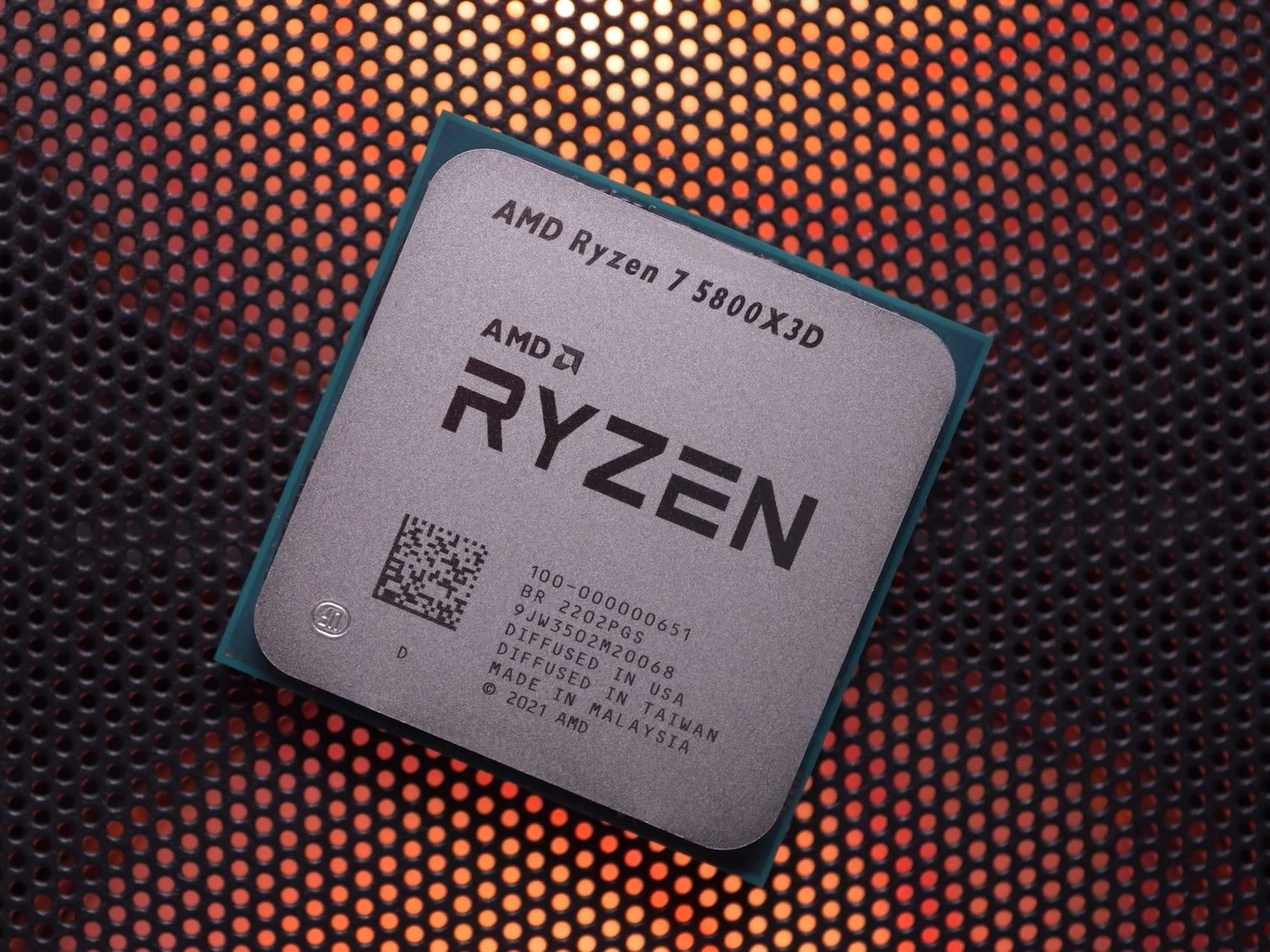
    When we took a look at the AMD Ryzen 7 5800X3D back in 2022, it was the quickest gaming CPU available. It even outperformed the much pricier Core i9-12900K, which is Intel’s top 12th-gen CPU. Fast forward to today, and the Ryzen 7 5800X3D’s performance remains quite relevant. Actually, testing from Hardware Unboxed shows that the Ryzen 7 5800X3D is only a few percentage points behind Intel’s latest flagship, the Core Ultra 9 285K.

    Performance at 1080p/Medium

    In the 14 games that HU tested at 1080p/Medium settings, the Ryzen 7 5800X3D achieved an average of 188 FPS, along with a 1% Low of 151. This means the CPU was nearly on par with the Ryzen 5 9600X and was just a tad behind the Core Ultra 9 285K (which you can find on Amazon). The Ryzen 7 9800X3D, on the other hand, was noticeably faster, boasting a 35% higher average FPS compared to the Ryzen 7 5800X3D.

    Performance at 1080p/Ultra

    The findings were similar at 1080p/Ultra, where the Ryzen 7 5800X3D still held its ground against the Core i5-14600K and the Ryzen 5 9600X. For example, while the Core i5-14600K and Ryzen 5 9600X had an average FPS of 153, the Ryzen 7 5800X3D closely matched this performance with an average of 151 FPS.

    In simpler terms, even with recent games like Battlefield 6, the Ryzen 7 5800X3D can keep pace with the newest CPUs. This is excellent news for those who are already using this processor or are planning to build a new system with it.

    Potential Reintroduction of AM4 CPUs

    As pointed out by HU, it would be beneficial for AMD to bring back AM4 CPUs like the Ryzen 7 5800X3D. Due to the current shortage in RAM supply, the prices of DDR4 RAM modules, although still high, are much more reasonable compared to DDR5 RAM kits. Since the latest Zen 5 and Intel Arrow Lake chips only work with DDR5, building a PC with the newest Intel/AMD CPUs has become quite costly for everyday gamers.

    Thus, bringing back the Ryzen 7 5800X3D would offer consumers a solid and affordable alternative to the latest CPUs. This is particularly crucial now, as the memory and SSD market may worsen in the future, and improvements might not come until 2028.

    Source:
    Link


  • Monster Hunter Wilds High FPS Locked Behind DLC Paywalls

    Monster Hunter Wilds High FPS Locked Behind DLC Paywalls

    Key Takeaways

    1. The DLC checking system in Monster Hunter Wilds may negatively affect game performance for players who do not own all DLCs.
    2. A Reddit user discovered a significant FPS boost when using a mod to disable the DLC checking feature.
    3. The FPS increase was substantial, with improvements from around 25 FPS to over 50 FPS in busy areas when the mod was activated.
    4. The mod that disables DLC checks is still in development and not yet ready for public testing, but it could become essential for performance optimization.
    5. Similar issues have been noted in other games, indicating that DLC systems may impact gameplay experiences across different titles.


    On-disc DLC and similar issues have caused problems for dedicated gamers for quite some time. But what if I told you that even game optimization might be tied to DLC? It sounds hard to believe, yet tests and player experiences with Monster Hunter Wilds on PC suggest that it could be true, although it’s likely not intentional by Capcom. Monster Hunter Wilds is a premium title, but it also has various DLCs and microtransactions. As a result, Capcom integrated a DLC checking system into the game to confirm which DLCs players have.

    Background Performance Issues

    The main issue is that this DLC checking system appears to run continuously in the background, only ceasing when a player owns every single DLC. This was uncovered by a Reddit user named u/de_Tylmarande on the MonsterHunter subreddit, who noticed a major performance difference between his copy of Monster Hunter Wilds and that of his friends, all running on the same laptop. His friends’ version of the game ran better at identical settings—about 20-30 FPS more on average—and the only distinction was that his friend owned all the DLC.

    Testing the Impact of DLC Checks

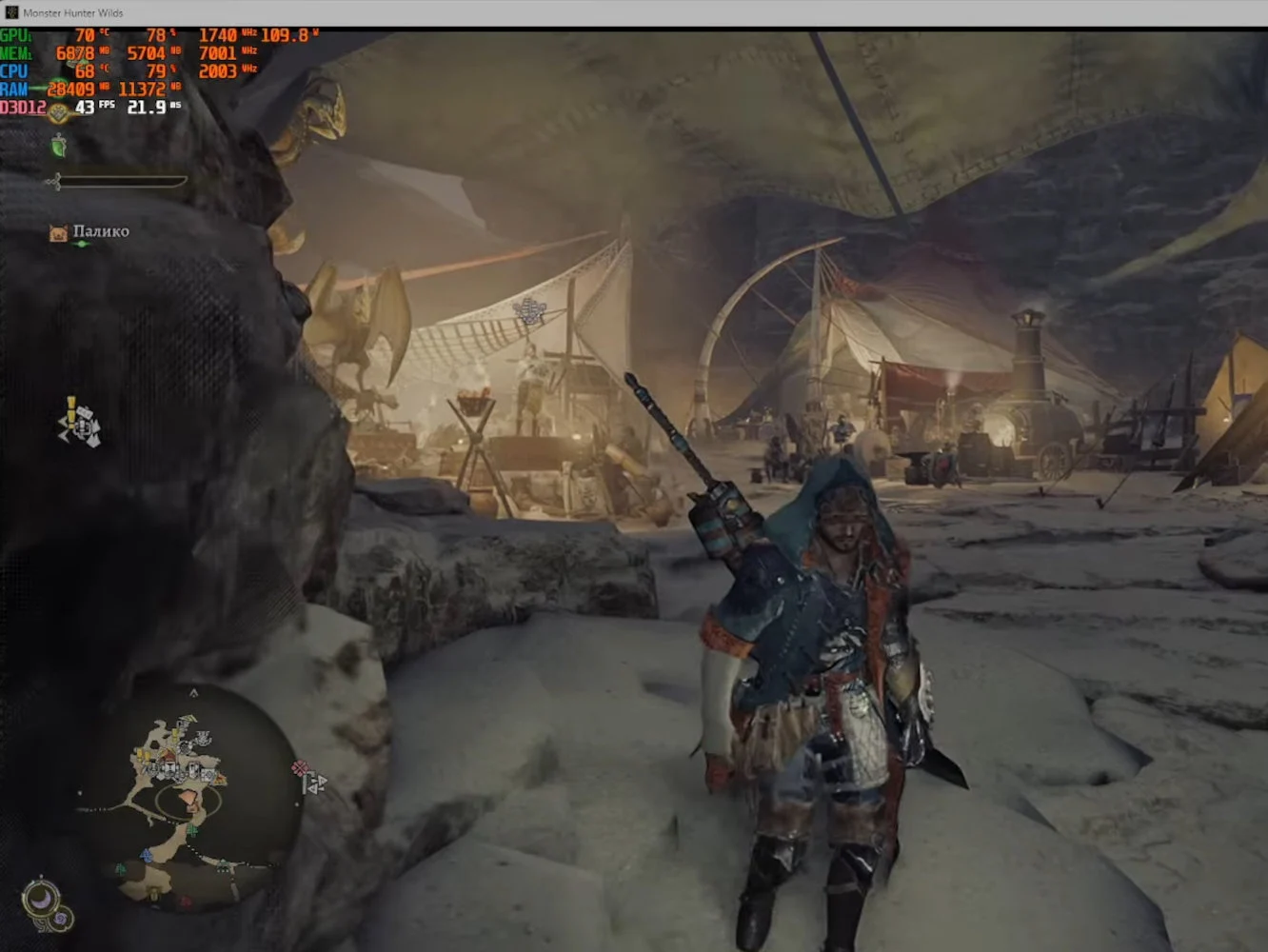
    Curious to see if he could achieve similar performance without spending extra money, u/de_Tylmarande tested Monster Hunter Wilds with and without a mod that disables the DLC checking. Without the mod, he saw around 25 FPS in a bustling village, peaking in the mid-30s. However, with the mod activated, he began to average over 50 FPS and occasionally hit 60, rarely falling below 50 FPS. This change transformed the game from nearly unplayable to fairly smooth, all thanks to turning off a single DRM feature.

    Potential Fixes and Future Updates

    This revelation is certainly shocking. On a side note, u/de_Tylmarande also claims to have previously shared an FPS fix with Capcom for Dragon’s Dogma 2 but didn’t receive acknowledgment for the follow-up patch. He mentioned he has provided details of this fix to “the same person I talked to a few years back about Dragon’s Dogma 2.” Hopefully, a bug fix will come soon, along with Capcom’s planned optimizations, making Wilds a better experience for all players.

    Unfortunately, the mod currently is still in development and is labeled as “not ready for public testing.” However, Tylmarande insists he will keep working on it in case Capcom does not release an official fix. Other users on Reddit have mentioned a similar loading issue in Grand Theft Auto V that negatively affected performance by repeatedly parsing a large JSON file. If this mod becomes essential for Wilds players, it could end up being as important as DSfix was for the original Dark Souls on PC. The mod can be installed using the standard Fluffy Mod Manager for the RE Engine, so if it does get a public release, setup should be easy.

    Source:
    Link


  • Sony PS5 Pro Performance Boost with PSSR 2.0 by March

    Sony PS5 Pro Performance Boost with PSSR 2.0 by March

    Key Takeaways

    1. Sony’s PlayStation 5 Pro will feature an advanced upscaling algorithm, PSSR 2.0, based on AMD’s FidelityFX Super Resolution 4.
    2. PSSR 2.0 is set to launch in the first quarter of 2026, likely by the end of March, according to leaker Gust_Fan.
    3. The update will enhance older games and PlayStation classics by upscaling them to higher resolutions and potentially increasing frame rates.
    4. There is a possibility of a performance mode that could provide 1440p at 120 fps for games that don’t reach 120 fps at full 4K resolution.
    5. Sony is expected to release a list of compatible games for PSSR 2.0 once the new software is launched.


    Last March, Sony made it clear that the Sony PlayStation 5 Pro (starting at $749 on Amazon) will feature a better upscaling algorithm that is based on AMD’s FidelityFX Super Resolution 4. However, other than announcing a release in 2026, they haven’t shared much more about PSSR 2.0. Japanese leaker Gust_Fan, who has previously disclosed reliable information about the PlayStation 5 Slim’s design, has indicated that PSSR 2.0 is set to launch in the first quarter of 2026, likely by the end of March.

    Upscaling Benefits

    PSSR 2.0 is also anticipated to enhance older games as well as PlayStation classics by allowing those games to be upscaled to higher resolutions. For titles made for the PS5, this update could significantly increase frame rates for some games, as FSR 4 allows for frame generation. This means that every other frame might be created by AI instead of being processed by the GPU. If Sony also adds frame generation along with the AI upscaling found in FSR 4, 4K gaming at 120 frames per second could become a reality for many PS5 titles.

    Performance Mode

    For games that do not reach 120 fps at full 4K resolution with PSSR 2.0, there are talks of a performance mode that could deliver 1440p at 120 fps. It’s still uncertain which titles will utilize PSSR 2.0, but Sony is expected to share a list of compatible games once this new software is launched. As shown in a comparison video by Digital Foundry, FSR 4 provides clear improvements in image quality, making it an exciting upgrade for gamers.

    Source:
    Link


  • Ex-Rockstar Games Employee Raises Concerns About AI Use in GTA 6

    Ex-Rockstar Games Employee Raises Concerns About AI Use in GTA 6

    Key Takeaways

    1. Rockstar Games shows hesitance towards generative AI, with leadership minimizing its creative role in GTA 6.
    2. Over 30 former employees seek compensation for alleged misconduct, citing concerns about working conditions and unionization efforts.
    3. Confidential information about GTA 6 was reportedly leaked during employee discussions on a Discord server, including mentions of a 32-player multiplayer mode.
    4. Leadership at Take-Two and Rockstar prefers AI for efficiency rather than replacing human creativity in game development.
    5. Ongoing court proceedings may reveal more about GTA 6’s development, despite Rockstar’s efforts to control leaks.


    While the studio keeps its future plans under wraps, Rockstar Games representatives have shown hesitance towards generative AI. Take-Two Interactive’s CEO, Strauss Zelnick, has also minimized the technology’s creative influence on GTA 6. However, court documents indicate that at least one former employee raised concerns regarding these tools.

    Evidence from the Tribunal

    The YouTube channel People Makes Games examined evidence from a recent tribunal in the UK. Over 30 employees sought compensation for lost wages after being let go for alleged “gross misconduct”. The core of the issue revolves around logs from the Independent Workers of Great Britain (IWGB) Discord server.

    The employees who support unionization argue that their chats were about working conditions. In contrast, Rockstar claims that confidential information was leaked during these exchanges, including details about GTA 6 and its new features. People Make Games looked through many messages, one of which mentioned a 32-player multiplayer mode. Yet, a significant portion of the discussions revolved around grievances about the studio.

    Concerns About AI

    On February 20th, 2025, a former worker seemed to respond to an office memo, stating, “I would both love and hate to know what uses of gen AI legal have approved.” As companies like Microsoft and EA pour money into AI, developers feel their job security is at risk. Generative AI can help with quality assurance and debugging, and even produce assets without needing to pay salaries. It’s likely that Rockstar only sees these tools as useful for basic tasks like scheduling. Nevertheless, the individual might have foreseen the technology taking on bigger roles.

    The Stance of Leadership

    Strauss Zelnick from Take-Two and Dan Houser, co-founder of Rockstar, are not in favor of AI replacing human artists. In interviews, they have emphasized using AI for enhancing efficiency rather than for map design or creative processes.

    Other leaks from the Discord server indicate that the studio aimed to have as many employees as possible working on-site. Rockstar is also known for its dedication to perfecting games, which likely still needs human input. While GTA 6 may utilize machine learning to enhance NPC behavior, it won’t replace human creativity.

    Future Revelations

    With numerous documents submitted to the court, more information about the game’s development could surface. Rockstar will strive to keep GTA 6 leaks under control, but sensitive information is already documented.

    Source:
    Link


  • Meta Closes Studio Behind Deadpool VR Video Game

    Meta Closes Studio Behind Deadpool VR Video Game

    Key Takeaways

    1. Meta is cutting over 1,000 jobs in its Reality Labs division and closing three game studios, including Twisted Pixel.
    2. The layoffs are part of a strategic shift to redirect funding from the metaverse to wearables, with plans to reinvest savings in 2026.
    3. Along with Twisted Pixel, other studios closed include Armature and Sanzaru, impacting notable VR titles.
    4. Despite studio closures, Meta remains committed to gaming, focusing future investments on third-party developers and partners.
    5. Meta still has five operational gaming studios, including Beat Games and BigBox, which are expected to continue creating games for Meta Quest headsets.


    Meta has recently made the decision to cut several jobs within its Reality Labs division. This move has also resulted in the closure of three game studios, with Twisted Pixel being one of them. Twisted Pixel is known for developing the video game Deadpool VR, which was launched on November 18, 2025.

    Job Cuts and Shifts in Focus

    According to a report from Bloomberg, over 1,000 jobs are affected by this layoff. The changes stem from Meta’s strategic choice to redirect its funding from the metaverse towards wearables. This information comes from an internal memo and statements from a company spokesperson. The report indicates that the savings from these layoffs will be reinvested to foster the growth of wearables in 2026.

    Studio Closures

    Besides Twisted Pixel Games, the layoffs have also resulted in the closure of Armature, the studio that created the VR version of Resident Evil 4, and Sanzaru, known for Asgard’s Wrath and Marvel Powers United. Deadpool VR is priced at $49.99 and is exclusive to Meta’s Quest 3 and Quest 3S headsets. It has earned a rating of 4.6 out of 5 stars on the Meta Store.

    Future of Gaming at Meta

    Even with the shutdown of these studios, Meta insists that it remains committed to video games, calling gaming a crucial part of its ecosystem. However, the company’s future investments will now primarily target third-party developers and partners.

    The closure leaves Meta with five gaming studios still operational, which are Beat Games, BigBox, Camouflaj, Glassworks, and Ouro. It is hoped that these studios will keep on creating games for the Meta Quest 3 and Meta Quest 3S (with the 256GB version listing for $359.99 on Amazon).

    Source:
    Link